Hubble Sees a Celestial Cannonball

Hubble Sees a Celestial Cannonball

2 min read

Hubble Sees a Celestial Cannonball
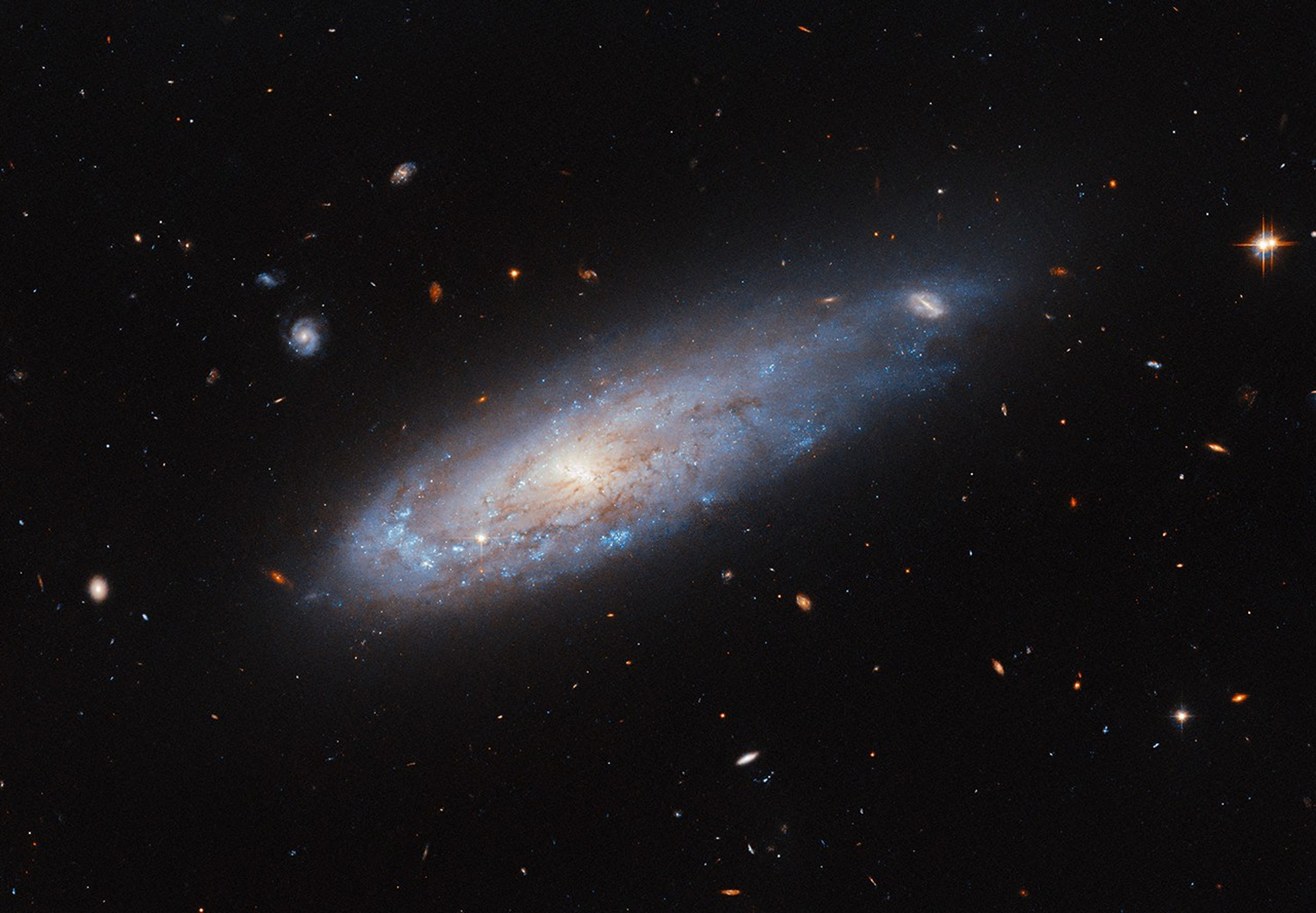
A spiral galaxy with a disk that glows visibly from the center. It has faint dust threaded through it. A spiral arm curves around the left edge of the disk and is noticeably denser with bright blue spots that hold hot and new stars. On the opposite side, the disk stretches out into a short tail where it covers a distant background galaxy. Other distant galaxies and some nearby stars are visible are also visible in this image.
This NASA/ESA Hubble Space Telescope image features the spiral galaxy IC 3225.
ESA/Hubble & NASA, M. Sun

The spiral galaxy in this NASA/ESA Hubble Space Telescope image is IC 3225. It looks remarkably as if it was launched from a cannon, speeding through space like a comet with a tail of gas streaming from its disk behind it. The scenes that galaxies appear in from Earth’s point of view are fascinating; many seem to hang calmly in the emptiness of space as if hung from a string, while others star in much more dynamic situations!

Appearances can be deceiving with objects so far from Earth — IC 3225 itself is about 100 million light-years away — but the galaxy’s location suggests some causes for this active scene, because IC 3225 is one of over 1,300 members of the Virgo galaxy cluster. The density of galaxies in the Virgo cluster creates a rich field of hot gas between them, called ‘intracluster medium’, while the cluster’s extreme mass has its galaxies careening around its center in some very fast orbits. Ramming through the thick intracluster medium, especially close to the cluster’s center, places enormous ‘ram pressure’ on the moving galaxies that strips gas out of them as they go.

As a galaxy moves through space, the gas and dust that make up the intracluster medium create resistance to the galaxy’s movement, exerting pressure on the galaxy. This pressure, called ram pressure, can strip a galaxy of its star-forming gas and dust, reducing or even stopping the creation of new stars. Conversely, ram pressure can also cause other parts of the galaxy to compress, which can boost star formation. IC 3225 is not so close to the cluster core right now, but astronomers have deduced that it has undergone ram pressure stripping in the past. The galaxy looks compressed on one side, with noticeably more star formation on that leading edge (bottom-left), while the opposite end is stretched out of shape (upper-right). Being in such a crowded field, a close call with another galaxy may also have tugged on IC 3225 and created this shape. The sight of this distorted galaxy is a reminder of the incredible forces at work on astronomical scales, which can move and reshape entire galaxies!

Media Contact:

Claire Andreoli
NASA’s Goddard Space Flight CenterGreenbelt, MD
claire.andreoli@nasa.gov
Share

Details

Last Updated

Oct 25, 2024

Editor
Andrea Gianopoulos

Powered by WPeMatico

Get The Details…

Back on Earth: NASA’s SpaceX Crew-8 Mission Splashes Down Off Florida

Back on Earth: NASA’s SpaceX Crew-8 Mission Splashes Down Off Florida

The four NASA SpaceX Crew-8 members sit in a row, smiling and waving in their spacesuits aboard a Dragon spacecraft.
NASA’s SpaceX Crew-8 members, from left to right, Roscosmos cosmonaut Alexander Grebenkin and NASA astronauts Michael Barratt, Matthew Dominick, and Jeanette Epps, are seen inside the Dragon spacecraft shortly after having landed off the coast of Pensacola, Florida, on Oct. 25, 2024.
Credit: NASA/Joel Kowsky

NASA’s SpaceX Crew-8 mission successfully splashed down at 3:29 a.m. EDT Friday, off Pensacola, Florida, concluding a nearly eight-month science mission and the agency’s eighth commercial crew rotation mission to the International Space Station.  

After launching March 3 on a SpaceX Falcon 9 rocket from NASA’s Kennedy Space Center in Florida, NASA astronauts Matthew Dominick, Michael Barratt, and Jeanette Epps, as well as Roscosmos cosmonaut Alexander Grebenkin, spent 232 days aboard the space station.

Recovery teams from NASA and SpaceX quickly secured the spacecraft and assisted the astronauts during exit. The crew now will head to NASA’s Johnson Space Center in Houston, while the Dragon spacecraft will return to SpaceX facilities at Cape Canaveral Space Force Station in Florida for inspection and refurbishment for future missions.

During their mission, crew members traveled nearly 100 million miles and completed 3,760 orbits around Earth. They conducted new scientific research to advance human exploration beyond low Earth orbit and benefit human life on Earth. Research and technology demonstrations included conducting stem cell research to develop organoid models for studying degenerative diseases, exploring how fuel temperature affects material flammability, and studying how spaceflight affects immune function in astronauts. Their work aims to improve astronaut health during long-duration spaceflights, contributing to critical advancements in space medicine and benefitting humanity.

Crew-8’s return follows the arrival of NASA’s SpaceX Crew-9 to the orbiting laboratory Sept. 29. These missions are part of NASA’s Commercial Crew Program, which provides reliable access to space, maximizing the use of the station for research and development and supporting future missions beyond low Earth orbit by partnering with private companies to transport astronauts to and from the space station. 

Learn more about NASA’s Commercial Crew program at:

https://www.nasa.gov/commercialcrew

-end-

Josh Finch / Jimi Russell
Headquarters, Washington
202-358-1100
joshua.a.finch@nasa.gov / james.j.russell@nasa.gov

Leah Cheshier / Sandra Jones
Johnson Space Center, Houston
281-483-5111 
leah.d.cheshier@nasa.gov / sandra.p.jones@nasa.gov  

Steve Siceloff / Stephanie Plucinsky
Kennedy Space Center, Florida
321-867-2468
steven.p.siceloff@nasa.gov / stephanie.n.plucinsky@nasa.gov

Share

Details

Last Updated

Oct 25, 2024

Editor
Jessica Taveau

Powered by WPeMatico
Get The Details…
Jessica Taveau

Sinister Solar System

Sinister Solar System

1 Min Read

Sinister Solar System

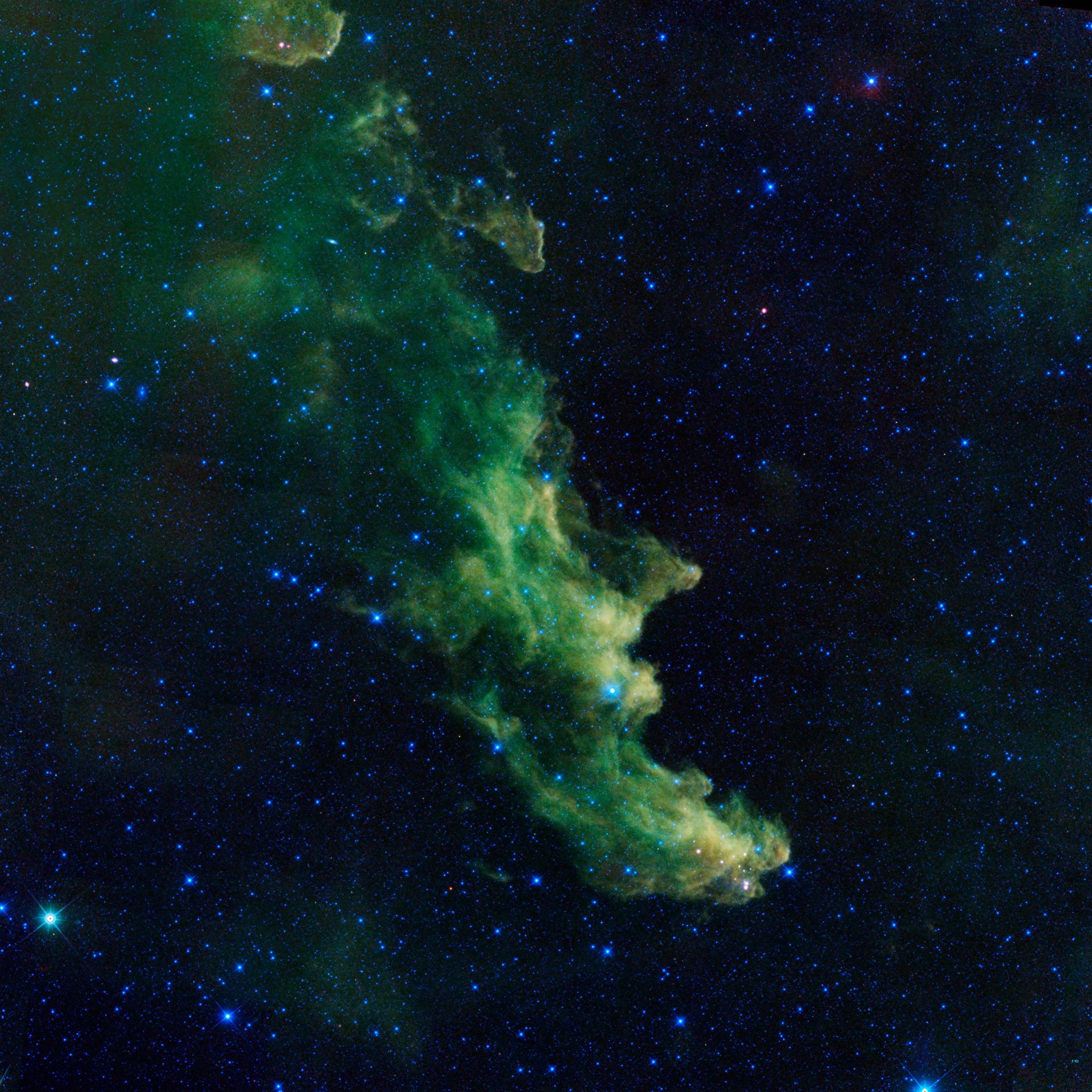
A witch appears to be screaming in space in this image from NASA’s Wide-Field Infrared Survey Explorer (WISE).
Credits:
NASA/WISE

Our universe is full of mysterious sights. Explore some of our most frightful finds from past Halloweens.

About the Author

NASA Science Editorial Team

NASA Science Editorial Team

Share

Details

Last Updated
Oct 24, 2024

Related Terms

Keep Exploring

Discover More Topics From NASA

Powered by WPeMatico

Get The Details…

Sols 4341-4342: A Bumpy Road

Sols 4341-4342: A Bumpy Road

4 min read

Sols 4341-4342: A Bumpy Road

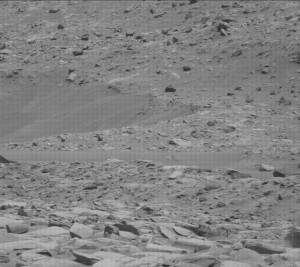
A grayscale photograph of the Martian surface shows a wide expanse of very rocky terrain, with sharp, angular stones arrayed as far as the eye can see, as if set together in a mosaic, stretching to the horizon where distant hills rise up. The stones are very bright and light-toned, while the ground in between them is medium gray, as are the hills and other terrain. A smooth channel cuts through the scene, running diagonally from the top center of the image down to the right side of the frame, just above the middle. A portion of the Curiosity rover is visible in the lower-right corner of the frame.
This image was taken by Left Navigation Camera aboard NASA’s Mars rover Curiosity on Sol 4329 — Martian day 4,329 of the Mars Science Laboratory mission — on Oct. 10, 2024, at 05:35:08 UTC.
NASA/JPL-Caltech

Earth planning date: Monday, Oct. 21, 2024

After Curiosity’s busy weekend, the team is ready for another day of planning. We are able to take advantage of the Earth-Mars time offset to full plan on both sols of our plan today. For this plan, I served as Mobility Rover Planner, and planned Curiosity’s drive. 

The first sol begins with some remote science. In this block, there is a ChemCam LIBS and Mastcam joint observation of “Ewe Lake,” to look for variation across the different layers in the rock. There is also a ChemCam RMI and a Mastcam of the “Olmstead Point” target, to see if there are chemical differences that make it darker than the surrounding rocks. Mastcam also is taking a stereo image of “Depressed Lake” (in order to see if this loose block belongs to the Stimson or the Sulfate units) and an image of the ChemCam AEGIS target the rover automatically found after the last drive. 

After a nap, Curiosity wakes up to do some contact science on the “Chuck Pass” target, which is a piece of bedrock with laminations and nodules. We perform DRT brushing, MAHLI, and APXS observations of this rock before stowing the arm so we can be ready to drive on the second sol. In the late afternoon, to take advantage of the lighting conditions, we have another short set of Mastcam imaging — an atmospheric sky column observation and a stereo mosaic of “Fascination Turret” from this new angle.

The second sol also kicks off with some remote sensing. We follow up the contact science with ChemCam LIBS and Mastcam of Chuck Pass. ChemCam also takes an RMI looking east back to the area of the white sulfur stones below “Whitebark Pass” to get yet another viewing angle. There is also some atmospheric imaging, Navcam deck monitoring (to see how the dust is moving around on the rover’s deck) and a large dust devil survey. 

After the imaging, we are ready to drive. This terrain has been very tricky. While the slopes are not steep, this is a very rocky area, as you can see in the image, making finding a safe path difficult. We don’t only need to worry about driving over things that are too big or too sharp, but we also have to make sure not to scrape the wheels along the side of a rock or steer them into a rock, making them wedge and stall. It also means that we do not have good stereo data out very far because the rocks block our view. The last complication is that we have to drive backwards — otherwise, the rover hardware will block Curiosity’s view of Earth during the time we want to send her the new plan. When we drive backwards, the rover hardware will block Curiosity’s view, so we need to turn to get a clear view in our images. We also take additional frames to be sure we can find the best path for the next drive. With all this, we ended up being able to drive about 32 meters today (about 105 feet). After a short diversion to get around a steering hazard, we were able to drive a fairly straight route along the path to our next major imaging stop. After the drive, we have our normal post-drive imaging, including a twilight MARDI image. 

We have been lucky so far on this terrain and been able to successfully complete our recent drives. Hopefully this drive will also be successful!

Written by Ashley Stroupe, Mission Operations Engineer at NASA’s Jet Propulsion Laboratory

Share

Details

Last Updated
Oct 24, 2024

Related Terms

Powered by WPeMatico

Get The Details…

Expedition 72 Back to Work as Crew-8 Heads to Earth

Expedition 72 Back to Work as Crew-8 Heads to Earth

The Milky Way appears in the vastness of space behind the SpaceX Dragon Endeavour spacecraft docked to the space station's Harmony module.
The Milky Way appears in the vastness of space behind the SpaceX Dragon Endeavour spacecraft docked to the space station’s Harmony module.

Seven Expedition 72 crew members remain aboard the International Space Station after the four SpaceX Crew-8 members entered the Dragon Endeavour spacecraft and departed the orbital outpost on Wednesday.

Crew-8 Commander Matthew Dominick, Pilot Mike Barratt, and Mission Specialists Jeanette Epps and Alexander Grebenkin are orbiting Earth today inside Endeavour nearing the end of a seven-and-a-half-month mission. The Commercial Crew quartet is targeting a splashdown off the coast of Florida at 3:29 a.m. EDT on Friday that will be streamed live on NASA+ beginning at 2:15 a.m. Learn how to watch NASA content through a variety of platforms, including social media.

Meanwhile, four NASA astronauts aboard the station slept in on Thursday following their support of the departed Crew-8 mission. Commander Suni Williams along with Flight Engineers Butch Wilmore, Nick Hague, and Don Pettit were on shift late Wednesday monitoring systems when Dragon undocked at 5:05 p.m. from the Harmony module’s space-facing port. The quartet was back to work on Thursday working on standard maintenance duties and research tasks.

Williams spent her shift in the Quest airlock cleaning cooling loops on a spacesuit and checking the suit’s other components. Pettit inspected fire extinguishers and breathing masks throughout the station’s U.S. segment ensuring they were in good operating condition.

Human research and technology studies were on the science portion of the schedule informing researchers how to successfully live and work in space long-term. Hague collected his saliva and urine samples for stowage in a science freezer and later analysis to understand microgravity’s effect on the human body. Wilmore set up the Sphere Cam-2 and filmed activities in the Destiny laboratory module in ultra-high resolution testing its ability to provide highly detailed mission imagery on future missions.

The three Roscosmos cosmonauts aboard the station worked a full shift on Thursday focusing on their complement of lab upkeep and space research. Three-time station visitor Alexey Ovchinin spent Thursday servicing life support hardware in the Zvezda service module. Flight Engineer Ivan Vagner photographed points on Earth testing a technique to determine the space station’s position in orbit, while first-time space flyer Aleksandr Gorbunov worked on orbital plumbing and labeled the contents of medical cabinets.

NASA and SpaceX now are targeting no earlier than Monday, Nov. 4 for the launch of the agency’s SpaceX 31st commercial resupply services mission to the International Space Station due to ongoing operations including Crew-9 port relocation and spacecraft integration for the cargo flight.

The company’s Dragon spacecraft will liftoff from Launch Complex 39A at NASA’s Kennedy Space Center in Florida and deliver food, supplies, and science investigations to the orbiting laboratory.

NASA will provide additional updates and information on launch and docking when available.


Learn more about station activities by following the space station blog@space_station and @ISS_Research on X, as well as the ISS Facebook and ISS Instagram accounts.

Get the latest from NASA delivered every week. Subscribe here: www.nasa.gov/subscribe

Powered by WPeMatico
Get The Details…

Mark Garcia