Curiosity Blog, Sols 4788-4797: Welcome Back from Conjunction

Curiosity Blog, Sols 4788-4797: Welcome Back from Conjunction

2 min read

Curiosity Blog, Sols 4788-4797: Welcome Back from Conjunction

An overhead, grayscale photo of the Martian surface shows a uniformly medium gray, flat, rocky area, where a few wide, shallow cracks on the surface are filled with small rocks. A drill hole, fully shadowed so you can’t see its depth, is in the ground near the center of the frame.
NASA’s Mars rover Curiosity acquired this image using its Mast Camera (Mastcam); it shows the “Nevado Sajama” drill site from November, right next to the location of this weekend’s drill. The new drill site will be to the upper left of the existing hole. Curiosity captured the image on Jan. 25, 2026 — Sol 4789, or Martian day 4,789 of the Mars Science Laboratory mission — at 19:20:37 UTC.
NASA/JPL-Caltech/MSSS

Written by Alex Innanen, Atmospheric Scientist at York University, Toronto

Earth planning date: Friday, Jan. 30, 2026

Mars has emerged from its holiday behind the Sun, and we here on Earth have been able to reconnect with Curiosity and get back to work on Mars. Our first planning day last Friday gave Curiosity a full weekend of activities, which wrapped up with getting us ready for our next drill. We checked out a broken white rock in the workspace with APXS, MAHLI, and ChemCam’s laser spectrometer and finished up imaging a sandy area we’ve kept an eye on during conjunction to see if we could catch any wind motion, before taking a small drive to our drill location about 2 meters away (about 6 feet).

This location may look familiar — our next drill will be only a few centimeters away from “Nevado Sajama,” which we drilled back in November. The reason we’ve returned here is to do a rare SAM experiment the instrument’s last container of tetramethylammonium hydroxide (or TMAH, for less of a mouthful). TMAH is a chemical that we can mix with our sample from Nevado Sajama to help identify any organic molecules. SAM had only two containers of TMAH (the first of which we used almost six years ago, so we want to be very certain that everything will go well with this experiment. As a result, we did a rehearsal of the handoff of the sample to SAM in Wednesday’s plan, before we drill this weekend.

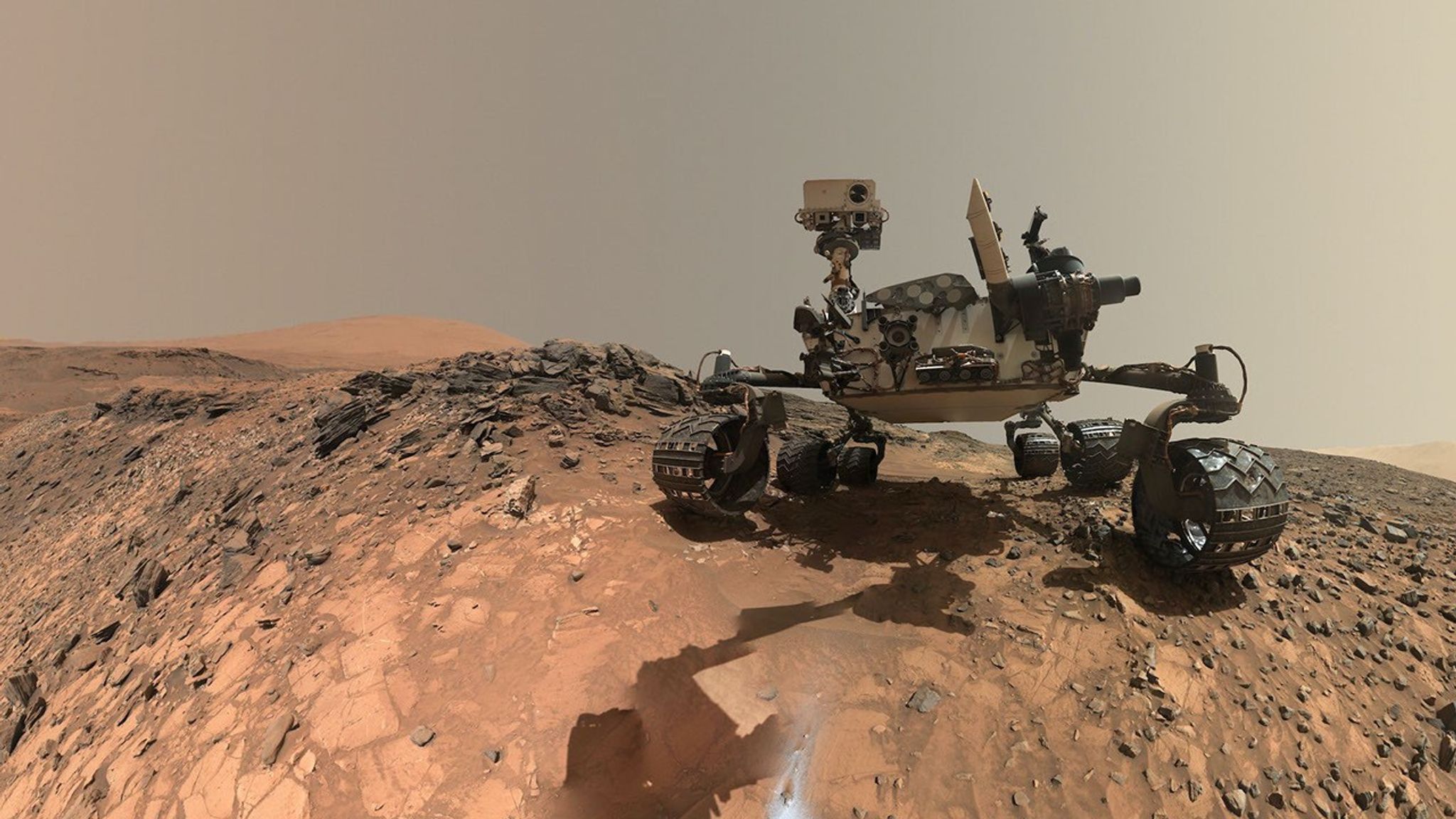
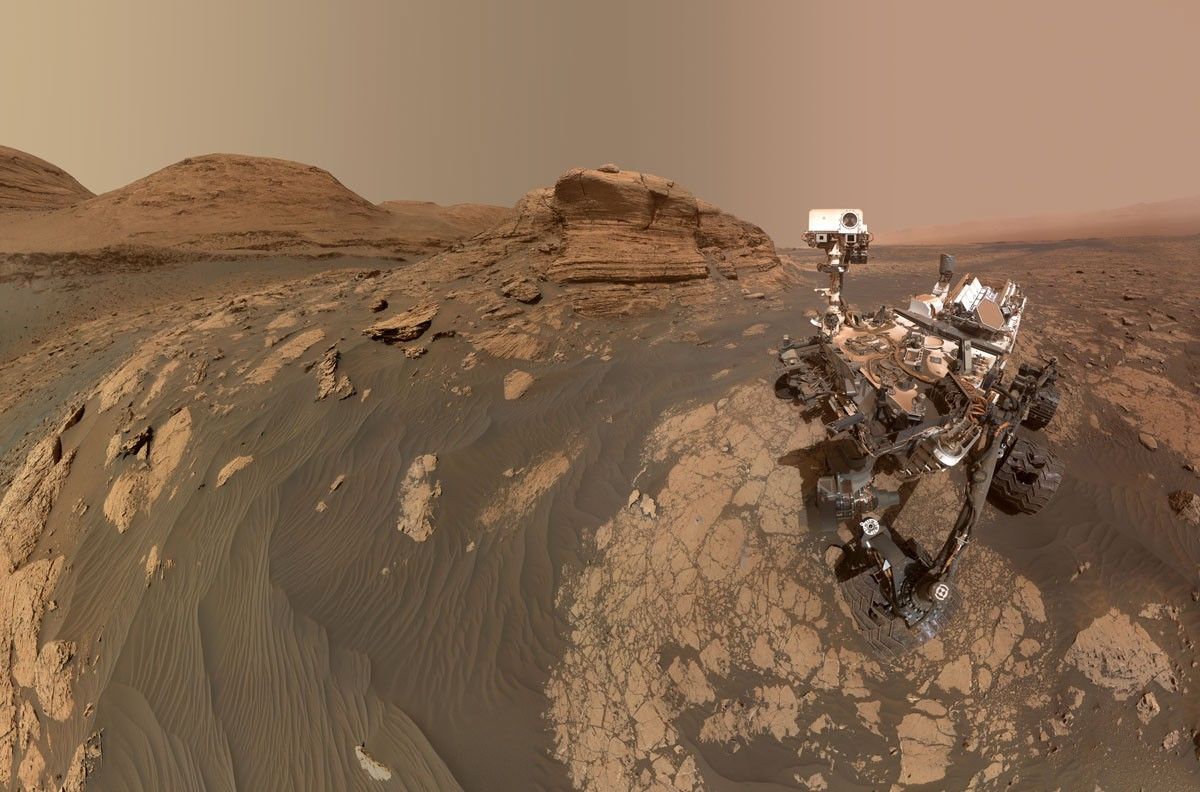
A rover sits on the hilly, orange Martian surface beneath a flat grey sky, surrounded by chunks of rock.
NASA’s Mars rover Curiosity at the base of Mount Sharp
NASA/JPL-Caltech/MSSS

Share

Details

Last Updated
Feb 04, 2026

Related Terms

Powered by WPeMatico

Get The Details…

NASA, University of Texas Expand Research and Workforce Development

NASA, University of Texas Expand Research and Workforce Development

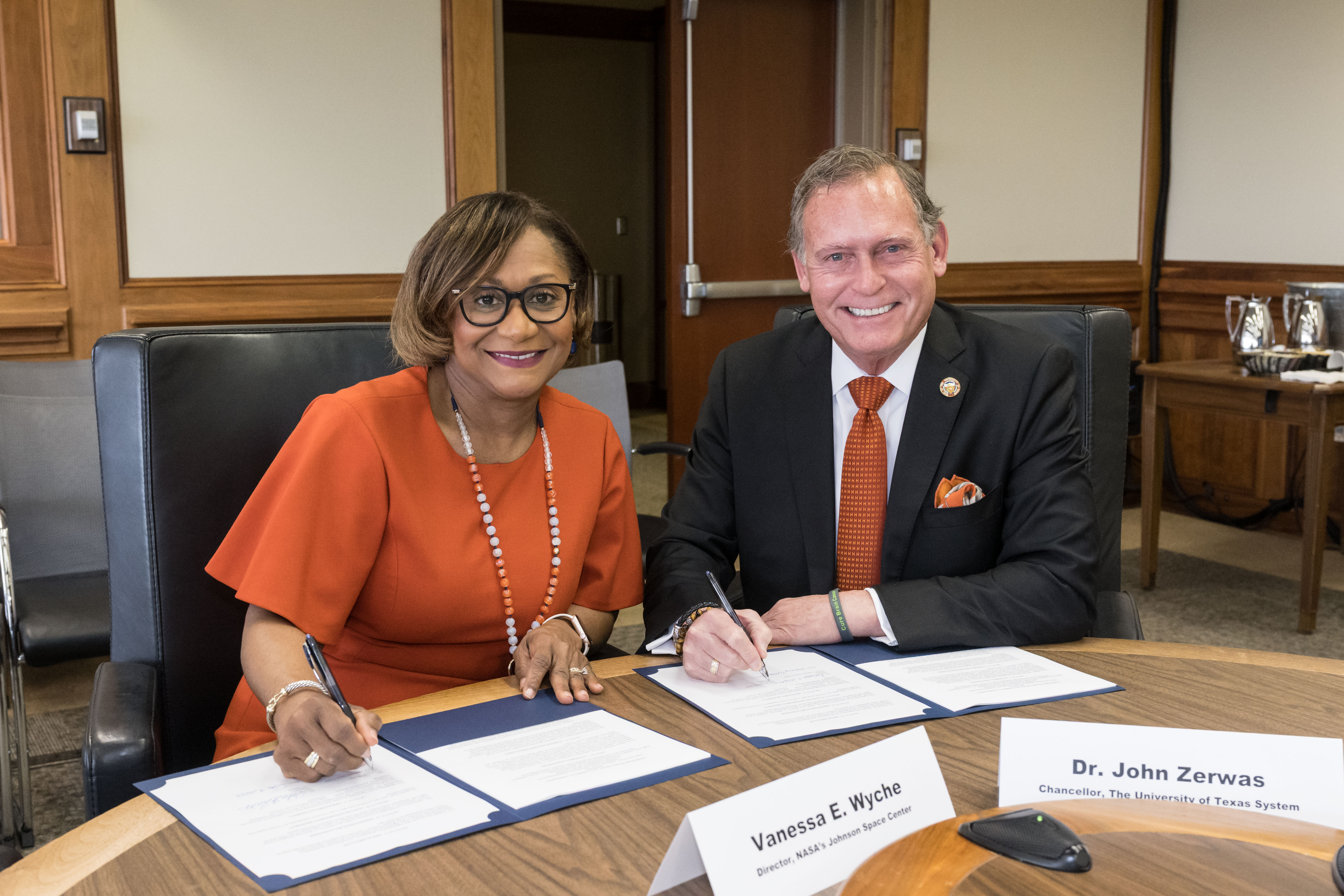
NASA’s Johnson Space Center in Houston and the University of Texas System (UT System) announced the signing of a collaborative Space Act Agreement on Jan. 9, 2026. The agreement expands research and workforce development partnership opportunities across NASA centers and UT System facilities.

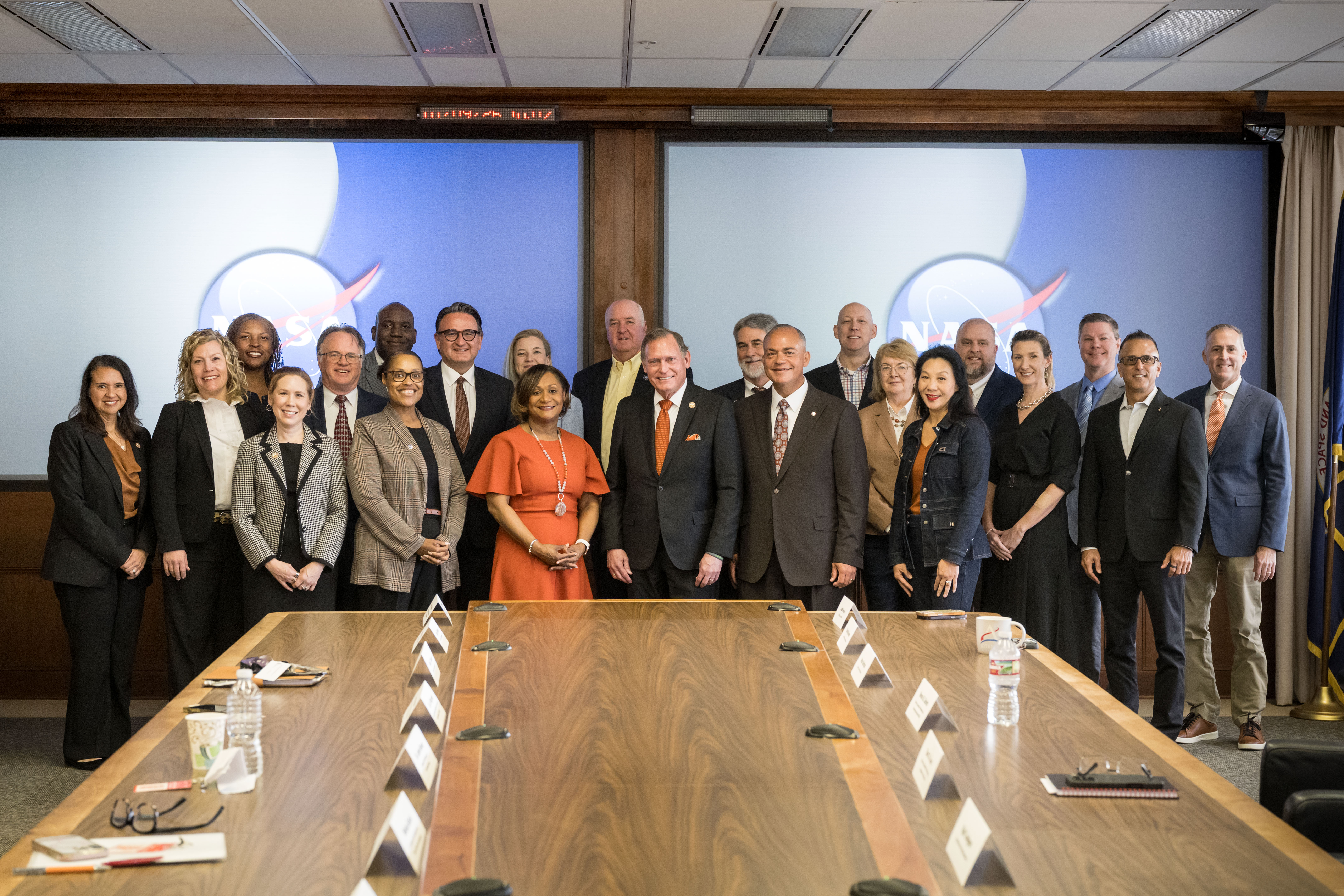
NASA’s Johnson Space Center Director Vanessa Wyche and University of Texas System Chancellor John M. Zerwas, participate in a ceremonial signing of a Space Act Agreement at Johnson Space Center in Houston on Jan. 9, 2026.
NASA/Helen Arase Vargas

The agreement builds upon decades of collaboration between NASA and the UT System by enabling additional research, teaching resources, and educational engagements that support human spaceflight and grow the pipeline of next-generation talent. It will leverage Johnson’s unique capabilities as the hub of human spaceflight and the UT System’s assets across its 13 institutions.

“NASA’s Johnson Space Center has a long history of working with colleges and universities to help us achieve our human spaceflight missions,” said Johnson Center Director Vanessa Wyche. “We are eager to partner with the UT System to collaborate in vital research and technology development initiatives that will enable us to meet our nation’s exploration goals and advance the future of space exploration.”

The agreement also reflects Johnson’s continued evolution through Dare Unite Explore – a set of commitments designed to ensure the center will remain the world leader in human space exploration. Those commitments include expanding partner access to the center’s world-class facilities and expertise, as well as establishing robust workforce development and recruitment programs.

Johnson Center Director Vanessa Wyche and UT System Chancellor John Zerwas (center) stand with members of their respective leadership teams following the ceremonial agreement signing.
NASA/Helen Arase Vargas

Wyche and UT System Chancellor John M. Zerwas hosted a ceremonial signing event at Johnson. During the event, Wyche and Zerwas, along with the center’s leadership team and the UT System executives and faculty, strategized on potential partnership opportunities and next steps for stakeholders.

Powered by WPeMatico

Get The Details…
Linda E. Grimm

Crew Studies Health, Earth Photography, and Works Dragon Preps

Crew Studies Health, Earth Photography, and Works Dragon Preps

The wintry landscape of New Jersey, New York, and Connecticut is seen from the International Space Station as it orbited 259 miles above the Atlantic coast of the United States. Temperatures in New York City ranged from a low of about 14 degrees Fahrenheit to a high of around 23 degrees when this photograph was taken.
The wintry landscape of New Jersey, New York, and Connecticut is seen from the International Space Station as it orbited above the Atlantic coast. Temperatures in New York City ranged from a low of about 14 degrees Fahrenheit to a high of around 23 degrees when this photograph was taken.
NASA

Biomedical research to promote astronaut health and Earth observations to understand the effects of natural catastrophes topped the science schedule aboard the International Space Station on Wednesday. The Expedition 74 trio is also gearing up for the arrival of the SpaceX Crew-12 mission while continuing lab maintenance for the upkeep of the orbiting lab.

A second day of CIPHER human research operations awaited NASA Flight Engineer Chris Williams as doctors on the ground continuously monitor how an astronaut’s body adapts to weightlessness. Williams began his shift collecting his blood samples then processing them in a centrifuge. Next, he photographed the sample tube configurations after the centrifuge activities, then stowed the samples in a science freezer for preservation and later analysis. Researchers are using the biomedical data collected from this investigation to understand how human health changes before, during, and after a spaceflight —critical knowledge for safeguarding crews on future missions farther from Earth

After lunchtime, Williams called down to Earth for a video conference with the four SpaceX Crew-12 members, who are targeted to launch to the orbital outpost no earlier than Feb. 11. Commander Jessica Meir and Pilot Jack Hathaway, both from NASA, and Mission Specialists Sophie Adenot of ESA (European Space Agency) and Andrey Fedyaev of Roscosmos called up to the station from NASA’s Mission Control Center in Houston for station familiarization activities prior to their arrival the day after launching from Cape Canaveral, Florida. Afterward, Williams continued his computer training to prepare for his monitoring role as Crew-12 approaches the station aboard the SpaceX Dragon.

Roscosmos Flight Engineer Sergei Mikaev once again pointed a camera out a station window and photographed Earth landmarks to capture areas struck by natural disasters. Mikaev targeted regions from Portugal to Kazakhstan then downloaded the imagery to a hard drive for return and analysis on Earth. Researchers will study the imagery to understand how the landscape is affected by and adapts to events such as storms, landslides, and earthquakes.

Station Commander Sergey Kud-Sverchkov from Roscosmos began his shift setting up video gear to record experiment operations for the Plasma Kristall-4 physics study. Next, Kud-Sverchkov replaced a laptop computer, installed a new computer battery, then photographed the completed job inside the Nauka science module. The two-time space station visitor wrapped up his shift on orbital plumbing and life support maintenance in the orbiting lab’s Roscosmos modules.

Learn more about station activities by following the space station blog, @space_station on X, as well as the ISS Facebook and ISS Instagram accounts.

Get the latest from NASA delivered every week. Subscribe here.

Powered by WPeMatico

Get The Details…

Mark A. Garcia

Station Nation: Erin Edwards, Deputy Branch Chief for Crew Operations and Capsule Communicator 

Station Nation: Erin Edwards, Deputy Branch Chief for Crew Operations and Capsule Communicator 

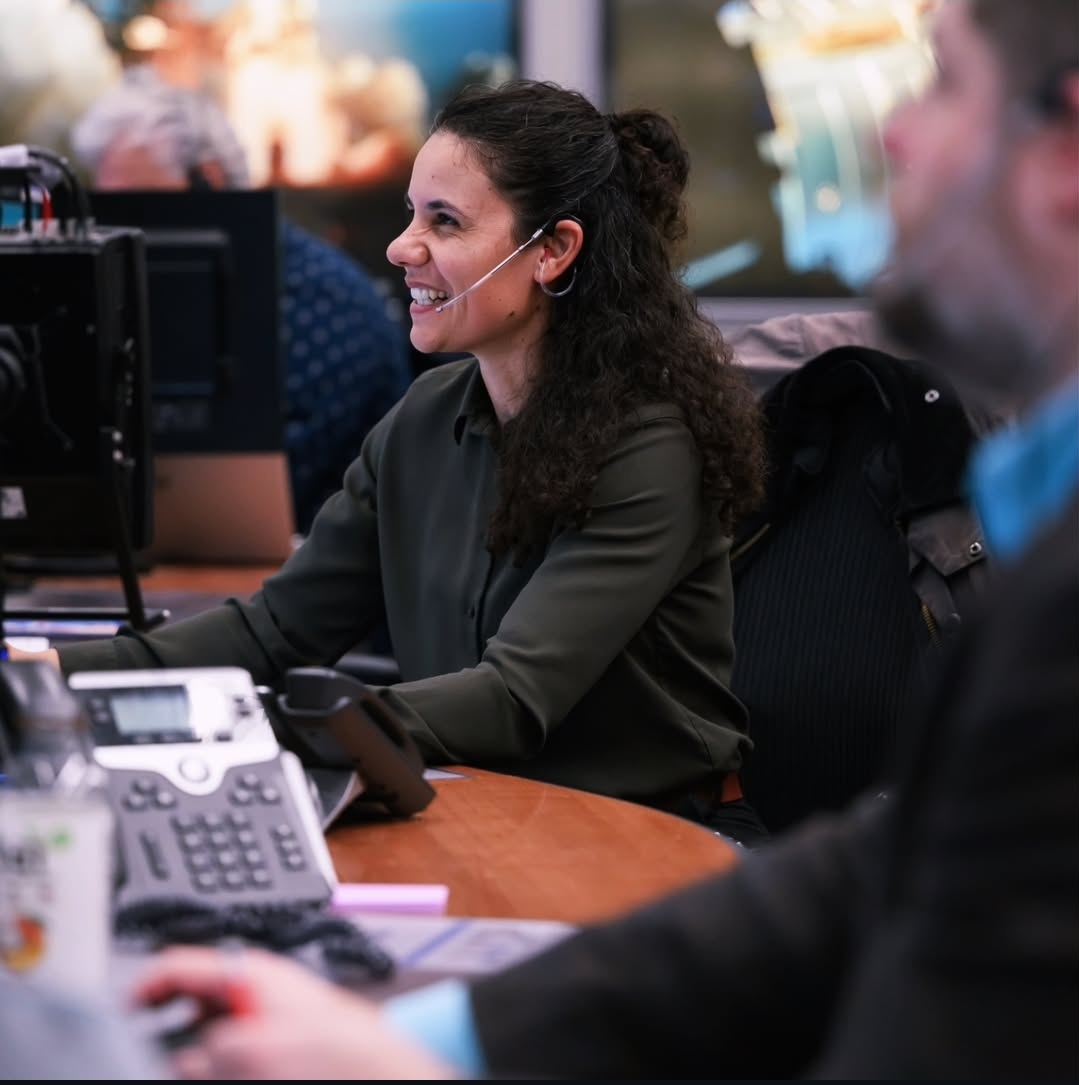
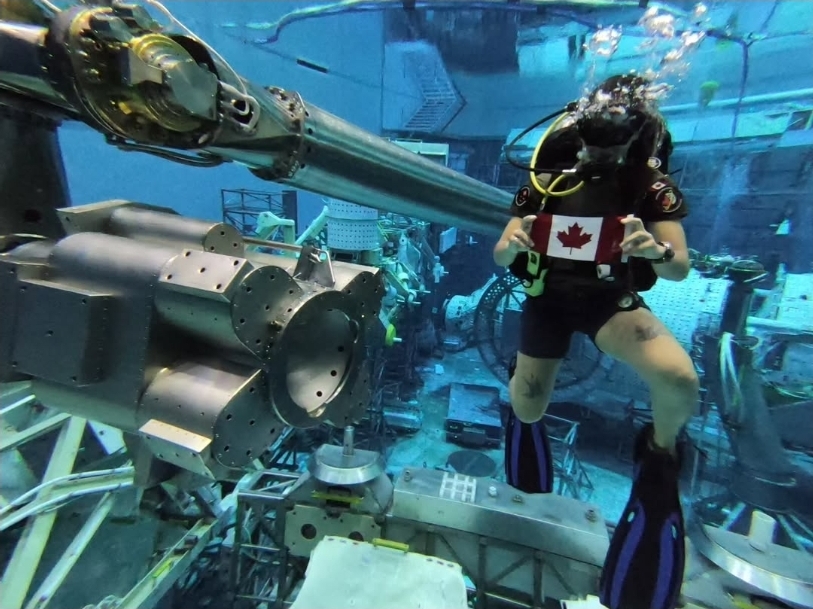
As a member of the Crew Operations Office, Erin Edwards and her team manage astronaut candidate training schedules, including field medical exercises, land survival, and underwater operations at NASA’s Neutral Buoyancy Laboratory in Houston. She also develops and tests new training programs to keep crews mission-ready.  

Along with her role as a crew operations officer, Edwards works in the International Space Station Mission Control Center as a capsule communicator, or capcom, and instructor. As a capcom, she must be fluent in the language of the spacecraft and its operations to clearly relay important information to the crew, especially during dynamic operations. 

Read on to learn about Edwards’ career with NASA and more! 

A woman at a desk with a headset on smiles and looks up.
Erin Edwards serves as a capsule communicator, or capcom, in the International Space Station Mission Control Center in Houston.
NASA/James Blair

Where are you from? 

Port Moody, British Columbia, Canada. 

How long have you been working for NASA? 

I’ve been at NASA for two years. My term here with the military is three years. 

What was your path to NASA? 

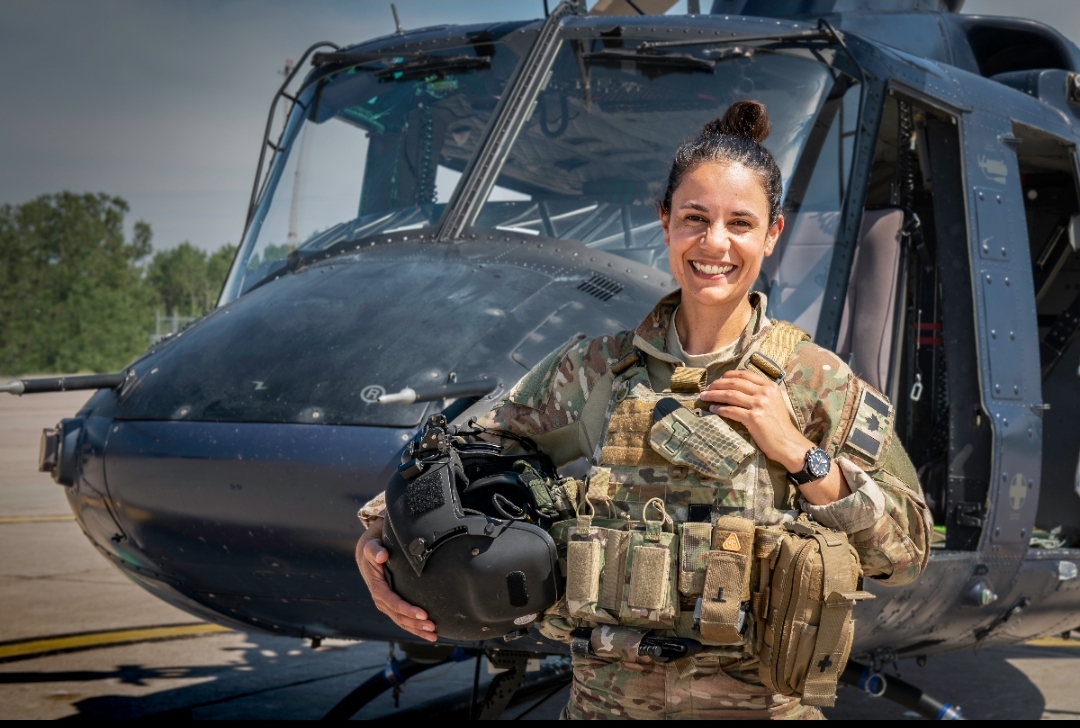
Super random! I’m a Canadian military pilot, previously working in the Canadian Special Operations Forces Command as an aircraft commander on the CH-146 Griffon. While we use a lot of space-based assets in aviation, the leap to human spaceflight was unexpected.  

An opportunity for an officer to work in the astronaut office as a capcom arose a few years ago. As a lifelong space nerd, I figured it would be an amazing opportunity. I applied and was interviewed, and before long, was posted to NASA’s Johnson Space Center as the first Canadian non-astronaut to be posted as a capcom and later as an operations officer. 

How would you describe your job to family or friends that may not be familiar with NASA? 

My team and I organize the unassigned crew and astronaut candidates’ work lives! As a capcom, I help translate what the engineers are saying in the flight control room for the astronauts aboard the station, and I help with the station activities as call sign Houston. More recently I’ve been assigned as the TH57 Helicopter Project Pilot at AOD to help get that fleet integrated for more lunar-focused Space Flight Readiness Training. 

What advice would you give to young individuals aspiring to work in the space industry or at NASA? 

Just go for it! You miss 100% of the shots you don’t take, as Wayne Gretzky said. My background as a military helicopter pilot, Navy diver, and mining engineer may appear to have no relevance to NASA, but that diverse experience has turned out to be useful here as an operations officer for astronaut training. I wouldn’t have known that if I hadn’t thrown my hat in the ring. No matter your technical background, there’s probably a place for it in spaceflight. Your experience has unique ways of benefiting such complex, multifaceted programs like spaceflight—so give it a shot! 

Is there a space figure you’ve looked up to or someone that inspires you?  

Spaceflight isn’t something we can do on our own, there are many integrated teams comprised of many different types of people all pulling together to make the impossible happen.

Erin Edwards

Erin Edwards

Deputy Branch Chief for Crew Operations and Capsule Communicator

Honestly, there isn’t a single person, but I think what NASA and my own country’s space program, like others, have committed themselves to as a giant team is what has inspired me over the years. I think I was inspired by that, the mission, and the culture of a united effort of so many to do hard things. 

What is your favorite NASA memory or the most meaningful project you’ve worked on during your time with NASA? 

There are two! After only a few months at NASA, I was told by my soon-to-be boss, James ‘Vegas’ Kelly, that I was selected to take over NASA astronaut Jonny Kim’s operations job. This was a huge vote of confidence for me as a new team member from Canada. The second was sending my first transmission to the station as a qualified capcom, which was incredibly cool. I am just a big nerd from a small town in Canada, and never in a million years did I think I would be at NASA at that console, so it was a little mind blowing. 

A person in a dive suit holds a Canadian flag underwater.
Erin Edwards during diving operations at NASA’s Neutral Buoyancy Laboratory in front of the Canadarm2 mock-up.
NASA/Tess Caswell

What do you love sharing about station? 

Everyone is playing their part to accomplish important science and experiments that we can’t do anywhere else. 

Erin Edwards

Erin Edwards

Deputy Branch Chief for Crew Operations and Capsule Communicator

People always seem surprised at how big the teams are that support the station and how collaborative of an effort it is. It stretches across disciplines, centers, and even countries. That information is critical for solving problems here on Earth. 

November 2, 2025, marked 25 years of continuous human presence. What does this milestone mean to you? 

A quarter century of science and partnership aboard the orbital laboratory is a testament to what we can do as a global society when we really want to. To me personally, being able to be here with people who have worked in space or help train the people going next is such a full circle situation. I dreamed of working on a team like this, and it happened 20 years later. That opportunity to fulfill a dream and represent Canada as part of the ISS program means a lot to me! 

If you could have dinner with any astronaut, past or present, who would it be? 

I was never able to meet Sally Ride. I think I would have loved to ask her some questions and hear her story in person. 

Do you have a favorite space-related memory or moment that stands out to you? 

Dr. Robert Thirsk, a Canadian astronaut, spoke to my elementary school in 1996, which he had attended years earlier. I was in sixth grade, and it was a formative interaction. Hearing him talk so passionately about his shuttle mission and life with his team aboard the orbiter was absolutely lifechanging. I didn’t know how I was going to do it, but I decided then that I wanted to work in space. That set my course for life. I’ll likely never get to space, but I got pretty close, and it is really something to pursue a goal like that for so long and have it work out, almost 

What are some of the key projects you have worked on during your time at NASA? What have been your favorite? 

Being able to put my operational helicopter background to use in helping to build the helicopter flight program here has been a really cool and unexpected opportunity! I happened to be the right person at the right time with the right skill set to make a difference in that aspect of training. I’m proud of that. 

Erin Edwards pictured in her role as a Royal Canadian Air Force helicopter pilot, where she built skills that she leverages in her work at NASA.
Canadian Armed Forces/Erin Edwards

What are your hobbies/things you enjoy doing outside of work? 

I’m in my forties, but still really like playing contact rugby, which is such a fun sport. Between the tactics, teamwork, bashing into people on the pitch, and a cheeky beer after a game, it’s a great way to spend a weekend. I run a lot and, when I can, climb – any kind of climbing, sport, bouldering, trad, ice climbing. All of it! 

Day launch or night launch? 

Night launch! 

Favorite space movie? 

Apollo 13. Obviously. 

NASA Worm or Meatball logo? 

Meatball! 

The NASA Meatball logo

NASA and its partners have supported humans continuously living and working in space since November 2000. After 25 years of continuous human presence, the space station remains a training and proving ground for the future of commercial space stations, deep space missions, enabling NASA’s Artemis campaign, lunar exploration, and future Mars missions. 

Every day, we are conducting exciting research aboard our orbiting laboratory that will help us explore farther into space and bring benefits back to people on Earth. You can keep up with the latest news, videos, and pictures about space station science on the Station Research & Technology news page. It is a curated hub of space station research digital media from Johnson and other centers and space agencies.  

Sign up for our weekly email newsletter to get the updates delivered directly to you.  

Follow updates on social media at @Space_Station on X, and on the space station accounts on Facebook and Instagram.  

Powered by WPeMatico

Get The Details…
Sumer Loggins

TB 26-01 Evaluation of Adhesive and Solvent Alternatives for Polymeric Bonding Applications

TB 26-01 Evaluation of Adhesive and Solvent Alternatives for Polymeric Bonding Applications

The NASA Engineering and Safety Center (NESC) conducted a technical assessment to evaluate alternatives to dichloromethane, traditionally used for bonding transparent polymeric materials. This effort was initiated in response to potential regulatory restrictions under the EPA Toxic Substances Control Act (TSCA), which could impact critical bonding processes used in spaceflight hardware and experimental systems.

Download PDF: Evaluation of Adhesive and Solvent Alternatives for PolymericBonding Applications

Powered by WPeMatico

Get The Details…
Meagan Chappell