NASA Identifies Cause of Artemis I Orion Heat Shield Char Loss

NASA Identifies Cause of Artemis I Orion Heat Shield Char Loss

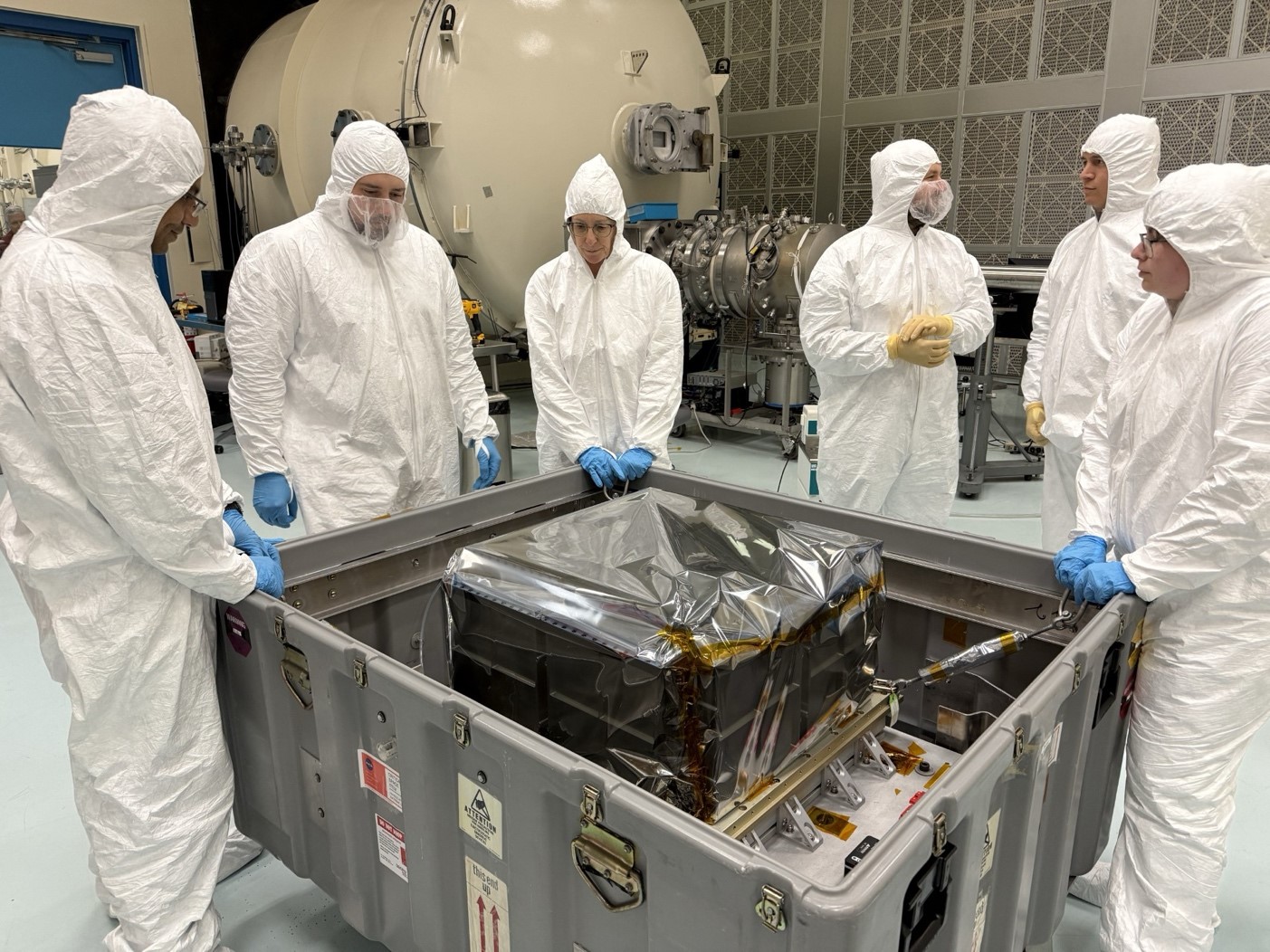
The Artemis II Orion spacecraft is lifted from the Final Assembly and Testing (FAST) Cell and placed in the west altitude chamber inside the Operations and Checkout Building at NASA’S Kennedy Space Center in Florida on June 28, 2024. Inside the altitude chamber, the spacecraft underwent a series of tests simulating deep space vacuum conditions.
Photo Credit: NASA / Rad Sinyak

After extensive analysis and testing, NASA has identified the technical cause of unexpected char loss across the Artemis I Orion spacecraft’s heat shield.

Engineers determined as Orion was returning from its uncrewed mission around the Moon, gases generated inside the heat shield’s ablative outer material called Avcoat were not able to vent and dissipate as expected. This allowed pressure to build up and cracking to occur, causing some charred material to break off in several locations.

“Our early Artemis flights are a test campaign, and the Artemis I test flight gave us an opportunity to check out our systems in the deep space environment before adding crew on future missions,” said Amit Kshatriya, deputy associate administrator, Moon to Mars Program Office, NASA Headquarters in Washington. “The heat shield investigation helped ensure we fully understand the cause and nature of the issue, as well as the risk we are asking our crews to take when they venture to the Moon.”

Findings

Teams took a methodical approach to understanding and identifying the root cause of the char loss issue, including detailed sampling of the Artemis I heat shield, review of imagery and data from sensors on the spacecraft, and comprehensive ground testing and analysis.

During Artemis I, engineers used the skip guidance entry technique to return Orion to Earth. This technique provides more flexibility by extending the range Orion can fly after the point of reentry to a landing spot in the Pacific Ocean. Using this maneuver, Orion dipped into the upper part of Earth’s atmosphere and used atmospheric drag to slow down. Orion then used the aerodynamic lift of the capsule to skip back out of the atmosphere, then reenter for final descent under parachutes to splashdown.

Using Avcoat material response data from Artemis I, the investigation team was able to replicate the Artemis I entry trajectory environment — a key part of understanding the cause of the issue — inside the arc jet facilities at NASA’s Ames Research Center in California. They observed that during the period between dips into the atmosphere, heating rates decreased, and thermal energy accumulated inside the heat shield’s Avcoat material. This led to the accumulation of gases that are part of the expected ablation process. Because the Avcoat did not have “permeability,” internal pressure built up, and led to cracking and uneven shedding of the outer layer.

After NASA’s Orion spacecraft was recovered at the conclusion of the Artemis I test flight and transported to NASA’s Kennedy Space Center in Florida, its heat shield was removed from the crew module inside the Operations and Checkout Building and rotated for inspection.
Credit: NASA

Teams performed extensive ground testing to replicate the skip phenomenon before Artemis I. However, they tested at much higher heating rates than the spacecraft experienced in flight. The high heating rates tested on the ground allowed the permeable char to form and ablate as expected, releasing the gas pressure. The less severe heating seen during the actual Artemis I reentry slowed down the process of char formation, while still creating gases in the char layer. Gas pressure built up to the point of cracking the Avcoat and releasing parts of the charred layer. Recent enhancements to the arc jet facility have enabled a more accurate reproduction of the Artemis I measured flight environments, so that this cracking behavior could be demonstrated in ground testing.

While Artemis I was uncrewed, flight data showed that had crew been aboard, they would have been safe. The temperature data from the crew module systems inside the cabin were also well within limits and holding steady in the mid-70s Fahrenheit. Thermal performance of the heat shield exceeded expectations.

Engineers understand both the material phenomenon and the environment the materials interact with during entry. By changing the material or the environment, they can predict how the spacecraft will respond. NASA teams unanimously agreed the agency can develop acceptable flight rationale that will keep crew safe using the current Artemis II heat shield with operational changes to entry.

NASA’s Investigation Process

Soon after NASA engineers discovered the condition on the Artemis I heat shield, the agency began an extensive investigation process, which included a multi-disciplinary team of experts in thermal protection systems, aerothermodynamics, thermal testing and analysis, stress analysis, material test and analysis, and many other related technical areas. NASA’s Engineering and Safety Center was also engaged to provide technical expertise including nondestructive evaluation, thermal and structural analysis, fault tree analysis, and other testing support.

“We took our heat shield investigation process extremely seriously with crew safety as the driving force behind the investigation,” said Howard Hu, manager, Orion Program, NASA’s Johnson Space Center in Houston. “The process was extensive. We gave the team the time needed to investigate every possible cause, and they worked tirelessly to ensure we understood the phenomenon and the necessary steps to mitigate this issue for future missions.”

The Artemis I heat shield was heavily instrumented for flight with pressure sensors, strain gauges, and thermocouples at varying ablative material depths. Data from these instruments augmented analysis of physical samples, allowing the team to validate computer models, create environmental reconstructions, provide internal temperature profiles, and give insight into the timing of the char loss.

Approximately 200 Avcoat samples were removed from the Artemis I heat shield at NASA’s Marshall Space Flight Center in Alabama for analysis and inspection. The team performed non-destructive evaluation to “see” inside the heat shield.

One of the most important findings from examining these samples was that local areas of permeable Avcoat, which had been identified prior to the flight, did not experience cracking or char loss. Since these areas were permeable at the start of the entry, the gases produced by ablation were able to adequately vent, eliminating the pressure build up, cracking, and char loss. 

A test block of Avcoat undergoes heat pulse testing inside an arc jet test chamber at NASA’s Ames Research Center in California. The test article, configured with both permeable (upper) and non-permeable (lower) Avcoat sections for comparison, helped to confirm understanding of the root cause of the loss of charred Avcoat material that engineers saw on the Orion spacecraft after the Artemis I test flight beyond the Moon.
Credit: NASA

Engineers performed eight separate post-flight thermal test campaigns to support the root cause analysis, completing 121 individual tests. These tests took place in facilities with unique capabilities across the country, including the Aerodynamic Heating Facility at the Arc-Jet Complex at Ames to test convective heating profiles with various test gases; the Laser Hardened Materials Evaluation Laboratory at Wright‐Patterson Air Force Base in Ohio to test radiative heating profiles and provide real-time radiography; as well as the Interaction Heating Facility at Ames to test combined convective and radiative heating profiles in the air at full-block scale.

Aerothermal experts also completed two hypersonic wind tunnel test campaigns at NASA’s Langley Research Center in Virginia and CUBRC aerodynamic test facilities in Buffalo, New York, to test a variety of char loss configurations and enhance and validate analytical models. Permeability testing was also performed at Kratos in Alabama, the University of Kentucky, and Ames to help further characterize the Avcoat’s elemental volume and porosity. The Advanced Light Source test facility, a U.S. Department of Energy scientific user facility at Lawrence Berkeley National Laboratory, was also used by engineers to examine the heating behavior of the Avcoat at a microstructure level.

In the spring of 2024, NASA stood up an independent review team to conduct an extensive review of the agency’s investigation process, findings, and results. The independent review was led by Paul Hill, a former NASA leader who served as the lead space shuttle flight director for Return to Flight after the Columbia accident, led NASA’s Mission Operations Directorate, and is a current member of the agency’s Aerospace Safety Advisory Panel. The review occurred over a three-month period to assess the heat shield’s post-flight condition, entry environment data, ablator thermal response, and NASA’s investigation progress. The review team agreed with NASA’s findings on the technical cause of the physical behavior of the heat shield.

Heat Shield Advancements

Knowing that permeability of Avcoat is a key parameter to avoid or minimize char loss, NASA has the right information to assure crew safety and improve performance of future Artemis heat shields. Throughout its history, NASA has learned from each of its flights and incorporated improvements into hardware and operations. The data gathered throughout the Artemis I test flight has provided engineers with invaluable information to inform future designs and refinements. Lunar return flight performance data and a robust ground test qualification program improved after the Artemis I flight experience are supporting production enhancements for Orion’s heat shield. Future heat shields for Orion’s return from Artemis lunar landing missions are being produced to achieve uniformity and consistent permeability. The qualification program is currently being completed along with the production of more permeable Avcoat blocks at NASA’s Michoud Assembly Facility in New Orleans.

For more information about NASA’s Artemis campaign, visit:

https://www.nasa.gov/artemis

Powered by WPeMatico

Get The Details…
Erika Peters

NASA’s Hubble Takes the Closest-Ever Look at a Quasar

NASA’s Hubble Takes the Closest-Ever Look at a Quasar

4 Min Read

NASA’s Hubble Takes the Closest-Ever Look at a Quasar

A two-panel annotated image of quasar 3C 273, taken by different Hubble science instruments. The top panel is a Hubble Wide Field Planetary Camera 2 (WFPC2) image of quasar 3C 273. It looks like a bright white car headlight. There is a linear orange-white smoke-like feature stretching to the 4 o’clock position, an extragalactic jet launched from the quasar in the center of the black hole of an unseen galaxy. The bottom panel is a Hubble Space Telescope Imaging Spectrograph (STIS) coronagraph image of quasar 3C 273. It looks the same as the WFPC2 image, but in shades of blue. A black circle (labeled “core light blocked”) blocks the glare of the quasar. Blue-colored filamentary material is visible near the black hole. The extragalactic jet is still visible.
A NASA Hubble Space Telescope image of the core of quasar 3C 273.
Credits:
NASA, ESA, Bin Ren (Université Côte d’Azur/CNRS); Acknowledgment: John Bahcall (IAS); Image Processing: Joseph DePasquale (STScI)

Astronomers have used the unique capabilities of NASA’s Hubble Space Telescope to peer closer than ever into the throat of an energetic monster black hole powering a quasar. A quasar is a galactic center that glows brightly as the black hole consumes material in its immediate surroundings.

The new Hubble views of the environment around the quasar show a lot of “weird things,” according to Bin Ren of the Côte d’Azur Observatory and Université Côte d’Azur in Nice, France. “We’ve got a few blobs of different sizes, and a mysterious L-shaped filamentary structure. This is all within 16,000 light-years of the black hole.”

Some of the objects could be small satellite galaxies falling into the black hole, and so they could offer the materials that will accrete onto the central supermassive black hole, powering the bright lighthouse. “Thanks to Hubble’s observing power, we’re opening a new gateway into understanding quasars,” said Ren. “My colleagues are excited because they’ve never seen this much detail before.”

Quasars look starlike as point sources of light in the sky (hence the name quasi-stellar object). The quasar in the new study, 3C 273, was identified in 1963 by astronomer Maarten Schmidt as the first quasar. At a distance of 2.5 billion light-years it was too far away for a star. It must have been more energetic than ever imagined, with a luminosity over 10 times brighter than the brightest giant elliptical galaxies. This opened the door to an unexpected new puzzle in cosmology: What is powering this massive energy production? The likely culprit was material accreting onto a black hole.

A two-panel annotated image of quasar 3C 273, taken by different Hubble science instruments. The top panel is a Hubble Wide Field Planetary Camera 2 (WFPC2) image of quasar 3C 273. It looks like a bright white car headlight. There is a linear orange-white smoke-like feature stretching to the 4 o’clock position, an extragalactic jet launched from the quasar in the center of the black hole of an unseen galaxy. The bottom panel is a Hubble Space Telescope Imaging Spectrograph (STIS) coronagraph image of quasar 3C 273. It looks the same as the WFPC2 image, but in shades of blue. A black circle (labeled “core light blocked”) blocks the glare of the quasar. Blue-colored filamentary material is visible near the black hole. The extragalactic jet is still visible.
A Hubble Space Telescope image of the core of quasar 3C 273. A coronagraph on Hubble blocks out the glare coming from the supermassive black hole at the heart of the quasar. This allows astronomers to see unprecedented details near the black hole such as weird filaments, lobes, and a mysterious L-shaped structure, probably caused by small galaxies being devoured by the black hole. Located 2.5 billion light-years away, 3C 273 is the first quasar (quasi-stellar object) ever discovered, in 1963.
NASA, ESA, Bin Ren (Université Côte d’Azur/CNRS); Acknowledgment: John Bahcall (IAS); Image Processing: Joseph DePasquale (STScI)

In 1994 Hubble’s new sharp view revealed that the environment surrounding quasars is far more complex than first suspected. The images suggested galactic collisions and mergers between quasars and companion galaxies, where debris cascades down onto supermassive black holes. This reignites the giant black holes that drive quasars.

For Hubble, staring into the quasar 3C 273 is like looking directly into a blinding car headlight and trying to see an ant crawling on the rim around it. The quasar pours out thousands of times the entire energy of stars in a galaxy. One of closest quasars to Earth, 3C 273 is 2.5 billion light-years away. (If it was very nearby, a few tens of light-years from Earth, it would appear as bright as the Sun in the sky!) Hubble’s Space Telescope Imaging Spectrograph (STIS) can serve as a coronagraph to block light from central sources, not unlike how the Moon blocks the Sun’s glare during a total solar eclipse. Astronomers have used STIS to unveil dusty disks around stars to understand the formation of planetary systems, and now they can use STIS to better understand quasars’ host galaxies. The Hubble coronograph allowed astronomers to look eight times closer to the black hole than ever before.

Scientists got rare insight into the quasar’s 300,000-light-year-long extragalactic jet of material blazing across space at nearly the speed of light. By comparing the STIS coronagraphic data with archival STIS images with a 22-year separation, the team led by Ren concluded that the jet is moving faster when it is farther away from the monster black hole.

“With the fine spatial structures and jet motion, Hubble bridged a gap between the small-scale radio interferometry and large-scale optical imaging observations, and thus we can take an observational step towards a more complete understanding of quasar host morphology. Our previous view was very limited, but Hubble is allowing us to understand the complicated quasar morphology and galactic interactions in detail. In the future, looking further at 3C 273 in infrared light with the James Webb Space Telescope might give us more clues,” said Ren.

At least 1 million quasars are scattered across the sky. They are useful background “spotlights” for a variety of astronomical observations. Quasars were most abundant about 3 billion years after the big bang, when galaxy collisions were more common.

The Hubble Space Telescope has been operating for over three decades and continues to make ground-breaking discoveries that shape our fundamental understanding of the universe. Hubble is a project of international cooperation between NASA and ESA (European Space Agency). NASA’s Goddard Space Flight Center in Greenbelt, Maryland, manages the telescope and mission operations. Lockheed Martin Space, based in Denver, also supports mission operations at Goddard. The Space Telescope Science Institute (STScI) in Baltimore, which is operated by the Association of Universities for Research in Astronomy, conducts Hubble science operations for NASA.

Explore More

Media Contacts:

Claire Andreoli (claire.andreoli@nasa.gov)
NASA’s Goddard Space Flight CenterGreenbelt, MD

Ray Villard
Space Telescope Science Institute, Baltimore, MD

Science Contact:

Bin Ren
Université Côte d’Azur, Observatoire de la Côte d’Azur, CNRS, France

Share

Details

Last Updated
Dec 05, 2024
Editor
Andrea Gianopoulos

Powered by WPeMatico

Get The Details…

Fresh Eyes on Ice Project Wins Award

Fresh Eyes on Ice Project Wins Award

A group of eleven individuals smiling and posing together in a brightly lit room, with colorful abstract artwork displayed on the wall behind them. One person in the front holds a red plaque or award.
The Fresh Eyes on Ice team receives the C. Peter Magrath exemplary project award from the Association of Public and Land-grant Universities.
H. Buurman

Congratulations to the Fresh Eyes on Ice project, which received a C. Peter Magrath exemplary project award from the Association of Public and Land-grant Universities! The award recognizes programs that demonstrate how colleges and universities have redesigned their learning, discovery, and engagement missions to deepen their partnerships and achieve broader impacts in their communities.

“Thank you to all of you for making this project what it is.” said Fresh Eyes on Ice project lead Research Professor Katie Spellman from the University of Alaska, Fairbanks. “We couldn’t do it without you.”

Fresh Eyes on Ice tracks changes in the timing and thickness of ice throughout Alaska and the circumpolar north. You can get involved by downloading the GLOBE Observer app and taking photos of ice conditions using the GLOBE Land Cover protocol.

Fresh Eyes on Ice is supported by the Navigating the New Arctic Program of the U.S. National Science Foundation and the NASA Citizen Science for Earth Systems Program.

Share

Details

Last Updated
Dec 05, 2024

Powered by WPeMatico

Get The Details…

Matt Dominick’s X Account: A Visual Journey from Space

Matt Dominick’s X Account: A Visual Journey from Space

3 Min Read

Matt Dominick’s X Account: A Visual Journey from Space

NASA astronaut and Expedition 72 Flight Engineer Matt Dominick points his camera out a window on the cupola as the International Space Station orbited 262 miles above the Atlantic Ocean off the coast of Africa.

We are lucky to have had the opportunity to fly in space and feel a responsibility to share with humanity the incredible views of the Earth and the cosmos.

Matt dominick

Matt dominick

NASA Astronaut

NASA astronaut and Expedition 72 Flight Engineer Matthew Dominick launched to the International Space Station on March 3, 2024 as the commander of NASA’s SpaceX Crew-8 mission. As a flight engineer aboard the orbiting laboratory, Dominick conducted scientific research while capturing breathtaking views of Earth and beyond from the ultimate vantage point—250 miles above the planet.

Dominick’s X account (@dominickmatthew) has become a visual diary, showcasing the beauty of our planet captured from low Earth orbit during his 235 days in space. From the ethereal glow of auroras dancing across the atmosphere to comets rising up over the horizon during an orbital sunrise, each meticulously captured image reflects his dedication to sharing the wonders of space exploration through social media. He goes beyond simply posting pictures; he reveals the techniques behind his astrophotography, including camera settings and insights into his creative process, inviting followers to appreciate the artistry involved.

Matt Dominick shared this timelapse video to his X account in August 2024, showing the Moon setting into streams of red and green aurora.
Matt Dominick

See the full X post here.

Amid his daily astronaut duties, Dominick dedicated personal time to this endeavor, amassing nearly 500,000 captivating photos of Earth and snapshots of life aboard the International Space Station, while having traveled 99,708,603 total statue miles around our home planet. Through his lens(es), he invited us to experience the awe of space while highlighting the realities of life in orbit, fostering an authentic connection with those who engage with his work.

Building on this commitment to connect, Dominick participated in the first-ever live X Spaces event from space, marking a new way for NASA astronauts to connect personally with followers. He shared insider tips on astrophotography from orbit and discussed the challenges and joys of capturing stunning images in microgravity. Concluding the event, he vividly narrated his live experience floating into the Cupola at sunset while orbiting over Paris just days before the 2024 Summer Olympic Games.

A screen recording of the first X Spaces event from space featuring NASA astronaut Matt Dominick.
NASA

Dominick’s journey as an astronaut unfolds in real-time on his X account. He has captured the arrivals and departures of various spacecraft, documented dynamic weather events, and even participated in Olympic festivities. His stunning timelapses and behind-the-scenes videos offer an intimate look at life aboard the space station, beautifully illustrating the intricate interplay between science and wonder.

What sets Dominick’s account apart is his playful perspective. He invites his audience into lighthearted moments—whether he’s cleaning his retainer in microgravity, relishing the arrival of fresh fruit, or sharing insights from the ISS toolbox. By documenting and sharing these experiences, he demystifies the complexities of space travel, making it an accessible and relatable journey for all. Through his engaging posts, Dominick cultivates a deeper connection with his followers, encouraging them to share in the beauty and reality of life beyond our planet.

Matt Dominick shared this video video to his X account in August 2024 after receiving fresh fruit aboard the International Space Station.
Matt Dominick

See the full X post here.

Visit Dominick’s X account (@dominickmatthew) to experience the wonders of space through his eyes, enriched by his remarkable journey of orbiting the Earth 3,760 times.

Share

Details

Last Updated

Dec 05, 2024

Powered by WPeMatico

Get The Details…
Abby Graf

NASA Astronauts Compete in ISS “Olympics”

NASA Astronauts Compete in ISS “Olympics”

2 Min Read

NASA Astronauts Compete in ISS “Olympics”

NASA astronauts, as part of Expedition 71, pose for a portrait during their ISS "Olympics" games.

The International Space Station Olympics.
NASA

See the Content Online: Olympics Instagram | Olympics X | Olympics Website | NASA HQ YouTube | NASA Facebook | FLOTUS Instagram

“Over the past few days on the International Space Station, we’ve had an absolute blast pretending to be Olympic athletes,” astronaut Matt Dominick started off in a crew message. “We, of course, have had the benefits of weightlessness…We can’t imagine how hard this must be, to be such a world-class athlete doing your sports under actual gravity. So from all of us aboard the International Space Station to every single athlete in the Olympic Games, Godspeed!”

250 miles above Earth, NASA astronauts aboard the International Space Station (ISS) held their own version of the 2024 Summer Olympics. Before the athletes competed on the ground in Paris, astronauts Matthew Dominick, Suni Williams, Butch Wilmore, Jeanette Epps, Tracy Dyson, and Mike Barratt brought the spirit of the Games to space, showcasing their own unique series of sports.

The two-minute epic montage, released on July 26, begins with crew members passing a uniquely orbital Olympic torch, crafted right aboard the space station. Each astronaut warms up for their event, with a standout moment featuring Butch Wilmore taking a sip from a floating sphere of water.

Let the games begin!

NASA astronaut Tracy Dyson kicked things off by powerlifting two of her fellow astronauts. Then Jeanette Epps went for the gold in the long jump. Matthew Dominick defied microgravity, executing a flawless gymnastics routine as he flew through the station. Suni Williams showcased her focus and strength, becoming the first to compete on the pommel horse in space. Mike Barratt gave it his all in the discus. And finally, Butch Wilmore set a record with his shotput throw!

The crew ended the video with a heartfelt message to all Olympic athletes, celebrating the spirit of international cooperation—a core principle of space station operations. The video was shared collaboratively across multiple social media channels, amplifying its reach and impact. Both NASA and the official Olympics social media accounts posted the video, showcasing the astronauts’ unique tribute to the Games. A special version of the video was also shared on the First Lady’s Instagram account, further emphasizing the spirit of international unity and the connection between space exploration and global events. This coordinated effort highlighted the collaboration between NASA and the Olympics, bringing attention to the shared values of teamwork, perseverance, and global cooperation.

Share

Details

Last Updated

Dec 05, 2024

Powered by WPeMatico

Get The Details…
Abby Graf