NASA Astronaut Don Pettit to Discuss Seven-Month Space Mission
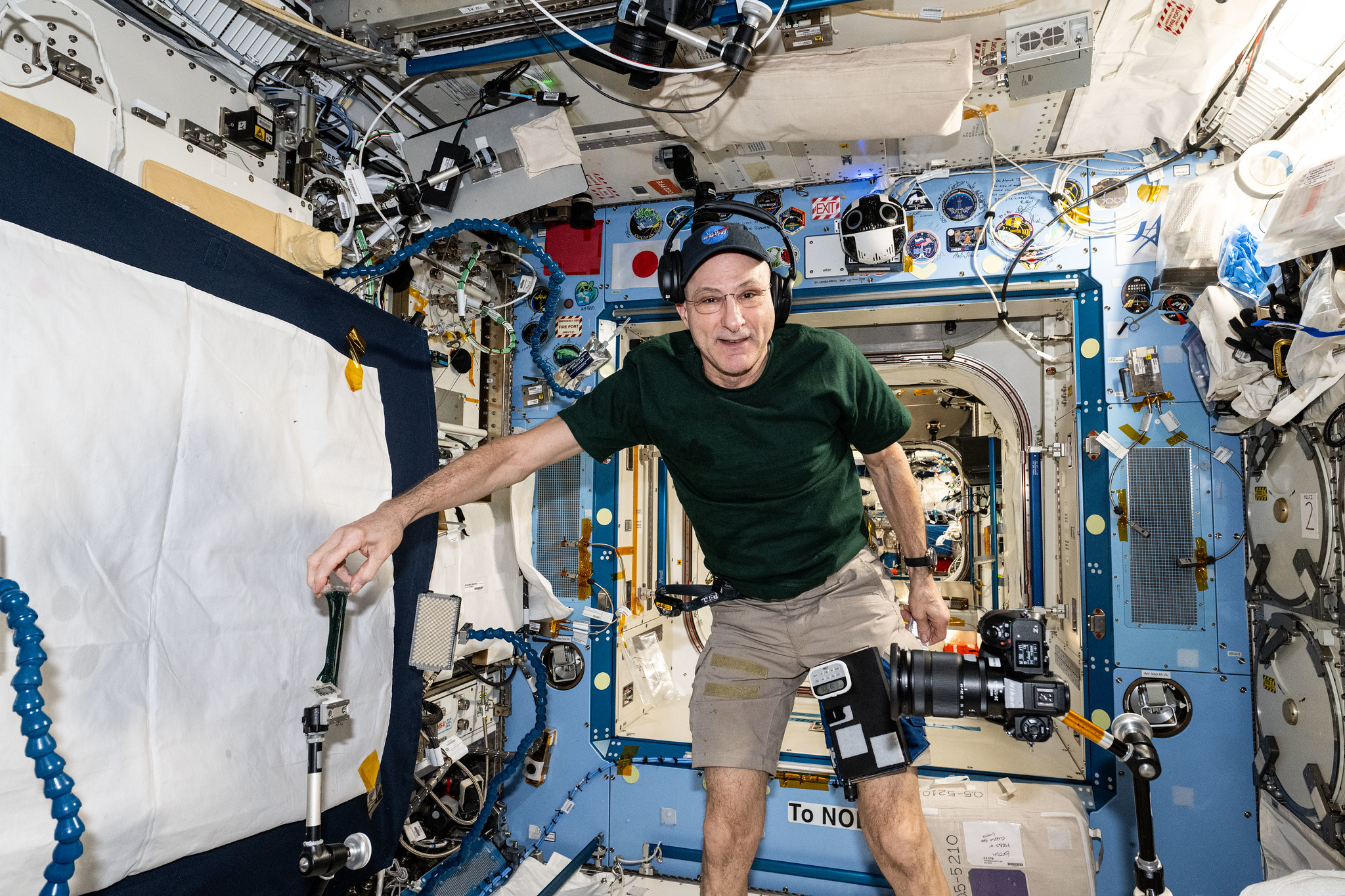
NASA astronaut and Expedition 72 Flight Engineer Don Pettit sets up camera hardware to photograph research activities inside the International Space Station’s Kibo laboratory module on March 15, 2025.
Credit: NASA
Media are invited to a news conference at 2 p.m. EDT Monday, April 28, at NASA’s Johnson Space Center in Houston where astronaut Don Pettit will share details of his recent mission aboard the International Space Station.
The news conference will stream live on NASA’s website. Learn how to stream NASA content through a variety of platforms.
To participate in person, U.S. media must contact the NASA Johnson newsroom no later than 5 p.m. Thursday, April 24, at 281-483-5111 or jsccommu@mail.nasa.gov. Media wishing to participate by phone must contact the newsroom no later than two hours before the start of the event. To ask questions by phone, media must dial into the news conference no later than 10 minutes prior to the start of the call. NASA’s media accreditation policy is available online.
Questions also may be submitted on social media during the news conference by using #AskNASA. Following the news conference, NASA will host a live question and answer session with Pettit on the agency’s Instagram. For more information, visit @NASA on social media.
Pettit returned to Earth on April 19 (April 20, Kazakhstan time), along with Roscosmos cosmonauts Alexey Ovchinin and Ivan Vagner. Pettit celebrated his 70th birthday on April 20. He spent 220 days in space as an Expedition 71/72 flight engineer, bringing his career total to 590 days in space during four spaceflights. Pettit and his crewmates completed 3,520 orbits of Earth over the course of their 93-million-mile journey. They also saw the arrival of six visiting spacecraft and the departure of seven.
During his time on orbit, Pettit conducted hundreds of hours of scientific investigations, including research to enhance on-orbit metal 3D printing capabilities, advance water sanitization technologies, explore plant growth under varying water conditions, and investigate fire behavior in microgravity, all contributing to future space missions.
He also spent time aboard the space station sharing his photography, often posting images to his X account. He took more than 670,000 photos during his stay.
Learn more about International Space Station research and operations at:
Eye on Infinity: NASA Celebrates Hubble’s 35th Year in Orbit
5 Min Read
Eye on Infinity: NASA Celebrates Hubble’s 35th Year in Orbit
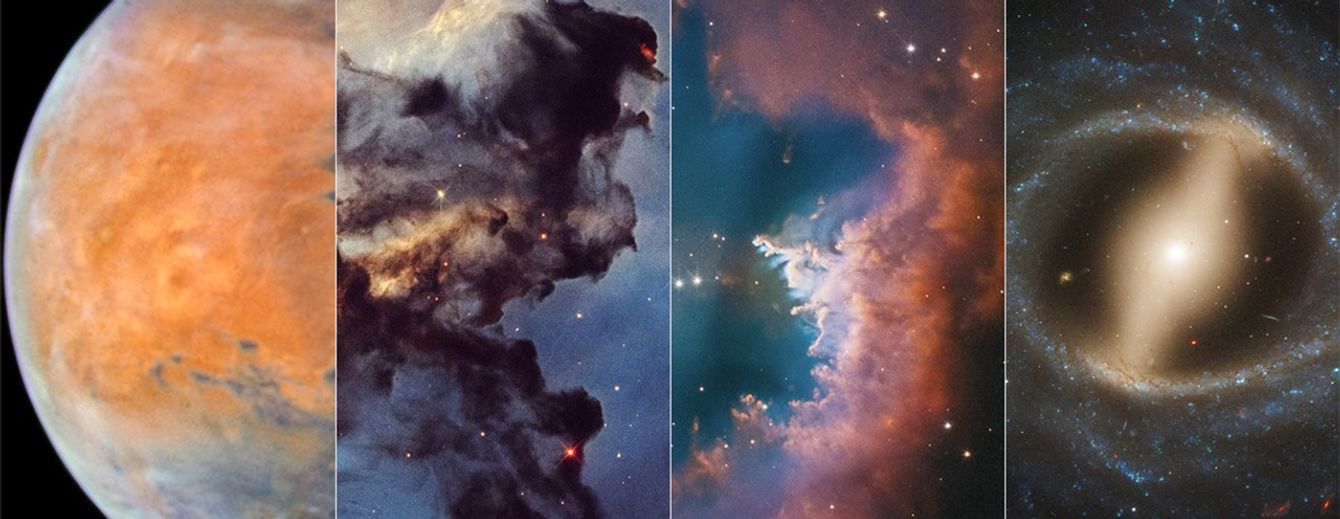
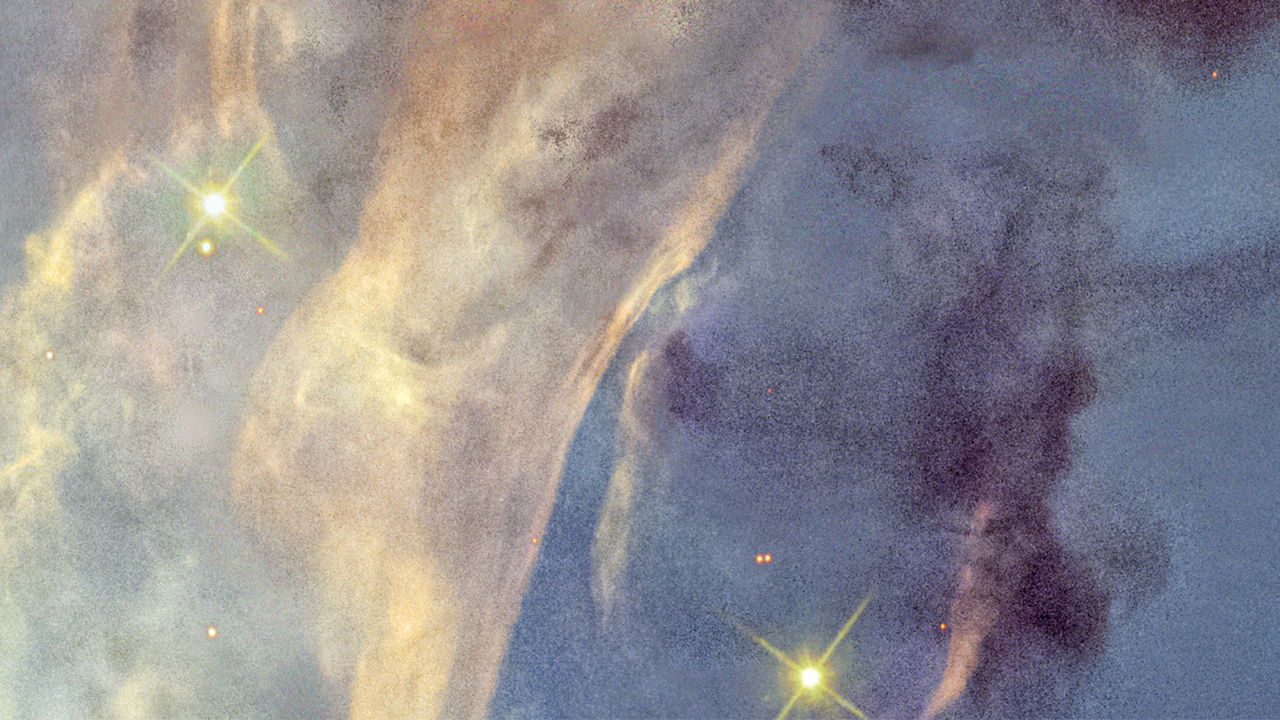
A selection of photogenic space targets to celebrate the 35th anniversary of NASA’s Hubble Space Telescope. Left to Right: Mars, a small portion of the Rosette Nebula, part of planetary nebula NGC 2899, barred spiral galaxy NGC 5335.
Credits: NASA, ESA, STScI; Image Processing: Joseph DePasquale (STScI), Alyssa Pagan (STScI)
In celebration of the Hubble Space Telescope’s 35 years in Earth orbit, NASA is releasing an assortment of compelling images recently taken by Hubble, stretching from the planet Mars to star-forming regions, and a neighboring galaxy.
After more than three decades of perusing the universe, Hubble remains a household name — the most well-recognized and scientifically productive telescope in history. The Hubble mission is a glowing success story of America’s technological prowess, unyielding scientific curiosity, and a reiteration of our nation’s pioneering spirit.
“Hubble opened a new window to the universe when it launched 35 years ago. Its stunning imagery inspired people across the globe, and the data behind those images revealed surprises about everything from early galaxies to planets in our own solar system,” said Shawn Domagal-Goldman, acting director of the Astrophysics Division at NASA Headquarters in Washington. “The fact that it is still operating today is a testament to the value of our flagship observatories, and provides critical lessons for the Habitable Worlds Observatory, which we plan to be serviceable in the spirit of Hubble.”
Perched above Earth’s blurry atmosphere, Hubble’s crystal-clear views have been nothing less than transformative for the public’s perception of the cosmos. Through its evocative imagery, Hubble has made astronomy very relevant, engaging, and accessible for people of all ages. Hubble snapshots can portray the universe as awesome, mysterious, and beautiful — and at the same time chaotic, overwhelming, and foreboding.
A selection of photogenic space targets to celebrate the 35th anniversary of NASA’s Hubble Space Telescope. Upper left: Mars. Upper right: planetary nebula NGC 2899. Lower left: a small portion of the Rosette Nebula. Lower right: barred spiral galaxy NGC 5335.
Image: NASA, ESA, STScI; Image Processing: Joseph DePasquale (STScI), Alyssa Pagan (STScI)
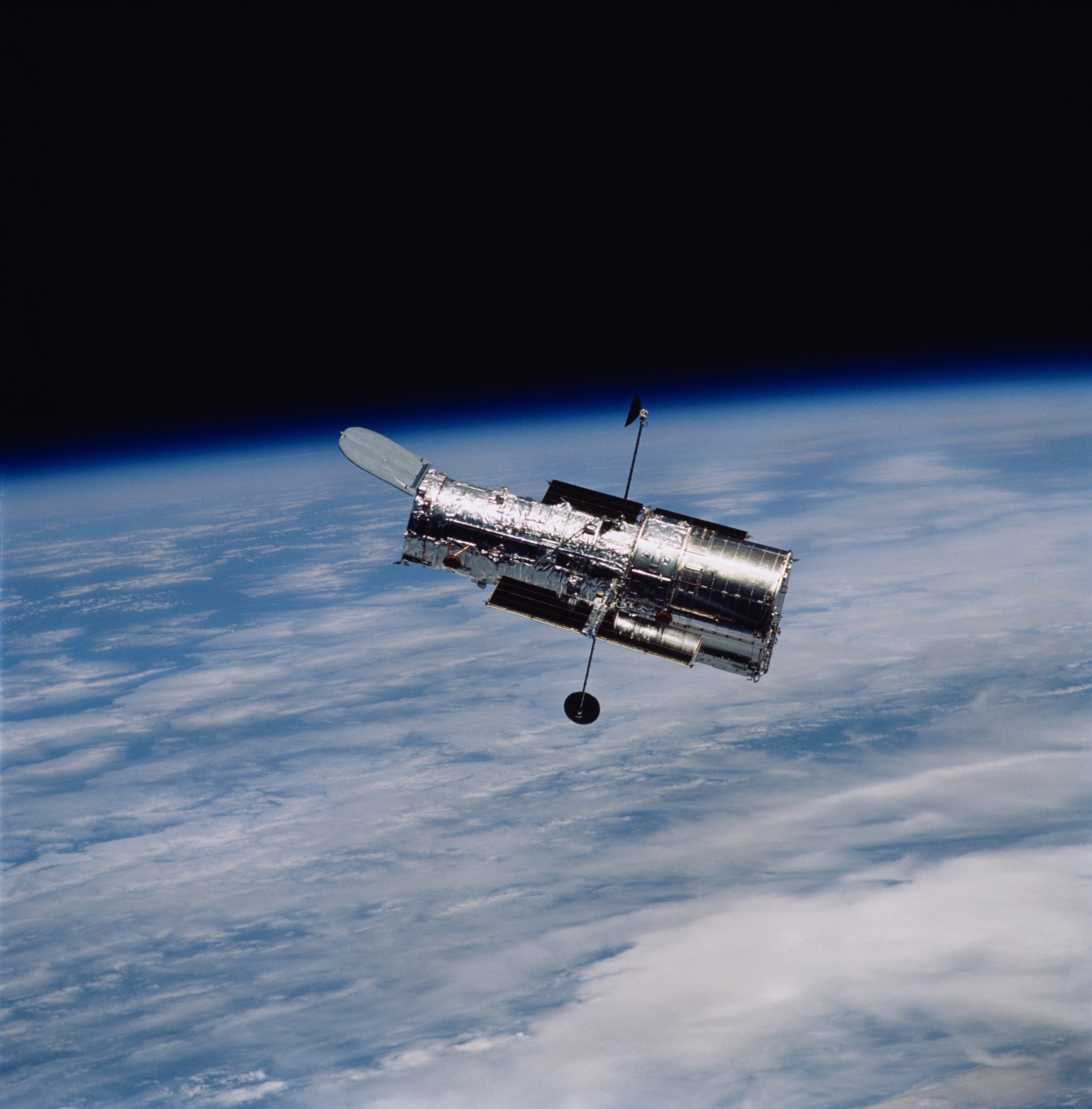
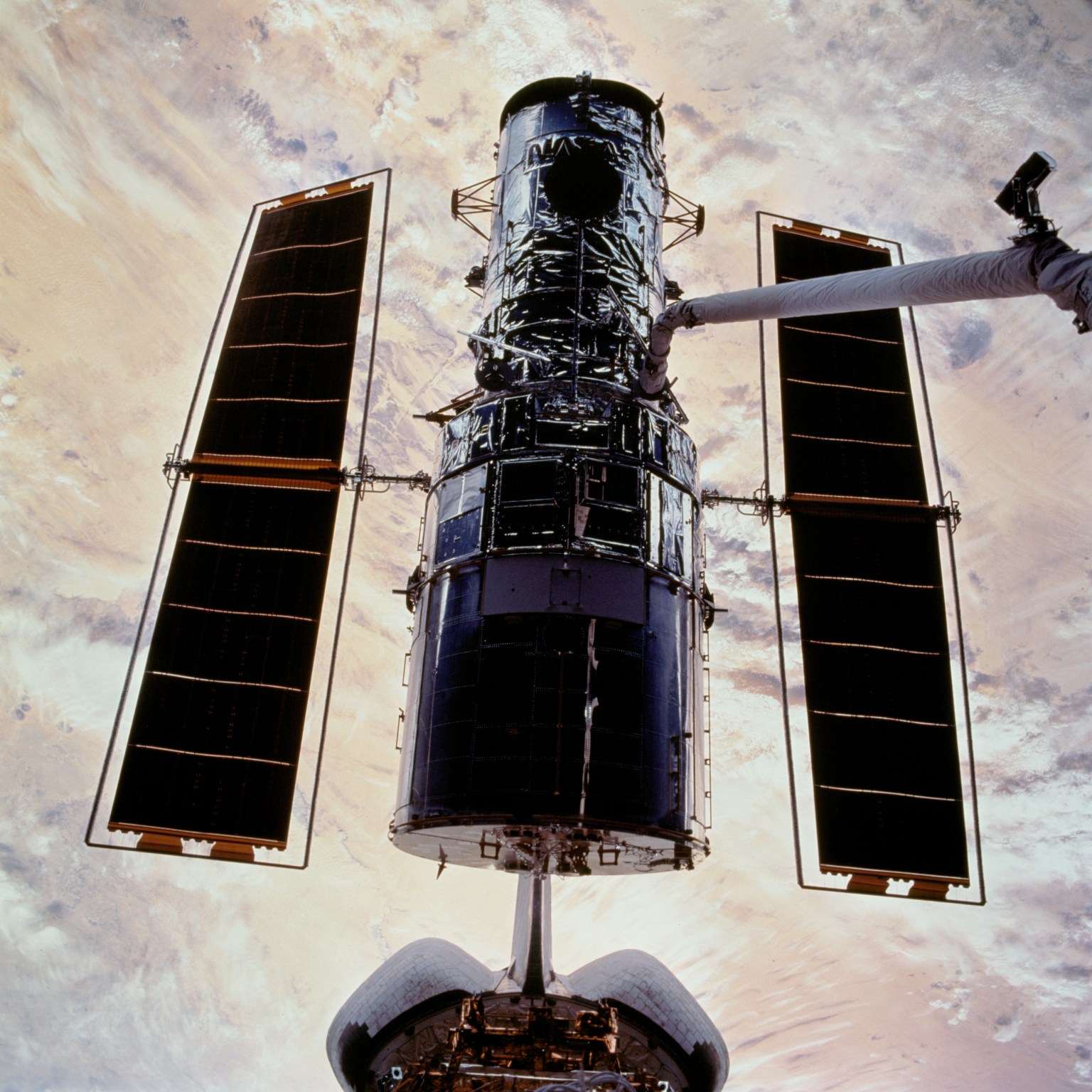
The 24,000-pound observatory was tucked away inside the space shuttle Discovery’s cargo bay and lofted into low Earth orbit on April 24, 1990. As the shuttle Discovery thundered skyward, the NASA commentator described Hubble as a “new window on the universe.” The telescope turned out to be exactly as promised, and more.
More scientific papers than ever are based on Hubble data, thanks to the dedication, perseverance, and skills of engineers, scientists, and mission operators. Astronauts chased and rendezvoused with Hubble on five servicing missions in which they upgraded Hubble’s cameras, computers, and other support systems. The servicing missions took place from 1993 to 2009.
The telescope’s mission got off to a shaky start in 1990 when an unexpected flaw was found in the observatory’s nearly eight-foot diameter primary mirror. Astronauts gallantly came to the rescue on the first shuttle servicing mission in December 1993 to improve Hubble’s sharpness with corrective optics.
To date, Hubble has made nearly 1.7 million observations, looking at approximately 55,000 astronomical targets. Hubble discoveries have resulted in over 22,000 papers and over 1.3 million citations as of February 2025. All the data collected by Hubble is archived and currently adds up to over 400 terabytes, representing the biggest dataset for a NASA astrophysics mission besides the James Webb Space Telescope.
Hubble’s Senior Project Scientist, Dr. Jennifer Wiseman, takes you on a tour of all four Hubble 35th anniversary images. Credit: NASA’s Goddard Space Flight Center; Lead Producer: Paul Morris; Narrator: Dr. Jennifer Wiseman
Before 1990, powerful optical telescopes on Earth could see only halfway across the cosmos. Estimates for the age of the universe disagreed by a big margin. Supermassive black holes were only suspected to be the powerhouses behind a rare zoo of energetic phenomena. Not a single planet had been seen around another star.
The relentless pace of Hubble’s trailblazing discoveries kick-started a new generation of space telescopes for the 21st century. Hubble provided the first observational evidence that there were myriad distant galaxies for Webb to pursue in infrared wavelengths that reach even farther beyond Hubble’s gaze. Now, Hubble and Webb are often being used in complement to study everything from exoplanets to galaxy evolution.
Hubble’s planned successor, the Habitable Worlds Observatory, will have a significantly larger mirror than Hubble’s to study the universe in visible and ultraviolet light. It will be significantly sharper than Hubble and up to 100 times more sensitive to starlight. The Habitable Worlds Observatory will advance science across all of astrophysics, as Hubble has done for over three decades. A major goal of the future mission is to identify terrestrial planets around neighboring stars that might be habitable.
The Hubble Space Telescope continues to make ground-breaking discoveries that shape our fundamental understanding of the universe. Hubble is a project of international cooperation between NASA and ESA (European Space Agency). NASA’s Goddard Space Flight Center in Greenbelt, Maryland, manages the telescope and mission operations. Lockheed Martin Space, based in Denver, also supports mission operations at Goddard. The Space Telescope Science Institute in Baltimore, which is operated by the Association of Universities for Research in Astronomy, conducts Hubble science operations for NASA.
A selection of photogenic space targets to celebrate the 35th anniversary of NASA’s Hubble Space Telescope. Upper left: Mars. Upper right: planetary nebula NGC 2899. Lower left: a small portion of the Rosette Nebula. Lower right: barred spiral galaxy NGC 5335.
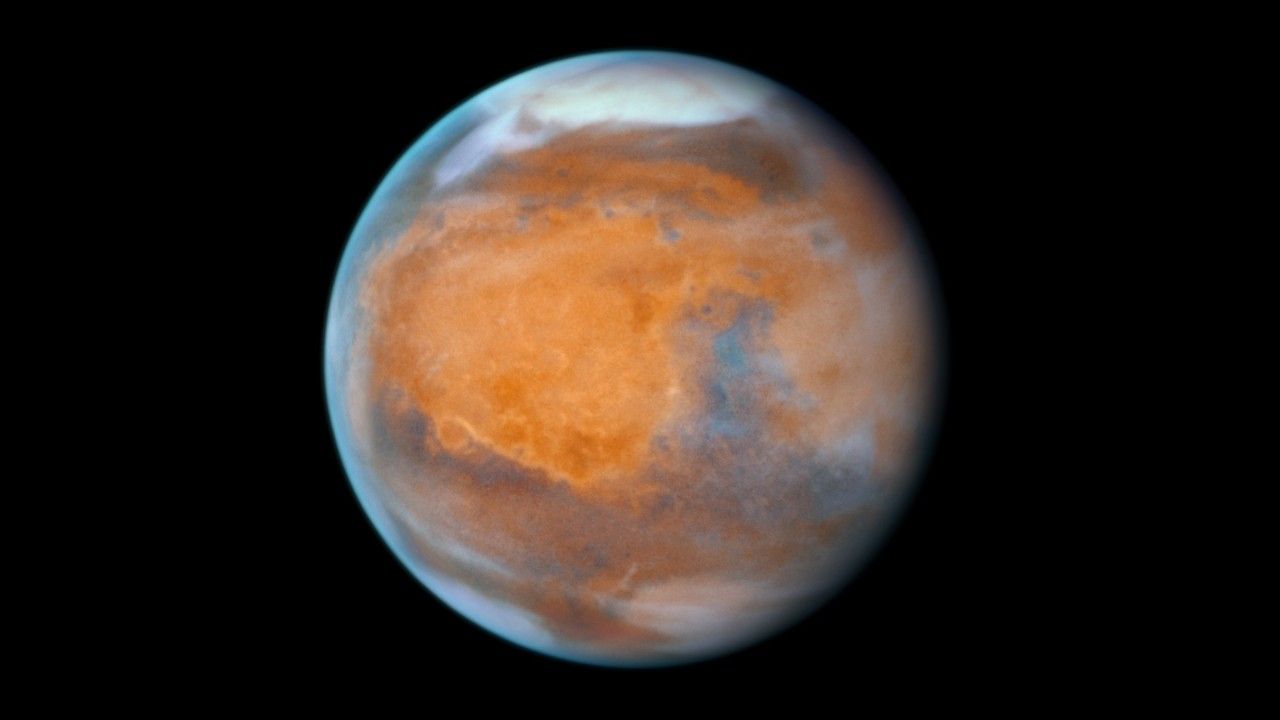
Mars Near Opposition 2024
This is a combination of Hubble Space Telescope images of Mars taken from December 28th to 30th, 2024. Mars was approximately 61 million miles from Earth. Thin water-ice clouds that are apparent in ultraviolet light give the Red Planet a frosty appearance.
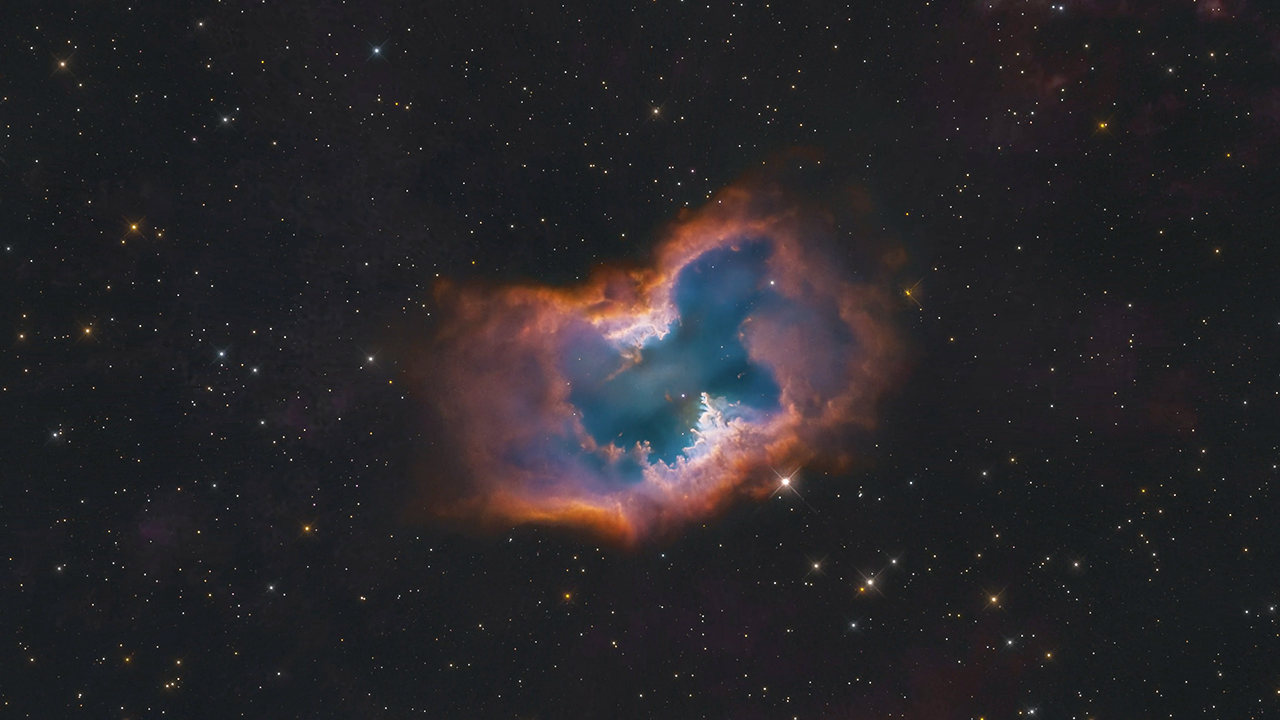
Planetary Nebula NGC 2899
This Hubble Space Telescope image captures the beauty of the moth-like planetary nebula NGC 2899. This object has a diagonal, bipolar, cylindrical outflow of gas propelled by radiation and stellar winds. The colors are from glowing hydrogen and oxygen.
Dark Clouds in Rosette Nebula
This is a Hubble Space Telescope photo of a small portion of the Rosette Nebula, a huge star-forming region spanning 100 light-years across and located 5,200 light-years away. Dark clouds of hydrogen gas laced with dust are silhouetted across the image.
Rosette Nebula Context Image
The Rosette Nebula is a vast star-forming region, 100 light-years across, that lies at one end of a giant molecular cloud. The background image is from the Digitized Sky Survey, while the inset is a small portion of the nebula as photographed by the Hubble Space Telescope.
NGC 5335
NASA’s Hubble Space Telescope captured in exquisite detail a face-on view of a remarkable-looking galaxy. NGC 5335 is categorized as a flocculent spiral galaxy with patchy streamers of star formation across its disk.
Mars Near Opposition Compass Image
These two images of Mars and its moon Phobos were captured by the Hubble Space Telescope’s Wide Field Camera 3 (WFC3) on consecutive days in December 2024. Compass arrows and a color key are provided for reference.
Planetary Nebula NGC 2899 Compass Image
This image of planetary nebula NGC 2899 was captured by the Hubble Space Telescope’s Wide Field Camera 3 (WFC3). The image shows a scale bar, compass arrows, and color key for reference.
Dark Clouds in Rosette Nebula Compass Image
This image of dark clouds in the Rosette Nebula was captured by the Hubble Space Telescope’s Wide Field Camera 3 (WFC3). The image shows a scale bar, compass arrows, and color key for reference.
NGC 5335 Compass Image
This image of barred spiral galaxy NGC 5335 was captured by the Hubble Space Telescope’s Wide Field Camera 3 (WFC3). The image shows a scale bar, compass arrows, and color key for reference.
Mars Rotation
This animation was assembled from a combination of Hubble Space Telescope images of Mars taken from December 28th to 30th, 2024. At the midpoint of the Hubble observations, Mars was approximately 61 million miles from Earth. The photos were then mapped onto a sphere, which is the…
Planetary Nebula NGC 2899
This video zooms across 6,500 light-years through a star-studding field to visit the planetary nebula NGC 2899, as photographed by the Hubble Space Telescope. The nebula has a diagonal bipolar structure formed by a cylindrical-shaped outflow of hot gasses and radiation from the c…
Rosette Nebula
This video offers a close-up look at a small portion of the magnificent Rosette Nebula, as photographed by the Hubble Space Telescope. Though Hubble cannot take three-dimensional pictures, this video is a visualization treatment of the photo to give a sense of depth with foregrou…
NASA Stennis Continues Prep for Future Artemis Testing
2 min read
Preparations for Next Moonwalk Simulations Underway (and Underwater)
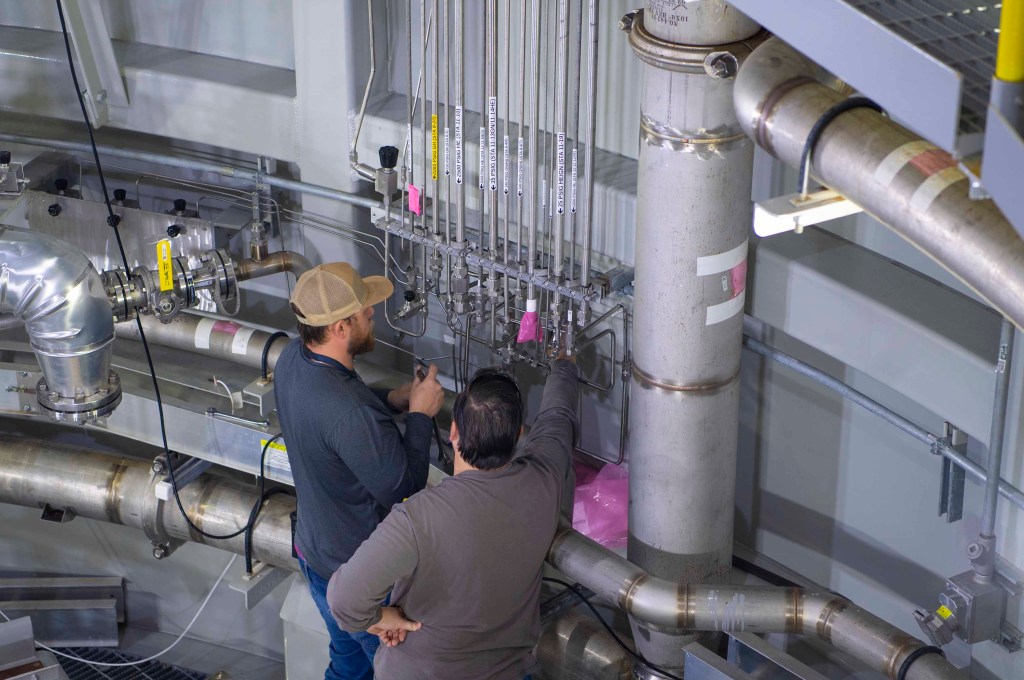
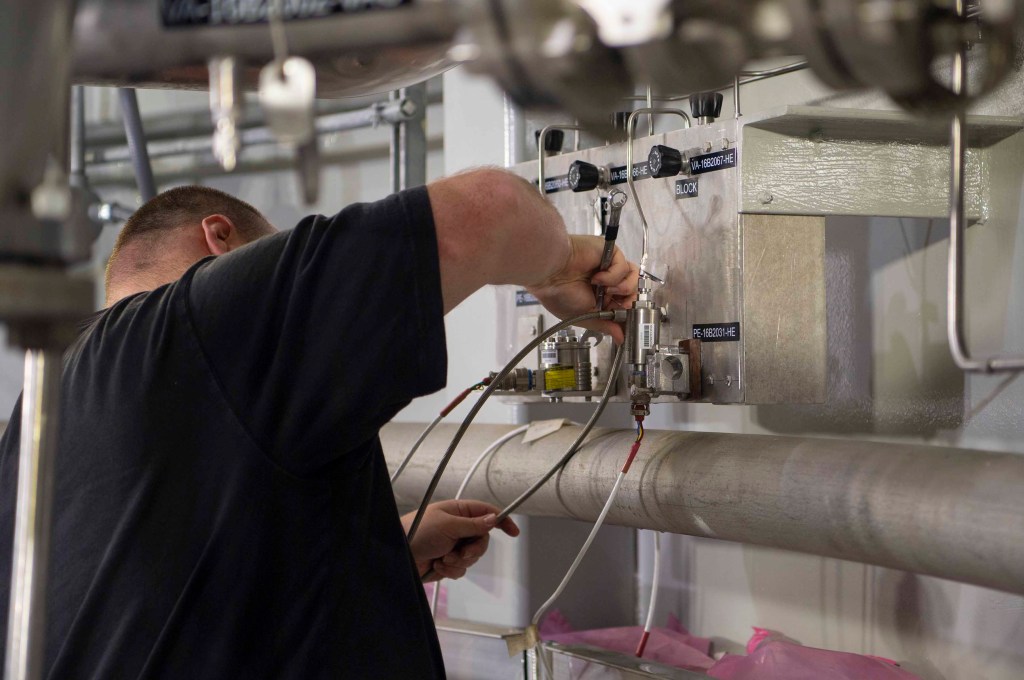
Syncom Space Services employees Kenneth Shipman, left, and Jesse Yarbrough perform final tubing install in early March to prepare the interstage simulator gas system on the Thad Cochran Test Stand at NASA’s Stennis Space Center for leak checks. Leak checks were performed prior to activation of the gas system this month. The activation marks a milestone in preparation for future Green Run testing of NASA’s exploration upper stage (EUS) in the B-2 position of the Thad Cochran Test Stand.
NASA/Danny Nowlin
Syncom Space Services employees Branson Cuevas, left, Kenneth Shipman, and Jesse Yarbrough install final tubing in early March before activation of the interstage simulator gas systems on the Thad Cochran Test Stand at NASA’s Stennis Space Center. The activation marks a milestone in preparation for future Green Run testing of NASA’s exploration upper stage (EUS) in the B-2 position of the stand.
NASA/Danny Nowlin
Crews at NASA’s Stennis Space Center recently completed activation of interstage gas systems needed for testing a new SLS (Space Launch System) rocket stage to fly on future Artemis missions to the Moon and beyond.
The activation marks a milestone in preparation for future Green Run testing of NASA’s exploration upper stage (EUS) in the B-2 position of the Thad Cochran Test Stand. For Green Run, teams will activate and test all systems to ensure the stage is ready to fly. Green Run will culminate with a hot fire of the stage’s four RL10 engines, just as during an actual mission.
The interstage simulator component will function like the SLS interstage section that protects the upper stage during Artemis launches. The interstage simulator will do the same during Green Run testing of the stage at NASA Stennis.
The interstage simulator gas system will provide helium, nitrogen, and hydrogen to the four RL10 engines for all wet dress and hot fire exercises and tests.
During the activation process, NASA Stennis crews simulated the engines and flowed gases to mirror various conditions and collect data on pressures and temperatures. NASA Stennis teams conducted 80 different flow cases, calculating such items as flow rates, system pressure drop, and fill/vent times. The calculated parameters then were compared to models and analytics to certify the gas system meets performance requirements.
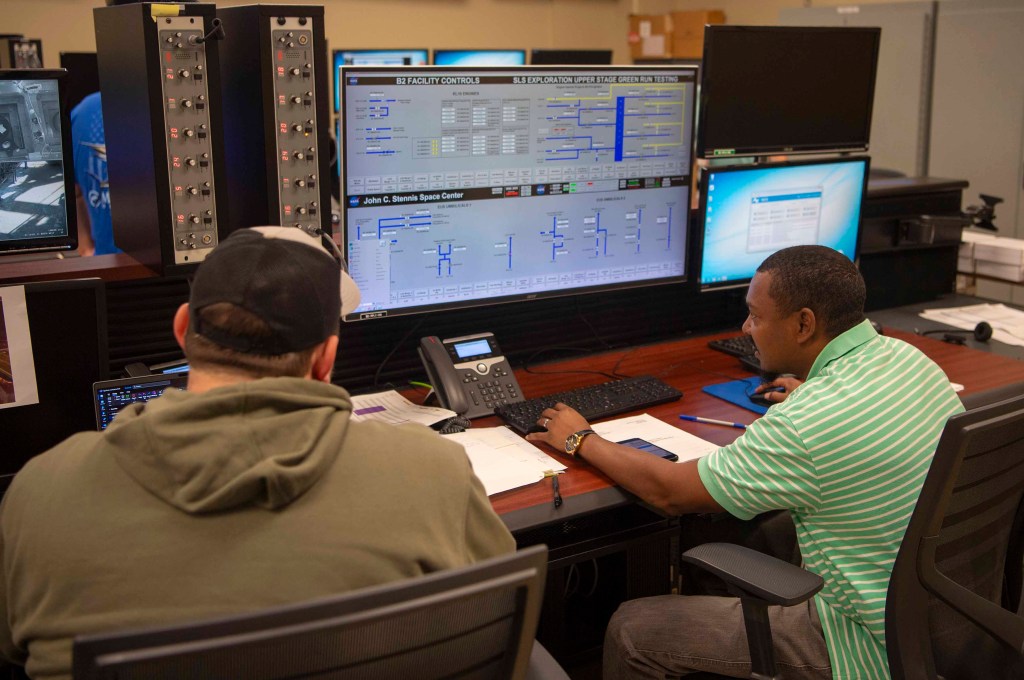
NASA engineers Chad Tournillon, left, and Robert Smith verify the functionality of the control system in early March for activation of the interstage simulator gas systems on the Thad Cochran Test Stand at NASA’s Stennis Space Center. The activation marks a milestone in preparation for future Green Run testing of NASA’s exploration upper stage (EUS) in the B-2 position of the stand.
NASA/Danny Nowlin
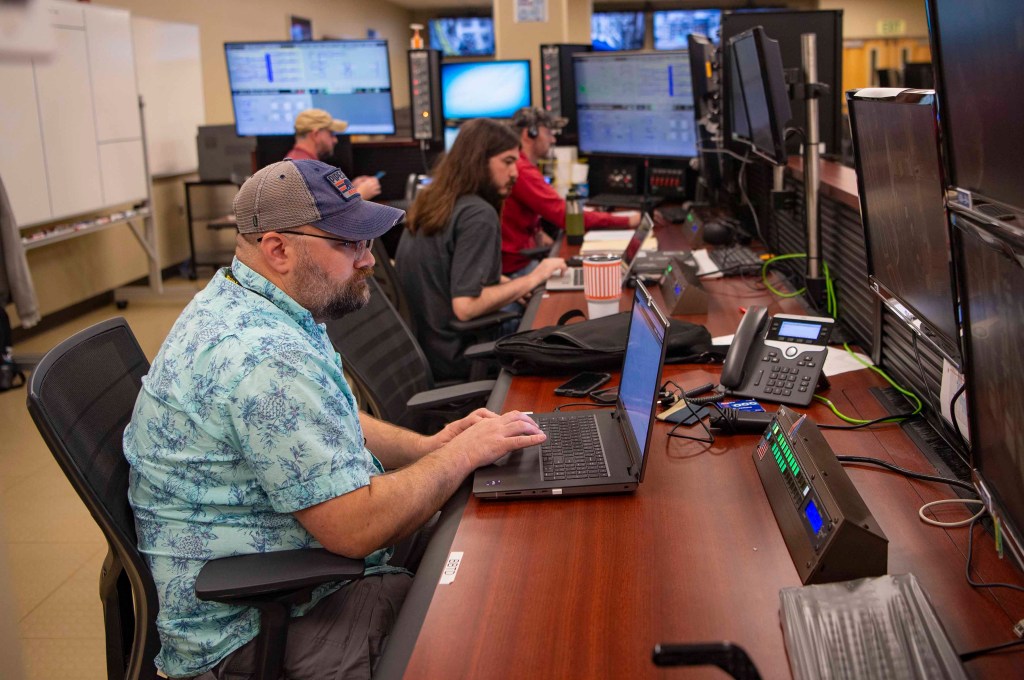
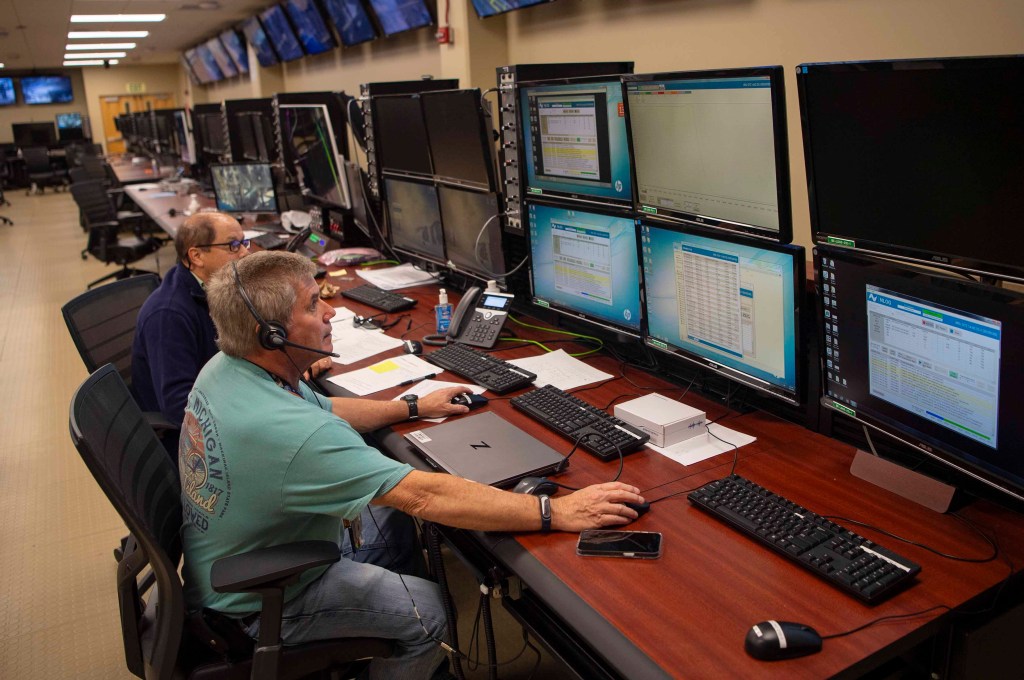
Members of the engineering and operations team review data as it is collected in early March during activation of the interstage simulator gas systems on the Thad Cochran Test Stand at NASA’s Stennis Space Center. Pictured are NASA’s Mark Robinson, Robert Simmers, Jack Conley, and Nick Nugent. Activation of the gas systems marks a milestone in preparation for future Green Run testing of NASA’s exploration upper stage (EUS) in the B-2 position of the Thad Cochran Test Stand.
NASA/Danny Nowlin
NASA engineers Pablo Gomez, left, and B.T. Wigley collect data in early March during activation of the interstage simulator gas systems on the Thad Cochran Test Stand at NASA’s Stennis Space Center. The activation marks a milestone in preparation for future Green Run testing of NASA’s exploration upper stage (EUS) in the B-2 position of the NASA Stennis stand.
NASA/Danny Nowlin
Syncom Space Services employees Brandon Fleming, Robert Sheaffer, and Logan Upton review paperwork in early March prior to activation of the interstage simulator gas systems on the Thad Cochran Test Stand at NASA’s Stennis Space Center. The activation marks a milestone in preparation for future Green Run testing of NASA’s exploration upper stage (EUS) in the B-2 position of the stand.
NASA/Danny Nowlin
Syncom Space Services engineering tech Brandon Fleming tightens a pressure transducer on the Thad Cochran Test Stand at NASA’s Stennis Space Center in early March. Various transducers were used to provide data during subsequent activation of the interstage simulator gas systems at the stand. The activation marks a milestone in preparation for future Green Run testing of NASA’s exploration upper stage (EUS) in the B-2 position of the Thad Cochran Test Stand.
NASA/Danny Nowlin
Crews now will work to activate the umbilical gases and liquid oxygen systems. The NASA Stennis team will then conduct water system activation, where it will flow the flame deflector, aspirator, diffuser cooling circuits, purge rings and water-cooled fairing.
Afterward, the team will deploy the FireX system to check for total coverage, expected to be completed in the summer.
Before the exploration upper stage, built by Boeing at NASA’s Michoud Assembly Facility in New Orleans, arrives at NASA Stennis, crews will perform a final 24-hour check, or stress test, across all test complex facilities to demonstrate readiness for the test series.
Nine Finalists Advance in NASA’s Power to Explore Challenge
3 min read
Nine Finalists Advance in NASA’s Power to Explore Challenge
The logo for the 2024-2025 Radioisotope Power Systems Power to Explore student essay contest.
Credits: NASA/David Lam
NASA has named nine finalists out of the 45 semifinalist student essays in the Power to Explore Challenge, a national writing competition for K-12 students featuring the enabling power of radioisotopes. Contestants were challenged to explore how NASA has powered some of its most famous science missions, and to dream up how their personal “superpowers” would energize their success on their own radioisotope-powered science mission.
I am always so impressed by quality of the essays and the creativity of the ideas that the students submit to NASA’s Power to Explore Challenge.
Carl Sandifer II
Program Manager, NASA Radioisotope Power Systems Program
The competition asked students to learn about NASA’s radioisotope power systems (RPS), likened to a “nuclear battery” that the agency uses to explore some of the most extreme destinations in our solar system and beyond. Long before the early days of Apollo, our Moon has inspired explorers of all ages to push beyond known limits to realize impossible dreams. These systems have enabled NASA to discover “moonquakes” on Earth’s Moon and study some of the most extreme moons of the solar system, which have active volcanoes, methane lakes, and ice glaciers. As of March 25, NASA has discovered over 891 moons, each with secrets ready to be unlocked.
Students were challenged to pick any moon in our solar system’s exploration could be enabled by this space power systems. In 275 words or less, they dreamed up a unique exploration mission of this moon and described their own power to achieve their mission goals.
The Power to Explore Challenge offered students the opportunity to learn more about these reliable power systems, celebrate their own strengths, and interact with NASA’s diverse workforce. This year’s contest received 2,051 submitted entries from all 50 states, U.S. territories, and the Department of Defense Education Activity overseas.
“I am always so impressed by quality of the essays and the creativity of the ideas that the students submit to NASA’s Power to Explore Challenge.” said Carl Sandifer, program manager of the Radioisotope Power Systems Program at NASA’s Glenn Research Center in Cleveland. “I’m looking forward to welcoming the winners to NASA’s Glenn this summer.”
Entries were split into three categories: grades K-4, 5-8, and 9-12. Every student who submitted an entry received a digital certificate and an invitation to the Power Up virtual event held on March 21 that announced the semifinalists. Students learned about what powers the NASA workforce to dream big and work together to explore.
Three national finalists in each grade category (nine finalists total) have been selected. In addition to receiving a NASA RPS prize pack, these participants will be invited to an exclusive virtual meeting with a NASA engineer or scientist to talk about their missions and have their space exploration questions answered. Winners will be announced on May 7.
Grades K-4
Mini M, Ann Arbor, Michigan
Zachary Tolchin, Guilford, Connecticut
Terry Xu, Arcadia, California
Grades 5-8
Lilah Coyan, Spokane, Washington
Maggie Hou, Snohomish, Washington
Sarabhesh Saravanakumar, Bothell, Washington
Grades 9-12
Faiz Karim, Jericho, New York
Kairat Otorov, Trumbull, Connecticut
Saanvi Shah, Bothell, Washington
About the Challenge
The challenge is funded by the Radioisotope Power Systems Program Office in NASA’s Science Mission Directorate and administered by Future Engineers under a Small Business Innovation Research phase III contract. This task is managed by the NASA Tournament Lab, a part of the Prizes, Challenges, and Crowdsourcing Program in NASA’s Space Technology Mission Directorate.
NASA Wins Six Webby Awards, Six Webby People’s Voice Awards
2 min read
Preparations for Next Moonwalk Simulations Underway (and Underwater)
NASA was recognized today by the 29th Annual Webby Awards with six Webby Awards and six Webby People’s Voice Awards, the latter of which are awarded by the voting public. The Webbys honors excellence in eight major media types: websites and mobile sites; video and film; advertising, media and public relations; apps and software; social; podcasts; artificial intelligence, immersive and games; and creators.
NASA has always been at the forefront of innovation, and that extends to our digital presence. These Webby Awards recognize the dedication and creativity of our teams in bringing the excitement of space exploration to a global audience. We’re proud to be leaders in this digital frontier.
Michelle R. Jones
Deputy Associate Administrator for Communications
Since 1998, NASA has been nominated for more than 100 Webby Awards, winning 49 Webbys and 67 People’s Voice Awards.
Full List of NASA’s 29th Annual Webby Award Wins
NASA.gov Webby Winner, People’s Voice Winner Websites and Mobile Sites | Government and Associations This is the sixth Webby Award and the 13th People’s Voice Award for the agency’s website
NASA Instagram Webby Winner Social | Education and Science
NASA+ Webby Winner, People’s Voice Winner Websites and Mobile Sites | Television, Film and Streaming
Established in 1996 during the web’s infancy, The Webbys is presented by the IADAS—a 3000+ member judging body. The Academy is comprised of Executive Members—leading Internet experts, business figures, luminaries, visionaries, and creative celebrities—and associate members who are former Webby winners, nominees and other internet professionals.
The Webby Awards presents two honors in every category—the Webby Award and the Webby People’s Voice Award. Members of the International Academy of Digital Arts and Sciences (IADAS) select the nominees for both awards in each category, as well as the winners of the Webby Awards. In the spirit of the open web, the Webby People’s Voice is chosen by the voting public, and garners millions of votes from all over the world.