Get My Good Side

Get My Good Side

A bird looks directly into the camera. The bird's head is red on top and white on the bottom. Its eyes are orange-brown. The blue sky makes up the backdrop of this photo. Part of the Vehicle Assembly Building, a rectangular building with a NASA meatball and a US flag on it, can be seen behind the bird.
NASA/Ben Smegelsky

A NASA photographer took this portrait of a curious sandhill crane on March 24, 2021, near the Vehicle Assembly Building at NASA’s Kennedy Space Center in Florida. Sandhill cranes are just one of the hundreds of types of birds that call the Merritt Island National Wildlife Refuge, which shares space with NASA Kennedy, their home.

See more photos of birds at NASA Kennedy.

Image credit: NASA/Ben Smegelsky

Powered by WPeMatico

Get The Details…
Monika Luabeya

Black Holes Can Cook for Themselves, Chandra Study Shows

Black Holes Can Cook for Themselves, Chandra Study Shows

Astronomers have taken a crucial step in showing that the most massive black holes in the universe can create their own meals. Using X-ray data from Chandra and optical light data, this study, based on observations of seven galaxy clusters in total, provides new evidence that outbursts from black holes can cool down gas to feed themselves. Massive galaxies at the centers of the clusters contain huge black holes that power outbursts in the form of jets, driven by the black holes feasting on gas. These images show the X-ray and optical data of the Perseus and Centaurus clusters from the survey.
Perseus Cluster: X-ray: NASA/CXC/SAO/V. Olivares et al.; Optical/IR: DSS; H-alpha: CFHT/SITELLE; Centaurus Cluster: X-ray: NASA/CXC/SAO/V. Olivaresi et al.; Optical/IR: NASA/ESA/STScI; H-alpha: ESO/VLT/MUSE; Image Processing: NASA/CXC/SAO/N. Wolk

Astronomers have taken a crucial step in showing that the most massive black holes in the universe can create their own meals. Data from NASA’s Chandra X-ray Observatory and the Very Large Telescope (VLT) provide new evidence that outbursts from black holes can help cool down gas to feed themselves.

This study was based on observations of seven clusters of galaxies. The centers of galaxy clusters contain the universe’s most massive galaxies, which harbor huge black holes with masses ranging from millions to tens of billions of times that of the Sun. Jets from these black holes are driven by the black holes feasting on gas.

These images show two of the galaxy clusters in the study, the Perseus Cluster and the Centaurus Cluster. Chandra data represented in blue reveals X-rays from filaments of hot gas, and data from the VLT, an optical telescope in Chile, shows cooler filaments in red.

The results support a model where outbursts from the black holes trigger hot gas to cool and form narrow filaments of warm gas. Turbulence in the gas also plays an important role in this triggering process.

According to this model, some of the warm gas in these filaments should then flow into the centers of the galaxies to feed the black holes, causing an outburst. The outburst causes more gas to cool and feed the black holes, leading to further outbursts.

This model predicts there will be a relationship between the brightness of filaments of hot and warm gas in the centers of galaxy clusters. More specifically, in regions where the hot gas is brighter, the warm gas should also be brighter. The team of astronomers has, for the first time, discovered such a relationship, giving critical support for the model.

This result also provides new understanding of these gas-filled filaments, which are important not just for feeding black holes but also for causing new stars to form. This advance was made possible by an innovative technique that isolates the hot filaments in the Chandra X-ray data from other structures, including large cavities in the hot gas created by the black hole’s jets.

The newly found relationship for these filaments shows remarkable similarity to the one found in the tails of jellyfish galaxies, which have had gas stripped away from them as they travel through surrounding gas, forming long tails. This similarity reveals an unexpected cosmic connection between the two objects and implies a similar process is occurring in these objects.

This work was led by Valeria Olivares from the University of Santiago de Chile, and was published Monday in Nature Astronomy. The study brought together international experts in optical and X-ray observations and simulations from the United States, Chile, Australia, Canada, and Italy. The work relied on the capabilities of the MUSE (Multi Unit Spectroscopic Explorer) instrument on the VLT, which generates 3D views of the universe.

NASA’s Marshall Space Flight Center in Huntsville, Alabama, manages the Chandra program. The Smithsonian Astrophysical Observatory’s Chandra X-ray Center controls science operations from Cambridge, Massachusetts, and flight operations from Burlington, Massachusetts.

Read more from NASA’s Chandra X-ray Observatory.

Learn more about the Chandra X-ray Observatory and its mission here:

https://www.nasa.gov/chandra

https://chandra.si.edu

Visual Description

This release features composite images shown side-by-side of two different galaxy clusters, each with a central black hole surrounded by patches and filaments of gas. The galaxy clusters, known as Perseus and Centaurus, are two of seven galaxy clusters observed as part of an international study led by the University of Santiago de Chile.

In each image, a patch of purple with neon pink veins floats in the blackness of space, surrounded by flecks of light. At the center of each patch is a glowing, bright white dot. The bright white dots are black holes. The purple patches represent hot X-ray gas, and the neon pink veins represent filaments of warm gas. According to the model published in the study, jets from the black holes impact the hot X-ray gas. This gas cools into warm filaments, with some warm gas flowing back into the black hole. The return flow of warm gas causes jets to again cool the hot gas, triggering the cycle once again.

While the images of the two galaxy clusters are broadly similar, there are significant visual differences. In the image of the Perseus Cluster on the left, the surrounding flecks of light are larger and brighter, making the individual galaxies they represent easier to discern. Here, the purple gas has a blue tint, and the hot pink filaments appear solid, as if rendered with quivering strokes of a paintbrush. In the image of the Centaurus Cluster on the right, the purple gas appears softer, with a more diffuse quality. The filaments are rendered in more detail, with feathery edges, and gradation in color ranging from pale pink to neon red.

News Media Contact

Megan Watzke
Chandra X-ray Center
Cambridge, Mass.
617-496-7998
mwatzke@cfa.harvard.edu

Lane Figueroa
Marshall Space Flight Center, Huntsville, Alabama
256-544-0034
lane.e.figueroa@nasa.gov

Powered by WPeMatico

Get The Details…
Lee Mohon

NASA Invites Media to Pre-Super Bowl Tours at New Orleans Facility

NASA Invites Media to Pre-Super Bowl Tours at New Orleans Facility

NASA’s Michoud Assembly Facility in New Orleans, includes 43 acres of manufacturing space under one roof — a space large enough to contain more than 31 professional football fields. Credit: NASA

Media are invited to visit NASA’s Michoud Assembly Facility in New Orleans between Tuesday, Feb. 4, and Thursday, Feb. 6, ahead of Super Bowl LIX for an inside look at America’s rocket factory, as well as interview agency experts.

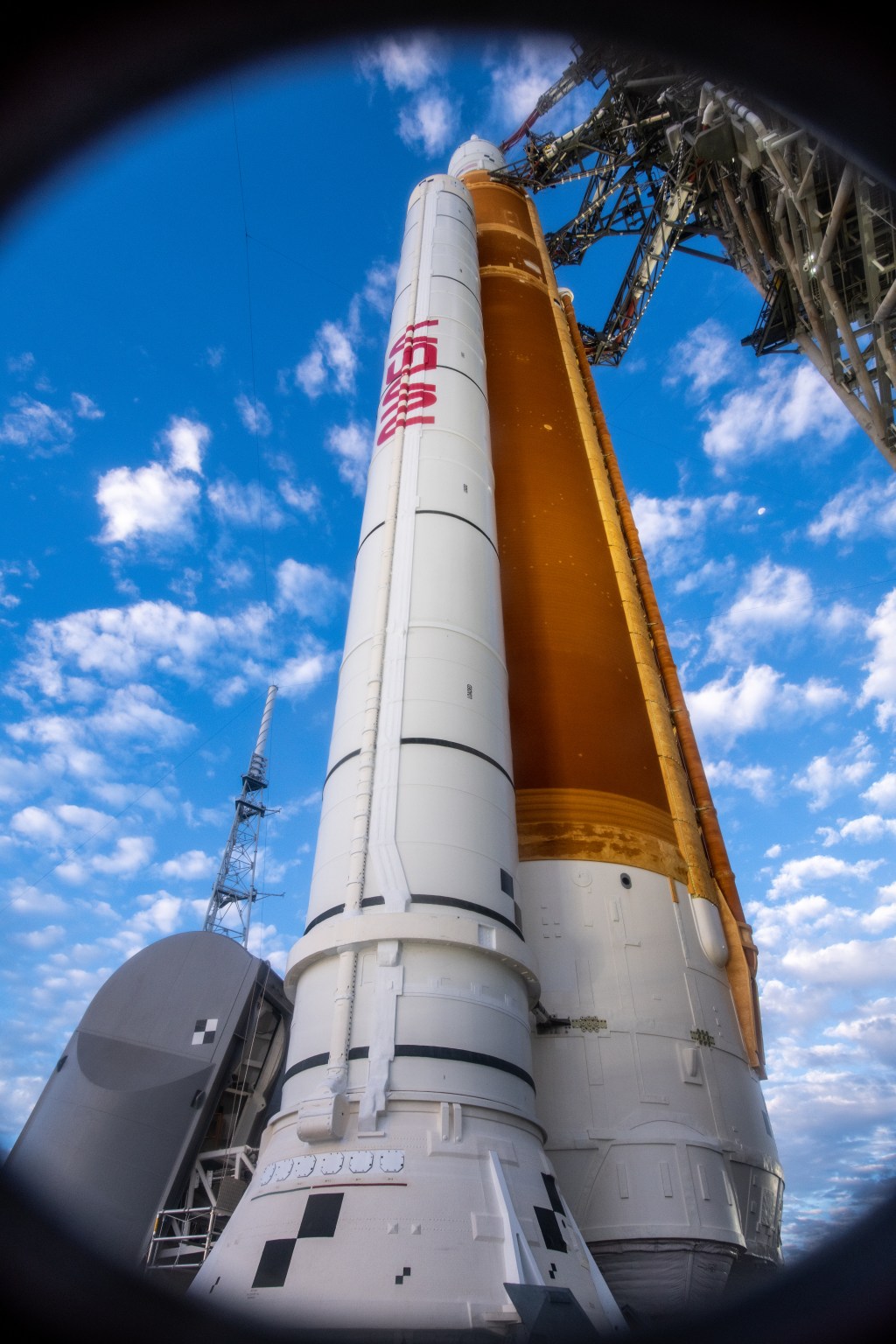
During this behind-the-scenes visit, media will tour NASA’s location for the manufacturing and production of large-scale space structures and see hardware that will carry astronauts back to the Moon as part of the Artemis campaign.

Registered members of the media will have the opportunity to:

  • Capture images and video of hardware NASA Michoud is building for the SLS (Space Launch System) rocket, Orion spacecraft, and SLS exploration upper stage for the agency’s Artemis campaign.
  • Tour special locations around NASA Michoud, one of the largest facilities in the world, with 43 acres of manufacturing space under one roof — a space large enough to contain more than 31 professional football fields.
  • Learn about NASA’s state-of-the-art manufacturing and welding equipment — including the world’s largest friction-stir welding tool.

Media must RSVP no later than 6 p.m. EST, Thursday, Jan. 30, to Jonathan Deal at: jonathan.e.deal@nasa.gov and Craig Betbeze at: craig.c.betbeze@nasa.gov. Please indicate a preferred date to visit between Feb. 4 and Feb. 6. This event is open to U.S. media. NASA’s media accreditation policy is available online.

Through Artemis, NASA will send astronauts to explore the Moon for scientific discovery, economic benefits, and to build the foundation for the first crewed missions to Mars.

Learn more about NASA’s Artemis campaign:

https://www.nasa.gov/artemis

-end- 

Rachel Kraft
NASA Headquarters, Washington
202-358-1100
rachel.h.kraft@nasa.gov

Jonathan Deal
Marshall Space Flight Center, Huntsville, Ala. 
256-544-0034 
jonathan.e.deal@nasa.gov

Powered by WPeMatico

Get The Details…
Roxana Bardan

COMING SOON: 2024 Annual Highlights of Results from the International Space Station

COMING SOON: 2024 Annual Highlights of Results from the International Space Station

The 2024 Annual Highlights of Results from the International Space Station is coming soon. This new edition contains updated bibliometric analyses, a list of all the publications documented in fiscal year 2024, and synopses of the most recent and recognized scientific findings from investigations conducted on the space station. These investigations are sponsored by NASA and all international partners – CSA (Canadian Space Agency), ESA (European Space Agency), JAXA (Japan Aerospace Exploration Agency), and the State Space Corporation Roscosmos (Roscosmos) – for the advancement of science, technology, and education.

Dr. Dmitry Oleynikov remotely operates a surgical robot aboard the Space Station using controls at the Virtual Incision offices in Lincoln, Nebraska. Robotic Surgery Tech Demo tests techniques for performing a simulated surgical procedure in microgravity using a miniature surgical robot that can be remotely controlled from Earth.
Credits: University of Nebraska-Lincoln

Between Oct. 1, 2023, and Sept. 30, 2024, more than 350 publications were reported. With approximately 40% of the research produced in collaboration between more than two countries and almost 80% of the high-impact studies published in the past seven years, station has continued to generate compelling and influential science above national and global standards since 2010.

The results achieved from station research provide insights that advance the commercialization of space and benefit humankind.

Some of the findings presented in this edition include:

  • Improved machine learning algorithms to detect space debris (Italian Space Agency)
  • Visuospatial processing before and after spaceflight (CSA)
  • Metabolic changes during fasting intervals in astronauts (ESA)
  • Vapor bubble production for the improvement of thermal systems (NASA)
  • The survival of microorganisms in space (Roscosmos)
  • Immobilization of particles for the development of optical materials (JAXA)

The content in the Annual Highlights of Results from the International Space Station has been reviewed and approved by the International Space Station Program Science Forum, a team of scientists and administrators representing NASA and international partners that are dedicated to planning, improving, and communicating the research operated on the space station.

For the Annual Highlights of Results 2023, click here.

Powered by WPeMatico

Get The Details…
Roger Weiss

Spacesuit Work and Life Science Wrap Up Week Aboard Station

Spacesuit Work and Life Science Wrap Up Week Aboard Station

Astronaut Don Pettit's reflection is pictured on the helmet visor of a spacesuit in this photograph he took inside the Quest airlock.
Astronaut Don Pettit’s reflection is pictured on the helmet visor of a spacesuit in this photograph he took inside the Quest airlock.

The week ended aboard the International Space Station with spacesuit maintenance and research into how microgravity affects blood pressure and breathing. The Expedition 72 residents also serviced a variety of hardware supporting science experiments and life support systems aboard the orbital outpost.

Two NASA astronauts, Commander Suni Williams and Flight Engineer Butch Wilmore, continued gearing up for a spacewalk scheduled to begin at 8 a.m. EST on Thursday, Jan. 30. Williams worked throughout Friday in the Quest airlock completing the charging of lithium-ion batteries that power spacesuits for the duration of a spacewalk. Next, she filtered and cleaned the water loops that cool astronauts in their spacesuits in the extreme environment of outer space. Wilmore pitched in and verified the functionality of spacesuit components including glove heaters, cameras, and helmet lights. The duo is preparing for a six-and-a-half-hour spacewalk next week to remove radio antenna hardware and search for microbes outside the orbital outpost.

NASA Flight Engineer Nick Hague began his day inside the Columbus laboratory module installing experiment containers on the BioLab, a biology research device that enables observations of microbes, cells, tissues, and more in weightlessness. NASA Flight Engineer Don Pettit activated life support gear in the Unity module and removed more life support hardware from the Tranquility module. The pair later met at the end of the day and reviewed procedures they will use in the future to service the external thermal control system that cools hardware on the outside of the orbital lab.

Roscosmos Flight Engineers Alexey Ovchinin and Ivan Vagner started their day on human research. This time, Ovchinin wore sensors that measured his exhalation following a deep breath helping doctors understand how microgravity affects the respiratory system. Vagner wore a separate set of sensors for a study observing how a crew member’s vascular system functions during a long-term space mission. Cosmonaut Aleksandr Gorbunov spent the first part of his day on orbital plumbing tasks in the Nauka science module then wrapped up his shift auditing stowage space throughout the station’s Roscosmos segment.


Learn more about station activities by following the space station blog@space_station and @ISS_Research on X, as well as the ISS Facebook and ISS Instagram accounts.

Get the latest from NASA delivered every week. Subscribe here: www.nasa.gov/subscribe

Powered by WPeMatico

Get The Details…

Mark Garcia