Space Biology Kicks Off Workweek as Crew Packs Dragon
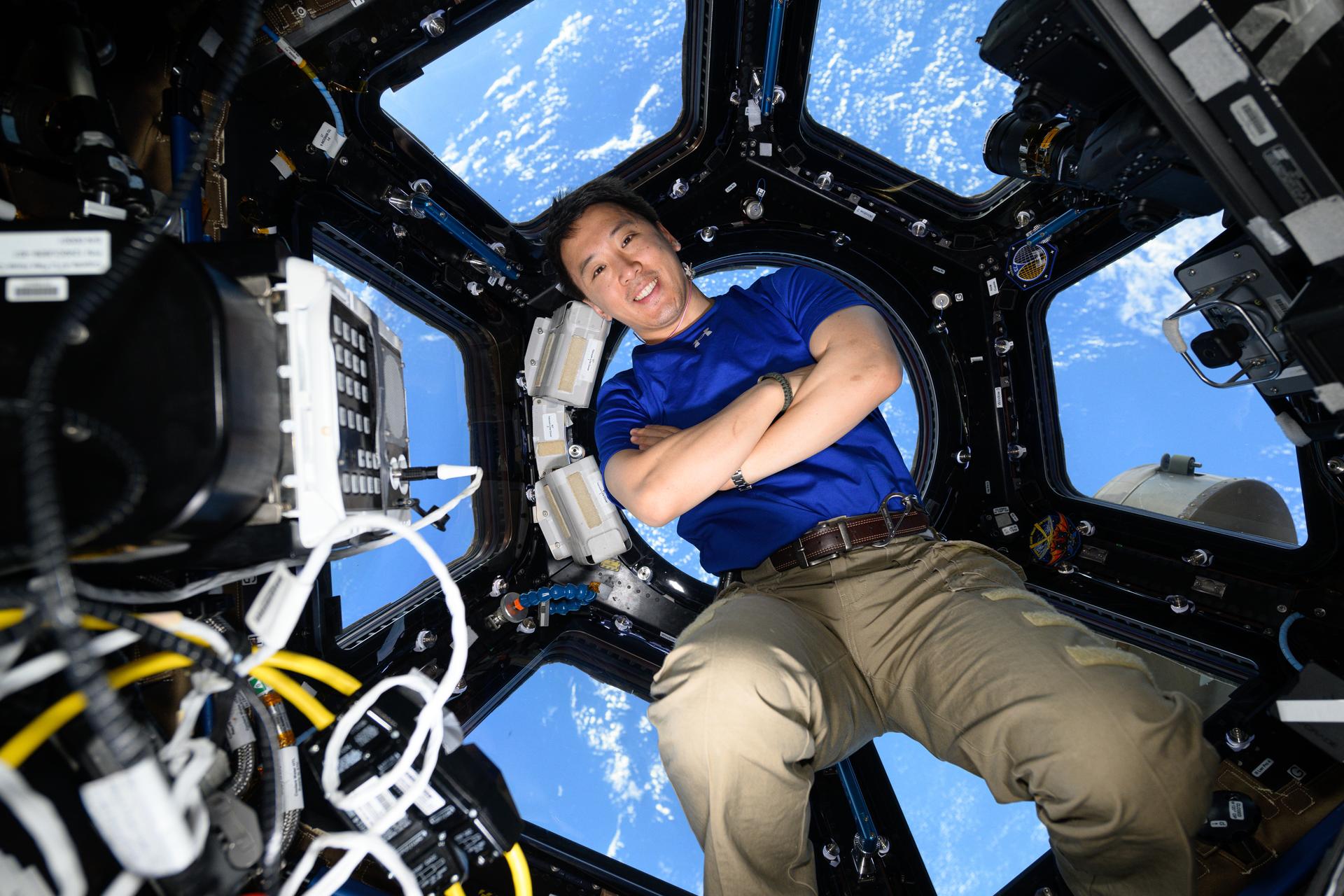
NASA astronaut Jonny Kim poses for a portrait inside the cupola, the International Space Station’s “window to the world.” The orbital outpost was soaring 265 miles above the Indian Ocean off the coast of Madagascar at the time of this photograph.
NASA
The Expedition 73 crew kicked off the work week studying space biology to learn how to counteract the effects of weightlessness on the human body. The International Space Station residents are also packing the SpaceX Dragon cargo spacecraft for its departure this week and practicing using the European robotic arm.
NASA Flight Engineers Jonny Kim and Anne McClain spent all day Monday testing a thigh cuff that may prevent the space-caused, upward flow of blood and other fluids toward a crew member’s upper body. Common symptoms include head and eye pressure, as well as the notable “puffy face.” Kim wore the thigh cuff as McClain measured his blood pressure and scanned his vessels using the Ultrasound 2 device. Doctors on the ground monitored in real time the effectiveness of the biomedical hardware to learn how to protect an astronaut’s eye structure and vision.
Roscosmos Flight Engineers Sergey Ryzhikov and Alexey Zubritsky started their day wearing sensors measuring their exhalation rate following a deep breath helping doctors understand how microgravity affects the respiratory system. Next, Ryzhikov swapped neon gas bottles for argon gas bottles for the Plasma Crystal-4 space physics study investigating complex plasmas, or low-temperature gaseous mixtures such as ionized gas, neutral gas, and micron-sized particles. Zubritsky conducted a photographic inspection inside the Zvezda service module.
Commander Takuya Onishi from JAXA (Japan Aerospace Exploration Agency) joined NASA Flight Engineer Nichole Ayers inside Dragon loading cargo ahead of its undocking scheduled for 12:05 p.m. EDT on Thursday with NASA+ live coverage beginning at 11:45 a.m. They will finalize cargo packing on Wednesday when the crew installs time critical, sample-packed portable science freezers inside Dragon for analysis back on Earth.
Onishi also processed protein crystal samples inside the inside the Advanced Space Experiment Processor-4 to learn how to synthesize medications during deep space missions. Ayers photographed Onishi during his science activities then joined McClain at the end of the day for a hearing exam.
Roscosmos Flight Engineer Kirill Peskov trained to use the European robotic arm (ERA) using a computer interface inside the Nauka science module. ERA and Nauka both launched on July 21, 2021, inside a Proton rocket from Kazakhstan’s Baikonur Cosmodrome. Nauka with the ERA attached autonomously docked to Zvezda’s Earth-facing port on July 29.
Sols 4541–4542: Boxwork Structure, or Just “Box-Like” Structure?
3 min read
Sols 4541–4542: Boxwork Structure, or Just “Box-Like” Structure?
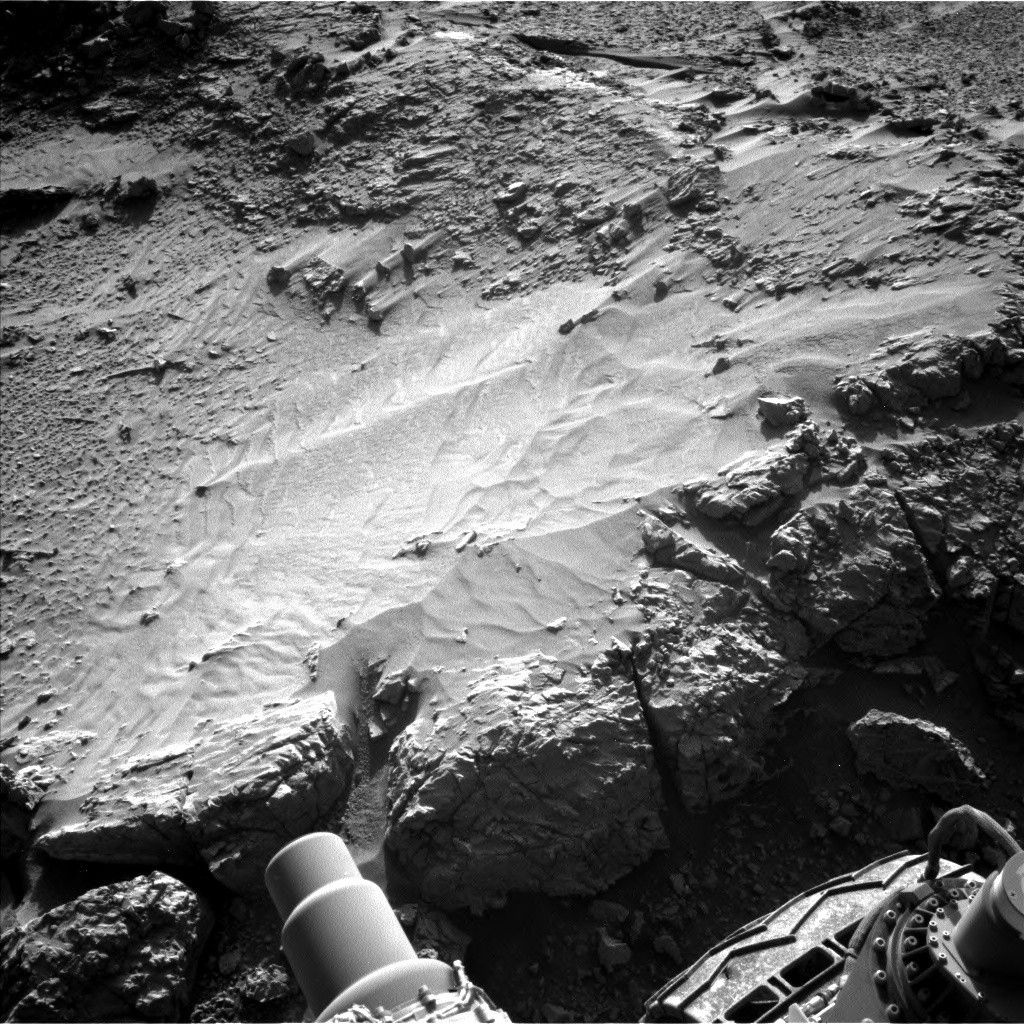
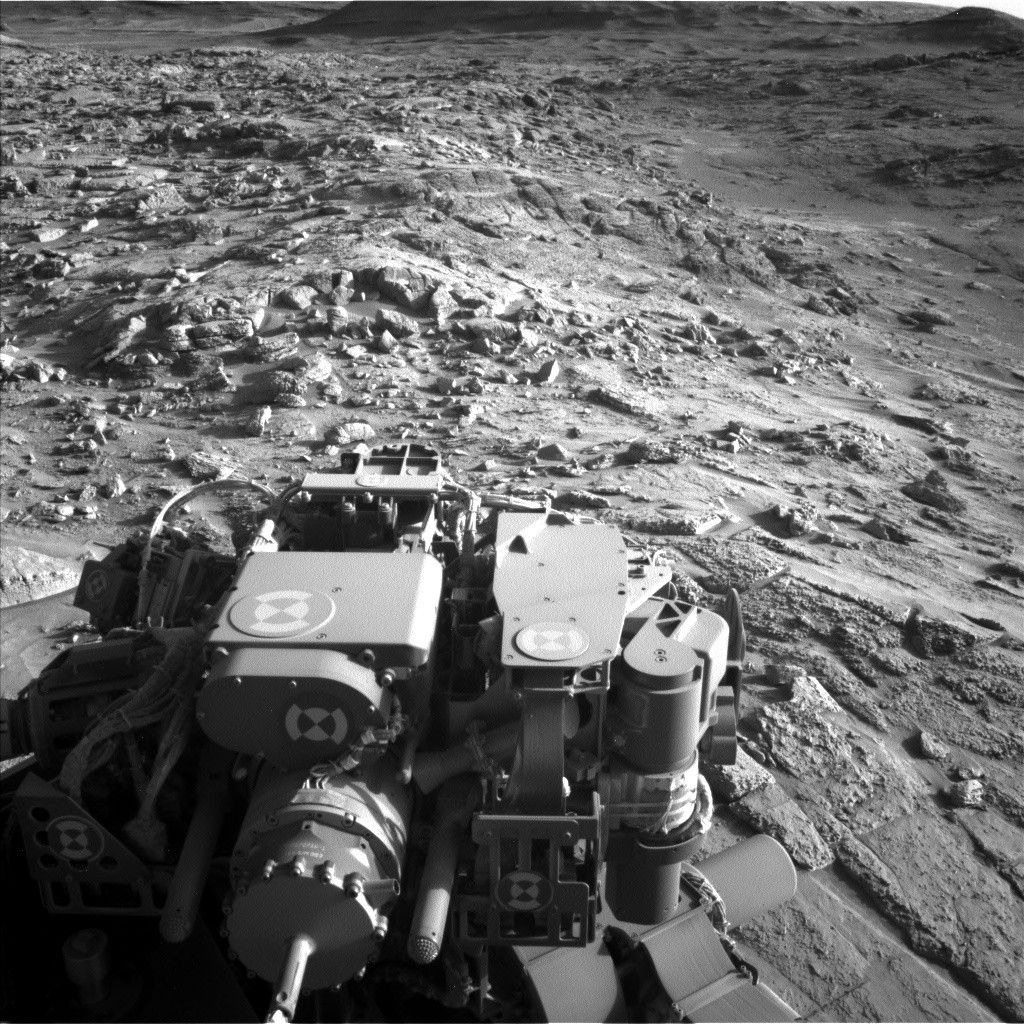
NASA’s Mars rover Curiosity acquired this image using its Left Navigation Camera on May 14, 2025 — Sol 4539, or Martian day 4,539 of the Mars Science Laboratory mission — at 00:57:26 UTC.
NASA/JPL-Caltech
Written by Ashley Stroupe, Mission Operations Engineer at NASA’s Jet Propulsion Laboratory
Earth planning date: Wednesday, May 14, 2025
Today we came into another strange and interesting workspace (see image above) that is as exciting as the one we had on Monday. This is our first arrival at a potential boxwork structure — a series of web-like, resistant ridges visible in orbital images that we have been looking forward to visiting since we first saw them. Today’s observations will be the first step to figure out if these ridges (at least the one in front of us) is part of a boxwork structure. Unfortunately, we can’t quite reach their targets safely today because one of the rover’s front wheels is perched on a small pebble and might slip off if we move the arm. Instead, we will take a lot of remote sensing observations and reposition the rover slightly so that we can try again on Friday.
But before repositioning, Curiosity will start off by taking a huge Mastcam mosaic of all terrain around the rover to help us document how it is changing along our path and with elevation. Mastcam then will look at “Temblor Range,” which is a nearby low and resistant ridge that also has some rover tracks from where we previously crossed it. Mastcam is also imaging a trough that is similar to the other troughs we have been seeing locally and that have multiple possible origins. Then, Mastcam will image the AEGIS target from the prior plan. ChemCam is taking a LIBS observation of “Glendale Peak,” a rugged top portion of the ridge defining the potential boxwork structure, which is to the right of the workspace, and an RMI mosaic of Texoli butte. Mastcam follows up the ChemCam observation of Glendale Peak by imaging it.
In parallel with all the imaging is our monthly test and maintenance of our backup pump for the Heat Rejection System (the HRS) The HRS is a fluid loop that distributes the heat from the rover’s power source to help keep all the subsystems within reasonable temperatures. We need to periodically make sure it stays in good working order just in case our primary pump has issues.
After all the imaging, the rover will bump 30 centimeters backwards (about 12 inches) to come down off the pebble and put the interesting science targets in the arm workspace. This should leave us in a position where it is safe to unstow the arm and put instruments down on the surface.
On the second, untargeted sol of the plan, we have some additional atmospheric science including a large dust-devil survey, as well as a Navcam suprahorizon movie and a Mastcam solar tau to measure the dust in the atmosphere. We finish up with another autonomous targeting of ChemCam with AEGIS.
NASA’s Perseverance Mars Rover to Take Bite Out of ‘Krokodillen’
5 min read
Preparations for Next Moonwalk Simulations Underway (and Underwater)
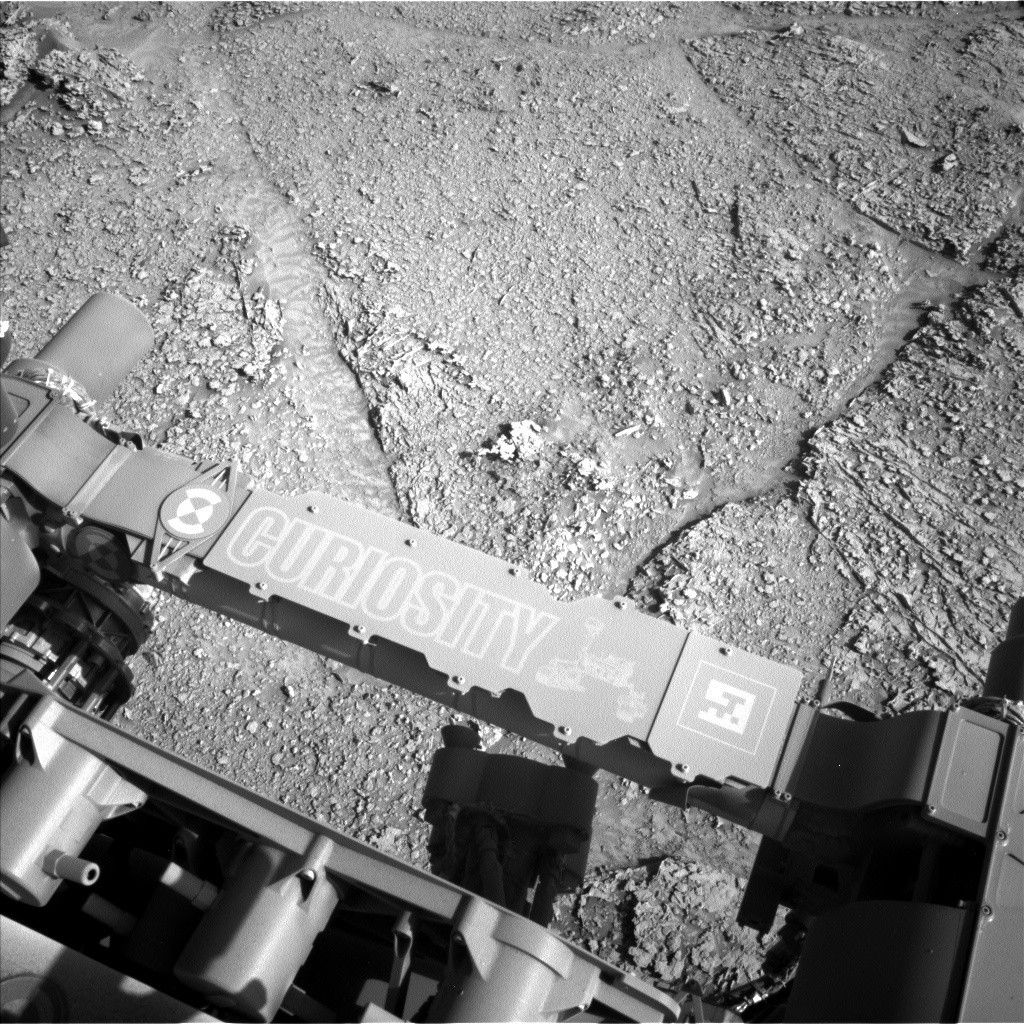
One of the navigation cameras on NASA’s Perseverance captured the rover’s tracks coming from an area called “Witch Hazel Hill,” on May 13, 2025, the 1,503rd Martian day, or sol, of the mission.
NASA/JPL-Caltech
Scientists expect the new area of interest on the lower slope of Jezero Crater’s rim to offer up some of the oldest rocks on the Red Planet.
NASA’s Perseverance Mars rover is exploring a new region of interest the team is calling “Krokodillen” that may contain some of the oldest rocks on Mars. The area has been on the Perseverance science team’s wish list because it marks an important boundary between the oldest rocks of Jezero Crater’s rim and those of the plains beyond the crater.
“The last five months have been a geologic whirlwind,” said Ken Farley, deputy project scientist for Perseverance from Caltech in Pasadena. “As successful as our exploration of “Witch Hazel Hill” has been, our investigation of Krokodillen promises to be just as compelling.”
Named by Perseverance mission scientists after a mountain ridge on the island of Prins Karls Forland, Norway, Krokodillen (which means “the crocodile” in Norwegian) is a 73-acre (about 30-hectare) plateau of rocky outcrops located downslope to the west and south of Witch Hazel Hill.
A quick earlier investigation into the region revealed the presence of clays in this ancient bedrock. Because clays require liquid water to form, they provide important clues about the environment and habitability of early Mars. The detection of clays elsewhere within the Krokodillen region would reinforce the idea that abundant liquid water was present sometime in the distant past, likely before Jezero Crater was formed by the impact of an asteroid. Clay minerals are also known on Earth for preserving organic compounds, the building blocks of life.
“If we find a potential biosignature here, it would most likely be from an entirely different and much earlier epoch of Mars evolution than the one we found last year in the crater with ‘Cheyava Falls,’” said Farley, referring to a rock sampled in July 2024 with chemical signatures and structures that could have been formed by life long ago. “The Krokodillen rocks formed before Jezero Crater was created, during Mars’ earliest geologic period, the Noachian, and are among the oldest rocks on Mars
Data collected from NASA’s Mars orbiters suggest that the outer edges of Krokodillen may also have areas rich in olivine and carbonate. While olivine forms from magma, carbonate minerals on Earth typically form during a reaction in liquid water between rock and dissolved carbon dioxide. Carbonate minerals on Earth are known to be excellent preservers of fossilized ancient microbial life and recorders of ancient climate.
The rover, which celebrated its 1,500th day of surface operations on May 9, is currently analyzing a rocky outcrop in Krokodillen called “Copper Cove” that may contain Noachian rocks.
Ranking Mars Rocks
The rover’s arrival at Krokodillen comes with a new sampling strategy for the nuclear-powered rover that allows for leaving some cored samples unsealed in case the mission finds a more scientifically compelling geologic feature down the road.
To date, Perseverance has collected and sealed two regolith (crushed rock and dust) samples, three witness tubes, and one atmospheric sample. It has also collected 26 rock cores and sealed 25 of them. The rover’s one unsealed sample is its most recent, a rock core taken on April 28 that the team named “Bell Island,” which contains small round stones called spherules. If at some point the science team decides a new sample should take its place, the rover could be commanded to remove the tube from its bin in storage and dump the previous sample.
“We have been exploring Mars for over four years, and every single filled sample tube we have on board has its own unique and compelling story to tell,” said Perseverance acting project scientist Katie Stack Morgan of NASA’s Jet Propulsion Laboratory in Southern California. “There are seven empty sample tubes remaining and a lot of open road in front of us, so we’re going to keep a few tubes — including the one containing the Bell Island core — unsealed for now. This strategy allows us maximum flexibility as we continue our collection of diverse and compelling rock samples.”
Before the mission adopted its new strategy, the engineering sample team assessed whether leaving a tube unsealed could diminish the quality of a sample. The answer was no.
“The environment inside the rover met very strict standards for cleanliness when the rover was built. The tube is also oriented in such a way within its individual storage bin that the likelihood of extraneous material entering the tube during future activities, including sampling and drives, is very low,” said Stack Morgan.
In addition, the team assessed whether remnants of a sample that was dumped could “contaminate” a later sample. “Although there is a chance that any material remaining in the tube from the previous sample could come in contact with the outside of a new sample,” said Stack Morgan, “it is a very minor concern — and a worthwhile exchange for the opportunity to collect the best and most compelling samples when we find them.”
News Media Contact
DC Agle Jet Propulsion Laboratory, Pasadena, Calif. 818-393-9011 agle@jpl.nasa.gov
This artist’s concept illustration, released on May 14, 2025, shows a Sun-like star encircled by a disk of dusty debris containing crystalline water ice. Astronomers long expected that frozen water was scattered in systems around stars. By using detailed data known as spectra from NASA’s James Webb Space Telescope, researchers confirmed the presence of crystalline water ice — definitive evidence of what astronomers expected. Water ice is a vital ingredient in disks around young stars — it heavily influences the formation of giant planets and may also be delivered by small bodies like comets and asteroids to fully formed rocky planets.
A Defining Era: NASA Stennis and Space Shuttle Main Engine Testing
6 Min Read
A Defining Era: NASA Stennis and Space Shuttle Main Engine Testing
The numbers are notable – 34 years of testing space shuttle main engines at NASA’s Stennis Space Center near Bay St. Louis, Mississippi, 3,244 individual tests, more than 820,000 seconds (totaling more than nine days) of cumulative hot fire.
The story behind the numbers is unforgettable.
“It is hard to describe the full impact of the space shuttle main engine test campaign on NASA Stennis,” Center Director John Bailey said. “It is hundreds of stories, affecting all areas of center life, within one great story of team achievement and accomplishment.”
NASA Stennis tested space shuttle main engines from May 19, 1975, to July 29, 2009. The testing made history, enabling 135 shuttle missions and notable space milestones, like deployment of the Hubble Space Telescope and construction of the International Space Station.
The testing also:
Established NASA Stennis as the center of excellence for large propulsion testing.
Broadened and deepened the expertise of the NASA Stennis test team.
Demonstrated and expanded the propulsion test capabilities of NASA Stennis.
Ensured the future of the Mississippi site.
The first space shuttle main engine is installed on May 8, 1975, at the Fred Haise Test Stand (formerly A-1). The engine would be used for the first six tests and featured a shortened thrust chamber assembly.
NASA
Assignment and Beginning
NASA Stennis was not the immediate choice to test space shuttle main engines. Two other sites also sought the assignment – NASA’s Marshall Flight Center in Alabama and Edwards Air Force Base in California. However, following presentations and evaluations, NASA announced March 1, 1971, that the test campaign would take place in south Mississippi.
“(NASA Stennis) was now assured of a future in propulsion testing for decades,” summarized Way Station to Space, a history of the center’s first decades.
Testing did not begin immediately. First, NASA Stennis had to complete an ambitious project to convert stands built the previous decade for rocket stage testing to facilities supporting single-engine hot fire.
Propellant run tanks were installed and calibrated. A system was fashioned to measure and verify engine thrust. A gimbaling capability was developed on the Fred Haise Test Stand to allow operators to move engines as they must pivot in flight to control rocket trajectory. Likewise, engineers designed a diffuser capability for the A-2 Test Stand to allow operators to test at simulated altitudes up to 60,000 feet.
NASA Stennis teams also had to learn how to handle cryogenic propellants in a new way. For Apollo testing, propellants were loaded into stage tanks to support hot fires. For space shuttle, propellants had to be provided by the stand to the engine. New stand run tanks were not large enough to support a full-duration (500 seconds) hot fire, so teams had to provide real-time transfer of propellants from barges, to the run tanks, to the engine.
The process required careful engineering and calibration. “There was a lot to learn to manage real-time operations,” said Maury Vander, chief of NASA Stennis test operations. “Teams had to develop a way to accurately measure propellant levels in the tanks and to control the flow from barges to the tanks and from the tanks to the engine. It is a very precise process.”
NASA Stennis teams conduct a hot fire of the space shuttle Main Propulsion Test Article in 1979 on the B-2 side of the Thad Cochran Test Stand. The testing involved installing a shuttle external fuel tank, a mockup of the shuttle orbiter, and the vehicle’s three-engine configuration on the stand, then firing all three engines simultaneously as during an actual launch.
NASA
Testing the Way
The biggest challenge was operation of the engine itself. Not only was it the most sophisticated ever developed, but teams would be testing a full engine from the outset. Typically, individual components are developed and tested prior to assembling a full engine. Shuttle testing began on full-scale engines, although several initial tests did feature a trimmed down thrust chamber assembly.
The initial test on May 19, 1975, provided an evaluation of team and engine. The so-called “burp” test did not feature full ignition, but it set the stage for moving forward.
“The first test was a monstrous milestone,” Vander said. “Teams had to overcome all sorts of challenges, and I can only imagine what it must have felt like to go from a mostly theoretical engine to seeing it almost light. It is the kind of moment engineers love – fruits-of-all-your-hard-labor moment.”
NASA Stennis teams conducted another five tests in quick succession. On June 23/24, with a complete engine thrust chamber assembly in place, teams achieved full ignition. By year’s end, teams had conducted 27 tests. In the next five years, they recorded more than 100 annual hot fires, a challenging pace. By the close of 1980, NASA Stennis had accumulated over 28 hours of hot fire.
The learning curve remained steep as teams developed a defined engine start, power up, power down, and shutdown sequences. They also identified anomalies and experienced various engine failures.
“Each test is a semi-controlled explosion,” Vander said. “And every test is like a work of art because of all that goes on behind the scenes to make it happen, and no two tests are exactly the same. There were a lot of knowledge and lessons learned that we continue to build on today.”
NASA Stennis test conductor Brian Childers leads Test Control Center operations during the 1000th test of a space shuttle main engine on the Fred Haise Test Stand (formerly A-1). on Aug. 17, 2006.
NASA
Powering History
Teams took a giant step forward in 1978 to 1981 with testing of the Main Propulsion Test Article, which involved installing three engines (configured as during an actual launch), with a space shuttle external tank and a mock orbiter, on the B-2 side of the Thad Cochran Test Stand.
Teams conducted 18 tests of the article, proving conclusively that the shuttle configuration would fly as needed. On April 12, 1981, shuttle Columbia launched on the maiden STS-1 mission of the new era. Unlike previous vehicles, this one had no uncrewed test flight. The first launch of shuttle carried astronauts John Young and Bob Crippen.
“The effort that you contributed made it possible for us to sit back and ride,” Crippen told NASA Stennis employees during a post-test visit to the site. “We couldn’t even make it look hard.”
Testing proceeded steadily for the next 28 years. Engine anomalies, upgrades, system changes – all were tested at NASA Stennis. Limits of the engine were tested and proven. Site teams gained tremendous testing experience and expertise. NASA Stennis personnel became experts in handling cryogenics.
Following the loss of shuttles Challenger and Columbia, NASA Stennis teams completed rigorous test campaigns to ensure future mission safety. The space shuttle main engine arguably became the most tested, and best understood, large rocket engine in the world – and NASA Stennis teams were among those at the forefront of knowledge.
NASA conducts the final space shuttle main engine test on July 29, 2009, on the A-2 Test Stand at NASA Stennis. The Space Shuttle Program concluded two years later with the STS-135 shuttle mission in July 2011.
NASA
A Foundation for the Future
NASA recognized the effort of the NASA Stennis team, establishing the site as the center of excellence for large propulsion test work. In the meanwhile, NASA Stennis moved to solidify its future, growing as a federal city, home to more than 50 resident agencies, organizations, and companies.
Shuttle testing opened the door for the variety of commercial aerospace test projects the site now supports. It also established and solidified the test team’s unique capabilities and gave all of Mississippi a sense of prideful ownership in the Space Shuttle Program – and its defining missions.
No one can say what would have happened to NASA Stennis without the space shuttle main engine test campaign. However, everything NASA Stennis now is rests squarely on the record and work of that history-making campaign.
“Everyone knows NASA Stennis as the site that tested the Apollo rockets that took humans to the Moon – but space shuttle main engine testing really built this site,” said Joe Schuyler, director of NASA Stennis engineering and test operations. “We are what we are because of that test campaign – and all that we become is built on that foundation.”