NASA’s EZIE Launches on Mission to Study Earth’s Electrojets

NASA’s EZIE Launches on Mission to Study Earth’s Electrojets

: A rocket lifts off from a launch pad at night, with the scene lit by rocket’s bright trail. Clouds of vapor billow out on the ground and from the rockets upper half.
A SpaceX Falcon 9 rocket lifts off from Vandenberg Space Force Base, carrying NASA’s EZIE spacecraft into orbit.
SpaceX

Under the nighttime California sky, NASA’s EZIE (Electrojet Zeeman Imaging Explorer) mission launched aboard a SpaceX Falcon 9 rocket at 11:43 p.m. PDT on March 14.

Taking off from Vandenberg Space Force Base near Santa Barbara, the EZIE mission’s trio of small satellites will fly in a pearls-on-a-string configuration approximately 260 to 370 miles above Earth’s surface to map the auroral electrojets, powerful electric currents that flow through our upper atmosphere in the polar regions where auroras glow in the sky.

At approximately 2 a.m. PDT on March 15, the EZIE satellites were successfully deployed. Within the next 10 days, the spacecraft will send signals to verify they are in good health and ready to embark on their 18-month mission.

“NASA has leaned into small missions that can provide compelling science while accepting more risk. EZIE represents excellent science being executed by an excellent team, and it is delivering exactly what NASA is looking for,” said Jared Leisner, program executive for EZIE at NASA Headquarters in Washington.

The electrojets — and their visible counterparts, theauroras — are generated duringsolar storms when tremendous amounts of energy get transferred into Earth’s upper atmosphere from the solar wind. Each of the EZIE spacecraft will map the electrojets, advancing our understanding of the physics of how Earth interacts with its surrounding space. This understanding will apply not only to our own planet but also to any magnetized planet in our solar system and beyond. The mission will also help scientists create models for predicting space weather to mitigate its disruptive impacts on our society.

“It is truly incredible to see our spacecraft flying and making critical measurements, marking the start of an exciting new chapter for the EZIE mission,” said Nelli Mosavi-Hoyer, project manager for EZIE at the Johns Hopkins Applied Physics Laboratory in Laurel, Maryland. “I am very proud of the dedication and hard work of our team. This achievement is a testament to the team’s perseverance and expertise, and I look forward to the valuable insights EZIE will bring to our understanding of Earth’s electrojets and space weather.”

Instead of using propulsion to control their polar orbit, the spacecraft will actively use drag experienced while flying through the upper atmosphere to individually tune their spacing. Each successive spacecraft will fly over the same region 2 to 10 minutes after the former.

“Missions have studied these currents before, but typically either at the very large or very small scales,” said Larry Kepko, EZIE mission scientist at NASA’s Goddard Space Flight Center in Greenbelt, Maryland. “EZIE will help us understand how these currents form and evolve, at scales we’ve never probed.”

The mission team is also working to distribute magnetometer kits called EZIE-Mag, which are available to teachers, students, and science enthusiasts who want to take their own measurements of the Earth-space electrical current system. EZIE-Mag data will be combined with EZIE measurements made from space to assemble a clear picture of this vast electrical current circuit.

The EZIE mission is funded by the Heliophysics Division within NASA’s Science Mission Directorate and is managed by the Explorers Program Office at NASA Goddard. The Johns Hopkins Applied Physics Laboratory leads the mission for NASA. Blue Canyon Technologies in Boulder, Colorado, built the CubeSats, and NASA’s Jet Propulsion Laboratory in Southern California built the Microwave Electrojet Magnetogram, which will map the electrojets, for each of the three satellites.

For the latest mission updates, follow NASA’s EZIE blog.

By Brett Molina
Johns Hopkins Applied Physics Laboratory

Share

Details

Last Updated
Mar 15, 2025
Editor
Vanessa Thomas
Contact
Sarah Frazier
Location
Goddard Space Flight Center

Powered by WPeMatico

Get The Details…

NASA’s SpaceX Crew-10 Launches to International Space Station

NASA’s SpaceX Crew-10 Launches to International Space Station

A SpaceX Falcon 9 rocket propelled the Dragon spacecraft into orbit carrying NASA astronauts Anne McClain and Nichole Ayers, JAXA (Japan Aerospace Exploration Agency) astronaut Takuya Onishi, and Roscosmos cosmonaut Kirill Peskov. (Credit: NASA)

Four crew members of NASA’s SpaceX Crew-10 mission launched at 7:03 p.m. EDT Friday from Launch Complex 39A at NASA’s Kennedy Space Center in Florida for a science expedition aboard the International Space Station.

A SpaceX Falcon 9 rocket propelled the Dragon spacecraft into orbit carrying NASA astronauts Anne McClain and Nichole Ayers, JAXA (Japan Aerospace Exploration Agency) astronaut Takuya Onishi, and Roscosmos cosmonaut Kirill Peskov. The spacecraft will dock autonomously to the forward-facing port of the station’s Harmony module at approximately 11:30 p.m. on Saturday, March 15. Shortly after docking, the crew will join Expedition 72/73 for a long-duration stay aboard the orbiting laboratory.

“Congratulations to our NASA and SpaceX teams on the 10th crew rotation mission under our commercial crew partnership. This milestone demonstrates NASA’s continued commitment to advancing American leadership in space and driving growth in our national space economy,” said NASA acting Administrator Janet Petro. “Through these missions, we are laying the foundation for future exploration, from low Earth orbit to the Moon and Mars. Our international crew will contribute to innovative science research and technology development, delivering benefits to all humanity.”

During Dragon’s flight, SpaceX will monitor a series of automatic spacecraft maneuvers from its mission control center in Hawthorne, California. NASA will monitor space station operations throughout the flight from the Mission Control Center at the agency’s Johnson Space Center in Houston.

NASA’s live coverage resumes at 9:45 p.m., March 15, on NASA+ with rendezvous, docking, and hatching opening. After docking, the crew will change out of their spacesuits and prepare cargo for offload before opening the hatch between Dragon and the space station’s Harmony module around 1:05 a.m., Sunday, March 16. Once the new crew is aboard the orbital outpost, NASA will broadcast welcome remarks from Crew-10 and farewell remarks from the agency’s SpaceX Crew-9 crew, beginning at about 1:40 a.m.

Learn how to watch NASA content through a variety of platforms, including social media.

The number of crew aboard the space station will increase to 11 for a short time as Crew-10 joins NASA astronauts Nick Hague, Suni Williams, Butch Wilmore, and Don Pettit, as well as Roscosmos cosmonauts Aleksandr Gorbunov, Alexey Ovchinin, and Ivan Vagner. Following a brief handover period, Hague, Williams, Wilmore, and Gorbunov will return to Earth no earlier than Wednesday, March 19.Ahead of Crew-9’s departure from station, mission teams will review weather conditions at the splashdown sites off the coast of Florida. 

During their mission, Crew-10 is scheduled to conduct material flammability tests to contribute to future spacecraft and facility designs. The crew will engage with students worldwide via the ISS Ham Radio program and use the program’s existing hardware to test a backup lunar navigation solution. The astronauts also will serve as test subjects, with one crew member conducting an integrated study to better understand physiological and psychological changes to the human body to provide valuable insights for future deep space missions.

With this mission, NASA continues to maximize the use of the orbiting laboratory, where people have lived and worked continuously for more than 24 years, testing technologies, performing science, and developing the skills needed to operate future commercial destinations in low Earth orbit and explore farther from our home planet. Research conducted at the space station benefits people on Earth and paves the way for future long-duration missions to the Moon under NASA’s Artemis campaign and beyond.

More about Crew-10
McClain is the commander of Crew-10 and is making her second trip to the orbital outpost since her selection as an astronaut in 2013. She will serve as a flight engineer during Expeditions 72/73 aboard the space station. Follow McClain on X.

Ayers is the pilot of Crew-10 and is flying her first mission. Selected as an astronaut in 2021, Ayers will serve as a flight engineer during Expeditions 72/73. Follow Ayers on X and Instagram.

Onishi is a mission specialist for Crew-10 and is making his second flight to the space station. He will serve as a flight engineer during Expeditions 72/73. Follow Onishi on X.

Peskov is a mission specialist for Crew-10 and is making his first flight to the space station. Peskov will serve as a flight engineer during Expeditions 72/73.

Learn more about NASA’s SpaceX Crew-10 mission and the agency’s Commercial Crew Program at:

https://www.nasa.gov/commercialcrew

-end-

Josh Finch / Jimi Russell
Headquarters, Washington
202-358-1100
joshua.a.finch@nasa.gov / james.j.russell@nasa.gov

Steven Siceloff / Stephanie Plucinsky
Kennedy Space Center, Florida
321-867-2468
steven.p.siceloff@nasa.gov / stephanie.n.plucinsky@nasa.gov

Kenna Pell / Sandra Jones
Johnson Space Center, Houston
281-483-5111
kenna.m.pell@nasa.gov / sandra.p.jones@nasa.gov

Powered by WPeMatico

Get The Details…
Abbey A. Donaldson

Risk of Venous Thromboembolism During Spaceflight

Risk of Venous Thromboembolism During Spaceflight

5 min read

Preparations for Next Moonwalk Simulations Underway (and Underwater)

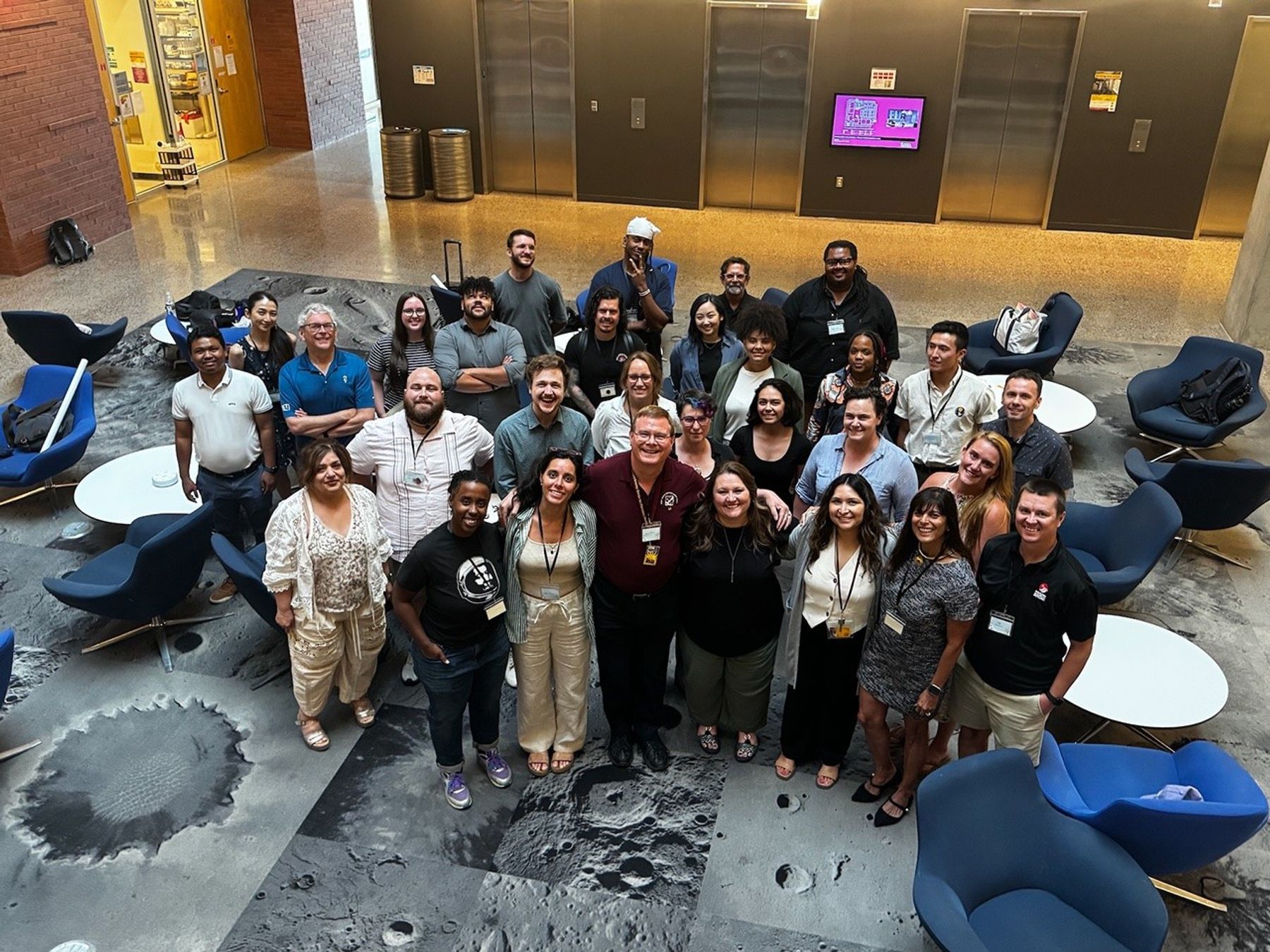
In-person participants (L-R) – Back row: Jason Lytle, Stuart Lee, Eric Bershad, Ashot Sargsyan, Aaron Everson, Philip Wells, Sergi Vaquer Araujo, Steven Grover, John A. Heit, Mehdi Shishehbor, Laura Bostick; Middle row: Sarah Childress Taoufik, Stephan Moll, Brandon Macias, Kristin Coffey, Ann-Kathrin Vlacil, Dave Francisco; Front row: James Pavela, Doug Ebert, Kathleen McMonigal, Esther Kim, Emma Hwang; Not pictured: Tyson Brunstetter, J. D. Polk
Online participants: Stephen Alamo, Mark Crowther, Steven Nissen, Mark Rosenberg, Jeffrey Weitz, R. Eugene Zierler, Serena Aunon, Tina Bayuse, Laura Beachy, Becky Brocato, Daniel Buckland, Jackie Charvat, Diana Cruz Topete, Quinn Dufurrena, Robert Haddon, Joanne Kaouk, Kim Lowe, Steve Laurie, Karina Marshall-Goebel, Sara Mason, Shannan Moynihan, James Pattarini, Devan Petersen, Ruth Reitzel, Donna Roberts, Lucia Roccaro, Mike Stenger, Terry Taddeo, Gavin Travers, Mary Van Baalen, Liz Warren
NASA

In October 2024, NASA’s Office of the Chief Health and Medical Officer (OCHMO) initiated a working group to review the status and progress of research and clinical activities intended to mitigate the risk of venous thromboembolism (VTE) during spaceflight. The working group took place over two days at NASA’s Johnson Space Center; a second meeting on the topic was held in December 2024 at the European Space Agency (ESA) facility in Cologne, Germany.

The working group was assembled from internal NASA subject matter experts (SMEs), the NASA OCHMO Standards Team, NASA and ESA stakeholders, and external SMEs, including physicians and medical professionals from leading universities and medical centers in the United States and Canada.

Background

Spaceflight Venous Thrombosis (SVT)

Spaceflight Venous Thrombosis (SVT) refers to a phenomenon experienced during spaceflight in which a thrombus (blood clot) forms in the internal jugular vein (and/or associated vasculature) that may be symptomatic (thrombus accompanied by, but not limited to, visible internal jugular vein swelling, facial edema beyond “nominal” spaceflight adaptation, eyelid edema, and/or headache) or asymptomatic. Obstructive thrombi have been identified in a very small number of crewmembers, as shown in the figure below.

Note that the figure below is for illustrative purposes only; locations are approximate, and size is not to scale.

Approximate location of identified thrombi in crewmembers.
Source: Modified from Cerebral Sinus Venous Thrombosis – University of Colorado Denver

With treatment, crewmembers were able to complete their mission, and anticoagulants were discontinued several days prior to landing to minimize the risk of bleeding in the event of a traumatic injury. Some thromboses completely resolved post landing, and some required additional treatment.

Pathophysiology of Venous Thromboembolism (VTE)

The proposed pathogenesis of VTE is referred to as Virchow’s triad and suggests that VTE occurs as the result of:

  1. Alterations in blood flow (i.e., stasis),
  2. Vascular endothelial injury/changes, and/or,
  3. Alterations in the constituents of the blood leading to hypercoagulability (i.e., hereditary predisposition or acquired hypercoagulability).

Note: pathophysiology are the changes that occur during a disease process; hypercoagulability is the increased tendency to develop blood to clots.

VTE, OCHMO, medical, health, venous thrombosis, blood clots, Virchow
The Virchow’s triad of risk factors for venous thrombosis.
Bouchnita, 2017

Blood stasis, or venous stasis, refers to a condition in which the blood flow in the veins slows down which leads to pooling in the veins. This slowing of the blood may be due to vein valves becoming damaged or weak, immobility, and/or the absence of muscular contractions. Associated symptoms include swelling, skin changes, varicose veins, and slow-healing sores or ulcers. In terrestrial medicine, venous thrombosis is typically caused by damaged or weakened vein valves, which can be due to many factors, including aging, blood clots, varicose veins, obesity, pregnancy, sedentary lifestyle, estrogen use, and hereditary predisposition.

Spaceflight Considerations

Altered Venous Blood Flow and Spaceflight Associated Neuro-ocular Syndrome

In addition to the terrestrial risk factors of VTE, there are physiological changes associated with spaceflight that are hypothesized to potentially play a role in the development of VTE in weightlessness. Specifically, researchers have explored the effects of the microgravity environment and subsequent observed headward fluid shifts that occur, and the potential impact on blood flow. Crewmembers onboard the International Space Station (ISS) experience weightlessness due to the microgravity environment and thus experience a sustained redistribution of bodily fluids from the legs toward the head. The prolonged headward fluid shifts during weightlessness results in facial puffiness, decreased leg volume, increased cardiac stroke volume, and decreased plasma volume.

Crewmembers have also experienced altered blood flow during spaceflight, including retrograde venous blood flow (RVBF) (the backflow of venous blood towards the brain) or stasis (a stoppage or slowdown in the flow of blood). While the causes of the observed stasis and retrograde blood flow in spaceflight participants is not well understood, the potential clinical significance of the role it may have in the development of thrombus formation warrants further investigation.

doppler, VTE, SANS, venous thrombosis, medical, health
Doppler imaging of a retrograde flow in the left internal jugular vein.
Yan & Seow, 2009

Other physiological concerns affected by fluid shifts are being studied to consider if any relation to VTE exists. Chronic weightlessness can cause bodily fluids such as blood and cerebrospinal fluid to move toward the head, which can lead to optic nerve swelling, folds in the retina, flattening of the back of the eye, and swelling in the brain. This collection of eye and brain changes is called “spaceflight associated neuro-ocular syndrome,” or SANS. Some astronauts only experience mild changes in space, while others have clinically significant outcomes. The long-term health outcome from these changes is unknown but actively being investigated. The risk of developing SANS is higher during longer-duration missions and remains a top research priority for scientists ahead of a Mars mission.

Conclusions and Further Work

Based on expert opinion and the assessment of the risk factors for thrombosis, an algorithm was developed to provide guidance for in-mission assessment and treatment of thrombus formation in weightlessness. The algorithm is based on early in-flight ultrasound testing to determine the flow characteristic of the left internal jugular vein and associated vasculature.

VTE, veinous thrombosis
NASA

Working Group Recommendations

The working group recommended several areas for further investigation to assess feasibility and potential to mitigate the risk of thrombosis in spaceflight:

  • Improved detection capabilities to identify when a thrombus has formed in-flight,
  • Pathophysiology/factors leading to thrombi formation during spaceflight,
  • Countermeasures and treatment

For more information on the working group meeting and a complete list of references, please see the Risk of Venous Thromboembolism (VTE) During Spaceflight Summary Report.

Powered by WPeMatico

Get The Details…
Kim Lowe

Sols 4479-4480: What IS That Lumpy, Bumpy Rock?

Sols 4479-4480: What IS That Lumpy, Bumpy Rock?

3 min read

Sols 4479-4480: What IS That Lumpy, Bumpy Rock?

A grayscale photograph of the Martian surface by the Curiosity rover captures medium gray soil with exposed small to medium sized rocks scattered around. Two medium sized rocks just in front of the rover stand out – unlike the smooth or sharp-edged ones around them, they look very rough-textured and bumpy, like a large clump of granola. The bottom of the frame shows parts of the rover, running from the middle left edge to the lower right corner of the image, including part of its robotic arm which carries a nameplate imprinted with “Curiosity” outlined in white, all-capital letters, and to the right of that a line drawing of the rover.
NASA’s Mars rover Curiosity acquired this image of its workspace, including two rocks in front of it with interesting textures, different from anything seen before in the mission. The rover took the image with its Left Navigation Camera on March 12, 2025 — sol 4478, or Martian day 4,478 of the Mars Science Laboratory mission — at 07:00:42 UTC.
NASA/JPL-Caltech

Written by Ashley Stroupe, Mission Operations Engineer at NASA’s Jet Propulsion Laboratory

Earth planning date: Wednesday, March 12, 2025

The days are getting shorter and colder for Curiosity as we head into winter. So our rover is sleeping in a bit before waking up to a busy plan. Today I served as the Engineering Uplink Lead, managing the engineering side of the plan to support all the science activities. 

We are seeing a lot of rocks with different, interesting textures, so Curiosity’s day begins with a lot of targeted imaging of this interesting area. The two rocks right in front of us (see image above) are different from anything that we have looked at before on the mission, so we are eager to know what they are. We are taking Mastcam images of “Manzana Creek” and “Palo Comado,” two of these interestingly textured rocks, and also of an area named “Vincent Gap,” where the rover disturbed some bedrock and exposed some regolith by driving over it in the prior plan. ChemCam is making a LIBS observation of a target called “Sturtevant Falls,” which is a nodule on the left-hand block in our workspace (on which we are later doing some contact science). ChemCam is also taking a long-distance RMI image in the direction of the potential boxworks formation (large veins), which is an area we will be exploring close-up in the future. There are also a Navcam dust devil movie and suprahorzion movie. Check out this article from November for more information on the boxwork formations.

After a nap, Curiosity wakes up to get in her arm exercise. I do not envy the Arm Rover Planner today (OK, maybe a little bit) in dealing with this very challenging workspace. The rock of interest (the left-hand rock in the above image) has jagged, vertical surfaces and a lot of crazy rough texture. Examining this rock is even more challenging because our primary targets are on the left side of the rock, rather than the side that is facing the rover. We are looking at two different targets, “Stunt Ranch,” which is a nodule on the rock, and “Pacifico Mountain,” which is the left-side face of the rock, with MAHLI and also doing a long APXS integration on Stunt Ranch. After the arm work, Curiosity is tucking herself in for the night by stowing the arm. 

The next morning, after again getting to sleep in a bit, Curiosity will make some more targeted observations, starting with another dust-devil survey. ChemCam will make a LIBS observation of “Switzer Falls,” which is a target on the right-hand rock in the workspace (and in the image), an RMI of “Colby Canyon,” a soft sediment deformation, and “Gould,” which is another target on the boxworks formation. Lastly, Mastcam takes a look at “Potrero John,” yet another interestingly textured rock.

Curiosity will then be ready to drive away. Today’s drive is on slightly better terrain that we have been seeing recently, with fewer large and pointy rocks. Though, the mobility rover planners still have to be careful about picking the safest path through. We’re heading about 25 meters (about 82 feet) to another rock target named “Humber Park,” where we hope to do additional contact science. After the drive, we have our standard set of post-drive imaging, a Mastcam solar tau, and then an early-morning Navcam cloud observation.

Share

Details

Last Updated
Mar 14, 2025

Related Terms

Powered by WPeMatico

Get The Details…

Career Spotlight: Engineer (Ages 14-18)

Career Spotlight: Engineer (Ages 14-18)

3 Min Read

Career Spotlight: Engineer (Ages 14-18)

The James Webb Space Telescope's Engineering Design Unit (EDU) primary mirror segment, coated with gold.

What does an engineer do?

An engineer applies scientific principles to design, build, and test machines, systems, or structures to meet specific needs. They follow the steps of the engineering design process to ensure their designs work as planned while meeting a variety of requirements, including size, weight, safety, and cost.

NASA hires several types of engineers to help tackle a range of missions. Whether it’s creating quieter supersonic aircraft, building powerful space telescopes to study the cosmos, or developing spacecraft to take humanity to the Moon, Mars, and beyond, NASA pushes the boundaries of engineering, giving us greater knowledge of our universe and a better quality of life here on Earth.

Crew-1: The Mission

What are the different types of engineering?

  • Aerospace engineer: Applies engineering principles to design hardware and software specific to flight systems for use in Earth’s atmosphere or in space.
  • Chemical engineer: Uses chemistry to conduct research or develop new materials.
  • Civil engineer: Designs human-made structures, such as launch pads, test stands, or a future lunar base.
  • Electrical engineer: Specializes in the design and testing of electronics such as computers, motors, and navigation systems.
  • Mechanical engineer: Designs and tests mechanical equipment and systems, such as rocket engines, aircraft frames, and astronaut tools.

How can I become an engineer?

High school is the perfect time to build a solid foundation of science and math skills through challenging academic courses as well as extracurricular activities, such as science clubs, robotics teams, or STEM camps in your area. You can also start researching what type of engineering is right for you, what colleges offer those engineering programs, and what you need to do to apply to those colleges.

Engineering roles typically require at least a bachelor’s degree.

Elaine Stewart

How can I start preparing today to become an engineer?

Looking for some engineering experiences you can try right away? NASA STEM offers hands-on activities for a variety of ages and skill levels. Engineering includes iteration – repeating something and making changes in an effort to learn more and improve the process or the design. When you try these activities, make a small change each time you repeat the process, and see whether your design improves.

NASA’s student challenges and competitions give teams the opportunity to gain authentic experience by taking on some of the technological challenges of spaceflight and aviation.

NASA also offers paid internships for U.S. citizens aged 16 and up. Interns work on real projects with the guidance of a NASA mentor. Internship sessions are held each year in spring, summer, and fall; visit NASA’s Internships website to learn about important deadlines and current opportunities.

NASA Engineering writing on a whiteboard

Advice from NASA engineers

“A lot of people think that just because they are more artistic or more creative, that they’re not cut out for STEM fields. But in all honesty, engineers and scientists have to be creative and have to be somewhat artistic to be able to come up with new ideas and see how they can solve the problems in the world around them.” – Sam Zauber, wind tunnel test engineer

“Students today have so many opportunities in the STEM area that are available to them. See what you like. See what you’re good at. See what you don’t like. Learn all there is to learn, and then you can really choose your own path. As long as you have the aptitude and the willingness to learn, you’re already there.”

Heather Oravec

Heather Oravec

Aerospace and Geotechnical Research Engineer

“Joining clubs and participating in activities that pique your interests is a great way to develop soft skills – like leadership, communication, and the ability to work with others – which will prepare you for future career opportunities.” – Estela Buchmann, navigation, guidance, and control systems engineer

Additional Resources

Powered by WPeMatico

Get The Details…
Sandra May