Station Trio Nears Departure During Busy Day of Blood Research
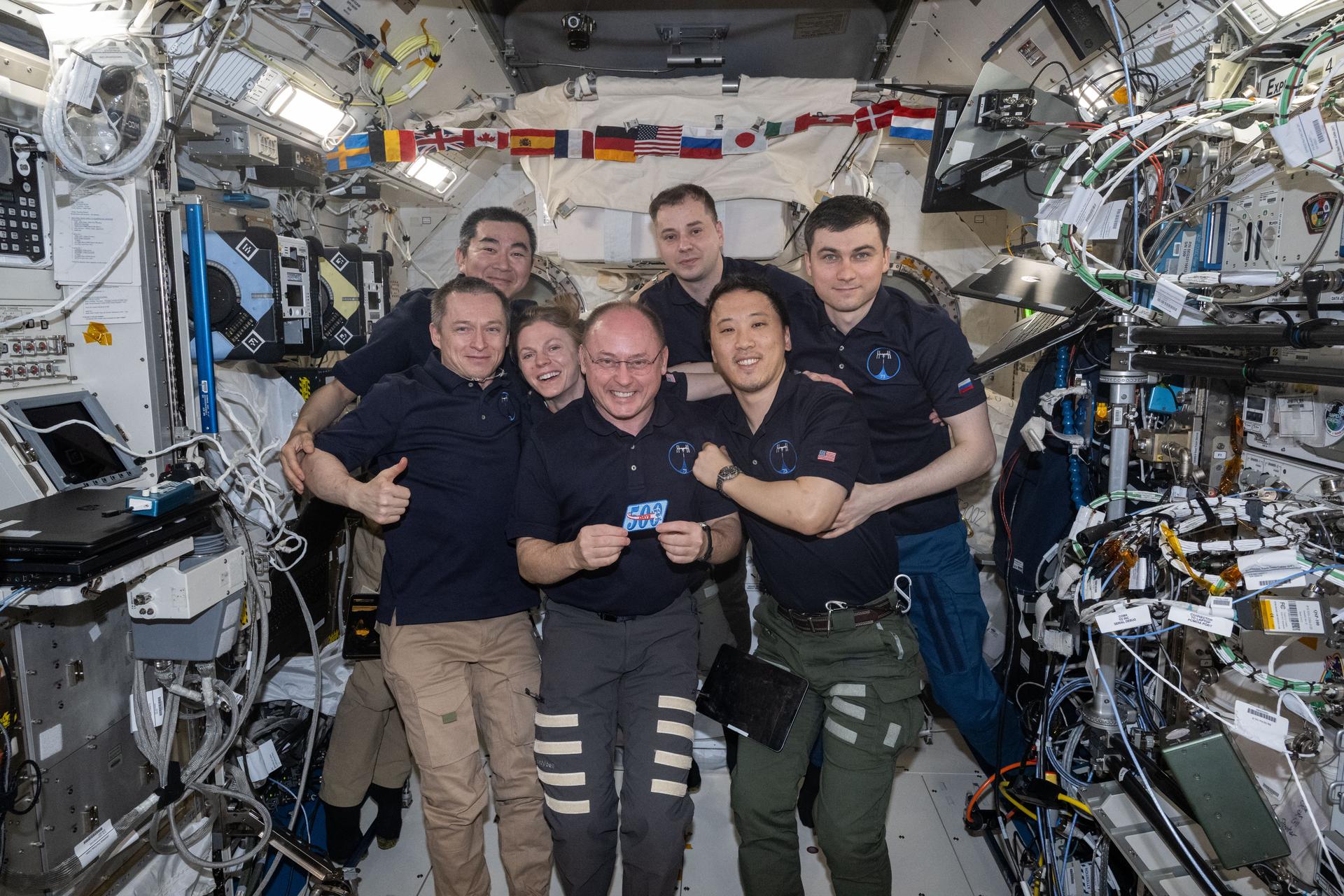
The seven-member Expedition 73 crew gathers together for a portrait on Nov. 27, 2025, celebrating NASA astronaut Mike Fincke’s (center) 500 cumulative days in space over four missions since 2004. In the front from left are, Roscosmos cosmonaut Sergey Ryzhikov, NASA astronaut Zena Cardman, Mike Fincke, and NASA astronaut Jonny Kim. In the back are, JAXA (Japan Aerospace Exploration Agency) astronaut Kimiya Yui and Roscosmos cosmonauts Oleg Platonov and Alexey Zubritsky.
NASA
Three Expedition 73 crewmates will end their stay aboard the International Space Station when they undock Dec. 8 and return to Earth a few hours later. In the meantime, blood research took precedence on Thursday ensuring astronauts stay healthy while living long-term in weightlessness.
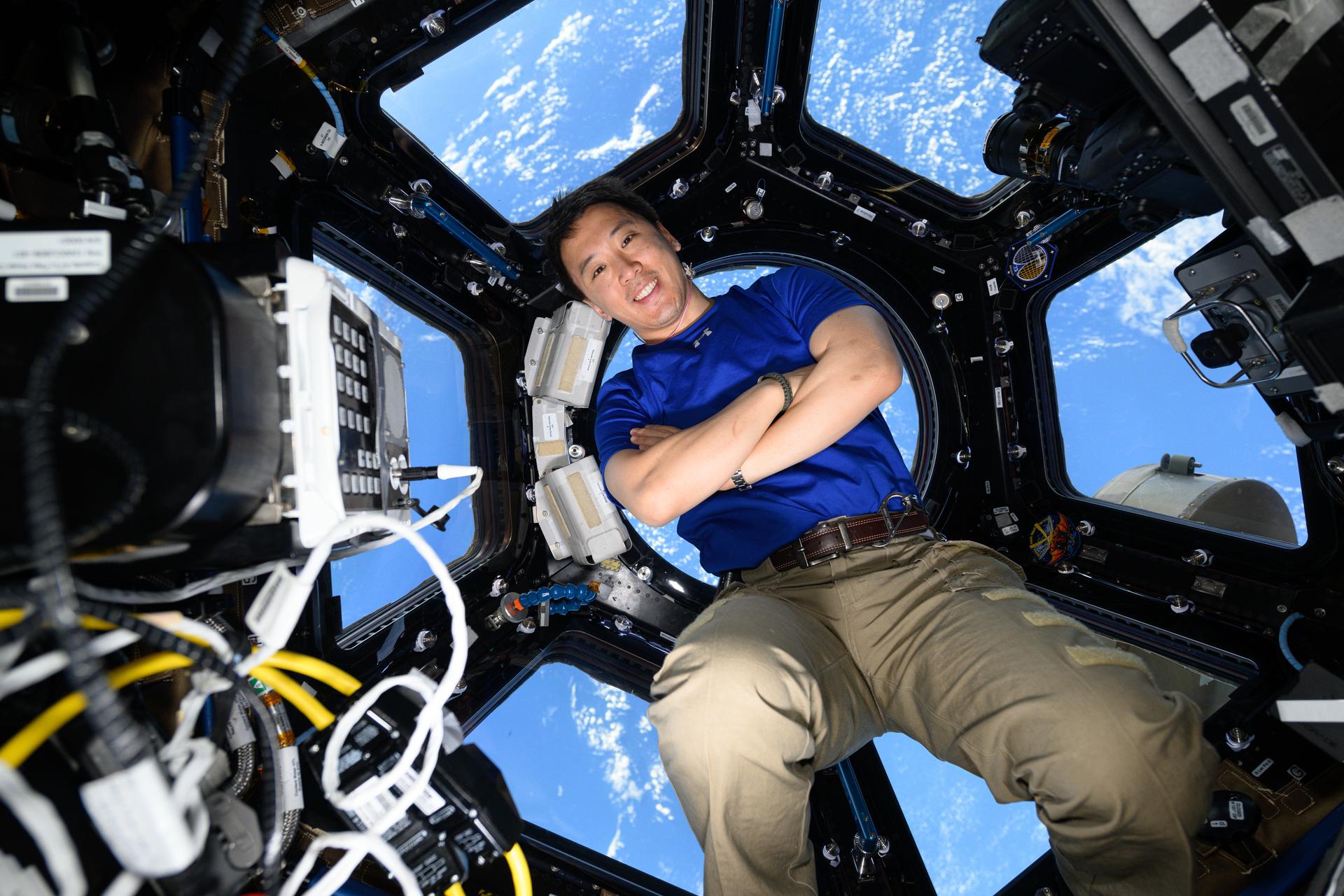
NASA astronaut Jonny Kim and Roscosmos cosmonauts Sergey Ryzhikov and Alexey Zubritsky are poised to complete a 245-day space research mission when they undock at 8:41 p.m. EDT on Monday, Dec. 8, from the Prichal module inside the Soyuz MS-27 crew spacecraft. The trio will parachute back to Earth inside the Soyuz descent module for a landing in Kazakhstan at 12:04 a.m. on Tuesday, less than three-and-a-half hours later. NASA’s live coverage of the crew’s return will be broadcast on NASA+, Amazon Prime, and the agency’s YouTube channel.
The homebound threesome reviewed and practiced the operations they will perform inside the Soyuz once they begin to feel the pull of Earth’s gravity as they reenter the atmosphere. Ryzhikov and Zubritsky also tested a unique suit that reverses space-caused fluid shifts toward the upper body by pulling blood toward the feet. Results may prevent head and eye pressure in space and ease the adjustment to gravity after a multi-month-long spaceflight.
NASA Flight Engineers Zena Cardman and Chris Williams scanned their veins with the Ultrasound 2 device and measured each other’s blood pressure providing doctors insight into an astronaut’s cardiovascular system. The duo conducted the cardiac portion of the long-running CIPHER human research investigation inside the Columbus laboratory module that is tracking astronaut health before, during, and after a mission.
Flight Engineers Mike Fincke of NASA and Kimiya Yui of JAXA (Japan Aerospace Exploration Agency) took turns bringing Williams up-to-speed with life on orbit. The veteran astronauts familiarized Williams with station hardware, operations, and systems. Williams has been on the orbital outpost since Nov. 27 when he and Roscosmos Flight Engineers Sergey Kud-Sverchkov and Sergei Mikaev arrived on the Soyuz MS-28 crew spacecraft.
Kud-Sverchkov and Mikaev examined how microgravity affects blood flow in a cosmonaut’s fingers and toes. A variety of advanced medical gear observed the behavior of their microcirculatory system as they wore a set of electrodes and cuffs on their head, hands, and feet.
Roscosmos Flight Engineer Oleg Platonov spent the first part of his shift documenting the location and amount of clothing and towels available in the Roscosmos segment of the station. After lunchtime, Platonov spent the rest his shift on life support maintenance duties.
NASA’s Nancy Grace Roman Space Telescope Completed
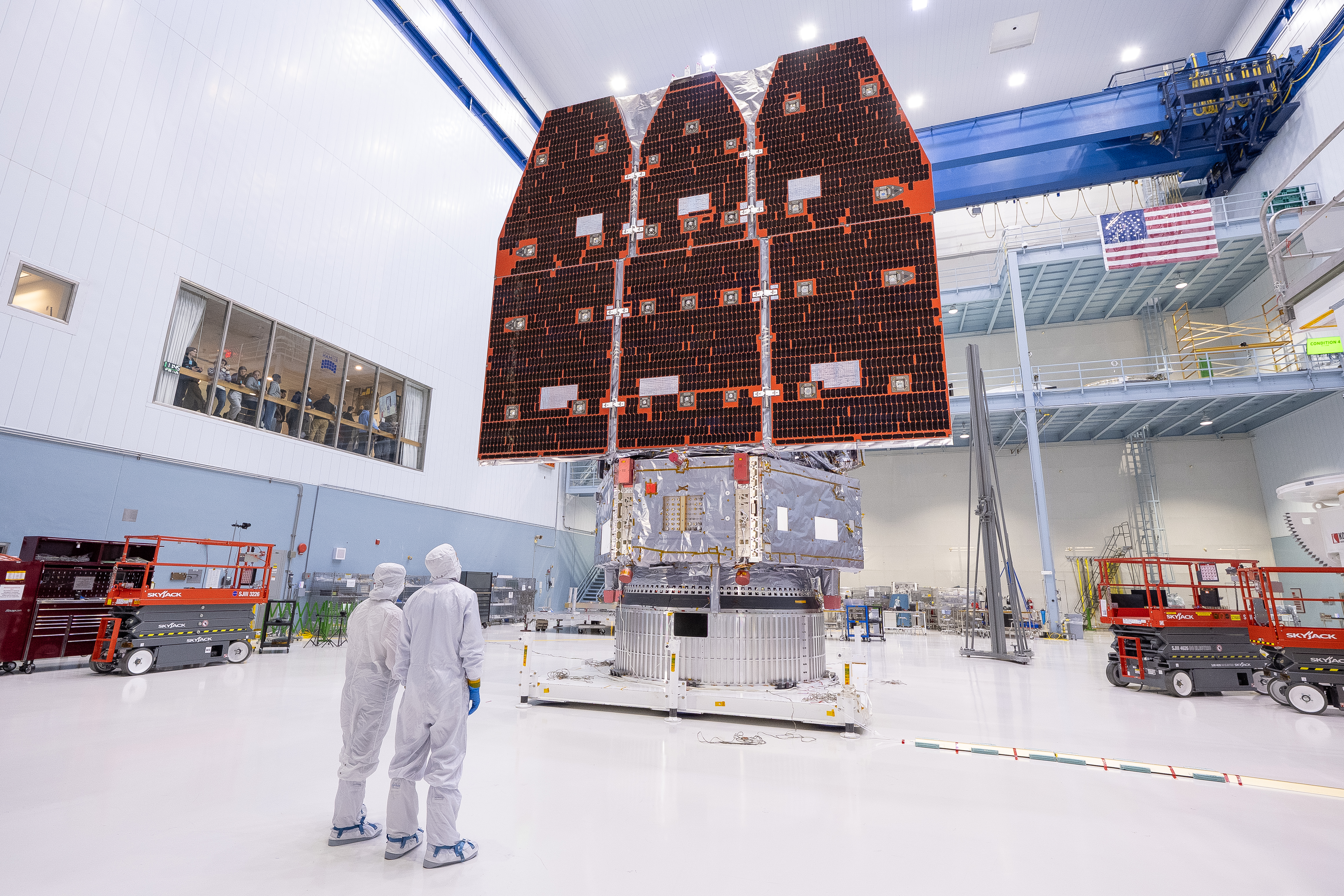
Over the course of several hours, technicians meticulously connected the inner and outer segments of NASA’s Nancy Grace Roman Space Telescope.
NASA/Jolearra Tshiteya
Two technicians look up at NASA’s Nancy Grace Roman Space Telescope after its inner and outer segments were connected at the agency’s Goddard Space Flight Center in Greenbelt, Maryland on Nov. 25, 2025. This marked the end of Roman’s construction. After final testing, the telescope will move to the launch site at NASA’s Kennedy Space Center in Florida for launch preparations in summer 2026. Roman — named after Dr. Nancy Grace Roman, NASA’s first chief astronomer — is slated to launch by May 2027, but the team is on track for launch as early as fall 2026.
NASA Sets Coverage for Astronaut Jonny Kim, Crewmates Return
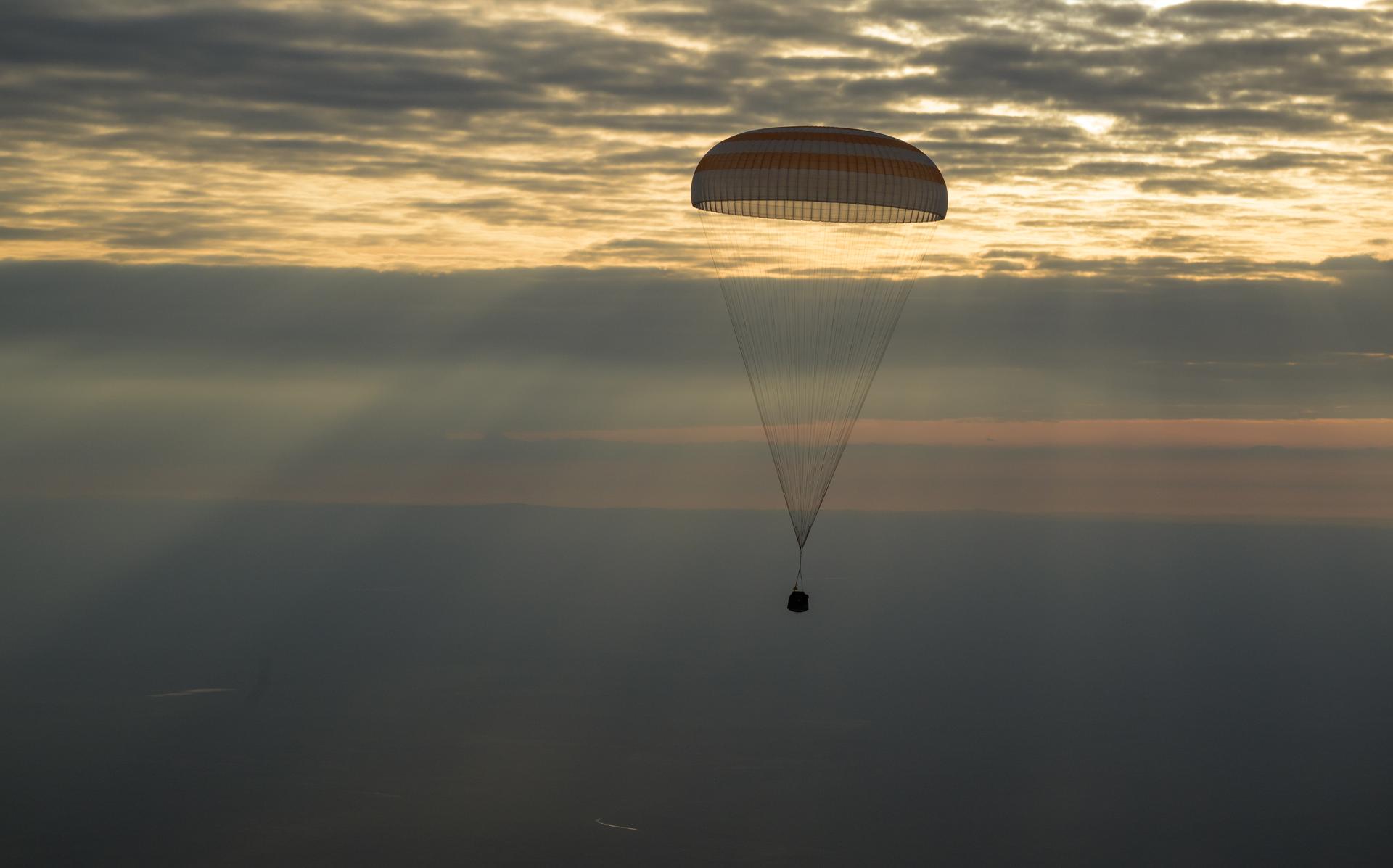
The Soyuz MS-26 spacecraft is seen as it lands on April 20, 2025 (April 19 Eastern time) in a remote area near the town of Zhezkazgan, Kazakhstan, with the Expedition 71/72 crew aboard.
NASA/Bill Ingalls
NASA astronaut Jonny Kim, accompanied by Roscosmos cosmonauts Sergey Ryzhikov and Alexey Zubritsky, is preparing to depart the International Space Station aboard the Soyuz MS-27 spacecraft and return to Earth.
Kim, Ryzhikov, and Zubritsky will undock from the station’s Prichal module at 8:41 p.m. EST on Monday, Dec. 8, headed for a parachute-assisted landing at 12:04 a.m. on Tuesday, Dec. 9 (10:04 a.m. local time in Kazakhstan), on the steppe of Kazakhstan, southeast of the city of Dzhezkazgan.
Watch NASA’s live coverage of the crew’s return on NASA+, Amazon Prime, and the agency’s YouTube channel. Learn how to stream NASA content through a variety of online platforms, including social media.
The space station change of command ceremony will begin at 10:30 a.m. Sunday, Dec. 7, on NASA+ and the agency’s YouTube channel. Rzyhikov will hand over station command to NASA astronaut Mike Fincke for Expedition 74, which begins at the time of Soyuz MS-27 undocking.
Kim and his crewmates are completing a 245-day mission aboard the station. At the conclusion of their mission, they will have orbited Earth 3,920 times and traveled nearly 104 million miles. This was the first flight for Kim and Zubritsky to the orbiting laboratory, while Ryzhikov is ending his third trip to space.
After landing, the three crew members will fly by helicopter to Karaganda, Kazakhstan, where recovery teams are based. Kim will board a NASA aircraft and return to Houston, while Ryzhikov and Zubritsky will depart for their training base in Star City, Russia.
NASA’s coverage is as follows (all times Eastern and subject to change based on real-time operations):
Sunday, Dec. 7:
10:30 a.m. – Expedition 73/74 change of command ceremony begins on NASA+Amazon Prime, and YouTube.
For more than 25 years, people have lived and worked continuously aboard the International Space Station, advancing scientific knowledge and making research breakthroughs that are not possible on Earth. The station is a critical testbed for NASA to understand and overcome the challenges of long-duration spaceflight and to expand commercial opportunities in low Earth orbit. As commercial companies concentrate on providing human space transportation services and destinations as part of a robust low Earth orbit economy, NASA is focusing its resources on deep space missions to the Moon as part of the Artemis campaign in preparation for future human missions to Mars.
Learn more about International Space Station research and operations at:
NASA Completes Nancy Grace Roman Space Telescope Construction
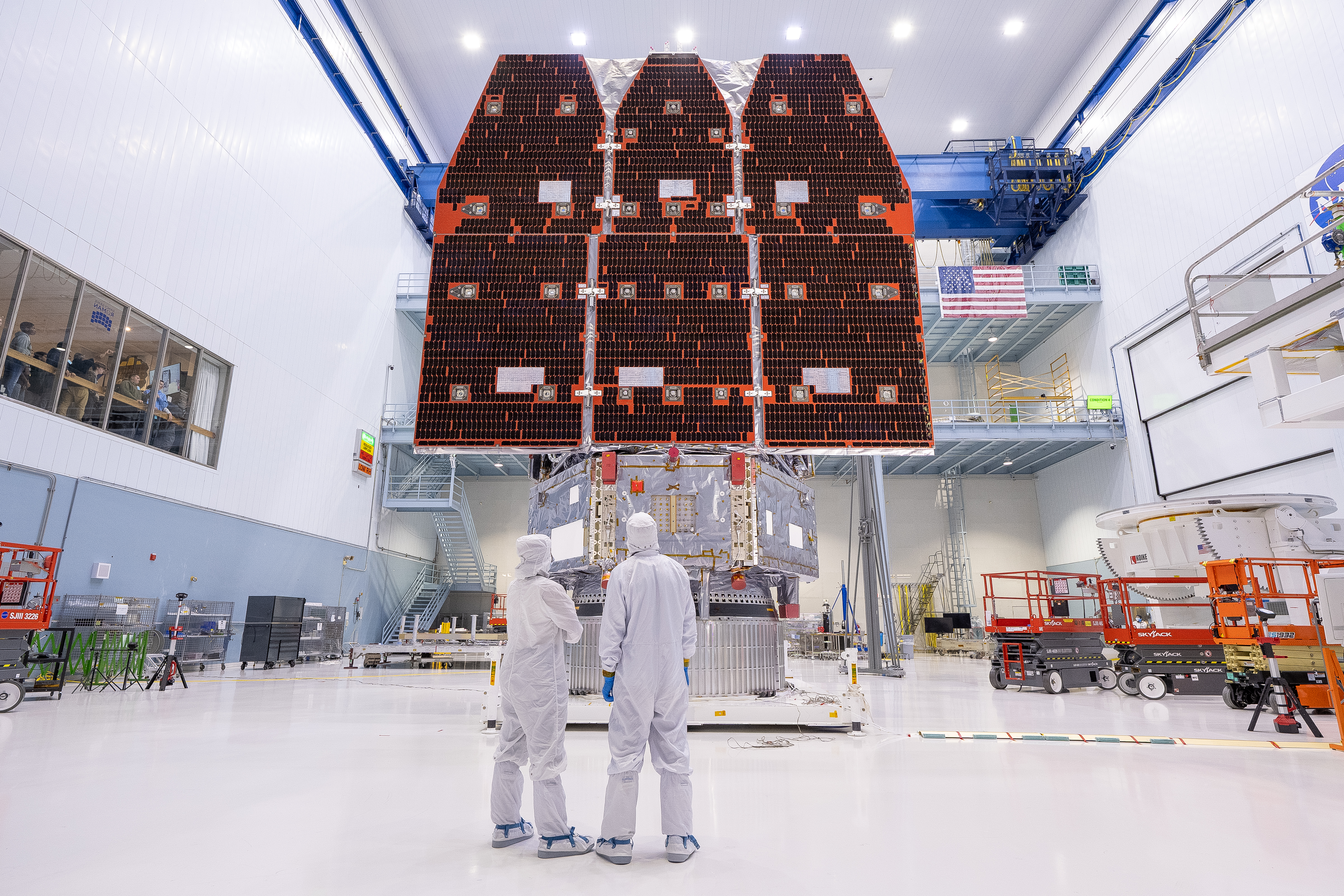
NASA’s next big eye on the cosmos is now fully assembled. On Nov. 25, technicians joined the inner and outer portions of the Nancy Grace Roman Space Telescope in the largest clean room at the agency’s Goddard Space Flight Center in Greenbelt, Maryland.
NASA’s Nancy Grace Roman Space Telescope is now fully assembled following the integration of its two major segments on Nov. 25 at the agency’s Goddard Space Flight Center in Greenbelt, Md. The mission is slated to launch by May 2027, but the team is on track for launch as early as fall 2026.
Credit: NASA/Jolearra Tshiteya
“Completing the Roman observatory brings us to a defining moment for the agency,” said NASA Associate Administrator Amit Kshatriya. “Transformative science depends on disciplined engineering, and this team has delivered—piece by piece, test by test—an observatory that will expand our understanding of the universe. As Roman moves into its final stage of testing following integration, we are focused on executing with precision and preparing for a successful launch on behalf of the global scientific community.”
After final testing, Roman will move to the launch site at NASA’s Kennedy Space Center in Florida for launch preparations in summer 2026. Roman is slated to launch by May 2027, but the team is on track for launch as early as fall 2026. A SpaceX Falcon Heavy rocket will send the observatory to its final destination a million miles from Earth.
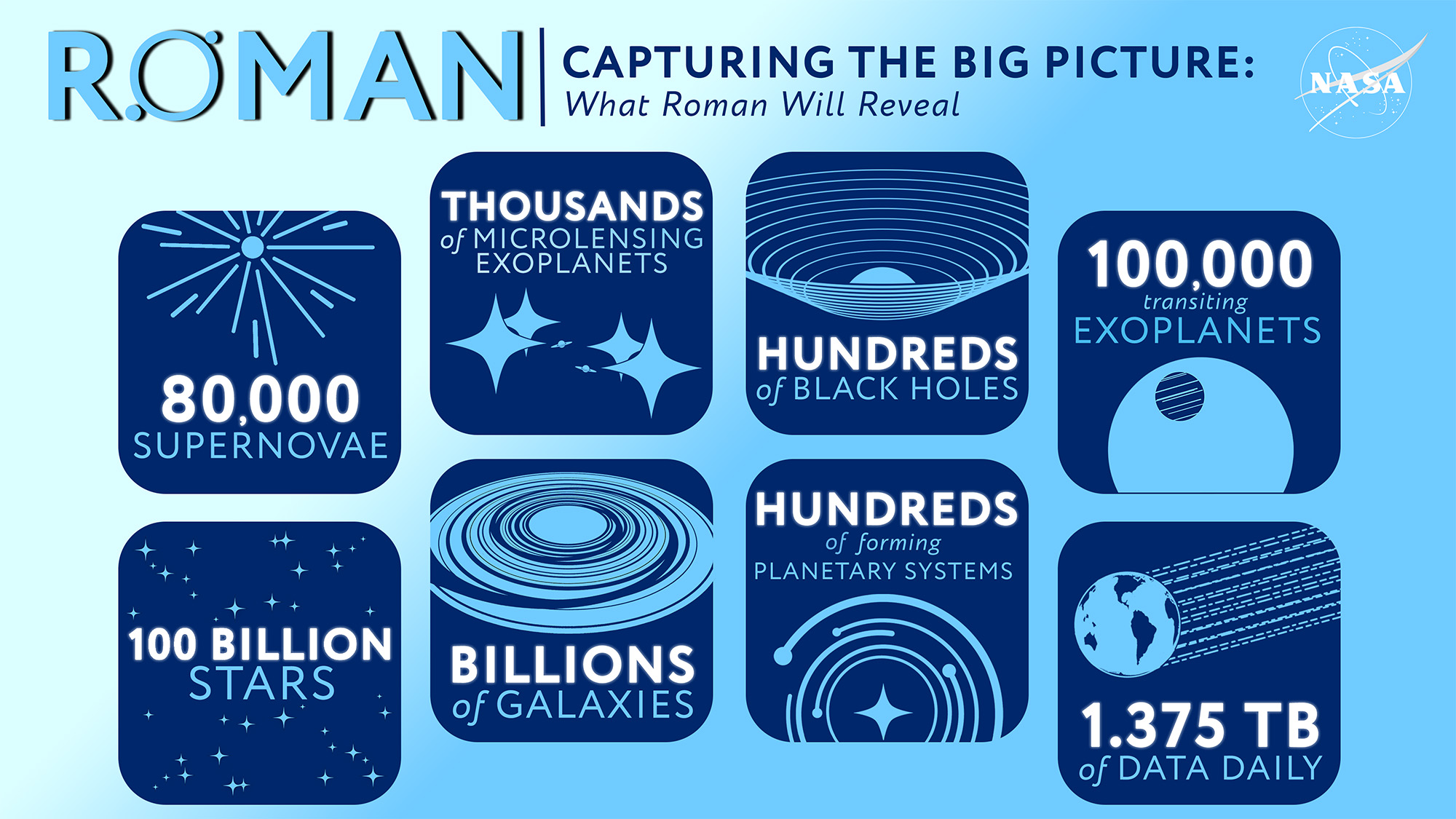
“With Roman’s construction complete, we are poised at the brink of unfathomable scientific discovery,” said Julie McEnery, Roman’s senior project scientist at NASA Goddard. “In the mission’s first five years, it’s expected to unveil more than 100,000 distant worlds, hundreds of millions of stars, and billions of galaxies. We stand to learn a tremendous amount of new information about the universe very rapidly after Roman launches.”
NASA’s Nancy Grace Roman Space Telescope will survey vast swaths of sky during its five-year primary mission. During that time, scientists expect it to see an incredible number of new objects, including stars, galaxies, black holes and planets outside our solar system, known as exoplanets. This infographic previews some of the discoveries scientists anticipate from Roman’s data deluge.
Credit: NASA’s Goddard Space Flight Center
Observing from space will make Roman very sensitive to infrared light — light with a longer wavelength than our eyes can see — from far across the cosmos. Pairing its crisp infrared vision with a sweeping view of space will allow astronomers to explore myriad cosmic topics, from dark matter and dark energy to distant worlds and solitary black holes, and conduct research that would take hundreds of years using other telescopes.
“Within our lifetimes, a great mystery has arisen about the cosmos: why the expansion of the universe seems to be accelerating. There is something fundamental about space and time we don’t yet understand, and Roman was built to discover what it is,” said Nicky Fox, associate administrator, Science Mission Directorate, NASA Headquarters in Washington. “With Roman now standing as a complete observatory, which keeps the mission on track for a potentially early launch, we are a major step closer to understanding the universe as never before. I couldn’t be prouder of the teams that have gotten us to this point.”
The coronagraph will demonstrate new technologies for directly imaging planets around other stars. It will block the glare from distant stars and make it easier for scientists to see the faint light from planets in orbit around them. The Coronagraph aims to photograph worlds and dusty disks around nearby stars in visible light to help us see giant worlds that are older, colder, and in closer orbits than the hot, young super-Jupiters direct imaging has mainly revealed so far.
“The question of ‘Are we alone?’ is a big one, and it’s an equally big task to build tools that can help us answer it,” said Feng Zhao, the Roman Coronagraph Instrument manager at NASA’s Jet Propulsion Laboratory in Southern California. “The Roman Coronagraph is going to bring us one step closer to that goal. It’s incredible that we have the opportunity to test this hardware in space on such a powerful observatory as Roman.”
The coronagraph team will conduct a series of pre-planned observations for three months spread across the mission’s first year-and-a-half of operations, after which the mission may conduct additional observations based on scientific community input.
The Wide Field Instrument is a 288-megapixel camera that will unveil the cosmos all the way from our solar system to near the edge of the observable universe. Using this instrument, each Roman image will capture a patch of the sky bigger than the apparent size of a full moon. The mission will gather data hundreds of times faster than NASA’s Hubble Space Telescope, adding up to 20,000 terabytes (20 petabytes) over the course of its five-year primary mission.
“The sheer volume of the data Roman will return is mind-boggling and key to a host of exciting investigations,” said Dominic Benford, Roman’s program scientist at NASA Headquarters.
Over the course of several hours, technicians meticulously connected the inner and outer segments of NASA’s Nancy Grace Roman Space Telescope, as shown in this time-lapse. Next, Roman will undergo final testing prior to moving to the launch site at NASA’s Kennedy Space Center in Florida for launch preparations in summer 2026.
NASA/Sophia Roberts
Survey trifecta
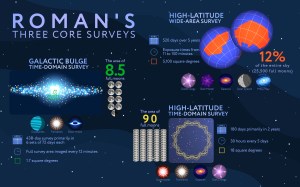
Using the Wide Field Instrument, Roman will conduct three core surveys which will account for 75% of the primary mission. The High-Latitude Wide-Area Survey will combine the powers of imaging and spectroscopy to unveil more than a billion galaxies strewn across a wide swath of space and time. Astronomers will trace the evolution of the universe to probe dark matter — invisible matter detectable only by how its gravity affects things we can see — and trace the formation of galaxies and galaxy clusters over time.
The High-Latitude Time-Domain Survey will probe our dynamic universe by observing the same region of the cosmos repeatedly. Stitching these observations together to create movies will allow scientists to study how celestial objects and phenomena change over time periods of days to years. That will help astronomers study dark energy — the mysterious cosmic pressure thought to accelerate the universe’s expansion — and could even uncover entirely new phenomena that we don’t yet know to look for.
Roman’s Galactic Bulge Time-Domain Survey will look inward to provide one of the deepest views ever of the heart of our Milky Way galaxy. Astronomers will watch hundreds of millions of stars in search of microlensing signals — gravitational boosts of a background star’s light caused by the gravity of an intervening object. While astronomers have mainly discovered star-hugging worlds, Roman’s microlensing observations can find planets in the habitable zone of their star and farther out, including worlds like every planet in our solar system except Mercury. Microlensing will also reveal rogue planets—worlds that roam the galaxy untethered to a star — and isolated black holes. The same dataset will reveal 100,000 worlds that transit, or pass in front of, their host stars.
The remaining 25% of Roman’s five-year primary mission will be dedicated to other observations that will be determined with input from the broader scientific community. The first such program, called the Galactic Plane Survey, has already been selected.
Because Roman’s observations will enable such a wide range of science, the mission will have a General Investigator Program designed to support astronomers to reveal scientific discoveries using Roman data. As part of NASA’s commitment to Gold Standard Science, NASA will make all of Roman’s data publicly available with no exclusive use period. This ensures multiple scientists and teams can use data at the same time, which is important since every Roman observation will address a wealth of science cases.
NASA’s freshly assembled Nancy Grace Roman Space Telescope will revolutionize our understanding of the universe with its deep, crisp, sweeping infrared views of space. The mission will transform virtually every branch of astronomy and bring us closer to understanding the mysteries of dark energy, dark matter, and how common planets like Earth are throughout our galaxy. Roman is on track for launch by May 2027, with teams working toward a launch as early as fall 2026. Credit: NASA’s Goddard Space Flight Center
Roman’s namesake — Dr. Nancy Grace Roman, NASA’s first chief astronomer — made it her personal mission to make cosmic vistas readily accessible to all by paving the way for telescopes based in space.
“The mission will acquire enormous quantities of astronomical imagery that will permit scientists to make groundbreaking discoveries for decades to come, honoring Dr. Roman’s legacy in promoting scientific tools for the broader community,” said Jackie Townsend, Roman’s deputy project manager at NASA Goddard. “I like to think Dr. Roman would be extremely proud of her namesake telescope and thrilled to see what mysteries it will uncover in the coming years.”
The Nancy Grace Roman Space Telescope is managed at NASA’s Goddard Space Flight Center in Greenbelt, Maryland, with participation by NASA’s Jet Propulsion Laboratory in Southern California; Caltech/IPAC in Pasadena, California; the Space Telescope Science Institute in Baltimore; and a science team comprising scientists from various research institutions. The primary industrial partners are BAE Systems Inc. in Boulder, Colorado; L3Harris Technologies in Rochester, New York; and Teledyne Scientific & Imaging in Thousand Oaks, California.
NASA Software Raises Bar for Aircraft Icing Research
4 min read
Preparations for Next Moonwalk Simulations Underway (and Underwater)
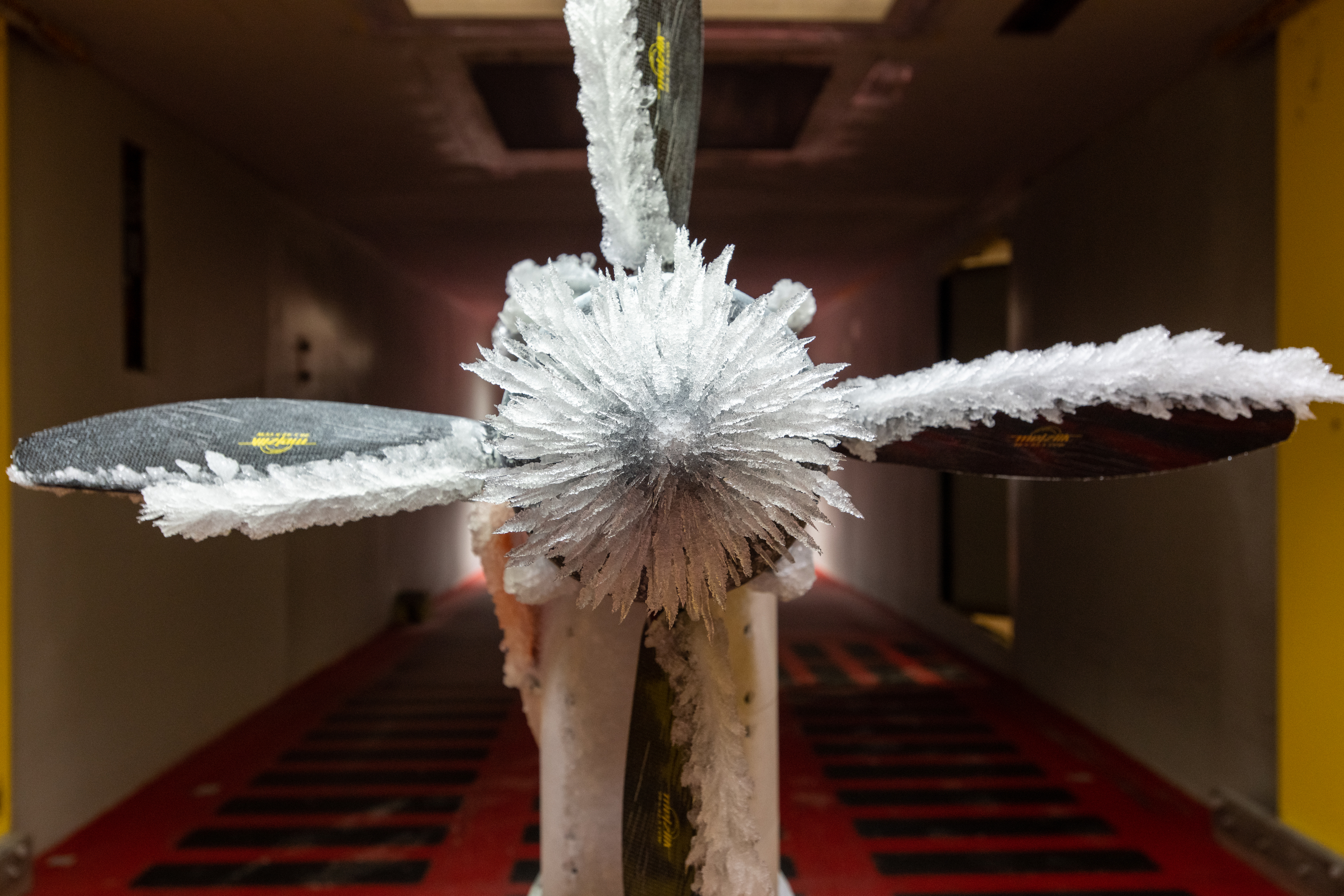
Researchers at NASA’s Glenn Research Center in Cleveland used the Glenn Icing Computational Environment (GlennICE) software to create 3D computational models of this advanced air mobility rotor and study propeller icing issues. The physical model of this rotor was installed and tested in the Icing Research Tunnel in 2023 as part of an icing evaluation study, which also sought to validate the computational models.
Credit: NASA/Jordan Cochran
When flying in certain weather conditions, tiny freezing water droplets floating in the air can pose a risk to aircraft. If not taken into consideration, these water droplets can accumulate on an aircraft as ice and pose a safety risk.
But NASA software tools such as Glenn Icing Computational Environment (GlennICE) are working to keep passengers and pilots safe.
NASA developed GlennICE, a new NASA software code, to transform the way we explore, understand, and prevent ice buildup on aircraft wings and engines, as well as control surfaces like rudders and elevators.
Owing to decades of world-class NASA research, engineers nationwide can now use GlennICE to design aircraft in such a way that ice buildup will either occur rarely or pose very little risk.
Named for NASA’s Glenn Research Center in Cleveland, GlennICE is part of NASA’s work to provide the aviation industry with computational tools, including design software, to improve aircraft safety and enable innovation. For icing research and modeling, NASA computer codes have become the industry standard over the past several decades. And GlennICE builds on this work, performing highly advanced digital modeling of water and ice particles in just about any atmospheric condition you can imagine.
With updated capabilities and a streamlined user experience, GlennICE will enable users to advance the state of the art – particularly researchers working on complex, unusual future aircraft designs.
“The legacy codes are well formulated to handle simulations of traditional tube-and-wing shaped aircraft,” said Christopher Porter, lead for GlennICE’s development. “But now, we have new vehicles with new designs that present icing research challenges. This requires a more advanced tool, and that’s where GlennICE comes in.”
So far, dozens of industry partners as well as other government agencies have started using GlennICE, which is available on NASA’s software catalog.
Timelapse video of an ice accretion on the 65% common research model.
Credit: NASA/Jordan Cochran
Ice buildup: not cool
Though based on legacy NASA codes such as LEWICE 3D, GlennICE is a whole different ballgame. The new toolkit can be tailored to unique situations and is compatible with other software tools. In other words, it is more configurable, and much less time consuming for researchers to set up and use.
This streamlined process, along with its more-advanced ability to model icing, allows GlennICE to easily tackle 21st-century concepts such as supersonic planes, advanced air mobility drones and other aircraft, unconventionally shaped wings, open-rotor turbofan designs, or new configurations for conventional aircraft such as radar domes.
But how does this simulation process work?
“Imagine an aircraft flying through a cloud,” Porter said. “Some of those water and ice droplets hit the aircraft and some of them don’t. GlennICE simulates these droplets and exactly where they will end up, both on the aircraft and not.”
When these water droplets hit the aircraft, they attach, freeze, and start to gather even more droplets that do the same. The software simulates exactly where this will occur, and what shape the ice will take over time.
“We’re not just dealing with the airplane, but the physics of the air and water as well,” Porter said.
Because it’s designed for simulating droplets, researchers have expressed interest in using GlennICE to simulate other conditions involving sand and ash. These substances, when ingested by aircraft engines, can pose separate risks that aeronautical engineers work to prevent.
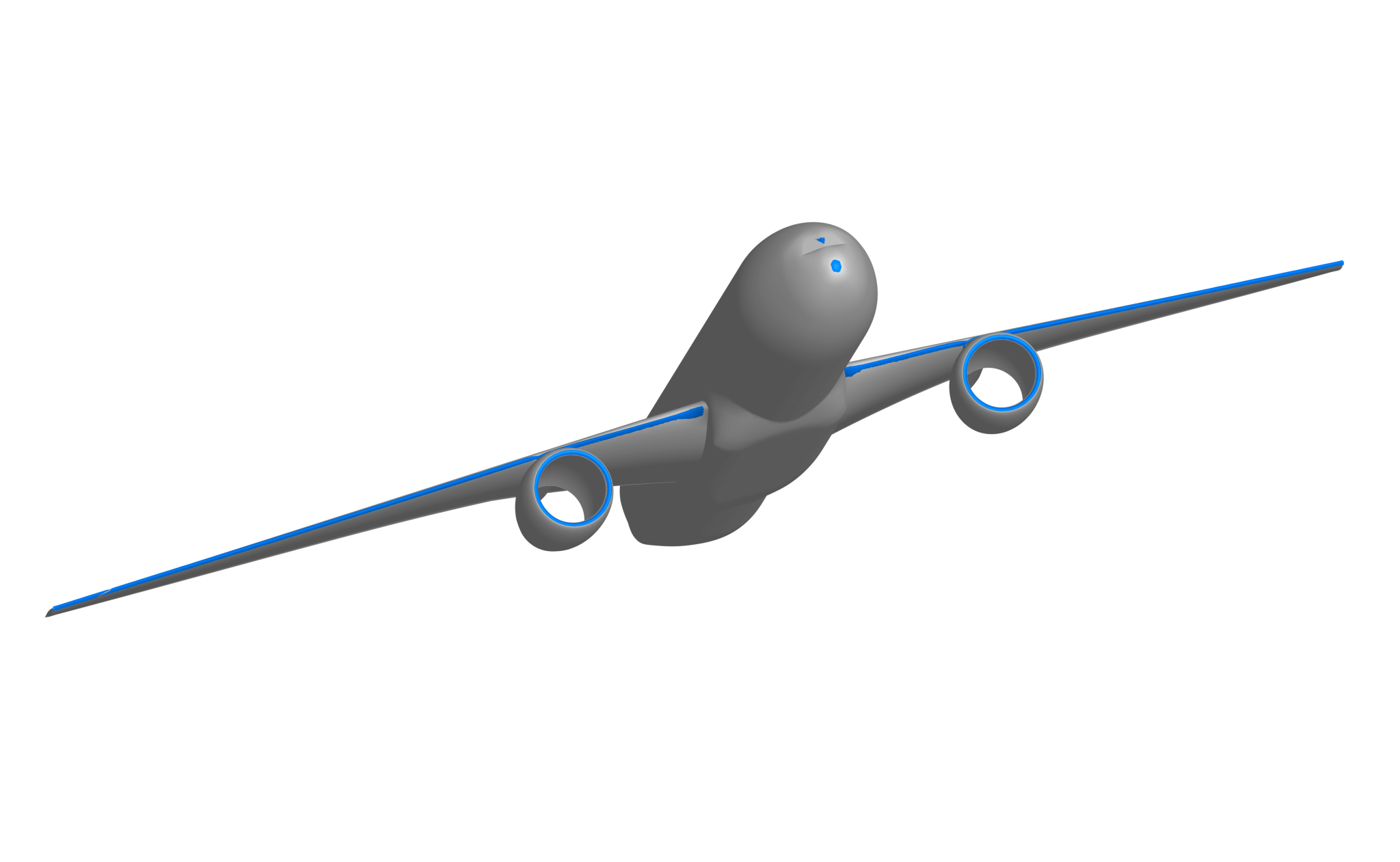
Glenn Icing Computational Environment (GlennICE) simulated ice accretions (blue) on the High Lift Common Research Model (gray).
Credit: NASA/Thomas Ozoroski
World-class research
Icing research is fundamental to aviation safety, and NASA fulfils a key role in ensuring pilots and passengers fly more safely and ice-free. The agency’s wind tunnels, for instance, have world-class icing research capabilities not commonly found in aeronautics research.
Paired with wind tunnel testing, GlennICE offers a holistic set of capabilities to researchers. While wind tunnels can verify and validate data with real-world models and conditions, tools like GlennICE can fill gaps in research not easily achieved with wind tunnels.
“Some environments we need to test in are impractical with wind tunnels because of the tunnel size required and complex physics involved,” Porter said. “But with GlennICE, we can do these tests digitally. For example, we can model all the icing conditions noted in new regulations.”
The GlennICE development falls under NASA’s Transformative Aeronautics Concept and Advanced Air Vehicles programs. Those programs supported GlennICE to further NASA’s work on computational tool development for aerospace design. More about the history of icing research at NASA is available on the agency’s website.