Watching Over the Deep Space Network Before Artemis II Signal Acquisition

Watching Over the Deep Space Network Before Artemis II Signal Acquisition

1 Min Read

Watching Over the Deep Space Network Before Artemis II Signal Acquisition

Blanca Renteria, Artemis Deep Space Network (DSN) operations chief, monitors data at the Space Flight Operations Facility at NASA’s Jet Propulsion Laboratory in Southern California shortly after Artemis II launched from the agency’s Kennedy Space Flight Center in Florida on April 1, 2026.
PIA26744
Credits:
NASA/JPL-Caltech

Description

Blanca Renteria, Artemis Deep Space Network (DSN) operations chief, monitors data at the Space Flight Operations Facility at NASA’s Jet Propulsion Laboratory in Southern California shortly after Artemis II launched from the agency’s Kennedy Space Flight Center in Florida on April 1, 2026, at 6:35 p.m. EDT.

The Space Flight Operations Facility operates the DSN, which comprises three complexes in Goldstone, California; Madrid, Spain; and Canberra, Australia. Each complex consists of several radio frequency antennas that communicate with dozens of robotic spacecraft exploring the solar system in addition to the crewed Artemis II mission. 

The DSN is managed by JPL for the agency’s Space Communications and Navigation program, which is located at NASA Headquarters within the Space Operations Mission Directorate. The DSN allows missions to track, send commands to, and receive scientific data from faraway spacecraft. JPL is managed by Caltech in Pasadena, California, for NASA.

For more information about Artemis II, visit: https://www.nasa.gov/mission/artemis-ii/
Powered by WPeMatico

Get The Details…

Watching the Artemis II Launch From JPL’s Space Flight Operations Facility

Watching the Artemis II Launch From JPL’s Space Flight Operations Facility

1 Min Read

Watching the Artemis II Launch From JPL’s Space Flight Operations Facility

Staff at NASA’s Jet Propulsion Laboratory in Southern California watch the launch of the agency’s Artemis II mission to the Moon on April 1, 2026, at the Space Flight Operations Facility, which operates the Deep Space Network (DSN).
PIA26743
Credits:
NASA/JPL-Caltech

Description

Staff at NASA’s Jet Propulsion Laboratory in Southern California watch the launch of the agency’s Artemis II mission to the Moon on April 1, 2026, at the Space Flight Operations Facility, which operates the Deep Space Network (DSN). Soon after launch, the Artemis II crew communicated with the Near Space Network while they were close to Earth. Later, communications were handed off to the DSN as the Orion capsule continued its journey into deep space.

The DSN comprises three complexes in Goldstone, California; Madrid, Spain; and Canberra, Australia. Each complex has several radio frequency antennas that communicate with dozens of spacecraft exploring the solar system in addition to the Artemis II mission.

The DSN is managed by JPL for the agency’s Space Communications and Navigation program, which is located at NASA Headquarters within the Space Operations Mission Directorate. The DSN allows missions to track, send commands to, and receive scientific data from faraway spacecraft. JPL is managed by Caltech in Pasadena, California, for NASA.

For more information about Artemis II, visit: https://www.nasa.gov/mission/artemis-ii/
Powered by WPeMatico

Get The Details…

JPL’s ‘Lucky Peanuts’ Before Artemis II Launch

JPL’s ‘Lucky Peanuts’ Before Artemis II Launch

1 Min Read

JPL’s ‘Lucky Peanuts’ Before Artemis II Launch

A container of “lucky peanuts” sits above workstations within the Space Flight Operations Facility at NASA’s Jet Propulsion Laboratory shortly before the launch of the Artemis II mission to the Moon on April 1, 2026.
PIA26742
Credits:
NASA/JPL-Caltech

Description

A container of “lucky peanuts” sits above workstations within the Space Flight Operations Facility at NASA’s Jet Propulsion Laboratory shortly before the launch of the Artemis II mission to the Moon on April 1, 2026. Eating peanuts before launches and other major mission events is a longstanding tradition at JPL.

The Space Flight Operations Facility operates the DSN, which comprises three complexes in Goldstone, California; Madrid, Spain; and Canberra, Australia. Each complex consists of several radio frequency antennas that communicate with dozens of spacecraft exploring the solar system in addition to the crewed Artemis II mission. 

The DSN is managed by JPL for the agency’s Space Communications and Navigation program, which is located at NASA Headquarters within the Space Operations Mission Directorate. The DSN allows missions to track, send commands to, and receive scientific data from faraway spacecraft. JPL is managed by Caltech in Pasadena, California, for NASA.

For more information about Artemis II, visit: https://www.nasa.gov/mission/artemis-ii/
Powered by WPeMatico

Get The Details…

Supporting Artemis II From JPL’s Space Flight Operations Facility

Supporting Artemis II From JPL’s Space Flight Operations Facility

2 Min Read

Supporting Artemis II From JPL’s Space Flight Operations Facility

The Artemis II mission patch appears in the center screen of the Space Flight Operations Facility at NASA’s Jet Propulsion Laboratory in Southern California on April 1, 2026, shortly before the mission launched to the Moon.
PIA26741
Credits:
NASA/JPL-Caltech

Description

The Artemis II mission patch appears in the center screen of the Space Flight Operations Facility at NASA’s Jet Propulsion Laboratory in Southern California on April 1, 2026, shortly before the mission launched to the Moon. A graphical representation of the antennas of the agency’s Deep Space Network (DSN), left, indicates which antennas are currently sending and receiving data, highlighted in white. 

Shortly after liftoff at 6:35 p.m. EDT from NASA’s Kennedy Space Center in Florida, initial Artemis II communications were handled by the agency’s Near Space Network. Then, the DSN acquired signal, marking the first time in over 50 years that the network would be communicating with a crewed spacecraft traveling through deep space.

The Space Flight Operations Facility operates the DSN, which comprises three complexes in Goldstone, California; Madrid, Spain; and Canberra, Australia. Each complex consists of several radio frequency antennas that communicate with dozens of spacecraft exploring the solar system in addition to the Artemis II mission. 

The DSN is managed by JPL for the agency’s Space Communications and Navigation program, which is located at NASA Headquarters within the Space Operations Mission Directorate. The DSN allows missions to track, send commands to, and receive scientific data from faraway spacecraft. JPL is managed by Caltech in Pasadena, California, for NASA.

For more information about Artemis II, visit: https://www.nasa.gov/mission/artemis-ii/

Powered by WPeMatico

Get The Details…

Snow in the Shadow of the Andes

Snow in the Shadow of the Andes

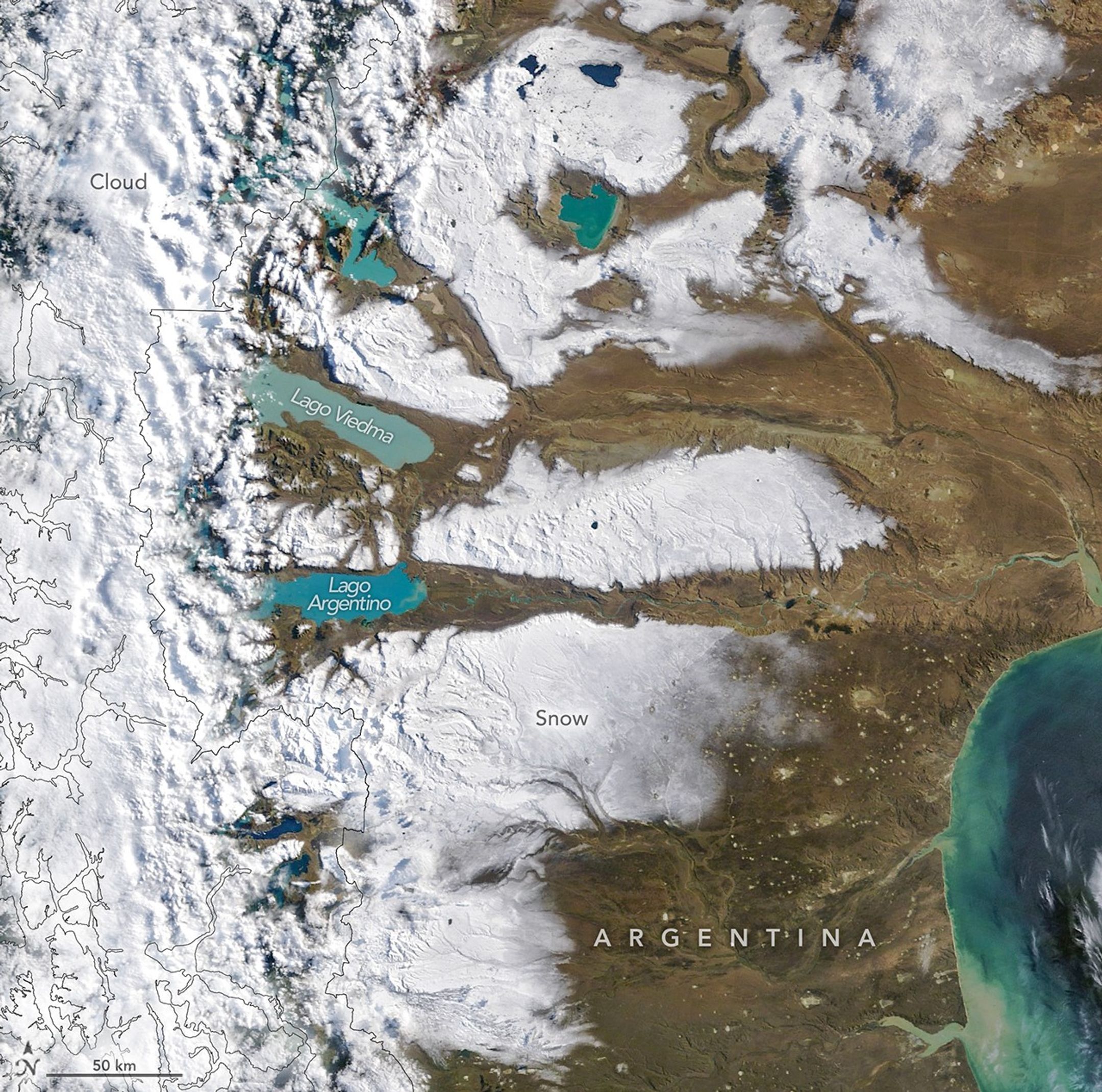
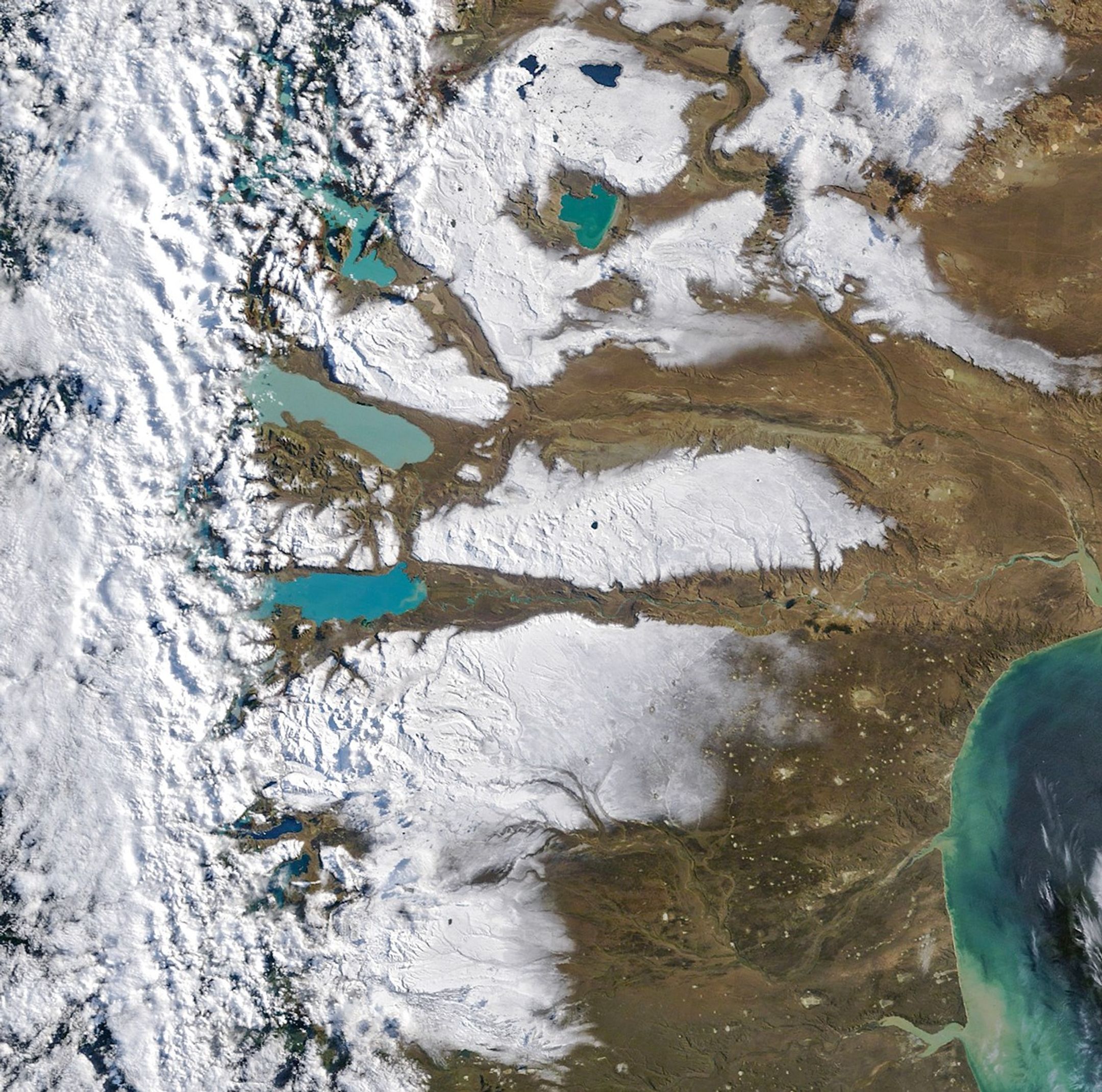
Large areas of snow cover the arid plains of southern Argentina. Several large lakes containing water in shades of milky blue are visible, while the Andes are veiled by clouds along the left side.
Snow covers large areas of southern Argentina’s high plains in this image acquired on April 3, 2026, by the MODIS (Moderate Resolution Imaging Spectroradiometer) on NASA’s Terra satellite.
NASA Earth Observatory/Michala Garrison

On the eastern, arid side of the Andes, the plains of southern Argentina stretch from the mountains to the Atlantic coast. The landscape often appears dry and brown, interrupted by colorful glacier-fed lakes, but a storm in early April 2026 blanketed swaths of the land in white. The MODIS (Moderate Resolution Imaging Spectroradiometer) on NASA’s Terra satellite captured this image of the snowy Patagonian Desert on the morning of April 3.

Early fall has been wetter than normal in southern Patagonia, said atmospheric scientist René Garreaud of the Universidad de Chile, noting that satellite-based estimates showed above-average precipitation from late March through early April. Much of the region’s precipitation tends to fall on the western, windward side of the Andes, he said. “But strong winds are capable of blowing some snow east into the Argentinian side, as beautifully reflected in the MODIS image.”

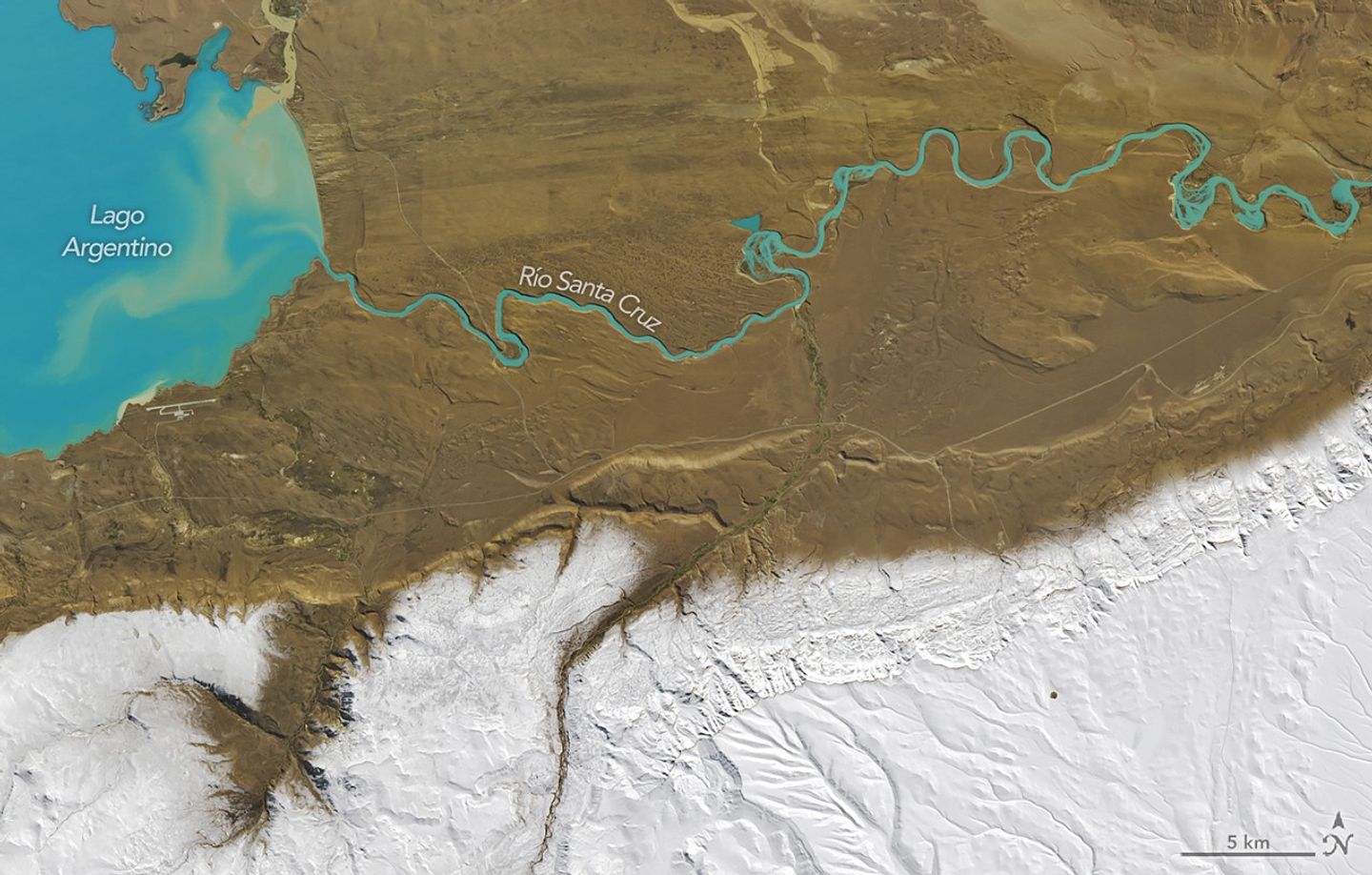
The outlet of bright blue Lago Argentino meanders across an otherwise dry, brown valley from left to right. The bottom third of the image is white, where snow covers higher elevations.
Snow lines a valley at the outlet of Lago Argentino in this image acquired on April 3, 2026, by the OLI (Operational Land Imager) on Landsat 9.
NASA Earth Observatory/Michala Garrison

Snow clings to the higher elevations, while valleys draining the large glacial lakes are bare. In this detailed Landsat image, a stark snow line appears along the outlet of Lago Argentino. Also note the color of the water. Lago Argentino and other nearby lakes contain an abundance of fine sediment, or glacial flour, pulverized by southern Patagonia’s plentiful glaciers. This suspended sediment makes the lakes appear milky blue or turquoise.

Though snow was widespread across the desert after the early-season storm, the wintry splendor was fleeting. A satellite view from the afternoon of April 4 showed that snow had melted from all but the highest mountain areas.

NASA Earth Observatory images by Michala Garrison, using MODIS data from NASA EOSDIS LANCE and GIBS/Worldview, and Landsat data from the U.S. Geological Survey. Story by Lindsey Doermann.

References & Resources

You may also be interested in:

Stay up-to-date with the latest content from NASA as we explore the universe and discover more about our home planet.

Dust Outbreak Reaches Europe

3 min read

Clouds of dust lofted from the Sahara Desert brought hazy skies and muddy rain to Western Europe.

Article

Wave of Dust Rolls Through Texas

3 min read

An advancing cold front kicked up a sharp line of sand and other small particles that swept over the high…

Article

Finding Freshwater in Great Salt Lake

4 min read

Reed-covered mounds exposed by declining water levels reveal an unexpected network of freshwater springs that feed directly into the lake…

Article

Powered by WPeMatico

Get The Details…