NASA Astronaut Chris Williams, Crewmates Arrive at Space Station

NASA Astronaut Chris Williams, Crewmates Arrive at Space Station

The Soyuz rocket launches to the International Space Station with Expedition 74 crew members: NASA astronaut Chris Williams, and Roscosmos cosmonauts Sergey Kud-Sverchkov and Sergei Mikaev, on Thursday, Nov. 27, 2025, at the Baikonur Cosmodrome in Kazakhstan.
NASA/Bill Ingalls

NASA astronaut Chris Williams, accompanied by Roscosmos cosmonauts Sergey Kud-Sverchkov and Sergei Mikaev, safely arrived at the International Space Station on Thursday, expanding the orbiting laboratory’s crew to 10 for the next two weeks.

The trio launched aboard the Soyuz MS-28 spacecraft at 4:27 a.m. EST (2:27 p.m. Baikonur time) from the Baikonur Cosmodrome in Kazakhstan. After a three-hour, two-orbit journey, the spacecraft docked at 7:34 a.m. to the space station’s Rassvet module.

Following hatch opening, expected about 10:10 a.m., the new arrivals will be welcomed by the Expedition 73 crew, including NASA astronauts Mike Fincke, Zena Cardman, and Jonny Kim; JAXA (Japan Aerospace Exploration Agency) astronaut Kimiya Yui; and Roscosmos cosmonauts Sergey Ryzhikov, Alexey Zubritsky, and Oleg Platonov.

NASA’s live coverage of hatch opening begins at 9:50 a.m. on NASA+, Amazon Prime, and YouTube. Learn how to watch NASA content through a variety of platforms, including social media.

During his stay aboard the space station, Williams will conduct scientific research and technology demonstrations aimed at advancing human space exploration and benefiting life on Earth. He will help install and test a new modular workout system for long-duration missions, support experiments to improve cryogenic fuel efficiency and grow semiconductor crystals in space, as well as assist NASA in designing new re-entry safety protocols to protect crews during future missions.

Expedition 74 is scheduled to begin on Monday, Dec. 8, following the departure of Kim, Ryzhikov, and Zubritsky, as they conclude an eight-month science mission aboard the orbital outpost.

Watch the change of command ceremony at 10:25 a.m. on Sunday, Dec. 7, as station leadership transfers from Ryzhikov to Fincke, live on NASA+.

Learn more about International Space Station, crews, research, and operations at:

https://www.nasa.gov/station

-end-

Jimi Russell
Headquarters, Washington
202-358-1100
james.j.russell@nasa.gov

Sandra Jones / Joseph Zakrzewski
Johnson Space Center, Houston
281-483-5111
sandra.p.jones@nasa.gov / joseph.a.zakrzewski@nasa.gov

Share

Details

Last Updated

Nov 27, 2025

Powered by WPeMatico

Get The Details…
Lauren E. Low

Trio Aboard Soyuz Launches to Station for Docking Today

Trio Aboard Soyuz Launches to Station for Docking Today

The Soyuz MS-28 rocket carrying three crew members launches on time from the Baikonur Cosmodrome in Kazakhstan.

The crewed Soyuz MS-28 spacecraft is safely in orbit and headed for the International Space Station, following a launch at 4:27 a.m. EST (2:27 p.m. Baikonur time) from the Baikonur Cosmodrome in Kazakhstan, with NASA astronaut Chris Williams and Roscosmos cosmonauts Sergey Kud-Sverchkov and Sergei Mikaev aboard.  

After a two-orbit, three-hour trajectory to the station, the spacecraft will dock automatically with the station’s Rassvet module at approximately 7:38 a.m. NASA’s live coverage of rendezvous and docking will begin at 6:45 a.m. on NASA+, Amazon Prime, YouTube, and more. Learn how to watch NASA content through a variety of platforms, including social media.

The trio will spend approximately eight months aboard the orbital laboratory before returning to Earth in summer 2026. This is the first flight for Williams and Mikaev, and the second for Kud-Sverchkov

Learn more about station activities by following the space station blog, @space_station on X, as well as the ISS Facebook and ISS Instagram accounts.

Get the latest from NASA delivered every week. Subscribe here.

Powered by WPeMatico

Get The Details…

Mark A. Garcia

Crew from NASA, Roscosmos Launching to Station on NASA+

Crew from NASA, Roscosmos Launching to Station on NASA+

Soyuz MS-27 backup crew members (from left) NASA astronaut Chris Williams and Roscosmos cosmonauts Sergey Kud-Sverchkov and Sergey Mikaev pose for a portrait at the Gagarin Cosmonaut Training Center in Russia.
Soyuz MS-28 crew members (from left) NASA astronaut Chris Williams and Roscosmos cosmonauts Sergey Kud-Sverchkov and Sergey Mikaev pose for a portrait at the Gagarin Cosmonaut Training Center in Russia.
GCTC

NASA’s live launch coverage is underway on NASA+, Amazon Prime, YouTube, and more, as teams prepare for the launch of the Soyuz MS-28 spacecraft to the International Space Station. Launch is scheduled for 4:27 a.m. EST (2:27 p.m. Baikonur time) from the Baikonur Cosmodrome in Kazakhstan. 

The spacecraft will carry NASA astronaut Chris Williams and Roscosmos cosmonauts Sergey Kud-Sverchkov and Sergei Mikaev to the orbiting laboratory, where they will spend approximately eight months conducting scientific research before returning to Earth in summer 2026.  

Learn how to watch NASA content through a variety of platforms, including social media. 

After a two-orbit, three-hour trip to the orbital laboratory, the spacecraft will dock automatically at approximately 7:38 a.m. with the station’s Rassvet module. Shortly after, hatches will open between Soyuz and the space station. NASA’s live coverage of rendezvous and docking will begin at 6:45 a.m. on NASA+, Amazon Prime, YouTube, and more. 

Once aboard, the trio will join NASA astronauts Mike Fincke, Zena Cardman, and Jonny Kim; JAXA (Japan Aerospace Exploration Agency) astronaut Kimiya Yui; and Roscosmos cosmonauts Sergei Ryzhikov, Alexey Zubritsky, and Oleg Platonov. 

Learn more about station activities by following the space station blog, @space_station on X, as well as the ISS Facebook and ISS Instagram accounts.

Get the latest from NASA delivered every week. Subscribe here.

Powered by WPeMatico

Get The Details…

Mark A. Garcia

PLANETS Units Have Landed – Free NASA-Funded Out-of-School Time Resources

PLANETS Units Have Landed – Free NASA-Funded Out-of-School Time Resources

4 min read

PLANETS Units Have Landed – Free NASA-Funded Out-of-School Time Resources

An out of school time educator holds a measuring tape as an elementary aged girl drops a weight to test the space craft shield her group created. Her group members, two boys and one girl, watch as she drops the weight.
Constructing a three dimensional topographic map from the Remote Sensing Science Pathway.

The NASA Science Activation program’s PLANETS (Planetary Learning that Advances the Nexus of Engineering, Technology, and Science) project, led by Northern Arizona University (NAU), is pleased to announce the official launch of three free out-of-school (OST) time units that give all learners in grades 3-5 and 6-8 the chance to do real planetary science and engineering. These units are supported by comprehensive educator guides, videos, and resources.

These three units – Space Hazards, Water in Extreme Environments, and Remote Sensing – have complementary engineering and science pathways that can be taught on their own or together. Subject matter experts in planetary science from the USGS Astrogeology Science Center were involved in every part of developing the activities, working with STEM (Science, Technology, Engineering, & Mathematics) education experts from Northern Arizona University Center for STEM Teaching & Learning, the Boston Museum of Science, and WestEd to ensure the activities are educational, engaging, and accurate.

PLANETS intentionally designed the units to benefit all learners. The curriculum reflects research-based pedagogical strategies, including those for multilingual learners, Indigenous learners, and learners with differing physical abilities. The units have been tested extensively in out-of-school time programs across the country and revised based on their feedback to ensure the needs of all learners are met. PLANETS provides a practical guide for out-of-school time educators with useful advice to effectively teach all students. All units also include educator background on the subject matter, as well as videos, and many useful tips and links to relevant NASA projects and resources.

“PLANETS is one of the most thoughtfully designed STEM resources I’ve used in an out-of-school setting. The hands-on activities are engaging, accessible, and grounded in real-world challenges that spark curiosity in every learner. What sets it apart is the intentional support for diverse learners and the clear, practical guidance for facilitators—making it truly turnkey for OST educators at any experience level. If you’re looking to build STEM identity, teamwork, and creative problem-solving in your program, PLANETS is a must.” ~ Kara Branch, CEO & Founder, Black Girls Do Engineer

In the Space Hazards unit, intended for learners in grades 3-5, students play a card game to learn about how to protect against the different hazards that people face on Earth and that astronauts and robotic probes face in space. The engineering pathway for this unit presents students with a challenge: design a space glove that will keep astronauts safe while still allowing them to do their work.

The Water in Extreme Environments unit is designed for grades 6-8. In the science pathway, students use planet “water cards” to learn where there is the most water in our solar system (hint: it’s not Earth!). The engineering pathway introduces learners to the scarcity of fresh water, both in extreme environments on Earth and for astronauts in space. Students design a filtration system to purify water for reuse.

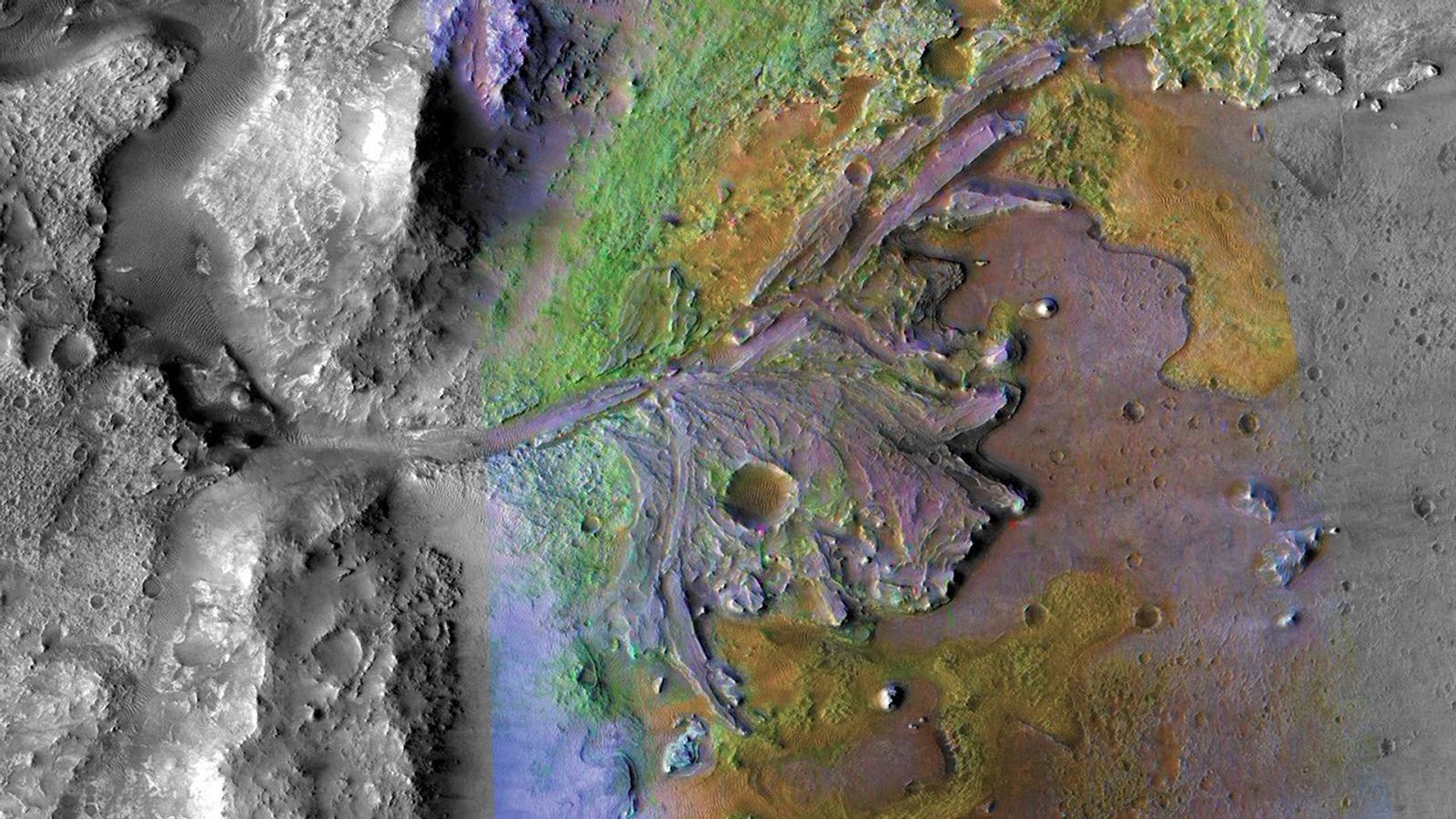
The engineering pathway for the Remote sensing unit, also designed for grades 6-8, puts students into the shoes of NASA spacecraft engineers, designing remote sensing devices to learn about the surface of planets, like Mars. The science pathway then uses real NASA remote sensing data from Mars landing site candidates to choose the best place to land a rover on Mars.

All PLANETS materials are available at no cost on the website: planets-stem.org. Check them out and empower every learner to see themselves as scientists and engineers.

PLANETS is supported by NASA under cooperative agreement award number NNX16AC53 and is part of NASA’s Science Activation Portfolio. Learn more about how Science Activation connects NASA science experts, real content, and experiences with community leaders to do science in ways that activate minds and promote deeper understanding of our world and beyond: https://science.nasa.gov/learn/about-science-activation/.

Share

Details

Last Updated
Nov 26, 2025
Editor
NASA Science Editorial Team

Powered by WPeMatico

Get The Details…
New Station Crew Counts Down to Thanksgiving Day Launch

New Station Crew Counts Down to Thanksgiving Day Launch

Soyuz MS-28 crew members (from left) Chris Williams from NASA and Sergey Kud-Sverchkov and Sergei Mikaev, both from Roscosmos.
GCTC

One NASA astronaut and two Roscosmos cosmonauts are at the Baikonur Cosmodrome in Kazakhstan counting down to a lift off on Thanksgiving Day to the International Space Station to begin an eight-month microgravity research mission. The seven-member Expedition 73 crew will expand to ten when the new trio arrives just over three hours after launch.

NASA astronaut Chris Williams and Roscosmos cosmonauts Sergey Kud-Sverchkov and Sergei Mikaev are in final preparations ahead of their launch aboard the Soyuz MS-28 crew spacecraft set for 4:27 a.m. EDT (2:27 p.m. Baikonur time) on Thursday, Nov. 27. Williams and Mikaev are beginning their first spaceflight while Kud-Sverchkov will be on his second mission to the orbital outpost.

The trio will orbit Earth twice inside the Soyuz spacecraft before its automated rendezvous and docking to the Rassvet module at 7:38 a.m. on Thanksgiving Day. The hatches will open about an hour-and-a-half later after a series of pressure and leak checks the new station trio will enter the station for a welcome ceremony and then a safety briefing with the Expedition 73 crew.

Onboard the station Wednesday, NASA Flight Engineers Zena Cardman, Jonny Kim, and Mike Fincke joined JAXA (Japan Aerospace Exploration Agency) Flight Engineer Kimiya Yui for an off-duty day on Wednesday. Meanwhile, Roscosmos cosmonauts Sergey Ryzhikov, Alexey Zubritsky, and Oleg Platonov stayed busy throughout the day. All seven crewmates will be busy on Thanksgiving welcoming the new arrivals and helping them get used to their new home in space.

Ryzhikov and Zubritsky partnered together readied crew quarters for the arriving crew. Ryzhikov also continued packing cargo inside the Soyuz MS-27 crew spacecraft that he, Zubritsky, and Kim will ride back to Earth in next month. Zubritsky participated in a blood circulation study then began collecting his personal items for stowage aboard the Soyuz MS-27. Zubritsky, with assistance from Platonov, also tested the lower body negative pressure suit for its ability to reverse the space-caused flow of body fluids toward a crew member’s head. Results may prevent microgravity-induced head and eye pressure and help crews adjust quicker to the return to Earth’s gravity.

Learn more about station activities by following the space station blog, @space_station on X, as well as the ISS Facebook and ISS Instagram accounts.

Get the latest from NASA delivered every week. Subscribe here.

Powered by WPeMatico

Get The Details…

Mark A. Garcia