NASA’s Perseverance Rover Snaps Selfie in Mars’ Western Frontier 

NASA’s Perseverance Rover Snaps Selfie in Mars’ Western Frontier 

6 min read

Preparations for Next Moonwalk Simulations Underway (and Underwater)

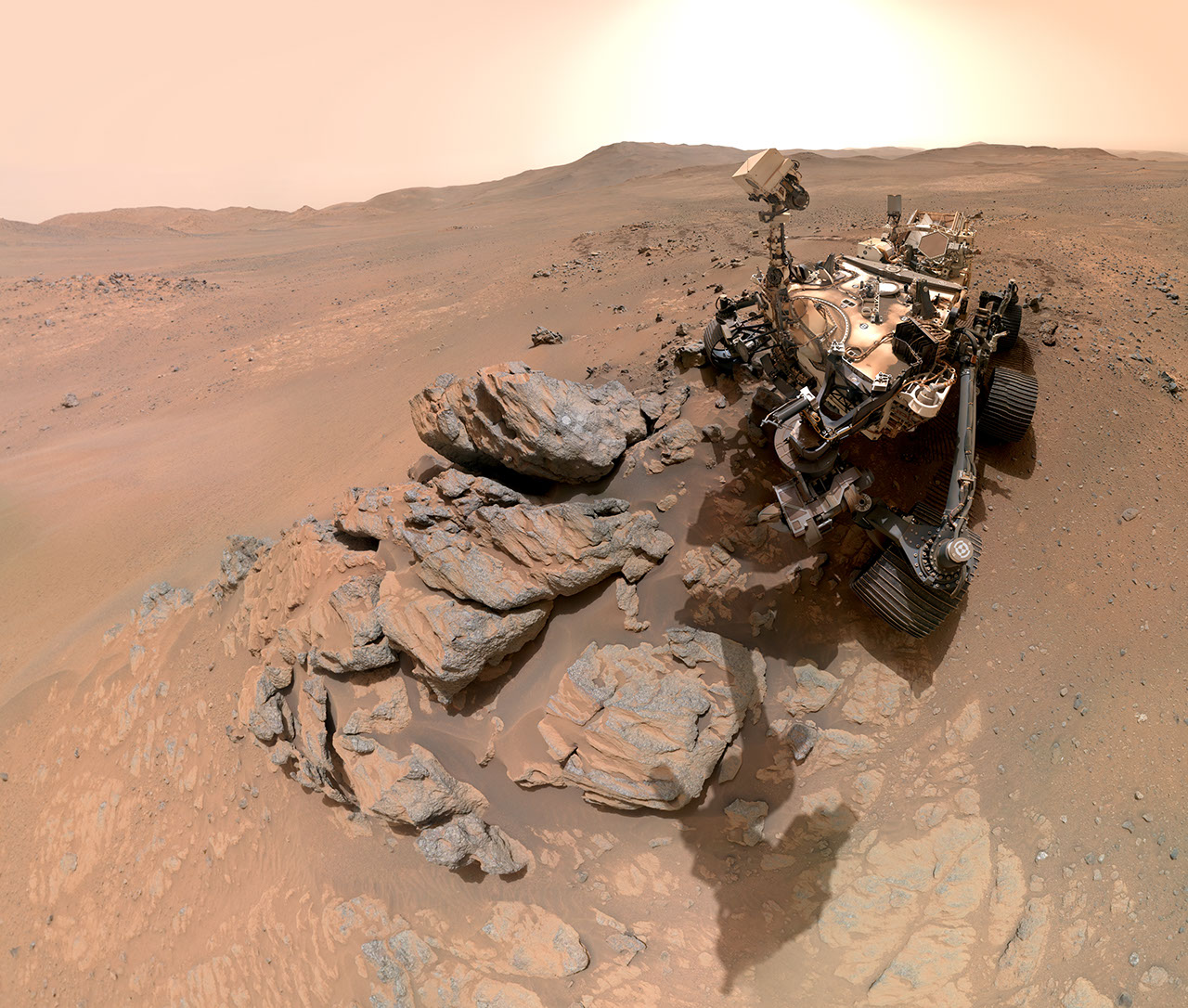
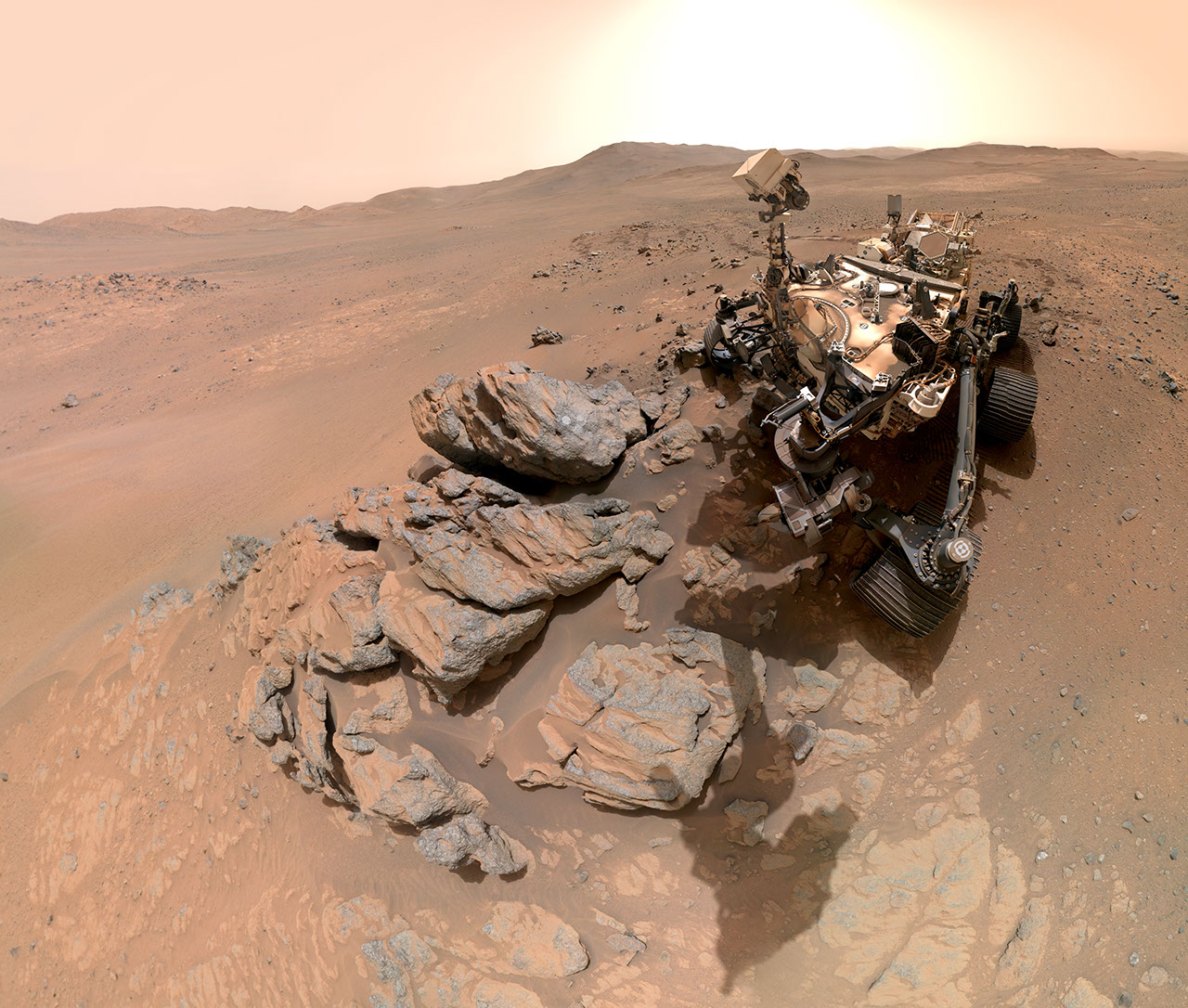
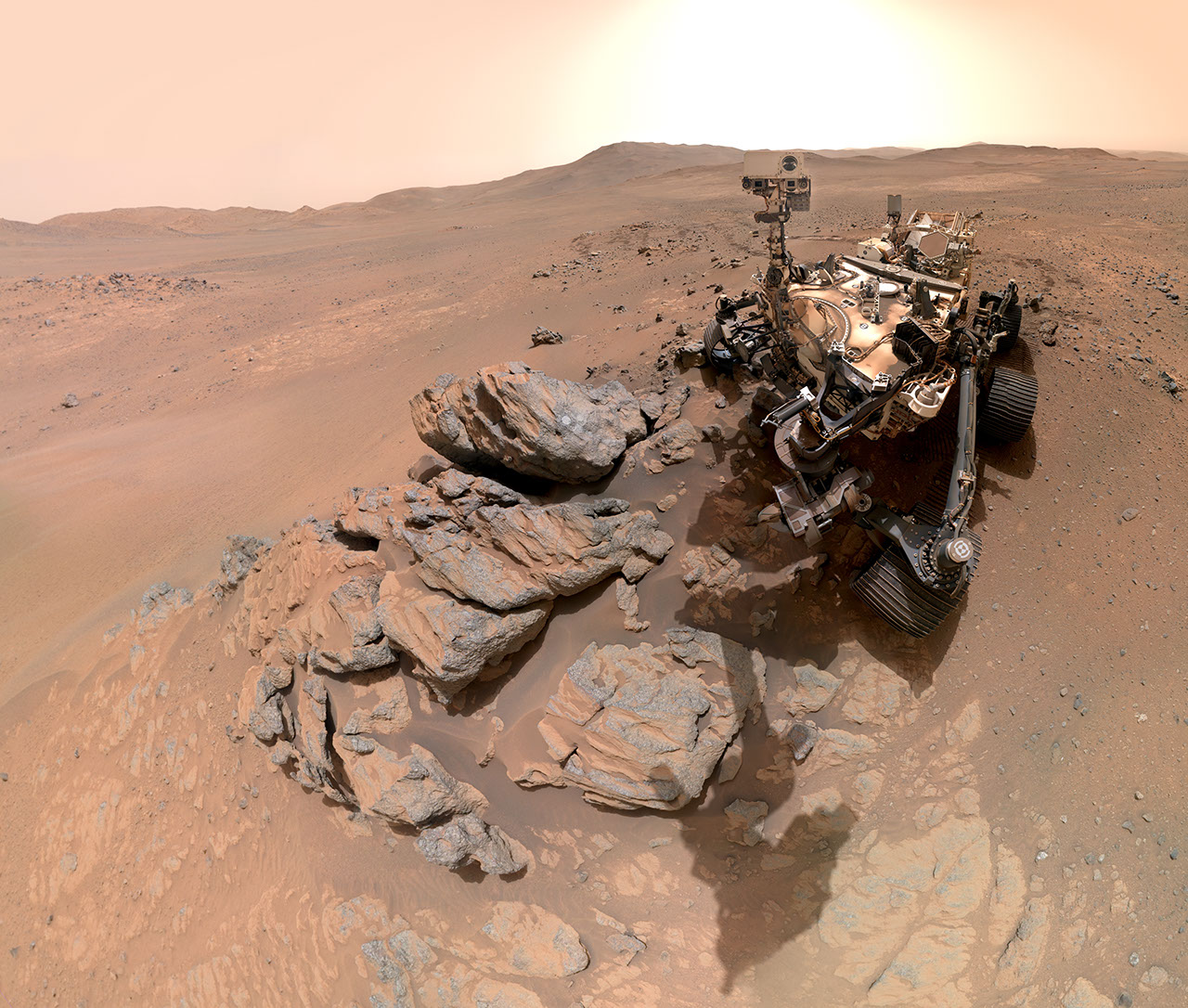
NASA’s Perseverance looks down at a rocky outcrop nicknamed “Arethusa” and then appears to look into the camera in this animated selfie, which is composed of 61 images taken March 11, 2026, during the rover’s deepest push west beyond Jezero Crater.
NASA/JPL-Caltech/MSSS

NASA’s Perseverance Mars rover recently took a self-portrait against a sweeping backdrop of ancient Martian terrain at a location the science team calls “Lac de Charmes.” Assembled from 61 individual images, the selfie shows Perseverance training its mast on a rocky outcrop on which it had just made a circular abrasion patch, with the western rim of Jezero Crater stretching into the background. The selfie was captured on March 11, the 1,797th Martian day, or sol, of the mission, during the rover’s deepest push west beyond the crater.  

Perseverance is in its fifth science campaign, known as the Northern Rim Campaign, of its mission on the Red Planet. The Lac de Charmes region represents some of the most scientifically compelling terrain the rover has visited.

Undulating terrain of reddish-brown soil and loose rocks stretches toward a rugged horizon. The sky above is hazy and pale. The image’s bottom edge is a jagged black border, indicating the edges of the frames stitched together to create the mosaic.
NASA’s Perseverance captured this enhanced-color panorama of an area nicknamed “Arbot” on April 5, the 1,882nd Martian day, or sol, of the mission. Made of 46 images, the panorama offers one of the richest geological vistas of the rover’s mission, revealing a windswept landscape of diverse rock textures.
NASA/JPL-Caltech/ASU/MSSS

“We took this image when the rover was in the ‘Wild West’ beyond the Jezero Crater rim — the farthest west we have been since we landed at Jezero a little over five years ago,” said Katie Stack Morgan, Perseverance’s project scientist at NASA’s Jet Propulsion Laboratory in Southern California. “We had just abraded and analyzed the ‘Arethusa’ outcrop, and the rover was sitting in a spot that provided a great view of both the Jezero Rim and the local terrain outside of the crater.” 

During abrading, the rover grinds down a portion of the rock’s surface, allowing the science team to analyze what’s inside. The technique enabled the team to determine that the Arethusa outcrop is composed of igneous minerals that likely predate the formation of Jezero Crater. Igneous rocks with large mineral crystals form underground as molten rock cools and solidifies. Perseverance acquired the selfie — its sixth since landing on Mars in 2021 — using the WATSON (Wide Angle Topographic Sensor for Operations and eNgineering) camera mounted at the end of its robotic arm, which made 62 precision movements over approximately one hour to build the composite image (learn more about how selfies are made).

Significant science

Along with the selfie, Perseverance used Mastcam-Z, located on its mast, to capture a mosaic of the “Arbot” area in Lac de Charmes on April 5, or Sol 1882. Made of 46 images, the panorama offers one of the richest geological vistas of the mission, revealing a windswept landscape of diverse rock textures.  

The image provides the team a clear road map for investigating the ridgeline and the area’s ancient rock variety, including what appear to be megabreccia — large fragments (some the size of skyscrapers) hurled by a massive meteorite impact that occurred on the plain called Isidis Planitia about 3.9 billion years ago. 

“What I see in this image is excellent exposure of likely the oldest rocks we are going to investigate during this mission,” said Ken Farley, Perseverance’s deputy project scientist at Caltech in Pasadena. “There is a sharp ridgeline visible in the mosaic whose jagged, angular texture contrasts starkly with the rounded boulders in the foreground. We also see a feature that may be a volcanic dike, a vertical intrusion of magma that hardened in place and was left standing as the softer surrounding material eroded away over billions of years.”  

The rock color in the mosaic offers less information to the science team than the distinctive textures, which help them differentiate the rock types. Unlike Jezero Crater’s river delta, which is composed of sedimentary rock, some rocks here appear to be extrusive igneous rocks (molten rock that reached the surface as lava flows) and impactites (rocks created or modified by a meteorite impact) believed to have formed before the crater about 4 billion years ago, offering a window into the planet’s deep early crust. 

New ballgame, near-marathon distance

“The rover’s study of these really ancient rocks is a whole new ballgame,” said Stack Morgan. “These rocks — especially if they’re from deep in the crust — could give us insights applicable to the entire planet, like whether there was a magma ocean on Mars and what initial conditions eventually made it a habitable planet.” 

After studying Arethusa, Perseverance drove northwest to the Arbot area, where it has been analyzing other rocky outcrops. When the team is satisfied with the work accomplished there, the rover will drive south to “Gardevarri,” a site with a notably clear exposure of olivine-bearing rocks. Formed in cooling magma, these types of rocks contain information that can help scientists better understand Mars’ volcanic history and provide context for large-scale geological processes. From there, the rover is expected to head southeast toward a region the team is calling “Singing Canyon” for more insights into the planet’s early crust.  

After more than five years of surface operations, Perseverance has abraded 62 rocks, collected 27 rock cores in its sample tubes (25 sealed, 2 unsealed), and traveled almost 26 miles (42 kilometers) — in other words, just shy of a marathon (26.2 miles, or 42.195 kilometers).  

“Having the benefit of four previous rover missions, the Perseverance team has always known our mission was a marathon and not a sprint,” said acting Perseverance project manager Steve Lee at JPL. “We’ve almost reached marathon distance. Our selfie may show that the rover is a bit dusty, but its beauty is more than skin deep. Perseverance is in great shape as we continue our explorations and extend into ultramarathon drive distances.”

More about Perseverance 

NASA’s Jet Propulsion Laboratory, which is managed for the agency by Caltech, built and manages operations of the Perseverance rover on behalf of NASA’s Science Mission Directorate in Washington, as part of NASA’s Mars Exploration Program portfolio. The WATSON imaging system was built by, and is operated by, Malin Space Science Systems in San Diego.

To learn more about NASA’s Perseverance:

https://science.nasa.gov/mission/mars-2020-perseverance

News Media Contacts

DC Agle 
Jet Propulsion Laboratory, Pasadena, Calif.
818-393-9011
agle@jpl.nasa.gov 

Karen Fox / Alana Johnson 
NASA Headquarters, Washington
240-285-5155 / 202-672-4780
karen.c.fox@nasa.gov / alana.r.johnson@nasa.gov

2026-032

Powered by WPeMatico

Get The Details…
scarney1

NASA’s Perseverance Captures Panorama at ‘Arbot’

NASA’s Perseverance Captures Panorama at ‘Arbot’

1 Min Read

NASA’s Perseverance Captures Panorama at ‘Arbot’

Undulating terrain of reddish-brown soil and loose rocks stretches toward a rugged horizon. The sky above is hazy and pale. The image’s bottom edge is a jagged black border, indicating the edges of the frames stitched together to create the mosaic.
PIA26753
Credits:
NASA/JPL-Caltech/ASU/MSSS

Description

NASA’s Perseverance Mars rover used its Mastcam-Z camera to capture this panorama of an area nicknamed “Arbot” on April 5, 2026, the 1,882nd Martian day, or sol, of the mission, during the rover’s deepest push west beyond Jezero Crater. Made of 46 images, the panorama offers one of the richest geological vistas of the mission, revealing a windswept landscape of diverse rock textures. This is an enhanced-color version, which had its color bands processed to improve visual contrast and accentuate color differences.

Undulating terrain of reddish-brown soil and loose rocks stretches toward a rugged horizon. The sky above is hazy and pale. The image’s bottom edge is a jagged black border, indicating the edges of the frames stitched together to create the mosaic.
Figure A

Figure A is a natural-color version of the mosaic.

Undulating terrain of reddish-brown soil and loose rocks stretches toward a rugged horizon. The sky above is hazy and pale. The image’s bottom edge is a jagged black border, indicating the edges of the frames stitched together to create the mosaic.
Figure B

Figure B is a 3D anaglyph version designed for use with red-blue glasses. It is composed of 92 images collected by Mastcam-Z.

NASA’s Jet Propulsion Laboratory, which is managed for the agency by Caltech in Pasadena, California, built and manages operations of the Perseverance rover. Arizona State University leads the operations of the Mastcam-Z instrument, working in collaboration with Malin Space Science Systems in San Diego, on the design, fabrication, testing, and operation of the cameras, and in collaboration with the Niels Bohr Institute of the University of Copenhagen on the design, fabrication, and testing of the calibration targets.

For more about Perseverance: science.nasa.gov/mission/mars-2020-perseverance/

Powered by WPeMatico

Get The Details…

NASA’s Perseverance Rover Snaps Westernmost Selfie

NASA’s Perseverance Rover Snaps Westernmost Selfie

2 Min Read

NASA’s Perseverance Rover Snaps Westernmost Selfie

The head of a robotic rover looks down at a rocky outcrop in the foreground. The dusty, orange-red Martian surface stretches away toward the crater rim in the distance. The Sun seems to bloom in a hazy sky.
PIA26752

Description

NASA’s Perseverance Mars rover took this selfie on March 11, 2026, the 1,797th Martian day, or sol, of the mission, during the rover’s deepest push west beyond Jezero Crater. Assembled from 61 individual images, the selfie shows Perseverance training its mast on the “Arethusa” rocky outcrop after creating a whitish circular abrasion patch. The crater’s western rim of Jezero Crater is visible in the background.

The head of a robotic rover looks toward the viewer, above a rocky outcrop in the foreground. The dusty, orange-red Martian surface stretches away toward the crater rim in the distance. The Sun seems to bloom in a hazy sky.
Figure A

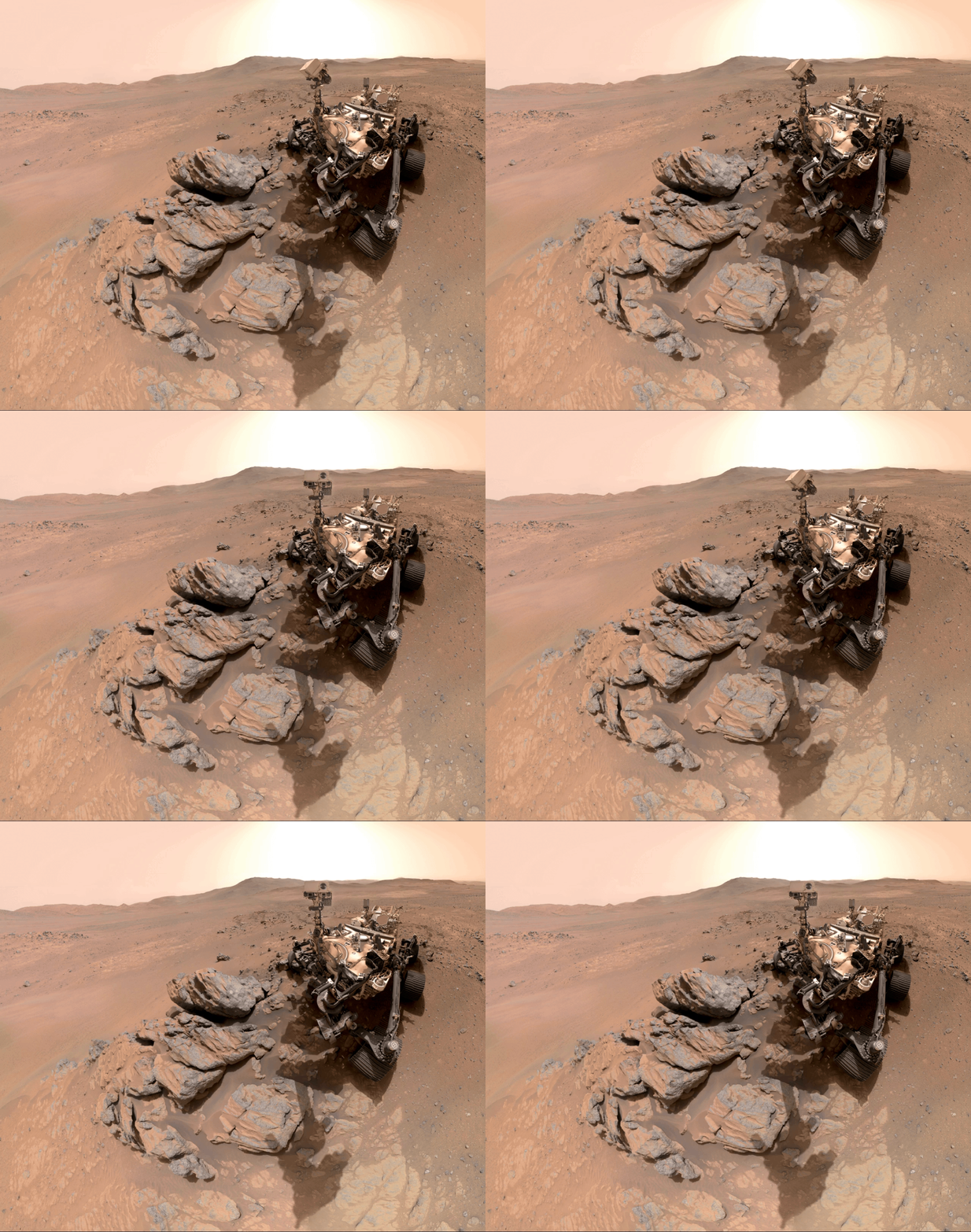
Figure A is a version of the selfie in which the rover appears to be looking at the camera.

The head of a robotic rover looks down at a rocky outcrop in the foreground. The dusty, orange-red Martian surface stretches away toward the crater rim in the distance. The Sun seems to bloom in a hazy sky.
Animation (.gif)

Here is a GIF combining the main image and Figure A, in which the rover appears to look up and down.

The selfie is composed of images taken by the WATSON (Wide Angle Topographic Sensor for Operations and eNgineering) camera on the end of the rover’s robotic arm. The images were stitched together after being sent back to Earth.

WATSON is part of an instrument called SHERLOC (Scanning Habitable Environments with Raman & Luminescence for Organics & Chemicals). WATSON was built by Malin Space Science Systems (MSSS) in San Diego and is operated jointly by MSSS and JPL.

The rover’s process for taking a selfie is explained in this video.

NASA’s Jet Propulsion Laboratory, which is managed for the agency by Caltech in Pasadena, California, built and manages operations of the Perseverance rover.

For more about Perseverance:

https://science.nasa.gov/mission/mars-2020-perseverance/

Powered by WPeMatico

Get The Details…

Hello Universe: NASA’s Next-Gen Space Processor Undergoes Testing

Hello Universe: NASA’s Next-Gen Space Processor Undergoes Testing

4 min read

Preparations for Next Moonwalk Simulations Underway (and Underwater)

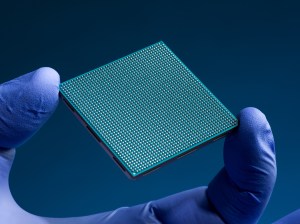
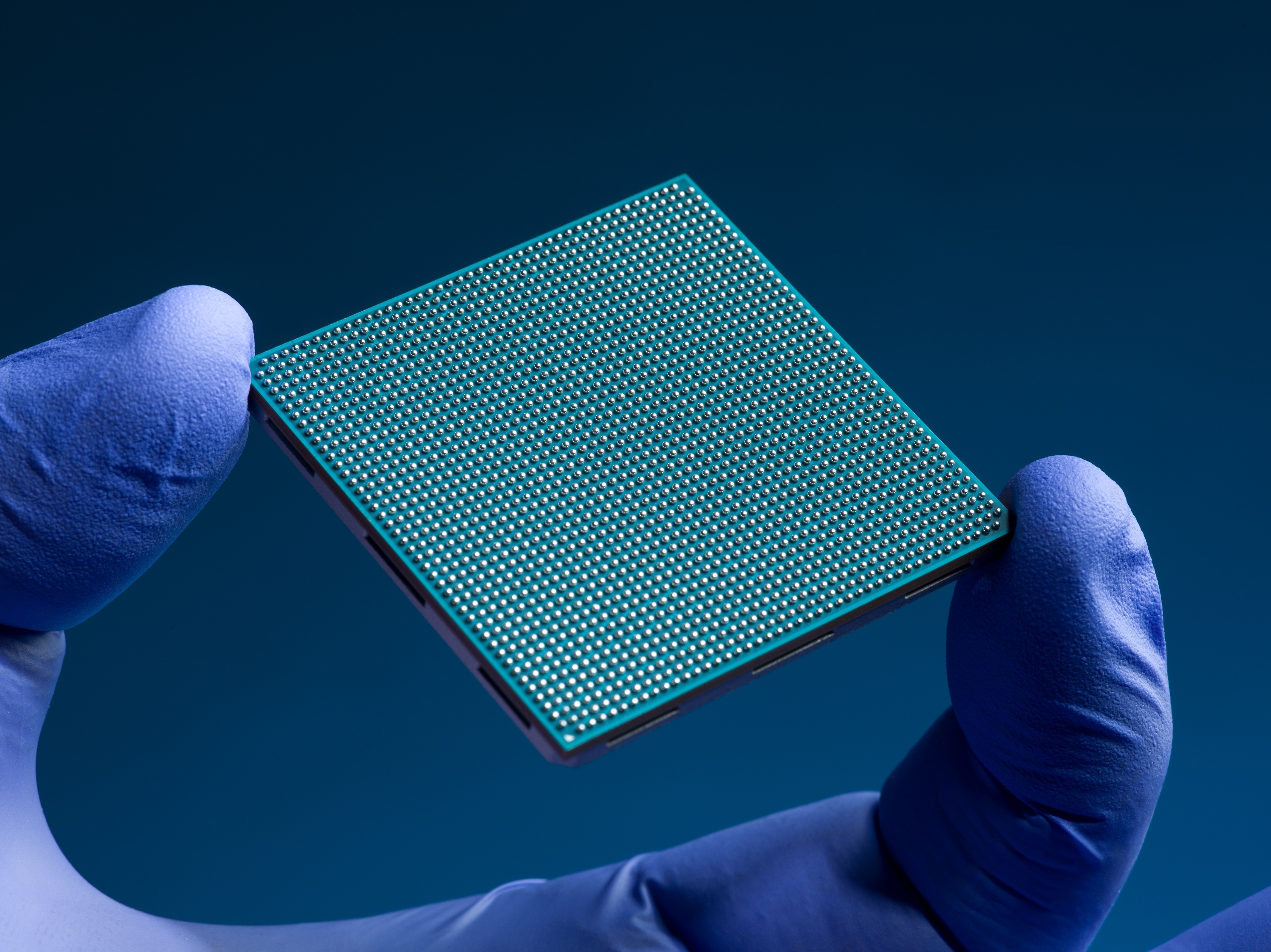
The finger and thumb of a hand clad in a blue nitrile glove hold a teal-colored square semiconductor chip against a dark blue background. The chip has an intricate grid of hundreds of tiny silver solder bumps on its underside.
Small enough to fit in the palm of a hand, NASA’s High Performance Spaceflight Computing processor packs the power of a full system-on-a-chip. This next-generation processor is made to survive deep space while delivering a massive leap in computational speed compared to current spacecraft technology.
NASA/JPL-Caltech

NASA’s High Performance Spaceflight Computing project aims to dramatically improve the computing power of spacecraft. Missions need processors that can withstand the harsh space environment, so they use chips developed years ago that are hardy and reliable. But upgraded chips are needed to enable the development of autonomous spacecraft, accelerate the rate of scientific discovery through faster data analysis, and support astronauts on missions to the Moon and Mars.

“Building on the legacy of previous space processors, this new multicore system is fault-tolerant, flexible, and extremely high-performing,” said Eugene Schwanbeck, program element manager in NASA’s Game Changing Development program at the agency’s Langley Research Center, in Hampton, Virginia. “NASA’s commitment to advancing spaceflight computing is a triumph of technical achievement and collaboration.”

The centerpiece of the High Performance Spaceflight Computing project is a new radiation-hardened, high-performance processor, designed to provide up to 100 times the computational capacity of current spaceflight computers while enduring a barrage of challenges in space. NASA’s Jet Propulsion Laboratory in Southern California has been conducting various tests that replicate those challenges.

“We are putting these new chips through the wringer by carrying out radiation, thermal, and shock tests while also evaluating their performance through a rigorous functional test campaign,” said Jim Butler, High Performance Space Computing project manager at JPL.

The processor must endure myriad tests to prove it can survive the rigors of spaceflight, including electromagnetic radiation and extreme temperature swings, both of which can degrade electronics. High-energy particles from the Sun and interstellar space can cause errors that send a spacecraft into “safe mode,” where nonessential operations are shut down until mission operators resolve the issue.

There are also unique challenges associated with landing on planetary bodies. “To simulate real-world performance, we are using high-fidelity landing scenarios from real NASA missions that would typically require power-intensive hardware to process huge volumes of landing-sensor data,” said Butler. “This is an exciting time for us to be working on hardware that will enable NASA’s next giant leaps.”

Testing at JPL, which began in February, will continue for several months. Results have been promising: The processor is working as designed and indications show it operating at 500 times the performance of the radiation-hardened chips currently in use. In a symbolic milestone, the team sent an email at the start of testing with the subject line “Hello Universe” — a nod to the test message that was popular in early computer development.

Computing superpowers

Built by Microchip Technology Inc., headquartered in Chandler, Arizona, the High Performance Spaceflight Computing processor is being developed by the company and JPL through a commercial partnership. Samples have been provided to early access partners in the broader defense and commercial aerospace industry. The technology will enable autonomous spacecraft to use artificial intelligence to respond in real time to complex situations and environments where human input isn’t possible. It will help deep space missions analyze, store, and transmit troves of data to Earth, accelerating the rate of science discoveries. It could also support future human missions to the Moon and Mars.

Known as a system-on-a-chip (or SoC), the processor can fit in the palm of a hand and includes all the key components of a computer, such as central processing units, computational offloads, advanced networking units, memory, and input/output interfaces. Compact and energy-efficient, SoCs are commonly found in smartphones and tablets. But only the SoCs JPL is testing are built to survive for years, millions (or even billions) of miles from the nearest repair technician, enduring conditions that even the toughest home user couldn’t replicate. 

Once certified for spaceflight, NASA will incorporate the chip into the computing hardware for many of the agency’s Earth orbiters, rovers exploring planetary surfaces, crewed habitats, and deep-space missions. The technology will be adapted by Microchip for Earth-based industries too, such as aviation and automotive manufacturing. The versatility of High Performance Spaceflight Computing supports NASA’s continued advancements in space exploration while providing transformative tools for numerous fields on Earth. 

The project is managed by the Space Technology Mission Directorate’s Game Changing Development (GCD) program based at NASA Langley. The GCD program and JPL, a division of Caltech in Pasadena, California, led the end-to-end maturation of the High Performance Spaceflight Computing technology by developing mission requirements, funding industry studies, and guiding the project life cycle to delivery. NASA JPL selected Microchip as a partner in 2022, and the company funded its own research and development of the processor. 

For more information about the High Performance Spaceflight Computing project, visit:

https://go.nasa.gov/4cIGUKu

News Media Contacts

Ian J. O’Neill
Jet Propulsion Laboratory, Pasadena, Calif.
818-354-2649
ian.j.oneill@jpl.nasa.gov

Jasmine Hopkins
NASA Headquarters, Washington
321-432-4624
jasmine.s.hopkins@nasa.gov

2026-031

Powered by WPeMatico

Get The Details…
scarney1

I Am Artemis: Kathleen Harmon

I Am Artemis: Kathleen Harmon

3 Min Read

I Am Artemis: Kathleen Harmon

Woman stands in a mission control room, with rows of computer consoles and large overhead screens displaying antenna imagery, data charts, the Artemis logo, and communications systems in operation. The Jet Propulsion Laboratory placard is visible in the background.

Kathleen Harmon, Artemis II Mission Interface Manager for NASA’s Deep Space Network, in the Charles Elachi Mission Control Center at NASA’s Jet Propulsion Laboratory in Southern California.

Credits:
NASA/JPL-Caltech

Listen to this audio excerpt from Kathleen Harmon, the Artemis II Mission Interface Manager for NASA’s Deep Space Network:

0:00 / 0:00

Captivated by Apollo launches on her television as a child, Kathleen Harmon now plays a key role in NASA’s Artemis program.

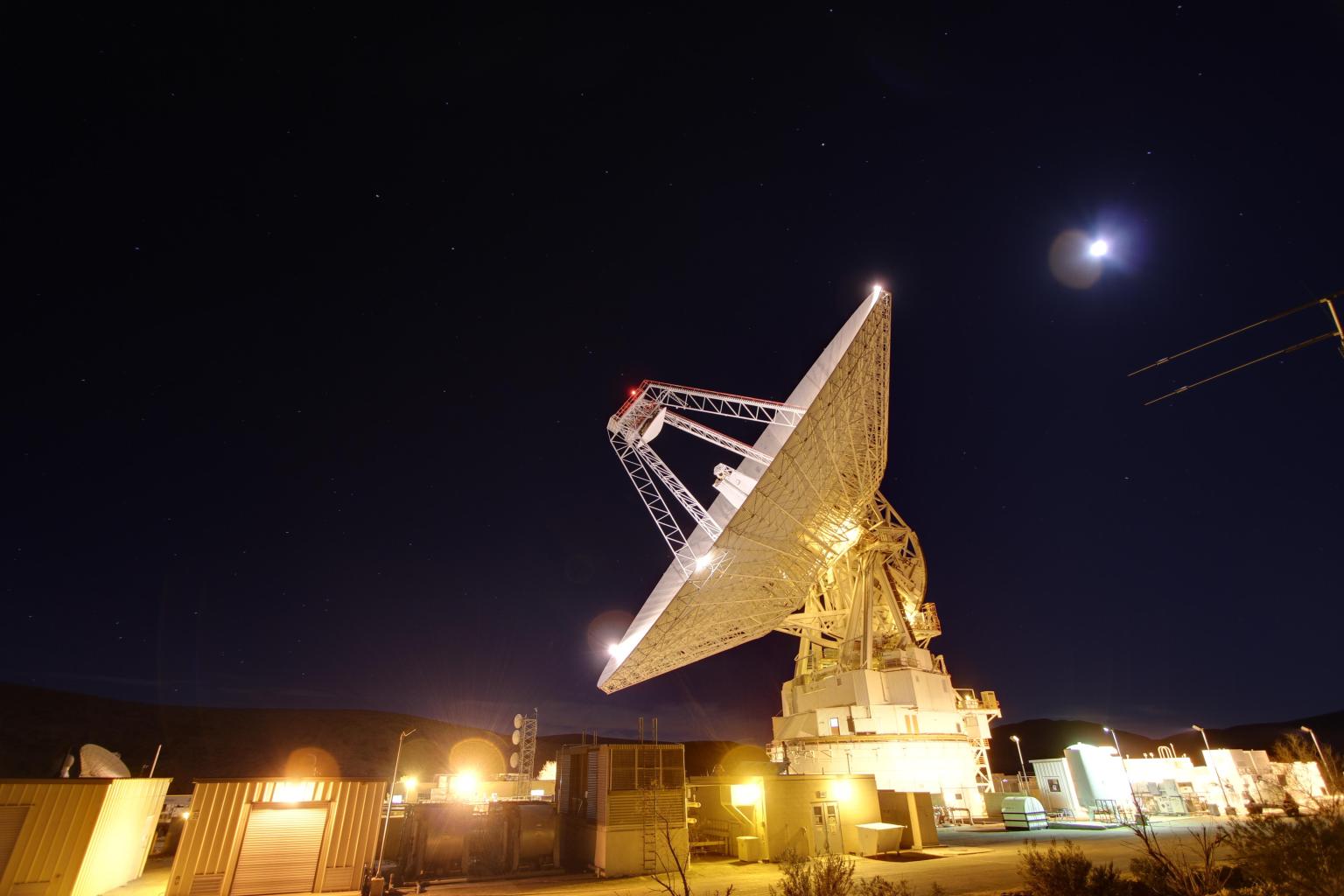
Harmon serves as the Artemis II mission interface manager for NASA’s Deep Space Network, an international array of giant radio antennas which are used to communicate with spacecraft. Managed by the agency’s Jet Propulsion Laboratory in Southern California, the Deep Space Network is the largest scientific telecommunications system in the world, supporting more than 40 missions exploring deep space. The network is also a key component of NASA’s Moon-bound Artemis missions.

Woman stands in a mission control room, with rows of computer consoles and large overhead screens displaying antenna imagery, data charts, the Artemis logo, and communications systems in operation. The Jet Propulsion Laboratory placard is visible in the background.
Kathleen Harmon, Artemis II Mission Interface Manager for NASA’s Deep Space Network, in the Charles Elachi Mission Control Center at NASA’s Jet Propulsion Laboratory in Southern California.
NASA/JPL-Caltech

“If you’re in a car and you’re going somewhere and you don’t have GPS or a cellphone, you might get lost, or you might not be able to tell someone that you’re lost,” said Harmon, illustrating how the Deep Space Network “talks” to spacecraft. “The network provides that lifeline to spacecraft across the solar system, and even interstellar space, so that they can talk to Earth and send back amazing science data, images, and videos from Mars rovers, space telescopes, orbiters, and more.”

In her role as a mission interface manager, and with her background as a systems engineer and decades of experience with NASA, Harmon prepares missions for launch and operations. This role requires careful coordination and collaboration across international partners, as the Deep Space Network’s radio antennas are spread around the world. She was responsible for ensuring the Deep Space Network was prepared to support the Artemis II spacecraft before launch.

You could not get any of that information back without the network. It’s a critical asset that also lets spacecraft know where they are.

Kathleen Harmon

Kathleen Harmon

Artemis II Mission Interface Manager for NASA’s Deep Space Network

“The network has three complexes equally spaced around the world so, as the Earth rotates, one is always in view to communicate with spacecraft wherever they are in the solar system,” said Harmon.

At any given moment, the Deep Space Network complex that is currently experiencing daylight is “in control” of the entire network to ensure consistent spacecraft connectivity, an operational approach the network team calls “follow the Sun.”

While the network supports NASA’s return to the Moon, working in partnership with the Near Space Network, it will continue to maintain a close watch on NASA’s fleet of spacecraft at the Moon and beyond.

“We supported Artemis II 24 hours a day, seven days a week for the entire mission with two antennas — a prime and a backup,” Harmon said. She added that while the network was supporting Artemis II, it also communicated with robotic rovers and spacecraft throughout the solar system.

While Harmon’s work has supported missions from Juno to Voyager, her contributions to the Artemis program remind her of what first inspired her to join to NASA.

“I was a very small child when the Apollo missions happened,” said Harmon. “Apollo was my earliest memory.”

Just thinking that I can be part of not only the Apollo generation but now also the Artemis generation — it’s very exciting to bridge that gap. This is a Golden Age of exploration.

Kathleen Harmon

Kathleen Harmon

Artemis II Mission Interface Manager for NASA’s Deep Space Network

Share

Details

Last Updated

May 12, 2026

Editor
Lauren Low
Contact
Lauren Low
Location
Jet Propulsion Laboratory

Powered by WPeMatico

Get The Details…
Korine Powers