


NASA Introduces New Flight Directors in Class of 2021
NASA has selected four new additions to its cadre of flight directors to oversee operations of the International Space Station.
Powered by WPeMatico
NASA has selected four new additions to its cadre of flight directors to oversee operations of the International Space Station.
Powered by WPeMatico
In this image from 2018, NASA astronaut Jeanette Epps trains in a U.S. spacesuit at the Johnson Space Center.
Powered by WPeMatico
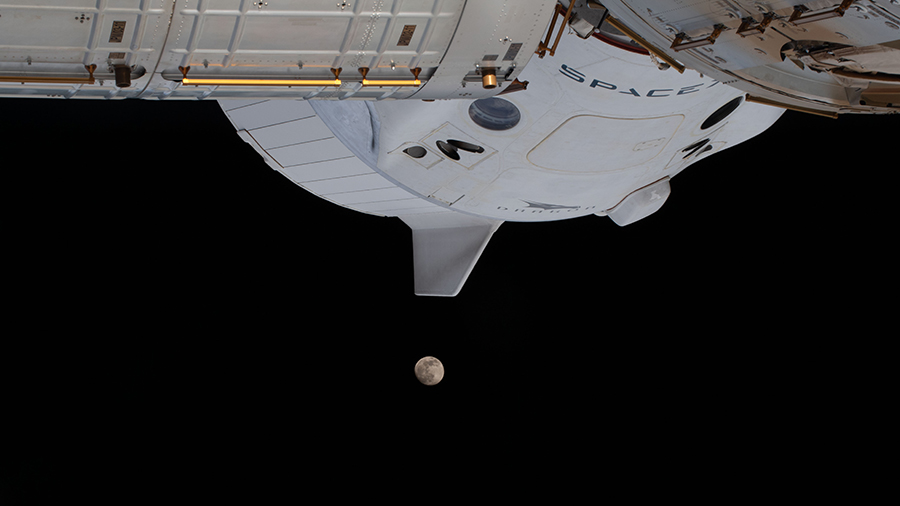
Most of the Expedition 64 crew started a three-day weekend today following a busy start to 2020 that saw two U.S. cargo ship departures and two spacewalks. The orbital residents aboard the International Space Station will fly over the Super Bowl on Sunday, and four of them will also break a U.S. space record from the ’70s.
Four SpaceX Crew-1 astronauts living aboard the International Space Station will surpass the U.S. record on Sunday for most days in space by a crew launched aboard a U.S. spacecraft. They will surpass the record of 84 days set by the Skylab 4 crew on Feb. 8, 1974.
Expedition 64 flight engineers Michael Hopkins, Victor Glover, Shannon Walker and Soichi Noguchi, docked the “Resilience” SpaceX Crew Dragon spacecraft to the Harmony module’s international docking adapter on Nov. 16, 2020. The Skylab 4 crew, with NASA astronauts Gerald Carr, Edward Gibson and William Pogue, docked their Apollo crew ship to the Skylab space station 47 years to the day when the crew of “Resilience” docked to the orbiting lab.
On the same day, the space station’s orbital path will take it over Tampa, Florida, at 7:15 p.m. EST, home of Super Bowl LV. The orbital flyover will be at the same time two NFL football teams will be competing to win the big game at Raymond James Stadium.
Four NASA astronauts and one JAXA (Japan Aerospace Exploration Agency) astronaut are relaxing today beginning a three-day weekend. The quintet were busy packing Northrop Grumman’s Cygnus space freighter and the SpaceX Cargo Dragon in January and monitoring their departures. Then they redirected their attention to a pair of spacewalks by Hopkins and Glover to upgrade communications and power systems. During that period microgravity research was running full speed ahead exploring everything from life science to space physics to advanced technology demonstrations.
Meanwhile in the Russian segment of the station, Commander Sergey Ryzhikov serviced exercise equipment and video communications gear. Flight Engineer Sergey Kud-Sverchkov set up and activated Earth observation hardware and assisted Ryzhikov with the upkeep of the Zvezda service module’s treadmill.
Mark Garcia
Powered by WPeMatico
The tip of the «wing» of the Small Magellanic Cloud galaxy is dazzling in this view from NASA’s Great Observatories.
Powered by WPeMatico
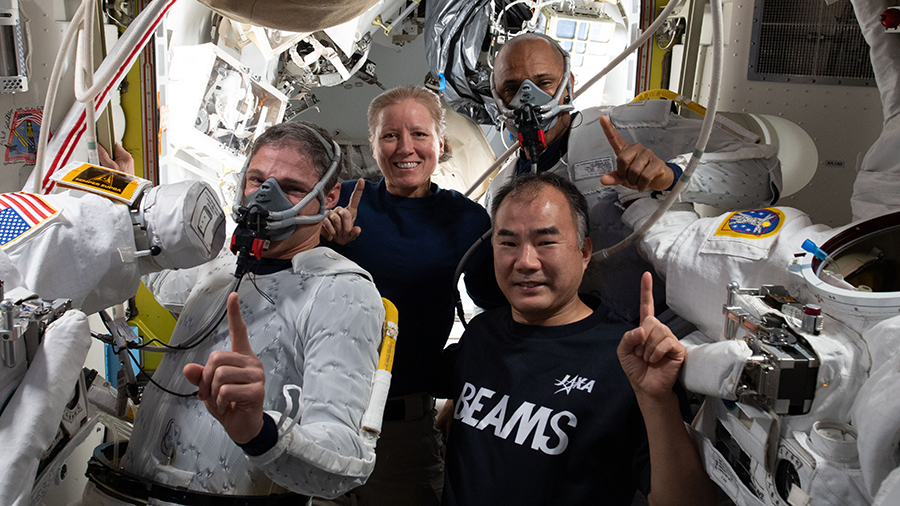
Free-flying robotics and fluid physics dominated the research schedule aboard the International Space Station today. The Expedition 64 crew also trained for an emergency while also preparing for upcoming U.S. and Russian cargo missions.
The Astrobee experimental robotic assistants were flying around inside the Japanese Kibo laboratory module on Thursday. The cube-shaped, toaster-sized robots are being tested for their ability to autonomously navigate and maneuver inside the orbiting lab. NASA Flight Engineer Kate Rubins set up the robotic free flyers and live streamed their activities to ground specialists during the afternoon.
Rubins also set up a fluid physics experiment in the morning that NASA Flight Engineer Shannon Walker would work on the rest of the day. Walker was studying simpler, more advanced ways to manage fluid and gas mixtures inside spacecraft life support systems.
Walker would also join her flight engineer crewmates Michael Hopkins and Victor Glover of NASA and Soichi Noguchi of JAXA for Crew Dragon emergency training. The quartet reviewed the procedures they would use in case the Crew Dragon encountered a chemical leak, depressurization or a fire.
Commander Sergey Ryzhikov is readying the station’s Russian segment for upcoming resupply ship missions. The commander is packing the Progress 76 cargo craft with trash and discarded gear ahead of its Feb. 9 undocking. Ryzhikov also tested video communications gear that will be used when the Progress 77 space freighter approaches the station for a docking on Feb. 17.
Northrop Grumman’s Cygnus resupply ship is due to arrive at the station on Feb. 22 carrying over 8,000 pounds of crew supplies, science experiments and station hardware. NASA will host a media teleconference on Feb. 11 to discuss the new research and technology demonstrations Cygnus is delivering.
Mark Garcia
Powered by WPeMatico
