La NASA busca directores de vuelo para misiones espaciales con humanos
La NASA está buscando líderes para uno de los mejores trabajos existentes en la Tierra relacionados con vuelos espaciales tripulados (incluyendo misiones a la Luna): el puesto de director de vuelo en Control de Misión en el Centro Espacial Johnson de la agencia en Houston.
Flight Controllers Assessing Debris Risk to Station
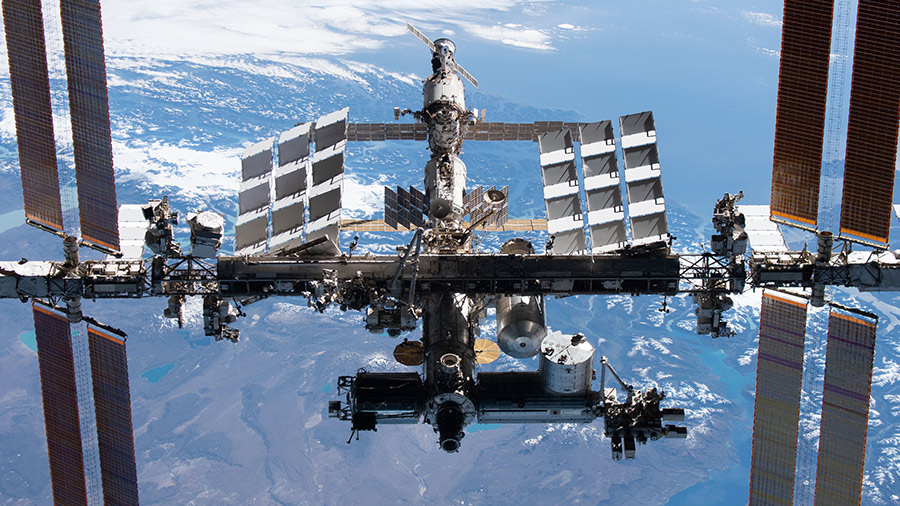
The space station was pictured from the SpaceX Crew Dragon Endeavour during its departure on Nov. 8, 2021.
Flight controllers and orbital debris experts in Houston are assessing the potential risk of a piece of orbital debris from a Pegasus rocket that may pass close to the International Space Station early Friday morning. Mission Control is working with NASA’s international partners to prepare for a possible debris avoidance maneuver. The closest pass is expected about 5:30 a.m. EST Friday, and the maneuver would take place about 3 a.m. if needed. The Expedition 66 crew aboard the station is not in any additional danger. Object 39915 was a piece of debris generated during the breakup of object 23106 (Pegasus R/B). The launch occurred on May 19, 1994, and the breakup of the rocket’s upper stage occurred on June 3, 1996.
NASA Awards Artemis Contract for Future Mega Moon Rocket Boosters
NASA has awarded the Booster Production and Operations Contract (BPOC) to Northrop Grumman of Brigham City, Utah, to build boosters for the agency’s Space Launch System (SLS) rocket to support nine SLS flights.
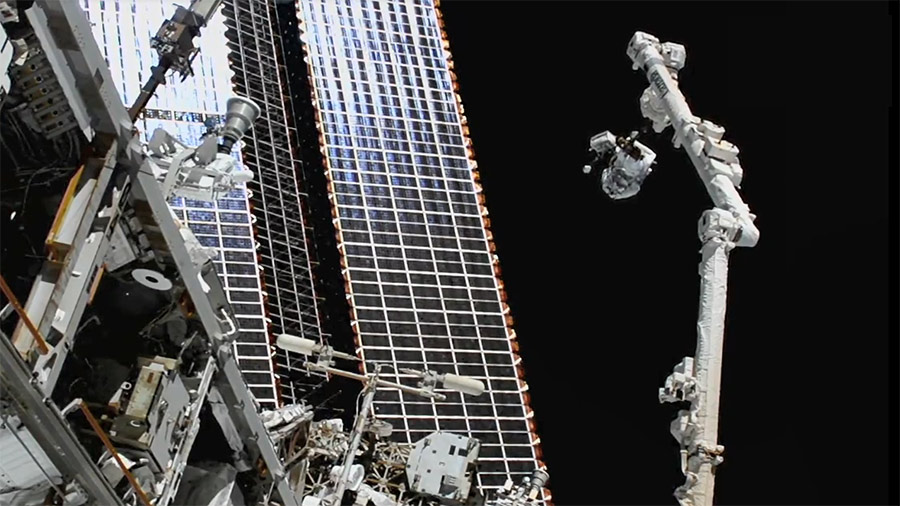
Marshburn and Barron successfully installed an S-band Antenna Subassembly (SASA) on the Port-1 truss structure and stowed the failed antenna. Additionally, the pair completed get-ahead tasks on the Port-4 truss structure, including resetting the torque on a set of bolts.
This was the fifth spacewalk for Marshburn, the first for Barron, and the 13th spacewalk at the International Space Station this year. Marshburn has now spent a total of 31 hours and one minute spacewalking, and Barron’s spacewalking time is now 6 hours and 32 minutes. Space station crew members have now spent a total of 64 days, 12 hours, and 26 minutes working outside the station conducting 245 spacewalks in support of assembly and maintenance of the orbiting laboratory.
Earlier this month, the International Space Station surpassed its 21-year milestone of continuous human presence, providing opportunities for unique research and technological demonstrations that help prepare for long-duration missions to the Moon and Mars and also improve life on Earth. During that time, 249 people from 19 countries have visited the orbiting laboratory, which has hosted nearly 3,000 research investigations from researchers in 108 countries and areas.