NASA to Highlight New Science Findings, Missions During AGU Meeting
NASA researchers and colleagues from around the world will present the latest findings on a range of Earth and space science topics at the annual American Geophysical Union (AGU) meeting, being held virtually and in New Orleans from Monday, Dec.13, through Friday, Dec. 17.
Station Separates from Debris After Orbital Maneuver
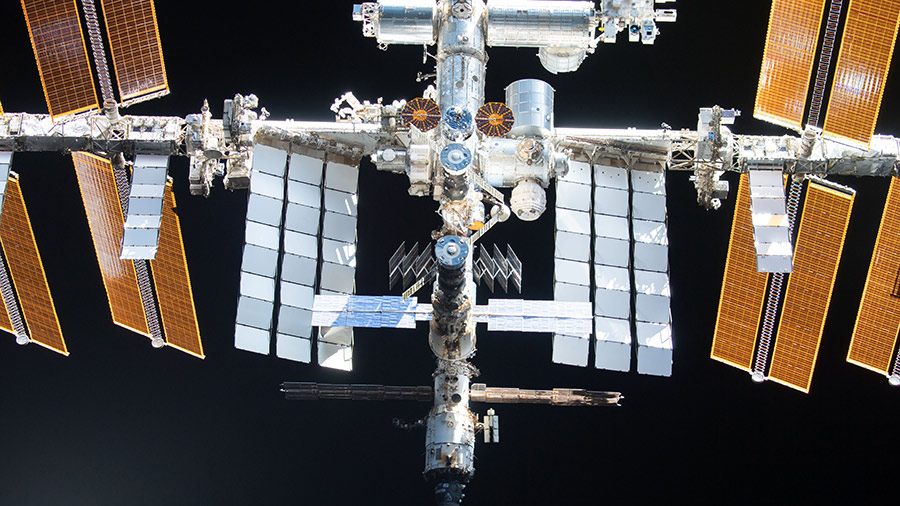
The space station was pictured from the SpaceX Crew Dragon Endeavour during its departure on Nov. 8, 2021. View the latest photographs of the orbiting lab here.
At 1:58 a.m. CST, 2:58 a.m. EST this morning, the Russian Progress 79, attached to the space station, fired its thrusters for 2 minutes and 41 seconds to slightly lower the station’s orbit. This maneuver provided a healthy margin of separation from a fragment of Pegasus rocket debris (object 39915) that ballistics specialists have been tracking. The Expedition 66 crew aboard the station is not in any additional danger.
The Pre-determined Debris Avoidance Maneuver, or PDAM, was coordinated between NASA flight controllers, Russian ballistics officials, and the station’s other international partners.
The station’s orbit has been lowered by 3/10 of a mile at apogee and 4/10 of a mile at perigee. The current orbit is 262.6 x 258.8 statute miles.
Object 39915 was a piece of debris generated during the breakup of object 23106 (Pegasus R/B). The launch occurred on May 19, 1994, and the breakup of the rocket’s upper stage occurred on June 3, 1996. Locate more information about how NASA manages the risk of orbital debris at: https://www.nasa.gov/mission_pages/station/news/orbital_debris.html
NASA TV Coverage Set for Crewed Soyuz Mission to Space Station
NASA will provide live coverage of key events in the mission of a veteran Russian cosmonaut and two Japanese private citizens set to launch to the International Space Station on Wednesday, Dec. 8, and return to Earth on Sunday, Dec. 19.
NASA Seeks Next Flight Directors for Human Spaceflight Missions
NASA is looking for leaders for one of the best jobs on Earth for human spaceflight – including missions to the Moon – the position of flight director in mission control at the agency’s Johnson Space Center in Houston.