NASA’s HiRISE Captures Perseverance Marking a Milestone on Mars
2 Min Read
NASA’s HiRISE Captures Perseverance Marking a Milestone on Mars
PIA26726
Credits: NASA/JPL-Caltech/University of Arizona
Downloads
NASA’s HiRISE Captures Perseverance Marking a Milestone on Mars
JPEG (492.31 KB)
PIA26726 Figure A
PNG (12.89 MB)
Description
NASA’s Perseverance rover appears as a green speck on the Martian surface on June 13, 2026, a day before the robotic explorer marked a distance milestone, having traveled a full marathon (26.2 miles, or 42.195 kilometers) on the Red Planet. Perseverance reached that distance after five years and four months of driving — on the 1,890th Martian day, or sol, of its mission; the previous record holder, NASA’s Opportunity rover, took 11 years and two months to reach the same milestone.
This image was taken by NASA’s Mars Reconnaissance Orbiter (MRO) using its High-Resolution Imaging Science Experiment (HiRISE) camera. The rover’s tracks can be seen tracing the surface. The rover is in an area west of Jezero Crater that the science team is calling “Arbot.”
Figure A
Figure A is the same image with a yellow circle indicating Perseverance.
Managed for NASA by Caltech, NASA’s Jet Propulsion Laboratory in Southern California manages operations of the Perseverance rover and MRO on behalf of the agency’s Science Mission Directorate as part of NASA’s Mars Exploration Program portfolio. Lockheed Martin Space in Denver built MRO and supports its operations. The University of Arizona, in Tucson, operates HiRISE, which was built by BAE Systems in Boulder, Colorado.
Euclid View of Milky Way Heart Previews Core Survey by NASA’s Roman
6 Min Read
Euclid View of Milky Way Heart Previews Core Survey by NASA’s Roman
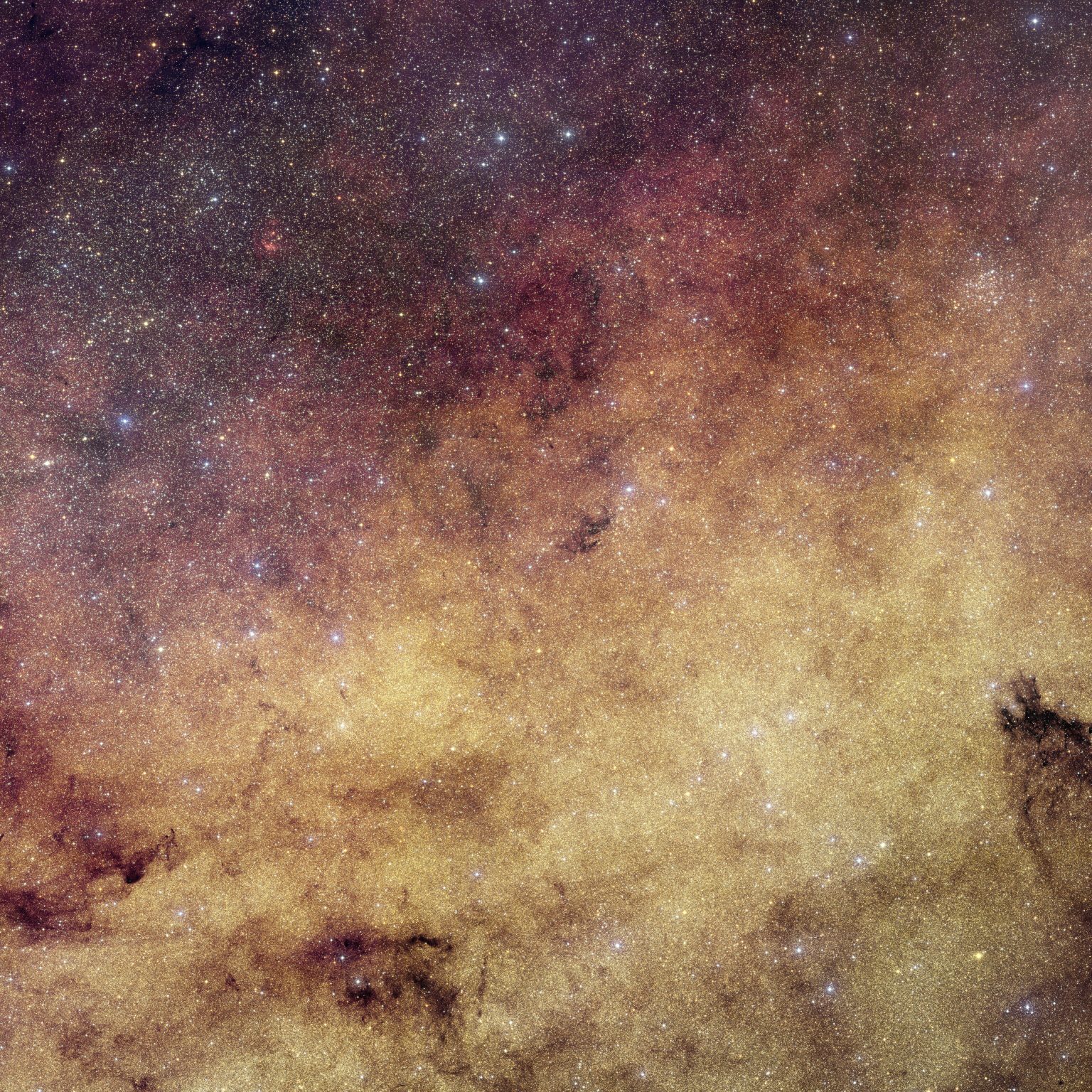
This image by ESA’s (European Space Agency) Euclid (with color added using ground-based images) provides an earlier snapshot of a region of our galaxy that NASA’s Nancy Grace Roman Space Telescope will repeatedly observe during the upcoming years.
Credits: ESA/Euclid/Euclid Consortium/NASA, CFHT, image processing by J.-C. Cuillandre and E. Bertin (CEA Paris-Saclay)
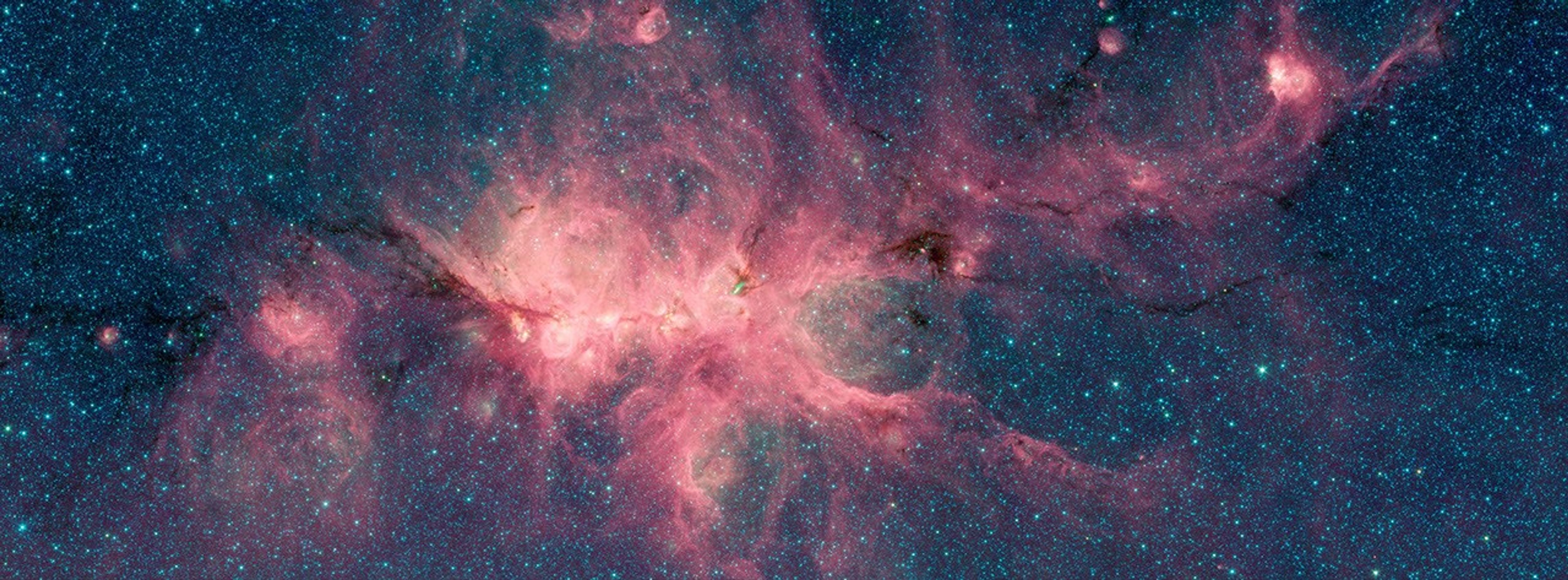
This image by ESA’s (European Space Agency) Euclid (with color added using ground-based images) provides an earlier snapshot of a region of our galaxy that NASA’s Nancy Grace Roman Space Telescope will repeatedly observe during the upcoming years. Euclid spent one day taking a series of nine individual images near the heart of the Milky Way. Its wider image has resolution similar to Roman’s, though it’s also shallower and lacks some of the colors Roman will see. At the right of the frame, Euclid looks through the dense foreground of the Milky Way’s galactic plane, where thick molecular clouds appear as dark patches that obscure parts of the galactic bulge beyond. Toward the left, the view rises to higher galactic latitudes: the yellow glow of the bulge becomes clearer, with fewer and more isolated foreground clouds interrupting the starlight.
ESA/Euclid/Euclid Consortium/NASA, CFHT, image processing by J.-C. Cuillandre and E. Bertin (CEA Paris-Saclay)
A new look at the heart of our Milky Way galaxy by Euclid, an ESA (European Space Agency) mission with NASA contributions, overlaps with a region scientists will observe with NASA’s Nancy Grace Roman Space Telescope, launching later this summer. This sneak peek gives astronomers a major jumpstart on a core Roman survey, helping scientists learn more than they could from either telescope alone.
“This is the only time Euclid has paused its normal sky survey, which is mainly geared toward cosmology,” said Jason Rhodes, a senior research scientist at NASA’s Jet Propulsion Laboratory in Southern California. Rhodes serves as both the U.S. Euclid science lead and the NASA JPL Roman project scientist. “This takes a lot of work and planning, so it really has to be something with a high impact for science. Adding Euclid’s snapshot to Roman’s future survey will help us map our galaxy better and identify hard-to-find cosmic treasures like isolated black holes and rogue planets more easily.”
Euclid took one day out from its six-year prime mission to preview the area of sky that will be targeted by Roman’s Galactic Bulge Time-Domain Survey, which will provide one of the deepest views ever into the center of our galaxy. Though Euclid’s one-time observation is shallower and lacks some of the color detail Roman will see, it has similar resolution and covers a larger region — about 5 square degrees, or the sky area covered by about 25 full moons — since Roman’s survey area hadn’t yet been determined when the observation took place in March 2025.
This artist’s concept outlines the areas of the galactic core covered by Euclid (orange) and the future survey area of the Roman telescope (green). The Euclid observations more than cover Roman’s planned survey area because the Roman coverage wasn’t yet set in stone when Euclid imaged the area. The only exception is the portion right in the galactic center since Euclid’s visible light observations can’t pierce the thick dust in this region like Roman’s infrared vision will.
NASA’s Goddard Space Flight Center
Over the course of its five-year primary mission, Roman will repeatedly image a smaller region (1.7 square degrees, or roughly the sky area covered by 8.5 full moons) to watch how hundreds of millions of stars and other objects change over short time periods. Monitoring these changes will reveal hordes of new planets, along with many other cosmic objects and phenomena. Stitching Euclid’s observation onto the front end of Roman’s collection will essentially extend the survey by two years (since Roman’s galactic bulge observations are set to begin in spring 2027), making even more science possible.
Mining hidden gems
Roman will watch for tiny surges in starlight that herald a microlensing event. This light-bending phenomenon occurs when a massive object like a star, planet, or black hole — any object with sufficient gravity — closely aligns with a background star from our vantage point. Light from the distant star curves as it travels through the warped space-time caused by the nearer object’s mass.
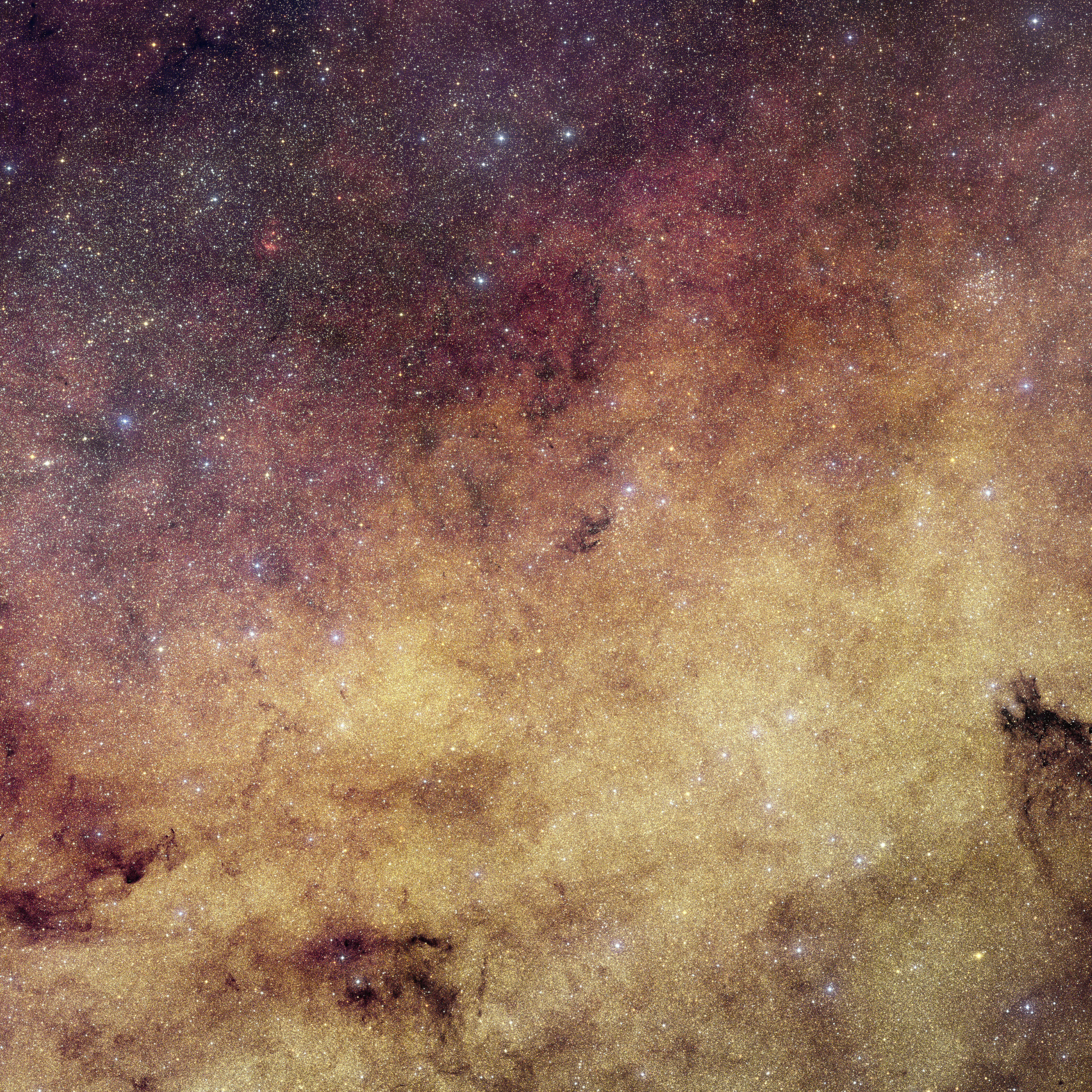
This image from Euclid (with color added using ground-based images) zooms in on the center of our Milky Way galaxy. The region gets its golden tone from myriad old, cool stars that have yellowish hues. Stars in this region are heavily crowded, so observing in this direction increases the likelihood of catching microlensing events.
ESA/Euclid/Euclid Consortium/NASA, CFHT, image processing by J.-C. Cuillandre and E. Bertin (CEA Paris-Saclay)
If the alignment is especially close, the nearer object acts like a cosmic lens, focusing and magnifying light from the background star.
“Most often, the lensing object is another star,” said Matthew Penny, an assistant professor at Louisiana State University, and co-lead of Euclid’s exoplanet science working group who has spent more than a decade simulating both Euclid and Roman data. “But Roman will also be able to detect planets orbiting them, and all kinds of weird objects that are nearly impossible to find any other way.”
Among those strange objects are black holes left behind after the most massive stars die. Astronomers think there should be about 100 million of these stellar-mass black holes in the Milky Way, but so far they’ve almost exclusively detected the invisible objects when they interact with a companion star. Yet most are thought to wander the galaxy alone. Roman will find them even when there’s nothing nearby to reveal their presence.
While microlensing events created by planets are typically hours or days long, black holes pack in so much mass that they can bend light over a larger region of space, creating much longer signals. That means astronomers may need to observe them for years to see the objects move out of alignment.
“The extra two years provided by Euclid give astronomers more time to watch the lens and source star drift apart, making it easier to identify the lens and measure its mass,” said Himanshu Verma, a postdoctoral researcher at Louisiana State University who has been analyzing Euclid images to help scientists predict and better understand the microlensing events Roman is expected to observe.
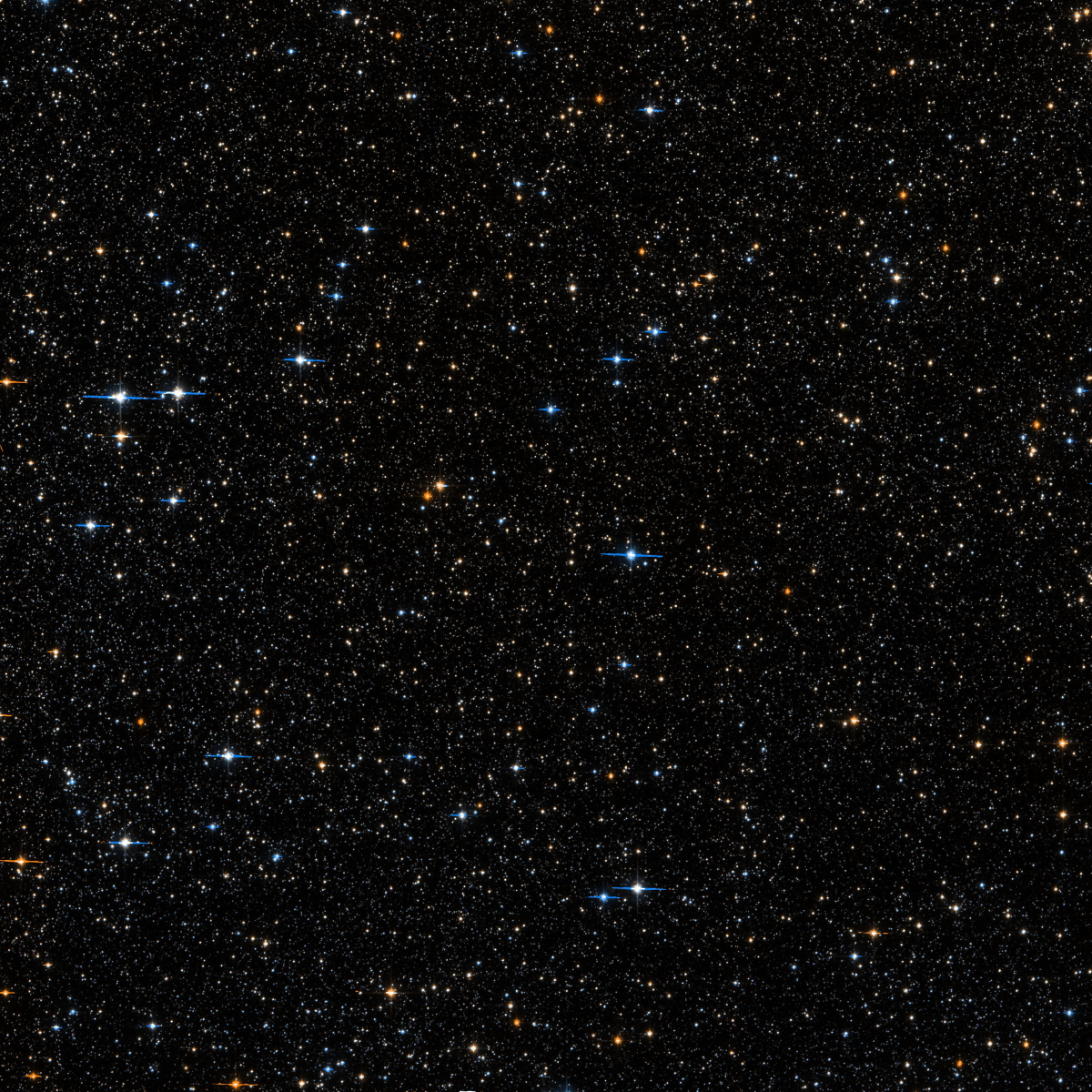
This image from the Advanced Camera for Surveys instrument on NASA’s Hubble Space Telescope is part of a 1.1-square-degree survey of the center of the Milky Way. Hubble’s full survey, which is made up of more than 350 individual images taken across about 14 months, is smaller but higher resolution than ESA’s Euclid observations and both overlap with the area Roman will cover. By capturing preview images years before Roman begins its microlensing search, Hubble and Euclid provide early reference points that will help astronomers measure the motions of stars and better characterize the planets and other objects Roman discovers.
Adapted from Terry et al. 2026
While most planet-hunting methods are best at finding scorching worlds tightly hugging their host star, microlensing is better at detecting worlds in orbits larger than Earth’s. That includes planets that whirl around their stars farther away than Neptune orbits the Sun and ones that have been kicked out of their original star systems altogether, now destined to roam the galaxy all alone.
“When Roman finds them, astronomers will be able to cross-reference Euclid’s earlier observations to look for stars near the lensing object, so we can confirm whether a planet is truly rogue or just orbiting very far from its host star,” said David Bennett, a senior research scientist and microlensing expert at the University of Maryland, College Park and NASA’s Goddard Space Flight Center.
Milky Way mapping
Scientists will also pair Euclid data with Roman’s Galactic Plane Survey. This observation program will reveal our home galaxy in unprecedented detail over an area about 400 times larger than the galactic bulge survey. In one month of observations spread across two years, the Roman survey will unveil tens of billions of stars and explore previously uncharted structures.
It’s tricky to study our own galaxy because it’s like trying to map the human body from inside a cell; there’s a lot of stuff in the way. Combining Euclid’s observations with Roman’s will let astronomers watch stars slowly move across the sky. Since stars in different parts of the Milky Way tend to follow different paths, this will help astronomers figure out which part of the galaxy those stars are in.
“One of the most exciting aspects of the Euclid observations is that they give us the chance to test and improve Milky Way models,” Penny said.
Euclid’s one-day detour offers a scientific payout that will last for years and shows how much more can emerge when telescopes team up.
“We’ve shown that these two telescopes can work together to do science that surpasses what either was originally designed for,” Rhodes said. “In doing so, we’ve established a model for future coordinated observations that can unlock far more discoveries than either mission could make alone.”
Spacewalk Preps and Human Research Fill the Expedition 74 Schedule
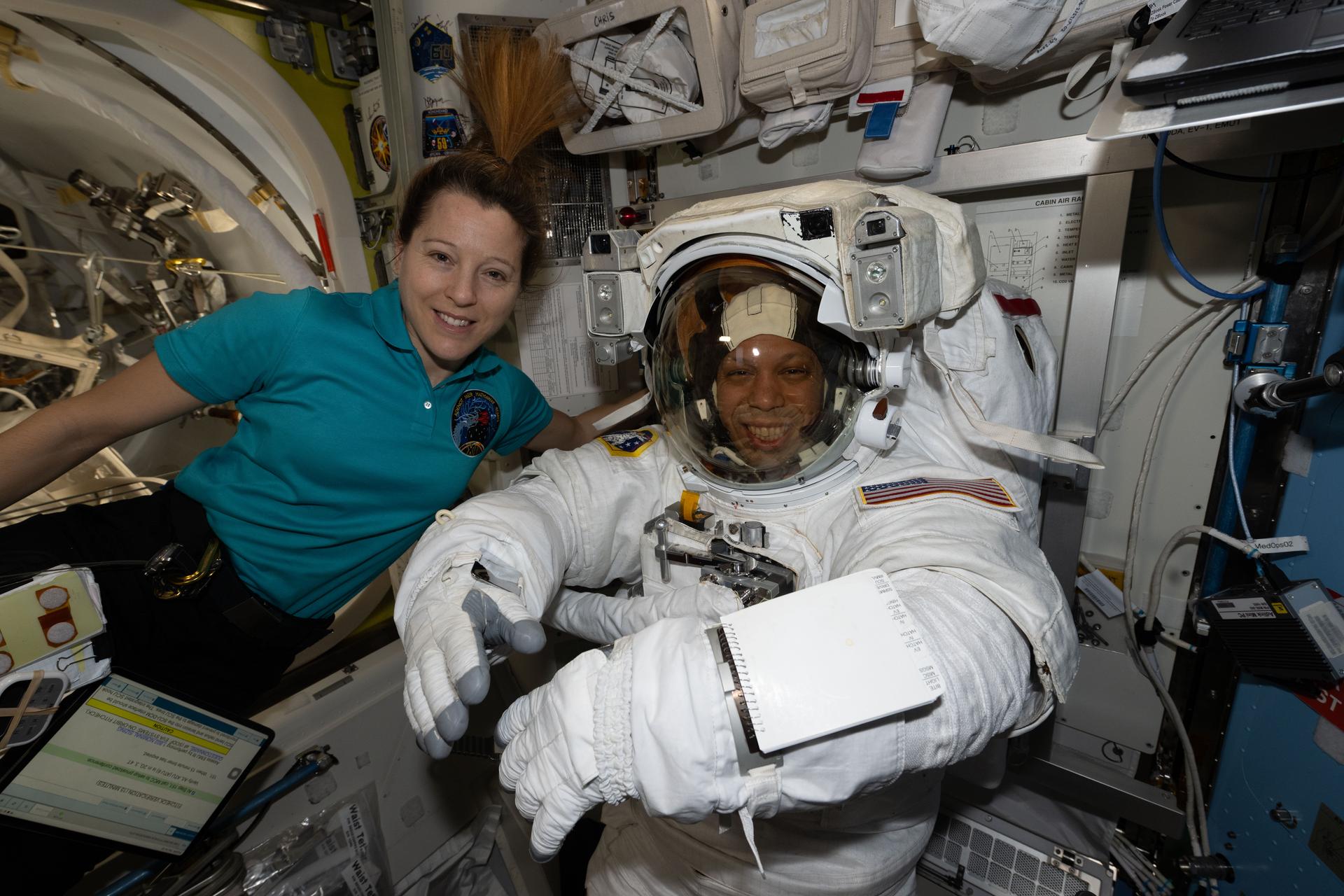
ESA astronaut Sophie Adenot assists NASA astronaut Chris Williams as he tries on his spacesuit, testing its comfort and mobility as well as its communications and life support systems ahead of a spacewalk planned for June 30, 2026.
NASA
The Expedition 74 crew members continued their spacewalk preparations on Wednesday reviewing robotics activities and configuring tools. The orbital residents also kept up their ongoing biomedical research and advanced technology studies aboard the International Space Station.
NASA flight engineers Chris Williams and Jessica Meir continue gearing up for their second spacewalk together set to begin at 8:35 a.m. EDT on Tuesday, June 30. The duo joined each other inside the Quest airlock and inspected the tethers that will secure the spacewalkers to the outside of the orbital outpost. They also collected and organized the equipment they will carry with them into the vacuum of space including pistol grip tools, cameras, stowage bags, and more. Williams and Meir will spend about six hours and 40 minutes next week replacing a malfunctioned wrist joint on the Canadarm2 robotic arm. NASA and the Canadian Space Agency (CSA) officials will preview the upcoming spacewalk tasks during a news conference on NASA’s YouTube channel at 2 p.m. on Thursday, June 25.
Williams and Meir also gathered with flight engineers Jack Hathaway of NASA and Sophie Adenot of ESA (European Space Agency) and called down to mission controllers in Houston, Texas, to talk about the upcoming spacewalk procedures. Afterward, the quartet practiced on a computer the delicate robotic maneuvers required to access and replace the wrist joint on the Canadarm2. Hathaway and Adenot will support the two spacewalkers next week helping them in and out of their spacesuits, monitoring their spacewalking activities, and carefully adjusting the Canadarm2 into position during the repair work.
Eye exams were the final task of the day for Meir as she operated medical imaging hardware inside the Harmony module and examined Williams’ retina, lens, and cornea to check his eye health. Hathaway loaded a CubeSat-packed deployer onto a platform inside the Kibo laboratory module for placement outside of the space station. Adenot wrapped up her shift testing the network connectivity of a computer tablet inside the SpaceX Dragon crew spacecraft.
Cosmonauts Sergey Kud-Sverchkov and Sergei Mikaev, the station’s commander and flight engineer from Roscosmos, also conducted eye checks, this time using the Ultrasound 3 device inside the Columbus laboratory module. Doctors on the ground monitored the ultrasound scans in real time to detect potential space-caused changes to eye pressure and structure. The duo then took turns testing artificial intelligence tools to boost crew efficiency and communications in space. Roscosmos flight engineer Andrey Fedyaev focused on studying how living in space affects the human body throughout Wednesday.
Fedyaev kicked off his shift placing sensors on his chest to measure his heart’s electrical activity. Next, he attached cuffs to his arm, wrist, and fingers measuring his blood pressure. Doctors are exploring how the circulatory system adjusts in microgravity since the human heart doesn’t pump blood as hard as it does on Earth. Finally, the two-time space lab resident wore an acoustic sensor around his neck that recorded his rapid exhalation for insights into his respiratory health.
Electricity powers the world, and electricians are the ones who get it where it needs to go. An electrician is an expert who is trained to make sure electrical systems and equipment are installed safely and working correctly. Electricians are involved in a variety of systems, including power, lighting, communications, and more – anything that needs electricity to run.
While electricians ensure systems and equipment have the power they need, electrical technicians focus on building, modifying, or testing electronic devices.
What are some of the different types of work electricians and electrical technicians do at NASA?
At NASA, electricians keep the lights on and the power flowing for rocket launches, scientific research, and everything in between. Their skills support engineers and scientists in building and testing spacecraft, aircraft, satellites, telescopes, and the equipment that makes human spaceflight possible. Electricians make sure all facilities and equipment have the power and functionality they need to be safe and ready to support NASA’s missions.
Electrical technicians at the agency help bring big ideas to life. They might build and wire control systems, connect tiny sensors to circuit boards, or write the software to make a device work in a specific way. They also test instruments in conditions that mimic space – extreme temperatures, intense vibrations, and even a vacuum – to make sure they will survive and perform well during their missions. Technicians use specialized tools, earn certifications, and work with incredible precision.
Being an electrician or electrical technician at NASA is careful, hands‑on work carried out with expertise. Because space hardware is headed to places like low-Earth orbit, the Moon, or even Mars, every detail has to be perfect.
What are the different certification levels for electricians?
The information below is a general overview of the career path of an electrician. Specific guidelines for these roles vary from state to state. It’s important to look up the license requirements in your state.
Apprentice electrician: This four-year job training program provides an entry into the industry. An apprentice works as an assistant to an experienced supervisor, gaining vital hands-on experience to move ahead as an electrician.
Journeyman electrician: A journeyman is an electrician who has finished an apprenticeship, then passed a test. At this stage, the electrician is licensed and allowed to work without supervision.
Master electrician: This is the highest certification possible for an electrician. Typically, a master electrician is someone who has completed approximately 4,000 hours as a journeyman, then passed a licensing exam. These electricians are qualified to work on complicated projects. They can also serve as supervisors for apprentices or journeymen following in their footsteps.
How can I become an electrician?
There are many options that provide the training needed to get started as an electrician or electrical technician.
Many community colleges, trade schools, and technical institutes offer a two-year program leading to an associate degree in electrical technology. Additionally, trade unions and apprenticeship programs provide real-world experience in the field.
Additionally, all branches of the U.S. military offer electronics training that may be transferrable to college credits or civilian certifications.
How can I start preparing today to become an electrician?
It’s never too early to set the stage for an electrifying career! In high school, you can take courses in math, science, and technical education. At the same time, you can start learning about basic electrical concepts such as circuitry and safety.
Begin researching associate degree programs and apprenticeship opportunities so you can consider which pathway seems right for you. Weighing these options now will help you understand program requirements and ensure you’re ready to take the next step.
You can also gain useful experience through part-time work, or shadowing electricians on the job.
What skills will I need to be a successful electrician?
Technical skills focus on the basics – how electricity works, how to stay safe, and how to read schematics and wiring diagrams. Some jobs also call for special hands‑on abilities, like soldering tiny components, putting together cables, or even having some familiarity with chemistry.
Being curious, open‑minded, and a good communicator matters, too. Any time you’re building or improving a device, you must understand who will use it and what they need it to do. Asking questions, sharing ideas, and being able to take feedback are essential to consistently building systems and devices that work well.
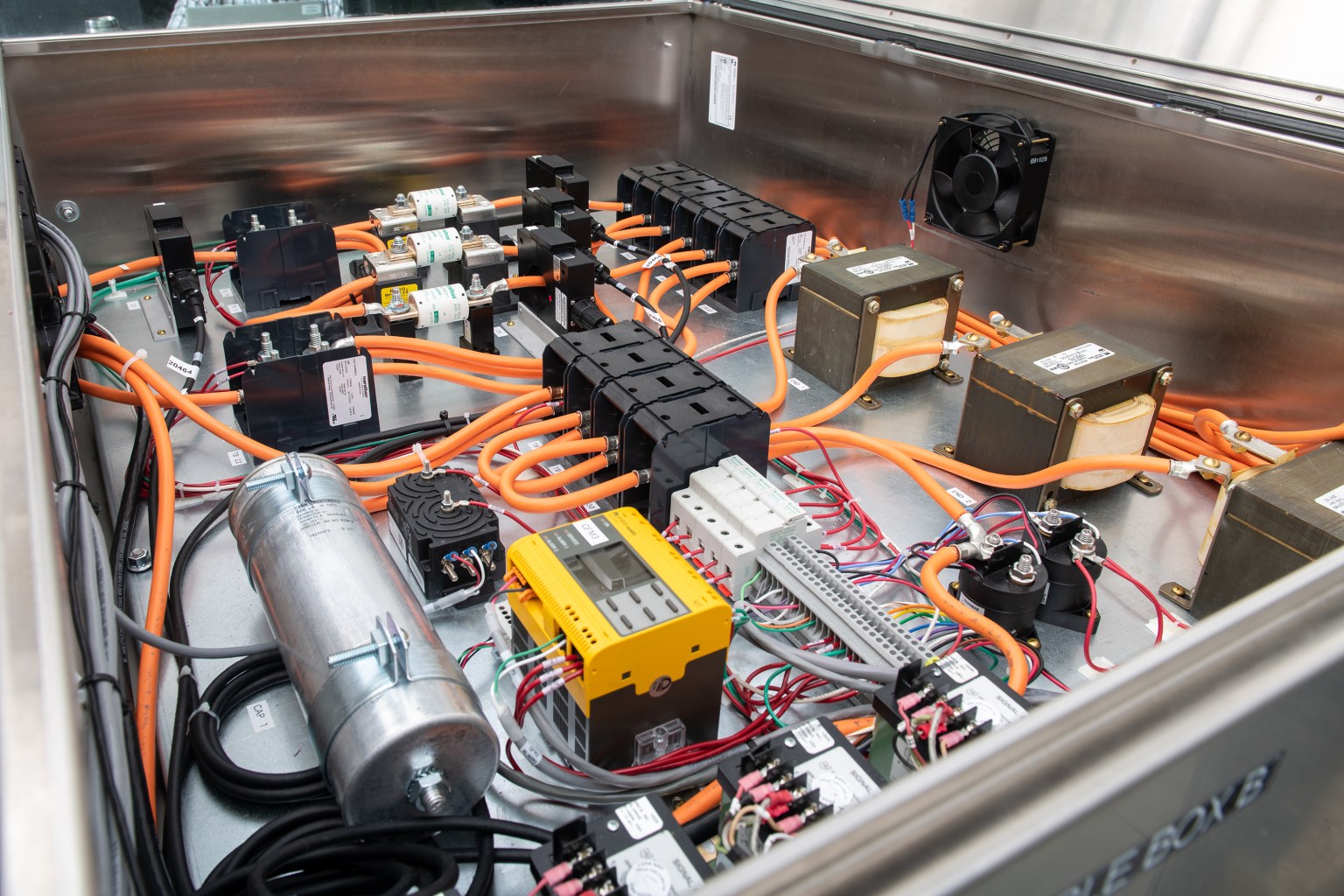
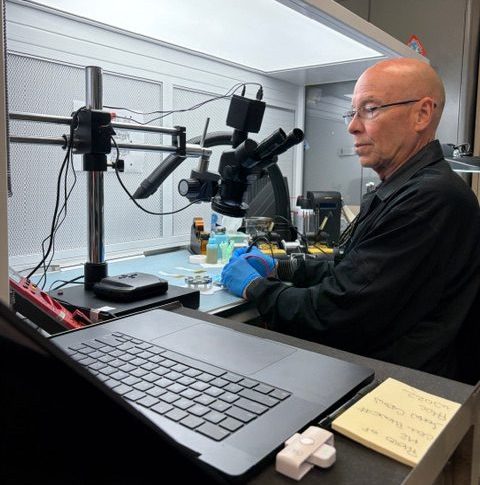
David McClaeb, electronic technician, NASA’s Goddard Space Flight Center in Greenbelt, Maryland
Advice from NASA electricians and electronic technicians
“As an aerospace technician, you have the opportunity to make a big difference. You can make a really big impact.” – Christopher Johnson, aerospace electrical engineering technician, NASA’s Kennedy Space Center in Florida
“What I wish I knew in high school is how many opportunities there are for electricians. I didn’t realize how big of a scale it really was. Everything needs electricity, and the sky’s the limit on what you can do with it. NASA needs electricians for everything from their testing campaigns to keeping their facilities running.” – Levi James, electrician apprentice, NASA’s Glenn Research Center at Armstrong Test Facility in Sandusky, Ohio
“It’s so gratifying when somebody comes in and says, ‘Hey, we want to build this, but it looks really difficult,’ and we say, ‘Yeah, it looks difficult, but we can do it’ – and we build it and then we hand it over to them, and then we’re on to the next thing. It’s a challenge, and I’m telling you, it is just so fun.” – David McClaeb, electronic technician, NASA’s Goddard Space Flight Center in Greenbelt, Maryland
Curiosity Blog, Sols 4927–4933: Let’s Drive to That Smooth Area
4 min read
Curiosity Blog, Sols 4927–4933: Let’s Drive to That Smooth Area
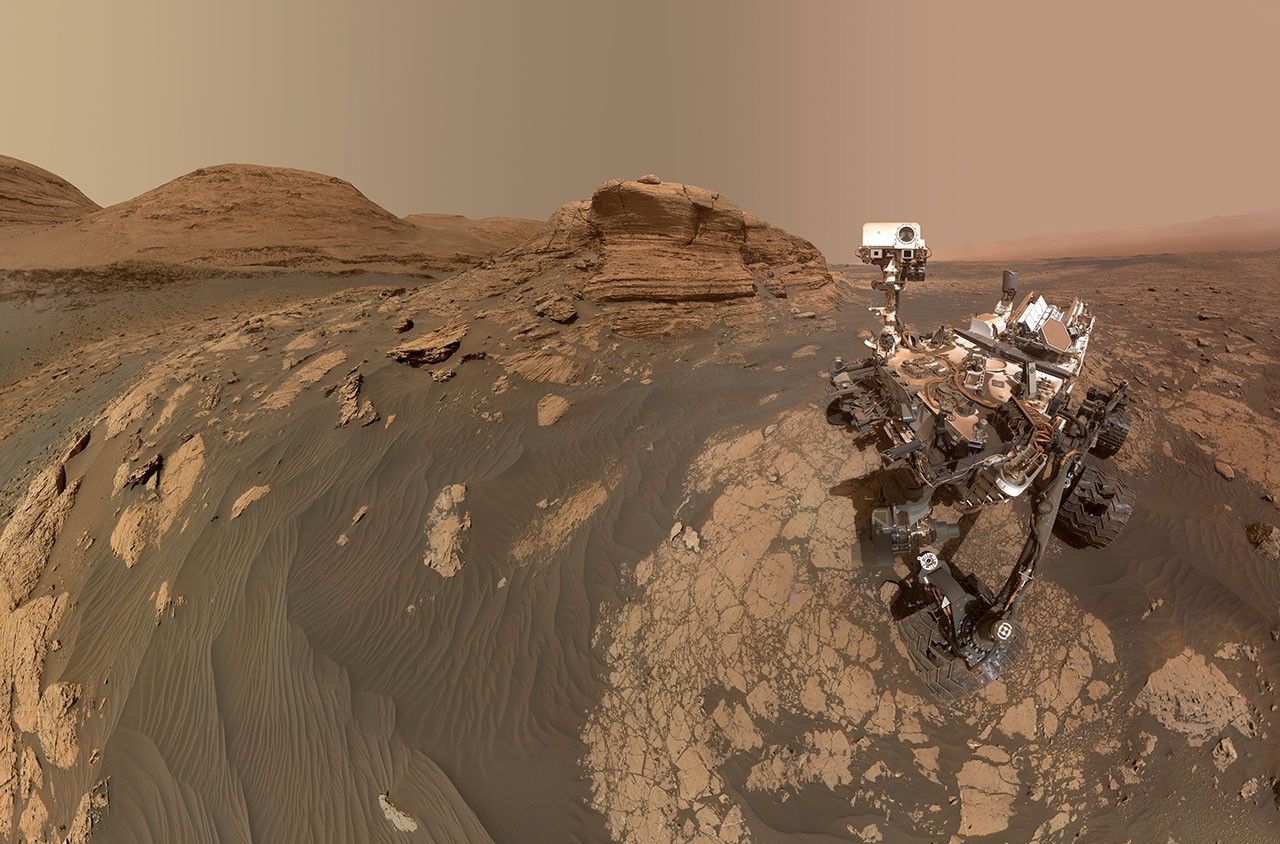
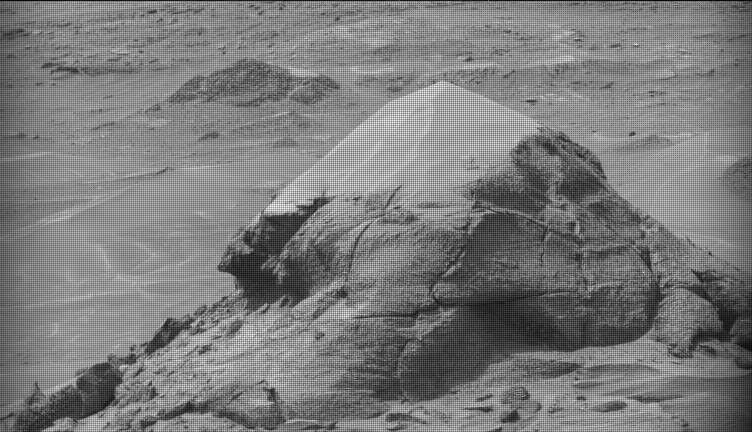
NASA’s Mars rover Curiosity acquired this image showing a breathtaking diversity of polygons, veins, and other textural features waiting for investigation by the Mars Science Laboratory team. Curiosity captured the image using its Left Navigation Camera on June 17, 2026 – Sol 4928, or Martian day 4,928 of the Mars Science Laboratory mission – at 17:47:52 UTC.
NASA/JPL-Caltech
By Susanne P. Schwenzer, Professor of Planetary Mineralogy at The Open University, UK
Earth planning date: Thursday, June 18, 2026
In the area Curiosity is currently exploring, the science team has mapped several areas with different-looking surface texture on the orbital images. If you wanted to have a look yourself at what there is to see, check the “Where is Curiosity?” map. You’ll discover different shades of orange and beige as well as more rough and more smooth-looking textures. This is what the geomorphologists in our team use to map the areas for exploration by the rover. Of course, we then supplement this all with ground-based images, including bespoke “drive direction imaging,” which is taken after each drive by the Mast Camera. Drive planning is done using a combination of all this information. So there shouldn’t be any surprises, right?
On Monday the team planned three sols in preparation for a Thursday planning to account for the U.S. federal holiday weekend. The workspace turned out to be a little spiky, so we could not find an area we could DRT. APXS still found one good bedrock target, “Rio Baker,” which also had MAHLI documentation. In addition, ChemCam investigated “Rica Aventura,” a textured bedrock, and “Tabebuia,” a darker-looking individual block, using its LIBS and conducted a passive spectral observation on a second dark float block called “Lago Ranco.” Of course, the team also wanted to look into the distance with ChemCam remote imaging, extending our investigation of the Cordillera base outcrop.
Imaging is always high on the list. In Monday’s plan Mastcam is looking into the modern dunes with the “Tacaza” mosaic, and with more mosaics looking forward to the future parking areas, some of which looked really smooth from that vantage point. We also continue our environmental and atmospheric observations looking for dust devils, the opacity of the atmosphere, and monitoring pressure and temperature. After all this, the rover drove about 35 meters (about 115 feet) to an area that looked really smooth in all images we had available at that point. So we were hoping for a good spot to deploy the DRT, but didn’t think we could be in for a surprise.
The drive ended exactly as planned, spot-on in the middle of that — from a distance — smooth-looking area. But when we opened the post-drive images on Thursday morning, we were all reacting with a lot of surprise. From up close, the parking spot looks anything but smooth. You can see the surprise in the title image of this blog. There are polygons, veins, lamination, and probably more, once we inspect the higher-resolution images taken today. “Higher-resolution” is the key for why we were in for such a surprise! The features are quite small, a few centimeters across, and therefore we could not see them in the orbital images or from a distance in our navigation and mast camera images. The camera resolution from a distance just isn’t enough to see them. But up close, the terrain revealed all its beauty! And I am sure there will be more in the even higher resolution of today’s MAHLI and ChemCam RMI imager images!
So, what did we plan after we caught our breath on Thursday? First, you guessed it, images, images, and more images. Mastcam takes a full panorama with its “left eye” and adds a range of closer-up mosaics with its higher-resolution “right eye.” In addition there is a ChemCam Remote Micro Imager image to document structures further afield at high resolution. ChemCam is investigating three targets using LIBS: “Rio Chimore” is a lighter-toned band; you can see some of those in the cover image of this blog, too. The other two LIBS targets are “Rio de Lava,” a vein target, and “Rio de Salta,” one of the polygons. APXS is also looking at the bedrock and the ridges, at the targets “Pampa Grande” and “Iquique Ridge.” MAHLI is having the above-mentioned close “hand lens” look. Let’s see what we will discover when we get those images.
Finally, Curiosity drove up the hill along very smooth-looking terrain that is just littered with tiny polygons. Let’s see if we are in for another surprise reverberating around all our offices — and across two continents, as I had the good fortune to be among the first ones, here in England (Or maybe it was our French ChemCam colleagues, who are in a time zone one hour ahead of me?). Whichever it is, this terrain has a lot to say about the geologic history of Mars!