Robotics Activities Continue; Crew Completes an Array of Research

Robotics Activities Continue; Crew Completes an Array of Research

An aurora glows in Earth's atmosphere as the International Space Station soared 260 miles above Utah during orbital nighttime.
An aurora glows in Earth’s atmosphere as the International Space Station soared 260 miles above Utah during orbital nighttime.

Another busy day of science activities is underway for the Expedition 70 crew and robotics ground controllers following the arrival of SpaceX’s Dragon cargo spacecraft last weekend. The seven members aboard the International Space Station spent time on an array of research today while grounds teams remotely retrieved science hardware from Dragon.

Flight Engineer Loral O’Hara started work in the morning on an experiment that studies age-related liver dysfunction and regeneration. The first-time station resident of NASA processed liver tissue samples in the Life Sciences Glovebox, research that could help scientists understand the biology of aging and its effects on disease mechanisms. Later in the day, Flight Engineer Jasmin Moghbeli of NASA took over this work before stowing the samples.

After yesterday’s ILLUMA-T extraction, mission controllers from the U.S. spent another day on robotics activities to retrieve more science hardware delivered inside Dragon’s unpressurized trunk. Remotely controlling the Canadarm2 robotic arm, engineers extracted the new Atmospheric Waves Experiment (AWE) payload to mount it to the exterior of the orbiting laboratory. From its perch, AWE will track small-scale atmospheric gravity waves in our home planet’s upper atmosphere to investigate how they contribute to space weather, which affects space- and ground-based comms, navigation, and tracking systems.

While ground teams worked remotely outside the station, research experiments continued for other residents aboard. Commander Andreas Mogensen of ESA (European Space Agency) spent the majority of his day deploying six antimicrobial placards for a four-month investigation that will test a coating to inhibit microbial growth on several surfaces aboard the orbiting laboratory.

Meanwhile, after yesterday’s start on treating cell samples inside the Kibo laboratory, astronaut Satoshi Furukawa of JAXA (Japan Aerospace Exploration Agency) continued this work for the Cell Gravisensing-2 study. Using a microscope, he observed additional samples to help researchers learn how lack of gravity affects cell response.

The trio of cosmonauts kept busy with their own scientific research and maintenance activities. Flight Engineer Konstantin Borisov worked on an ongoing investigation that observes Earth’s nighttime atmosphere in near-ultraviolet and photographed the Zarya and Nauka modules to assist in future planning of repairs and science equipment placement. Flight Engineer Oleg Kononenko inspected hardware in Nauka, while Flight Engineer Nikolai Chub completed some orbital plumbing and investigated the processes of liquid phases in microgravity.


Learn more about station activities by following the space station blog, @space_station and @ISS_Research on X, as well as the ISS Facebook and ISS Instagram accounts.

Get weekly video highlights at: https://roundupreads.jsc.nasa.gov/videoupdate/

Get the latest from NASA delivered every week. Subscribe here: www.nasa.gov/subscribe

Powered by WPeMatico

Get The Details…

Abby Graf

NASA Engineer Earns Goddard Innovation Award for Sun-studying Photon Sieves

NASA Engineer Earns Goddard Innovation Award for Sun-studying Photon Sieves

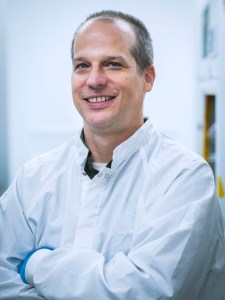
Goddard’s Office of the Chief Technologist named engineer Steven Denis as the FY23 Internal Research and Development (IRAD) Innovator of the Year, an honor the office bestows annually on individuals who demonstrate the best in innovation.

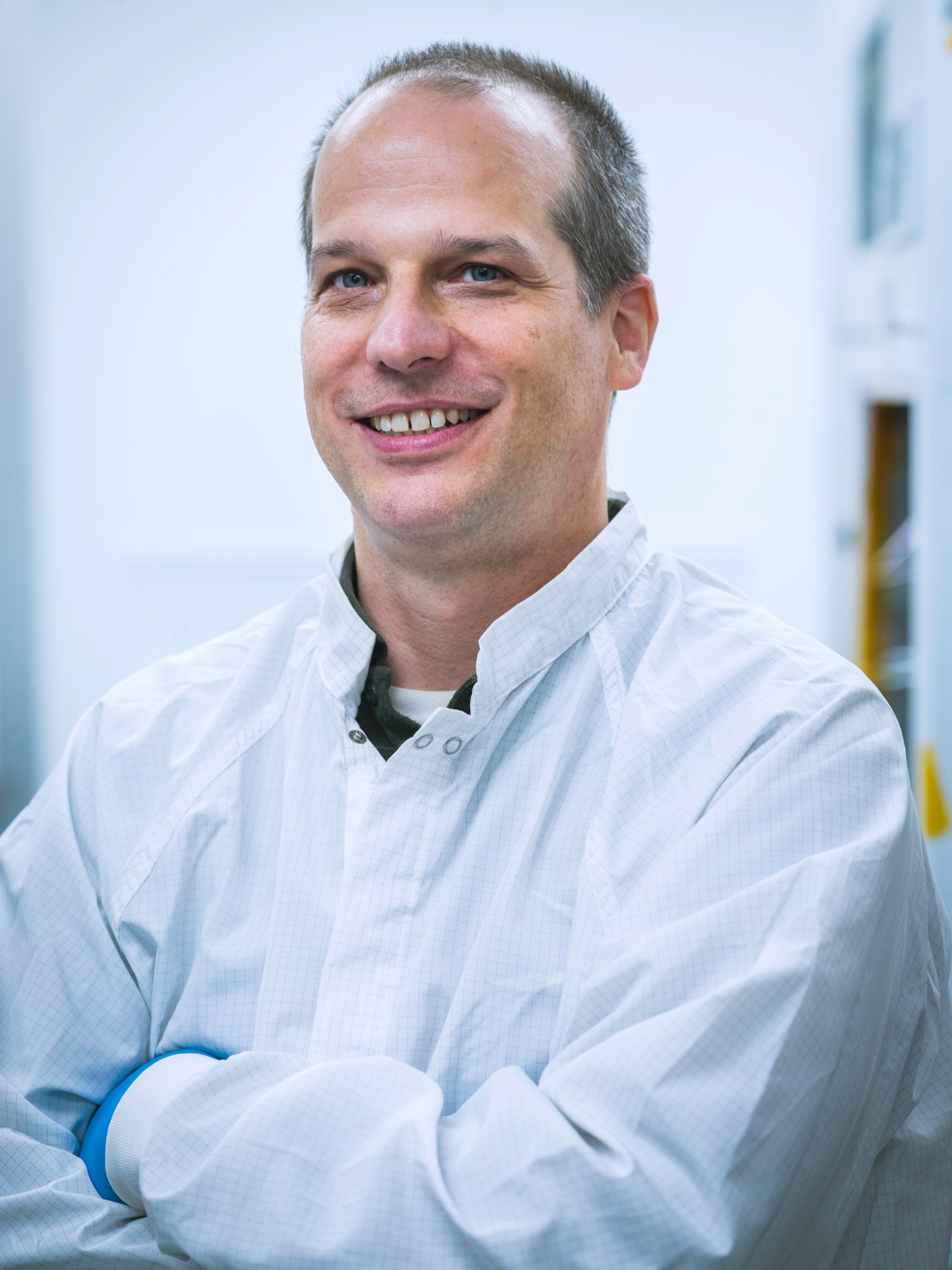
Portrait of Kevin Denis, Goddard's FY23 IRAD Innovation award recipient
Kevin Denis
Credit: NASA / Christopher Gunn

Denis demonstrated persistence and innovation in developing hair-thin photon sieves to focus extreme ultraviolet light – a difficult wavelength to capture. Thin membranes matter for solar science, he said, because these sieves transmit up to seven times more light than thicker materials. Denis’s work will open new ways to study the Sun in better detail and understand its influence on Earth and the solar system.

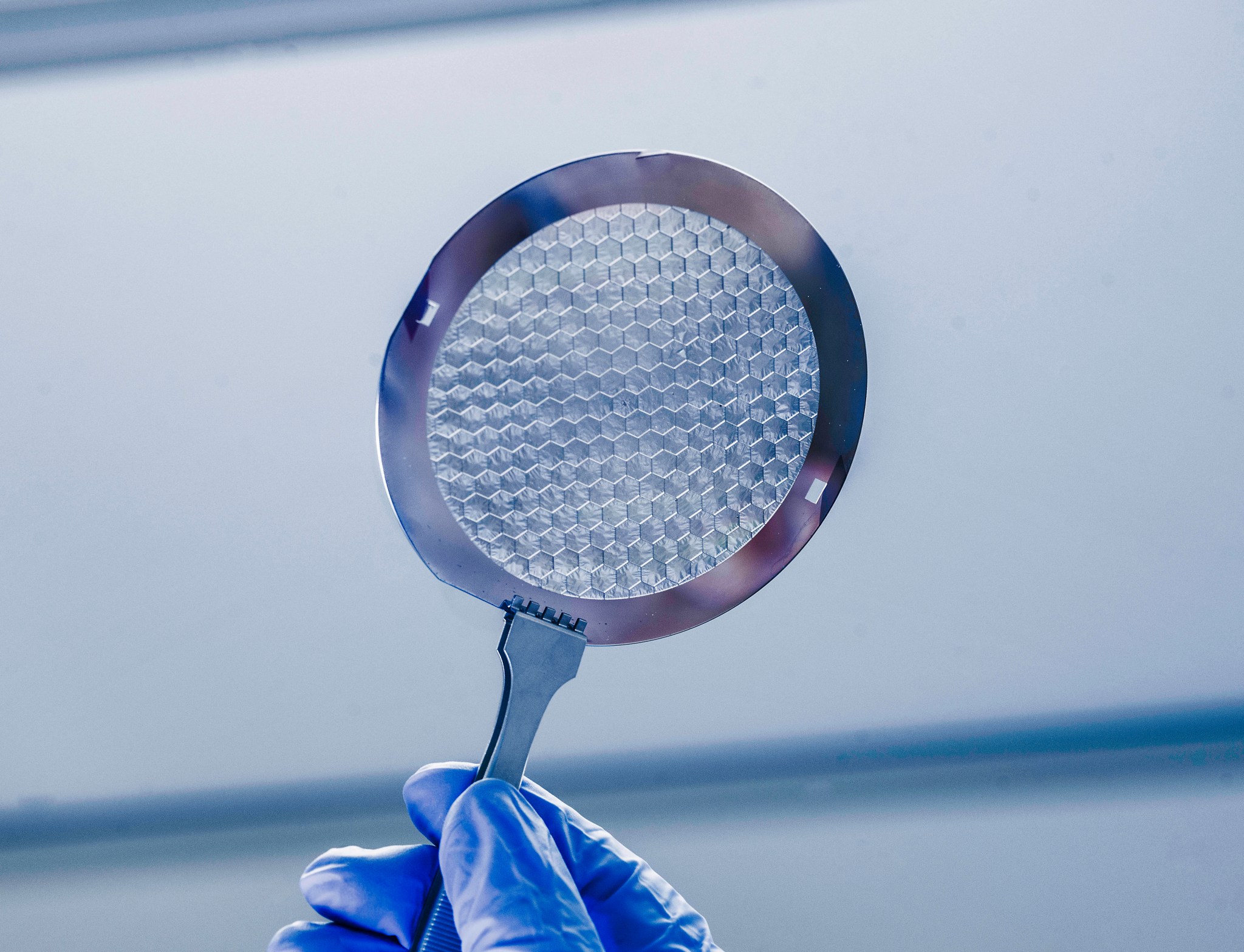
Working closely with solar scientists over many years through Goddard ’s IRAD, or Internal Research and Development program, Denis developed new ways to create wider and thinner membranes of silicon and niobium. These photon sieves, created in Goddard’s Detector Development Laboratory, are so thin they must be supported by a honeycomb lattice of thicker silicon to prevent tearing. Etched with microscopic holes in a circular pattern, they refract light similar to Fresnel lenses used in lighthouses. Extreme ultraviolet light passing through this sieve is bent gradually inward to a distant receiver.

an 8-inch wafer of silicon, with hair-thin panels etched with microscopic holes.
Photon sieves like this are cut from a single wafer of silicon or niobium to focus extreme ultraviolet light – a difficult wavelength to capture.
NASA / Christopher Gunn

“It’s a sheer physical challenge to construct sieves with such precision,” said Goddard heliophysicist Dr. Doug Rabin. “Their smallest features are a few microns across. Kevin has really responded to that challenge with very creative solutions.”

Denis’s photon sieves should eventually be able to resolve features near the surface of the Sun 10 to 50 times smaller than can be seen today with the Solar Dynamics Observatory’s EUV imager, Rabin said.

Denis takes inspiration from working closely with scientists to overcome barriers to advancing their field, he said. “With this project in particular, scientists Rabin and Adrian Daw have done a great job using the sieves in near-term science applications while we push the technology for larger and more capable missions.”

Denis’s work was highlighted in Physics Today, a publication of the American Institute for Physics, for its importance in advancing pivotal technology that can address outstanding questions of how coronal heating and acceleration happens in the Sun’s lower atmosphere.

With two patents already awarded based on this project, Denis is submitting a new application for his latest fabrication process.

While he continues to push the limits of engineering, Denis said he is looking forward to seeing them used in missions of increasing complexity and capability. “It’s a great motivation to see they are going to be used for new science.”

By Karl B. Hille

NASA’s Goddard Space Flight Center in Greenbelt, Md.

Powered by WPeMatico

Get The Details…
Karl B. Hille

NASA Telescope Data Becomes Music You Can Play

NASA Telescope Data Becomes Music You Can Play

4 min read

NASA Telescope Data Becomes Music You Can Play

For millennia, musicians have looked to the heavens for inspiration. Now a new collaboration is enabling actual data from NASA telescopes to be used as the basis for original music that can be played by humans.

Since 2020, the “sonification” project at NASA’s Chandra X-ray Center has translated the digital data taken by telescopes into notes and sounds. This process allows the listener to experience the data through the sense of hearing instead of seeing it as images, a more common way to present astronomical data.

A musical ensemble performs soundscape that composer Sophie Katsner created using data sonifications from NASA’s Chandra, Hubble and Spitzer space telescopes. Based in Montreal, Ensemble Éclat is dedicated to the performance of contemporary classical music and promoting the works of emerging composers. (Video Credit: NASA/CXC/A. Jubett & Priam David)

A new phase of the sonification project takes the data into different territory. Working with composer Sophie Kastner, the team has developed versions of the data that can be played by musicians.

“It’s like a writing a fictional story that is largely based on real facts,” said Kastner. “We are taking the data from space that has been translated into sound and putting a new and human twist on it.”

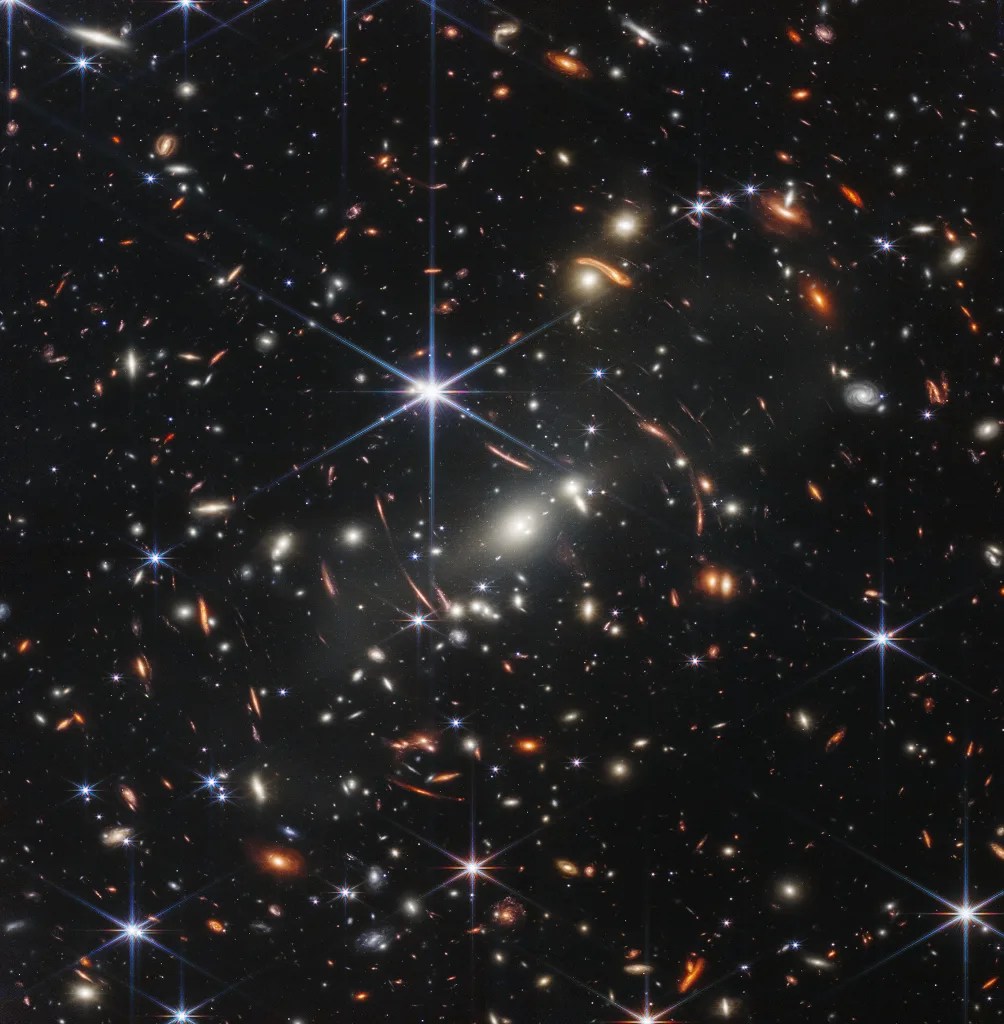
This pilot program focuses on data from a small region at the center of our Milky Way galaxy where a supermassive black hole resides. NASA’s Chandra X-ray Observatory, Hubble Space Telescope, and retired Spitzer Space Telescope have all studied this area, which spans about 400 light-years across.

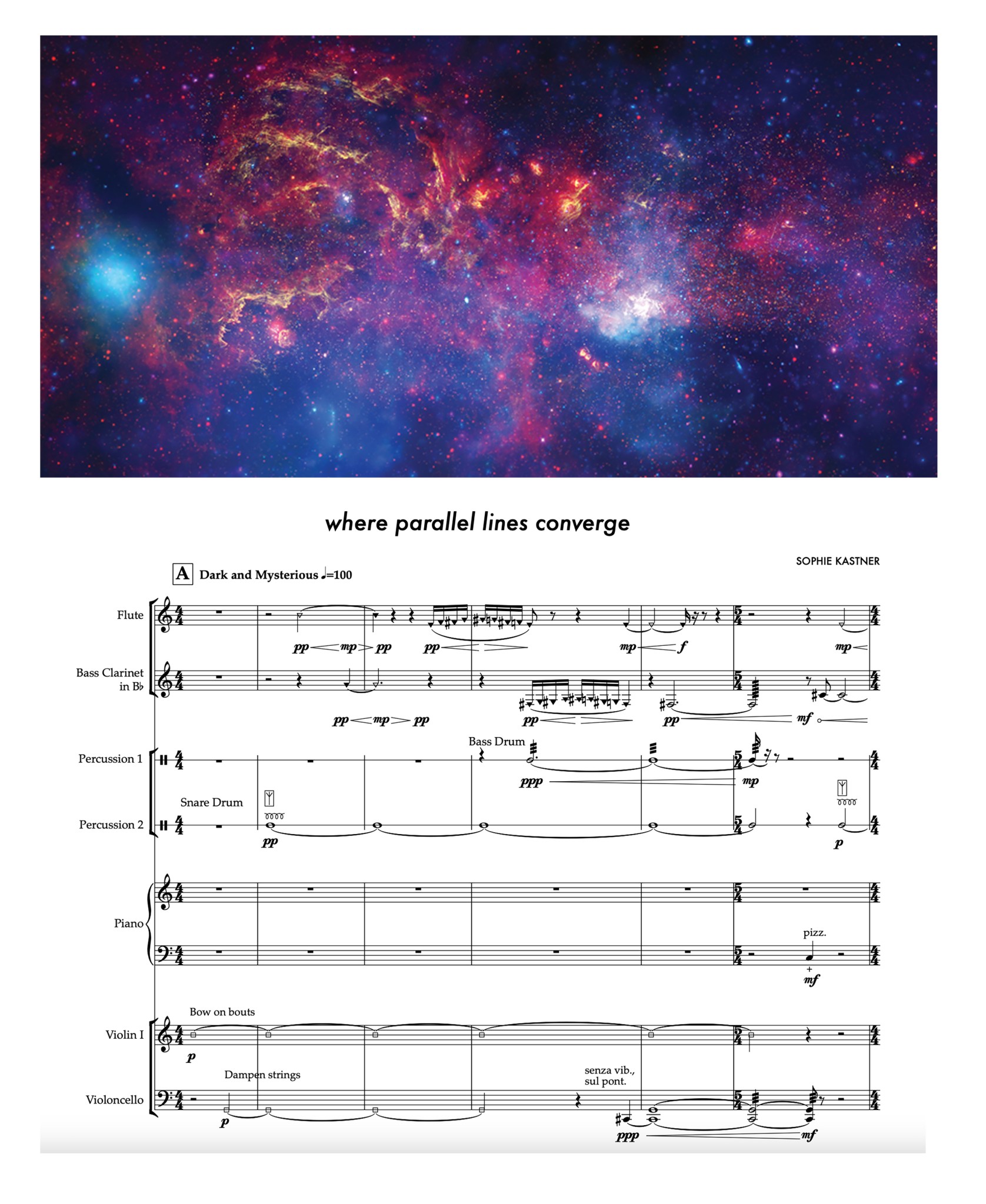
The Galactic Center sonification, using data from NASA’s Chandra, Hubble and Spitzer space telescopes, has been translated into a new composition with sheet music and score. Working with a composer, this soundscape can be played by musicians.
The Galactic Center sonification, using data from NASA’s Chandra, Hubble and Spitzer space telescopes, has been translated into a new composition with sheet music and score. Working with a composer, this soundscape can be played by musicians. The full score and sheet music for individual instruments is available at: https://chandra.si.edu/sound/symphony.html
Composition: NASA/CXC/SAO/Sophie Kastner

We’ve been working with these data, taken in X-ray, visible, and infrared light, for years,” said Kimberly Arcand, Chandra visualization and emerging technology scientist. “Translating these data into sound was a big step, and now with Sophie we are again trying something completely new for us.”

In the data sonification process, computers use algorithms to mathematically map the digital data from these telescopes to sounds that humans can perceive. Human musicians, however, have different capabilities than computers.

Kastner chose to focus on small sections of the image in order to make the data more playable for people. This also allowed her to create spotlights on certain parts of the image that are easily overlooked when the full sonification is played.

“I like to think of it as creating short vignettes of the data, and approaching it almost as if I was writing a film score for the image,” said Kastner. “I wanted to draw listener’s attention to smaller events in the greater data set.”

The result of this trial project is a new composition based upon and influenced by real data from NASA telescopes, but with a human take.

“In some ways, this is just another way for humans to interact with the night sky just as they have throughout recorded history,” says Arcand. “We are using different tools but the concept of being inspired by the heavens to make art remains the same.”

Kastner hopes to expand this pilot composition project to other objects in Chandra’s data sonification collection. She is also looking to bring in other musical collaborators who are interested in using the data in their pieces.

Sophie Kastner’s Galactic Center piece is entitled “Where Parallel Lines Converge.” If you are a musician who wants to try playing this sonification at home, check out the sheet music at: https://chandra.si.edu/sound/symphony.html.

The piece was recorded by Montreal based Ensemble Éclat conducted by Charles-Eric LaFontaine on July 19, 2023 at McGill University.

NASA’s Marshall Space Flight Center manages the Chandra program. The Smithsonian Astrophysical Observatory’s Chandra X-ray Center controls science operations from Cambridge, Massachusetts, and flight operations from Burlington, Massachusetts.

Read more from NASA’s Chandra X-ray Observatory.

For more Chandra images, multimedia and related materials, visit: https://www.nasa.gov/mission/chandra-x-ray-observatory/

Megan Watzke
Chandra X-ray Center
Cambridge, Mass.
617-496-7998

Jonathan Deal
Marshall Space Flight Center
Huntsville, Ala.
256-544-0034

Powered by WPeMatico

Get The Details…
Lee Mohon

Modeling Turbofan Engines to Understand Aircraft Noise

Modeling Turbofan Engines to Understand Aircraft Noise

2 min read

Modeling Turbofan Engines to Understand Aircraft Noise


This simulation shows the complex flow of air particles through the Source Diagnostic Test turbofan engine. By simulating the fan’s rotations, researchers can target design innovations and modifications to reduce the impact of fan noise on people living and working in areas with heavy air traffic.
Credit: Timothy Sandstrom, Luis Fernandes/NASA Ames Research Center

Airplane engines are loud – just ask anyone who lives near an airport. Increased air traffic from next-generation aircraft has the potential for even more disruptive noise. Researchers and engineers at NASA are working to reduce noise generated by turbofan engines, but each new design requires certification and testing to understand how much noise it will generate during takeoff and approach.  

Using the Pleiades supercomputer at the NASA Advanced Supercomputing facility at the agency’s Ames Research Center in California’s Silicon Valley, researchers have developed software that can model different engine configurations in a more timely and economic manner.  

Generating accurate simulations of rotating geometry, like a turbofan, requires time-consuming computations. Using NASA’s Launch, Ascent, and Vehicle Aerodynamics software, the team used a sliding mesh technique, which reduces the amount of runtime mapping procedures by analytically matching stationary and rotating points on the modeling grid.

The simulation is based on the Source Diagnostic Test fan, a simplified turbofan engine model used for physical tests. By using a simulation instead of a physical model, testing will require less time and expense, opening the door to easier testing and certification of turbofan engine designs that lower fuel burn and reduce emissions without increased noise levels. 

NASA is showcasing 42 of the agency’s computational achievements at SC23, the international supercomputing conference, Nov. 12-17, 2023, in Denver, Colorado. For more technical information, visit: ​

https://www.nas.nasa.gov/sc23.

For news media:

Members of the news media interested in covering this topic should reach out to the NASA Ames newsroom.

About the Author

Tara Friesen

Tara Friesen

Share

Details

Last Updated

Nov 15, 2023

Powered by WPeMatico

Get The Details…
Tara Friesen

Pale Blue Dot: Visualization Challenge

Pale Blue Dot: Visualization Challenge

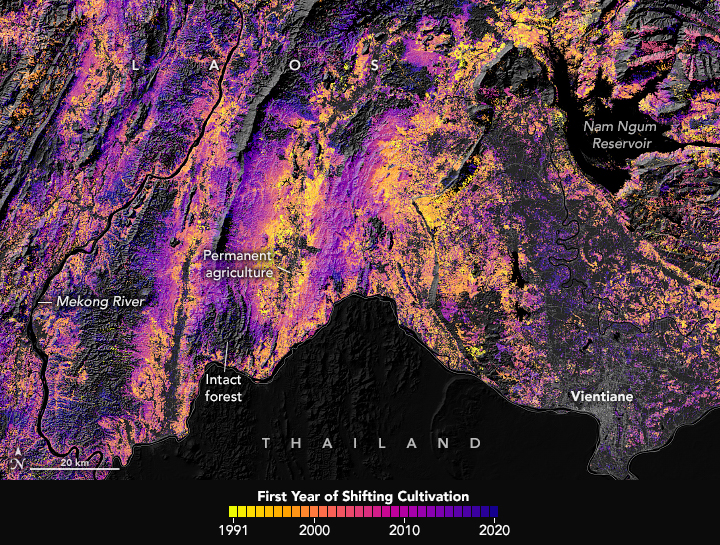
Satellite visualization of shifting land use over 40 years in East Asia.

Our world is facing many urgent challenges, such as climate change, water insecurity, and food insecurity. Maintaining and improving quality of life around the world requires bringing together innovators across disciplines and countries to find creative solutions.

One critical tool for understanding and improving the urgent challenges facing our world is Earth observation data, meaning data that is gathered in outer space about life here on Earth! Earth observation data provides accurate and publicly accessible information on our atmosphere, oceans, ecosystems, land cover, and built environment. The United States and its partners have a long history of exploring outer space and making satellite, airborne, and in-situ sensor datasets openly available to all.

Your goal in this challenge is to create a visualization using Earth observation data that advances at least one of the following Sustainable Development Goals (SDGs):

By participating, you can be part of NASA’s initiative to Transform to Open Science and to make Earth observation data available to all.

Award: 10-day Space Study program, with travel, lodging, and tuition covered.

Open Date: November 15, 2023

Close Date: January 26, 2024

For more information, visit: https://www.drivendata.org/competitions/256/

Powered by WPeMatico

Get The Details…
Sarah Douglas