Astrobee Powered On, Safety Drills, and Health Measurements Top Today’s Schedule

Astrobee Powered On, Safety Drills, and Health Measurements Top Today’s Schedule

NASA astronaut and Expedition 69 Flight Engineer Woody Hoburg monitors an Astrobee robotic free-flyer in the Kibo laboratory module testing its operations in conjunction with mission controllers. The robotics work is being done to demonstrate ways to control the free-flyers using student-written code that recognizes multiple gestures.

Another round of safety training is underway today on the International Space Station. The Expedition 69 crew members were also tasked with robotic activities, ultrasound scans and station maintenance.

United Arab Emirates (UAE) Flight Engineer Sultan Alneyadi powered on the station’s free-flying robots, Astrobee, in the morning. Later in the day, NASA astronaut Woody Hoburg performed a Zero Robotics dry run with Astrobee in the Japanese Experiment Module and assisted grounds teams with multiple software test runs. In dry run sessions, the Astrobee robots verify various aspects and programming for the Zero Robotics student competition—a program that provides students the opportunity to write software that controls one of three Astrobee robots, helping inspire the next generation of explorers, scientists and engineers.

Alneyadi was also tasked with consolidating food as the crew preps for the berthing of Northrop Grumman’s 19th commercial resupply mission, targeted for launch on Tuesday, August 1 and capture on Friday, August 4.

NASA astronaut Stephen Bowen was joined by Hoburg in the afternoon to take ISAFE measurements. In the microgravity environment, blood and fluids shift toward the head, which can cause structural changes to the eye. ISAFE measures eye, brain and blood vessel changes in microgravity using an ultrasound device in order to help researchers better predict eye changes on future long-duration spaceflight.

NASA Flight Engineer Frank Rubio performed computer maintenance in the Japanese Experiment Module in the morning. He then completed maintenance tasks on the Confocal Space Microscope, a Japanese Aerospace Exploration Agency facility that provides fluorescent images of biological samples. At the end of the day, Rubio, joined by Alneyadi, Hoburg, Bowen and Commander Sergey Prokopyev and Flight Engineers Dmitri Petelin and Andrey Fedyaev of Roscosmos, all completed a second set of safety drills.

Ahead of training, Prokopyev completed maintenance tasks in the Zvezda service module while Fedyaev took inventory in the Functional Cargo Block, or Zarya module, and Petelin ran additional experiments studying liquid phases in microgravity.

Mission Control Center Houston is back to normal operations after full communication with the International Space Station was restored July 25, following a loss of power to the space station’s primary ground communication equipment at NASA’s Johnson Space Center. The issue occurred during planned upgrades to the ground power system to ensure the mission control power grid remains robust and reliable. Ground teams activated the backup control center systems located at the agency’s Marshall Space Flight Center in Huntsville, Alabama, to regain communications with the space station while engineers addressed the power issue in Houston. The backup systems typically are used in events such as a hurricane when evacuation from Mission Control Center Houston may be necessary. Flight controllers in Houston were able to stay in contact with the Expedition 69 crew aboard the space station through Roscosmos, as well as backup channels and the crew was not in any danger. All check-outs of the equipment went as planned following repowering.


Learn more about station activities by following the space station blog@space_station and @ISS_Research on Twitter, as well as the ISS Facebook and ISS Instagram accounts.

Get weekly video highlights at: https://roundupreads.jsc.nasa.gov/videoupdate/

Get the latest from NASA delivered every week. Subscribe here: www.nasa.gov/subscribe

Powered by WPeMatico

Get The Details…

Abby Graf

NASA Awards $14 Million to Universities for Supportive STEM Efforts

NASA Awards $14 Million to Universities for Supportive STEM Efforts

NASA is investing more than $14 million in 19 U.S. colleges and universities to grow their STEM capacity to participate in critical spaceflight research and prepare a new generation of diverse students for careers in the nation’s science, technology, engineering, and math workforce.

Powered by WPeMatico

Get The Details…

NASA, DARPA Experts to Discuss Nuclear Rocket Program Developments

NASA, DARPA Experts to Discuss Nuclear Rocket Program Developments

Experts from NASA and the Defense Advanced Research Projects Agency (DARPA) will hold a media teleconference at 1 p.m. EDT Wednesday, July 26, to discuss the latest developments in the Demonstration Rocket for Agile Cislunar Operations (DRACO) program.

Powered by WPeMatico

Get The Details…

Safety Training, Space Botany, Robotics Practice and Spacesuit Maintenance Today

Safety Training, Space Botany, Robotics Practice and Spacesuit Maintenance Today

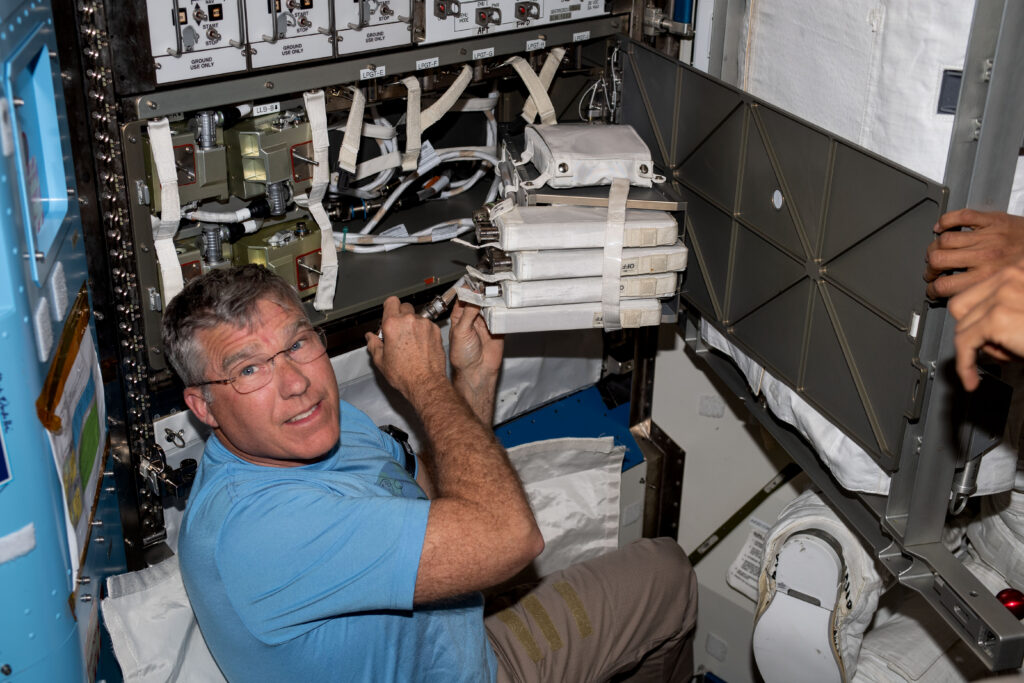
NASA astronaut and Expedition 68 Flight Engineer Stephen Bowen is pictured conducting maintenance activities
NASA astronaut and Expedition 69 Flight Engineer Stephen Bowen is pictured conducting maintenance activities.

The seven-member Expedition 69 crew is keeping busy Tuesday with a round of training, prepping for an upcoming cargo delivery and tending to plants aboard the International Space Station.

NASA Flight Engineer Frank Rubio, joined by Commander Sergey Prokopyev and Flight Engineer Dmitri Petelin of Roscosmos began the day with a round of safety training. The rest of the crew, including NASA astronauts Stephen Bowen and Woody Hoburg, United Arab Emirates (UAE) Flight Engineer Sultan Alneyadi and Flight Engineer Andrey Fedyaev of Roscosmos completed the same training midafternoon.

Rubio then tended to seedlings growing aboard the orbital lab in Plant Habitat-03, thinning the Arabidopsis sprouts to retain a singular healthy plant per unit. These ongoing investigations assess if adaptations in one generation of plants grown in space can transfer to the next.

Meanwhile, Hoburg continued collecting samples for the Standard Measures investigation and was later joined by Rubio to complete the first robotics practice session to get set for the upcoming rendezvous and capture of Northrop Grumman’s commercial cargo spacecraft, Cygnus. The company’s 19th commercial resupply mission—packed with new science, hardware, and supplies for the crew—is targeted to launch at 8:31 p.m. EDT on Tuesday, August 1.

Bowen spent his morning consolidating stowage in the Japanese Experiment Module, then worked in tandem with Alneyadi performing cooling loop scrubs of spacesuits, or Extravehicular Mobility Units (EMUs), through the afternoon. Alneyadi ended his day by initiating Iodination of the spacesuits, both activities required to remove contaminants from the transfer loops.

Following his morning training, Prokopyev carried out additional cargo plans for the upcoming ISS Progress 85 mission arriving to the station in August. Additionally, he ran the Cardiovector investigation, which assesses cardiac function to study crew health in a low-gravity environment. Meanwhile, Petelin continued ongoing research of liquid phases in microgravity, while Fedyaev performed maintenance in the Poisk module.

Around 9 a.m., a power issue in Mission Control Houston resulted in the loss of command, telemetry, and voice from the ground to the International Space Station. The issue was isolated to the ground, and flight controllers were able to talk to the crew onboard station through Roscosmos channels, and at no point was the crew in any danger. The mission control team worked to transition to back-up hardware for telemetry, commanding, and audio. It is expected that by the end of the day the issue will be resolved and the system will be back into a normal configuration.


Learn more about station activities by following the space station blog@space_station and @ISS_Research on Twitter, as well as the ISS Facebook and ISS Instagram accounts.

Get weekly video highlights at: https://roundupreads.jsc.nasa.gov/videoupdate/

Get the latest from NASA delivered every week. Subscribe here: www.nasa.gov/subscribe

Powered by WPeMatico

Get The Details…

Abby Graf