The Marshall Star for December 13, 2023

The Marshall Star for December 13, 2023

16 Min Read

The Marshall Star for December 13, 2023

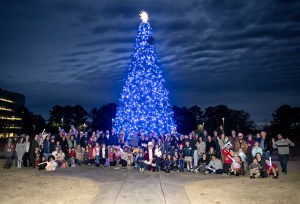
Marshall team members gather at the center’s holiday reception Dec. 7 in Activities Building 4316. From left are Cory Brown, Leigh Martin, Lisa Watkins, Shaun Baek, and Randy Silver.

Marshall Team Members Celebrate Holiday Season

By Jessica Barnett

Marshall team members gather at the center’s holiday reception Dec. 7 in Activities Building 4316. From left are Cory Brown, Leigh Martin, Lisa Watkins, Shaun Baek, and Randy Silver.
NASA/Alex Russell

For hundreds of team members at NASA’s Marshall Space Flight Center, “eat, drink, and be merry” was the afternoon theme for Dec. 7.

Marshall team members sign up for door prizes while Marshall Acting Center Director Joseph Pelfrey offers welcoming remarks at the center’s holiday reception.
NASA/Alex Russell

The center hosted a holiday celebration in Activities Building 4316, complete with food, door prizes, and plenty of opportunity to wish one happy holidays. Acting Center Director Joseph Pelfrey welcomed team members to the festivities with a brief recap of 2023 and look forward to 2024.

Hundreds of Marshall team members enjoy the buffet-style food offerings at the center’s holiday reception.
NASA/Alex Russell

“I was thrilled to see such an excellent turnout at the holiday reception,” Pelfrey said after the reception. “This has been an exceptional year for us at Marshall, and it’s important we take time this season to celebrate our successes and recharge for 2024.”

The NASA worm logo flanked by two holiday trees was just one of the ways Activities Building 4316 was decked out for a merry holiday reception Dec. 7.
NASA/Alex Russell

Barnett, a Media Fusion employee, supports the Marshall Office of Communications.

› Back to Top

IXPE Marks 2 Years of Groundbreaking X-ray Astronomy

By Rick Smith

On Dec. 9, astronomers and physicists commemorated two years of landmark X-ray science by NASA’s IXPE (Imaging X-ray Polarimetry Explorer) mission.

IXPE is the joint NASA-Italian Space Agency mission to study polarized X-ray light. Polarization is a characteristic of light that can help reveal information about where that light came from, such as the geometry and inner workings of the ultra-powerful energy sources from which it emanates.
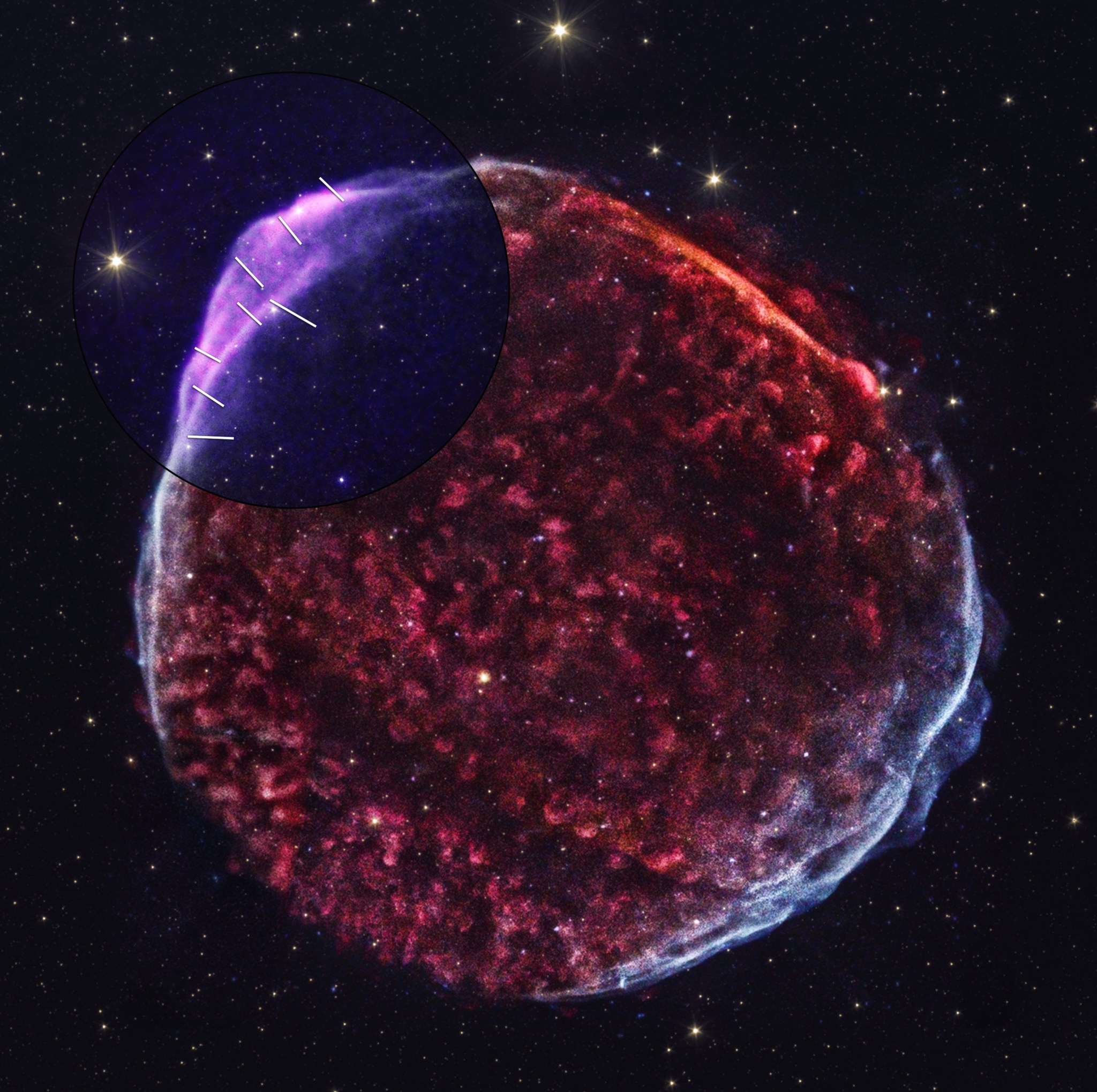
A red and orange circle on a black starry background. A portion of the upper left is purple with lines on it.
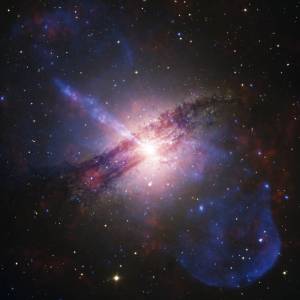
This image of supernova remnant SN 1006 combines data from IXPE and NASA’s Chandra X-ray Observatory. The red, green, and blue elements reflect low, medium, and high energy X-rays, respectively, as detected by Chandra. IXPE data is shown in purple in the upper left corner, with the addition of lines representing the outward movement of the remnant’s magnetic field.
X-ray: NASA/CXC/SAO (Chandra); NASA/MSFC/Nanjing Univ./P. Zhou et al. (IXPE); IR: NASA/JPL/CalTech/Spitzer; Image Processing: NASA/CXC/SAO/J.Schmidt

Launched Dec. 9, 2021, IXPE orbits Earth some 340 miles high, studying X-ray emissions from powerful cosmic phenomena thousands to billions of light-years from Earth, including quasars, blazars, remnants of supernova explosions, and high-energy particle streams spewing from the vicinity of black holes at nearly the speed of light.

“Adding X-ray polarization to our arsenal of radio, infrared, and optical polarization is a game changer,” said Alan Marscher, a Boston University astronomer who leads a research group that uses IXPE’s findings to analyze supermassive black holes.

Martin Weisskopf, the astrophysicist who led the development of IXPE at NASA’s Marshall Space Flight Center and served as its principal investigator until his retirement from NASA in spring 2022, agreed.

“There can be no question that IXPE has shown that X-ray polarimetry is important and relevant to furthering our understanding of how these fascinating X-ray systems work,” Weisskopf said.

Scientists have long understood, for example, the fundamentals of blazars such as Markarian 501 and Markarian 421. A blazar is a massive black hole feeding off material swirling around it in a disk, creating powerful jets of high-speed cosmic particles which rush away in two directions perpendicular to the disk. But how are those particles accelerated to such high energies? IXPE data published in November 2022 in the journal Nature identified the culprit at Markarian 501 as a shock wave within the jet.

“This is a 40-year-old mystery that we’ve solved,” said Yannis Liodakis, a NASA Postdoctoral Program researcher at Marshall. “We finally had all of the pieces of the puzzle, and the picture they made was clear.”

IXPE also conducted unprecedented studies of three supernova remnants – Cassiopeia A, Tycho, and SN 1006 – helping scientists further their understanding of the origin and processes of the magnetic fields surrounding these phenomena.

IXPE is even shedding new light on fundamental mechanisms of our own galaxy. According to studies IXPE conducted in early 2022, Sagittarius A*, the supermassive black hole at the center of the Milky Way, woke up about 200 years ago to devour gas and other cosmic detritus, triggering an intense, short-lived X-ray flare. By combining data from IXPE, Chandra, and the European Space Agency’s XMM-Newton mission, researchers determined the event occurred around the start of the 19th century.

An illustration of of a black hole that looks purple at the bottom and shows a stream of white and blue coming out of the hole.
This NASA illustration shows the structure of a black hole jet as inferred by recent IXPE observations of the blazar Markarian 421. The jet is powered by an accretion disk, shown at the bottom of the image, which orbits and falls into the black hole over time. Helical magnetic fields are threaded through the jet. IXPE observations have shown that the X-rays must be generated in a shock originating within material spiraling around the magnetic fields. The inset shows the shock front itself.
NASA/Pablo Garcia

“We know change can happen to active galaxies and supermassive black holes on a human timescale,” said IXPE project scientist Steve Ehlert at Marshall. “IXPE is helping us better understand the timescale on which the black hole at the center of our galaxy is changing. We’re eager to observe it further to determine which changes are typical and which are unique.”

IXPE also has supported observations of unanticipated cosmic events – such as the brightest pulse of intense radiation ever recorded, which swept through our solar system in October 2022. The pulse stemmed from a powerful gamma-ray burst likely to occur no more than once in 10,000 years, researchers said. Backing up data from NASA’s Fermi Space Telescope and other imagers, IXPE helped determine how the pulse was organized and confirmed that Earth imagers viewed the jet almost directly head-on.

Perhaps most exciting to space scientists is how IXPE data is upending conventional wisdom about various classes of high-energy sources.

“So many of the polarized X-ray results we’ve seen over the past two years were a big surprise, tossing theoretical models right out the window,” Ehlert said. “Seeing results we didn’t anticipate sparks new questions, new theories. It’s really exciting!”

That excitement continues to build among IXPE partners around the world. In June, the mission was formally extended for 20 months beyond its initial two-year flight – meaning IXPE will continue to observe high-energy X-ray emissions across the cosmos through at least September 2025.

The new year also will mark the start of the IXPE General Observer Program, which invites astrophysicists and other space scientists around the world to propose and take part in studies using the IXPE telescope. Beginning in February 2024, as much as 80% of IXPE’s time will be made available to the broader scientific community.

IXPE is a collaboration between NASA and the Italian Space Agency with partners and science collaborators in 12 countries. Led at Marshall, IXPE’s spacecraft operations are jointly managed by Ball Aerospace in Broomfield, Colorado, and the University of Colorado’s Laboratory for Atmospheric and Space Physics in Boulder.

Smith, a Manufacturing Technical Solutions employee, supports the Marshall Office of Communications.

› Back to Top

This Holiday Season, Take Care of Yourself and Others

Dear Marshall family,

As 2023 comes to a close, my thoughts seem to be focused more than ever upon gratitude. As is true for many of you I’m sure, I am so incredibly thankful for my loved ones, for good health for me and my loved ones, and for the life that I enjoy.

The life that I enjoy encompasses a great deal. I have a comfortable home, with heat for the winter, air conditioning for the summer, hot and cold water all year long, good food to eat, reliable vehicles to drive, nice clothes and shoes to wear, access to entertainment, the ability to be a part of a community, and I could go on and on. The point is, I have a great deal to be thankful for, and being thankful helps me to be more aware of the fact that many in our community and our world are not so fortunate. I hope that you, too, will take some time to consider the people, circumstances, and things for which you are grateful, and also to consider looking for opportunities to help those in our community who are less fortunate.
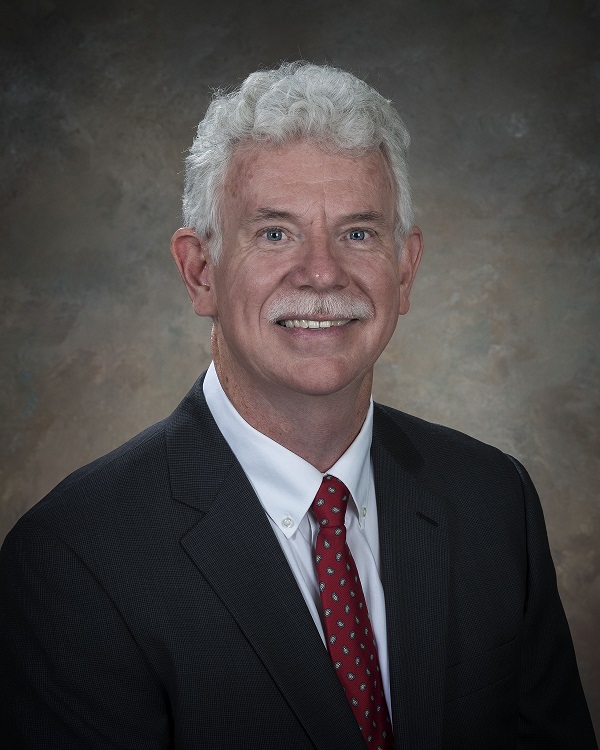
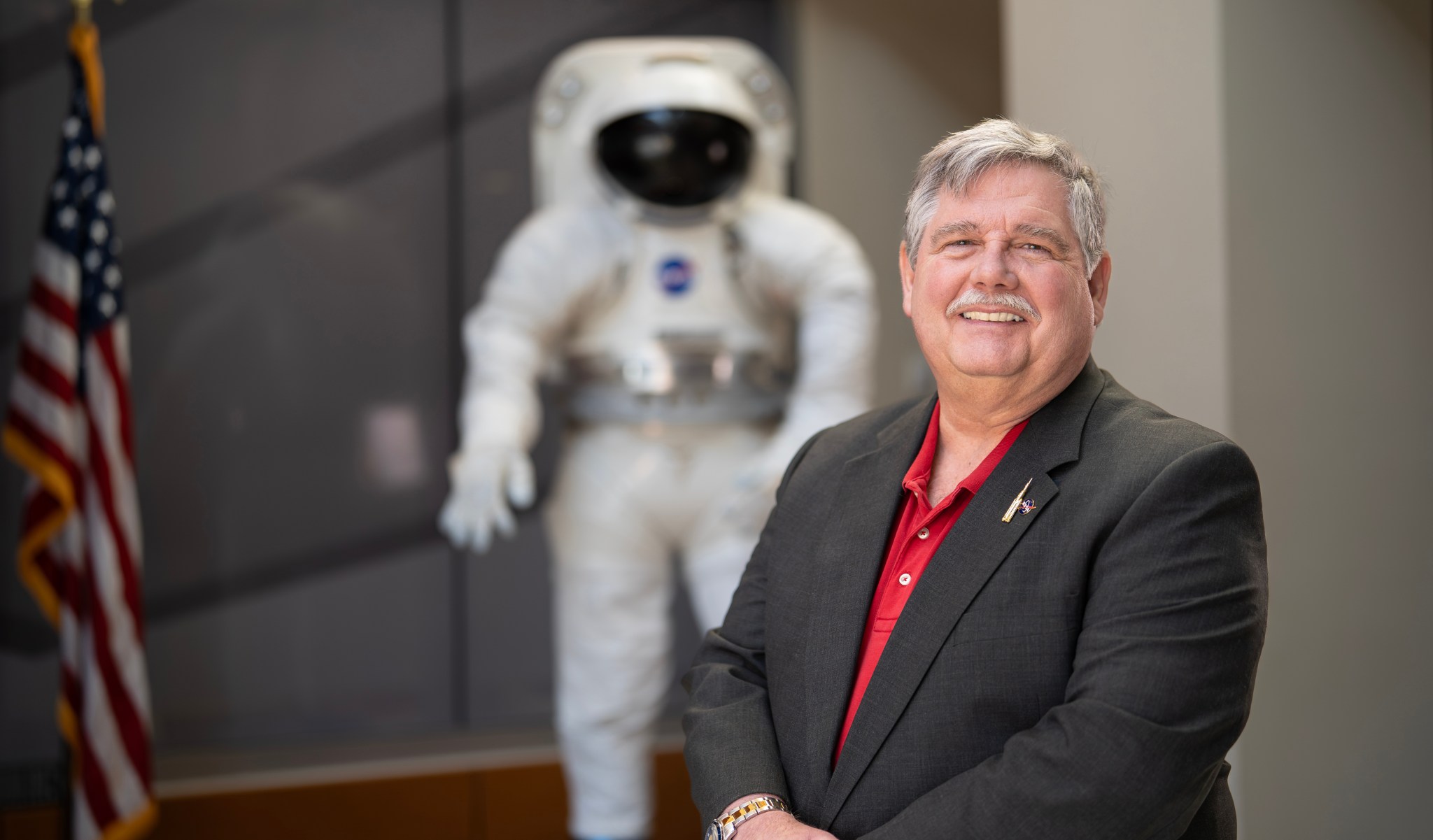
Terry Sterry.
Dr. Terry Sterry.
NASA

With the holidays upon us, this can be a very demanding time of year, and that can add a good deal of stress to our lives. The stressors of the season will be different for each of us, but some common ones include attending more parties and other events, hosting parties, being around people whom we would prefer to avoid, spending too much on gifts, and trying to make everything turn out perfectly.

Please be deliberate in taking good care of yourselves during the holiday season. That, too, will look different for everyone, but some tips include giving ourselves permission to get enough sleep and rest, setting a budget and sticking to it, striving for enjoyment rather than perfection, limiting our indulgence in all the good food of the season, not drinking to excess, and giving ourselves permission to say ‘no’ to things that will cause us to be stretched too thin or pushed beyond our limits. 

While we typically think of the holidays as a time of joy and celebration, it can also be a time of intense sadness, grief, and feeling overwhelmed. Pay attention to those around you and if you see opportunities to offer support, please do. The holidays are very family focused, and this can be especially difficult for those who have discord within their family, for those with little or no remaining family, or those who have lost loved ones over this past year. If you find yourself struggling, please reach out to those you trust, be that family members, friends, spiritual leaders, or counselors (including the Marshall Employee Assistance Program), for support. Don’t suffer alone or in silence. It’s OK to ask for help. 

I’ll close with a couple of requests. First, please use your leave – take some time off to enjoy the holiday season, or just to go out and do something that you’ve been wanting to do. Second, if you have leave that you can’t use, please consider donating it to the leave bank. Donated leave makes a tremendous difference for those who have exhausted their own leave due to illness or accident, or to care for loved ones who are ill or recovering. Your generosity has the potential to help someone avoid the painful situation of having to take leave without pay.

Happy Holidays!  Be safe and well.

Dr. Terry Sterry
Licensed psychologist and Marshall Employee Assistance Program coordinator

For more information, team members can visit the Employee Assistance Program page on Inside Marshall.

› Back to Top

NASA Teams Prepare Moon Rocket-to-Spacecraft Connector for Assembly

The elements of the super-heavy lift SLS (Space Launch System) rocket for NASA’s Artemis II mission are undergoing final preparations before shipment to NASA’s Kennedy Space Center for stacking and pre-launch activities in 2024.

Teams at NASA’s Marshall Space Flight Center recently rotated the Orion stage adapter – a ring structure that connects NASA’s Orion spacecraft to the SLS rocket’s interim cryogenic propulsion stage (ICPS) – in preparation for the installation of its diaphragm. The installation Nov. 30 marks one of the final steps for the adapter before it is readied for shipment to Kennedy via NASA’s Super Guppy cargo aircraft.
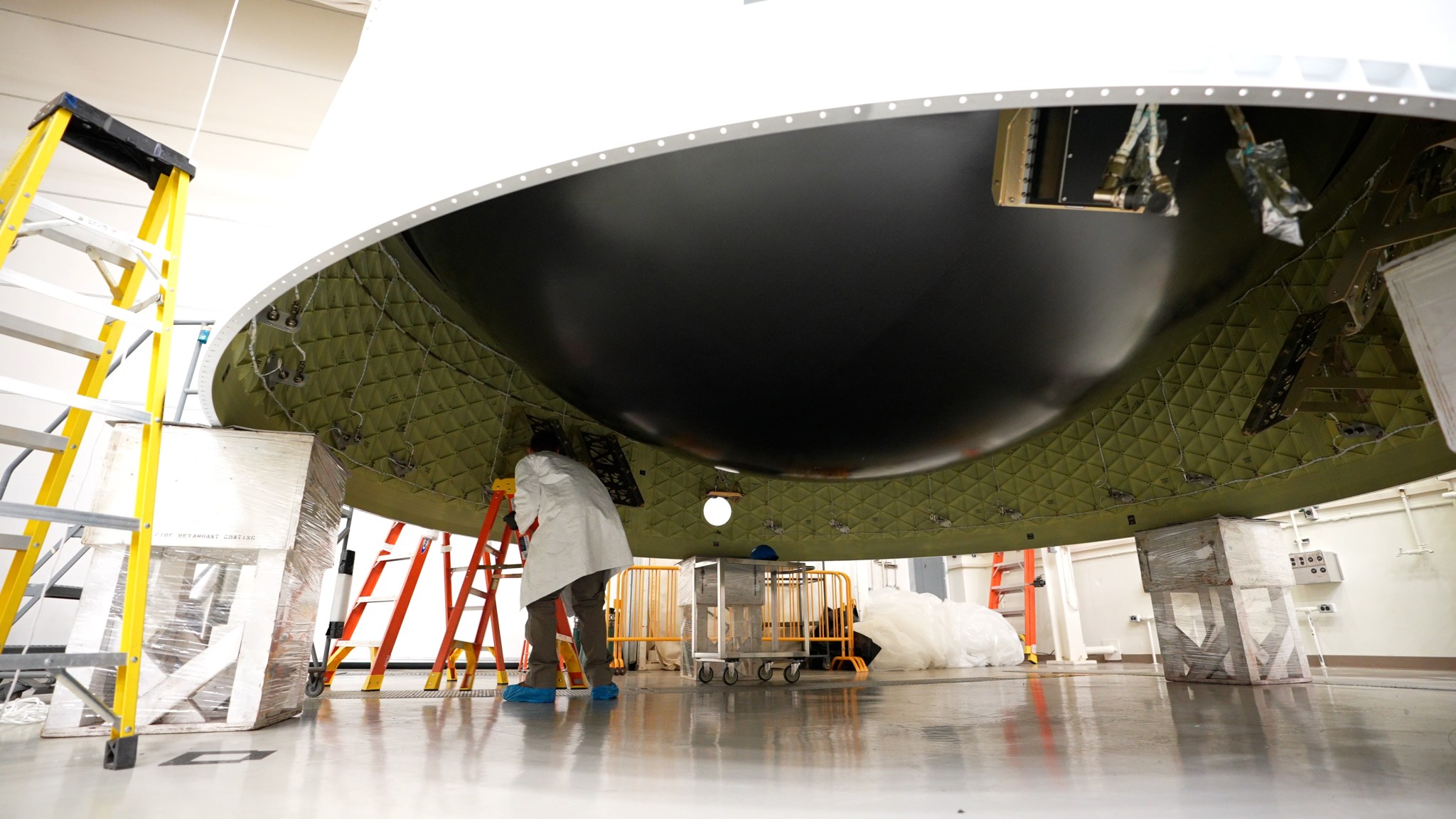
Engineers at NASA’s Marshall Space Flight Center flip the Artemis II Orion stage adapter for installation of its diaphragm Nov. 30.
Teams at NASA’s Marshall Space Flight Center recently rotated the Orion stage adapter – a ring structure that connects NASA’s Orion spacecraft to the SLS rocket’s interim cryogenic propulsion stage – in preparation for the installation of its diaphragm. The installation Nov. 30 marks one of the final steps for the adapter before it is readied for shipment to Kennedy via NASA’s Super Guppy cargo aircraft.
NASA/Sam Lott

“The diaphragm is a composite, dome-shaped structure that isolates the volume above the ICPS from that below Orion,” said Brent Gaddes, lead for the Orion stage adapter, in the Spacecraft/Payload Integration & Evolution Office for the SLS Program at Marshall. “It serves as a barrier between the two, preventing the highly flammable hydrogen gas that could escape the rocket’s propellant tanks from building up beneath the Orion spacecraft and its crew before and during launch.”

At five feet tall and weighing in at 1,800 pounds, the adapter is the smallest major element of the SLS rocket that will produce more than 8.8 million pounds of thrust to launch four Artemis astronauts inside Orion around the Moon. The adapter is fully manufactured by engineering teams at Marshall.

NASA is working to land the first woman and first person of color on the Moon under Artemis. SLS is part of NASA’s backbone for deep space exploration, along with Orion and the Gateway in orbit around the Moon, and commercial human landing systems. SLS is the only rocket that can send Orion, astronauts, and supplies to the Moon in a single launch.

› Back to Top

25 Years Ago: NASA, Partners Begin Space Station Assembly

On Dec. 6, NASA marked 25 years since the first two elements of the International Space Station were launched and joined in space. Today, the space station remains a global endeavor, with 273 people from 21 countries now having visited the microgravity laboratory and has hosted more than 3,700 research and educational investigations from people in 108 countries and areas.

On Nov. 20 and Dec. 4, 1998, Zarya and Unity, respectively, launched into orbit as the first two modules of the International Space Station. On Dec. 6, 1998, the space shuttle Endeavour STS-88 crew, NASA astronauts Bob Cabana, Rick Sturckow, Nancy Currie, Jerry Ross, and James Newman, along with Russian Space Agency (now Roscosmos) cosmonaut Sergei Krikalev, captured the Zarya module with the space shuttle’s robotic arm and mated it to Unity.

Image of the Unity Node 1 module being lifted out of the cargo bay
The Unity Node 1 module being lifted out of the cargo bay. On Nov. 20 and Dec. 4, 1998, Zarya and Unity, respectively, launched into orbit as the first two modules of the International Space Station. On Dec. 6, 1998, the space shuttle Endeavour STS-88 crew captured the Zarya module with the space shuttle’s robotic arm and mated it to Unity.
NASA

Engineers thousands of miles apart designed and built the two modules and the elements first met in space. The STS-88 crew, commanded by Cabana, spent the next few days and three spacewalks making connections between the two modules before releasing the early station.

Since the joining of Zarya and Unity, the space station has grown with additions from international partners, resulting in the largest and most complex piece of technology constructed in space.

In November 2000, the space station received its first long-duration residents, Expedition 1, including NASA astronaut William Shepard, and Roscosmos cosmonauts Krikalev and Yuri Gidzenko. Since that time, international teams have kept the space station permanently inhabited, performing routine operations and maintenance including dozens of spacewalks, and conducting world-class research in a wide array of scientific disciplines. From visiting spacecraft with cargo, crew, and private astronauts, to spacewalks for station upgrades, to science investigations and technology demonstrations, to commercial activities, to public outreach and STEM downlinks, the International Space Station is a busy orbital outpost and microgravity laboratory.

The International Space Station as it appeared in 2021, compared to Zarya and Unity at the same scale in the inset

The seven-member Expedition 70 crew called down to Earth on Dec. 6 and discussed with NASA Associate Administrator Bob Cabana and International Space Station Program Manager Joel Montalbano the orbital outpost’s accomplishments since the assembly era began on Dec. 6, 1998. Cabana was the commander of Endeavour when both modules were robotically mated then outfitted during a series of spacewalks. Montalbano, NASA’s sixth station leader since the program’s inception, said, “We want to celebrate today all the people who designed, built, and operate the International Space Station.”

The Payload Operations Integration Center at NASA’s Marshall Space Flight Center operates, plans, and coordinates the science experiments onboard the space station 365 days a year, 24 hours a day.

› Back to Top

Hubble Captures a Cluster in the Cloud

A striking Hubble Space Telescope image shows the densely packed globular cluster known as NGC 2210, which is situated in the Large Magellanic Cloud (LMC). The LMC lies about 157,000 light-years from Earth and is a so-called satellite galaxy of the Milky Way, meaning that the two galaxies are gravitationally bound. Globular clusters are very stable, tightly bound clusters of thousands or even millions of stars. Their stability means that they can last a long time, and therefore globular clusters are often studied to investigate potentially very old stellar populations.

A dense cluster of stars. It is brightest and most crowded in the center, where the stars are mostly a cool white color. Moving out towards the edges the stars become more spread out and reddish until a noticeable ‘edge’ to the cluster is reached. Beyond that edge there are still many stars, more disorganized and seen on a black background. Some stars appear to be in front of the cluster.
NASA’s Hubble Space Telescope can resolve individual stars in the densely packed cores of globular clusters like NGC 2210.
ESA/Hubble & NASA, A. Sarajedini

In fact, 2017 research using some of the data that were also used to build the image revealed that a sample of LMC globular clusters were incredibly close in age to some of the oldest stellar clusters found in the Milky Way’s halo. They found that NGC 2210 specifically probably clocks in at around 11.6 billion years old. Even though this is only a couple of billion years younger than the universe itself, it made NGC 2210 by far the youngest globular cluster in their sample. All other LMC globular clusters studied in the same work were found to be even older, with four of them over 13 billion years old. This tells astronomers that the oldest globular clusters in the LMC formed contemporaneously with the oldest clusters in the Milky Way, even though the two galaxies formed independently.

As well as being a source of interesting research, this old-but-relatively-young cluster is also extremely beautiful, with its highly concentrated population of stars. The night sky would look very different from the perspective of an inhabitant of a planet orbiting one of the stars in a globular cluster’s center: the sky would appear to be stuffed full of stars, in a stellar environment that is thousands of times more crowded than our own.

› Back to Top

Webb Stuns with New High-Definition Look at Exploded Star

Like a shiny round ornament ready to be placed in the perfect spot on a holiday tree, supernova remnant Cassiopeia A (Cas A) gleams in a new image from NASA’s James Webb Space Telescope. As part of the 2023 Holidays at the White House, First Lady of the United States Dr. Jill Biden debuted the first-ever White House Advent Calendar. To showcase the “Magic, Wonder, and Joy” of the holiday season, Dr. Biden and NASA are celebrating with this new image from Webb.

While all is bright, this scene is no proverbial silent night. Webb’s NIRCam (Near-Infrared Camera) view of Cas A displays this stellar explosion at a resolution previously unreachable at these wavelengths. This high-resolution look unveils intricate details of the expanding shell of material slamming into the gas shed by the star before it exploded.
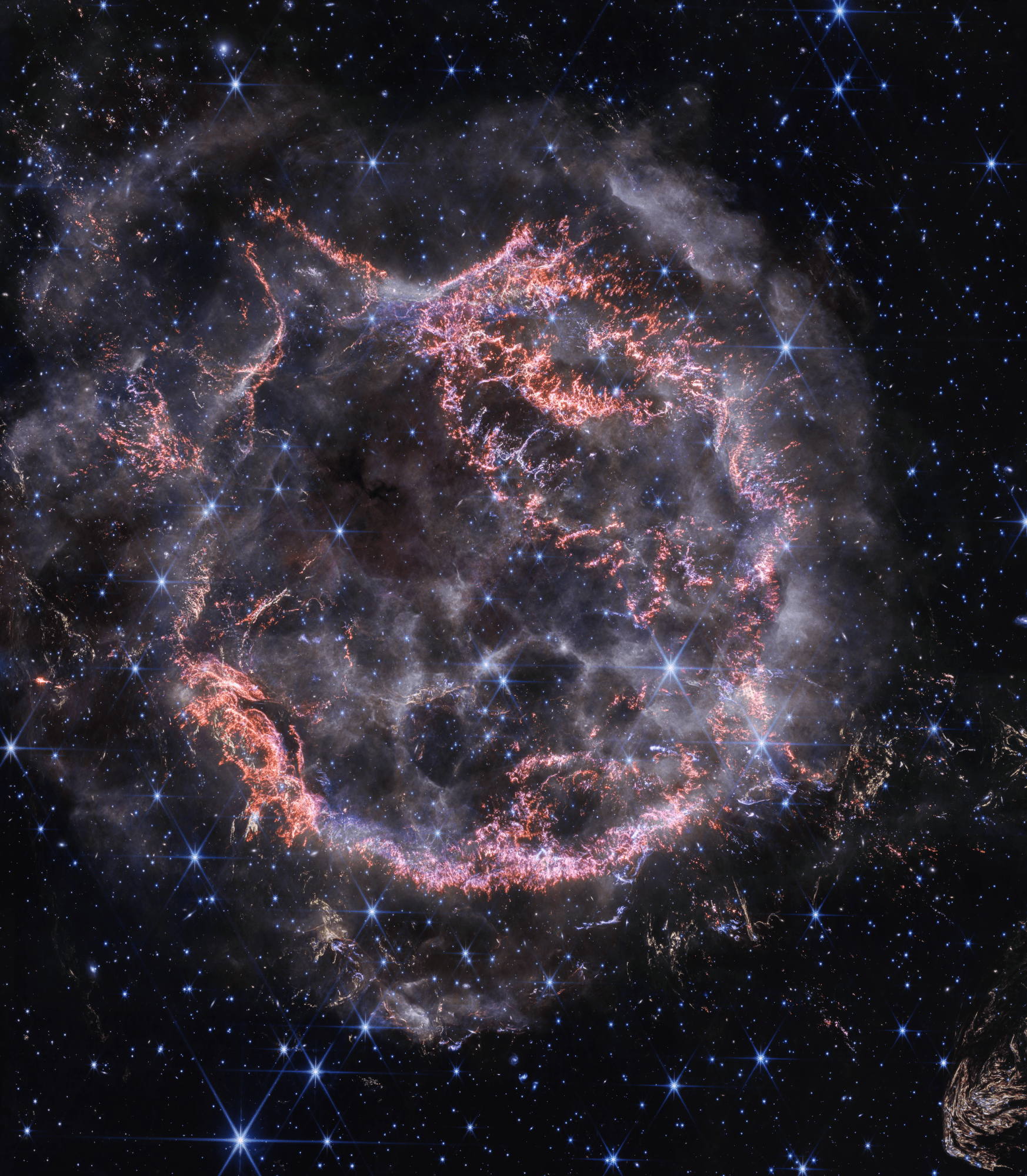
NASA’s James Webb Space Telescope’s new view of Cassiopeia A in near-infrared light is giving astronomers hints at the dynamical processes occurring within the supernova remnant. Tiny clumps represented in bright pink and orange make up the supernova’s inner shell, and are comprised of sulfur, oxygen, argon, and neon from the star itself. A large, striated blob at the bottom right corner of the image, nicknamed Baby Cas A, is one of the few light echoes visible NIRCam’s field of view. In this image, red, green, and blue were assigned to Webb’s NIRCam data at 4.4, 3.56, and 1.62 microns (F444W, F356W, and F162M, respectively).
NASA, ESA, CSA, STScI, D. Milisavljevic (Purdue University), T. Temim (Princeton University), I. De Looze (University of Gent)

Cas A is one of the most well-studied supernova remnants in all of the cosmos. Over the years, ground-based and space-based observatories, including NASA’s Chandra X-Ray Observatory, Hubble Space Telescope, and retired Spitzer Space Telescope have assembled a multiwavelength picture of the object’s remnant.

However, astronomers have now entered a new era in the study of Cas A. In April 2023, Webb’s MIRI (Mid-Infrared Instrument) started this chapter, revealing new and unexpected features within the inner shell of the supernova remnant. Many of those features are invisible in the new NIRCam image, and astronomers are investigating why.

The James Webb Space Telescope is the world’s premier space science observatory. Webb is solving mysteries in our solar system, looking beyond to distant worlds around other stars, and probing the mysterious structures and origins of our universe and our place in it. Webb is an international program led by NASA with its partners, ESA (European Space Agency) and the Canadian Space Agency.

› Back to Top

Gorgeously Green: Geminids Peak Dec. 13-14

By Lauren Perkins

The Geminid meteor shower is active for much of December, but the peak occurs the night of the 13th into the morning of the 14th. Meteor rates in rural areas can be upwards of one per minute this year with minimal moonlight to interfere.

Northern Lights, or aurora borealis, haunted skies over the island of Kvaløya, near Tromsø Norway on Dec. 13. This 30 second-long exposure records their shimmering glow gently lighting the wintery coastal scene. A study in contrasts, it also captures the sudden flash of a fireball meteor from December’s excellent Geminid meteor shower. Streaking past familiar stars in the handle of the Big Dipper, the trail points back toward the constellation Gemini, off the top of the view.
Bjørnar G. Hansen

Bill Cooke, lead for the Meteoroid Environment Office at NASA’s Marshall Space Flight Center, shares why the Geminids particularly excite him: “Most meteors appear to be colorless or white, however the Geminids appear with a greenish hue. They’re pretty meteors!”

Depending on the meteor’s chemical composition, the meteor will emit different colors when burned in the Earth’s atmosphere. Oxygen, magnesium, and nickel usually produce green.

As with all meteor showers, all you need is a clear sky, darkness, a bit of patience, and perhaps warm outer wear and blankets for this one. You don’t need to look in any particular direction; meteors can generally be seen all over the sky.

Perkins, a Media Fusion employee, supports the Marshall Office of Communications.

› Back to Top

Powered by WPeMatico

Get The Details…
Lee Mohon

NASA’s NEOWISE Celebrates 10 Years, Plans End of Mission

NASA’s NEOWISE Celebrates 10 Years, Plans End of Mission

NEOWISE is depicted in an artist’s concept in front of an image of the infrared sky captured by the mission showing asteroid Holda (the string of red dots moving across the sky). Holda was the first near-Earth object the mission detected shortly after the space telescope was reactivated in 2013.
NASA/JPL-Caltech

The asteroid and comet-hunting infrared space telescope has gathered an impressive haul of observations, but it’s now at the mercy of the Sun, which is accelerating its demise.

NASA’s NEOWISE has had a busy decade. Since its reactivated mission began on Dec. 13, 2013, the space telescope has discovered a once-in-a-lifetime comet, observed more than 3,000 near-Earth objects, bolstered international planetary defense strategies, and supported another NASA mission’s rendezvous with a distant asteroid. And that’s just a partial list of accomplishments.

But all good things must come to an end: Solar activity is causing NEOWISE – short for Near-Earth Object Wide-field Infrared Survey Explorer – to fall out of orbit. By early 2025, the spacecraft is expected to drop low enough into Earth’s atmosphere that it will become unusable. Eventually, it will reenter our atmosphere, entirely burning up.

About every 11 years, the Sun experiences a cycle of increased activity that peaks during a period called solar maximum. Explosive events, such as solar flares and coronal mass ejections, become more frequent and heat up our planet’s atmosphere, causing it to expand. Atmospheric gases increase drag on satellites orbiting Earth, slowing them down. With the Sun currently approaching its next maximum, NEOWISE will no longer be able to maintain its orbit above our atmosphere.

Comet C/2020 F3 NEOWISE appears as a trio of fuzzy red dots in this composite of several infrared images captured by the NEOWISE mission on March 27, 2020. These observations helped astronomers determine the comet’s path shortly after its discovery.
NASA/JPL-Caltech

“The mission has planned for this day a long time. After several years of calm, the Sun is waking back up,” said Joseph Masiero, NEOWISE’s deputy principal investigator and a scientist at IPAC, a research organization at Caltech in Pasadena, California. “We are at the mercy of solar activity, and with no means to keep us in orbit, NEOWISE is now slowly spiraling back to Earth.”

WISE Beginnings

The past 10 years represent a second life for the spacecraft. Managed by NASA’s Jet Propulsion Laboratory in Southern California, NEOWISE repurposed a different mission that launched in 2009: the Wide-field Infrared Survey Explorer (WISE). Data from WISE and NEOWISE has been used to study distant galaxies, cool stars, exploding white dwarf stars, outgassing comets, near-Earth asteroids, and more.

In 2010, WISE achieved its scientific goal of conducting an all-sky infrared survey with far greater sensitivity than previous surveys. The WISE mission also found tens of millions of actively feeding supermassive black holes across the sky. Through the Disk Detective project, citizen scientists have used WISE data to find circumstellar disks, which are spinning clouds of gas, dust, and rubble around stars.

Invisible to the naked eye, infrared wavelengths are emitted by warm objects. To keep the heat generated by WISE itself from interfering with its observations of infrared wavelengths, the spacecraft relied on cryogenic coolant. After the coolant ran out and WISE had mapped the sky twice, NASA put the spacecraft into hibernation in February 2011.

Without coolant, the space telescope could no longer observe the universe’s coldest objects, but it could still see near-Earth asteroids and comets, which are heated by the Sun. So NASA reactivated the spacecraft in 2013 with a more specialized role in mind: aiding planetary defense efforts by surveying and studying those objects, which can stray into our planet’s orbital neighborhood and create a potential impact hazard.

Astronomers could not only rely on the mission to seek out these objects, but also use its data to figure out their size and albedo – how much sunlight their surfaces reflect – and to gather clues about the minerals and rocks they’re composed of.

“NEOWISE has showcased the importance of having an infrared space survey telescope as part of NASA’s planetary defense strategy while also keeping tabs on other objects in the solar system and beyond,” said Amy Mainzer, the mission’s principal investigator at the University of Arizona in Tucson.

Mainzer is also leading NASA’s upcoming NEO Surveyor, which will build on NEOWISE’s legacy. The next-generation infrared space telescope will seek out some of the hardest-to-find near-Earth objects, such as dark asteroids and comets that don’t reflect much visible light, as well as objects that approach Earth from the direction of the Sun. Scheduled for launch in 2027, the JPL-managed mission will also search for objects known as Earth Trojans – asteroids that lead or trail our planet’s orbit – the first of which WISE discovered in 2011.

Comet NEOWISE and Beyond

Since becoming NEOWISE, the mission has scanned the entire sky over 20 times and made 1.45 million infrared measurements of over 44,000 solar system objects. That includes more than 3,000 near-Earth objects, 215 of which NEOWISE discovered. Data from the mission has contributed to refining the orbits of these objects while gauging their size as well.

Its forte is characterizing near-Earth asteroids. In 2021, NEOWISE became a key component of an international planetary defense exercise that focused on the hazardous asteroid Apophis.

The mission has also discovered 25 comets, including the long-period comet C/2020 F3 (NEOWISE). The comet became a dazzling celestial object visible in the Northern Hemisphere for several weeks in 2020 and the first comet that could be seen by the naked eye since 2007, when Comet McNaught was primarily visible in the Southern Hemisphere.

Future researchers will continue to rely on the vast archive of NEOWISE observations to make new discoveries, similar to the way researchers used WISE data from 2010 long after the observations were made to characterize asteroid Dinkinesh in support of NASA’s Lucy mission before its October 2023 encounter.

“This is a bittersweet moment. It’s sad to see this trailblazing mission come to an end, but we know there’s more treasure hiding in the survey data,” said Masiero. “NEOWISE has a vast archive, covering a very long period of time, that will inevitably advance the science of the infrared universe long after the spacecraft is gone.”

More About the Mission

NEOWISE and NEO Surveyor support the objectives of NASA’s Planetary Defense Coordination Office (PDCO) at NASA Headquarters in Washington. The NASA Authorization Act of 2005 directed NASA to discover and characterize at least 90% of the near-Earth objects more than 140 meters (460 feet) across that come within 30 million miles (48 million kilometers) of our planet’s orbit. Objects of this size can cause significant regional damage, or worse, should they impact the Earth.

JPL manages and operates the NEOWISE mission for PDCO within the Science Mission Directorate. The Space Dynamics Laboratory in Logan, Utah, built the science instrument. Ball Aerospace & Technologies Corp. of Boulder, Colorado, built the spacecraft. Science data processing takes place at IPAC at Caltech. Caltech manages JPL for NASA.

For more information about NEOWISE, visit:

https://www.nasa.gov/neowise

Powered by WPeMatico

Get The Details…
Naomi Hartono

NASA Provides Update on Venture-Class Launch Services

NASA Provides Update on Venture-Class Launch Services

NASA logo

NASA currently is working with several commercial companies as part of the agency’s VADR (Venture-Class Acquisition of Dedicated and Rideshare) launch services contract, providing new opportunities for science, and technology payloads.

These include:

  • ABL Space Systems of El Segundo, California
  • Astra Space Inc. of Alameda, California
  • Blue Origin Florida, LLC of Merritt Island, Florida
  • Firefly Space Transport Services of Cedar Park, Texas
  • L2 Solutions DBA SEOPS, LLC of Houston, Texas
  • Northrop Grumman Systems Corporation of Chandler, Arizona
  • Phantom Space Corporation of Tucson, Arizona
  • Relativity Space Inc. of Long Beach, California
  • Rocket Lab USA Inc. of Long Beach, California
  • SpaceX (Space Exploration Technologies Corp.) of Hawthorne, California
  • United Launch Services LLC of Centennial, Colorado

Building on NASA’s previous procurement efforts to foster development of a growing U.S. commercial launch market, VADR provides Federal Aviation Administration -licensed commercial launch services for payloads that can tolerate higher risk. By using a lower level of mission assurance, and commercial best practices for launching rockets, these highly flexible contracts help broaden access to space through lower launch costs.

Awards Update

Task orders under the VADR contract include launch services for several small satellite missions. CubeSats are a class of nanosatellites that use a standard size and form factor. The standard CubeSat size uses a “one unit” or “1U” measuring 10x10x10 centimeters and is extendable to larger sizes; 1.5, 2, 3, 6, and even 12U. A CubeSat typically weighs less than 2 kilogram (4.4 pounds) per unit.

Given the standardized size of these payloads and the ability to launch as a rideshare, rockets and launch dates are subject to change for these missions by the launch provider. This flexibility is one of the reasons NASA can cost-efficiently secure launch services for these small satellites.

  • NASA awarded L2 Solutions DBA SEOPS, LLC a task order to secure the launch of two 6U CubeSats for the agency’s Ames Research Center in California’s Silicon Valley as part of the agency’s Pathfinder Technology Demonstrator (PTD) series of missions. The demonstration flight tests the operation of a variety of novel CubeSat technologies in low Earth orbit, providing significant enhancements to the performance of these small and effective spacecraft. Over the course of multiple planned PTD missions, the successful demonstration of new subsystem technologies will increase small spacecraft capabilities, enabling direct infusion into a wider range of future science, and exploration missions. The two nanosatellites, PTD-4 and PTD-R, will launch on SpaceX’s Transporter-11 mission out of Vandenberg Space Force Base in Lompoc, California.
  • NASA awarded SpaceX a task order to launch Dione under the agency’s CubeSat Launch Initiative. The 6U CubeSat from Goddard Spaceflight Center in Greenbelt, Maryland, will quantify how Earth’s ionosphere and thermosphere respond to electromagnetic and kinetic energy inputs from the magnetosphere. The mission is a collaboration with Catholic University of America, Utah State University, and Virginia Tech. NASA’s Science Mission Directorate Heliophysics Division is funding this effort. Dione is targeted to launch no earlier than mid-2024.
  • NASA awarded SpaceX a task order to launch ARCSTONE under the agency’s CubeSat Launch Initiative. The 6U CubeSat, built at NASA’s Langley Research Center in Hampton, Virginia, will carry a spectrometer to low Earth orbit to establish a lunar calibration standard that will improve weather and climate sensors. ARCSTONE will use the Moon’s spectral reflectance for Earth science observations and is targeted to launch no earlier than mid-2025.
  • NASA awarded SpaceX a task order for the launch of TSIS-2 (Total and Spectral Solar Irradiance Sensor-2). TSIS-2 will measure the Sun’s energy input to Earth. Since 1978, various satellites have measured the Sun’s brightness above Earth’s atmosphere. TSIS-2 will add solar irradiance measurements. Unlike its predecessor TSIS-1, which operates from the International Space Station, TSIS-2 will ride on a free-flying spacecraft. Managed by NASA Goddard, TSIS-2 has instruments from the Laboratory for Atmospheric and Space Physics at the University of Colorado, Boulder. A launch date is under review.

    Previously Announced Task Orders:

    PREFIRE
    CubeSats for Phantom Space Corp.
    EscaPADE
    Two CSLI Missions Awarded to SpaceX
    TROPICS
    TRACERS

    Powered by WPeMatico

    Get The Details…
    Jason Costa

    I am Artemis: Bruce Askins

    I am Artemis: Bruce Askins

    Bruce Askins
    Bruce Askins

    Growing up, Bruce Askins was passionate about space and oceanography. His desire to explore other worlds always made him want to be an astronaut. Though he did not become an astronaut, Askins has built a 42-year career at NASA, and, as the infrastructure management lead for NASA’s SLS (Space Launch System) Program at the agency’s Marshall Space Flight Center in Huntsville, Alabama, Askins is an integral part for the next generation of explorers.

    Askins and his team are the gatekeepers and protectors of data and responsible for both cyber- security and physical security for the SLS Program. Under Askins’ leadership, his team ensures all data is stored properly, that information about the rocket shared outside NASA  is done with proper data markings, and access is given to those that need it.

    Askins wasn’t always familiar with the world of infrastructure and cyber security. As a mechanical engineering graduate from the University of Alabama in Huntsville, Askins began his career as part of NASA’s internship program. He considered himself imaginative, or “creatively driven,” which is why Askins originally pursued a career at NASA.

    “I always loved the design aspect of my early position in special test equipment,” Askins says. “Back then I drew everything by hand with a pencil before eventually transitioning to computers.”

    His creativity and interest in underwater worlds, along with his scuba diver certification, led him to have a hand in designing early test elements for NASA’s Hubble Space Telescope. At the Neutral Buoyancy Simulator, a former underwater training facility at Marshall, Askins interacted with a crew of astronauts supporting Hubble and designed the flight simulation hardware used for crew training on the Canadarm2 robotic arm that is still a part of the International Space Station today.

    Askins has been a part of the NASA family for almost half a century and is thrilled to be a part of the next era of space exploration to the Moon under Artemis.

    “To explore is one of the greatest things that we can all do, and with the Artemis Generation the sky’s the limit,” Askins said.

    SLS is part of NASA’s backbone for deep space exploration, along with the Orion spacecraft, advanced spacesuits and rovers, the Gateway in orbit around the Moon, and commercial human landing systems. SLS is the only rocket that can send Orion, astronauts, and supplies to the Moon in a single launch.

    Check out some of our other “I am Artemis” features.  

    Powered by WPeMatico

    Get The Details…
    Lee Mohon

    NASA Stennis Continues Preparations for Future Artemis Testing

    NASA Stennis Continues Preparations for Future Artemis Testing

    3 min read

    Preparations for Next Moonwalk Simulations Underway (and Underwater)

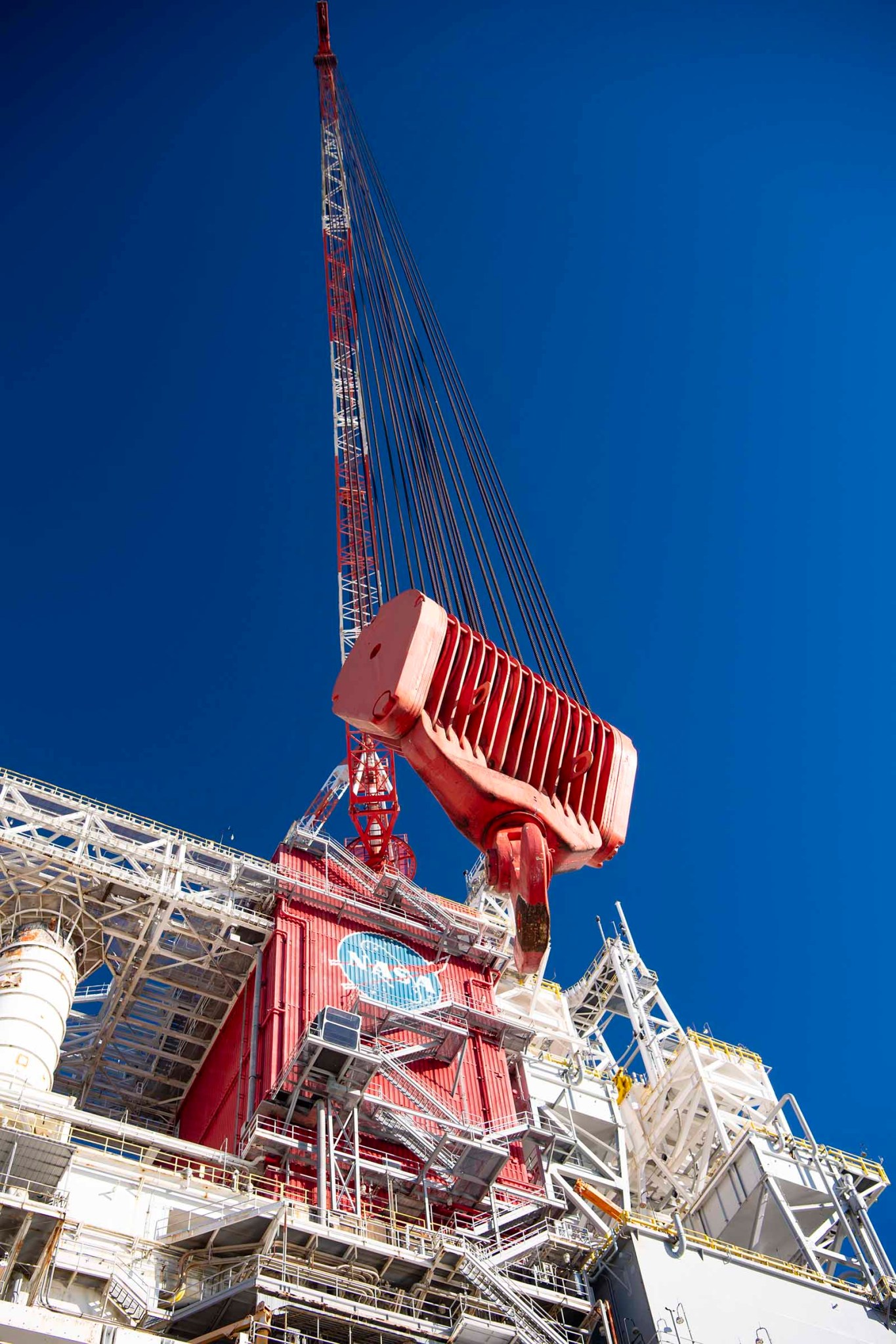
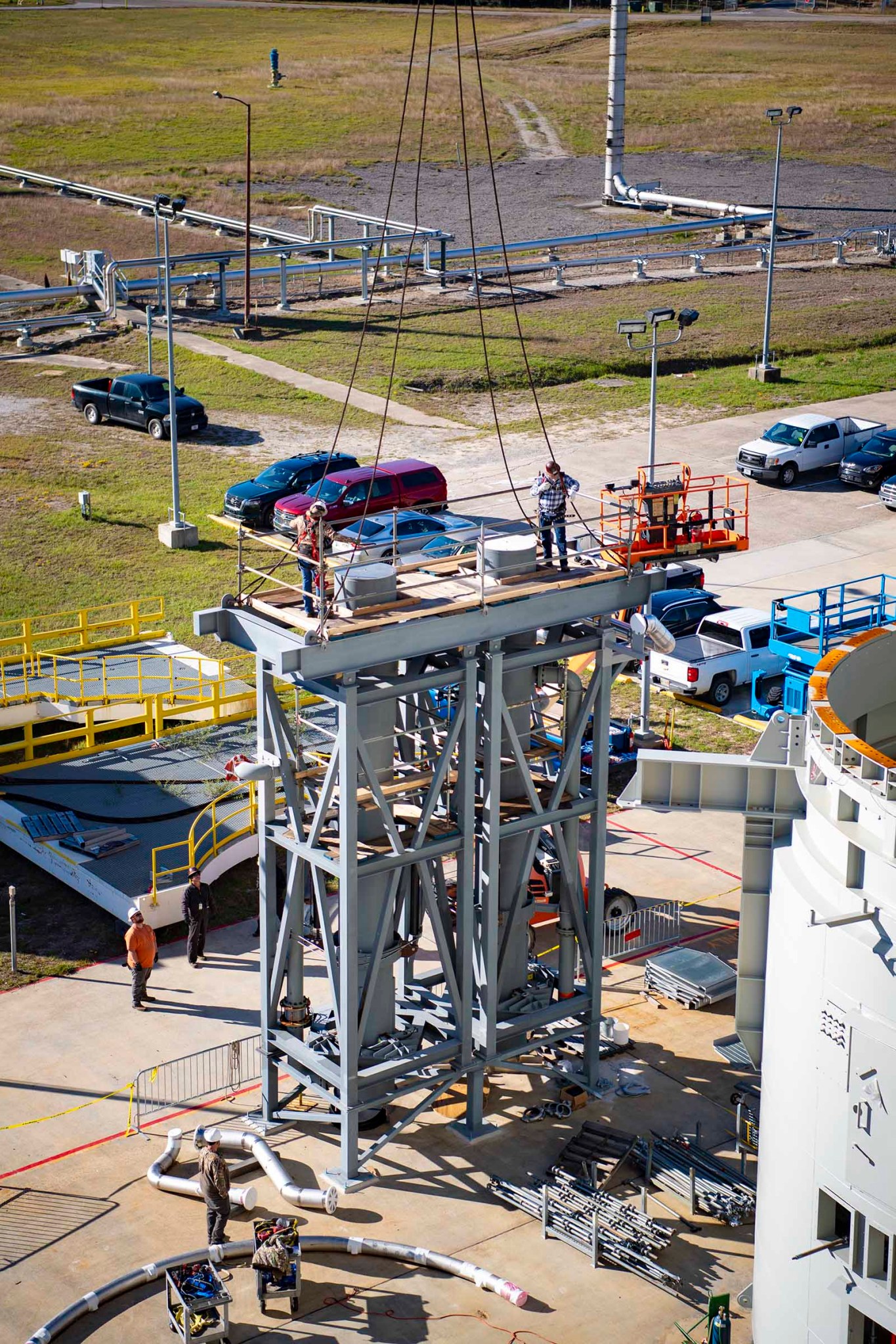
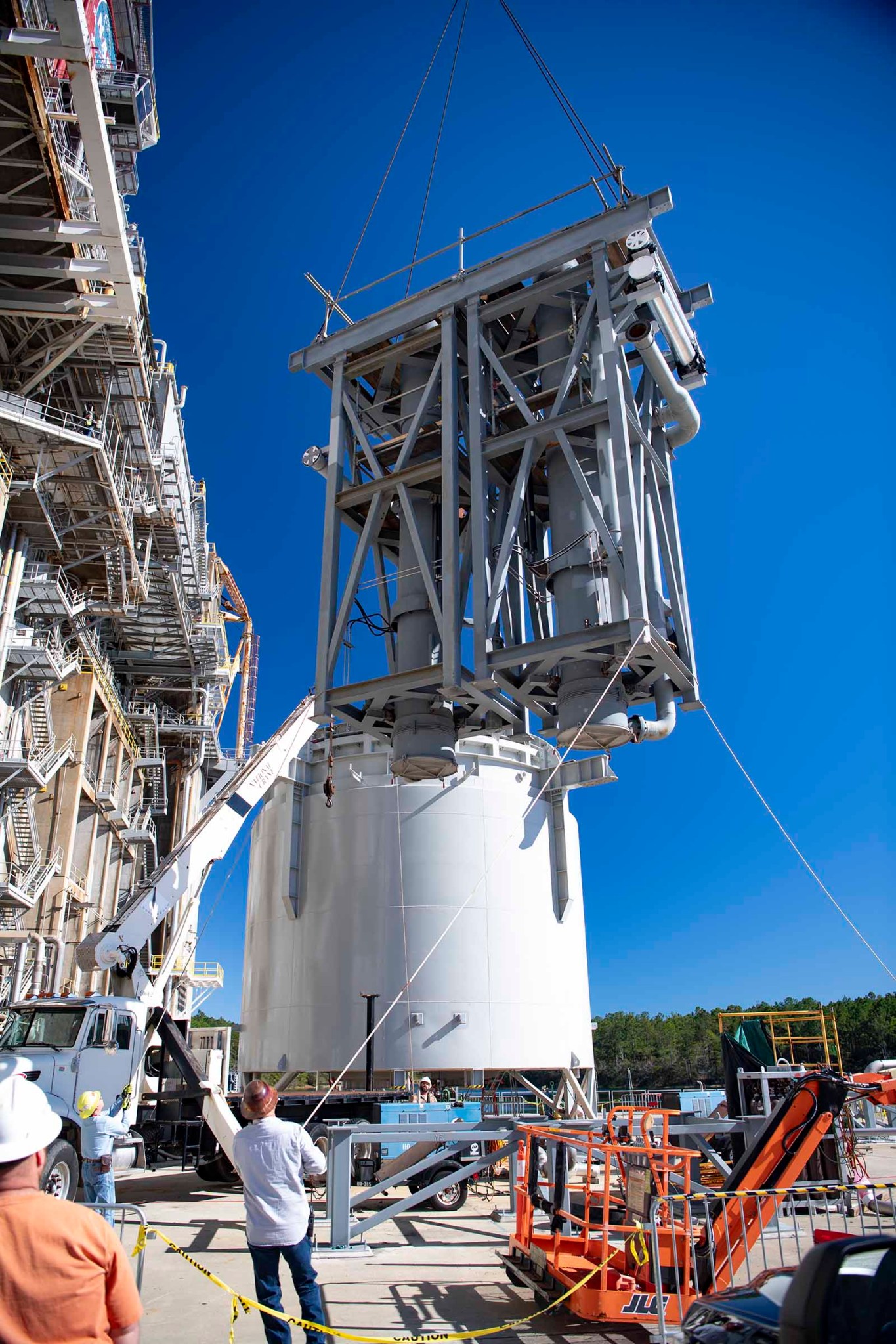
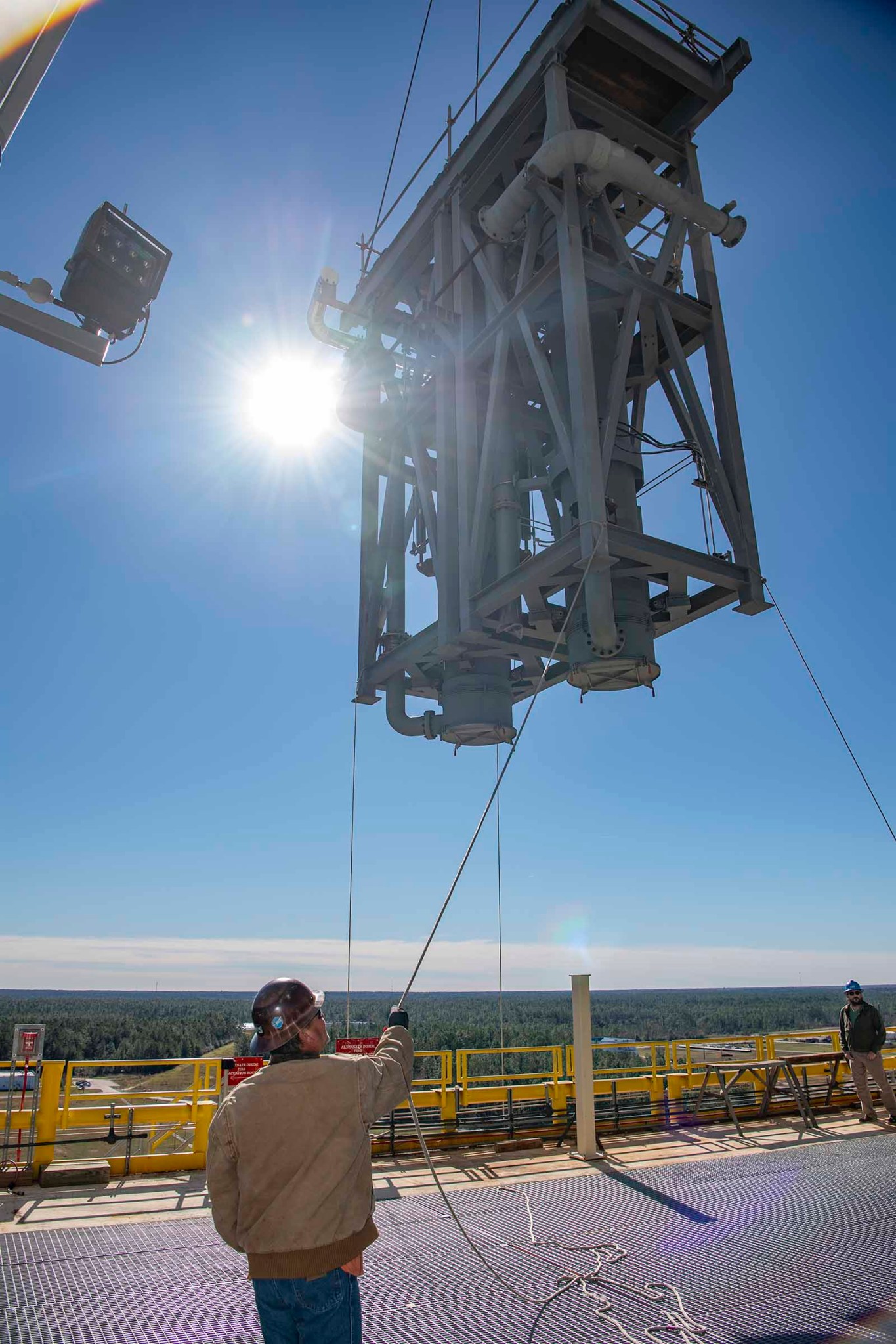
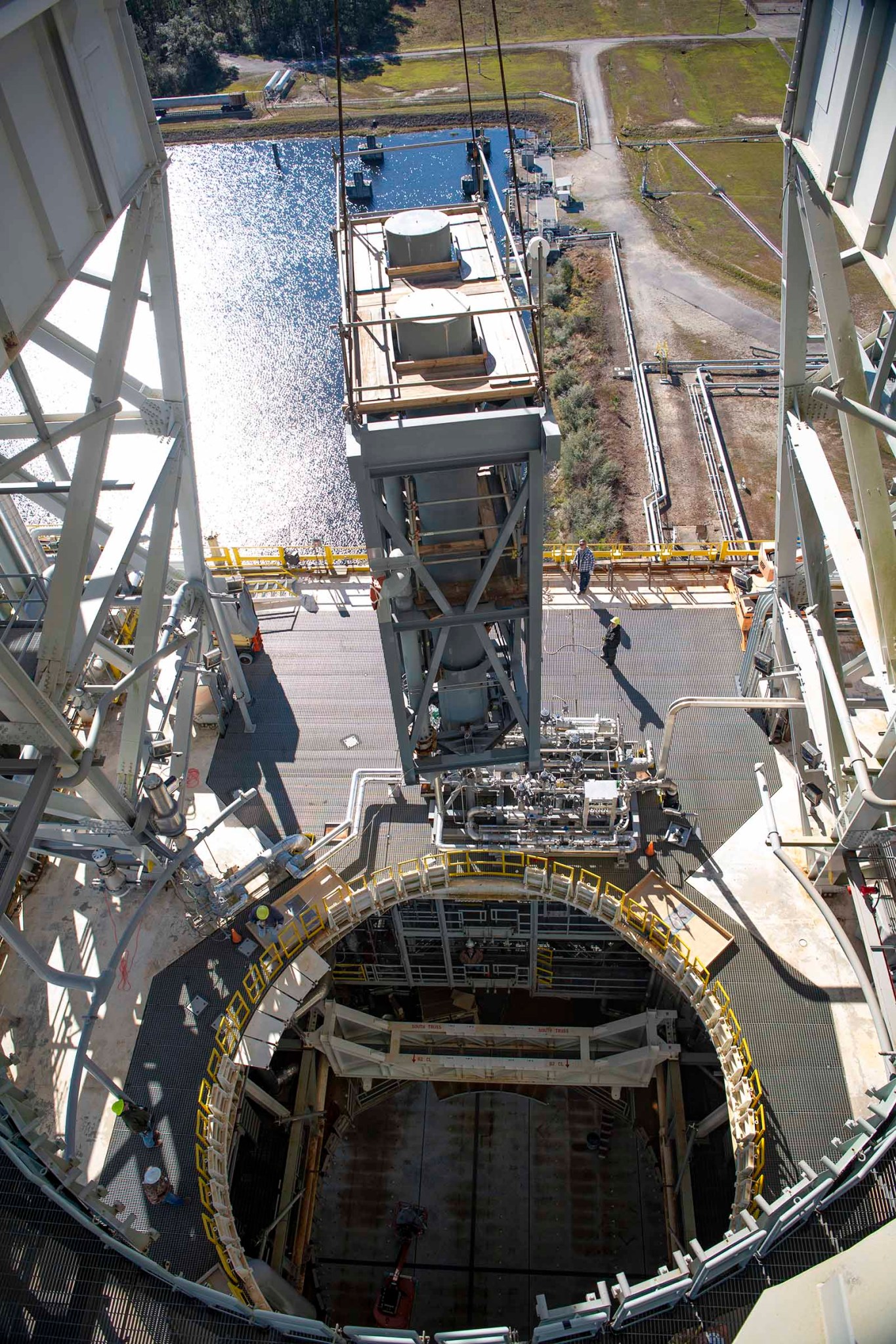
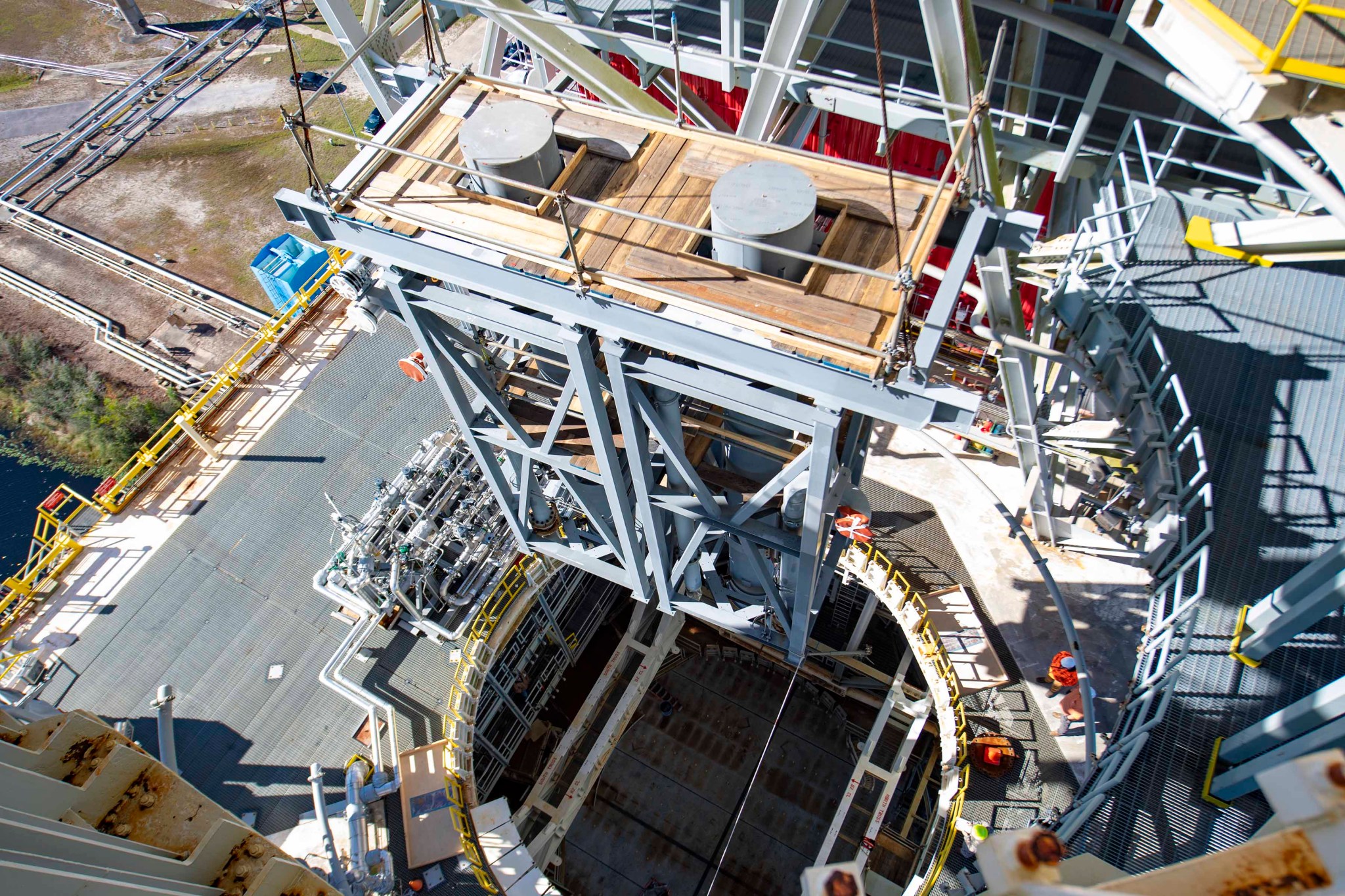
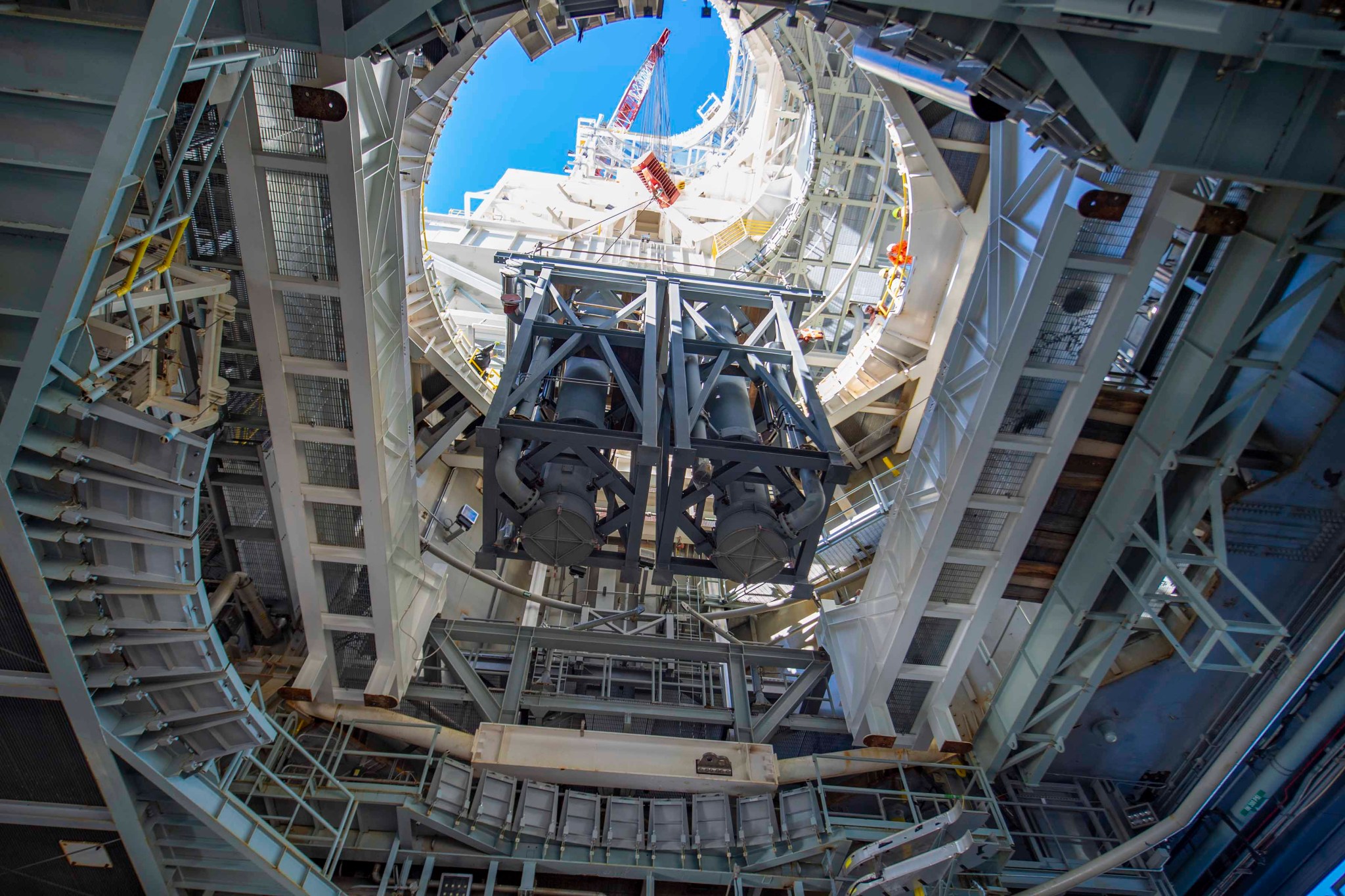
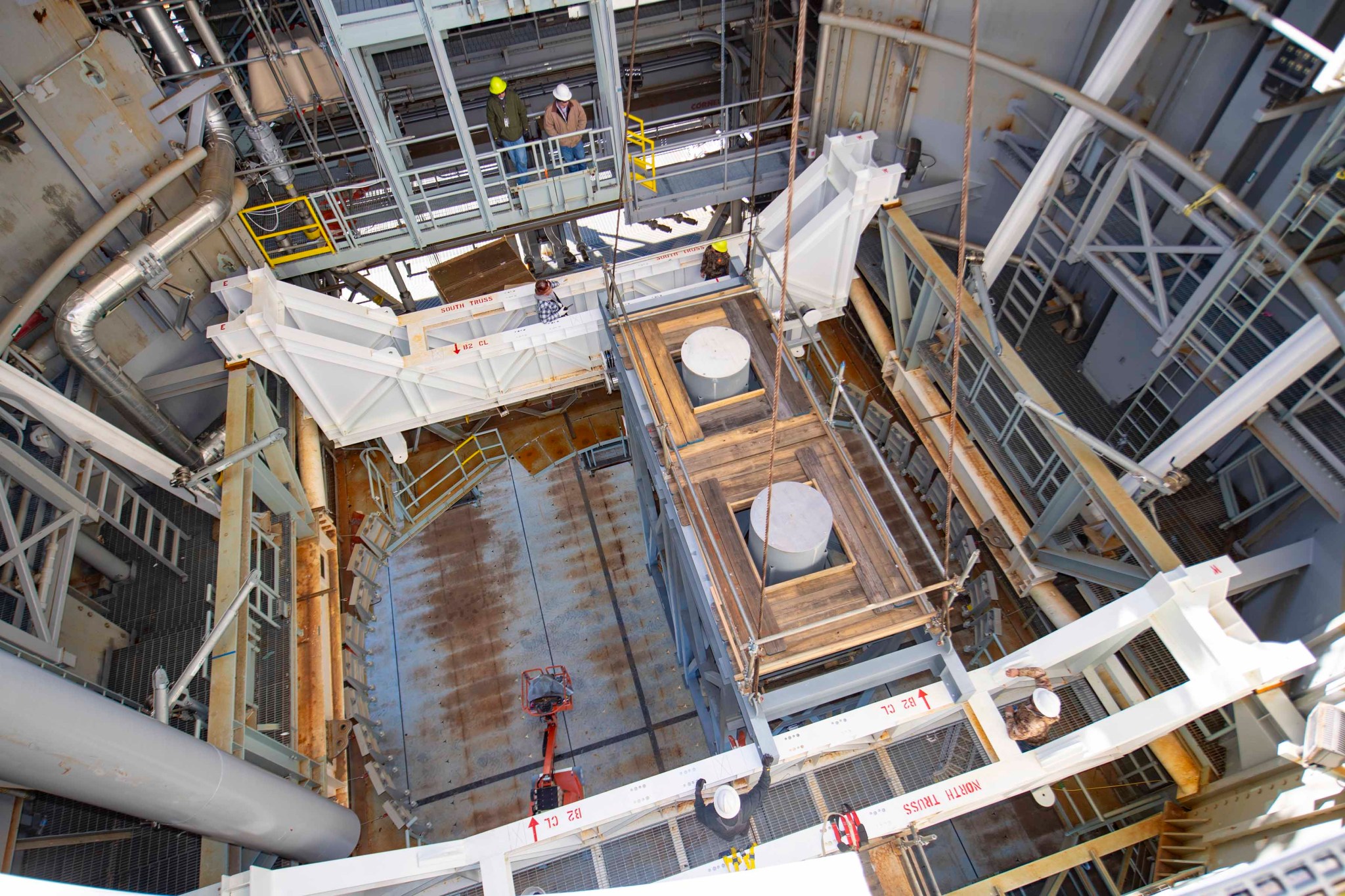
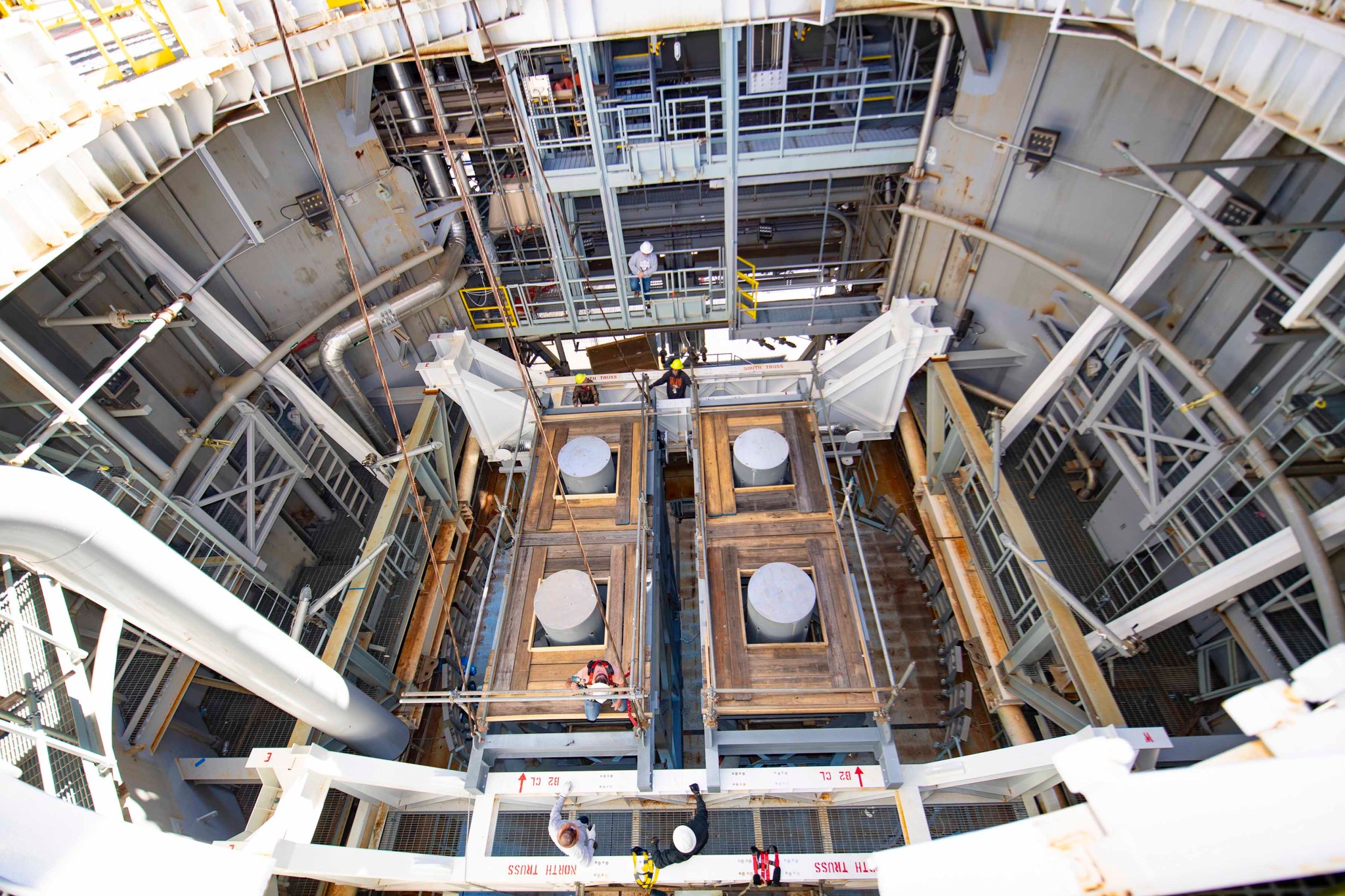
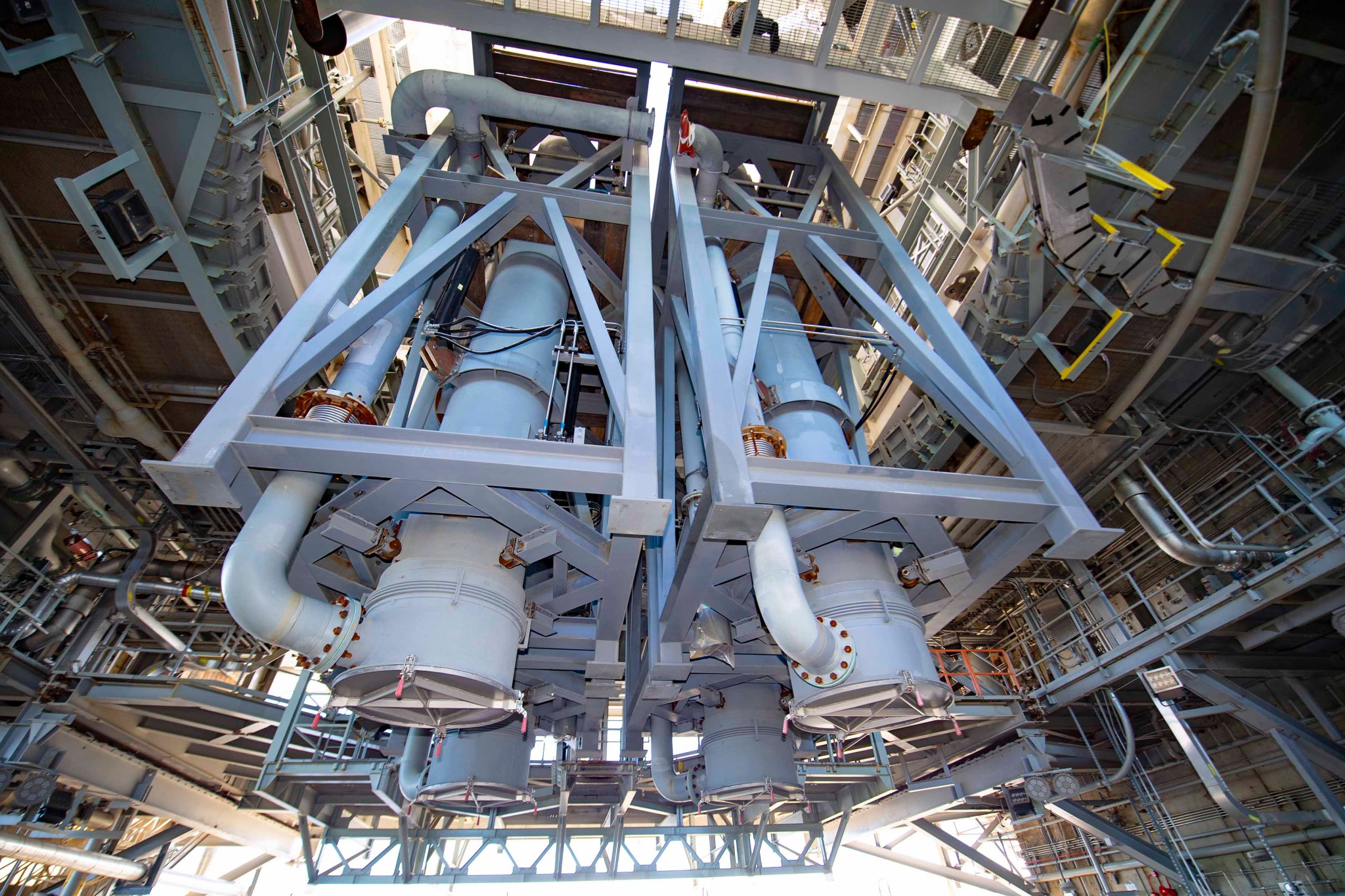
    Crews at NASA’s Stennis Space Center cleared a milestone Dec. 11, installing a key component in preparation for future Green Run testing of NASA’s new Exploration Upper Stage (EUS) vehicle for use on the SLS (Space Launch System) rocket.

    Four large diffusers, each weighing 14 tons, were lifted by crane for installation on the Thad Cochran Test Stand (B-2). The diffusers are a critical component designed to help direct engine exhaust away from the EUS during hot fire testing to minimize heat exposure to sensitive vehicle systems.

    Installation of a key component of NASA’s new Exploration Upper Stage (EUS) vehicle
    NASA Stennis teams lift and install large diffusers onto the Thad Cochran Test Stand (B-2).
    NASA/Danny Nowlin
    Installation of a key component of NASA’s new Exploration Upper Stage (EUS) vehicle
    NASA Stennis teams lift and install large diffusers onto the Thad Cochran Test Stand (B-2).
    NASA/Danny Nowlin
    Installation of a key component of NASA’s new Exploration Upper Stage (EUS) vehicle
    NASA Stennis teams lift and install large diffusers onto the Thad Cochran Test Stand (B-2).
    NASA/Danny Nowlin
    Installation of a key component of NASA’s new Exploration Upper Stage (EUS) vehicle
    NASA Stennis teams lift and install large diffusers onto the Thad Cochran Test Stand (B-2).
    NASA/Danny Nowlin
    Installation of a key component of NASA’s new Exploration Upper Stage (EUS) vehicle
    NASA Stennis teams lift and install large diffusers onto the Thad Cochran Test Stand (B-2).
    NASA/Danny Nowlin
    Installation of a key component of NASA’s new Exploration Upper Stage (EUS) vehicle
    NASA Stennis teams lift and install large diffusers onto the Thad Cochran Test Stand (B-2).
    NASA/Danny Nowlin
    Installation of a key component of NASA’s new Exploration Upper Stage (EUS) vehicle
    NASA Stennis teams lift and install large diffusers onto the Thad Cochran Test Stand (B-2).
    NASA/Danny Nowlin
    Installation of a key component of NASA’s new Exploration Upper Stage (EUS) vehicle
    NASA Stennis teams lift and install large diffusers onto the Thad Cochran Test Stand (B-2).
    NASA/Danny Nowlin
    Installation of a key component of NASA’s new Exploration Upper Stage (EUS) vehicle
    NASA Stennis teams lift and install large diffusers onto the Thad Cochran Test Stand (B-2).
    NASA/Danny Nowlin
    Installation of a key component of NASA’s new Exploration Upper Stage (EUS) vehicle
    NASA Stennis teams lift and install large diffusers onto the Thad Cochran Test Stand (B-2).
    NASA/Danny Nowlin
    Installation of a key component of NASA’s new Exploration Upper Stage (EUS) vehicle
    NASA Stennis teams lift and install large diffusers onto the Thad Cochran Test Stand (B-2).
    NASA/Danny Nowlin
    Installation of a key component of NASA’s new Exploration Upper Stage (EUS) vehicle
    NASA Stennis teams lift and install large diffusers onto the Thad Cochran Test Stand (B-2).
    NASA/Danny Nowlin

    NASA’s new EUS is being built at NASA’s Michoud Assembly Facility in New Orleans as a more powerful SLS second stage to send the Orion spacecraft and heavier payloads to deep space as NASA continues its mission to explore the secrets of the universe for the benefit of all. The EUS is expected to fly on the Artemis IV mission following a series of Green Run tests of its integrated systems at NASA Stennis to demonstrate it is ready to fly. The test series will culminate with a hot fire of the four RL10 engines that will power the EUS.

    NASA Stennis teams lifted and installed large diffusers onto the Thad Cochran Test Stand (B-2) on December 11, 2023, in preparation for future Green Run testing of the new Exploration Upper Stage before it flies on the SLS (Space Launch System) rocket as part of NASA’s Artemis missions to the Moon and beyond.

    During an actual flight, critical EUS systems will be protected by the SLS interstage. To protect the systems during Green Run testing, teams are using an interstage simulator, a size-and-weight replica of the actual SLS interstage, and the connected diffusers.

    The system requires a high level of precision. The diffusers will be connected to the EUS engine nozzles using a flexible seal so gimbaling, or moving a rocket engine a few degrees along a tight circular axis to direct the thrust and “steer” the vehicle, can occur during testing. They also are designed to facilitate propellant connections and allow test teams access to the engine area as needed.

    The carbon steel diffusers were precisely designed by a joint NASA Stennis and Jacobs Engineering team, using computational models, subscale testing, and historical data. The units then were made by Custom Steel Fabricators in Columbia, Tennessee, and delivered by truck to NASA Stennis.

    Following lift and installation on the test stand, the diffuser system will be connected to the facility water and hydraulic supplies. A final checkout of the system will include a full test stand water flow demonstration.

    Share

    Details

    Last Updated

    Dec 13, 2023

    Editor
    NASA Stennis Communications
    Contact
    C. Lacy Thompson
    Location
    Stennis Space Center

    Powered by WPeMatico

    Get The Details…
    LaToya Dean