Biotech Research on Station Promoting Astronaut Health

Biotech Research on Station Promoting Astronaut Health
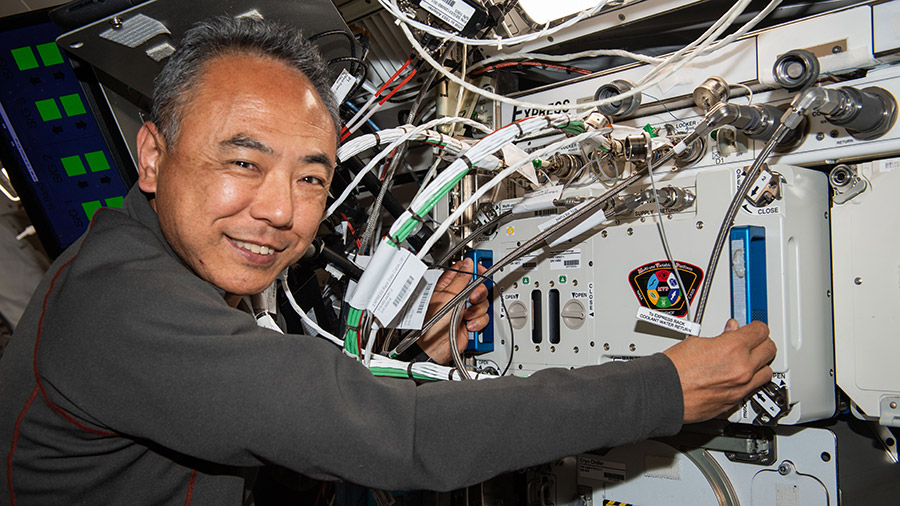
JAXA astronaut Satoshi Furukawa removes experiment hardware from inside the Multi-use Variable-g Platform, a biology research device that can generate artificial gravity.

The Expedition 69 crew aboard the International Space Station focused its main research activities on biotechnology on Wednesday. The orbital residents also continued the ongoing maintenance of lab hardware.

Researchers on the ground use the facilities aboard the space station to understand how living in weightlessness affects the human body. Some of the experiments operate remotely or autonomously, for others the astronauts set up and run the experiments, or even act as subjects as NASA and its international partners learn how to sustain crews on future missions to the Moon, Mars, and beyond.

NASA Flight Engineer Jasmin Moghbeli began her day conducting DNA research by analyzing microbe samples collected from the orbital outpost’s potable water dispenser. She used a small commercial DNA sequencing device to identify the samples for the BioMole technology demonstration. BioMole may improve environmental monitoring systems on the station and future spacecraft traveling farther away from Earth.

Moghbeli then assisted JAXA (Japan Aerospace Exploration Agency) astronaut Satoshi Furukawa as he replaced components on the BioFabrication Facility (BFF). The 3D biological printer is testing printing organ-like tissues in microgravity with an eye to manufacturing whole human organs in space in the future.

Flight Engineer Andreas Mogensen of ESA (European Space Agency) continued his human research duties that he began on Tuesday. The two-time station visitor serviced blood samples that had been placed overnight in the Kubik research incubator then stowed the specimens in a science freezer for later analysis. Mogensen is helping doctors learn how microgravity affects cellular immune functions and to monitor the human immune system in space.

NASA Flight Engineer Frank Rubio continued his space physics activities for a second day as he replaced experiment gear inside the Cold Atom Lab. The research device chills atoms to near absolute zero creating almost no motion allowing scientists to study fundamental behaviors and quantum characteristics.

The station’s three cosmonauts turned their attention on Wednesday to the upkeep of hardware in the Roscosmos segment of the orbital lab. Commander Sergey Prokopyev and Flight Engineer Dmitri Petelin spent the day replacing pumps and installing batteries on an Orlan spacesuit. Flight Engineer Konstantin Borisov videotaped himself becoming familiar with and exercising on the advanced resistive exercise device before checking out a laptop computer in the Nauka science module.


Learn more about station activities by following the space station blog@space_station and @ISS_Research on X, as well as the ISS Facebook and ISS Instagram accounts.

Get weekly video highlights at: https://roundupreads.jsc.nasa.gov/videoupdate/

Get the latest from NASA delivered every week. Subscribe here: www.nasa.gov/subscribe

Powered by WPeMatico

Get The Details…

Mark Garcia

2023 Multilateral Coordination Board Joint Statement

2023 Multilateral Coordination Board Joint Statement

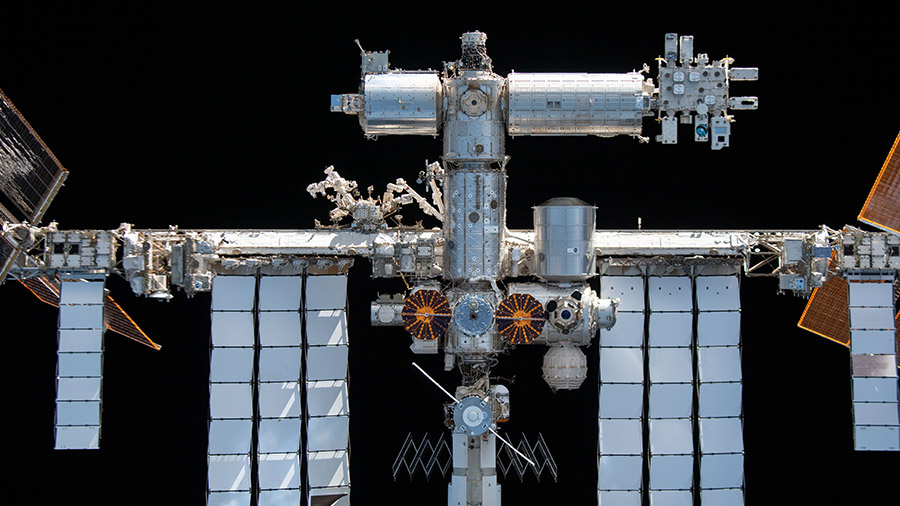
The International Space Station is pictured from the SpaceX Crew Dragon Endeavour during a fly around of the orbiting lab that took place on Nov. 8, 2021.

The International Space Station Multilateral Coordination Board met Wednesday, Aug. 23, to review the operational status of the microgravity laboratory.

The board members welcomed the commitments by the United States, Japan, Canada, and member states of ESA (European Space Agency) to extend the International Space Station operations through 2030, as well as Russia’s commitment to extend operations through 2028. The members confirmed the readiness of the International Space Station partnership to continue working together to advance microgravity research on this unique orbiting laboratory and to ensure the safe operation of the space station.

During the meeting, the board underlined the role of the International Space Station in providing an environment to develop and test technologies and engineering solutions in support of long-term space exploration, as well as serving as a proving ground for an increase in the commercialization of low Earth orbit. The members also discussed respective plans and priorities for operations in low Earth orbit, including utilization goals and the importance of interoperability standards for enabling technical cooperation in space.


Learn more about station activities by following the space station blog@space_station and @ISS_Research on X, as well as the ISS Facebook and ISS Instagram accounts.

Get weekly video highlights at: https://roundupreads.jsc.nasa.gov/videoupdate/

Get the latest from NASA delivered every week. Subscribe here: www.nasa.gov/subscribe

Powered by WPeMatico

Get The Details…

Mark Garcia

Station Back to Business Following Crew Departure

Station Back to Business Following Crew Departure

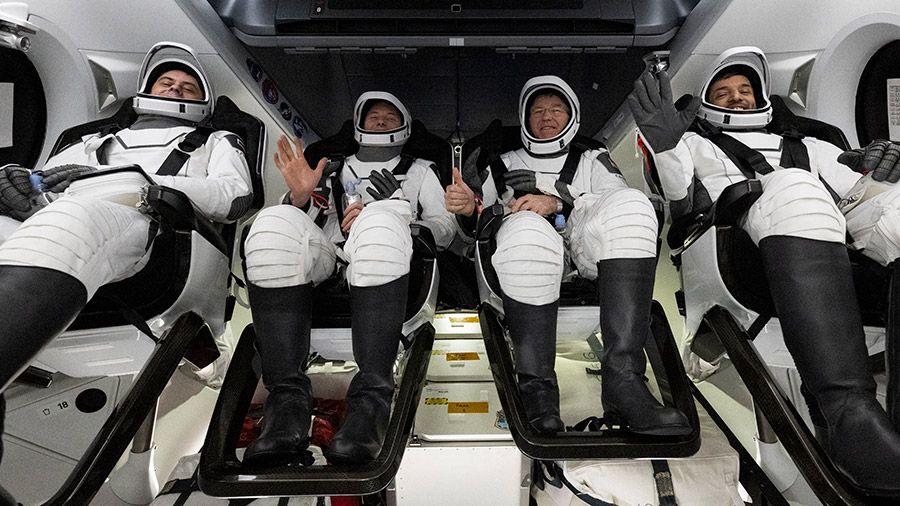
From left, crewmates Andrey Fedyaev, Woody Hoburg, Stephen Bowen, and Sultan Alneyadi are pictured inside the SpaceX Dragon Endeavour spacecraft shortly after returning to Earth on Sept. 4, 2023. Credit: NASA/Joel Kowsky

Four new Expedition 69 flight engineers are in their second week aboard the International Space Station spending more time on microgravity research and lab maintenance. Another trio of station crewmates is nearing one year in space and will soon turn its attention to departure at the end of the month.

Two of the station’s newest new flight engineers, Jasmin Moghbeli from NASA and Satoshi Furukawa from JAXA (Japan Aerospace Exploration Agency), worked Tuesday on the NanoRacks Bishop airlock inside the Tranquility module. The duo inspected cameras and installed components on the commercial doorway that enables larger payloads to be moved inside and outside the station. Earlier, mission controllers had spent about a week maneuvering Bishop in the grips of the Canadarm2 robotic arm for an experiment to measure temperature, vibrations, and radiation on external payload sites.

The other two new crewmates, ESA (European Space Agency) astronaut Andreas Mogensen and Roscosmos cosmonaut Konstantin Borisov, worked on biomedical science and station upkeep tasks throughout the day. Mogensen spun blood samples in a centrifuge then processed them for incubation to study how cellular immune functions are affected by microgravity. Borisov spent his day on battery maintenance and orbital plumbing duties in the orbital lab’s Roscosmos segment.

NASA Flight Engineer Frank Rubio is nearing 365 continuous days in space along with Commander Sergey Prokopyev and Flight Engineer Dmitri Petelin, both from Roscosmos. The trio, which has been on the station since Sept. 21 of last year, is due to leave the orbital lab at the end of the month inside the Soyuz MS-23 crew ship and parachute to a landing in Kazakhstan.

In the meantime, Rubio worked Tuesday removing and replacing components inside the Cold Atom Lab that chills atoms to extremely low temperatures to observe quantum characteristics. Prokopyev inventoried personal items aboard the station and continued transferring cargo from the Roscosmos Progress 85 resupply ship. Petelin attached electrodes to himself and recorded his heart activity for a cardiac investigation.

Five spacecraft are still parked at the orbital outpost following the undocking on Sunday of the SpaceX Dragon Endeavour with four Commercial Crew members aboard. Dragon Endeavour, commanded by Stephen Bowen and piloted by Woody Hoburg, both from NASA, with Mission Specialists Sultan Alneyadi of UAE (United Arab Emirates) and Andrey Fedyaev from Roscosmos splashed down early the next day off the coast of Florida. The quartet split up soon after reaching shore and headed home to their individual countries.


Learn more about station activities by following the space station blog@space_station and @ISS_Research on X, as well as the ISS Facebook and ISS Instagram accounts.

Get weekly video highlights at: https://roundupreads.jsc.nasa.gov/videoupdate/

Get the latest from NASA delivered every week. Subscribe here: www.nasa.gov/subscribe

Powered by WPeMatico

Get The Details…

Mark Garcia