Research, Maintenance Keep Crew Busy Ahead of Spacewalks

Research, Maintenance Keep Crew Busy Ahead of Spacewalks
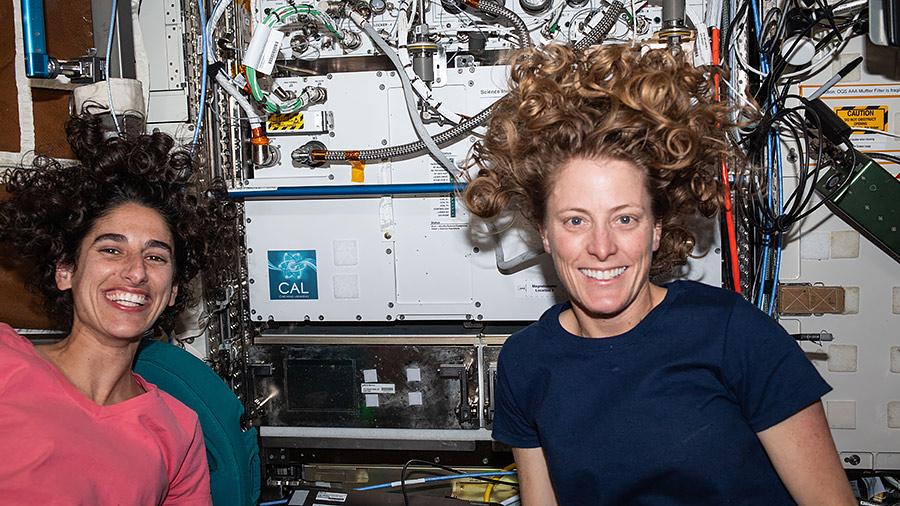
Astronauts (from left) Jasmin Moghbeli and Loral O'Hara pose for a portrait in front of the Cold Atom Lab. The physics research device observes the quantum behavior of atoms chilled to near absolute zero.
Astronauts (from left) Jasmin Moghbeli and Loral O’Hara pose for a portrait in front of the Cold Atom Lab. The physics research device observes the quantum behavior of atoms chilled to near absolute zero.

International Space Station managers have rescheduled a pair of spacewalks as they continue to review data from a backup radiator leak that has since ceased. In the meantime, the Expedition 70 crew members had a busy day at the end of the week packed with space research, cargo operations, and more spacewalk preparations.

The next U.S. spacewalk at the orbiting laboratory will take place at 8:35 a.m. EDT on Thursday, Oct. 19. Astronauts Loral O’Hara from NASA and Andreas Mogensen from ESA (European Space Agency) will spend about six-and-a-half hours swabbing station surfaces to collect potential samples of microbes that might survive in the extreme environment of outer space. NASA TV will begin its spacewalk coverage at 7 a.m. on the agency’s app and website.

A second U.S. spacewalk with O’Hara and NASA Flight Engineer Jasmin Moghbeli has been targeted for Oct. 30. The NASA duo will spend about six-and-a-half hours in the vacuum of space removing faulty radio communications gear and installing new solar array hardware.

The trio along with Flight Engineer Satoshi Furukawa from JAXA (Japan Aerospace Exploration Agency) took a pause from their spacewalk activities on Friday. The astronauts refocused their attention on human research and botany while also keeping up electronics and life support maintenance.

O’Hara took a robotics test and provided biological samples for an experiment to understand the psychological and physiological changes an astronaut experiences while living in weightlessness. Furukawa checked carbon dioxide bottles and hoses that support the growth environment inside the Advanced Plant Habitat botany research facility.

Moghbeli began her day transferring cargo in and out of the Cygnus space freighter. She then cleaned the Human Research Facility’s centrifuge chamber before servicing a variety of computers throughout the orbital lab. Mogensen spent Friday collecting water samples for ground analysis from life support systems in the space station’s U.S. segment.

Two Roscosmos cosmonauts are stepping up their preparations for a spacewalk planned to begin at 4:20 p.m. on Oct. 25. Five-time lab resident Oleg Kononenko and first-time space flyer Nikolai Chub will exit the Poisk airlock in their Orlan spacesuits to install new hardware and deploy a nanosatellite. The pair ended the week studying their spacewalk procedures and testing support hardware.

Flight Engineer Konstantin Borisov began Friday training to maneuver the European robotic arm attached to the Nauka science module. Afterward, Borisov opened panels inside Nauka and photographed internal hardware configurations in anticipation of future experiments.

Powered by WPeMatico

Get The Details…

Mark Garcia

NASA Prepares Artemis II Moon Rocket Core Stage for Final Assembly Phase

NASA Prepares Artemis II Moon Rocket Core Stage for Final Assembly Phase

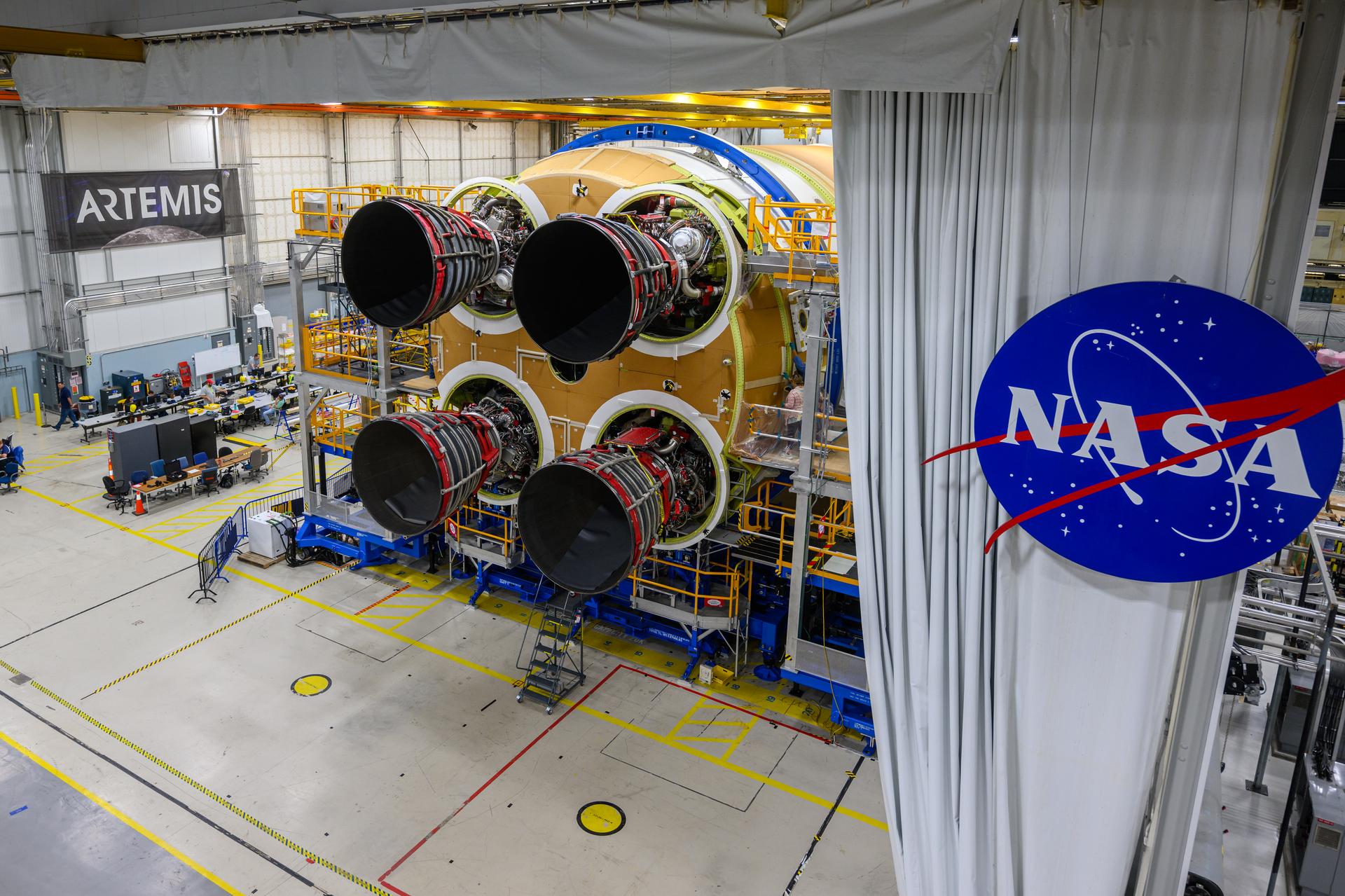
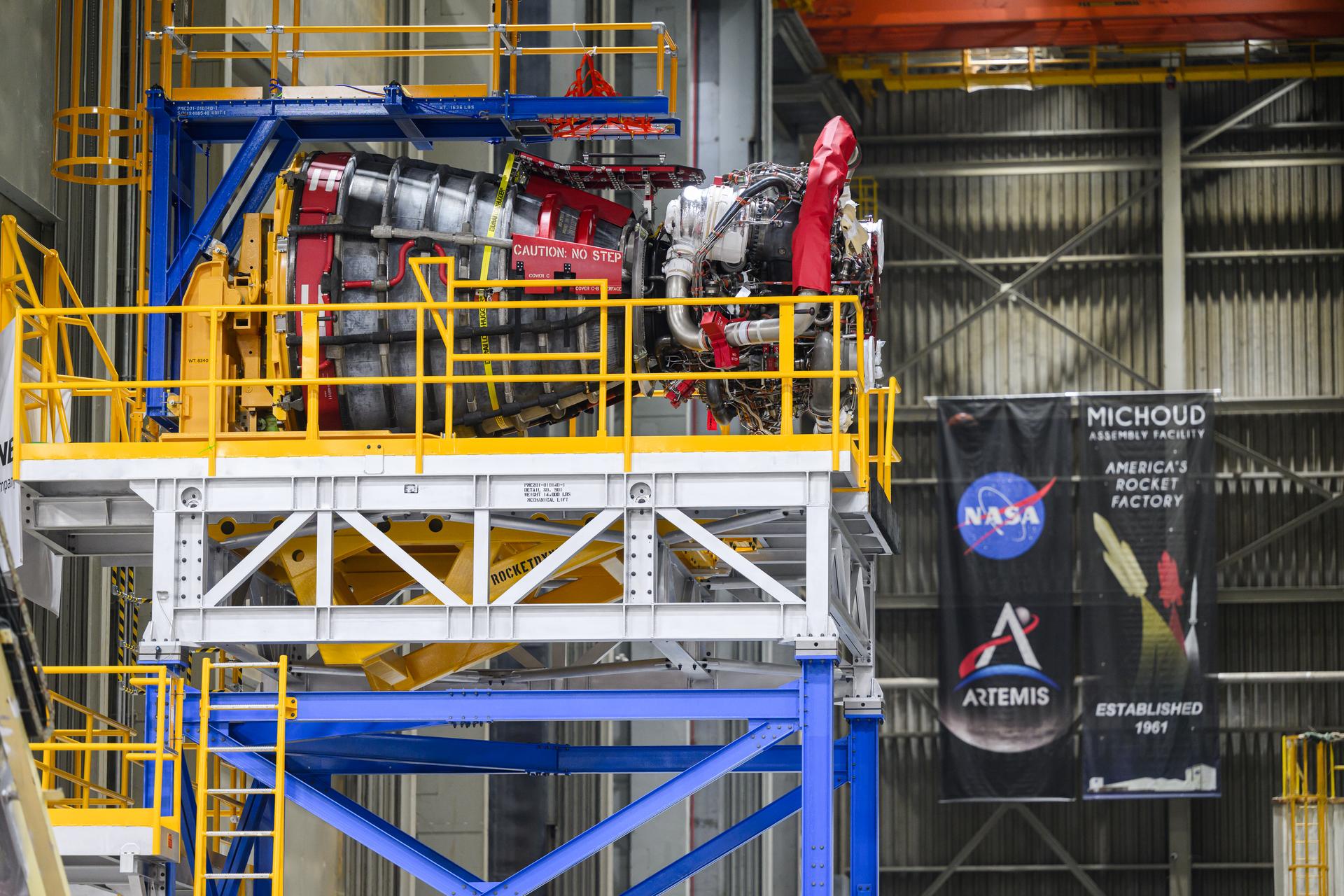
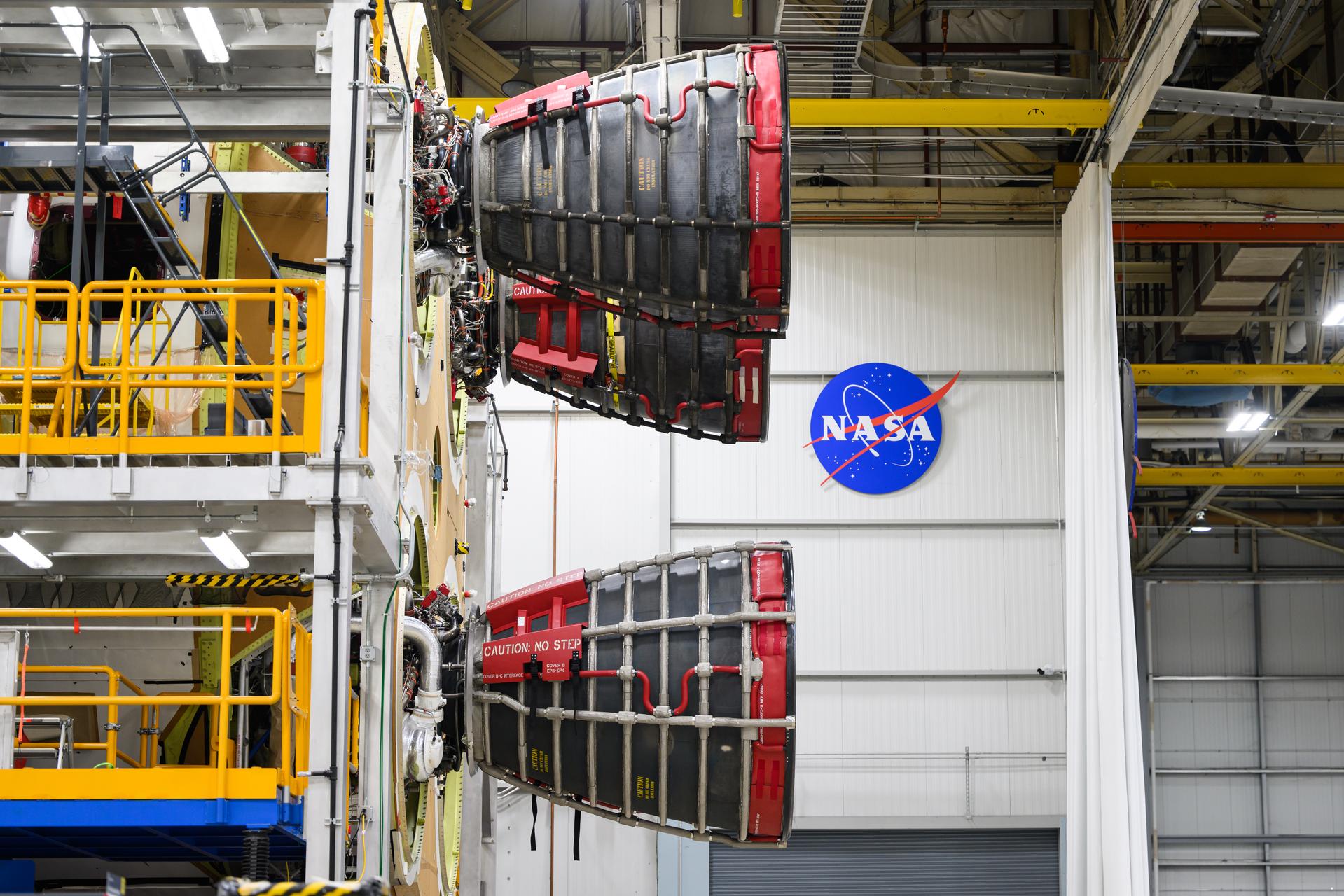
These photos and videos show how technicians at NASA’s Michoud Assembly Facility in New Orleans installed the third and fourth RS-25 engines onto the core stage for the agency’s SLS (Space Launch System) rocket that will help power NASA’s first crewed Artemis mission to the Moon.   Technicians added the first engine to the SLS core stage Sept. 11. The second engine was installed onto the stage Sept. 15 with the third and fourth engines following Sept. 19 and Sept. 20. Engineers consider the engines to be “soft” mated to the rocket stage. Technicians with NASA, Aerojet Rocketdyne, an L3Harris Technologies company and the RS-25 engines lead contractor, along with Boeing, the core stage lead contractor, will now focus efforts on the complex tax of fully securing the engines to the stage and integrating the propulsion and electrical systems within the structure.   NASA is working to land the first woman and first person of color on the Moon under Artemis. SLS is part of NASA’s backbone for deep space exploration, along with Orion and the Gateway in orbit around the Moon. SLS is the only rocket that can send Orion, astronauts, and supplies to the Moon in a single mission.
All four RS-25 engines have been installed onto the SLS (Space Launch System) core stage for NASA’s Artemis II mission. The installation of the engines signals the core stage is nearly finished with assembly and will soon be ready for shipment to NASA’s Kennedy Space Center in Florida. During launch, the rocket’s engines provide more than two million pounds of combined thrust.
Credits: NASA

By Megan Carter

NASA and its partners have fully secured the four RS-25 engines onto the core stage of the agency’s SLS (Space Launch System) rocket for the Artemis II flight test. The core stage, and its engines, is the backbone of the SLS mega rocket that will power the flight test, the first crewed mission to the Moon under Artemis.

Engineers have begun final integration testing at NASA’s Michoud Assembly Facility in New Orleans, in preparation for acceptance ahead of shipment of the stage to Kennedy Space Center in Florida in the coming months.

“NASA integrated many lessons learned from the first-time build and assembly of the SLS core stage for Artemis I to increase efficiencies during manufacturing and cross-team collaboration with our partners for Artemis II. NASA teams in New Orleans remain focused on assembling and preparing the SLS rocket’s liquid-fueled stage to support the flight.”

Julie Bassler

Julie Bassler

Manager of the Stages Office for the SLS Program

The 212-foot-tall core stage includes two massive liquid propellant tanks and four RS-25 engines at its base. For Artemis II, the core stage and its engines act as the powerhouse of the rocket, providing more than two million pounds of thrust for the first eight minutes of flight to send the crew of four astronauts inside NASA’s Orion spacecraft on an approximately 10-day mission around the Moon.

NASA, Aerojet Rocketdyne, an L3Harris Technologies company and the RS-25 engines lead contractor, along with Boeing, the core stage lead contractor, secured the engines to the maze of propulsion and avionics systems within the core stage Oct. 6. In the coming weeks, engineers will perform testing on the entire stage and its avionics and electrical systems, which act as the “brains” of the rocket to help control it during flight.

Once testing of the stage is complete and the hardware passes its acceptance review, the core stage will be readied for shipping to Kennedy via the agency’s Pegasus barge, based at Michoud.

As teams prepare the core stage for Artemis II, rocket hardware is also under construction on our factory floor for Artemis III, IV, and V that will help send the future Artemis astronauts to the lunar South Pole.

The engines were first soft mated one by one onto the stage beginning in early September. The last RS-25 engine was structurally installed onto the stage Sept. 20. Installing the four engines is a multi-step, collaborative process for NASA, Boeing, and Aerojet Rocketdyne.

Following the initial structural connections of the individual engines, securing and outfitting all four engines to the stage is the lengthiest part of the engine assembly process and includes securing the thrust vector control actuators, ancillary interfaces, and remaining bolts before multiple tests and checkouts.

All major hardware elements for the SLS rocket that will launch Artemis II are either complete or in progress. The major components for the rocket’s two solid rocket boosters are at Kennedy. The rocket’s two adapters, produced at Marshall, along with the rocket’s upper stage, currently at lead contractor United Launch Alliance’s facility in Florida near Kennedy, will be prepared for shipment in the spring.

NASA is working to land the first woman and first person of color on the Moon under Artemis. SLS is part of NASA’s backbone for deep space exploration, along with Orion and the Gateway in orbit around the Moon, and commercial human landing systems. SLS is the only rocket that can send Orion, astronauts, and supplies to the Moon in a single mission.

Corinne Beckinger
Marshall Space Flight Center, Huntsville, Ala.
256.544.0034
corinne.m.beckinger@nasa.gov

Powered by WPeMatico

Get The Details…
Lee Mohon