A Full Moon Checkup

A Full Moon Checkup

The Moon appears along the centerline of scans acquired by the OLI (Operational Land Imager) on Landsat 9 on January 3, 2026. These monthly lunar scans help ensure the long-term consistency of Landsat’s Earth observations.
Landsat Project Science Support/Ross Walter

In April 2026, NASA’s Artemis program took humanity back to the Moon, providing a new look at Earth’s only natural satellite. As the world celebrates the return of Artemis II’s four astronauts, the lunar surface continues to play a critical role in missions much closer to Earth.

Since 1972, the NASA/USGS Landsat program has captured the longest continuous record of Earth’s land surface, collecting images that track everything from crop health to glacial change. But with such a long data record, how can scientists trust that images acquired today can be accurately compared to those from days, years, or even decades ago? They look to the Moon.

Unlike Earth, with its constantly changing weather, seasons, and landscape, the Moon is remarkably stable. With no atmosphere and virtually no surface changes, the Moon reflects sunlight in a predictable, consistent way. This stability gives engineers a reference to fine-tune Landsat’s instruments and be confident that the data are accurate.

Once a month, during the full Moon, the spacecraft turns its instruments away from Earth and points them directly at the lunar surface. Over the course of two orbits, the spacecraft maneuvers to image the moon 15 times. During each pass, Landsat captures detailed measurements of light reflected off the Moon’s surface, revealing any unintended sensor change, or “drift,” that needs correction.

The animation above shows the scans acquired by band 4 of the OLI (Operational Land Imager) on Landsat 9 on January 3, 2026. Each parallel scan was acquired by one of the 14 detector modules that comprise the instrument’s focal plane. The satellite maneuvers so that each module images the Moon, with one module capturing it twice.  

Landsat Project Science Support/Ross Walter

This work is one piece in a complex puzzle called calibration, which is part of what makes NASA the gold standard of science worldwide. From before launch all the way to the end of a satellite’s life, engineers ensure that the data collected by the satellite is accurate and consistent. In addition to looking to the Moon, Landsat also looks to places on Earth where the ground is uniform, like the wide, pale expanse of the White Sands desert in New Mexico.

Scientists also collect measurements on the ground to check against those collected from space. For example, they ensure that surface temperature readings match those recorded by Landsat’s thermal band. All these efforts are part of what make a Landsat image different from photos taken by consumer cameras. Landsat images contain crucial information that scientists can use to map changes in habitats, tree species, agricultural patterns, and more.

Video and animation by Ross Walter, using Landsat data from the U.S. Geological Survey. Story by Ross Walter and Madeleine Gregory, Landsat Project Science Support.

References & Resources

You may also be interested in:

Stay up-to-date with the latest content from NASA as we explore the universe and discover more about our home planet.

Earthset From the Lunar Far Side

2 min read

The crew of NASA’s Artemis II mission captured extraordinary images of our home planet during their journey around the far…

Article

Shades of a Lunar Eclipse

3 min read

A series of nighttime satellite images revealed how moonlight reaching Earth varied throughout a total lunar eclipse.

Article

Seasons Change in Southwest Virginia

3 min read

From autumn color to a winter-white finish, forested areas around Blacksburg trade foliage for snow over the span of two…

Article

Powered by WPeMatico

Get The Details…

Jaclyn Kagey Shapes Humanity’s Return to the Moon 

Jaclyn Kagey Shapes Humanity’s Return to the Moon 

3 Min Read

Jaclyn Kagey Shapes Humanity’s Return to the Moon 

Two people practice underwater operations in a Moon like environment. The person on the left is holding an U.S. flag.

Jaclyn Kagey trains in NASA’s Neutral Buoyancy Laboratory, where astronauts and flight controllers rehearse spacewalk procedures in a simulated microgravity environment.

Credits:
NASA

For Jaclyn Kagey, preparing astronauts to put boots on the Moon is part of her daily work. 

As the Artemis extravehicular activity lead in NASA’s Flight Operations Directorate, Kagey plays a central role in preparing astronauts to safely explore the lunar surface. 

A woman poses in a black suit in front of the U.S. flag (left) and the NASA flag.
Official portrait of Jaclyn Kagey.
NASA/Robert Markowitz

My mission is to shape the historic endeavor by working closely with scientists and industry partners to define lunar surface activities. We are setting the standard for humanity’s return to the Moon.

Jaclyn Kagey

Jaclyn Kagey

Artemis Extravehicular Activity Lead

During Artemis missions, astronauts will explore the Moon’s South Pole, a region never visited by humans, paving the way for future deep space exploration.  

Kagey helps define how astronauts will work on the Moon, from planning detailed spacewalk timelines to guiding real-time operations. Crews will conduct these activities after stepping outside NASA’s human landing system, a commercial lander designed to safely transport astronauts from lunar orbit to the surface and back.  

A woman wears a lunar backpack while practicing picking up rocks with a lunar tool at a rock yard.
Jaclyn Kagey conducts lunar surface operations training in the Rock Yard at Johnson Space Center, where teams test tools and procedures for future Artemis missions.
NASA

Kagey’s NASA career spans more than 25 years and includes work across some of the agency’s most complex programs.  

While studying at Embry-Riddle Aeronautical University, she watched space shuttle launches that solidified her goal of working at NASA. “From a young age, my aspirations were singularly focused on contributing to the nation’s aircraft and spaceflight endeavors,” she said. 

That goal became reality through United Space Alliance, where she and her husband began their careers as contractors.  

A woman smiles and poses at a desk in front of several monitors at mission control.
Jaclyn Kagey works in the Mission Control Center during a spacewalk simulation at NASA’s Johnson Space Center in Houston.
NASA/Robert Markowitz

One of her career-defining moments came during a high-pressure operation aboard the International Space Station. 

“I’ve planned and executed seven spacewalks, but one that stands out was U.S. EVA 21,” she said. “We had a critical ammonia leak on the station, and from the time the issue was identified, we had just 36 hours to plan, prepare the spacesuits, and execute the repair.” 

The team successfully completed the spacewalk and restored the system. “The agility, dedication, and teamwork shown during that operation were remarkable,” Kagey said. “It demonstrated what this team can accomplish under pressure.” 

Two people practice underwater operations in a Moon like environment. The person on the left is holding an U.S. flag.
Jaclyn Kagey trains in NASA’s Neutral Buoyancy Laboratory, where astronauts and flight controllers rehearse spacewalk procedures in a simulated microgravity environment.
NASA

There are times when the mission requires everything you have. There are also times when you have to step back. Learning when to do each is critical.

Jaclyn Kagey

Jaclyn Kagey

Artemis Extravehicular Activity Lead

Throughout her career, Kagey has learned that adaptability is an essential skill. 

“Things rarely go exactly as planned, and my job is to respond in a way that keeps the crew safe and the mission moving forward,” she said.  

A woman, left, wearing a spacesuit poses next to a man at a facility.
Jaclyn Kagey suited up in Axiom Space’s Extravehicular Mobility Unit (AxEMU) spacesuit during a test on the Active Response Gravity Offload System (ARGOS) at Johnson’s Space Vehicle Mockup Facility.
Axiom Space

Kagey’s influence also extends to the future of spacesuit development. Standing on the shorter end of the height spectrum, she once could not complete a full test in the legacy Extravehicular Mobility Unit despite passing the fit check. Although Kagey could don the suit, its proportions were too large for her and made it difficult to move as needed for the test. That experience drove her to advocate for designs that better support a wider range of body types.  

That effort came full circle when she recently completed her first test in Axiom Space’s lunar spacesuit, called the Axiom Extravehicular Mobility Unit (AxEMU), on the Active Response Gravity Offload System (ARGOS) at Johnson Space Center in Houston. 

“It’s exciting to literally fit into the future of spacewalks!” Kagey said. 

About the Author

Sumer Loggins

Sumer Loggins

Share

Details

Last Updated

May 25, 2026

Powered by WPeMatico

Get The Details…
Sumer Loggins

Call for Creatives: NASA Seeks Help Illuminating Mission Storytelling

Call for Creatives: NASA Seeks Help Illuminating Mission Storytelling

NASA meatball
Credit: NASA

As NASA pushes the boundaries of exploration and innovation for the benefit of humanity, the agency is looking for partners to share mission stories covering Artemis Moon missions, nuclear propulsion, aeronautics, and more.

NASA published an Announcement for Proposals on May 21 asking filmmakers, documentarians, songwriters, storytellers, poets, and others to submit proposals to partner with the agency by Tuesday, June 30.

In this initial round, NASA is seeking up to 10 partners for unfunded Space Act Agreements to share the stories behind, and insights into, multiple NASA missions, including, but not limited to, the following:

  • Artemis program, including the recently added Artemis III mission in 2027, and Artemis IV lunar landing in 2028, as well as plans for the agency to develop a Moon Base. Learn more about Artemis on the agency’s website.
  • NASA’s advancement of nuclear propulsion, including the Space Reactor-1 Freedom mission to Mars in 2028 carrying the Skyfall payload.
  • NASA’s cutting-edge aviation work through flight tests and other efforts.

While this opportunity is focused on U.S. creators, the agency will consider proposals with a minority of international participants. Proposals should detail which area of focus is desired, funding and distribution arrangements, and any specifics needs from NASA to move forward (access to facilities, personnel, etc.).

Full requirements and other details are available online:

https://go.nasa.gov/CreatorProposals

-end-

Camille Gallo / Cheryl Warner
Headquarters, Washington
202-358-1600
camille.m.gallo@nasa.gov / cheryl.m.warner@nasa.gov

Share

Details

Last Updated

May 22, 2026

Editor
Jennifer M. Dooren

Related Terms

Powered by WPeMatico

Get The Details…
Lauren E. Low

Cancer Treatment, Cartilage Repair, and Spacesuit Checks Wrap Up Week

Cancer Treatment, Cartilage Repair, and Spacesuit Checks Wrap Up Week

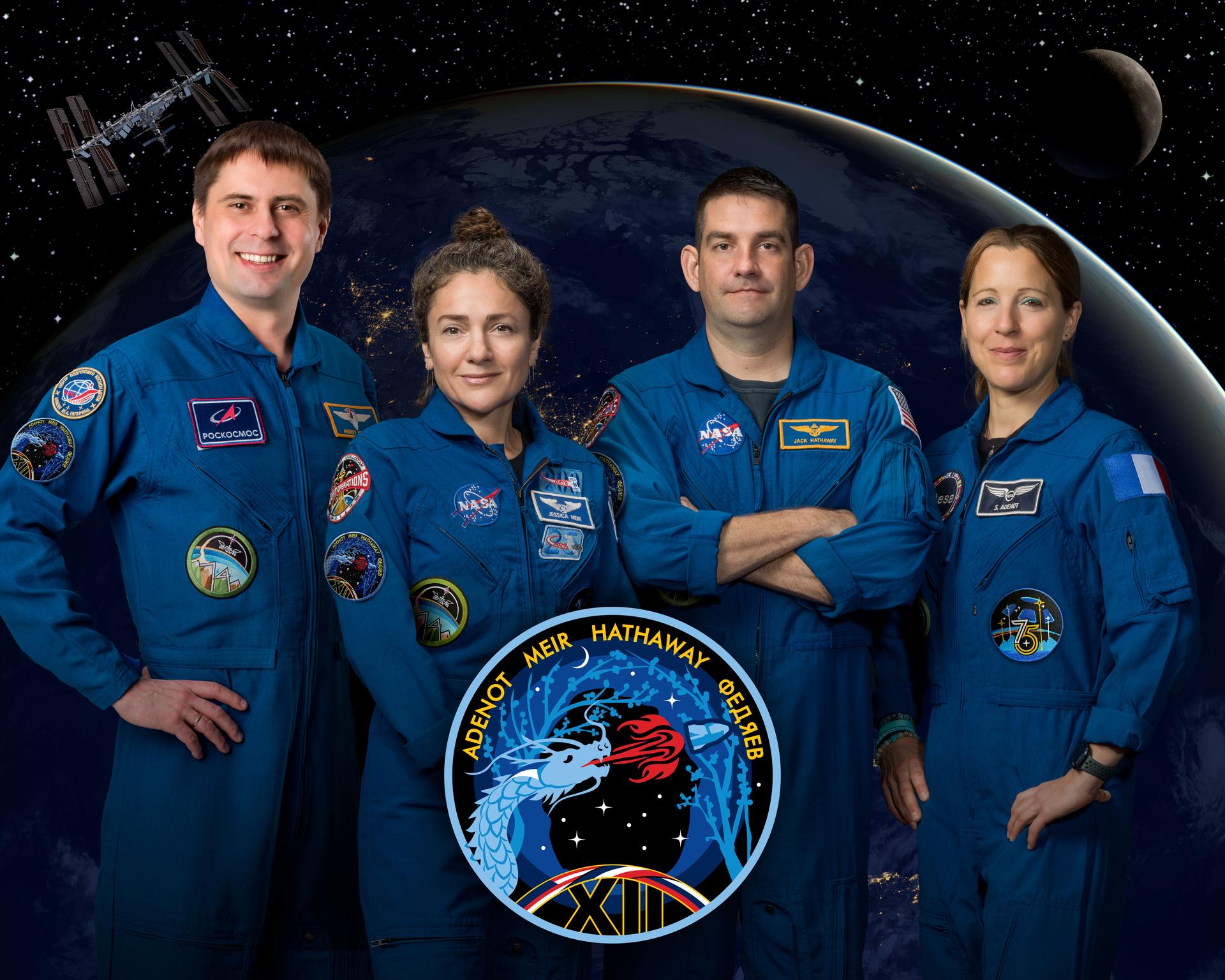
NASA astronauts Jessica Meir and Jack Hathaway, both Expedition 74 flight engineers, work together to process stem cell samples aboard the International Space Station’s Kibo laboratory module. Meir nourished the stem cells inside Kibo's Life Science Glovebox after Hathaway retrieved them from a science freezer, thawed them, and handed them over for treatment. The research may lead to the development of space-designed therapies to treat cancer and blood conditions.
NASA astronauts Jessica Meir and Jack Hathaway work together to process stem cell samples aboard the Kibo laboratory module. Meir nourished the stem cells inside Kibo’s Life Science Glovebox after Hathaway retrieved them from a science freezer, thawed them, and handed them over for treatment. The research may lead to the development of space-designed therapies to treat cancer and blood conditions.
NASA

Experiments exploring cancer treatments and cartilage repair topped the Expedition 74 crew’s research schedule on Friday. Two cosmonauts are also gearing up for a spacewalk in less than a week.

Doctors are taking advantage of the International Space Station’s weightless environment to develop and test advanced cancer treatments. Two experiments taking place aboard the orbital outpost on Friday are looking at different therapies and exploring how microgravity impacts their effectiveness.

NASA flight engineer Chris Williams continued the Space Cancer Therapeutics investigation by processing samples of fruit flies engineered with a pancreatic‑cancer genetic profile and treated with an anti‑cancer drug. Williams exposed one group of flies to artificial gravity and a second group to microgravity. Both sets will be frozen for preservation and returned to Earth aboard a SpaceX Dragon cargo spacecraft. Researchers will analyze the samples to assess the therapy’s effectiveness, understand its underlying molecular mechanisms, and determine microgravity’s influence on cancer development. Fruit flies are ideal for this research because their physiology is well understood, allowing scientists to track how cancer‑related processes change in different spaceflight conditions.

NASA flight engineer Jack Hathaway worked in the Harmony module observing DNA-mimicking materials for their ability to form stable structures in microgravity and potentially fight cancer. Hathaway pointed a light-measuring device at the manufactured nanoparticles that resemble the natural building blocks of DNA to evaluate the quality of the samples. The biotechnology study is testing the tiny, engineered materials—loaded with a cancer‑fighting drug—for their ability to reach target cancer cells and prevent unwanted side effects possibly leading to the development of a new type of cancer treatment.

NASA flight engineer Jessica Meir spent her shift treating samples of cartilage cells inside the Kibo laboratory module’s Life Science Glovebox to learn how human cartilage builds and repairs itself when gravity is removed. Doctors will use the insights from the biotechnology experiment to learn how to create replacement cartilage, treat arthritis and joint damage, and understand the effects of weightlessness on an astronaut’s joint health.

Flight engineer Sophie Adenot of ESA (European Space Agency) spent her day reorganizing and transferring cargo in and out of the SpaceX Dragon cargo spacecraft docked to the Harmony module’s forward port. Adenot adjusted a variety of science freezers to access cargo pallets and other research hardware installed inside Dragon for stowage aboard the space station.

Roscosmos cosmonauts Sergey Kud-Sverchkov and Sergey Mikaev, station commander and flight engineer respectively, tested a pair of Orlan spacesuits in the Poisk module’s airlock checking the suits for pressure leaks, functionality, and mobility. Flight engineer Andrey Fedyaev assisted the duo with the suit checks then moved on and checked components that support the Elektron oxygen generator in the Roscosmos segment of the orbital outpost.

Learn more about station activities by following the space station blog, @space_stationon X, as well as the ISS Facebook and ISS Instagram accounts.

Get the latest from NASA delivered every week. Subscribe here.

Powered by WPeMatico

Get The Details…

Mark A. Garcia