Volunteers Worldwide Successfully Tracked NASA’s Artemis I Mission

Volunteers Worldwide Successfully Tracked NASA’s Artemis I Mission

4 min read

Volunteers Worldwide Successfully Tracked NASA’s Artemis I Mission
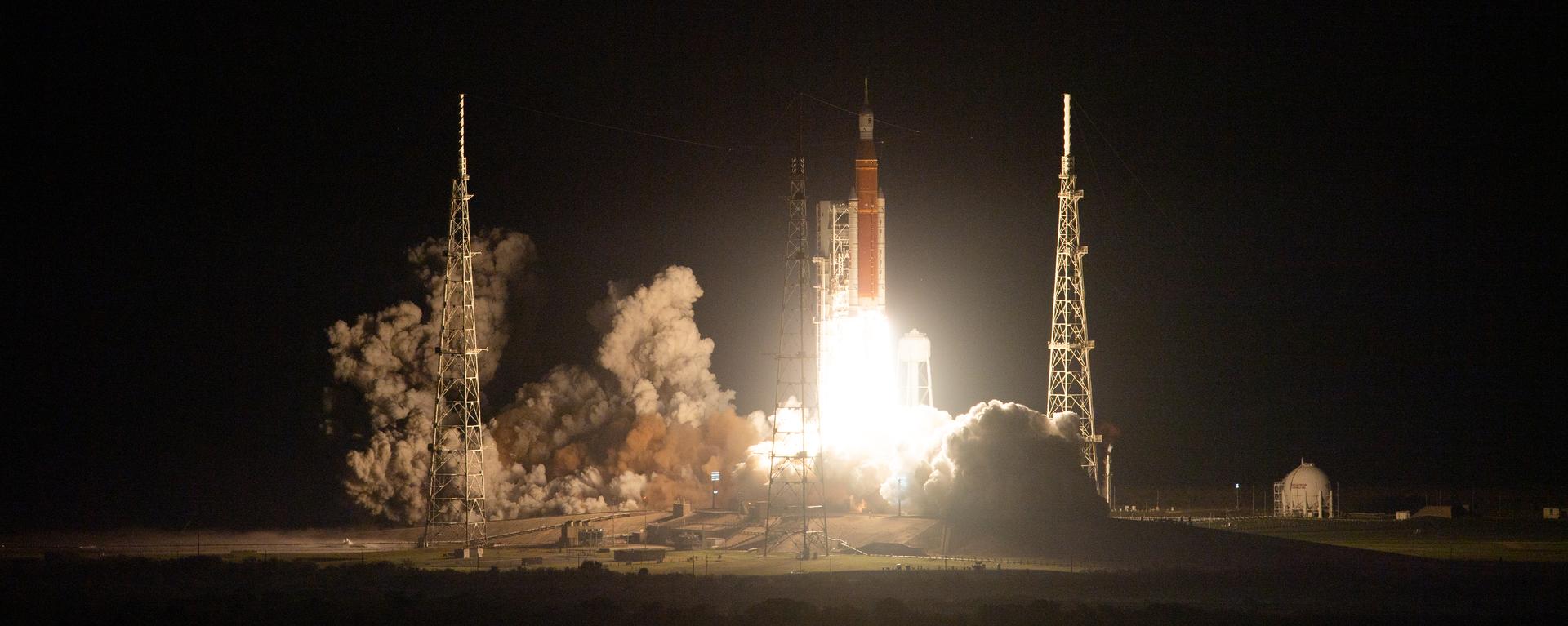
Artemis I Launch
NASA’s Space Launch System rocket carrying the Orion spacecraft launches on the Artemis I flight test, Wednesday, Nov. 16, 2022, from Launch Complex 39B at NASA’s Kennedy Space Center in Florida.
Photo Credit: NASA/Joel Kowsky

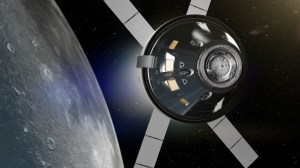
In the year since NASA’s historic Artemis I mission successfully launched, the agency has been analyzing data from its approximately 25-day journey around the Moon and back to Earth, including data submitted from volunteers around the world as they tracked the uncrewed Orion spacecraft.

The flight test, which launched on Nov. 16, 2022, atop the agency’s powerful SLS (Space Launch System) rocket, sent the Orion spacecraft nearly 270,000 miles beyond the Moon to test the integrated rocket and spacecraft for the first time before future crewed missions.

NASA’s Space Communications and Navigation (SCaN) program selected 18 participants to attempt to passively track the Orion spacecraft. The effort helped NASA gain a better understanding of external organizations’ tracking capabilities as it seeks to augment the agency’s capabilities for tracking future missions to the Moon, Mars, and beyond.

Ten volunteers successfully tracked the Orion spacecraft during Artemis I’s uncrewed flight test to and from the Moon.

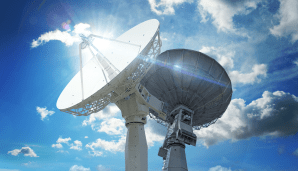
The participants – ranging from international space agencies, academic institutions, commercial companies, nonprofits, and private citizens – attempted to receive Orion’s signal and use their respective ground antennas to passively track and measure changes in the radio waves transmitted by Orion. They took measurements during three phases of the mission: the spacecraft’s journey to the Moon, its orbit around the Moon, and the journey back to Earth.  

We have spent the last few months really understanding what the data can mean for future Artemis or lunar tracking efforts.

John Hudiburg

John Hudiburg

SCaN Mission Integration and Commitment Manager

“We were happy with the engagement and have spent the last few months really understanding what the data can mean for future Artemis or lunar tracking efforts,” said John Hudiburg, SCaN Mission Integration and Commitment Manager.

Data collected from the participants was provided to Flight Dynamics Facility (FDF) analysts at NASA’s Goddard Space Flight Center in Greenbelt, Maryland, for evaluation.

“The public and industry sector’s response was very exciting,” said Flight Dynamics Facility liaison Juan Crenshaw. “It shows the worldwide interest in supporting the next era of human exploration. The Flight Dynamics Facility analysts found that the data showed promising results, with many of the participants successfully tracking Orion during its journey.”
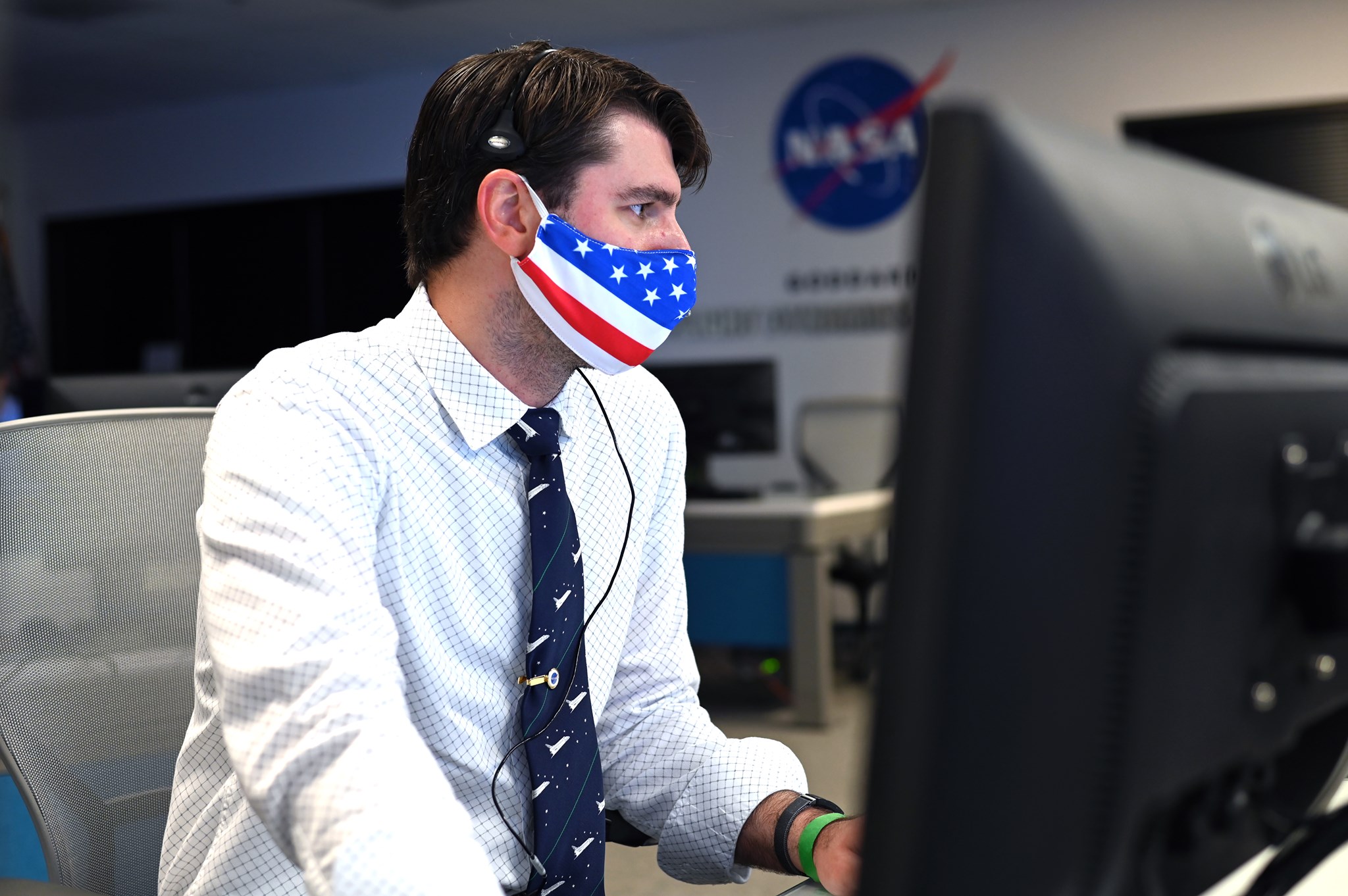
Sam Schrieber, Director of Goddard’s Flight Dynamics Facility sits on console at NASA’s Goddard Space Flight Center in Greenbelt, Md., for the Artemis I launch on November 16, 2023.
NASA

To process the data, analysts combined it with operational data from NASA’s Deep Space Network and generated standard datasets that were easier to analyze. Analysts then compared this data against the actual Artemis I tracking data collected by engineers at NASA’s Johnson Space Center in Houston. This comparison allowed analysts to identify any errors or trends in the data.  

Some of the data submitted also revealed certain challenges. These challenges included differences in the implementation of Consultative Committee for Space Data Systems (CCSDS) standards, formatting issues with the data, data quality issues. However, these challenges help NASA understand what information should be clarified for future tracking efforts.

“NASA gained an understanding of the broader community’s capabilities, the participating organizations got to show what they can do in terms of tracking, and the Flight Dynamics Facility learned how to analyze unconventional external tracking data,” said Flight Dynamics Facility Deputy Operations Director Jason Laing. “Now, we can take the lessons learned and apply them to potential tracking opportunities for future missions.”

SCaN serves as the program office for all of NASA’s space communications and navigation activities and supports the Artemis missions through both the Near Space Network and Deep Space Network. SCaN is a part of NASA’s Space Operations Mission Directorate at NASA Headquarters in Washington.

With Artemis missions, NASA is collaborating with commercial and international partners to explore the Moon for scientific discovery and technology advancement and establish the first long-term presence on the Moon. The Moon missions will serve as training for how to live and work on another world as NASA prepares for human exploration of Mars.

By Katrina Lee

NASA’s Goddard Space Flight Center, Greenbelt, Md

Share

Details

Last Updated

Nov 15, 2023

Editor

Katherine S. Schauer

Contact

Katherine S. Schauer
katherine.s.schauer@nasa.gov

Location

Goddard Space Flight Center

Powered by WPeMatico

Get The Details…
Katherine Schauer

Dragon Kicks Off Robotics and Science Activities on Station

Dragon Kicks Off Robotics and Science Activities on Station

Thrusters on the SpaceX Dragon cargo spacecraft fire automatically adjusting the vehicle's approach for a docking to the station's forward port.
Thrusters on the SpaceX Dragon cargo spacecraft fire automatically adjusting the vehicle’s approach for a docking to the station’s forward port.

The Expedition 70 crew and robotics controllers on the ground were busy unloading a U.S. cargo craft today. The International Space Station residents are also activating new science experiments to reveal how microgravity affects humans.

The astronauts and teams on the ground are working together today unpacking some of the nearly 6,500 pounds of science, supplies, and hardware delivered inside the SpaceX Dragon cargo spacecraft on Saturday. Commander Andreas Mogensen worked inside the commercial resupply ship on Tuesday disassembling some of the loaded crew bags strapped inside Dragon. The ESA (European Space Agency) astronaut then moved the smaller cargo items through the hatch and into the station to replenish the crew. Mogensen also supported a pair of space botany experiments to help sustain crews traveling farther away from Earth.

Mission controllers from the U.S. and Japan coordinated their robotics activities to retrieve and install some of the heavier science hardware delivered inside Dragon’s unpressurized trunk. The U.S. engineers remotely controlled the Canadarm2 robotic arm to extract the new ILLUMA-T laser communications experiment stowed in Dragon. The JAXA (Japan Aerospace Exploration Agency) robotics controllers were standing by as the Canadarm2 handed off ILLUMA-T to the Japanese robotic arm for installation on the Kibo laboratory module.

NASA Flight Engineer Loral O’Hara worked throughout Tuesday on a new investigation for a deeper understanding of the aging process. She processed human cell samples for incubation and stowage in a science freezer. The cell samples are being cultured in space and compared to samples on Earth to observe cell stress, metabolism, and other characteristics that may contribute to accelerated aging processes in humans living on and off the Earth.

Astronauts Jasmin Moghbeli and Satoshi Furukawa partnered together treating cell samples inside the Kibo lab for the Cell Gravisensing-2 study. The duo retrieved samples from an incubator, observed them in a microscope, then inserted them into a science freezer for later analysis. Observations will help researchers learn how cells respond to the lack of gravity promoting space biology and improving treatments for ailments on Earth.

Moghbeli from NASA also installed computer gear inside the Combustion Integrated Rack that enables the safe research of fuels and flames in weightlessness. Furukawa from JAXA routed cables and set up a laptop computer that will support operations for the ILLUMA-T laser technology study.

The orbiting lab’s three cosmonauts spent Tuesday focusing on their array of research and maintenance tasks for Roscosmos. Cosmonaut and five-time station visitor Oleg Kononenko inspected the Zvezda service module with inputs from specialists on the ground. Flight Engineer Nikolai Chub photographed the internal condition of the station’s Roscosmos modules for analysis then strapped on a sensor-packed cap and practiced futuristic piloting techniques. Finally, Flight Engineer Konstantin worked on orbital plumbing tasks, updated computer tablet software, and photographed landmarks on Earth for study.


Learn more about station activities by following the space station blog@space_station and @ISS_Research on X, as well as the ISS Facebook and ISS Instagram accounts.

Get weekly video highlights at: https://roundupreads.jsc.nasa.gov/videoupdate/

Get the latest from NASA delivered every week. Subscribe here: www.nasa.gov/subscribe

Powered by WPeMatico

Get The Details…

Mark Garcia

NASA’s C-130 Delivers GUSTO Payload to Antarctica

NASA’s C-130 Delivers GUSTO Payload to Antarctica

NASA’s Wallops Flight Facility C-130 aircraft delivered the agency’s Galactic/Extragalactic ULDB Spectroscopic Terahertz Observatory (GUSTO) payload to McMurdo Station, Antarctica, on Oct. 28, 2023. The GUSTO mission will launch on a scientific balloon in December 2023.

Powered by WPeMatico

Get The Details…

Going for the GUSTO in Antarctica

Going for the GUSTO in Antarctica

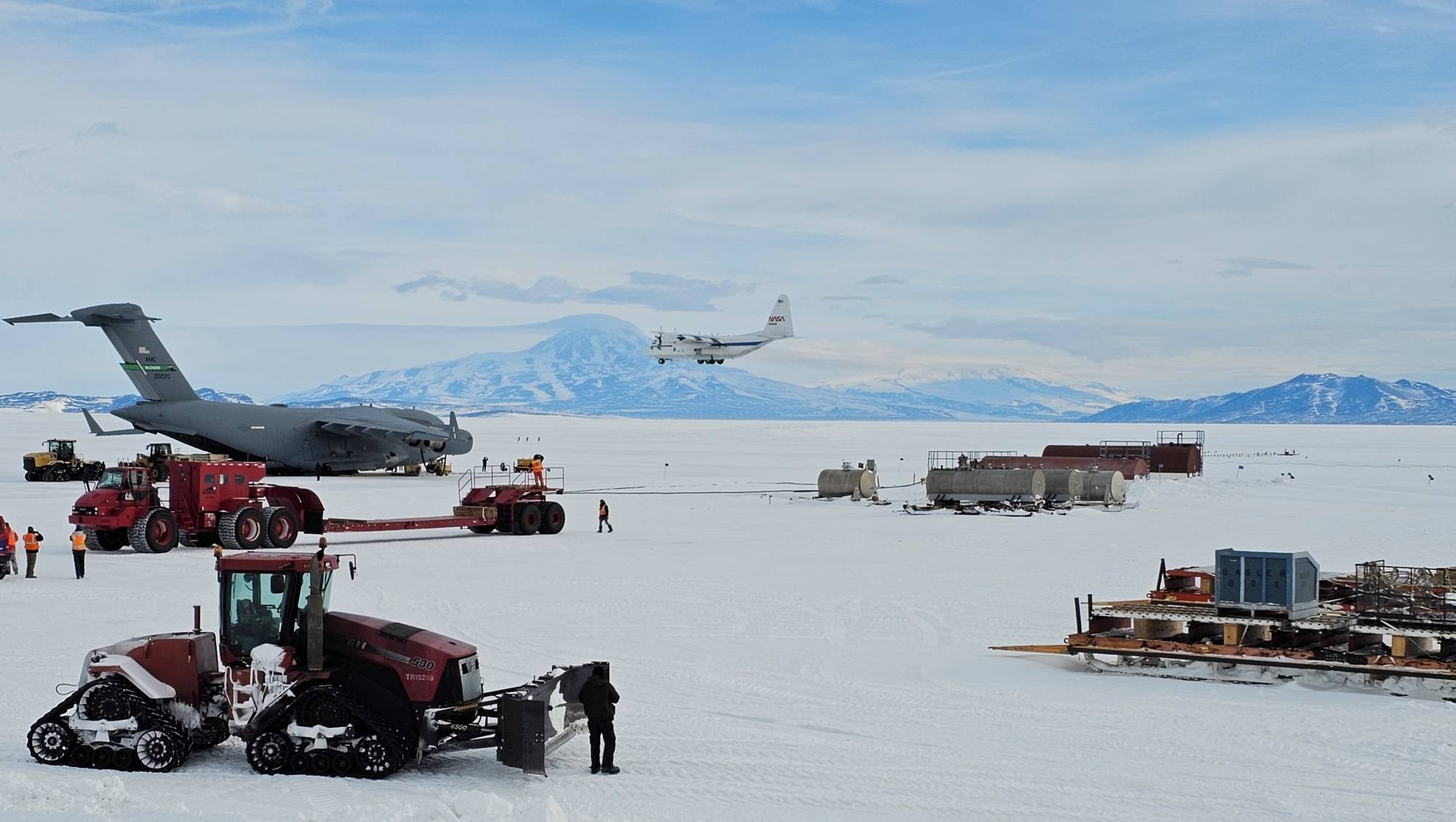
Tractors and other heavy machinery rest on the snowy plain in the foreground. In the middle of the image, a dark gray aircraft sits on the ground as a smaller white aircraft, NASA's C-130, lands.
NASA / Scott Battaion

NASA’s Wallops Flight Facility C-130 aircraft, shown in this image from Oct. 28, 2023, delivered the agency’s Galactic/Extragalactic ULDB Spectroscopic Terahertz Observatory (GUSTO) payload to McMurdo Station, Antarctica. This was the first mission to Antarctica for the plane.

The GUSTO mission, launching aboard a football-stadium-sized, zero-pressure scientific balloon in December 2023, will fly an Ultralong-Duration Balloon (ULDB) carrying a telescope with carbon, oxygen, and nitrogen emission line detectors. This unique combination of data will supply the spectral and spatial resolution information needed for the mission team to untangle the complexities of the cosmic material found between stars, and map out large sections of the plane of our Milky Way galaxy and the nearby galaxy known as the Large Magellanic Cloud.

See more photos from the C-130’s voyage to Antarctica.

Image Credit: NASA/Scott Battaion

Powered by WPeMatico

Get The Details…
Monika Luabeya

Trailblazing New Earth Satellite Put to Test in Preparation for Launch

Trailblazing New Earth Satellite Put to Test in Preparation for Launch

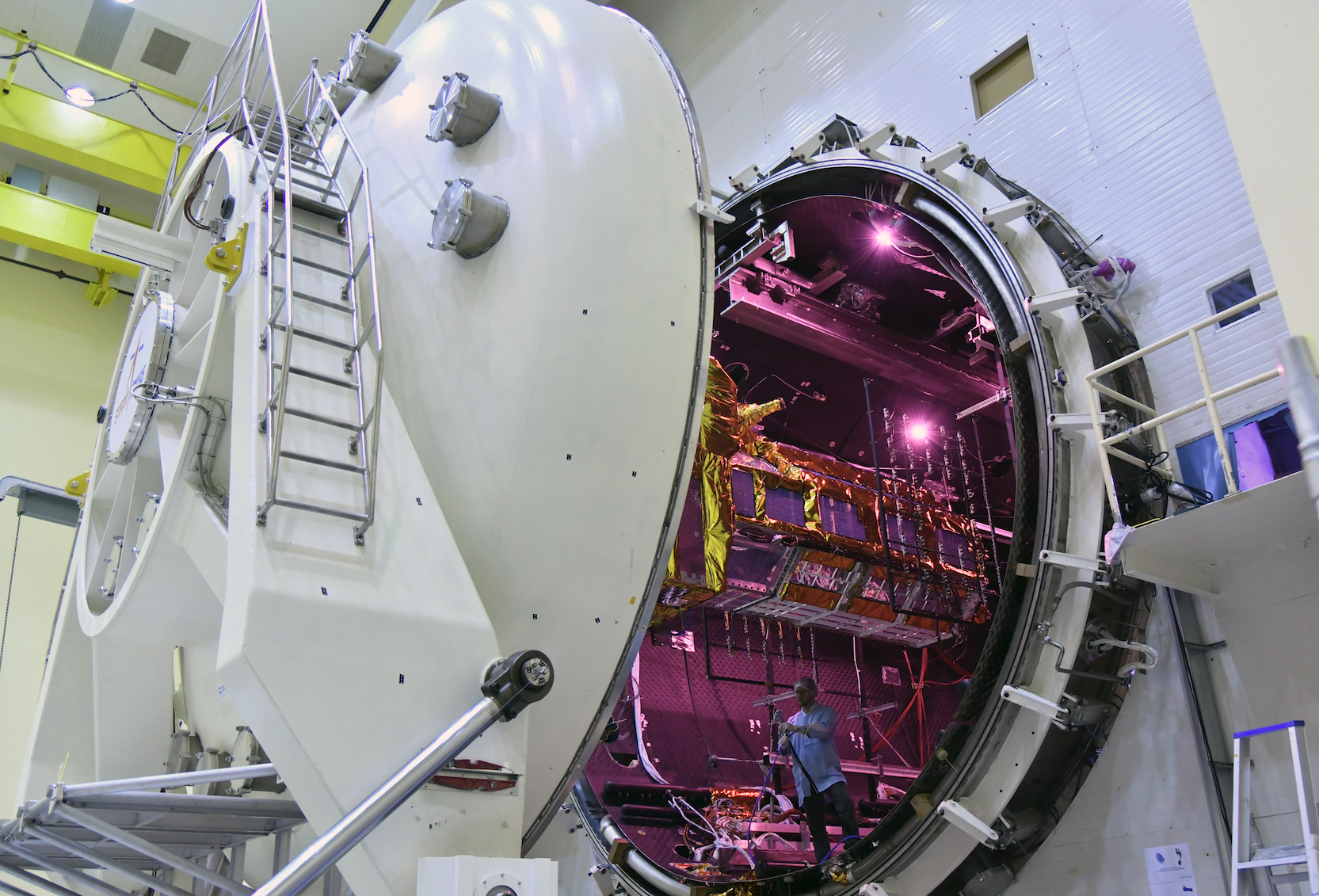
The NISAR satellite enters the thermal vacuum chamber at an ISRO facility in Bengaluru on Oct. 19. It emerged three weeks later having met all requirements of its performance under extreme temperatures and space-like vacuum.
ISRO

During three weeks in a thermal vacuum chamber in Bengaluru, India, the joint NASA-ISRO satellite demonstrated its hardiness in a harsh, space-like environment.

NISAR, the trailblazing Earth-observing radar satellite being developed by the United States and Indian space agencies, passed a major milestone on Nov. 13, emerging from a 21-day test aimed at evaluating its ability to function in the extreme temperatures and the vacuum of space.

Short for NASA-ISRO Synthetic Aperture Radar, NISAR is the first space hardware collaboration between NASA and the Indian Space Research Organisation, or ISRO, on an Earth-observing mission. Scheduled to launch in early 2024, the satellite will scan nearly all the planet’s land and ice twice every 12 days, monitoring the motion of those surfaces down to fractions of an inch. It will be able to observe movements from earthquakes, landslides, and volcanic activity and track dynamic changes in forests, wetlands, and agricultural lands.

The thermal vacuum test occurred at ISRO’s Satellite Integration and Test Establishment in the southern Indian city of Bengaluru. It’s one of a battery of tests the satellite will face leading to launch. Other tests will ensure it can withstand the shaking, vibration, and jostling that it will encounter during launch.

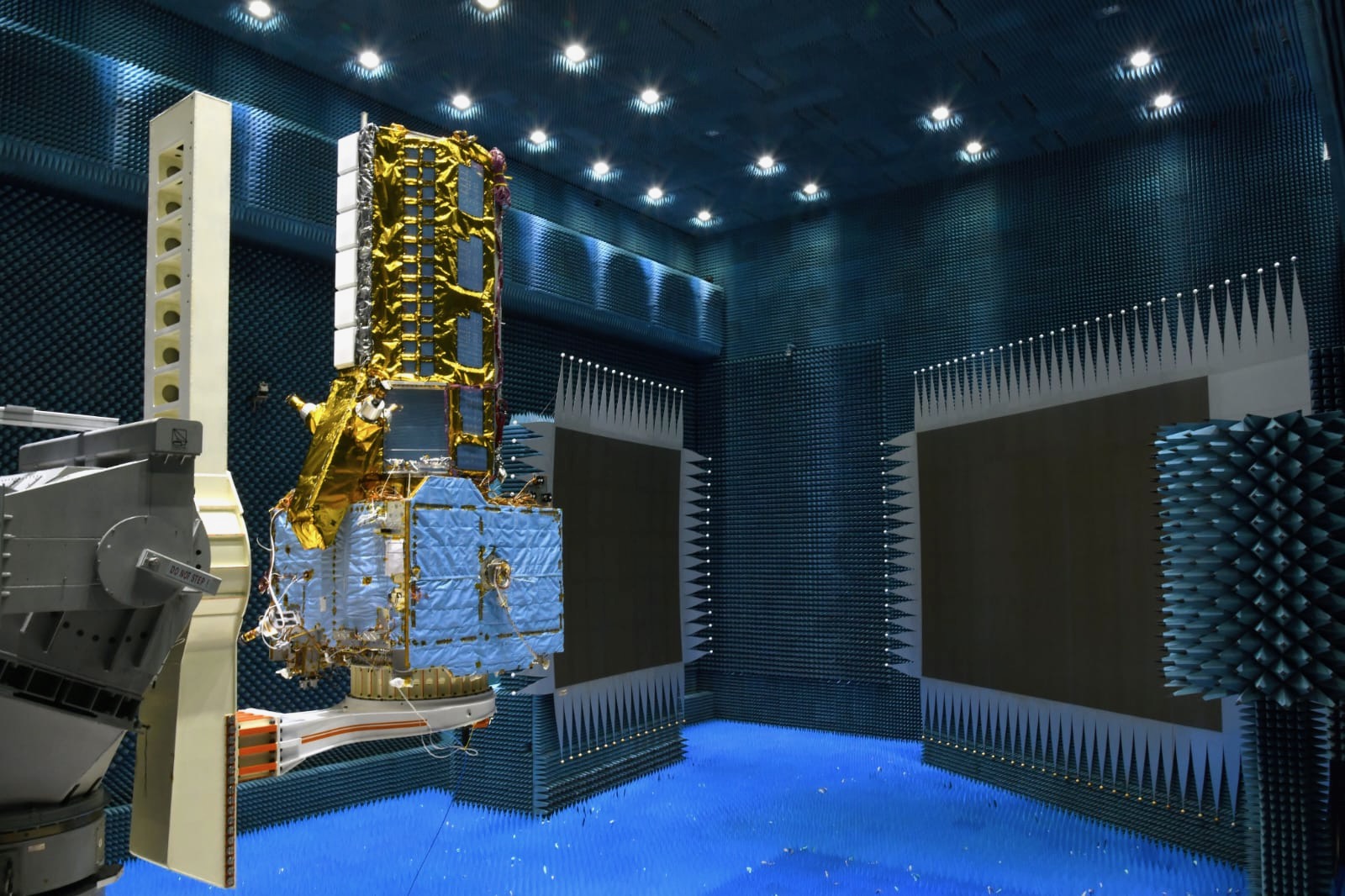
The NISAR satellite stayed in this ISRO antenna testing facility for 20 days in September as engineers evaluated the performance of its L- and S-band radar antennas. The foam spikes lining the walls, floor, and ceiling prevent radio waves from bouncing around the room and interfering with measurement.
ISRO

NISAR, partially covered in gold-hued thermal blanketing, entered the vacuum chamber on Oct. 19. Over the following week, engineers and technicians lowered the pressure to an infinitesimal fraction of the normal pressure at sea level. They also subjected the satellite to an 80-hour “cold soak” at 14 degrees Fahrenheit (minus 10 degrees Celsius), followed by an equally lengthy “hot soak” at up to 122 F (50 C). This simulates the temperature swings the spacecraft will experience as it is exposed to sunlight and darkness in orbit.

ISRO and JPL teams worked around the clock during the three-week period, testing the performance of the satellite’s thermal systems and its two primary science instrument systems – the L-band and S-band radars – under the most extreme temperature conditions they will experience in space.

This latest round of testing followed 20 days of testing in September in which engineers used ISRO’s compact antenna test facility to evaluate whether the radio signals from the two radar systems’ antennas passed requirements. Blue foam spikes lining the facility’s walls, floor, and ceiling prevent radio waves from bouncing around the room and interfering with measurement.

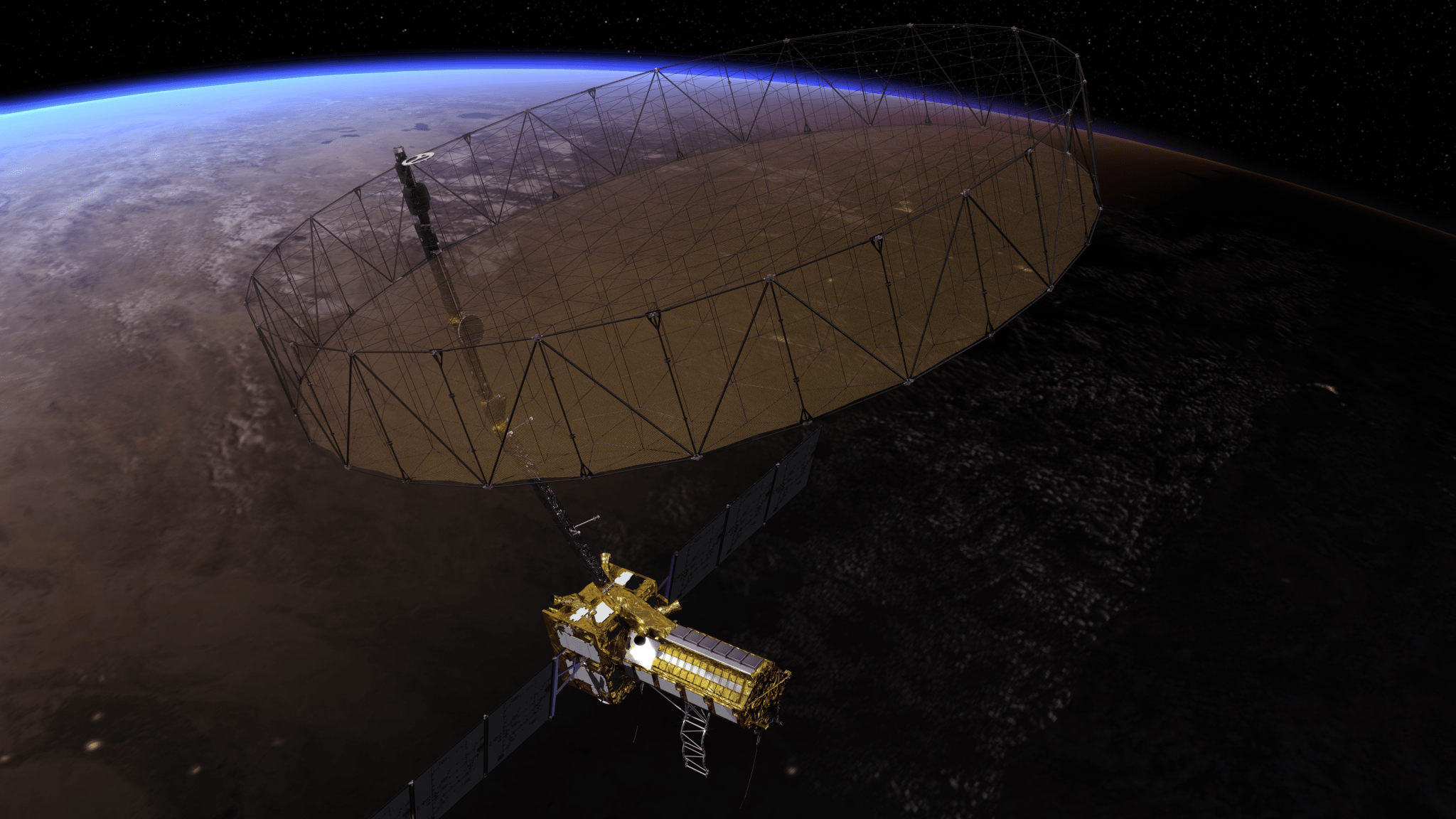
With thermal vacuum and compact antenna tests successfully done, NISAR will soon be fitted with its solar panels and its nearly 40-foot (12-meter) radar antenna reflector, which resembles a snare drum and will unfold in space at the end of a 30-foot (9-meter) boom extending from the spacecraft.

After it launches in early 2024, NISAR will scan nearly all of the planet’s land and ice twice every 12 days. In orbit, the satellite will extend its solar panels and nearly 40-foot (12-meter) radar antenna reflector, which resembles a snare drum and will unfold at the end of a 30-foot (9-meter) boom extending from the spacecraft.
NASA-JPL/Caltech

The satellite will undergo additional tests before being packed up and transported about 220 miles (350 kilometers) eastward to Satish Dhawan Space Centre, where it will be mounted atop ISRO’s Geosynchronous Satellite Launch Vehicle Mark II rocket and sent into low Earth orbit.

More About the Mission

NISAR is an equal collaboration between NASA and ISRO and marks the first time the two agencies have cooperated on hardware development for an Earth-observing mission. NASA’s Jet Propulsion Laboratory, which is managed for the agency by Caltech in Pasadena, California, leads the U.S. component of the project and is providing the mission’s L-band SAR. NASA is also providing the radar reflector antenna, the deployable boom, a high-rate communication subsystem for science data, GPS receivers, a solid-state recorder, and payload data subsystem. U R Rao Satellite Centre (URSC) in Bengaluru, which leads the ISRO component of the mission, is providing the spacecraft bus, the launch vehicle, and associated launch services and satellite mission operations. ISRO’s Space Applications Centre in Ahmedabad is providing the S-band SAR electronics.

To learn more about NISAR, visit:

https://nisar.jpl.nasa.gov/

News Media Contacts

Andrew Wang / Jane J. Lee
Jet Propulsion Laboratory, Pasadena, Calif.
626-379-6874 / 818-354-0307
andrew.wang@jpl.nasa.gov / jane.j.lee@jpl.nasa.gov

2023-167

Powered by WPeMatico

Get The Details…
Naomi Hartono