Deformable Mirrors in Space: Key Technology toDirectly Image Earth Twins

Deformable Mirrors in Space: Key Technology toDirectly Image Earth Twins
7 Min Read

Deformable Mirrors in Space: Key Technology toDirectly Image Earth Twins

The opening of a black cylinder surrounds a gold metallic square, which contains a circular, mirror-like structure.

PROJECT:

Deformable Mirror Technology development

SNAPSHOT

Deformable mirrors enable direct imaging of exoplanets by correcting imperfections or shape changes in a space telescope down to subatomic scales.


d

Finding and studying Earth-like planets orbiting nearby stars is critical to understand whether we are alone in the universe. To study such planets and assess if they can sustain life, it is necessary to directly image them. However, these planets are difficult to observe, since light from the host star hides them with its glare. A coronagraph instrument can be used to remove the glare light from the host star, enabling reflected light from the planet to be collected.  A deformable mirror is an essential component of a coronagraph, as it can correct the tiniest of imperfections in the telescope and remove any remaining starlight contamination.

Detecting an Earth-like planet poses significant challenges as the planet is approximately 10 billion times fainter than its parent star. The main challenge is to block nearly all of the star’s light so that the faint light reflected from the planet can be collected.  A coronagraph can block the starlight, however, any instability in the telescope’s optics—such as misalignment between mirrors or a change in the mirror’s shape—can result in starlight leakage, causing glare that hides the planet. Therefore, detecting an Earth-like planet using a coronagraph requires precise control of both the telescope and the instrument’s optical quality, or wavefront, to an extraordinary level of 10s of picometers (pm), which is approximately on the order of the size of a hydrogen atom.

Deformable mirrors will enable future space coronagraphs to achieve this level of control. These devices will be demonstrated in space on a coronagraph technology demonstration instrument on NASA’s Roman Space Telescope, which will launch by May 2027. This technology will also be critical to enable a future flagship mission after Roman recommended by the 2020 Decadal Survey in Astronomy and Astrophysics, provisionally called the “Habitable Worlds Observatory” (HWO). 

What is a deformable mirror and how do they work?

Deformable Mirrors (DM) are devices that can adjust the optical path of incoming light by changing the shape of a reflective mirror using precisely controlled piston-like actuators. By adjusting the shape of the mirror, it is possible to correct the wavefront that is perturbated by optical aberrations upstream and downstream of the DM. These aberrations can be caused by external perturbations, like atmospheric turbulence, or by optical misalignments or defects internal to the telescope.

DM technology originated to enable adaptive optics (AO) in ground-based telescopes, where the primary goal is to correct the aberrations caused by atmospheric turbulence. The main characteristics of a DM are: 1) the number of actuators, which is proportional to the correctable field of view; 2) the actuators’ maximum stroke – i.e., how far they can move; 3) the DM speed, or time required to modify the DM surface; 4) the surface height resolution that defines the smallest wavefront control step, and (5) the stability of the DM surface.

Ground-based deformable mirrors have set the state-of-the-art in performance, but to lay the groundwork to eventually achieve ambitious goals like the Habitable Worlds Observatory, further development of DMs for use in space is underway.

For a space telescope, DMs do not need to correct for the atmosphere, but instead must correct the very small optical perturbations that slowly occur as the space telescope and instrument heat up and cool down in orbit. Contrast goals (the brightness difference between the planet and the star) for DMs in space are on the order of 10-10 which is 1000 times deeper than the contrast goals of ground-based counterparts. For space applications total stroke requirements are usually less than a micrometer; however, DM surface height resolution of ~10 pm and DM surface stability of ~10 pm/hour are the key and driving requirements.

Another key aspect is the increased number of actuators needed for both space- and ground-based applications.  Each actuator requires a high voltage connection (on the order of 100V) and fabricating a large number of connections creates an additional challenge.

Deformable Mirror State-of-the-Art

Two main DM actuator technologies are currently being considered for space missions. The first is electrostrictive technology, in which an actuator is mechanically connected to the DM’s reflective surface. When a voltage is applied to the actuator, it contracts and modifies the mirror surface. The second technology is the electrostatically-forced Micro Electro-Mechanical System (MEMS) DM. In this case, the mirror surface is deformed by an electrostatic force between an electrode and the mirror.

Several NASA-sponsored contractor teams are working on advancing the DM performance required to meet the requirements of future NASA missions, which are much more stringent than most commercial applications, and thus, have a limited market application. Some examples of those efforts include improving the mirror’s surface quality or developing more advanced DM electronics.

MEMS DMs manufactured by Boston Micromachines Corporation (BMC) have been tested in vacuum conditions and have undergone launch vibration testing. The largest space-qualified BMC device is the 2k DM (shown in Fig. 2), which has 50 actuators across its diameter (2040 actuators in total). Each actuator is only 400 microns across. The largest MEMS DM produced by BMC is the 4k DM, which has 64 actuators across its diameter (4096 actuators in total) and is used in the coronagraph instrument for the Gemini ground-based observatory. However, the 4k DM has not been qualified for space flight.
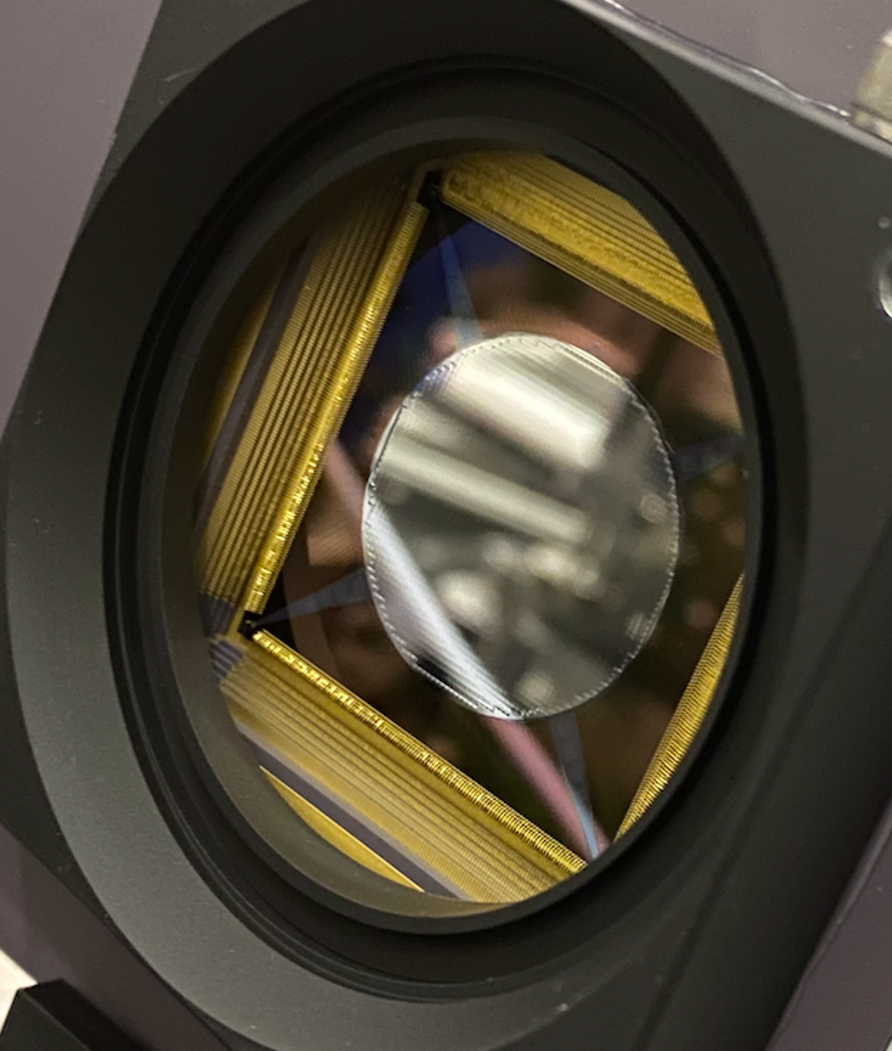
Fig. 2: The Boston Micromachines Corporation 2k DM that has 2040 actuators with 400 um pitch.
Credit: Dr. Eduardo Bendek

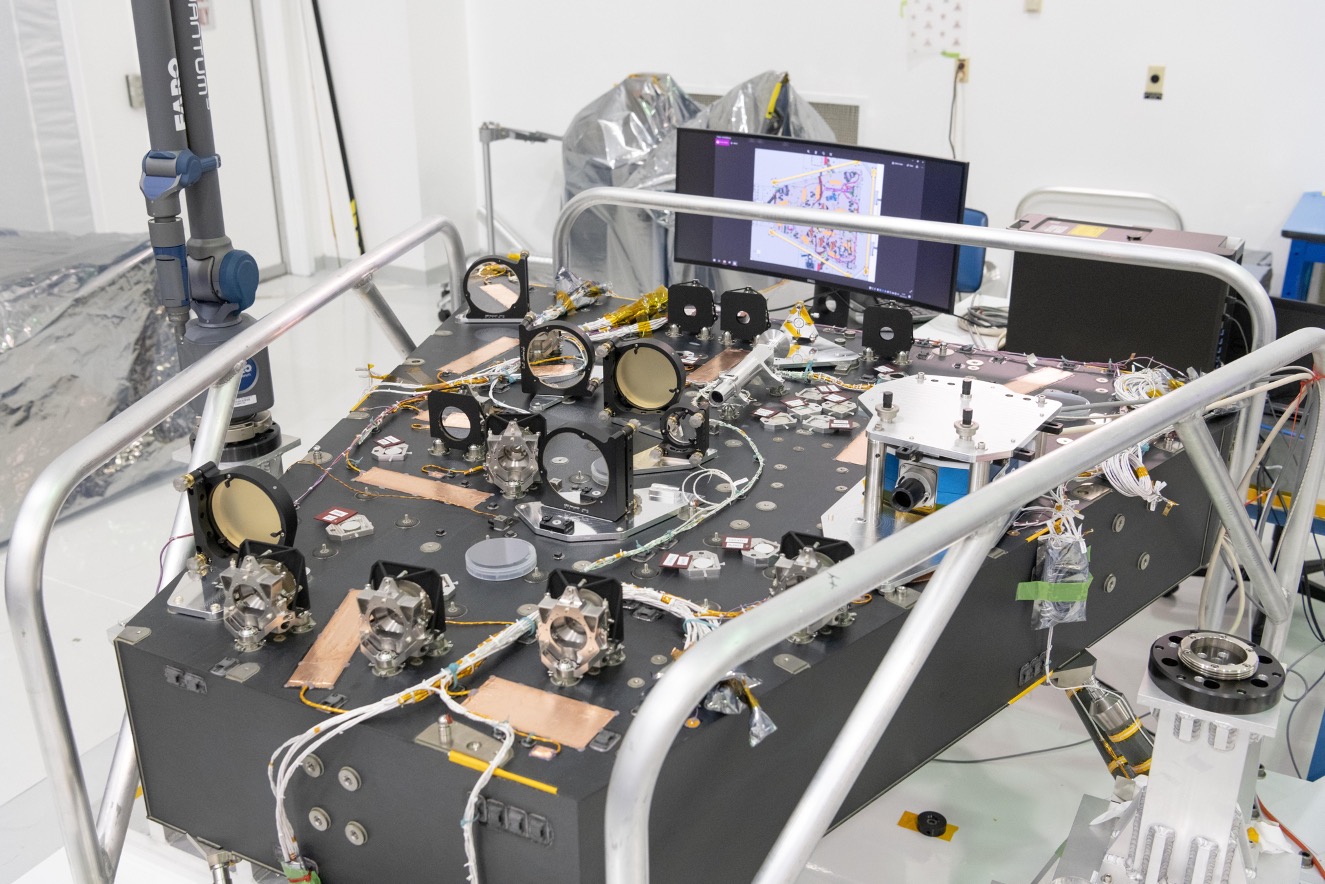
Electrostrictive DMs manufactured by AOA Xinetics (AOX) have also been validated in vacuum and qualified for space flight. The AOX 2k DM has a 48 x 48 actuator grid (2304 actuators) with a 1 mm pitch. Two of these AOX 2k DMs will be used in the Roman Space Telescope Coronagraph (Fig. 3) to demonstrate the DM technology for high-contrast imaging in space. AOX has also manufactured larger devices, including a 64 x 64 actuator unit tested at JPL.

A table-like structure supporting numerous circular devices, electronics, and wiring, surrounded by railings
Fig. 3: The Roman Space Telescope Coronagraph during assembly of the static optics at NASA’s Jet Propulsion Laboratory
Credit: NASA

Preparing the technology for the Habitable Worlds Observatory

Deformable Mirror technology has advanced rapidly, and a version of this technology will be demonstrated in space on the Roman Space Telescope. However, it is anticipated that for wavefront control for missions like the HWO, even larger DMs with up to ~10,000 actuators would be required, such as 96 x 96 arrays. Providing a high-voltage connection to each of the actuators is a challenge that will require a new design.

The HWO would also involve unprecedented wavefront control requirements, such as a resolution step size down to single-digit picometers, and a stability of ~10 pm/hr. These requirements will not only drive the DM design, but also the electronics that control the DMs, since the resolution and stability are largely defined by the command signals sent by the controller, which require the implementation of filters to remove any noise the electronics could introduce.

NASA’s Astrophysics Division investments in DM technologies have advanced DMs for space flight onboard the Roman Space Telescope Coronagraph, and the Division is preparing a Technology Roadmap to further advance the DM performance to enable the HWO.

Author: Eduardo Bendek, Ph.D. Jet Propulsion Laboratory, California Institute of Technology.

The research was carried out at the Jet Propulsion Laboratory, California Institute of Technology, under a contract with the National Aeronautics and Space Administration (80NM0018D0004).

ACTIVITY LEADS

Dr. Eduardo Bendek (JPL) and Dr. Tyler Groff (GSFC), Co-chairs of DM Technology Roadmap working group; Paul Bierden (BMC); Kevin King (AOX).

SPONSORING ORGANIZATION

Astrophysics Division Strategic Astrophysics Technology (SAT) Program, and the NASA Small Business Innovation Research (SBIR) Program

Share

Details

Last Updated

Nov 20, 2023

Powered by WPeMatico

Get The Details…

NASA One Step Closer to Fueling Space Missions with Plutonium-238

NASA One Step Closer to Fueling Space Missions with Plutonium-238

2 min read

NASA One Step Closer to Fueling Space Missions with Plutonium-238

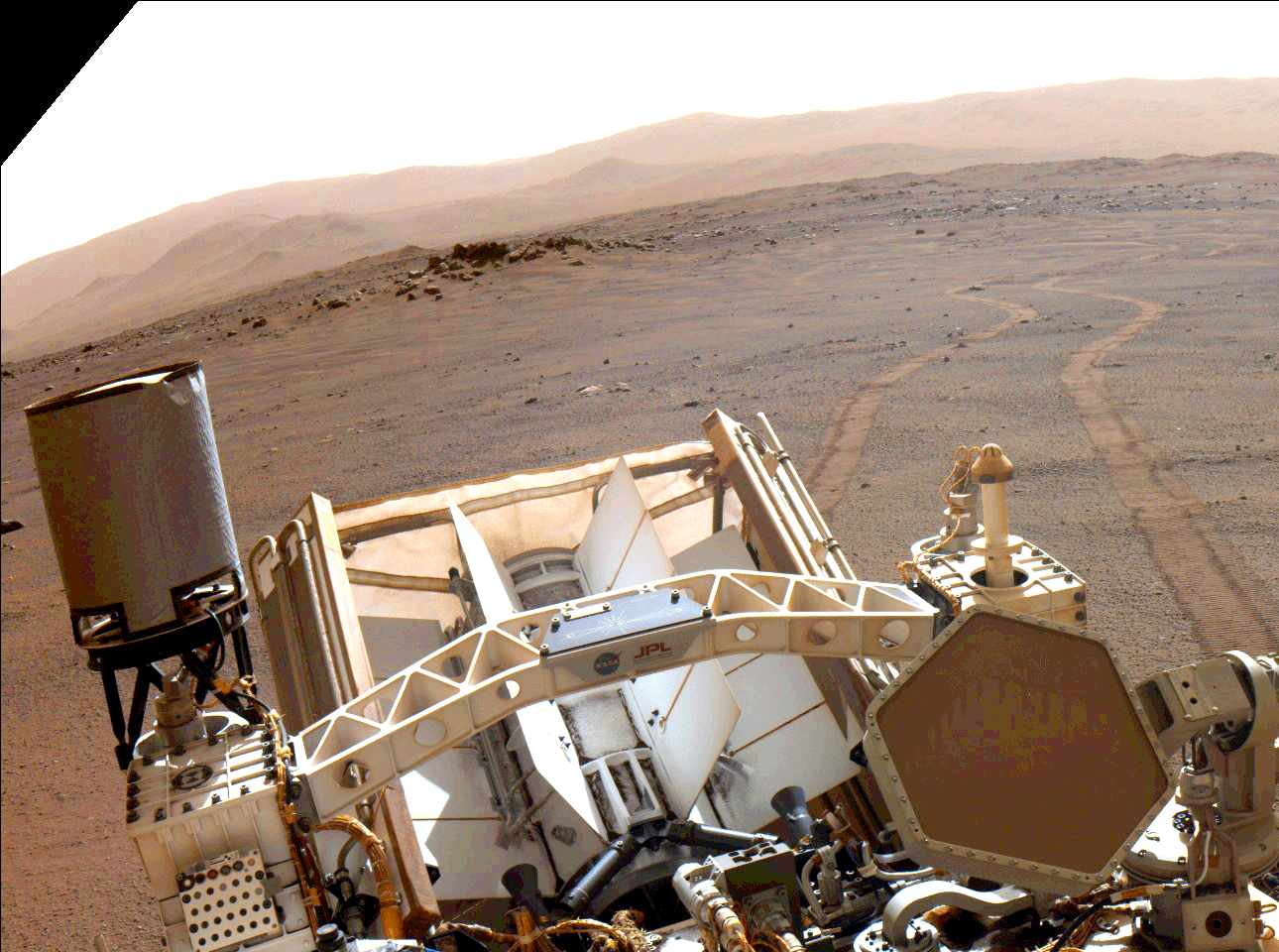
A close-up view of the Multi-Mission Radioisotope Power System on the back end of the Perseverance rover. The rover’s tracks snake through the Martian sand toward a clay-colored mountain range.
Close-up of NASA’s Perseverance Mars rover as it looks back at its wheel tracks on March 17, 2022, the 381st Martian day, or sol, of the mission.

Credit: NASA

The recent shipment of heat source plutonium-238 from the U.S. Department of Energy’s (DOE’s) Oak Ridge National Laboratory to its Los Alamos National Laboratory is a critical step toward fueling planned NASA missions with radioisotope power systems.

This shipment of 0.5 kilograms (a little over 1 pound) of new heat source plutonium oxide is the largest since the domestic restart of plutonium-238 production over a decade ago. It marks a significant milestone toward achieving the constant rate production average target of 1.5 kilograms per year by 2026.

Radioisotope power systems, or RPS, enable exploration of some of the deepest, darkest, and most distant destinations in the solar system and beyond. RPS use the natural decay of the radioisotope plutonium-238 to provide heat to a spacecraft in the form of a Light Weight Radioisotope Heater Unit (LWRHU), or heat and electricity in the form of a system such as the Multi-Mission Radioisotope Thermoelectric Generator (MMRTG).

The DOE has produced the heat source plutonium oxide required to fuel the RPS for missions such as NASA’s Mars 2020. The first spacecraft to benefit from this restart, the Perseverance rover, carries some of the new plutonium produced by DOE. An MMRTG continuously provides the car-sized rover with heat and about 110 watts of electricity, enabling the exploration of the Martian surface and the gathering of soil samples for possible retrieval.

“NASA’s Radioisotope Power Systems Program works in partnership with the Department of Energy to enable missions to operate in some of the most extreme environments in our solar system and interstellar space,” said Carl Sandifer, RPS program manager at NASA’s Glenn Research Center in Cleveland.

For over sixty years, the United States has employed radioisotope-based electrical power systems and heater units in space. Three dozen missions have explored space for decades using the reliable electricity and heat provided by RPS.

NASA and DOE are continuing their long-standing partnership to ensure the nation can enable future missions requiring radioisotopes for decades to come.

Powered by WPeMatico

Get The Details…
Kelly M. Matter

Crew Studies Biology and Works in Dragon as Station Turns 25

Crew Studies Biology and Works in Dragon as Station Turns 25

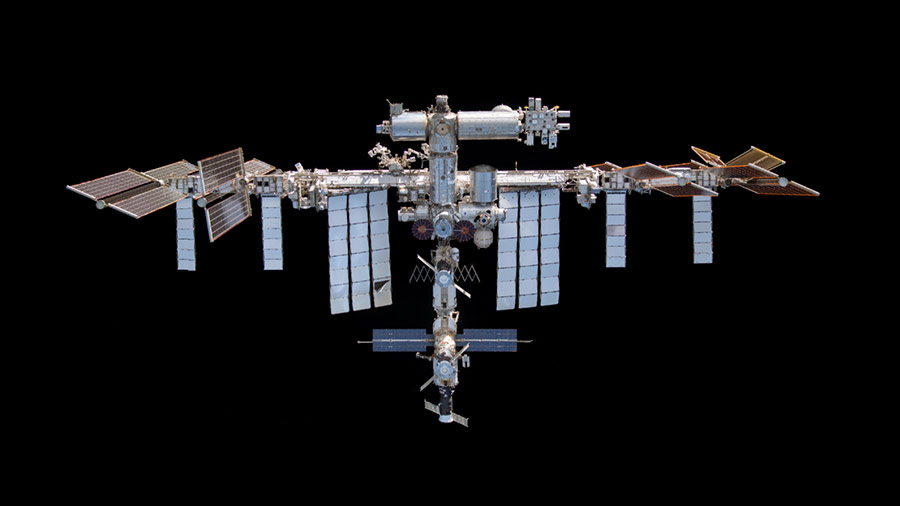
The space station is pictured from the SpaceX Crew Dragon Endeavour during its departure and flyaround on Nov. 8, 2021.

Space biology and Dragon work were the top duties at the beginning of the week for the Expedition 70 crew. The International Space Station also turned 25 years old today with its first module having orbited Earth since 1998.

Eye scans were on the biomedical research schedule for four astronauts on Monday afternoon. Commander Andreas Mogensen kicked off the exams activating the Ultrasound 2 device then setting up communications gear allowing doctors on the ground to remotely monitor the activities. Mogensen from ESA (European Space Agency) then took turns with flight engineers Loral O’Hara, Jasmin Moghbeli, and Satoshi Furukawa in the Columbus laboratory module participating in the regularly scheduled eye exams.

Mogensen partnered with Moghbeli from NASA at the end of the day and practiced SpaceX Dragon Endurance undocking and landing procedures on the crew spacecraft’s computers. Mogensen earlier unpacked medical supply kits from Endurance and stowed them inside the orbital outpost. O’Hara from NASA and Furukawa from JAXA (Japan Aerospace Exploration Agency) worked inside Endurance as well configuring orbital plumbing gear in the vehicle that has been docked to the station since Aug. 27.

O’Hara later worked on a space botany study to promote STEM (Science, Technology, Engineering, and Math) education among tribal members. Five varieties of seeds provided by the Choctaw Nation of Oklahoma are exposed to microgravity for several months then returned to Earth and planted next to the same seeds left on Earth for comparison. Furukawa turned off a microscope in the Kibo laboratory module and removed samples for a study that was observing how cells sense gravity or the lack gravity. He then stayed in Kibo setting up research hardware and connecting an incubator for an upcoming experiment to observe stem cell growth that may support regenerative medicine technology.

In the Roscosmos segment of the space station, veteran cosmonaut Oleg Kononenko spent the day inside the Nauka science module checking its airlock, ventilation, and docking systems. Flight Engineer Nikolai Chub attached sensors to himself monitoring his cardiac activity then cleaned air ducts inside the Nauka and Poisk modules. Flight Engineer Konstantin Borisov wore a sensor-packed cap that recorded his responses while practicing futuristic planetary and robotic piloting techniques on a computer.

On Nov. 20, the International Space Station passes 25 years since the first module launched into orbit. The Zarya module lifted off in November 1998 from the Baikonur Cosmodrome in Kazakhstan and would shortly be joined by the Unity module less than a month later. Through this global endeavor, 273 people from 21 countries now have visited the unique microgravity laboratory that has hosted more than 3,000 research and educational investigations from people in 108 countries and areas.


Learn more about station activities by following the space station blog@space_station and @ISS_Research on X, as well as the ISS Facebook and ISS Instagram accounts.

Get weekly video highlights at: https://roundupreads.jsc.nasa.gov/videoupdate/

Get the latest from NASA delivered every week. Subscribe here: www.nasa.gov/subscribe

Powered by WPeMatico

Get The Details…

Mark Garcia

NASA to Talk Science Highlights of First Artemis Robotic Moon Landing

NASA to Talk Science Highlights of First Artemis Robotic Moon Landing

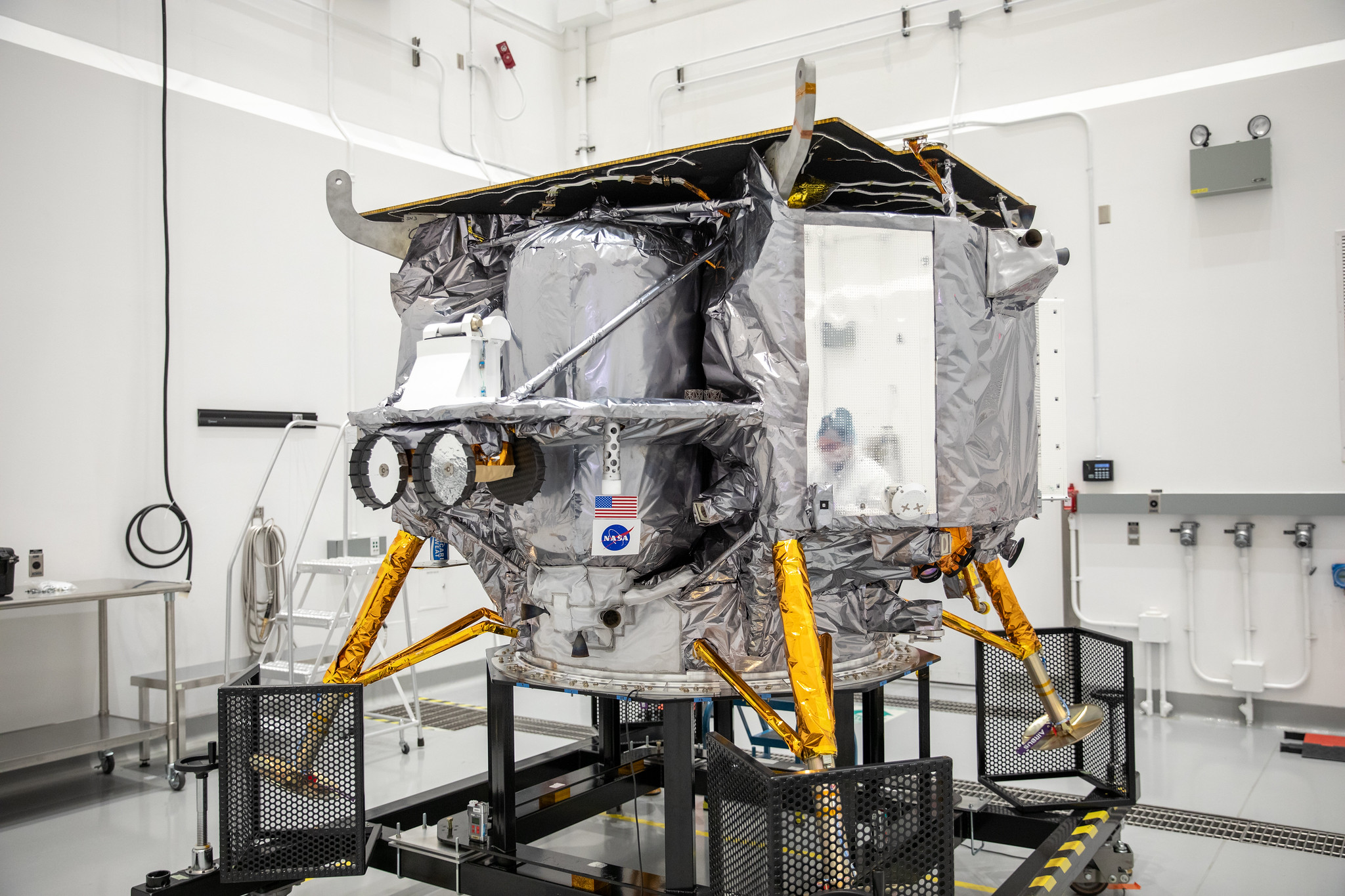
Teams with Astrobotic install the NASA meatball decal on Astrobotic’s Peregrine lunar lander on Tuesday, Nov. 14, 2023, at the Astrotech Space Operations Facility near the agency’s Kennedy Space Center in Florida.
NASA/Isaac Watson

NASA will host a What’s on Board media teleconference at 2 p.m. EST Wednesday, Nov. 29, to discuss the science payloads flying aboard the first commercial robotic flight to the lunar surface as part of the agency’s CLPS (Commercial Lunar Payload Services) initiative under the Artemis program.

Carrying NASA and commercial payloads to the Moon, Astrobotic Technologies will launch its Peregrine lander on ULA’s (United Launch Alliance) Vulcan rocket. Liftoff of the ULA Vulcan rocket is targeted no earlier than Sunday, Dec. 24, from Launch Complex 41 at Cape Canaveral Space Force Station in Florida. The Peregrine lunar lander will touch down on the Moon in early 2024.

Audio of the call will stream on the agency’s website at:

https://www.nasa.gov/nasatv

Briefing participants include:

  • Joel Kearns, deputy associate administrator for Exploration, Science Mission Directorate, NASA Headquarters in Washington
  • Ryan Watkins, program scientist, Exploration Science Strategy and Integration Office, NASA Headquarters
  • Chris Culbert, program manager, CLPS, NASA’s Johnson Space Center in Houston
  • John Thornton, CEO, Astrobotic, Pittsburgh

To participate by telephone, media must RSVP no later than two hours before the briefing to: ksc-newsroom@mail.nasa.gov.

NASA awarded a task order for the delivery of scientific payloads to Astrobotic in May 2019. Among the items on its lander, the Peregrine Mission One will carry NASA payloads investigating the lunar exosphere, thermal properties of the lunar regolith, hydrogen abundances in the soil at the landing site, and magnetic fields, as well as radiation environment monitoring. 

Through Artemis, NASA is working with multiple CLPS vendors to establish a regular cadence of payload deliveries to the Moon to perform experiments, test technologies, and demonstrate capabilities to help NASA explore the lunar surface. This pool of companies may bid on task orders to deliver NASA payloads to the Moon. Task orders include payload integration and operations, launching from Earth, and landing on the surface of the Moon. The indefinite delivery, indefinite quantity CLPS contracts have a cumulative maximum value of $2.6 billion through 2028.

With CLPS, as well as with human exploration near the lunar South Pole, NASA will establish a long-term cadence of Moon missions in preparation for sending the first astronauts to Mars.

For more Artemis updates, follow along at:

https://blogs.nasa.gov/artemis/

-end-

Karen Fox / Alise Fisher
Headquarters, Washington
202-358-1600 / 202-358-2546
karen.fox@nasa.gov / alise.m.fisher@nasa.gov

Nilufar Ramji
Johnson Space Center, Houston
281-483-5111
nilufar.ramji@nasa.gov

Antonia Jaramillo
Kennedy Space Center, Florida
321-501-8425
antonia.jaramillobotero@nasa.gov

Powered by WPeMatico

Get The Details…
Abbey A. Donaldson

PRIME-1 Simulation

PRIME-1 Simulation

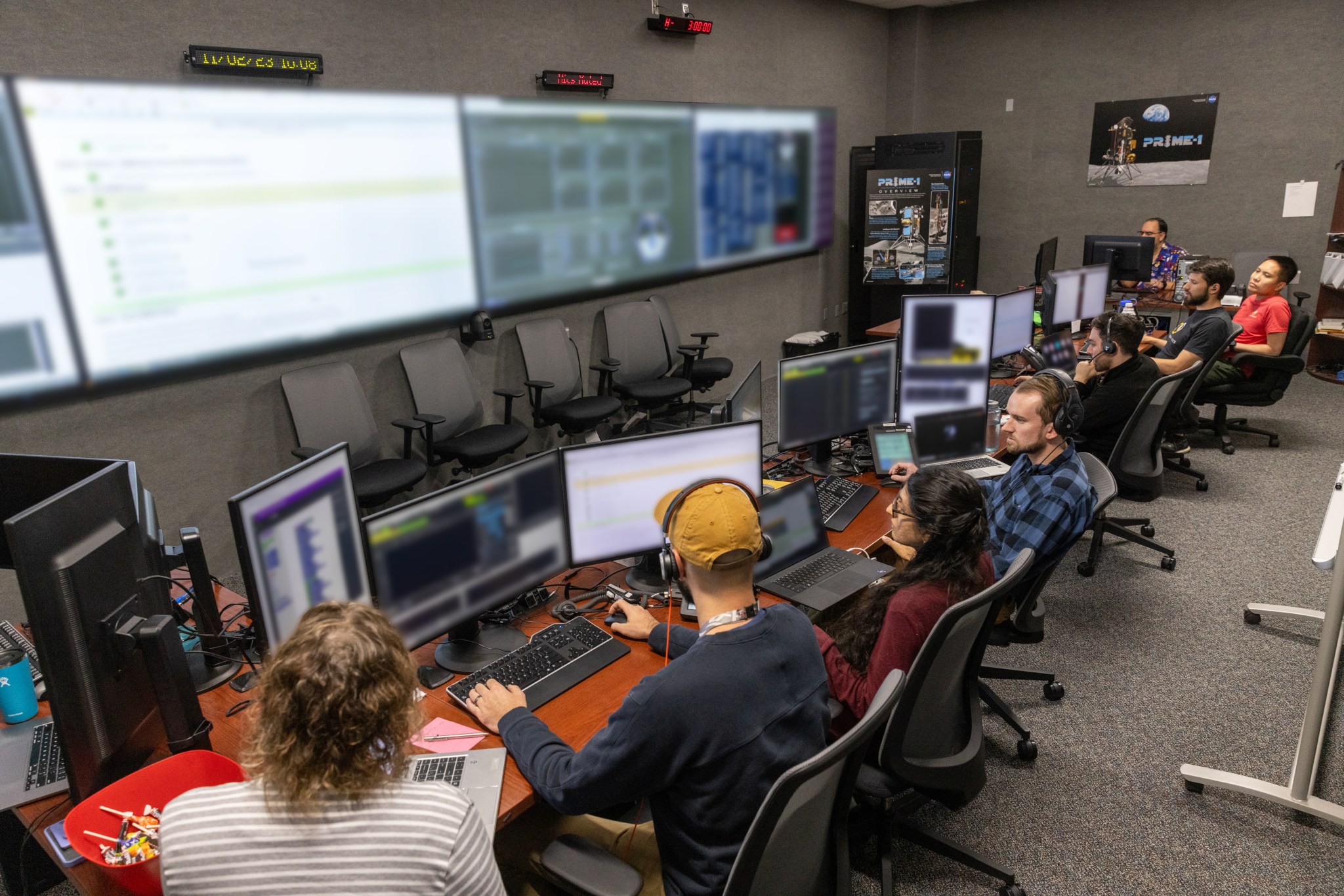
A team of engineers participates in simulation training for the Polar Resources Ice Mining Experiment-1 (PRIME-1) on Thursday, Nov. 2, 2023, inside the Neil Armstrong Operations and Checkout Building at NASA’s Kennedy Space Center in Florida.

A team of engineers participate in simulation training for the Polar Resources Ice Mining Experiment-1 (PRIME-1) on Thursday, Nov. 2, 2023, inside the Neil Armstrong Operations and Checkout Building at NASA’s Kennedy Space Center in Florida. The purpose of the training is to get the integrated PRIME-1 team – engineers with PRIME-1’s MSOLO (Mass Spectrometer Observing Lunar Operations) and Honeybee Robotics’ TRIDENT (The Regolith and Ice Drill for Exploring New Terrain) drill – prepared to operate the instrument on the lunar surface. The team commanded the PRIME-1 hardware, located at Intuitive Machines in Houston, to operate MSOLO and TRIDENT.

“While the MSOLO and TRIDENT teams have been independently training extensively, it’s exciting to have both teams in the room together operating our hardware concurrently,” said Pri Johnson, one of the MSOLO systems engineers. “There’s a tangible energy in the room this week as we all work together for this mission simulation. It all started to feel very real!”

PRIME-1 is scheduled to launch through NASA’s CLPS (Commercial Lunar Payload Delivery Service) initiative and will be the first in-situ resource utilization demonstration on the Moon, with MSOLO and TRIDENT making up its two primary components. Through Artemis missions, CLPS deliveries will be used to perform science experiments, test technologies, and demonstrate capabilities to help NASA explore the Moon and prepare for human deep space exploration missions.

Photo credit: NASA/Frank Michaux

Powered by WPeMatico

Get The Details…
Jason Costa