NASA Releases Its First International Space Station Tour in Spanish

NASA Releases Its First International Space Station Tour in Spanish

Lee esta nota de prensa en español aquí.

Record-breaking NASA astronaut Frank Rubio provides the agency’s first Spanish-language video tour of humanity’s home in space – the International Space Station.

Rubio welcomes the public aboard the microgravity science laboratory in a behind-the-scenes look at living and working in space recorded during his 371-day mission aboard the space station, the longest single spaceflight in history by an American.

The station tour is available to watch on the agency’s NASA+ streaming platform, NASA app, NASA Television, YouTube, and the agency’s website.

Continuously inhabited for more than 23 years, the space station is a scientific platform where crew members conduct experiments across multiple disciplines of research, including Earth and space science, biology, human physiology, physical sciences, and technology demonstrations that could not be performed on Earth.

The crew living aboard the station are the hands of thousands of researchers on the ground conducting more than 3,300 experiments in microgravity. During his record-breaking mission, Rubio spent many hours contributing to scientific activities aboard the orbiting laboratory, conducting everything from human health studies to plant research.

Rubio returned to Earth in September, having completed approximately 5,936 orbits of the Earth and a journey of more than 157 million miles during his first spaceflight, roughly the equivalent of 328 trips to the Moon and back.

Get the latest NASA space station news, images and features on Instagram, Facebook, and X.

Keep up with the International Space Station, its research, and crew at:

https://www.nasa.gov/station

-end-

María José Viñas
Headquarters, Washington
240-458-0248
maria-jose.vinasgarcia@nasa.gov

Chelsey Ballarte
Johnson Space Center, Houston
281-483-5111
chelsey.n.ballarte@nasa.gov

Powered by WPeMatico

Get The Details…
Abbey A. Donaldson
NASA Scientific Balloons Ready for Flights Over Antarctica

NASA Scientific Balloons Ready for Flights Over Antarctica

4 min read

NASA Scientific Balloons Ready for Flights Over Antarctica

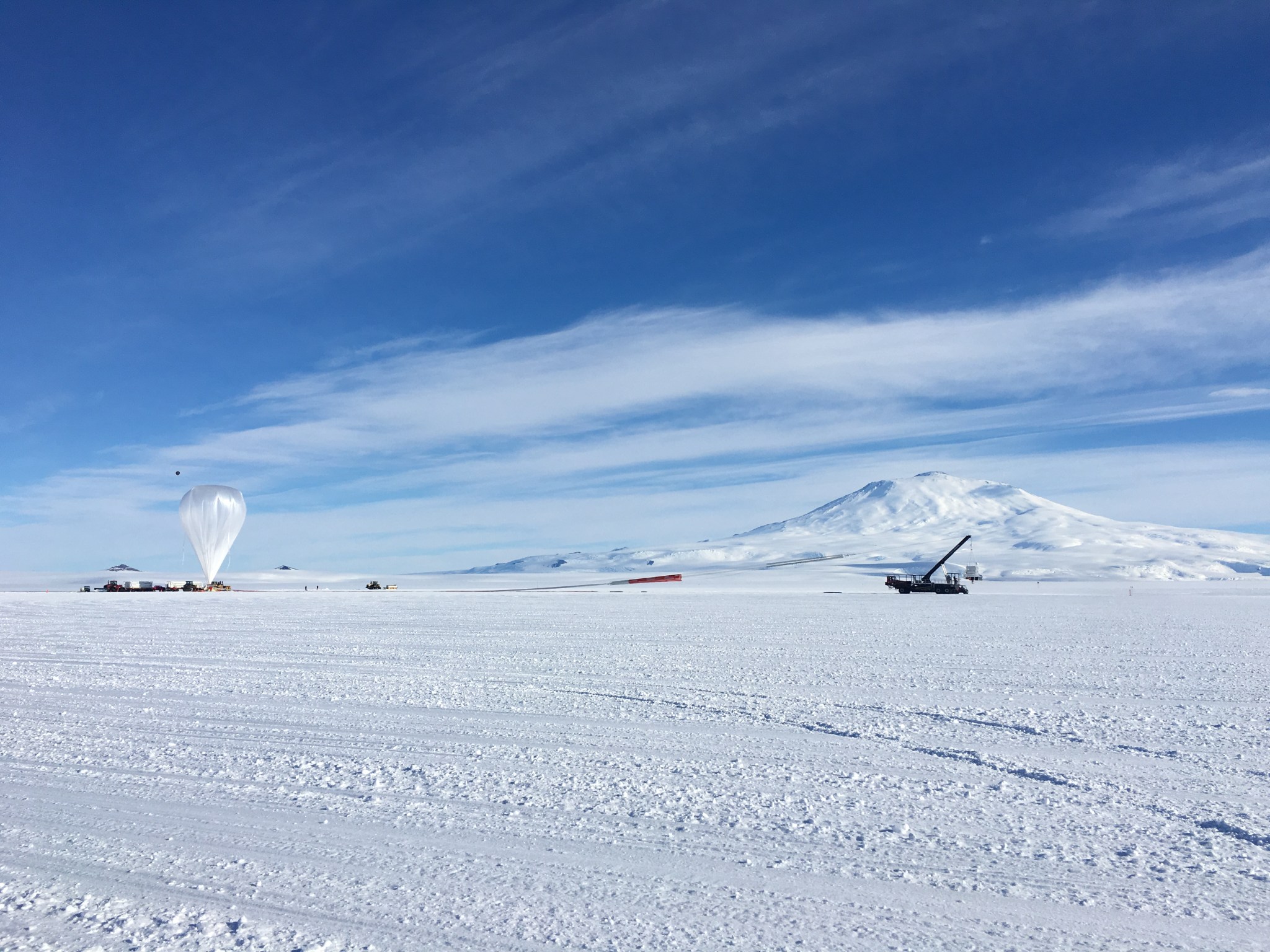
A scientific balloon being prepared for launch on a snowy landscape. The balloon is a clear plastic in the shape of an upside down tear drop. To the right is a large crane holding a square payload. The ground is completely covered in snow, and a snow-covered mountain is seen in the distance. The sky is bright blue with wispy clouds.
A scientific balloon payload is being prepared for launch in McMurdo Station, Antarctica.
NASA’s Wallops Flight Facility

NASA kicks off its annual Antarctic Long Duration Balloon Campaign around Dec. 1, which includes three scientific balloon flights planned for launch from the long-duration balloon (LDB) Camp near McMurdo Station, Antarctica. NASA’s stadium-sized, zero-pressure balloons will support a total of five missions on the long-duration flights with one mission vying to break NASA’s heavy-lift, long-duration balloon flight record, which stands at 55 days, 1 hour, and 34 minutes.

“The annual Antarctic long-duration balloon campaign is the program’s flagship event for long-duration missions,” said Andrew Hamilton, acting chief of NASA’s Balloon Program Office (BPO). “The environment and stratospheric wind conditions provide a unique and valuable opportunity to fly missions in a near-space environment for days or weeks at a time. The BPO team is excited to provide support to all our missions this year.”

Headlining this year’s campaign is the Galactic/Extragalactic ULDB Spectroscopic Terahertz Observatory (GUSTO) mission. This Astrophysics mission is managed by NASA’s Explorers Program Office at Goddard Space Flight Center. The mission is led by principal investigator Christopher Walker from the University of Arizona with support from the Johns Hopkins University Applied Physics Laboratory. GUSTO will aim for 55-plus days in flight above the southernmost hemisphere’s skies to map a large part of the Milky Way galaxy, including the galactic center, and the nearby Large Magellanic Cloud. The GUSTO telescope is equipped with very sensitive detectors for carbon, oxygen, and nitrogen emission lines. Measuring these emission lines will give the GUSTO team deep insight into the full lifecycle of the interstellar medium, the cosmic material found between stars. GUSTO’s science observations will be performed from Antarctica to allow for enough observation time aloft, access to astronomical objects, and solar power provided by the austral summer in the polar region.

Additional missions set to fly during the Antarctic LDB campaign include:

  • Anti-Electron Sub-Orbital Payload (AESOP-Lite): The mission, led by a team from the University of Delaware and University of California Santa Cruz, will measure cosmic-ray electrons and positrons. These electron measurements will be compared to Voyager I and II, which reached interstellar space and have been measuring cosmic ray electrons since 2012 and 2018, respectively. AESOP-Lite will fly on a 60 million cubic feet balloon, a test flight set to qualify the balloon for reaching altitudes greater than 150,000 feet, which is higher than NASA’s current stratospheric inventory.
  • Long durAtion evalUation solaR hand LAunch (LAURA): This engineering test flight, led by NASA’s Columbia Scientific Balloon Facility, will utilize solar panels to extend the science capability of the hand launch platform from a few days in flight to long-duration flights. Hand-launched balloons are about 40 times smaller in volume than the heavy-lift balloons and have limited time aloft due to the amount and weight of batteries used for powering the science and balloon instruments.
  • Anihala (Antarctic Infrasound Hand Launch): This piggyback payload on the AESOP-Lite launch, a cooperative mission between the Swedish Institute of Space Physics and Sandia National Lab, aims to measure natural background sound in the stratosphere over a continent where human-generated sound is largely absent.

Zero-pressure balloons feature open ducts that allow gas to escape and prevent an increase in pressure from inside the balloon. Gas expansion occurs as it heats during the balloon’s rise above Earth’s surface or by temperature increases from a rising Sun. These balloons, which typically have a shorter flight duration due to the loss of gas from the cycle of day to night, can only fly long-duration missions during the constant daylight of summer in polar regions, where the balloon stays in constant sunlight.

NASA’s Wallops Flight Facility in Virginia manages the agency’s scientific balloon flight program with 10 to 15 flights each year from launch sites worldwide. Peraton, which operates NASA’s Columbia Scientific Balloon Facility (CSBF) in Texas, provides mission planning, engineering services, and field operations for NASA’s scientific balloon program. The CSBF team has launched more than 1,700 scientific balloons over some 40 years of operations. NASA’s balloons are fabricated by Aerostar. The NASA Scientific Balloon Program is funded by the NASA Headquarters Science Mission Directorate Astrophysics Division.

For mission tracking, click here. For more information on NASA’s Scientific Balloon Program, visit: https://www.nasa.gov/scientificballoons.

Share

Details

Last Updated

Nov 27, 2023

Editor

Olivia F. Littleton

Contact

Olivia F. Littleton
olivia.f.littleton@nasa.gov

Location

Wallops Flight Facility

Powered by WPeMatico

Get The Details…
Olivia F. Littleton

NASA Administrator to Travel to India, UAE; Discuss Space Cooperation

NASA Administrator to Travel to India, UAE; Discuss Space Cooperation

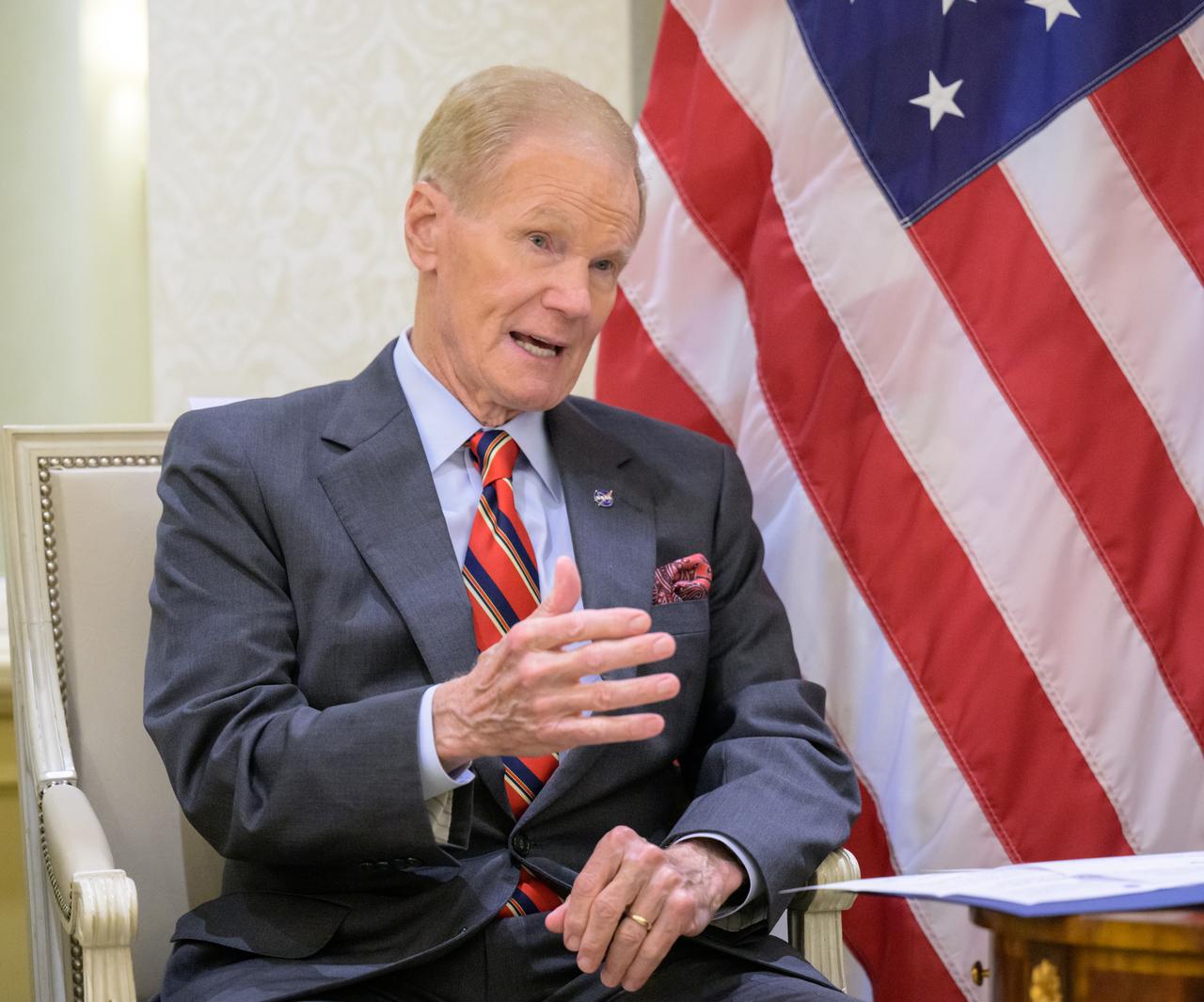
NASA Administrator Bill Nelson gives remarks after Indian Ambassador to the United States Taranjit Sandhu signed the Artemis Accords, Wednesday, June 21, 2023, at the Willard InterContinental Hotel in Washington.
NASA/Bill Ingalls

NASA Administrator Bill Nelson will travel to India and the United Arab Emirates (UAE) for a series of meetings beginning Monday, Nov. 27, with key government officials.

Nelson also will meet with space officials in both countries to deepen bilateral cooperation across a broad range of innovation and research-related areas, especially in human exploration and Earth science.

The visit to India fulfills a commitment through the United States and India initiative on Critical and Emerging Technology spearheaded by President Joe Biden. Nelson will visit several locations in India, including the Bengaluru-based facilities where the NISAR spacecraft, a joint Earth-observing mission between NASA and the Indian Space Research Organization (ISRO), is undergoing testing and integration for launch in 2024. NISAR is short for NASA ISRO Synthetic Aperture Radar.

As the first satellite mission between NASA and ISRO, NISAR is a revolutionary Earth-observing instrument, the first in the Earth System Observatory, that will measure Earth’s changing ecosystems, dynamic surfaces, and ice masses providing information about biomass, natural hazards, sea level rise, and groundwater, key information to guide efforts related to climate change, hazard mitigation, agriculture, and more.

While in the UAE, Nelson will participate in the 2023 United Nations Climate Change Conference, highlighting NASA’s role as a global leader in providing decisionmakers with critical Earth-science data. It will be the first time a NASA administrator will have attended the conference.

Students in each country also will have the opportunity to meet with Nelson to discuss science, technology, engineering, and mathematics (STEM) education and their roles as members of the Artemis Generation.

For more information about NASA’s international partnerships, visit:

https://www.nasa.gov/oiir

-end-

Jackie McGuinness
Headquarters, Washington
202-358-1600
jackie.mcguinness@nasa.gov

Share

Details

Last Updated

Nov 24, 2023

Powered by WPeMatico

Get The Details…
Abbey A. Donaldson
Crew Continues Biology Research, Station Upkeep on Friday

Crew Continues Biology Research, Station Upkeep on Friday

An aurora dances in the horizon of Earth's atmosphere as city lights shine through clouds cast over Mongolia while the International Space Station orbited 263 miles above.
An aurora dances in the horizon of Earth’s atmosphere as city lights shine through clouds cast over Mongolia while the International Space Station orbited 263 miles above.

The Expedition 70 crew is back to work following yesterday’s off-duty day to observe the Thanksgiving holiday. After enjoying holiday treats like chocolate, duck, quail, seafood, pumpkin spice cappuccino and more, the seven International Space Station residents focused on space biology research and station upkeep on Friday.

In the morning, Flight Engineer Jasmin Moghbeli of NASA serviced components on the BioFabrication Facility (BFF), a 3D printer used to print organ-like tissues in microgravity. She then moved on to other space biology tasks, deploying the work volume in the Life Sciences Glovebox to culture cells for the Bacterial Adhesion and Corrosion investigation, a study that examines bacterial genes in microgravity and whether they can corrode various surfaces in the orbiting laboratory. Studies of the sort help researchers better understand the effectiveness of disinfection in extreme environments.

Commander Andreas Mogensen of ESA (European Space Agency) took over Moghbeli’s work on BFF, continuing to service components throughout the afternoon. Ahead of this task, he captured images of cells for the Cerebral Aging investigation, which may provide insights to scientists on Earth on accelerated aging symptoms.

Cargo transfers continued throughout Friday as Flight Engineer Loral O’Hara of NASA spent the morning unstowing items from the Dragon spacecraft that arrived to the station last week. In the afternoon, she completed some orbital plumbing, testing the tank capacity of the Brine Processor.

Flight Engineer Satoshi Furukawa of JAXA (Japan Aerospace Exploration Agency) was also tasked with orbital plumbing in the morning, setting up the drain in the wastewater processing system. Throughout the rest of the day, he continued with station upkeep, cleaning and inspecting hatches.

The Roscosmos trio living and working in microgravity—Flight Engineers Nikolai Chub, Oleg Kononenko, and Konstantin Borisov— spent Friday prepping the Progress 84 spacecraft ahead of its undocking from the Poisk module at 2:55 a.m. EST Wednesday, Nov. 29. Kononenko also powered up a 3D printer to demonstrate printing tools and parts in space.


Learn more about station activities by following the space station blog, @space_station and @ISS_Research on X, as well as the ISS Facebook and ISS Instagram accounts.

Get weekly video highlights at: https://roundupreads.jsc.nasa.gov/videoupdate/

Get the latest from NASA delivered every week. Subscribe here: www.nasa.gov/subscribe

Powered by WPeMatico

Get The Details…

Abby Graf