La NASA anticipa el primer vuelo del avión experimental X-59 para 2024 

La NASA anticipa el primer vuelo del avión experimental X-59 para 2024 

3 min read

Preparations for Next Moonwalk Simulations Underway (and Underwater)
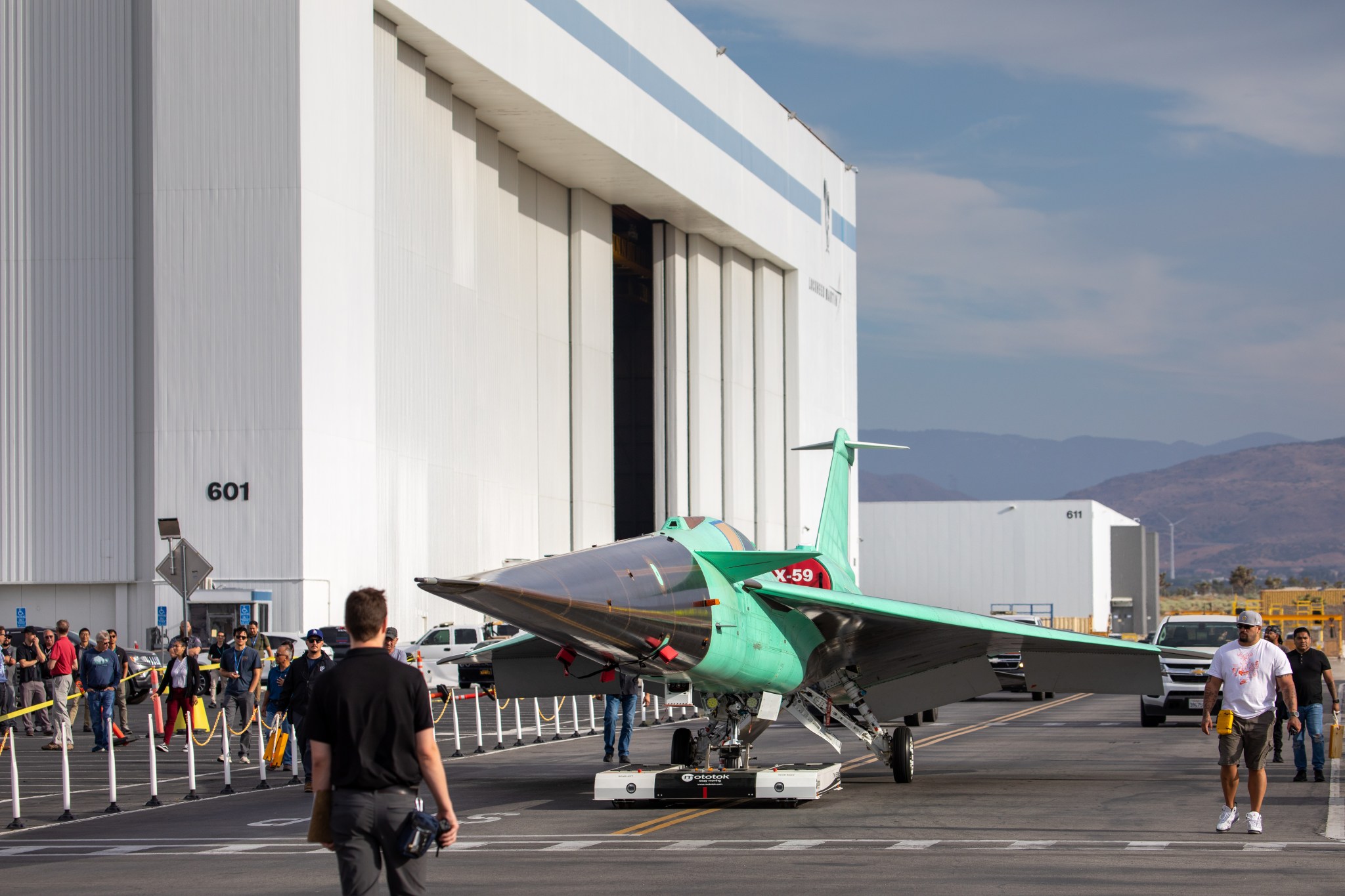
X-59 being moved from the construction site.
El avión de investigación X-59 de la NASA se trasladó de su lugar de construcción a la línea de vuelo -o el espacio entre el hangar y la pista- en Lockheed Martin Skunk Works, en Palmdale (California), el 16 de junio de 2023. El traslado permitió al equipo del X-59 realizar pruebas de seguridad y estructurales, pasos críticos hacia el primer vuelo.
Lockheed Martin

Lee esta historia en inglés aquí.

La misión Quesst de la NASA ha ajustado la fecha prevista para el primer vuelo de su avión supersónico silencioso X-59 a 2024. 

El X-59, un avión experimental único en su clase, ha requerido una compleja labor de ingeniería por parte de los investigadores de la NASA que trabajan con el contratista principal Lockheed Martin Skunk Works. Además del diseño de la aeronave, el X-59 también combina nueva tecnología con sistemas y componentes de múltiples aeronaves ya establecidas, como su tren de aterrizaje procedente de un F-16 y su sistema de soporte vital adaptado de un F-15.  

Para poder desarrollar esta aeronave única, el equipo de Quesst está trabajando en varios retos técnicos identificados a lo largo de 2023, cuando estaba previsto que el X-59 realizara su primer vuelo.  Se necesita más tiempo para integrar plenamente los sistemas en la aeronave y garantizar que funcionen juntos como se espera. El equipo también está resolviendo problemas intermitentes con algunos de los ordenadores redundantes de seguridad que controlan los sistemas de la aeronave. 

Quesst realizó progresos constantes hacia el vuelo durante el pasado año. El equipo dio los últimos toques a la estructura de la cola del X-59, lo que les permitió finalizar su cableado eléctrico y continuar con las pruebas críticas en tierra, y trasladarlo desde sus instalaciones de ensamblaje a la línea de vuelo para realizar pruebas estructurales. 

El X-59 demostrará la capacidad de volar supersónicamente, es decir, más rápido que la velocidad del sonido, mientras reduce el normalmente fuerte estallido sónico, a un golpe más leve o silencioso. La NASA tiene previsto volar el X-59 sobre varias comunidades para obtener datos sobre cómo notan los residentes el sonido que hace. La agencia facilitará esa información a los organismos reguladores estadounidenses e internacionales para que modifiquen las normas que actualmente prohíben los vuelos supersónicos comerciales sobre tierra. 

Las principales prioridades de la NASA para cualquier misión son la seguridad y garantizar el éxito. Para Quesst, eso significa no sólo estar seguro de que el X-59 es seguro antes de volar, sino seguro a largo plazo y confiable durante la fase de pruebas comunitarias. La aeronave está siendo examinada actualmente en pruebas integradas, que deben completarse antes de que vuele. En cuanto finalice esta fase, la aeronave continuará su viaje con una revisión de preparación para el vuelo, momento en el que la NASA tiene previsto publicar un calendario más específico para el primer vuelo. 

Quesst es una misión con el potencial de revolucionar los viajes de la aviación comercial al reducir drásticamente el tiempo de viaje. Un vuelo seguro y fiable del X-59 es fundamental para que la NASA consiga esos beneficios. La agencia está comprometida con un proceso exhaustivo de revisión y pruebas que redunde en el éxito de esa misión. 

Artículo Traducido por: Elena Aguirre 

Share

Details

Last Updated

Jan 03, 2024

Editor
Lillian Gipson
Contact
Jim Banke

Powered by WPeMatico

Get The Details…
Lillian Gipson
NASA Invites You to X-59 Rollout Watch Party

NASA Invites You to X-59 Rollout Watch Party

2 min read

Preparations for Next Moonwalk Simulations Underway (and Underwater)

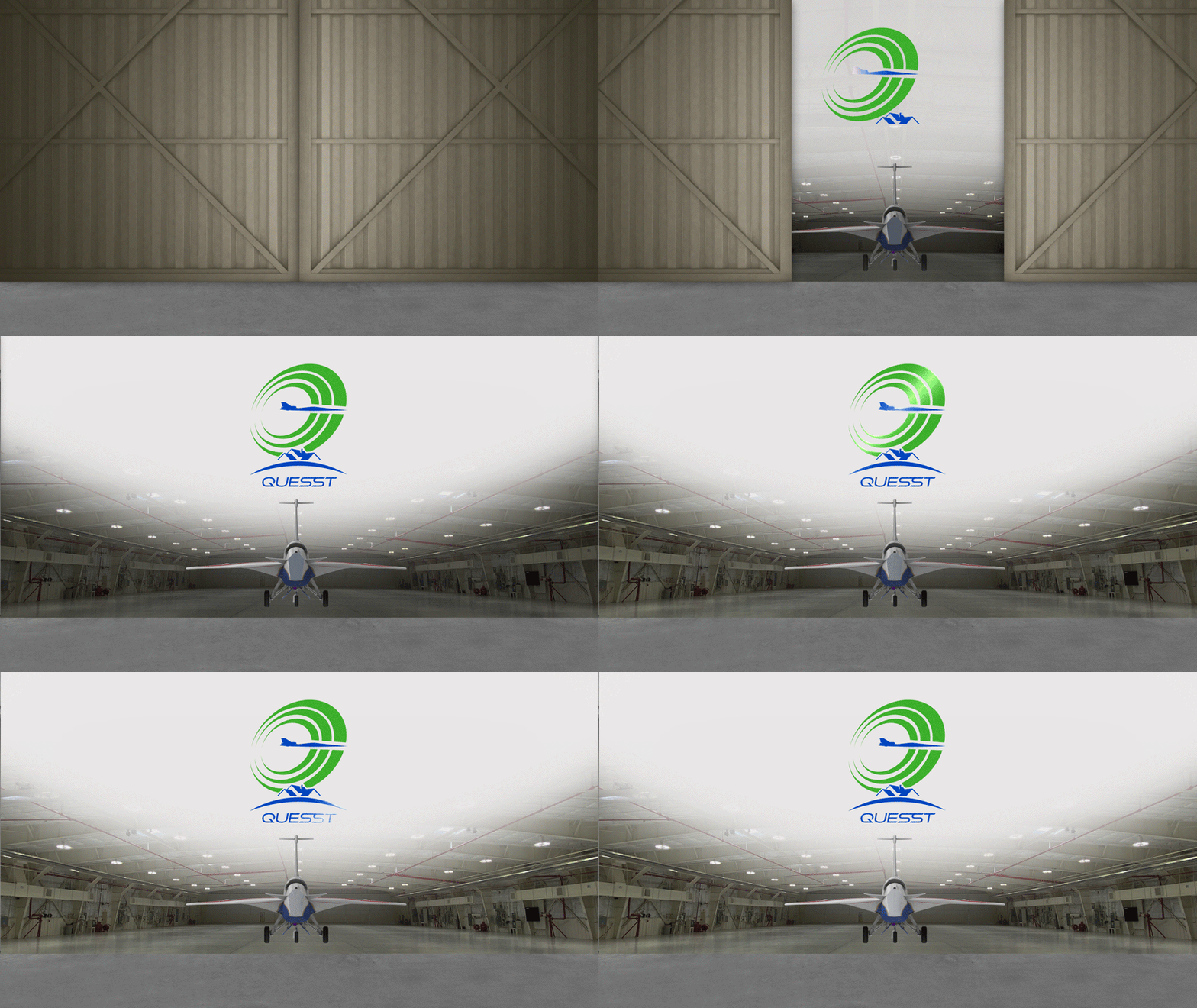
An animated gif of an artist illustration of the X-59 inside a hangar with the new Quesst mark above it.

It’s almost time for NASA’s supersonic X-59 airplane to make its red, white, and blue public debut, and you’re invited to join friends and family in taking a front-row, virtual VIP seat to the rollout ceremony in the California high desert.

As a historic milestone in aviation history, NASA is encouraging people across the nation and around the world to get together and celebrate the occasion by hosting a watch party to view the rollout festivities from their classrooms, homes, or anywhere else.

Although NASA won’t provide snacks and refreshments, the agency does have some ideas to help you host a successful watch party. They include printable invitations, links to STEM-related activities, and a complete X-59 Watch Party Planning Guide.

The centerpiece of NASA’s Quesst mission to study sound and help reduce the sonic boom made by supersonic flight to a sonic thump, the Lockheed Martin-built X-59 is scheduled to be rolled out from the company’s Skunk Works hangar in Palmdale, California on Jan. 12.

The X-59’s rollout ceremony will be broadcast live on the NASA+ streaming service beginning at 4 p.m. EST on Jan. 12, 2024. The event also will air live on the NASA app, YouTube, and on the agency’s website. Viewers can also learn how to stream NASA TV through a variety of platforms, including social media.

If you’re ready to commit to hosting an X-59 rollout ceremony watch party let us know and we’ll add your location to our world map, where a growing list of dozens of sites are already signed up.

All the details for signing up and more are available on our Watch Party web page

About the Author

Jim Banke

Jim Banke

Managing Editor/Senior Writer

Jim Banke is a veteran aviation and aerospace communicator with more than 35 years of experience as a writer, producer, consultant, and project manager based at Cape Canaveral, Florida. He is part of NASA Aeronautics’ Strategic Communications Team and is Managing Editor for the Aeronautics topic on the NASA website.

Powered by WPeMatico

Get The Details…
Jim Banke

Crew Members Kick-Start New Year with Ongoing Science and Maintenance

Crew Members Kick-Start New Year with Ongoing Science and Maintenance

Four Expedition 70 crew members share new year's remarks. From left, Commander Andreas Mogensen of ESA, Flight Engineer Jasmin Moghbeli of NASA, Flight Engineer Satoshi Furukawa of JAXA, and Flight Engineer Loral O'Hara of NASA. Credits: NASA
Four Expedition 70 crew members share new year’s remarks. From left, Commander Andreas Mogensen of ESA, Flight Engineer Jasmin Moghbeli of NASA, Flight Engineer Satoshi Furukawa of JAXA, and Flight Engineer Loral O’Hara of NASA. Credits: NASA

The seven-member Expedition 70 crew is back to work after Monday saw an off-duty day for the International Space Station residents. A variety of activities took place in orbit on Tuesday, while some members conducted cleaning activities and others picked back up on scientific research to kick-start the new year.

Flight Engineer Loral O’Hara of NASA spent part of her day unstowing materials in the Combustion Integrated Rack to prep for the SoFIE-GEL investigation. As part of ongoing science, crew members study burning in microgravity to determine how material flammability is affected by fuel temperatures. To continue this research, O’Hara swapped out a used manifold gas bottle in the experiment with a new one. In the evening, she donned the Actiwatch to monitor sleep-wake patterns throughout the night.

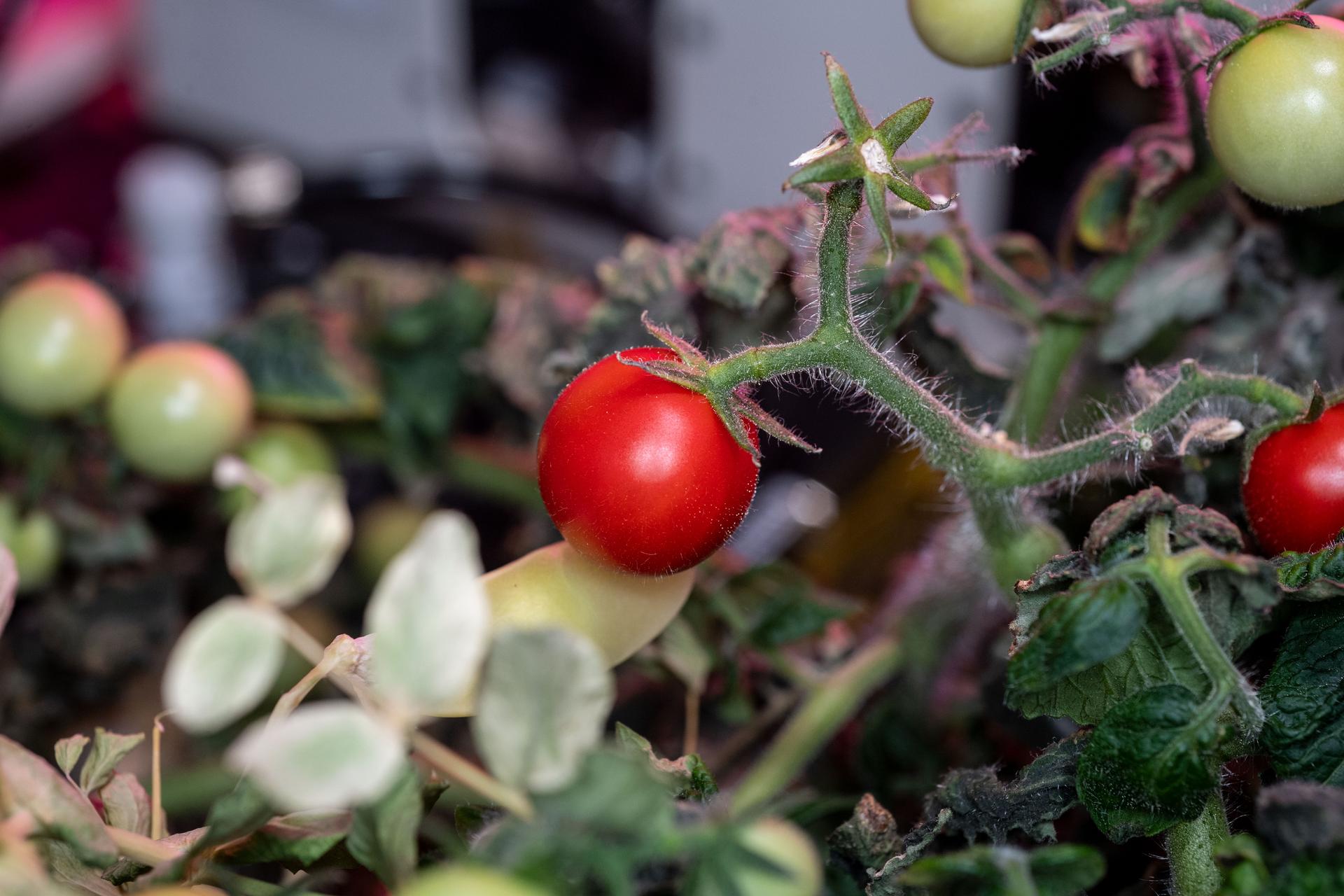
Flight Engineer Jasmin Moghbeli of NASA cleaned up in the Harmony module in the morning, then set out to replenish the water supply in the distribution and recovery reservoirs of Plant Habitat-06—an investigation that studies the physiological and genetic responses to defense activation in wild-type tomatoes. Afterward, Moghbeli began an experiment to test the efficiency of an antimicrobial coating in space.

Commander Andreas Mogensen of ESA (European Space Agency) began the day swapping out the heart rate monitor on CEVIS, the station’s bicycle. He then completed a robotics training session, practicing the capture of a cargo craft, reviewing how to control free-flying assistants, and operating the robotic arm. After lunch, Mogensen deployed the Life Sciences Glovebox that will be used for ongoing science activities this week, then analyzed water from the station’s water processor assembly.

Meanwhile, Satoshi Furukawa of JAXA (Japan Aerospace Exploration Agency) hydrated and incubated production packs for the BioNutrients-1 investigation which uses technology for on-demand production of human nutrients over long-duration missions.

The three cosmonauts aboard the orbiting laboratory—Oleg Kononenko, Nikolai Chub, and Konstantin Borisov—split up maintenance duties on Tuesday. Kononenko ran the 3D printer in Zvezda and audited cargo in the Prichal module, while Chub conducted maintenance on the water management system and Borisov inventoried accessories of the Roscosmos docking system.


Learn more about station activities by following the space station blog, @space_station and @ISS_Research on X, as well as the ISS Facebook and ISS Instagram accounts.

Get weekly video highlights at: https://roundupreads.jsc.nasa.gov/videoupdate/

Get the latest from NASA delivered every week. Subscribe here: www.nasa.gov/subscribe

Powered by WPeMatico

Get The Details…

Abby Graf

NASA’s SpaceX Crew-6 Preflight

NASA’s SpaceX Crew-6 Preflight

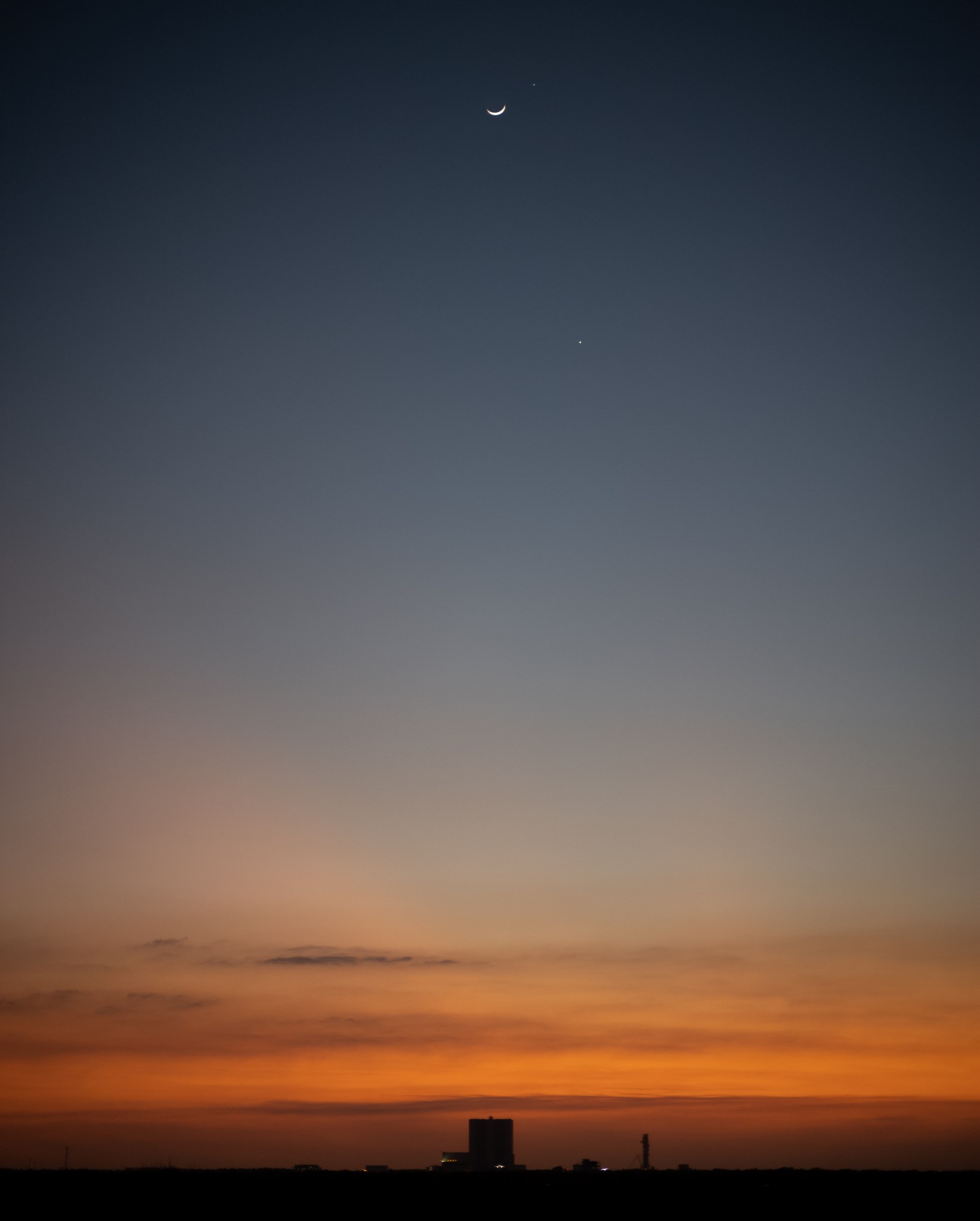
Jupiter, top, and Venus, bottom, are seen with the crescent Moon above the Vehicle Assembly Building, Wednesday, Feb. 22, 2023, at NASA’s Kennedy Space Center in Florida as preparations continued for NASA’s SpaceX Crew-6 mission. The agency’s SpaceX Crew-6 mission was the sixth crew rotation mission of the SpaceX Dragon spacecraft and Falcon 9 rocket to the International Space Station as part of the agency’s Commercial Crew Program.

Powered by WPeMatico

Get The Details…

Crescent Moon Over NASA’s Kennedy Space Center

Crescent Moon Over NASA’s Kennedy Space Center

The sky shifts from a deep blue to burnt orange (top to bottom). The crescent moon is at the top of the image, with Jupiter to its right and Venus below it. The silhouette of the Vehicle Assembly Building at NASA's Kennedy Space Center stands out against the orange sky.
NASA / Joel Kowsky

The crescent moon, along with Jupiter (top right of Moon) and Venus (below Moon) appeared over the Vehicle Assembly Building at NASA’s Kennedy Space Center in Florida Feb. 22, 2023, as preparations continued for NASA’s SpaceX Crew-6 mission. NASA astronauts Stephen Bowen and Warren “Woody” Hoburg, UAE (United Arab Emirates) astronaut Sultan Alneyadi, and Roscosmos cosmonaut Andrey Fedyaev launched to the International Space Station March 2, 2023.

The NASA Headquarters photographers chose this photo as one of the best images from 2023. See the rest on Flickr.

Image Credit: NASA/Joel Kowsky

Powered by WPeMatico

Get The Details…
Monika Luabeya