Hubble Finds Weird Home of Farthest Fast Radio Burst

Hubble Finds Weird Home of Farthest Fast Radio Burst

5 min read

Hubble Finds Weird Home of Farthest Fast Radio Burst
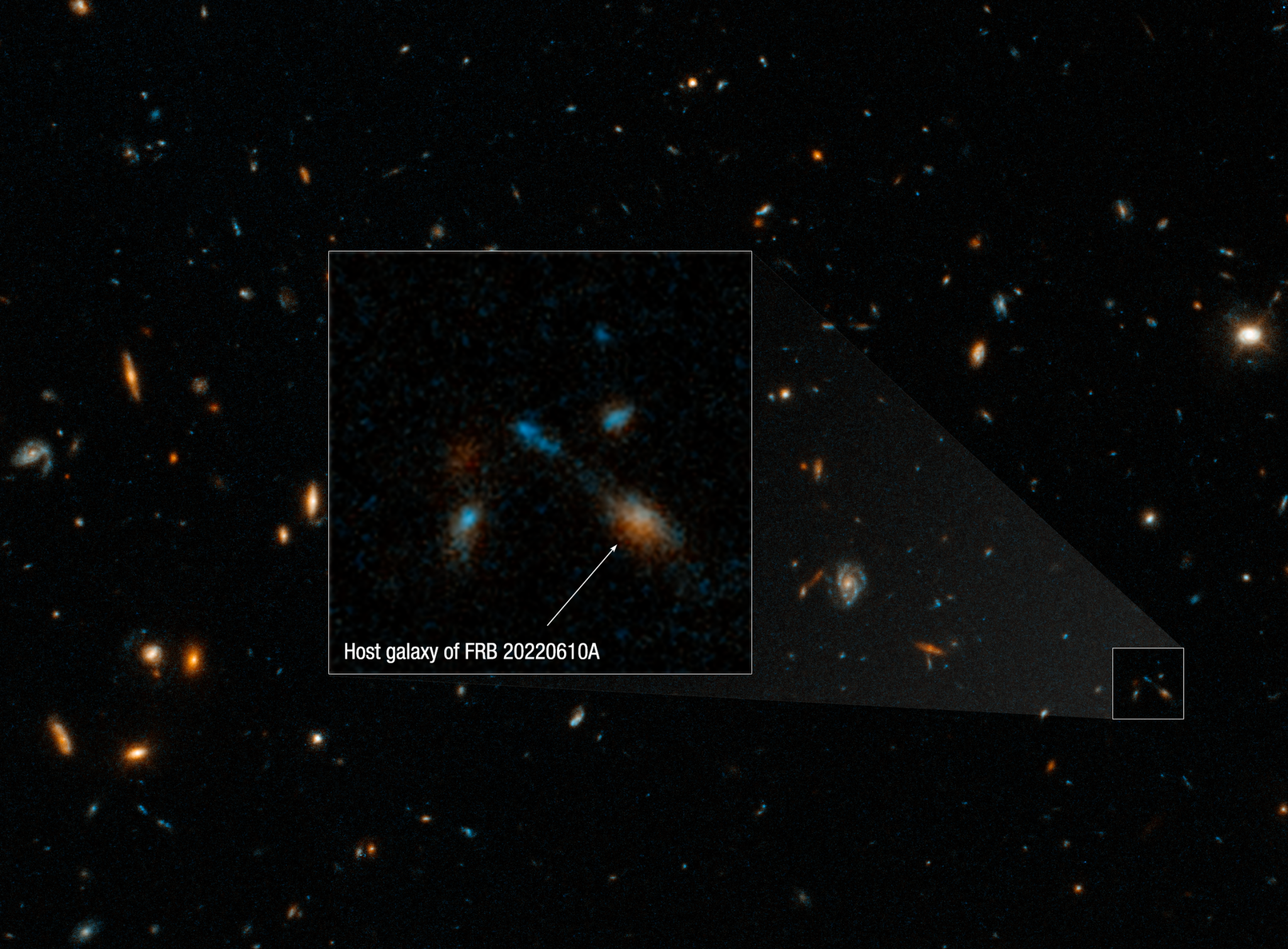
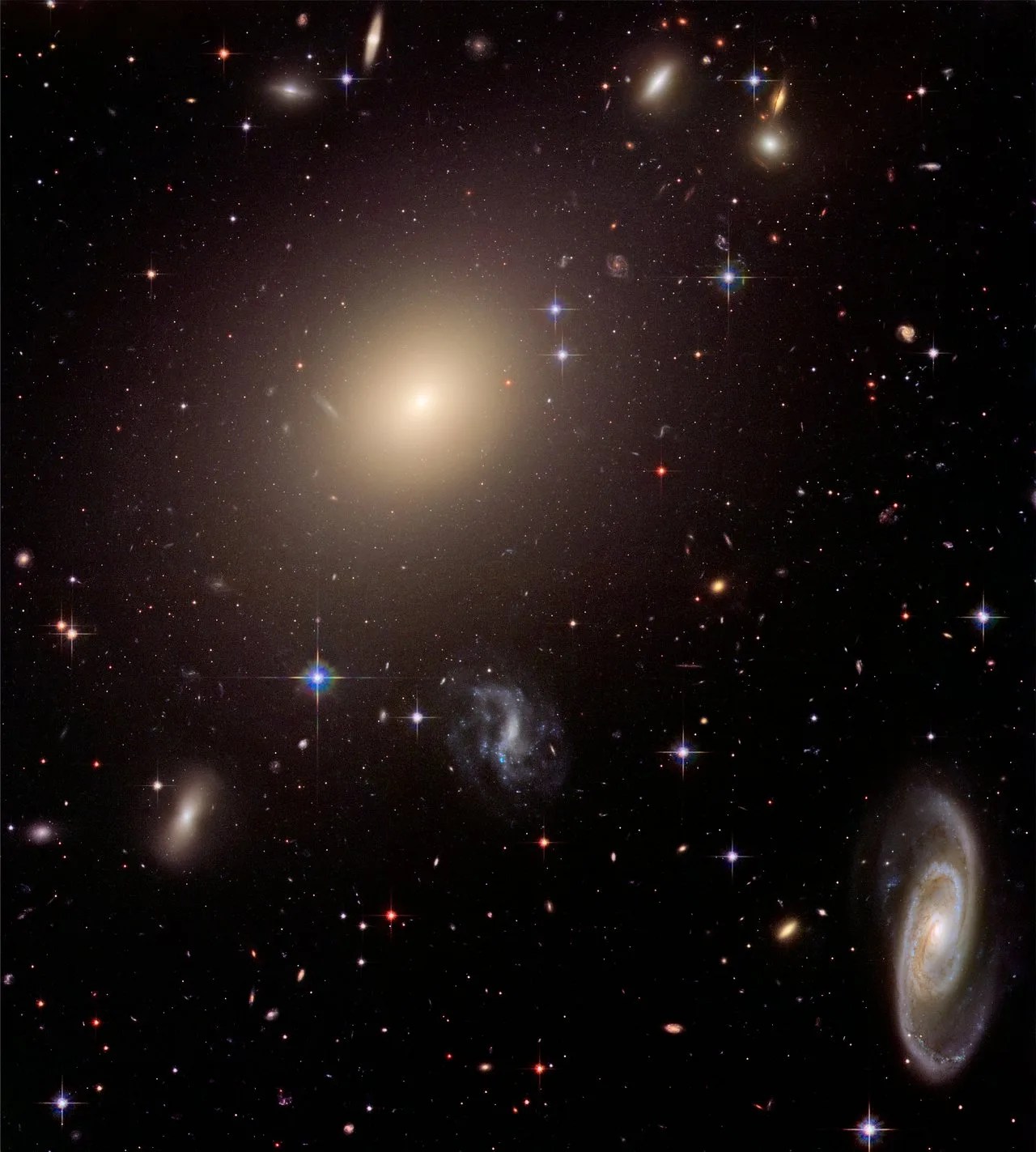
Black background dotted with galaxies. A square box in the lower-right quadrant of the image denotes a callout that provides an expanded view of that region. The expanded box view (just left of image center) reveals the host galaxy of the Fast Radio Burst.
A NASA Hubble Space Telescope image of the host galaxy of an exceptionally powerful fast radio burst, FRB 20220610A. Hubble’s sensitivity and sharpness reveals a compact group of multiple galaxies that may be in the process of merging. They existed when the universe was only 5 billion years old. FRB 20220610A was first detected on June 10, 2022, by the Australian Square Kilometer Array Pathfinder (ASKAP) radio telescope in Western Australia. The European Southern Observatory’s Very Large Telescope in Chile confirmed that the FRB came from a distant place.
NASA, ESA, STScI, Alexa Gordon (Northwestern)

Astronomers using NASA’s Hubble Space Telescope have found a rare event in an oddball place.

It’s called a fast radio burst (FRB), a fleeting blast of energy that can – for a few milliseconds – outshine an entire galaxy. Hundreds of FRBs have been detected over the past few years. They pop off all over the sky like camera flashes at a stadium event, but the sources behind these intense bursts of radiation remain uncertain.

This new FRB is particularly weird because it erupted halfway across the universe, making it the farthest and most powerful example detected to date.

And if that’s not strange enough, it just got weirder based on the follow-up Hubble observations made after its discovery. The FRB flashed in what seems like an unlikely place: a collection of galaxies that existed when the universe was only 5 billion years old. The large majority of previous FRBs have been found in isolated galaxies.

FRB 20220610A was first detected on June 10, 2022, by the Australian Square Kilometer Array Pathfinder (ASKAP) radio telescope in Western Australia. The European Southern Observatory’s Very Large Telescope in Chile confirmed that the FRB came from a distant place. The FRB was four times more energetic than closer FRBs.

“It required Hubble’s keen sharpness and sensitivity to pinpoint exactly where the FRB came from,” said lead author Alexa Gordon of Northwestern University in Evanston, Illinois. “Without Hubble’s imaging, it would still remain a mystery as to whether this was originating from one monolithic galaxy or from some type of interacting system. It’s these types of environments – these weird ones – that are driving us toward better understanding the mystery of FRBs.”

Hubble’s crisp images suggest this FRB originated in an environment where there may be as many as seven galaxies on a possible path to merging, which would also be very significant, researchers say.

“We are ultimately trying to answer the questions: What causes them? What are their progenitors and what are their origins? The Hubble observations provide a spectacular view of the surprising types of environments that give rise to these mysterious events,” said co-investigator Wen-fai Fong, also of Northwestern University.

Though astronomers do not have a consensus on the possible mechanism behind this extraordinary phenomenon, it’s generally thought that FRBs must involve some sort of compact object, like a black hole or neutron star. One extreme type of neutron star is called a magnetar – the most intensely magnetic type of neutron star in the universe. It has a magnetic field that is so strong that, if a magnetar were located halfway between Earth and the Moon, it would erase the magnetic strip on everyone’s credit card in the world. Much worse yet, if an astronaut traveled within a few hundred miles of the magnetar, they would effectively be dissolved, because every atom in their body would be disrupted.

Possible mechanisms involve some kind of jarring starquake, or alternatively, an explosion caused when a magnetar’s twisting magnetic field lines snap and reconnect. A similar phenomenon happens on the Sun, causing solar flares, but a magnetar’s field is a trillion times stronger than the Sun’s magnetosphere. The snapping would generate an FRB’s flash, or might make a shock wave that incinerates surrounding dust and heats gas into a plasma.

There could be several flavors of magnetars. In one case, it could be an exploding object orbiting a black hole surrounded by a disk of material. Another alternative is a pair of orbiting neutron stars whose magnetospheres periodically interact, creating a cavity where eruptions can take place. It’s estimated that magnetars are active for about 10,000 years before settling down, so they would be expected to be found where a firestorm of star birth is taking place. But this doesn’t seem to be the case for all magnetars.

In the near future, FRB experiments will increase their sensitivity, leading to an unprecedented rate in the number of FRBs detected at these distances. Hubble will play a crucial role in characterizing the environments in which these FRBs occur. Astronomers will soon learn just how special the environment of this FRB was.

“We just need to keep finding more of these FRBs, both nearby and far away, and in all these different types of environments,” said Gordon.

The results are being presented at the 243rd meeting of the American Astronomical Society in New Orleans, Louisiana.

The Hubble Space Telescope is a project of international cooperation between NASA and ESA. NASA’s Goddard Space Flight Center in Greenbelt, Maryland, manages the telescope. The Space Telescope Science Institute (STScI) in Baltimore, Maryland, conducts Hubble and Webb science operations. STScI is operated for NASA by the Association of Universities for Research in Astronomy, in Washington, D.C.

Media Contact:

Claire Andreoli
NASA’s Goddard Space Flight CenterGreenbelt, MD
claire.andreoli@nasa.gov

Ray Villard
Space Telescope Science Institute, Baltimore, MD

Science Contact:

Alexa Gordon
Northwestern University, Evanston, IL

Share

Details

Last Updated
Jan 09, 2024
Editor
Andrea Gianopoulos

Powered by WPeMatico
Get The Details…

La NASA comparte avances sobre las primeras misiones lunares Artemis con tripulación

La NASA comparte avances sobre las primeras misiones lunares Artemis con tripulación

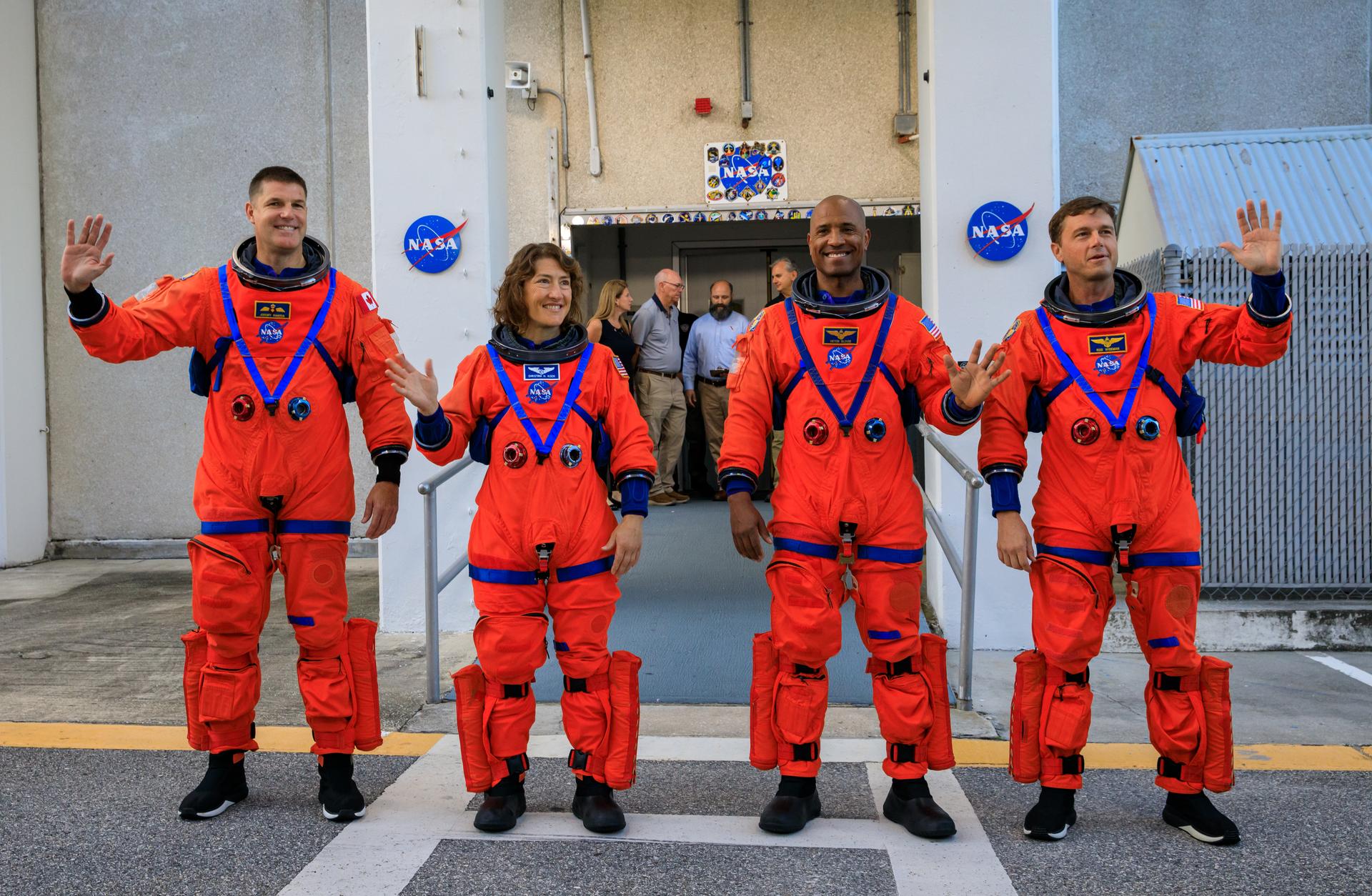
Los miembros de la tripulación del Artemis II (de izquierda a derecha) Jeremy Hansen, astronauta de la CSA (Agencia Espacial Canadiense), y Christina Koch, Victor Glover y Reid Wiseman, astronautas de la NASA, parten del cuartel de tripulación de astronautas en el edificio de operaciones y control Neil Armstrong hacia los vehículos de transporte de la tripulación de Artemis antes de desplazarse a la plataforma de lanzamiento 39B como parte de una prueba integrada de los sistemas de tierra en el Centro Espacial Kennedy en Florida el miércoles 20 de septiembre, para poner a prueba la cronología de la tripulación para el día del lanzamiento.
NASA

La NASA anunció el martes cambios en las próximas misiones Artemis, que sentarán las bases para la exploración científica a largo plazo de la Luna, el aterrizaje de la primera mujer y la primera persona no blanca en la superficie lunar, y la preparación de expediciones con seres humanos a Marte en beneficio de todos. Para llevar a cabo estas misiones de forma segura, los dirigentes de la agencia han ajustado los calendarios de Artemis II y Artemis III para que los equipos técnicos puedan superar los retos asociados a los primeros desarrollos, operaciones e integración.

El objetivo de la NASA es ahora septiembre de 2025 para Artemis II, la primera misión Artemis tripulada alrededor de la Luna, y septiembre de 2026 para Artemis III, la cual se prevé que aterrice con los primeros astronautas cerca del Polo Sur lunar. Artemis IV, la primera misión a la estación espacial lunar Gateway, sigue prevista para 2028.

“Estamos regresando a la Luna como nunca antes lo habíamos hecho, y la seguridad de nuestros astronautas es la máxima prioridad de la NASA mientras nos preparamos para futuras misiones Artemis”, dijo el administrador de la NASA, Bill Nelson. “Hemos aprendido mucho desde Artemis I, y el éxito de estas primeras misiones depende de nuestras asociaciones comerciales e internacionales para ampliar nuestro alcance y comprensión del lugar de la humanidad en nuestro sistema solar. Artemis representa lo que podemos lograr como nación y como coalición mundial. Cuando nos proponemos lograr lo difícil, juntos podemos conseguir lo grandioso”.

Garantizar la seguridad de la tripulación es el principal motivo de los cambios en el calendario de Artemis II. Como primera prueba de vuelo Artemis con tripulación a bordo de la nave espacial Orion, la misión pondrá a prueba sistemas críticos de control medioambiental y de soporte vital necesarios para sustentar a los astronautas. Las pruebas de la NASA para calificar los componentes para mantener a la tripulación segura y garantizar el éxito de la misión han revelado problemas que requieren tiempo adicional para ser resueltos. Los equipos técnicos están solucionando un asunto relacionado con la batería y abordando retos con un componente del circuito responsable de la ventilación del aire y el control de la temperatura.

Se espera que la investigación de la NASA sobre la pérdida inesperada de trozos de capa de carbón del escudo térmico de la nave espacial durante Artemis I concluya esta primavera boreal. Los equipos técnicos han adoptado un enfoque metódico para entender el problema, que incluye un amplio muestreo del escudo térmico, pruebas y revisión de los datos de los sensores y las imágenes.

El nuevo calendario para Artemis III se alinea con el calendario actualizado para Artemis II, garantiza que la agencia pueda incorporar las lecciones aprendidas de Artemis II en la próxima misión y reconoce los retos de desarrollo que han experimentado los socios industriales de la NASA. Dado que cada misión Artemis  tripulada aumenta la complejidad y añade pruebas de vuelo para nuevos sistemas, el calendario ajustado proporcionará a los proveedores que desarrollan nuevas capacidades (SpaceX para el sistema de aterrizaje humano y Axiom Space para los trajes espaciales de nueva generación) tiempo adicional para las pruebas y cualquier refinamiento antes de la misión.

“Estamos dejando que el hardware nos dé información para que la seguridad de la tripulación guíe nuestra toma de decisiones. Utilizaremos la prueba de vuelo de Artemis II, y cada uno de los vuelos siguientes, para reducir el riesgo de futuras misiones a la Luna”, declaró Catherine Koerner, administradora asociada de la Dirección de Misiones de Desarrollo de Sistemas de Exploración de la sede central de la NASA en Washington. “Estamos resolviendo los retos asociados con las capacidades y operaciones nuevas, y estamos más cerca que nunca de establecer una exploración sostenida del vecino más cercano de la Tierra mediante Artemis”.

Además de las actualizaciones del calendario para Artemis II y III, la NASA está reexaminando el calendario para el lanzamiento de los primeros elementos integrados de Gateway, previsto anteriormente para octubre de 2025, con el fin de proporcionar tiempo de desarrollo adicional y alinear mejor ese lanzamiento con la misión Artemis IV en 2028.

La NASA también ha comunicado que ha pedido a los dos proveedores del sistema de aterrizaje para seres humanos de Artemis (SpaceX y Blue Origin) que, como parte de sus contratos actuales, empiecen a aplicar los conocimientos adquiridos en el desarrollo de sus sistemas a futuras variaciones para poder transportar grandes cargamentos en misiones posteriores.

“Artemis es una campaña de exploración a largo plazo para llevar a cabo actividades científicas en la Luna con astronautas y preparar futuras misiones tripuladas a Marte. Eso significa que debemos hacerlo bien a medida que desarrollamos y lanzamos nuestros sistemas fundamentales para que podamos llevar a cabo estas misiones con seguridad”, dijo Amit Kshatriya, administrador adjunto de Desarrollo de Sistemas de Exploración, y gerente de la Oficina del Programa de la Luna a Marte de la NASA en la sede de la agencia. “La seguridad de la tripulación es y seguirá siendo nuestra prioridad número uno”.

Los dirigentes de la NASA hicieron hincapié en la importancia de que todos los socios cumplan los plazos para que la agencia pueda maximizar los objetivos de vuelo con el hardware disponible en cada misión. La NASA evalúa periódicamente el progreso y los plazos como parte de la planificación programática integrada para garantizar que la agencia y sus socios puedan cumplir con éxito sus objetivos de exploración de la Luna a Marte.

Mediante Artemis, la NASA explorará la Luna más que nunca, aprenderá a vivir y trabajar lejos de nuestro hogar y se preparará para la futura exploración con seres humanos del planeta rojo. El cohete Sistema de Lanzamiento Espacial de la NASA, los sistemas terrestres de exploración y la nave Orion, junto con el sistema de aterrizaje para humanos, los trajes espaciales de nueva generación, la estación espacial lunar Gateway y los futuros vehículos exploradores son la base de la NASA para la exploración del espacio profundo.

Para más información sobre Artemis (en inglés), visita:

https://www.nasa.gov/artemis

-fin-

Kathryn Hambleton / Rachel Kraft
Sede, Washington
202-358-1100 / 202-365-7575
kathryn.hambleton@nasa.gov / rachel.h.kraft@nasa.go

Powered by WPeMatico
Get The Details…
Roxana Bardan

NASA’s X-59 Rollout Embodies Aeronautical Tradition

NASA’s X-59 Rollout Embodies Aeronautical Tradition

5 Min Read

NASA’s X-59 Rollout Embodies Aeronautical Tradition

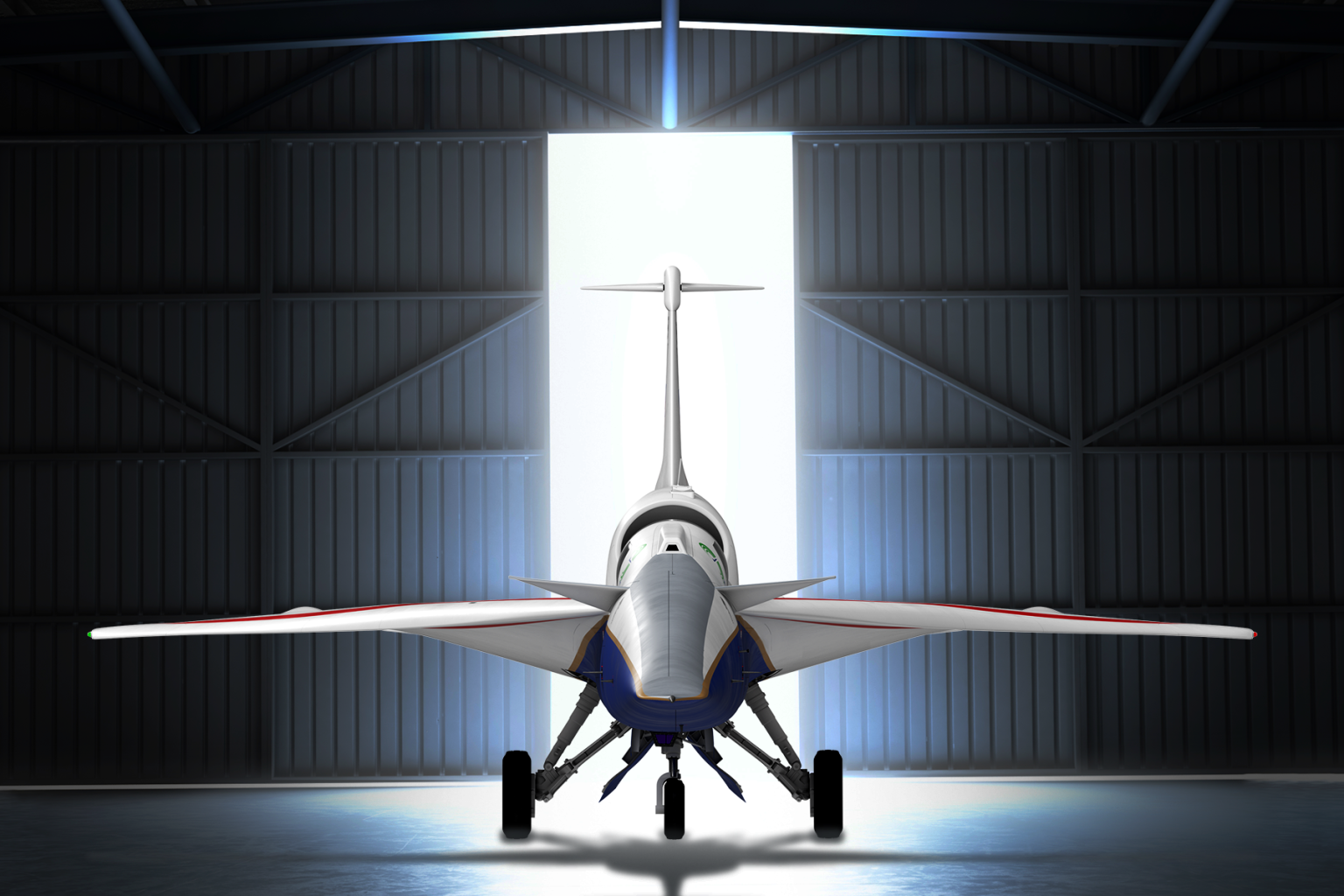
Artist’s concept of the X-59

Artist concept of the X-59 quiet supersonic aircraft. The centerpiece of NASA’s Quesst mission, the agency and Lockheed Martin will formally unveil the aircraft to the public on Friday, Jan. 12.

Credits:
NASA

Lee esta historia en español aquí.

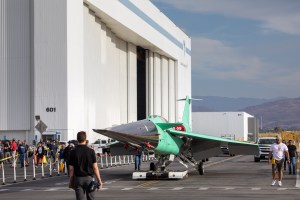
NASA’s X-59 aircraft is heading out of the hangar – preparing to embark on the first phase of its mission to fly faster than the speed of sound without generating a loud sonic boom.

Leadership from NASA and prime contractor Lockheed Martin will officially unveil the fully completed and freshly painted X-59 to the world during a rollout ceremony Friday, Jan. 12 at 4 p.m., EST. NASA TV will broadcast the event live from Lockheed Martin’s Skunk Works facility in Palmdale, California, where the aircraft was assembled.

“This is the big reveal,” said Catherine Bahm, manager of NASA’s Low Boom Flight Demonstrator project, who is overseeing the development and build of the X-59. “The rollout is a huge milestone toward achieving the overarching goal of the Quesst mission to quiet the sonic boom.”

Quesst is NASA’s mission through which the X-59 will demonstrate its quiet supersonic capabilities. NASA will fly the aircraft over selected U.S. communities and then survey what people on the ground hear when it flies overhead. The agency will share data on these reactions to the quieter sonic “thumps” with regulators, who could then consider rules that currently ban commercial supersonic flight over land because of noise concerns.

Watch this two-minute video to experience a visual overview of NASA’s Quesst mission featuring the X-59 experimental aircraft.

Tradition of Rollout

So, what is an aircraft rollout? And why is it significant to NASA, industry stakeholders, and the team of aeronautical innovators who built the X-59?

Conceiving, designing, building, and testing a new airplane takes years of meticulous, highly detailed work. Every new design helps innovate a new way to fly – especially in the case of X-planes, whose very mission is to continue pushing the boundaries of what’s possible.

Unveiling the X-59 to the world represents not just the aircraft’s technical achievements, but also the future of flight, and the spirit of aeronautics research itself.

For the team, some of whom have worked on the aircraft since the first component was created, the reveal of the X-59 will be a very special moment.

CATHERINE BAHM

CATHERINE BAHM

NASA Project Manager

In the past, aircraft and spacecraft built for and used by NASA have had rollout ceremonies ranging in scope and meaning.

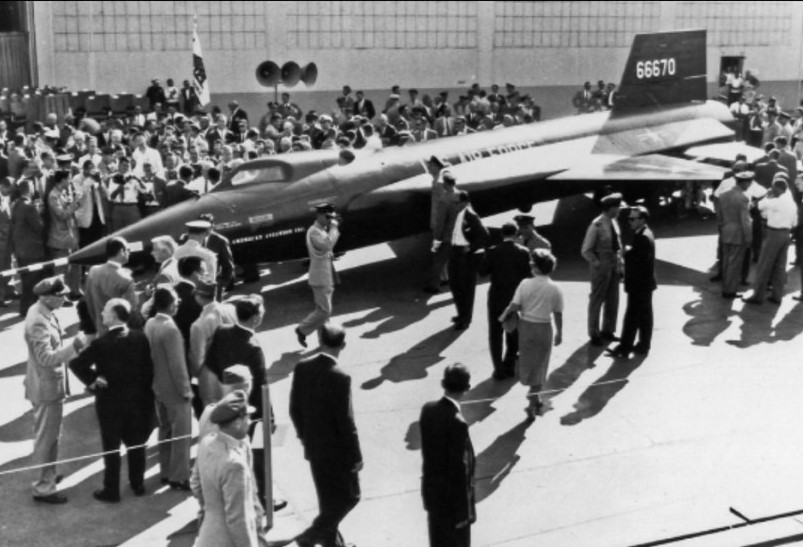
In 1959, for example, the first X-15 rocket-powered aircraft rolled out to great fanfare to an audience including project leadership, the aircraft’s pilots, and then-Vice President Richard Nixon. The aircraft represented the future of winged spaceflight and hypersonic flight. It went on to carry American pilots into space onboard a winged vehicle for the first time, as well as set the record for the fastest speed a human has travelled on an airplane, which still stands to this day.

Crowds gather to admire the first X-15 after its rollout from the North American Aviation plant
Crowds gather on Oct. 15, 1958, to admire the first X-15 rocket plane after its rollout from the North American Aviation plant in Los Angeles. One of NASA’s most historic aircraft, it flew 199 missions between 1959 and 1968 during a program that included NASA, the U.S. Air Force, and the U.S. Navy.

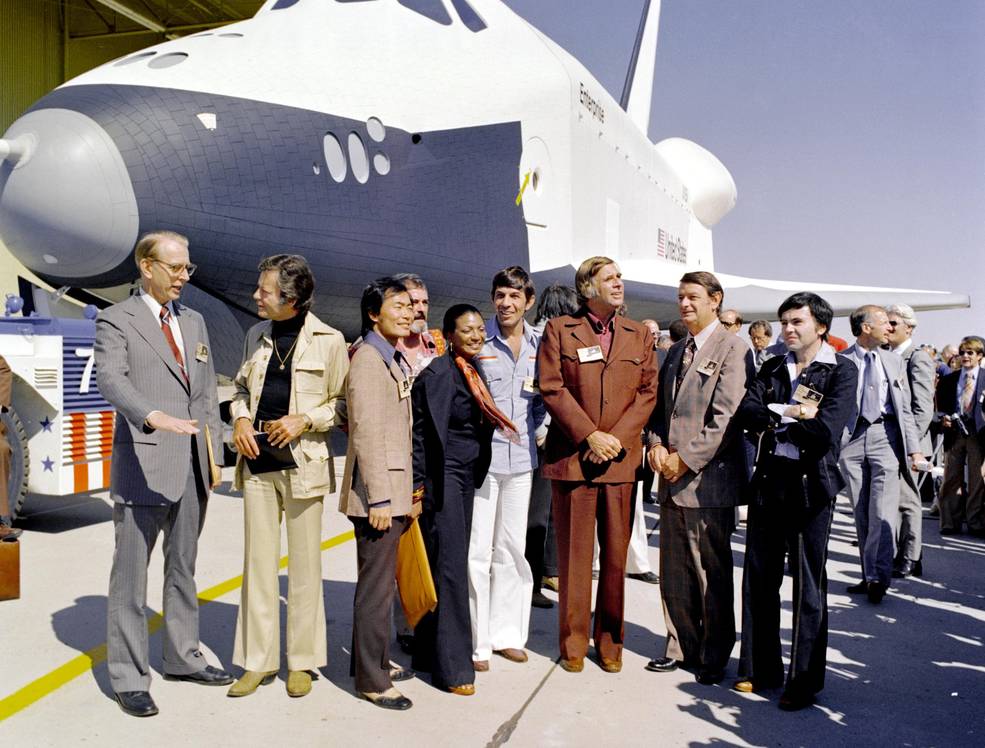
Another famous NASA rollout is that of space shuttle Enterprise in 1976 with the cast of Star Trek: The Original Series, and the show’s creator, Gene Roddenberry, in attendance. The Enterprise, so named for the fictional starship of the 1960s television series, proved the shuttle orbiter could descend and land like an airplane following reentry from space. The vehicle paved the way for the Space Shuttle Program to proceed with spaceflight.

a space shuttle orbiter named Enterprise sits behind NASA officials and actors from the TV series Star Trek.
NASA officials and representatives from the TV show Star Trek, including creator Gene Roddenberry, were on hand for Enterprise’s rollout from its Rockwell factory in Palmdale, California, on Sept. 17, 1976.
NASA

Culmination of Efforts

In the case of the X-59, the rollout ceremony provides a glimpse of a potential new era of high-speed commercial flight over land –  a quiet one.

Fifty years ago, the United States prohibited commercial supersonic flight over land  because of concerns about the noise generated by sonic booms. Today, however, Quesst’s technology could reduce this noise dramatically. The mission aims to gather data from the X-59 that could help regulators adjust the ban, basing revised rules on noise levels instead of speed.

“The idea of lifting the ban on supersonic flight over land is really exciting,” Bahm said. “And that’s the future the X-59 could enable.”

The rollout also represents something closer to the ground – the achievement of the hardworking, dedicated team who took the aircraft from imagination to reality. For them, the rollout celebrates the weeks, months, and years spent developing and building the X-59.

Watch this 57-second time-lapse video of the X-59’s assembly as it happened between May of 2019 and June of 2021 inside Lockheed Martin’s Skunk Works factory in Palmdale, California.

“For the team, some of whom have worked on the aircraft since the first component was created, the reveal of the X-59 will be a very special moment.” Bahm said. “The innovative design of the X-59 leverages decades of work for NASA. We are sharing this achievement with all those who made this possible.”

With assembly complete, NASA’s mission to quiet the boom reaches a new chapter. Though there’s still a ways to go, the potential future for commercial supersonic travel is closer than it was before. The Quesst mission team will now continue ground testing before first flight later this year.

“Rollout is a major accomplishment, but it also means the next milestone is first flight, and then supersonic flights after that,” Bahm said. “Our eyes are on the mission.”

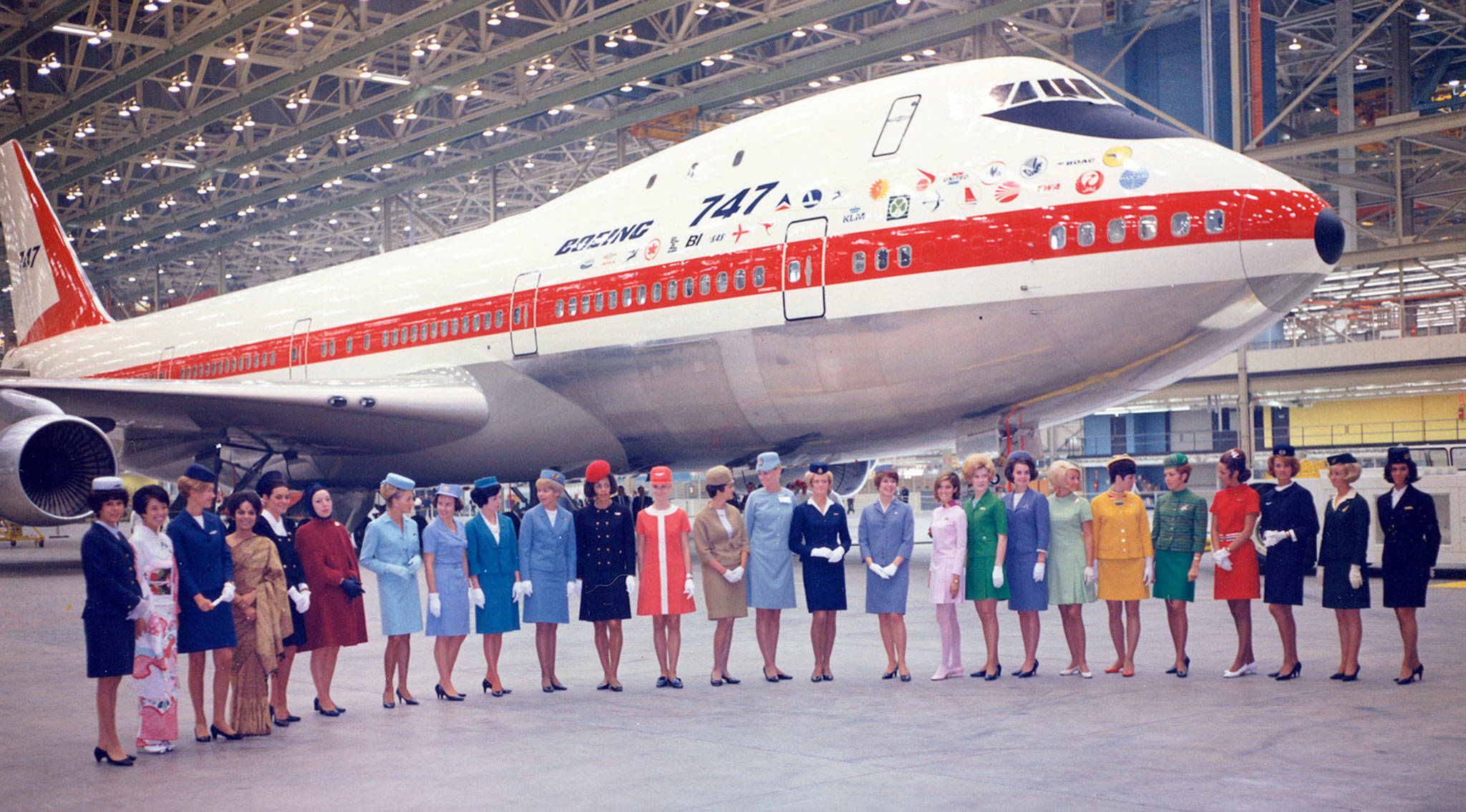
A Boeing 747 Jumbo Jet is seen in a hangar with 26 flight attendants representing 26 airliner standing in front of the airplane.
A memorable rollout ceremony in aviation history took place on Sept. 30, 1968, when the first Boeing 747 made its public debut at the company’s Everett assembly plant near Seattle. To commemorate the event, flight attendants representing each of the 26 airlines who had purchased a 747 attended the ceremony.
Boeing

About the Author

John Gould

John Gould

Aeronautics Research Misson Directorate

Powered by WPeMatico
Get The Details…
Jim Banke

La presentación del X-59 de la NASA personifica la tradición aeronáutica

La presentación del X-59 de la NASA personifica la tradición aeronáutica

6 Min Read

La presentación del X-59 de la NASA personifica la tradición aeronáutica

Artist’s concept of the X-59

Concepto artístico del silencioso avión supersónico X-59. La pieza central de la misión Questt de la NASA, la agencia y Lockheed Martin presentarán oficialmente al mundo el totalmente terminado y recientemente pintado avion X-59, durante una ceremonia que tendrá lugar el viernes 12 de enero a las 4 de la tarde, hora del Este.

Credits:
NASA

Read this story in English here.

El avión X-59 de la NASA está saliendo del hangar–preparándose para embarcarse en la primera fase de su misión de volar más rápido que la velocidad del sonido sin generar un fuerte estampido sónico.

Los directivos de la NASA y el contratista principal Lockheed Martin,  presentarán oficialmente al mundo el totalmente terminado y recientemente pintado avion X-59, durante una ceremonia que tendrá lugar el viernes 12 de enero a las 4 de la tarde, hora del Este. Este evento será transmitido en directo por NASA TV desde las instalaciones Skunk Works de Lockheed Martin en Palmdale, California, donde este avión fue ensamblado.

“Esta es la gran revelación”, declaró Catherine Bahm, directora del proyecto Low Boom Flight Demonstrator de la NASA, que supervisa el desarrollo y la construcción del X-59. “La presentación es un gran logro hacia el objetivo general de la misión Quesst de reducir el estampido sónico”.

Quesst es la misión de la NASA a través de la cual el X-59 demostrará sus capacidades supersónicas silenciosas. La NASA volará la aeronave sobre comunidades estadounidenses seleccionadas y después estudiará lo que la gente sobre tierra firme escucha. La agencia compartirá la información de estas reacciones a los “golpes” sónicos más silenciosos con los organismos reguladores, que podrían considerar las normas que actualmente prohíben los vuelos supersónicos comerciales sobre tierra firme por motivos de ruido.

Tradición de la presentación

¿Qué es la presentación de una aeronave? ¿Y por qué es importante para la NASA, el sector industrial y el equipo de innovadores en la aeronáutica que construyeron el X-59?

Concebir, diseñar, construír y probar una nueva aeronave conlleva años de trabajo detallado y meticuloso. Cada diseño nuevo contribuye a innovar una nueva forma de volar– especialmente en el caso de los X-Planes, que tienen la misión de continuar sobrepasando los límites de lo posible. 

La presentación del X-59 al mundo no solamente representa los logros técnicos del avión, sino también el futuro del vuelo y el espíritu de la investigación en la aeronáutica.

Para el equipo, algunos de los cuales han trabajado en el avión desde que se creó el primer componente, la presentación del X-59 será un momento muy especial.

CATHERINE BAHM

CATHERINE BAHM

NASA Project Manager

En el pasado, las aeronaves y naves espaciales construidas y utilizadas por la NASA han tenido ceremonias de presentación de diverso alcance y significado.

Por ejemplo, en 1959, el X-15, que fue el primer avión propulsado por cohete, despegó ante una audiencia que incluía a los líderes del proyecto, los pilotos de la aeronave y al Vice presidente Richard Nixon. El avión representaba el futuro de los vuelos espaciales hipersónicos y con alas. Llevó por primera vez a pilotos estadounidenses al espacio a bordo de un vehículo con alas y estableció el récord de velocidad más rápida alcanzada por un humano en un avión, récord que sigue vigente hoy en día. 

Crowds gather to admire the first X-15 after its rollout from the North American Aviation plant
Multitudes se reúnen el 15 de octubre de 1958 para admirar el primer avión cohete X-15 después de su lanzamiento desde la planta de North American Aviation en Los Ángeles. Uno de los aviones más históricos de la NASA, voló 199 misiones entre 1959 y 1968 durante un programa que incluía a la NASA, la Fuerza Aérea de los EE. UU. y la Marina de los EE. UU.

Otra presentación famosa de la NASA fue el del transbordador espacial Enterprise en 1976, con la presencia del reparto de Star Trek: la serie original y del creador de la serie, Gene Roddenberry. El Enterprise, llamado así por la nave ficticia de la serie de televisión de los años 60, demostró que el transbordador orbital podía descender y aterrizar como un avión tras su reentrada del espacio. El vehículo marcó el camino para que el Programa del Transbordador Espacial continuara con los vuelos espaciales.

enterprise_rollout_at_palmdale_w_star_trek_crew_sep_17_1976
Funcionarios de la NASA y representantes del programa de televisión Star Trek, incluido el creador Gene Roddenberry, estuvieron presentes en el lanzamiento de Enterprise desde su fábrica de Rockwell en Palmdale, California, el 17 de septiembre de 1976.
NASA

Culminación de los esfuerzos

En el caso del X-59, la ceremonia de presentación permite vislumbrar una posible nueva era de vuelos comerciales de alta velocidad y silenciosos sobre tierra.

Hace cincuenta años, Estados Unidos prohibió los vuelos supersónicos comerciales sobre tierra debido a la preocupación por el ruido generado por los estampidos sónicos. Sin embargo hoy en día la tecnología de Quesst podría reducir drásticamente este ruido. El objetivo de la misión es recopilar datos del X-59 que podrían ayudar a los reguladores a ajustar la prohibición, considerando los niveles de ruido en lugar de la velocidad.

“La idea de levantar la prohibición de los vuelos supersónicos sobre tierra firme es realmente emocionante”, comenta Bahm. “Y ése es el futuro que podría habilitar el X-59”.

Mire este lapso de tiempo del ensamblaje del X-59 tal como ocurrió entre mayo de 2019 y junio de 2021 dentro de la fábrica Skunk Works de Lockheed Martin en Palmdale, California.

El lanzamiento también representa algo más cercano al suelo–el logro del equipo trabajador y dedicado que llevó el avión de la imaginación a la realidad. Para ellos, el lanzamiento celebra las semanas, meses y años dedicados al desarrollo y construcción del X-59.

“Para el equipo, algunos de los cuales han trabajado en el avión desde que se creó el primer componente, la presentación del X-59 será un momento muy especial.”comentó Bahm. “El diseño innovador del X-59 aprovecha décadas de trabajo para la NASA. Compartimos este logro con todos los que lo han hecho posible”.

Una vez completado el ensamblaje, la misión de la NASA de silenciar el estampido sónico alcanzará un nuevo capítulo. Aunque todavía queda camino por recorrer, el futuro potencial de los viajes supersónicos comerciales está más cerca que antes. El equipo de la misión Quesst continuará ahora las pruebas en tierra firme antes del primer vuelo a finales de este año.

“El lanzamiento es un gran logro, pero también significa que el siguiente logro es el primer vuelo, y después los vuelos supersónicos”, comentó Bahm. “Nuestros ojos están puestos en la misión”.

A Boeing 747 Jumbo Jet is seen in a hangar with 26 flight attendants representing 26 airliner standing in front of the airplane.
El 30 de septiembre de 1968 tuvo lugar una ceremonia de lanzamiento memorable en la historia de la aviación, cuando el primer Boeing 747 hizo su debut público en la planta de ensamblaje de la compañía en Everett, cerca de Seattle. Para conmemorar el evento, asistieron a la ceremonia azafatas en representación de cada una de las 26 aerolíneas que habían comprado un avión 747.
Boeing

Artículo Traducido por: Elena Aguirre y Monica Uribe

About the Author

John Gould

John Gould

Aeronautics Research Misson Directorate

Share

Details

Last Updated

Jan 09, 2024

Editor
Lillian Gipson
Contact

Powered by WPeMatico
Get The Details…
Lillian Gipson

A “Green Monster” Lurks in Star’s Debris

A “Green Monster” Lurks in Star’s Debris

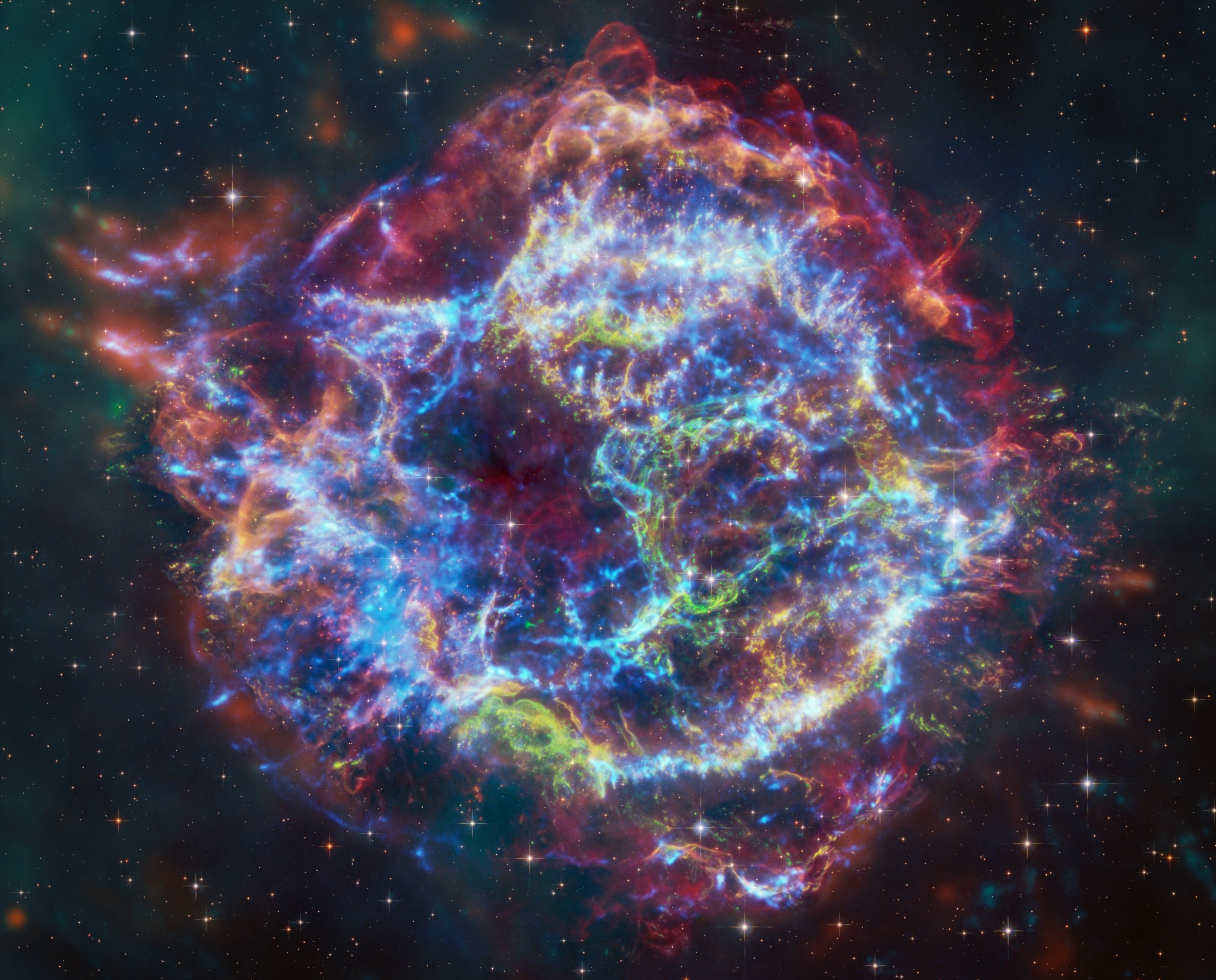
This image of Cassiopeia A resembles a disk of electric light with red clouds, glowing white streaks, red and orange flames, and an area near the center of the remnant resembling a somewhat circular region of green lightning. X-rays from Chandra are blue and reveal hot gas, mostly from supernova debris from the destroyed star, and include elements like silicon and iron. X-rays are also present as thin arcs in the outer regions of the remnant. Infrared data from Webb is red, green, and blue. Webb highlights infrared emission from dust that is warmed up because it is embedded in the hot gas seen by Chandra, and from much cooler supernova debris. Hubble data shows a multitude of stars that permeate the field of view.
X-ray: NASA/CXC/SAO; Optical: NASA/ESA/STScl; IR: NASA/ESA/CSA/STScl/Milisavljevic et al., NASA/JPL/CalTech; Image Processing: NASA/CXC/SAO/J. Schmidt and K. Arcand

For the first time, astronomers have combined data from NASA’s Chandra X-ray Observatory and James Webb Space Telescope to study the well-known supernova remnant Cassiopeia A (Cas A). This work has helped explain an unusual structure in the debris from the destroyed star called the “Green Monster,” because of its resemblance to the wall in the left field of Fenway Park.

By combining the Webb data with X-rays from Chandra, researchers have concluded that the Green Monster was created by a blast wave from the exploded star slamming into material surrounding it. Detailed analysis found that filaments in the outer part of Cas A, from the blast wave, closely matched the X-ray properties of the Green Monster, including less iron and silicon than in the supernova debris. This interpretation is apparent from the color Chandra image, which shows that the colors inside the Green Monster’s outline best match with the colors of the blast wave rather than the debris with iron and silicon.

Learn more about the Green Monster.

Powered by WPeMatico
Get The Details…
Michelle Zajac