
Nuevos astronautas de Artemis se gradúan y la NASA hará la cobertura

Nuevos astronautas de Artemis se gradúan y la NASA hará la cobertura
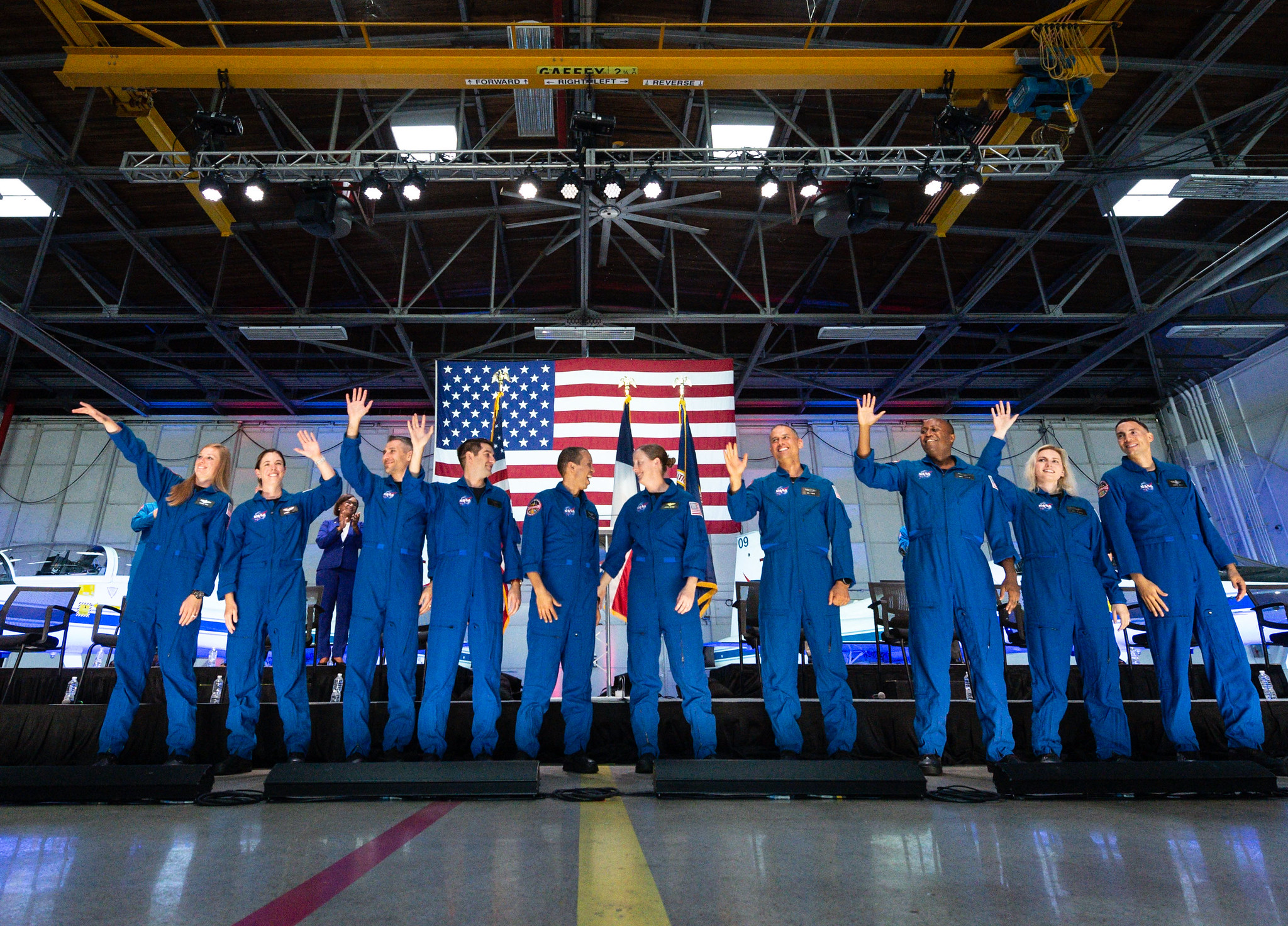
La promoción de candidatos a astronautas de la NASA, fotografiada durante un acto cerca del Centro Espacial Johnson de la NASA en Houston el 7 de diciembre de 2021.
Créditos: NASA/James Blair

Read this release in English here.

La NASA rendirá homenaje a la nueva generación de candidatos a astronautas para el programa Artemis durante su acto de graduación, a las 10:30 a.m. hora del este del miércoles 5 de marzo en el Centro Espacial Johnson de la agencia en Houston.

Después de completar más de dos años de capacitación básica, estos candidatos recibirán sus “alas” y serán elegibles para vuelos espaciales, incluyendo asignaciones a la Estación Espacial Internacional, futuros destinos comerciales y misiones a la Luna y, más adelante, misiones a Marte.

La promoción de estudiantes que comenzaron sus estudios en 2021 incluye a 10 candidatos de la NASA, así como a dos candidatos de los Emiratos Árabes Unidos (EAU) del Centro Espacial Mohammed Bin Rashid, quienes han estado entrenando junto a los candidatos de la NASA.

Después de la ceremonia, a las 11:45 a.m. hora del este, la NASA tendrá una sesión de preguntas y respuestas con los estudiantes y los medios de comunicación presentes. Quienes sigan la sesión en las redes sociales pueden hacer preguntas usando la etiqueta #AskNASA. Los recién graduados también estarán disponibles para entrevistas con los medios de comunicación en persona y de manera remota.

Tanto la ceremonia como la sesión de preguntas y respuestas serán transmitidas en vivo por NASA+, NASA Television y el sitio web de la agencia. Aprende en este enlace (en inglés) cómo puedes ver la transmisión de NASA TV a través de diferentes plataformas, incluidas las redes sociales.

Los periodistas no estadounidenses que quieran participar de forma presencial deberán solicitar sus credenciales antes de las 5 p.m. hora de la zona central (CT) del miércoles 21 de febrero a la sala de redacción del Centro Espacial Johnson, llamando al teléfono +1 281-483-5111 o enviando un correo electrónico a jsccommu@mail.nasa.gov. Los periodistas estadounidenses que deseen participar en persona deben solicitar sus credenciales comunicándose con la sala de redacción del centro Johnson antes de las 5 p.m. CT del jueves 29 de febrero. Todos los medios interesados en obtener una entrevista en persona o en forma remota con los astronautas deberán solicitar sus credenciales antes de las 5 p.m. CT del 29 de febrero, comunicándose con la sala de redacción del centro Johnson.

Los candidatos a astronauta de la NASA son:

Nichole Ayers, mayor de la Fuerza Aérea de Estados Unidos, es nativa de Colorado y se graduó en el año 2011 de la Academia de la Fuerza Aérea de Estados Unidos en Colorado Springs, Colorado, con una licenciatura en matemáticas y una especialización en ruso. Más tarde obtuvo una maestría en matemáticas computacionales y aplicadas de la Universidad Rice en Houston. Ayers tiene más de 200 horas de combate y más de 1.400 horas de tiempo total de vuelo en el T-38 y en el avión de combate F-22 Raptor. Ayers, una de las pocas mujeres que ha pilotado el F-22, lideró en 2019 la primera formación de este avión compuesta exclusivamente por mujeres en combate.

Marcos Berríos, mayor de la Fuerza Aérea de Estados Unidos, creció en Guaynabo, Puerto Rico. Berríos trabajó como ingeniero aeroespacial para la Dirección de Desarrollo de la Aviación del Ejército de Estados Unidos en el aeródromo federal de Moffett en California y como piloto de helicópteros de búsqueda y rescate de combate para la Guardia Nacional Aérea de California. Es piloto de pruebas y tiene una licenciatura en ingeniería mecánica del Instituto de Tecnología de Massachusetts en Cambridge, Massachusetts, y una maestría en ingeniería mecánica, así como un doctorado en aeronáutica y astronáutica de la Universidad de Stanford en Palo Alto, California. Berríos ha acumulado más de 110 misiones de combate y 1.400 horas de vuelo en más de 21 aeronaves diferentes.

Chris (Christina) Birch creció en Gilbert, Arizona, y se graduó de la Universidad de Arizona en Tucson, con títulos en matemáticas y bioquímica y biofísica molecular. Después de obtener un doctorado en ingeniería biológica del Instituto de Tecnología de Massachusetts, dio clases de bioingeniería en la Universidad de California en Riverside, y de escritura y comunicación científicas en el Instituto de Tecnología de California en Pasadena. Posteriormente, dejó la academia para convertirse en ciclista de pista en el equipo de la selección nacional de Estados Unidos.

Deniz Burnham considera a Wasilla, Alaska, su hogar. Expasante en el Centro de Investigación Ames de la NASA en Silicon Valley, California, obtuvo una licenciatura en ingeniería química de la Universidad de California en San Diego y una maestría en ingeniería mecánica de la Universidad del Sur de California en Los Ángeles. Burnham es una líder con experiencia en la industria de la energía, y ha gestionado proyectos de perforación en plataformas petroleras durante más de una década, incluyendo el Ártico en Alaska, el norte de Alberta en Canadá y Texas. Burnham sirvió en la Reserva de la Marina de Estados Unidos como oficial del servicio de ingeniería. Es piloto privada licenciada con las siguientes calificaciones: avión monomotor de tierra y mar, avión de instrumentos y helicóptero-rotor.

Luke Delaney, mayor retirado del Cuerpo de Marines de Estados Unidos, creció en Debary, Florida. Tiene una licenciatura en ingeniería mecánica de la Universidad del Norte de Florida en Jacksonville, y una maestría en ingeniería aeroespacial de la Escuela Naval de Postgrado en Monterey, California. Delaney es un aviador naval que ha participado en ejercicios en toda la región del Pacífico asiático y realizó misiones de combate en apoyo de la Operación Libertad Duradera. Como piloto de pruebas, efectuó vuelos de evaluación de integración de sistemas de armas y se desempeñó como instructor. Delaney trabajó recientemente como piloto de investigación en el Centro de Investigación Langley de la NASA en Hampton, Virginia, donde apoyó misiones científicas aéreas. Incluyendo su carrera en la NASA, Delaney ha registrado más de 3.900 horas de vuelo en 48 modelos de aviones a reacción, de hélice y de ala giratoria.

Andre Douglas es nativo de Virginia. Obtuvo una licenciatura en ingeniería mecánica de la Academia de la Guardia Costera de Estados Unidos, una maestría en ingeniería mecánica y en arquitectura naval e ingeniería marina de la Universidad de Michigan en Ann Arbor, una maestría en ingeniería eléctrica e informática de la Universidad Johns Hopkins en Baltimore y un doctorado en ingeniería de sistemas de la Universidad George Washington en Washington. Douglas sirvió en la Guardia Costera de Estados Unidos como arquitecto naval, ingeniero de salvamento, asistente de control de daños y oficial de cubierta. Recientemente fue miembro sénior del personal del Laboratorio de Física Aplicada de la Universidad Johns Hopkins en Laurel, Maryland, trabajando en robótica marítima, defensa planetaria y misiones de exploración espacial para la NASA.

Jack Hathaway, comandante de la Marina de Estados Unidos, es oriundo de Connecticut. Obtuvo licenciaturas en física e historia de la Academia Naval de Estados Unidos y completó sus estudios de posgrado en la Universidad de Cranfield en Inglaterra y en la Escuela Profesional de Guerra Naval de Estados Unidos. Como aviador naval, Hathaway voló y fue desplegado con el Escuadrón de Caza y Ataque 14 de la Marina a bordo del USS Nimitz y el Escuadrón de Caza y Ataque 136 a bordo del USS Truman. Se graduó de la Escuela de Pilotos de Prueba del Imperio en Wiltshire, Inglaterra, apoyó al Estado Mayor Conjunto en el Pentágono y, más recientemente, fue asignado como futuro oficial ejecutivo del Escuadrón de Caza y Ataque 81. Tiene más de 2.500 horas de vuelo en 30 tipos de aeronaves, más de 500 aterrizajes en portaaviones y ha volado en 39 misiones de combate.

Anil Menon, teniente coronel de la Fuerza Aérea de Estados Unidos, nació y creció en Minneapolis. Fue el primer médico de la tripulación de vuelo de SpaceX, ayudando a llevar al espacio a los primeros seres humanos que viajaron con esta empresa, durante la misión Demo-2 de SpaceX para la NASA, y desarrollando una organización médica para apoyar a los sistemas humanos durante futuras misiones. Antes de eso, sirvió en la NASA como médico de la tripulación de vuelo para diferentes expediciones de transporte de astronautas a la Estación Espacial Internacional. Menon es un médico especializado en medicina de emergencia en ejercicio activo con formación en medicina rural y aeroespacial. Como médico, fue socorrista durante el terremoto de 2010 en Haití, el terremoto de 2015 en Nepal y el accidente del Salón Aeronáutico de Reno de 2011. En la Fuerza Aérea, Menon apoyó a la 45.a Ala Espacial como médico de la tripulación de vuelo y a la 173.a Ala de Combate, donde realizó más de 100 salidas en el avión de combate F-15 y transportó a más de 100 pacientes como parte del equipo de transporte aéreo de cuidados críticos.

Christopher Williams creció en Potomac, Maryland. Se graduó de la Universidad de Stanford con una licenciatura en física y obtuvo un doctorado en física del Instituto de Tecnología de Massachusetts, donde dedicó sus investigaciones a la astrofísica. Williams es físico médico certificado, y completó su formación como residente en la Escuela de Medicina de Harvard en Boston, antes de unirse al cuerpo docente como físico clínico e investigador. Recientemente trabajó como físico médico en el Departamento de Oncología Radioterápica en el hospital Brigham and Women’s y en el Instituto de Investigación contra el Cáncer Dana-Farber en Boston. Fue el físico principal del programa de radioterapia adaptativa guiada por resonancia magnética de ese instituto. Su investigación se centró en el desarrollo de técnicas de orientación por imagen para tratamientos contra el cáncer.

Jessica Wittner, teniente comandante de la Marina de Estados Unidos, es originaria de California y cuenta con una distinguida carrera en servicio activo como aviadora naval y piloto de pruebas. Tiene una licenciatura en ingeniería aeroespacial de la Universidad de Arizona en Tucson y una maestría en ingeniería aeroespacial de la Escuela Naval de Postgrado de Estados Unidos. Wittner fue comisionada como oficial naval mediante un programa de preparación para reclutas y ha servido operativamente volando aviones de combate F/A-18 con el Escuadrón de Caza y Ataque 34 en Virginia Beach, Virginia, y el Escuadrón de Caza y Ataque 151 en Lemoore, California. Graduada de la Escuela de Pilotos de Pruebas Navales de Estados Unidos, también trabajó como piloto de pruebas y oficial de proyectos con el Escuadrón de Pruebas y Evaluación Aérea 31 en China Lake, California.

Los candidatos a astronauta de los Emiratos Árabes Unidos son:

Nora AlMatrooshi, nacida en Sharjah, la primera mujer astronauta emiratí y árabe, fue seleccionada en el segundo grupo de candidatos a astronauta de los EAU y forma parte de la promoción de candidatos a astronautas de la NASA de 2021 que reciben su formación en Estados Unidos. AlMatrooshi tiene una licenciatura en ingeniería mecánica de la Universidad de los Emiratos Árabes Unidos y completó un semestre en la Universidad de Ciencias Aplicadas de Vaasa en Finlandia. Es miembro de la Sociedad Estadounidense de Ingenieros Mecánicos y anteriormente trabajó como ingeniera de tuberías en la National Petroleum Construction Co. Durante su trabajo allí, contribuyó a importantes proyectos de ingeniería para las empresas Abu Dhabi National Oil Co. y Saudi Aramco, y se desempeñó como especialista técnica. También fue vicepresidenta del Consejo Juvenil de la Empresa Nacional de Construcción Petrolera durante tres años.

Mohammed AlMulla, nacido en Dubai, también fue seleccionado en el segundo grupo de candidatos a astronauta de los EAU y forma parte de la promoción de candidatos a astronauta de la NASA de 2021 que reciben su formación en Estados Unidos. A los 19 años, obtuvo una licencia de piloto comercial de la autoridad de seguridad de la aviación civil de Australia, lo que lo convirtió en el piloto más joven de la policía de Dubai. A los 28 años, estableció otro récord al convertirse en el instructor más joven de esta misma organización después de recibir su licencia de entrenador de pilotos. AlMulla obtuvo una licenciatura en derecho y economía en 2015 y una maestría ejecutiva en administración pública de la Escuela de Gobierno Mohammed Bin Rashid en 2021. Con más de 15 años de experiencia, también se desempeñó como jefe del Departamento de Capacitación del Centro del Ala Aérea de la Policía de Dubai.

Todos los candidatos a astronautas han completado su capacitación en caminatas espaciales, robótica, sistemas de estaciones espaciales, dominio del jet T-38 y el idioma ruso. En la ceremonia, cada candidato recibirá un pin de astronauta, lo que marcará su graduación de la capacitación básica y su elegibilidad para ser seleccionado para volar en el espacio.

La NASA continúa su trabajo a bordo de la estación espacial, el cual ha mantenido más de 23 años consecutivos de presencia humana. La agencia también permite el desarrollo de nuevas estaciones espaciales comerciales donde los integrantes de la tripulación continuarán realizando actividades científicas en beneficio de la exploración de la Tierra y el espacio profundo.

Como parte de la campaña Artemis de la NASA, la agencia establecerá las bases para la exploración científica a largo plazo en la Luna, pondrá en la superficie lunar a la primera mujer, a la primera persona no blanca y al primer astronauta de sus socios internacionales, y se preparará para las expediciones humanas a Marte en beneficio de todos.

Encuentra fotos adicionales de los candidatos a astronautas y más acerca de su formación aquí:

https://flic.kr/s/aHsmXdVHhc

-fin-

Josh Finch / Claire O’Shea
Headquarters, Washington
202-358-1100
joshua.a.finch@nasa.gov / claire.a.o’shea@nasa.gov

Courtney Beasley
Johnson Space Center, Houston
281-483-5111
courtney.m.beasley@nasa.gov

Powered by WPeMatico

Get The Details…
Roxana Bardan
New Artemis Generation Astronauts to Graduate, NASA Sets Coverage

New Artemis Generation Astronauts to Graduate, NASA Sets Coverage

NASA’s astronaut candidate class is pictured at an event near NASA’s Johnson Space Center in Houston on Dec. 7, 2021.
Credits: NASA/James Blair

Lee esta nota de prensa en español aquí.

NASA will honor the next generation of Artemis astronaut candidates to graduate at 10:30 a.m. EST Tuesday, March 5, at the agency’s Johnson Space Center in Houston.

After completing more than two years of basic training, these candidates will earn their wings and become eligible for spaceflight, including assignments to the International Space Station, future commercial destinations, missions to the Moon, and eventually, missions to Mars.

The 2021 class includes 10 NASA candidates, as well as two United Arab Emirates (UAE) candidates from the Mohammed Bin Rashid Space Center who have been training alongside the NASA candidates.

After the ceremony, at 11:45 a.m., NASA will host a Q&A session with students and media in the audience. Those following the session on social media may ask questions using #AskNASA. The new graduates also will be available for in-person and remote media interviews.

Both the ceremony and Q&A session will stream live on NASA+, NASA Television, and the agency’s website. Learn how to stream NASA TV through a variety of platforms including social media.

International media must request credentials to participate in person by 5 p.m. Wednesday, Feb. 21, from the Johnson newsroom at 281-483-5111 or jsccommu@mail.nasa.gov. U.S. media wishing to participate in person must request credentials no later than 5 p.m. Thursday, Feb. 29, to the Johnson newsroom. All media seeking an in-person or remote interview with the astronauts must request credentials by 5 p.m. Feb. 29, from the Johnson newsroom.

NASA’s astronaut candidates are:

Nichole Ayers, major, U.S. Air Force, is a native of Colorado who graduated from the U.S. Air Force Academy in Colorado Springs, Colorado, in 2011 with a bachelor’s degree in Mathematics and a minor in Russian. She later earned a master’s degree in Computational and Applied Mathematics from Rice University in Houston. Ayers has more than 200 combat hours and more than 1,400 hours of total flight time in the T-38 and the F-22 Raptor fighter jet. One of the few women to have flown the F-22, in 2019 Ayers led the first ever all-woman formation of the aircraft in combat.

Marcos Berríos, major, U.S. Air Force, grew up in Guaynabo, Puerto Rico. Berríos worked as an aerospace engineer for the U.S. Army Aviation Development Directorate at Moffett Federal Airfield in California and as a combat search and rescue helicopter pilot for the California Air National Guard. He is a test pilot who holds a bachelor’s degree in Mechanical Engineering from the Massachusetts Institute of Technology in Cambridge, Massachusetts, and a master’s degree in Mechanical Engineering as well as a doctorate in Aeronautics and Astronautics from Stanford University in Palo Alto, California. Berríos has accumulated more than 110 combat missions and 1,400 hours of flight time in more than 21 different aircraft.

Chris (Christina) Birch grew up in Gilbert, Arizona, and graduated from the University of Arizona in Tucson, with degrees in Mathematics and Biochemistry and Molecular biophysics. After earning a doctorate in biological engineering from the Massachusetts Institute of Technology, she taught bioengineering at the University of California in Riverside, and scientific writing and communication at the California Institute of Technology in Pasadena. She subsequently left academia to become a track cyclist on the U.S. National Team.

Deniz Burnham calls Wasilla, Alaska, home. A former intern at NASA’s Ames Research Center in Silicon Valley, California, she earned a bachelor’s degree in Chemical Engineering from the University of California in San Diego, and a master’s degree in Mechanical Engineering from the University of Southern California in Los Angeles. Burnham is an experienced leader in the energy industry, having managed drilling projects on oil rigs for over a decade, including the Arctic in Alaska, Northern Alberta in Canada, and Texas. Burnham served in the U.S. Navy Reserves as an engineering duty officer. She is a licensed private pilot with the following ratings: airplane single engine land and sea, instrument airplane, and rotorcraft-helicopter.

Luke Delaney, major, retired, U.S. Marine Corps, grew up in Debary, Florida. He holds a degree in Mechanical Engineering from University of North Florida in Jacksonville, and a master’s degree in Aerospace Engineering from the Naval Postgraduate School in Monterey, California. Delaney is a naval aviator who participated in exercises throughout the Asia Pacific region and conducted combat missions in support of Operation Enduring Freedom. As a test pilot, he executed flights evaluating weapon systems integration, and he served as an instructor. Delaney most recently worked as a research pilot at NASA’s Langley Research Center in Hampton, Virginia, where he supported airborne science missions. Including his NASA career, Delaney has logged more than 3,900 flight hours on 48 models of jet, propeller, and rotary wing aircraft.

Andre Douglas is a Virginia native. He earned a bachelor’s degree in Mechanical Engineering from the U.S. Coast Guard Academy, a master’s degree in Mechanical Engineering and in Naval Architecture and Marine Engineering from the University of Michigan in Ann Arbor, a master’s degree in Electrical and Computer Engineering from Johns Hopkins University in Baltimore, and a doctorate in Systems Engineering from the George Washington University in Washington. Douglas served in the U.S. Coast Guard as a naval architect, salvage engineer, damage control assistant, and officer of the deck. He most recently was a senior staff member at the Johns Hopkins University Applied Physics Lab in Laurel, Maryland, working on maritime robotics, planetary defense, and space exploration missions for NASA.

Jack Hathaway, commander, U.S. Navy, is a native of Connecticut. He earned bachelor’s degrees in Physics and History from the U.S. Naval Academy and completed graduate studies at Cranfield University in England and the U.S. Naval War College. A naval aviator, Hathaway flew and deployed with Navy’s Strike Fighter Squadron 14 aboard the USS Nimitz and Strike Fighter Squadron 136 aboard the USS Truman. He graduated from Empire Test Pilots’ School in Wiltshire, England, supported the Joint Chiefs of Staff at the Pentagon, and was most recently assigned as the prospective executive officer for Strike Fighter Squadron 81. He has more than 2,500 flight hours in 30 types of aircraft, more than 500 carrier arrested landings, and flew 39 combat missions.

Anil Menon, lieutenant colonel, U.S. Air Force, was born and raised in Minneapolis. He was SpaceX’s first flight surgeon, helping to launch the company’s first humans to space during NASA’s SpaceX Demo-2 mission and building a medical organization to support the human system during future missions. Prior to that, he served NASA as the crew flight surgeon for various expeditions taking astronauts to the International Space Station. Menon is an actively practicing emergency medicine physician with fellowship training in wilderness and aerospace medicine. As a physician, he was a first responder during the 2010 earthquake in Haiti, 2015 earthquake in Nepal, and the 2011 Reno Air Show accident. In the Air Force, Menon supported the 45th Space Wing as a flight surgeon and the 173rd Fighter Wing, where he logged more than 100 sorties in the F-15 fighter jet and transported over 100 patients as part of the critical care air transport team.

Christopher Williams grew up in Potomac, Maryland. He graduated from Stanford University with a bachelor’s degree in Physics and a doctorate in Physics from the Massachusetts Institute of Technology, where his research was in astrophysics. Williams is a board-certified medical physicist, completing his residency training at Harvard Medical School in Boston, before joining the faculty as a clinical physicist and researcher. He most recently worked as a medical physicist in the Radiation Oncology Department at the Brigham and Women’s Hospital and Dana-Farber Cancer Institute in Boston. He was the lead physicist for the institute’s MRI-guided adaptive radiation therapy program. His research focused on developing image guidance techniques for cancer treatments.

Jessica Wittner, lieutenant commander, U.S. Navy, is a native of California with a distinguished career serving on active duty as a naval aviator and test pilot. She holds a bachelor’s degree in Aerospace Engineering from the University of Arizona in Tucson, and a master’s in Aerospace Engineering from the U.S. Naval Postgraduate School. Wittner was commissioned as a naval officer through an enlisted-to-officer program and has served operationally flying F/A-18 fighter jets with Strike Fighter Squadron 34 in Virginia Beach, Virginia, and Strike Fighter Squadron 151 in Lemoore, California. A graduate of U.S. Naval Test Pilot School, she also worked as a test pilot and project officer with Air Test and Evaluation Squadron 31 in China Lake, California.

UAE’s astronaut candidates are:

Nora AlMatrooshi, born in Sharjah, the first Emirati and Arab woman astronaut, was selected in the second group of UAE astronaut candidates and is part of NASA’s astronaut candidate class of 2021 undergoing training in the U.S. AlMatrooshi holds a bachelor’s degree in Mechanical Engineering from the United Arab Emirates University and completed a semester at Vaasa University of Applied Sciences in Finland. She is a member of The American Society of Mechanical Engineers and previously worked as a piping engineer at the National Petroleum Construction Co. During her time there, she contributed to significant engineering projects for the Abu Dhabi National Oil Co. and Saudi Aramco and served as a technical specialist. She also was vice president of the Youth Council at the National Petroleum Construction Company for three years.

Mohammed AlMulla, born in Dubai, also was selected in the second group of UAE astronaut candidates, and is part of NASA’s astronaut candidate class of 2021 undergoing training in the U.S. At 19 years old, he had obtained a commercial pilot’s license from Australia civil aviation safety authority, making him the youngest pilot in Dubai Police. At age 28, he set another record by becoming the youngest trainer in the same organization after receiving his pilot trainer license. AlMulla earned a bachelor’s degree in Law and Economics in 2015 and an executive master’s in Public Administration from the Mohammed Bin Rashid School of Government in 2021. With more than 15 years of experience, he also served as the Head of Training Department of the Air Wing Centre at Dubai Police.

All astronaut candidates have completed training in spacewalking, robotics, space station systems, T-38 jet proficiency, and Russian language. At the ceremony, each candidate will receive an astronaut pin, marking their graduation from basic training and their eligibility to be selected to fly in space.

NASA continues its work aboard the space station, which has maintained more than 23 consecutive years of human presence. The agency also is enabling the development of new commercial space stations where crew members will continue conducting science to benefit Earth and deep space exploration.

As part of NASA’s Artemis campaign, the agency will establish the foundation for long-term scientific exploration at the Moon, land the first woman, first person of color, and its first international partner astronaut on the lunar surface, and prepare for human expeditions to Mars for the benefit of all.

Find additional photos of the astronaut candidates and their training here:

https://flic.kr/s/aHsmXdVHhc

-end-

Josh Finch / Claire O’Shea
Headquarters, Washington
202-358-1100
joshua.a.finch@nasa.gov / claire.a.o’shea@nasa.gov

Courtney Beasley
Johnson Space Center, Houston
281-483-5111
courtney.m.beasley@nasa.gov

Share

Details

Last Updated

Feb 07, 2024

Powered by WPeMatico

Get The Details…
Roxana Bardan

For Your Processing Pleasure: The Sharpest Pictures of Jupiter’s Volcanic Moon Io in a Generation

For Your Processing Pleasure: The Sharpest Pictures of Jupiter’s Volcanic Moon Io in a Generation

1 min read

For Your Processing Pleasure: The Sharpest Pictures of Jupiter’s Volcanic Moon Io in a Generation

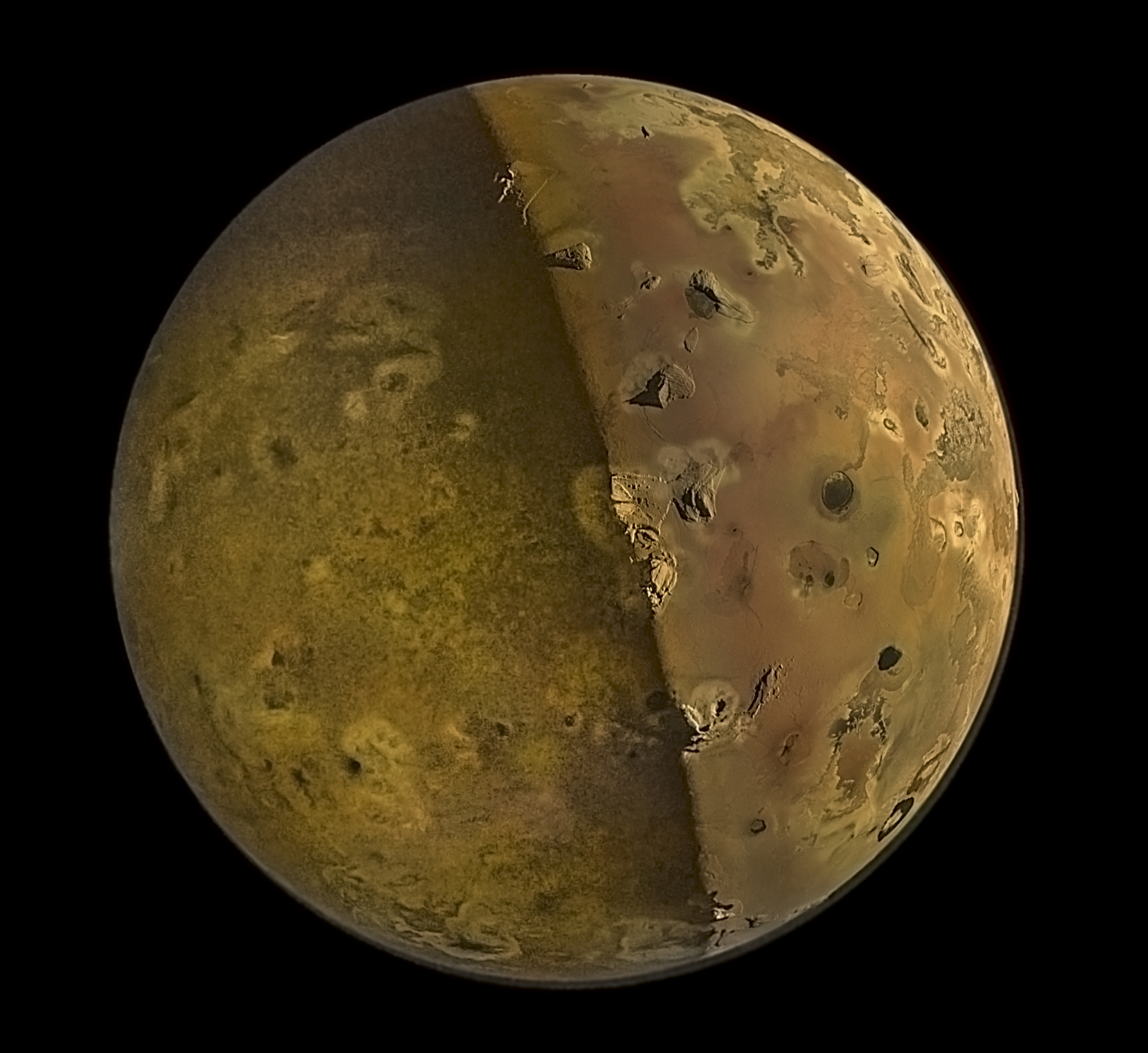
An image of an orangish-brown moon showing craters and other surface detail; the right hemisphere is lit with sunlight reflected from Jupiter.
Jupiter’s moon Io, its night side illuminated by reflected sunlight from Jupiter, or “Jupitershine.”
Image data: NASA/JPL-Caltech/SwRI/MSSS Image processing by Emma Wälimäki © CC BY

NASA’s Juno spacecraft just made the closest flybys of Jupiter’s moon Io that any spacecraft has carried out in more than 20 years. An instrument on this spacecraft called “JunoCam” returned spectacular, high-resolution images—and raw data are now available for you to process, enhance, and investigate.

On Dec. 30th, 2023, Juno came within about 930 miles (1,500 kilometers) of the surface of the solar system’s most volcanic world. It made a  second ultra-close flyby of Io just this week. The second pass went predominantly over the southern hemisphere of Io, while prior flybys have been over the north. There’s a lot to see in these photos! There’s evidence of an active plume, tall mountain peaks with well-defined shadows, and lava lakes—some with apparent islands. 

It will be a challenge to sort all of this out, and the JunoCam scientists need your help. Previous JunoCam volunteers like Gerald Eichstadt have seen their processed images appear in multiple scientific publications and press releases.

You can find the new raw images, see the creations of other image processors, and submit your own work at: https://www.missionjuno.swri.edu/junocam/processing.

Share

Details

Last Updated

Feb 07, 2024

Powered by WPeMatico

Get The Details…

Ax-3 Astronauts Undock in Dragon from Station for Earth Return

Ax-3 Astronauts Undock in Dragon from Station for Earth Return

The SpaceX Dragon Freedom spacecraft (left) backs away from the space station carrying four Axiom Mission 3 astronauts. The SpaceX Dragon Endurance (right) is pictured docked to the Harmony module's space-facing port. Credit: NASA TV
The SpaceX Dragon Freedom spacecraft (left) backs away from the space station carrying four Axiom Mission 3 astronauts. The SpaceX Dragon Endurance (right) is pictured docked to the Harmony module’s space-facing port. Credit: NASA TV

The SpaceX Dragon spacecraft undocked from the space-facing port of the International Space Station’s Harmony module at 9:20 a.m. EST over the Pacific Ocean, west of Ecuador, to complete the third all-private astronaut mission to the orbiting laboratory, Axiom Mission 3 (Ax-3).

Dragon is slowly maneuvering away from the orbital laboratory into an orbital track that will return the astronaut crew and its cargo safely to Earth, targeting a splashdown off the coast of Daytona, Florida, at approximately 8:30 a.m. EST Friday, Feb. 9.

Ax-3 astronauts Michael López-Alegría, Walter Villadei, Marcus Wandt, and Alper Gezeravci will complete 18 days aboard the orbiting laboratory at the conclusion of their mission. The SpaceX Dragon will return to Earth with more than 550 pounds of science and supplies, including NASA experiments and hardware.

Joint operations with the Axiom and SpaceX mission teams end and NASA coverage of the mission concludes when the spacecraft exits the area of the space station, approximately 30 minutes after undocking.

Axiom Space leads independent mission operations for Ax-3 and will resume coverage of Dragon’s re-entry and splashdown.


Learn more about station activities by following the space station blog@space_station and @ISS_Research on X, as well as the ISS Facebook and ISS Instagram accounts.

Get weekly video highlights at: https://roundupreads.jsc.nasa.gov/videoupdate/

Get the latest from NASA delivered every week. Subscribe here: www.nasa.gov/subscribe

Powered by WPeMatico

Get The Details…

Mark Garcia

Ax-3 Astronauts Close Dragon Hatch Before Undocking

Ax-3 Astronauts Close Dragon Hatch Before Undocking

The Axiom Mission 3 crew members are seated inside the SpaceX Dragon spacecraft preparing for their undocking from the International Space Station. Credit: NASA TV

At 7:25 a.m. EST, the hatch closed between the Dragon spacecraft and the International Space Station in preparation for undocking and return to Earth of the Axiom Mission 3 (Ax-3) with astronauts Michael López-Alegría, Walter Villadei, Marcus Wandt, and Alper Gezeravci.

NASA Television will air live coverage resuming at 9 a.m. in advance of the planned departure of Dragon with undocking about 9:20 a.m. and will continue until about 30 minutes after undocking when joint operations with the Axiom and SpaceX mission teams ends.

Today’s undocking will begin the Ax-3 mission’s journey home with splashdown off the coast of Daytona, Florida, targeted for approximately 8:30 a.m. EST Friday, Feb 9.


Learn more about station activities by following the space station blog@space_station and @ISS_Research on X, as well as the ISS Facebook and ISS Instagram accounts.

Get weekly video highlights at: https://roundupreads.jsc.nasa.gov/videoupdate/

Get the latest from NASA delivered every week. Subscribe here: www.nasa.gov/subscribe

Powered by WPeMatico

Get The Details…

Mark Garcia