New NASA Mission will Study Ultraviolet Sky, Stars, Stellar Explosions

New NASA Mission will Study Ultraviolet Sky, Stars, Stellar Explosions
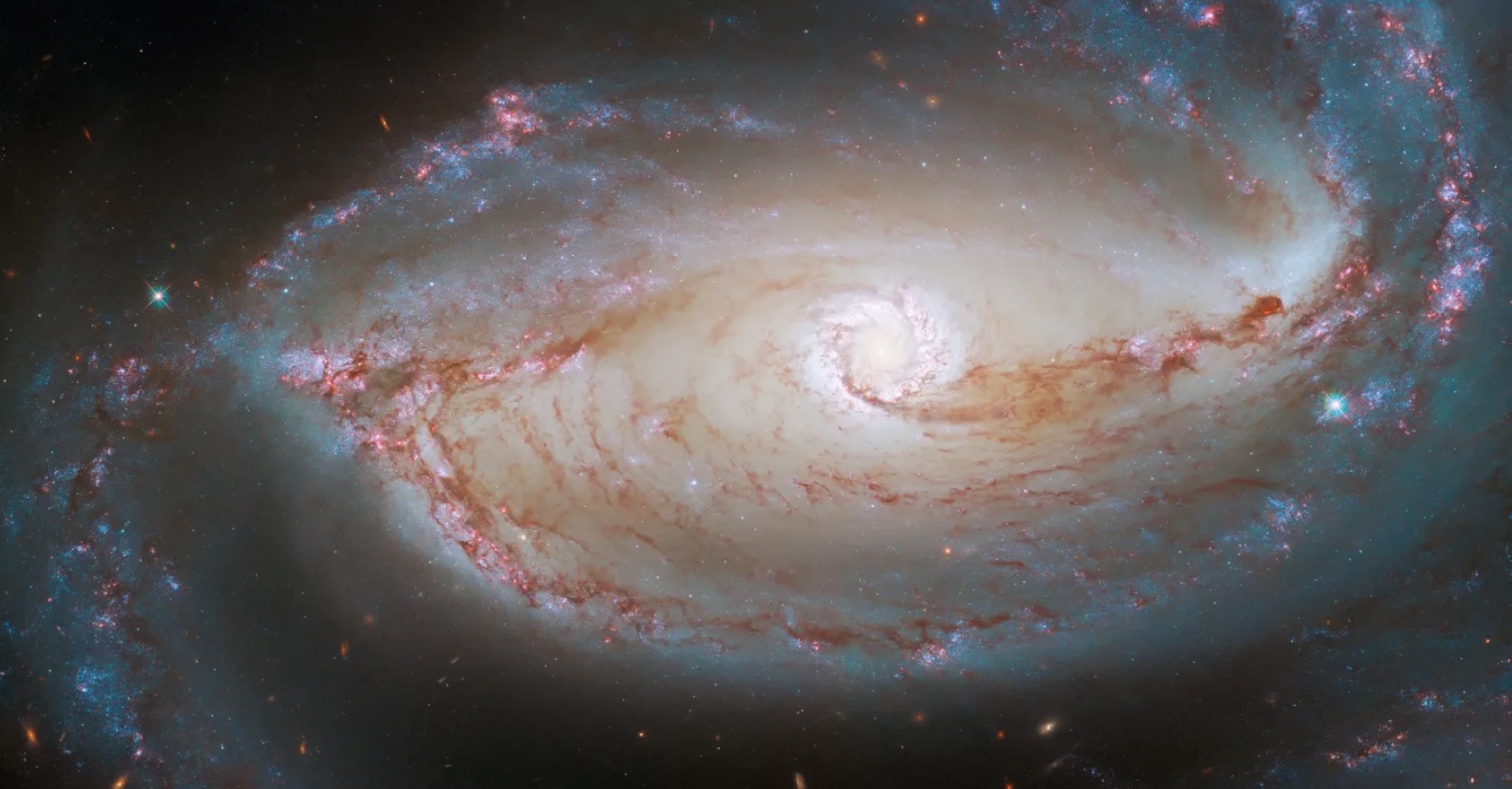
This image shows the heart of the barred spiral galaxy NGC 1097, as seen by NASA’s Hubble Space Telescope.
Credit: ESA/Hubble & NASA, D. Sand, K. Sheth

As NASA explores the unknown in air and space, a new mission to survey ultraviolet light across the entire sky will provide the agency with more insight into how galaxies and stars evolve. The space telescope, called UVEX (UltraViolet EXplorer), is targeted to launch in 2030 as NASA’s next Astrophysics Medium-Class Explorer mission.

In addition to conducting a highly sensitive all-sky survey, UVEX will be able to quickly point toward sources of ultraviolet light in the universe. This will enable it to capture the explosions that follow bursts of gravitational waves caused by merging neutron stars. The telescope also will carry an ultraviolet spectrograph to study stellar explosions and massive stars.

“NASA’s UVEX will help us better understand the nature of both nearby and distant galaxies, as well as follow up on dynamic events in our changing universe,” said Nicola Fox, associate administrator, Science Mission Directorate at NASA Headquarters in Washington. “This mission will bring key capabilities in near-and far-ultraviolet light to our fleet of space telescopes, delivering a wealth of survey data that will open new avenues in exploring the secrets of the cosmos.”

The telescope’s ultraviolet survey will complement data from other missions conducting wide surveys in this decade, including the Euclid mission led by ESA (European Space Agency) with NASA contributions, and NASA’s Nancy Grace Roman Space Telescope, set to launch by May 2027. Together, these missions will help create a modern, multi-wavelength map of our universe.

“With the innovative new UVEX mission joining our portfolio, we will gain an important legacy archive of data that will be of lasting value to the science community,” said Mark Clampin, director of the Astrophysics Division at NASA Headquarters. “This new telescope will contribute to our understanding of the universe across multiple wavelengths and address one of the major priorities in Astrophysics today: studying fleeting changes in the cosmos.”

NASA selected the UVEX Medium-Class Explorer concept to continue into development after detailed review of two Medium-Class Explorer and two Mission of Opportunity concept proposals by a panel of scientists and engineers, and after evaluation based on NASA’s current astrophysics portfolio coupled with available resources. The UVEX mission was selected for a two-year mission and will cost approximately $300 million, not including launch costs.

The mission’s principal investigator is Fiona Harrison at Caltech in Pasadena, California. Other institutions involved in the mission include University of California at Berkeley, Northrop Grumman, and Space Dynamics Laboratory.

The Explorers Program is the oldest continuous NASA program. The program is designed to provide frequent, low-cost access to space using principal investigator-led space science investigations relevant to the agency’s astrophysics and heliophysics programs.

Since the launch of Explorer 1 in 1958, which discovered the Earth’s radiation belts, the Explorers Program has launched more than 90 missions, including the Uhuru and Cosmic Background Explorer missions that led to Nobel prizes for their investigators.

The program is managed by NASA’s Goddard Space Flight Center for the Science Mission Directorate, which conducts a wide variety of research and scientific exploration programs for Earth studies, space weather, the solar system, and the universe.

For more information about the Explorers Program, visit:

https://explorers.gsfc.nasa.gov

-end-

Alise Fisher
Headquarters, Washington
202-358-2546
alise.m.fisher@nasa.gov

Share

Details

Last Updated

Feb 13, 2024

Related Terms

Powered by WPeMatico

Get The Details…
Roxana Bardan
Six NASA Instruments Will Fly to Moon on Intuitive Machines Lander

Six NASA Instruments Will Fly to Moon on Intuitive Machines Lander

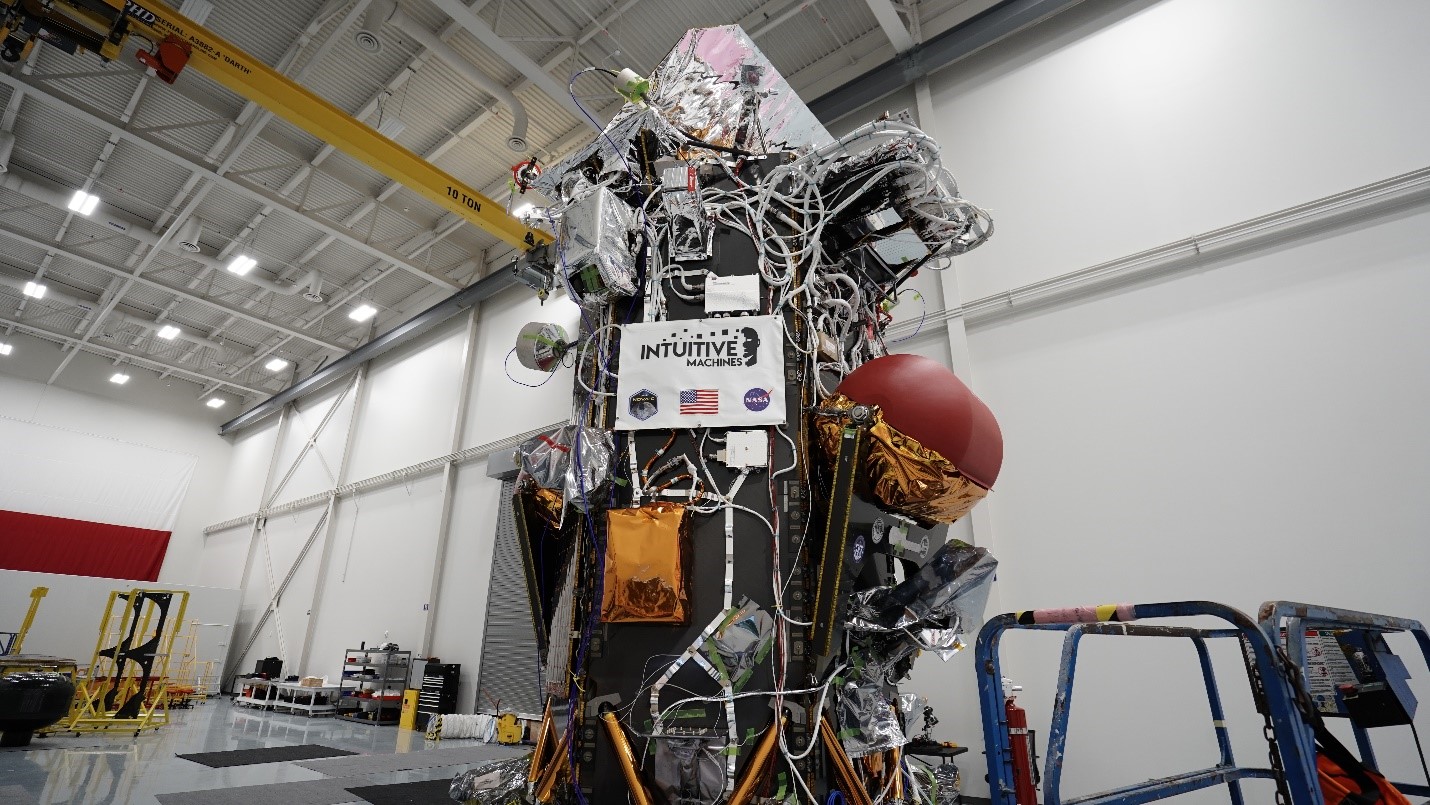
The Nova-C lunar lander is seen in the high bay of Intuitive Machines Headquarters in Houston, before it shipped to NASA’s Kennedy Space Center in Florida for integration with a SpaceX Falcon 9 rocket for launch as part of NASA’s CLPS (Commercial Lunar Payload Services) initiative and Artemis campaign.
Credit: Intuitive Machines

NASA is gearing up for a commercial robotic flight to the Moon under the agency’s CLPS (Commercial Lunar Payload Services) initiative and Artemis campaign. Intuitive Machines will launch its Nova-C lander on a SpaceX Falcon 9 rocket no earlier than Wednesday, Feb. 14, from Cape Canaveral, Florida. The Intuitive Machines IM-1 mission will carry six NASA payloads targeted for the South Polar region.

The group of NASA instruments aboard IM-1 will conduct scientific research and demonstrate technologies to help us better understand the Moon’s environment and improve landing precision and safety in the challenging conditions of the lunar south polar region, paving the way for future Artemis astronaut missions. The payloads will collect data on how the plume of engine gasses interacts with the Moon’s surface and kicks up lunar dust, investigate radio astronomy and space weather interactions with the lunar surface, test precision landing technologies, and measure the quantity of liquid propellant in Nova-C propellant tanks in the zero gravity of space. The Nova-C lander will also carry a retroreflector array that will contribute to a network of location markers on the Moon that will be used as a position marker for decades to come

The Nova-C lander is targeted to land Thursday, Feb. 22, in a relatively flat and safe area near the Malapert A crater, in the south polar region of the Moon.

The six NASA payloads aboard Intuitive Machines’ IM-1 mission include:

  • LN-1 (Lunar Node 1 Navigation Demonstrator)
    A small, CubeSat-sized flight hardware experiment that integrates navigation and communication functionality for autonomous navigation to support future surface and orbital operations. Principal investigator: Dr. Evan Anzalone, NASA’s Marshall Space Flight Center
  • LRA (Laser Retroreflector Array)
    A collection of eight retroreflectors that enable precision laser ranging, which is a measurement of the distance between an orbiting or landing spacecraft to the reflector on the lander. LRA is a passive optical instrument and will function as a permanent location marker on the Moon for decades to come.
    Principal investigator: Dr. Xiaoli Sun, NASA’s Goddard Space Flight Center
  • NDL (Navigation Doppler Lidar for Precise Velocity and Range Sensing)
    A Lidar-based (Light Detection and Ranging) descent and landing sensor. This instrument operates on the same principles of radar but uses pulses from a laser emitted through three optical telescopes. NDL will measure vehicle velocity (speed and direction) and altitude (distance to surface) with high precision during descent to touchdown. Principal investigator: Dr. Farzin Amzajerdian, NASA’s Langley Research Center
  • RFMG (Radio Frequency Mass Gauge)
    A rocket propellant gauge used to measure the amount of spacecraft propellant in a low-gravity space environment. Using sensor technology, RFMG will measure the amount, or mass, of cryogenic propellants in Nova-C’s tanks, providing data that can help predict propellant usage on future missions. Principal investigator: Dr. Greg Zimmerli, NASA’s Glenn Research Center
  • ROLSES (Radio-wave Observations at the Lunar Surface of the Photoelectron Sheath)
    Four antennas and a low-frequency radio receiver system designed to study the dynamic radio energy environment near the lunar surface and determine how natural and human-generated activity near the surface interacts with science investigations. It will also detect radio emissions from the Sun, Jupiter, and Earth, as well as dust impacting the surface of the Moon. Principal investigator: Dr. Nat Gopalswamy, NASA Goddard
  • SCALPSS (Stereo Cameras for Lunar Plume-Surface Studies)
    A suite of four cameras to capture stereo and still images of the dust plume created by the lander’s engine as it begins its descent to the lunar surface until after the engine shuts off. Principal investigator: Michelle Munk, NASA Langley

Intuitive Machines is one of 14 vendors eligible to carry NASA payloads to the Moon through the agency’s CLPS initiative, which began in 2018. CLPS is an innovative approach connecting NASA with commercial solutions from American companies to deliver scientific, exploration, and technology payloads to the Moon’s surface and into lunar orbit. Through CLPS, NASA aims to gain new insights into the lunar environment and expand the lunar economy to support future crewed missions under the Artemis campaign.

Learn more about NASA’s CLPS initiative at:

https://www.nasa.gov/clps/

Powered by WPeMatico

Get The Details…
Jeffery Rubio

Spiral Galaxy NGC 4254’s Dazzling Swirls

Spiral Galaxy NGC 4254’s Dazzling Swirls

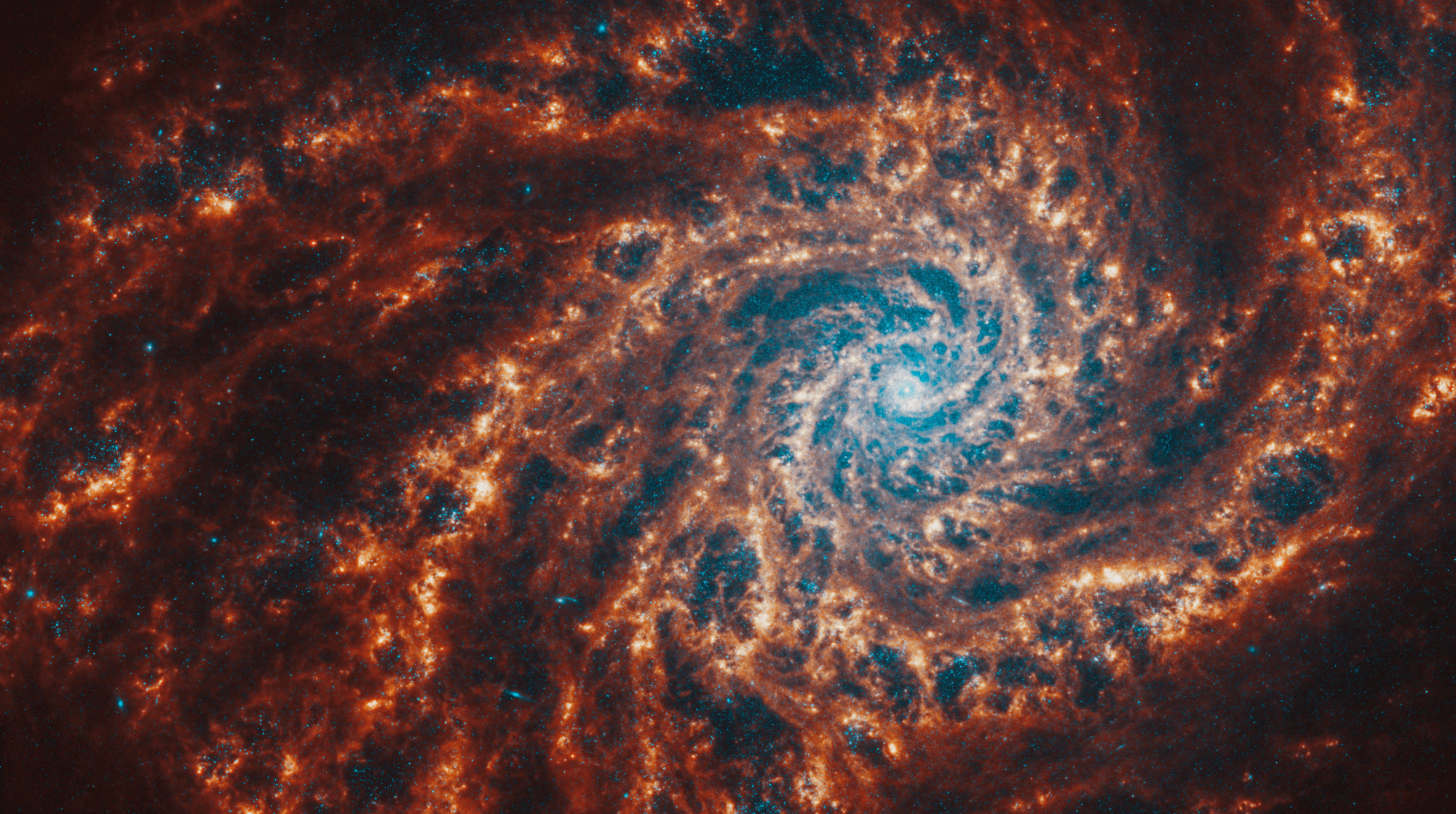
Webb’s image of NGC 4254 shows a densely populated face-on spiral galaxy anchored by its central region, which has a light blue haze that takes up about a quarter of the view. In this circular core is the brightest blue area. Within the core are populations of older stars, represented by many pinpoints of blue light. Spiny spiral arms made of stars, gas, and dust also start at the center, largely starting in the wider area of the blue haze. The spiral arms extend to the edges, rotating counterclockwise. The spiraling filamentary structure looks somewhat like a cross section of a nautilus shell. The arms of the galaxy are largely orange, ranging from dark to bright orange. Scattered across the packed scene are some additional bright blue pinpoints of light, which are stars spread throughout the galaxy. In areas where there is less orange, it is darker, and some dark regions look more circular.
It’s oh-so-easy to be mesmerized by this spiral galaxy. Follow its clearly defined arms, which are brimming with stars, to its center, where there may be old star clusters and – sometimes – active supermassive black holes. NASA’s James Webb Space Telescope delivered highly detailed scenes of this and other nearby spiral galaxies in a combination of near- and mid-infrared light.
NASA, ESA, CSA, STScI, Janice Lee (STScI), Thomas Williams (Oxford), and the PHANGS team

NGC 4254, a spiral galaxy, is resplendent in orange and blue in this Jan. 29, 2024, image from the James Webb Space Telescope. This is one of 19 nearby spiral galaxies recently imaged by the telescope as part of the long-standing Physics at High Angular resolution in Nearby GalaxieS (PHANGS) program supported by more than 150 astronomers worldwide.

Webb’s Near-Infrared Camera captured millions of stars in these images, which sparkle in blue tones, while the telescope’s Mid-Infrared Instrument data highlights glowing dust, showing us where it exists around and between stars.

Explore the intricacies of spiral galaxies in this deep dive.

Image Credit: NASA, ESA, CSA, STScI, Janice Lee (STScI), Thomas Williams (Oxford), and the PHANGS team

Powered by WPeMatico

Get The Details…
Monika Luabeya

Into the Belly of the Rover: VIPER’s Final Science Instrument Installed 

Into the Belly of the Rover: VIPER’s Final Science Instrument Installed 

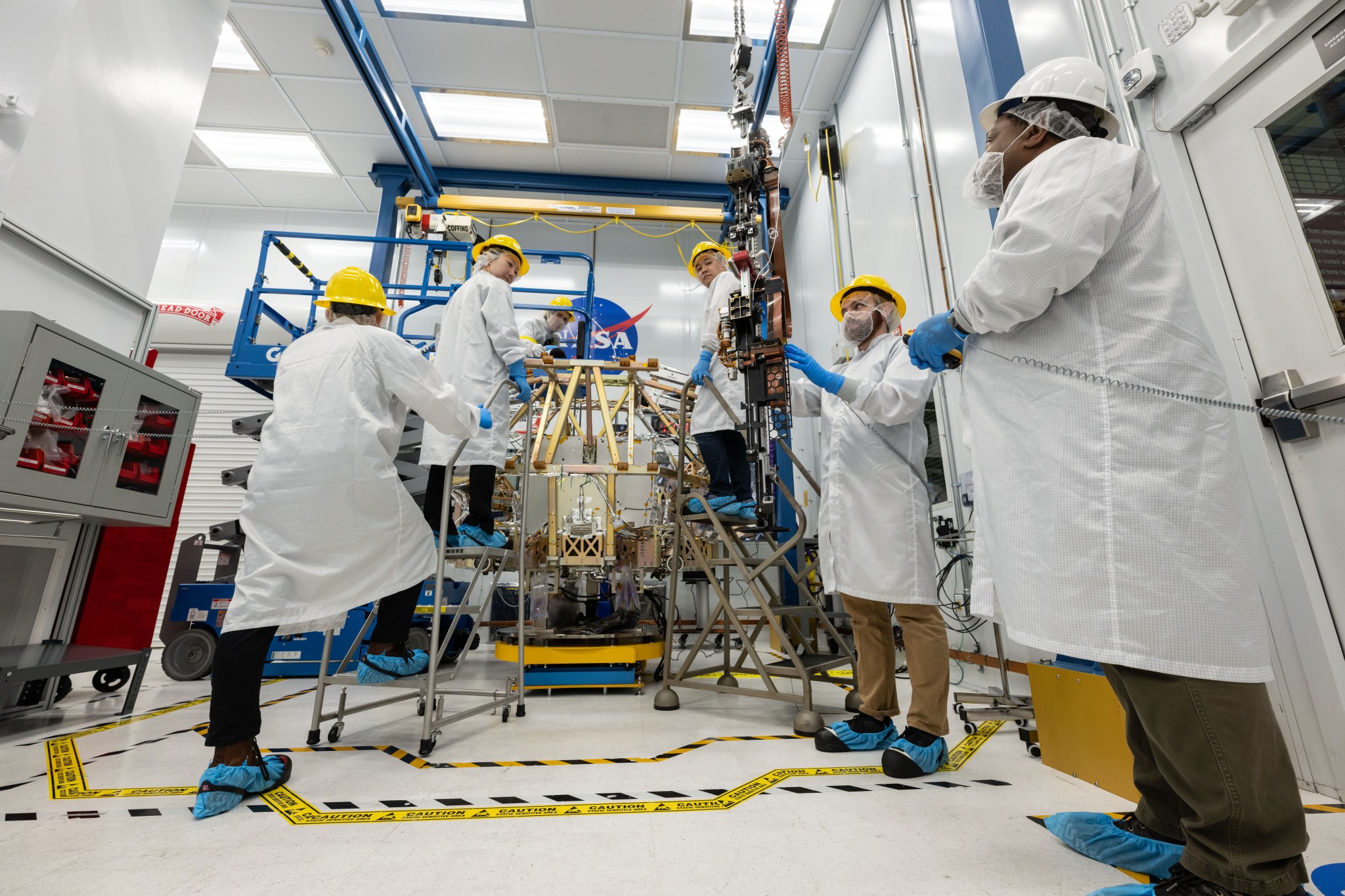
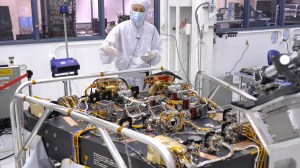
A team of engineers prepares to integrate TRIDENT – short for The Regolith Ice Drill for Exploring New Terrain – into the belly of NASA’s first robotic Moon rover, VIPER – short for the Volatiles Investigating Polar Exploration Rover.
NASA/Bill Stafford

A team of engineers prepares to integrate TRIDENT – short for The Regolith Ice Drill for Exploring New Terrain – into the belly of NASA’s first robotic Moon rover, VIPER (Volatiles Investigating Polar Exploration Rover). 

TRIDENT, designed and developed by engineers at Honeybee Robotics in Altadena, California, is the fourth and final science instrument to be installed into VIPER. NASA engineers have already successfully integrated VIPER’s three other science instruments into the rover. These include: the MSOLO (Mass Spectrometer Observing Lunar Operations), NIRVSS (Near-Infrared Volatiles Spectrometer System), and NSS (Neutron Spectrometer System). 

Shortly after TRIDENT was integrated in the clean room at NASA’s Johnson Space Center in Houston, the team also successfully tested its ability to power on, release the locks that hold the drill in place during launch, extend to its full depth of more than three feet (one meter), perform percussive drilling, and return to its stowed position inside the rover.

TRIDENT will dig up soil from below the lunar surface using a rotary percussive drill – meaning it both spins to cut into the ground and hammers to fragment hard material for more energy-efficient drilling. In addition to being able to measure the strength and compactedness of the lunar soil, the drill also carries a temperature sensor to take readings below the surface. VIPER will launch to the Moon aboard Astrobotic’s Griffin lunar lander on a SpaceX Falcon Heavy rocket as part of NASA’s Commercial Lunar Payload Services initiative. It will reach its destination at Mons Mouton near the Moon’s South Pole. Scientists will work with these four instruments to better understand the origin of water and other resources on the Moon, which could support human exploration as part of NASA’s Artemis campaign.

Powered by WPeMatico

Get The Details…
Rachel Hoover

Team Assessing SHERLOC Instrument on NASA’s Perseverance Rover

Team Assessing SHERLOC Instrument on NASA’s Perseverance Rover

3 min read

Preparations for Next Moonwalk Simulations Underway (and Underwater)

NASA’s Perseverance puts its robotic arm to work
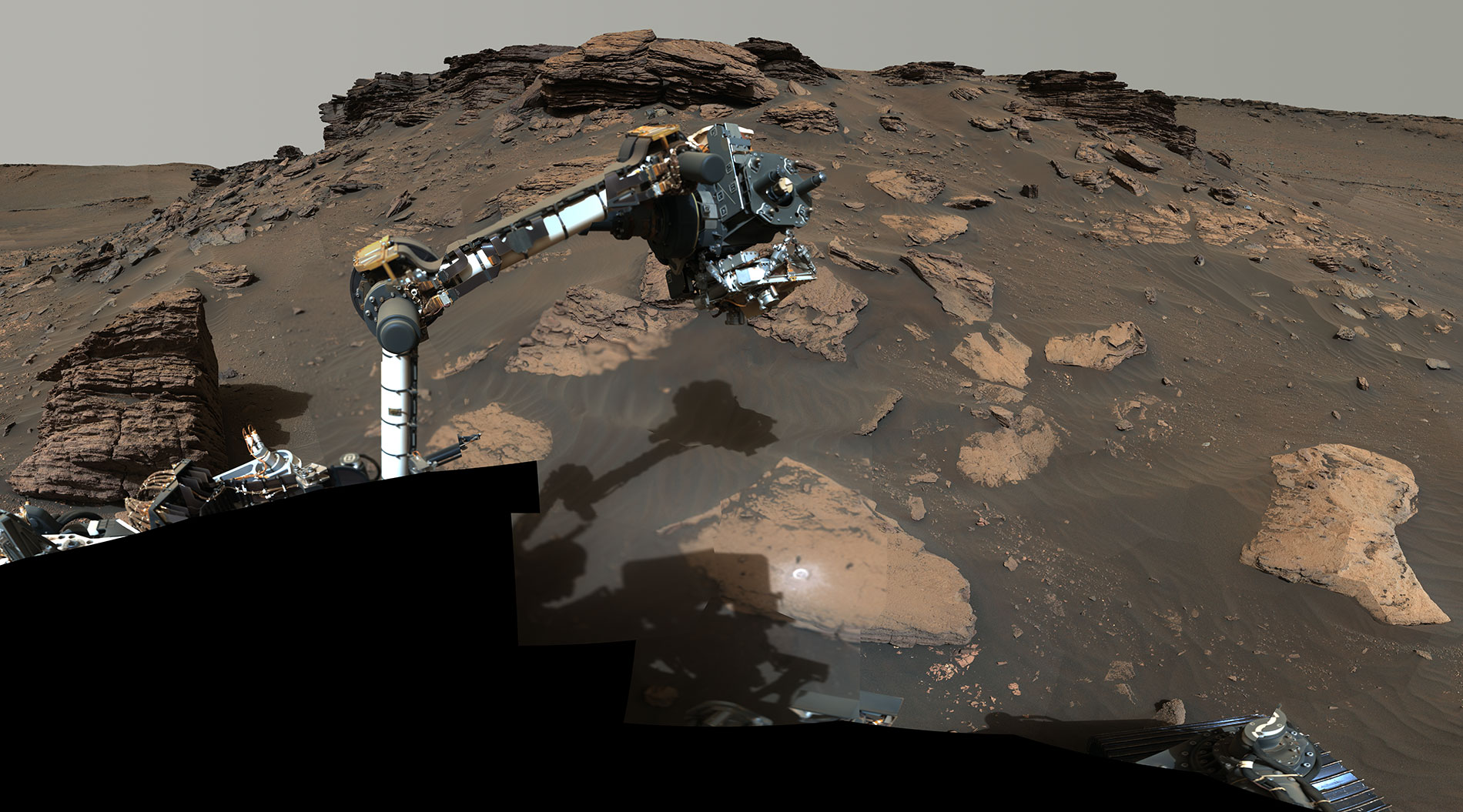
NASA’s Perseverance puts its robotic arm to work around a rocky outcrop called “Skinner Ridge” in a set of images captured in June and July 2022 by the rover’s Mastcam-Z camera system. SHERLOC is mounted on the end of the arm.
NASA/JPL-Caltech/ASU/MSSS

Engineers are working to stabilize a dust cover on one of the science instrument’s cameras.

Data and imagery from NASA’s Perseverance Mars rover indicate one of two covers that keep dust from accumulating on the optics of the SHERLOC instrument remains partially open. In this position, the cover interferes with science data collection operations. Mounted on the rover’s robotic arm, SHERLOC (Scanning Habitable Environments with Raman & Luminescence for Organics and Chemicals) uses cameras, a spectrometer, and a laser to search for organic compounds and minerals that have been altered in watery environments and may be signs of past microbial life.

The mission determined on Jan. 6 that the cover was oriented in such a position that some of its operation modes could not successfully operate. An engineering team has been investigating to determine the root cause and possible solutions. Recently, the cover partially opened. To better understand the behavior of the cover’s motor, the team has been sending commands to the instrument that alter the amount of power being fed to it.

With the cover in its current position, the instrument cannot use its laser on rock targets, and cannot collect spectroscopy data. However, imaging microscopy can still be acquired with WATSON, a color camera on SHERLOC used for taking close-up images of rock grains and surface textures. WATSON (Wide Angle Topographic Sensor for Operations and eNgineering) operates through a different aperture.

SHERLOC is part of a seven-instrument suite on Perseverance. During development of the mission, the team designed the instrument suite such that the rover could still achieve its science objectives should any single instrument fail, as there is some overlap among the capabilities of the instruments. Along with SHERLOC, PIXL (Planetary Instrument for X-ray Lithochemistry) and SuperCam also perform spectroscopy.

Currently making its way to explore an area nicknamed “Beehive Geyser,” the rover marked its 1,000th Martian day, or sol, on the Red Planet on Dec. 12, 2023 – more than 300 sols beyond its initial prime mission. Since the rover’s landing Feb. 18, 2021, SHERLOC has scanned and provided rich data on 34 rock targets, creating a total of 261 hyperspectral maps of those targets. Featuring a radioisotope power system, Perseverance’s design is based on the agency’s Curiosity Mars rover, which is still going strong after more than 11 years (4,000 sols) on the Red Planet.

More About the Mission

A key objective for Perseverance’s mission on Mars is astrobiology, including the search for signs of ancient microbial life. The rover will characterize the planet’s geology and past climate, pave the way for human exploration of the Red Planet, and be the first mission to collect and cache Martian rock and regolith.

Subsequent NASA missions, in cooperation with ESA (European Space Agency), would send spacecraft to Mars to collect these sealed samples from the surface and return them to Earth for in-depth analysis.

The Mars 2020 Perseverance mission is part of NASA’s Moon to Mars exploration approach, which includes Artemis missions to the Moon that will help prepare for human exploration of the Red Planet.

JPL, which is managed for NASA by Caltech in Pasadena, California, built and manages operations of the Perseverance rover.

For more about Perseverance:

mars.nasa.gov/mars2020/

News Media Contacts

Karen Fox / Alana Johnson
NASA Headquarters, Washington
301-286-6284 / 202-358-1501
karen.c.fox@nasa.gov / alana.r.johnson@nasa.gov

DC Agle
Jet Propulsion Laboratory, Pasadena, Calif.
818-393-9011
agle@jpl.nasa.gov

2024-015

Share

Details

Last Updated

Feb 13, 2024

Powered by WPeMatico

Get The Details…
Anthony Greicius