55 Years Ago: Four Months Until the Moon Landing
The road to the Moon landing cleared a major hurdle in March 1969 with the flight of Apollo 9 that tested all components of the spacecraft in low Earth orbit. Astronauts James A. McDivitt and Russell L. Schweickart flew the Lunar Module (LM) Spider while David R. Scott awaited their return in the Command Module (CM) Gumdrop. The success of Apollo 9 paved the way for Apollo 10, the next mission planned for May, to test the combined spacecraft in lunar orbit. Preparations for Apollo 10 continued with the rollout of the Saturn V to its launch pad. And if that dress rehearsal mission completed all its objectives, Apollo 11 could achieve the first Moon landing in July. The astronauts for that mission continued their training as engineers tested the spacecraft and assembled the rocket.
Apollo 9
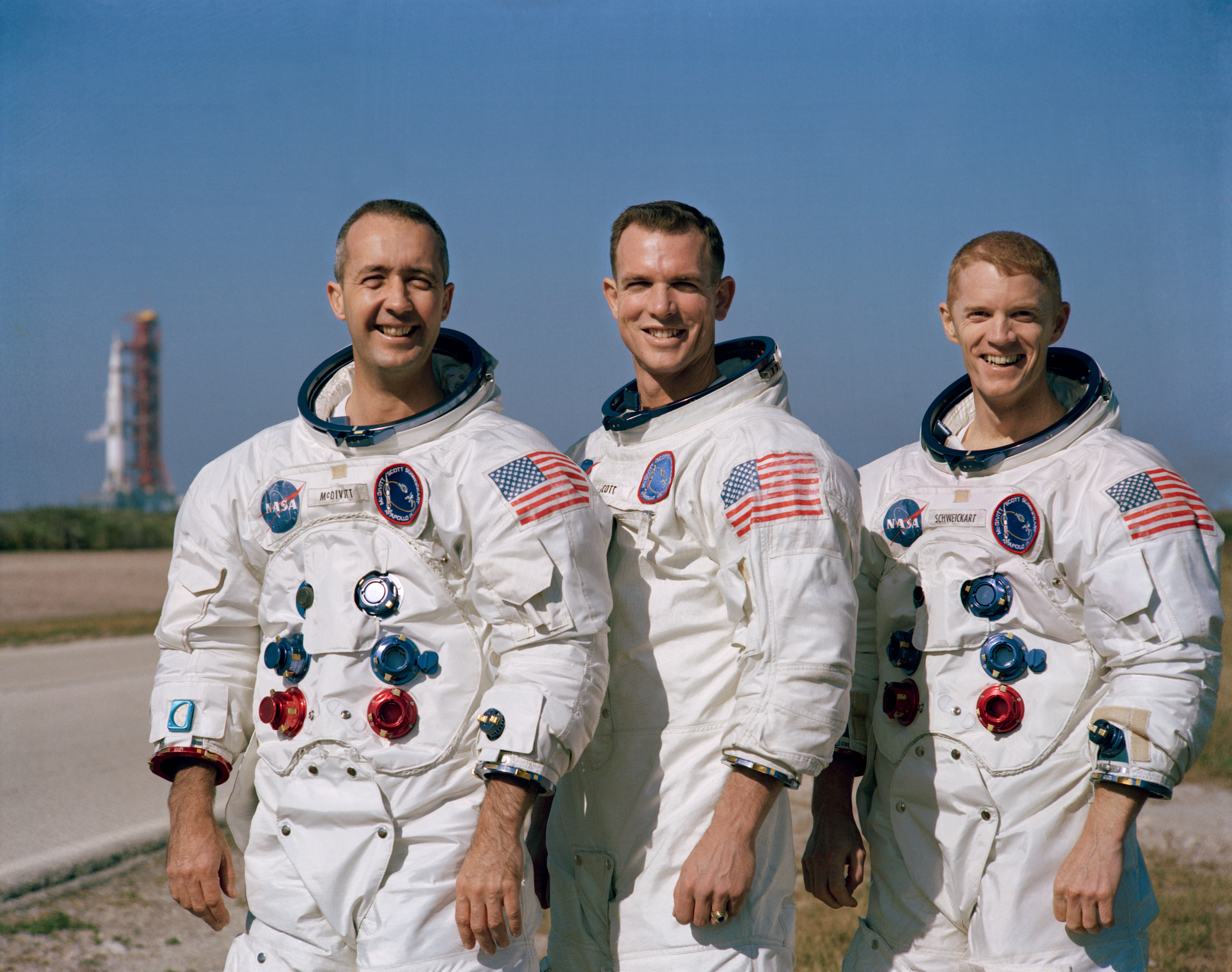
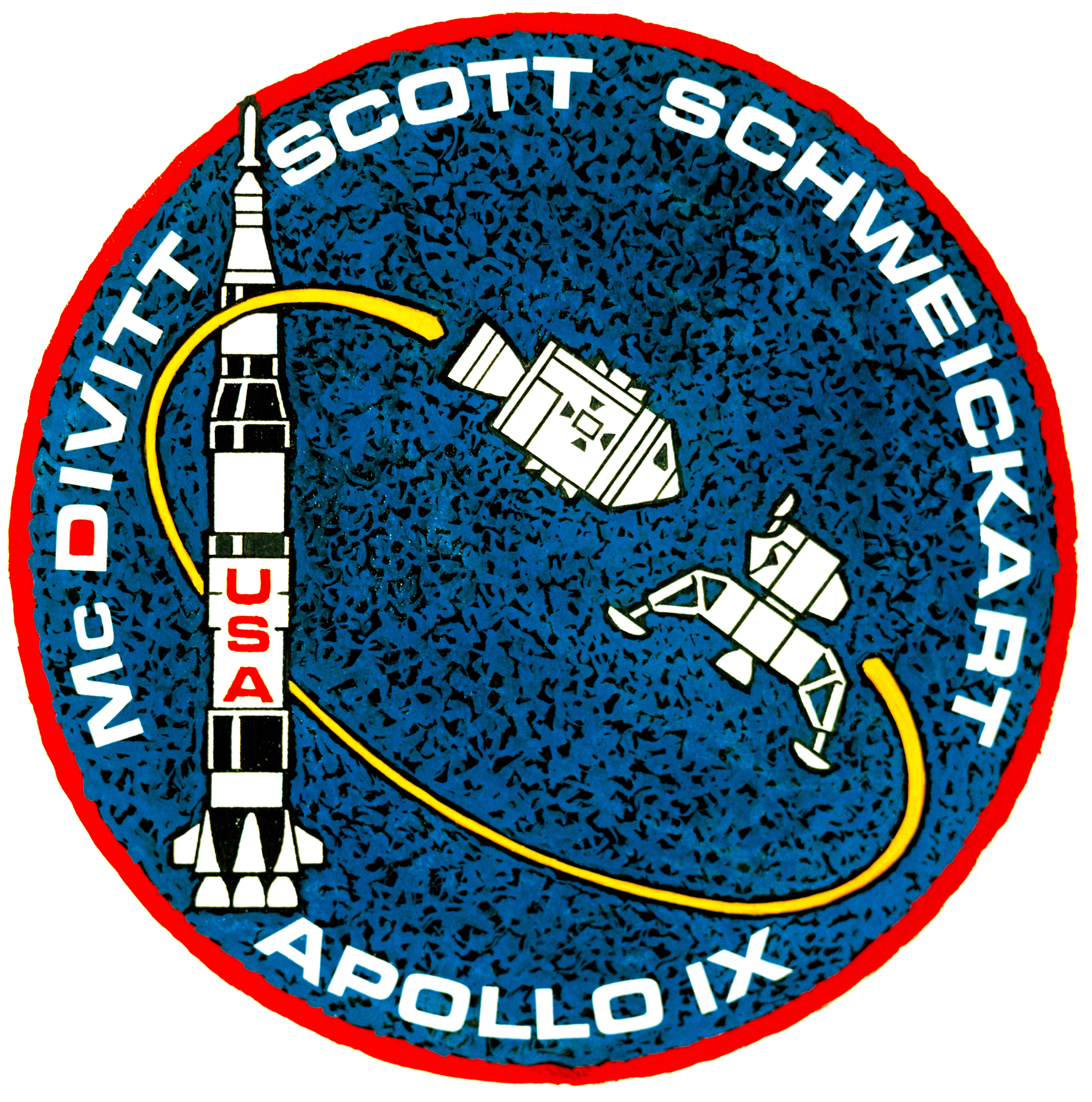
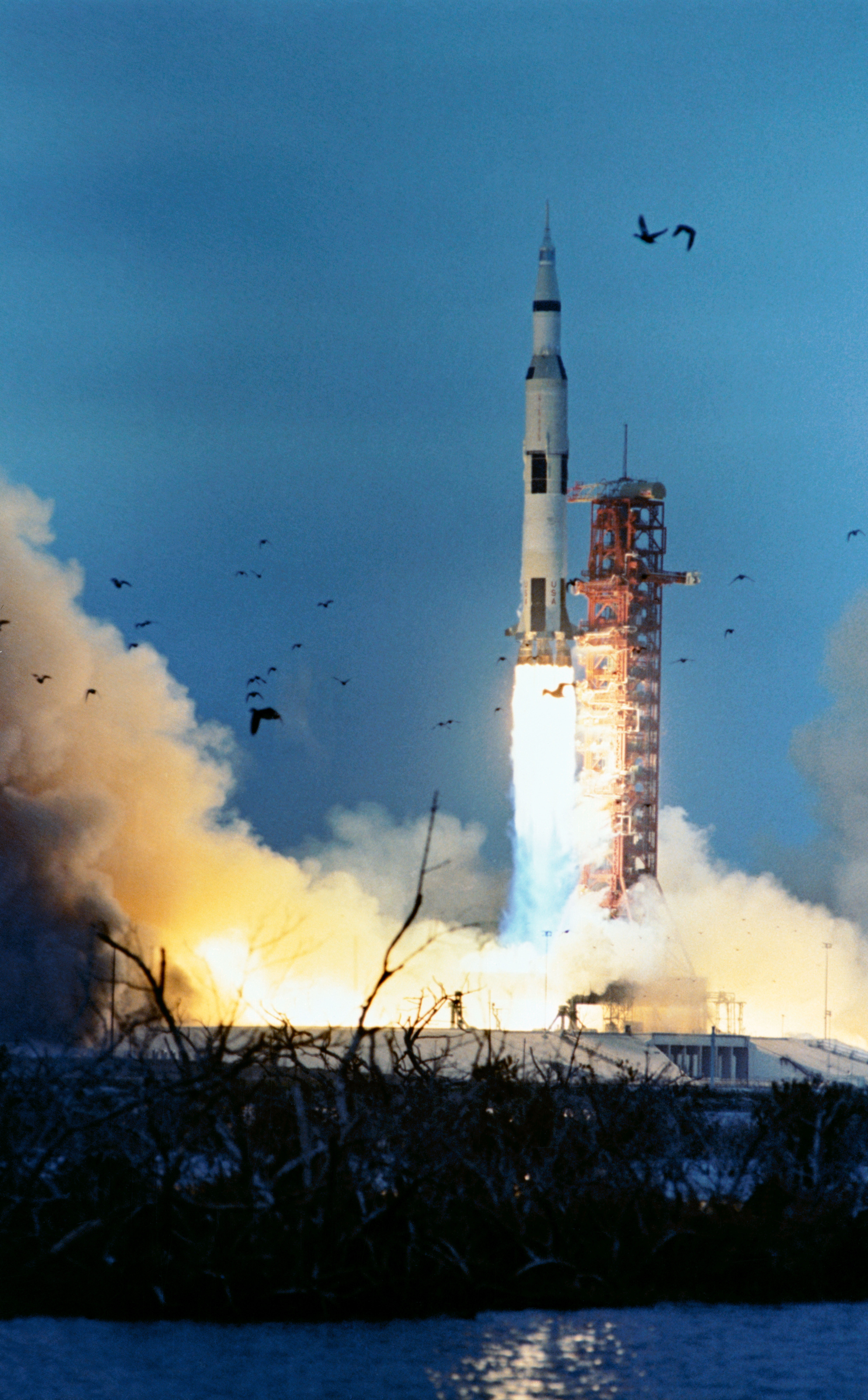
Left: Apollo 9 astronauts James A. McDivitt, left, David R. Scott, and Russell L. Schweickart pose in front of their Saturn V rocket at NASA’s Kennedy Space Center in Florida. Middle: The Apollo 9 crew patch. Right: Liftoff of Apollo 9!
At 11 a.m. on March 3, 1969, Apollo 9 lifted off from Launch Pad 39A at NASA’s Kennedy Space Center (KSC) in Florida. For only the second time, the giant Saturn V lifted three astronauts into space. Although planned for Feb. 28, managers delayed the liftoff by three days to give the astronauts time to recover from upper respiratory infections. The incident prompted NASA to institute a preflight medical quarantine for astronauts on future missions to minimize their risk of contracting infectious diseases.
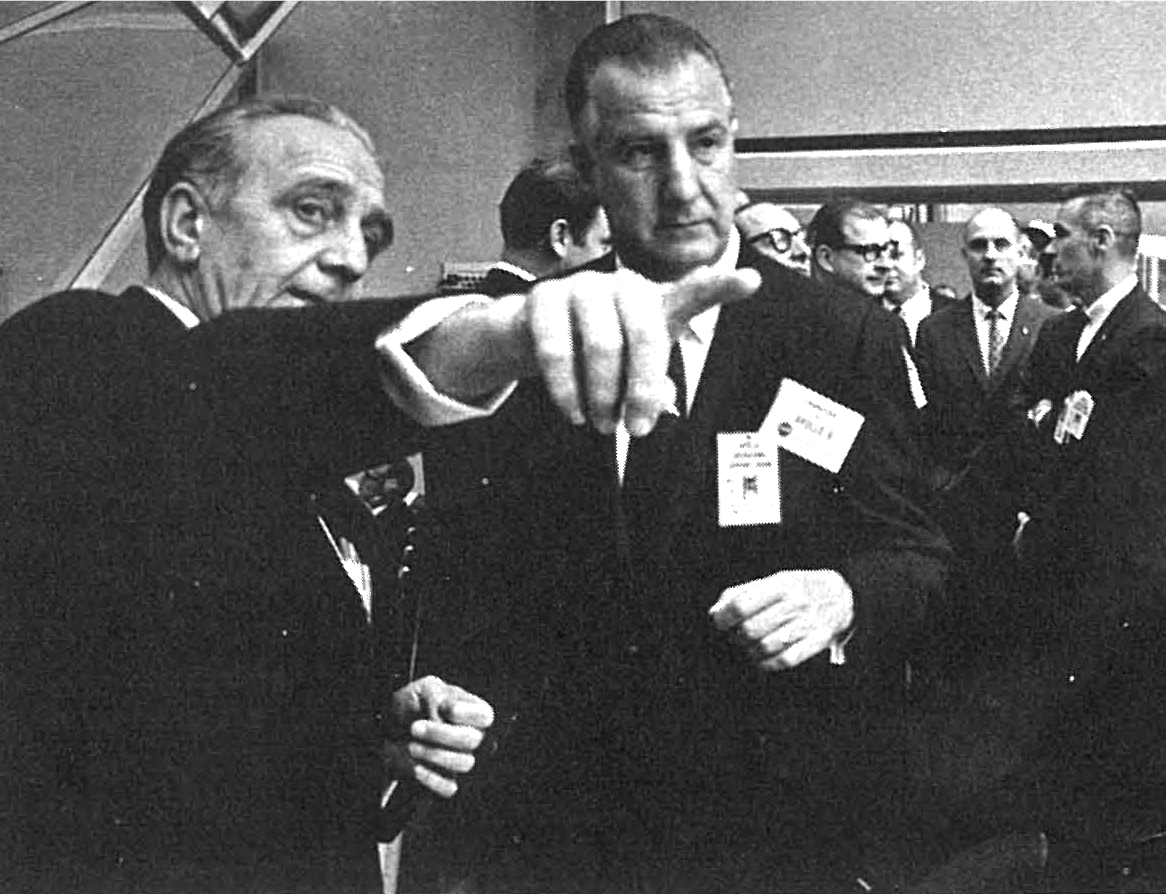
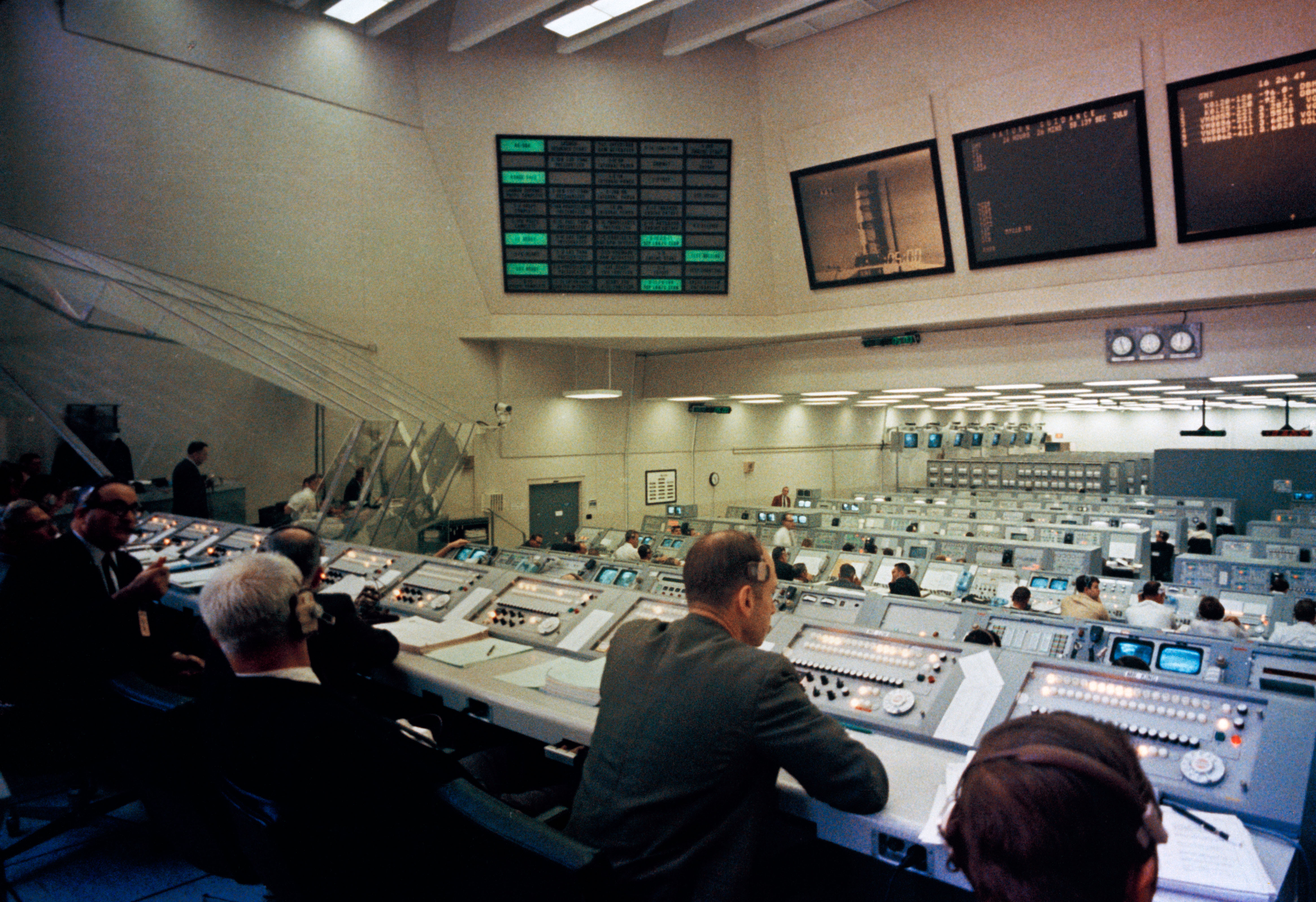
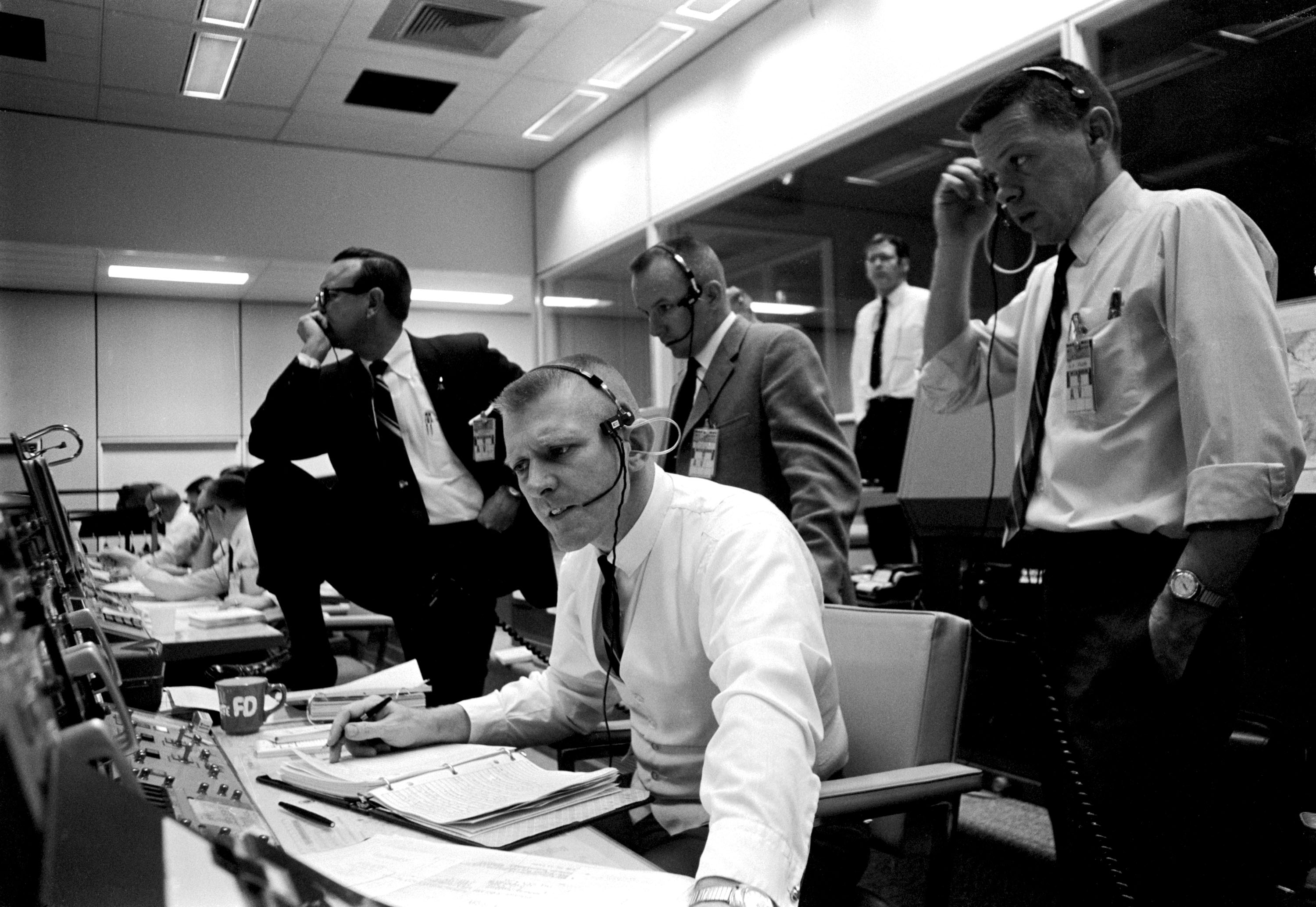
Left: In the Launch Control Center (LCC) at NASA’s Kennedy Space Center (KSC) in Florida, KSC Director Kurt H. Debus, left, gives a tour to Vice President Spiro T. Agnew as they await the launch of Apollo 9. Middle: Controllers in the LCC’s Firing Room 2 monitor Apollo 9’s countdown. Right: In Mission Control at the Manned Spacecraft Center, now NASA’s Johnson Space Center in Houston, Apollo 9 Lead Flight Director Eugene F. Kranz, seated, monitors the flight’s progress.
Controllers in Firing Room 2 of the Launch Control Center (LCC) monitored Apollo 9’s smooth countdown. Vice President Spiro T. Agnew, who chaired the National Aeronautics and Space Council, attended the launch, escorted by NASA Acting Administrator Thomas O. Paine and KSC Director Kurt H. Debus. As soon as the Saturn V cleared the launch tower, control of the flight switched from the LCC to Mission Control at the Manned Spacecraft Center (MSC), now NASA’s Johnson Space Center in Houston. Apollo 9 Lead Flight Director Eugene F. Kranz and his team of controllers monitored the launch. Eleven minutes after liftoff, the Saturn V’s three stages placed Apollo 9 in orbit around the Earth. During the 10-day mission, Flight Directors Gerald D. Griffin and M.P. “Pete” Frank took their turns along with Kranz leading their teams to monitor the flight.
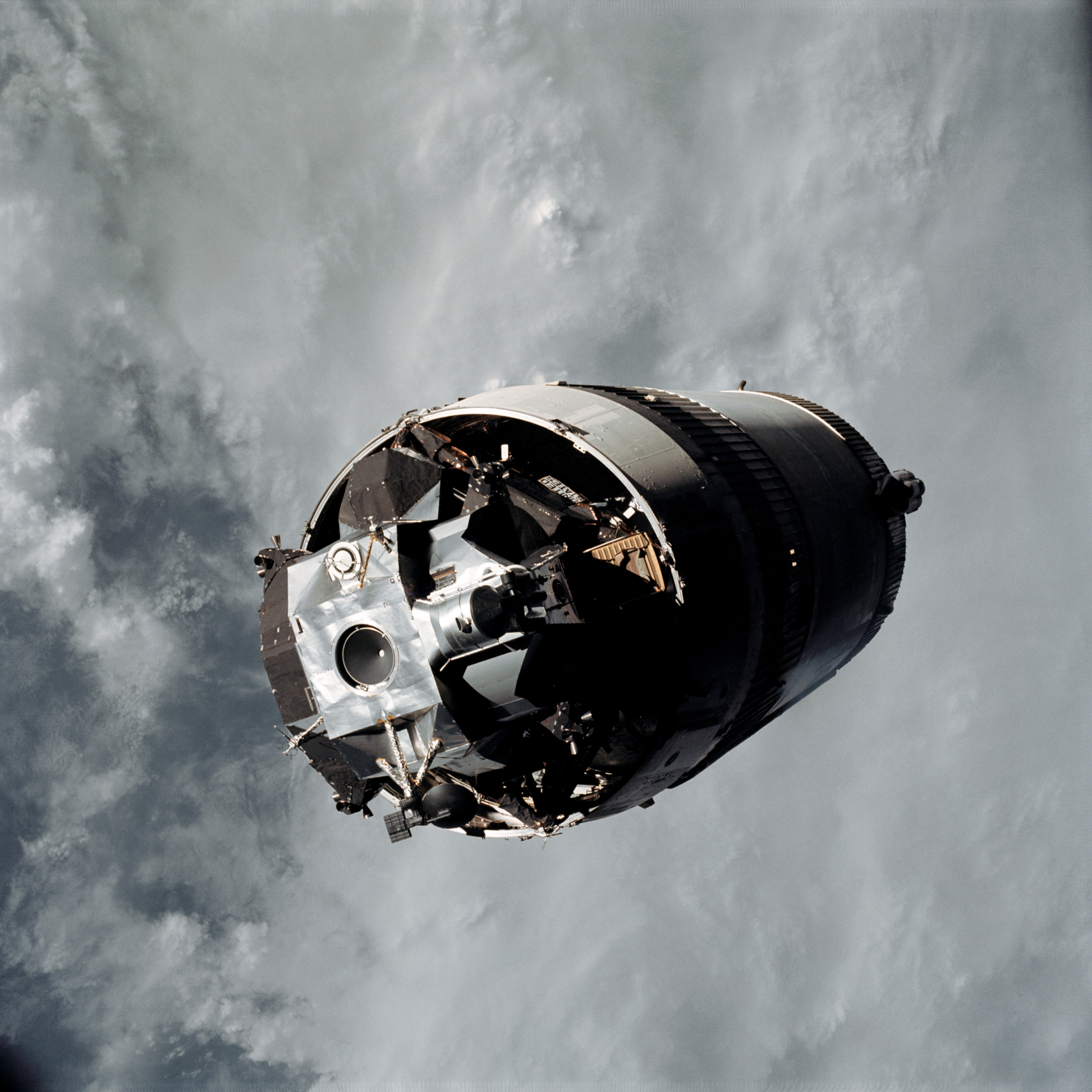
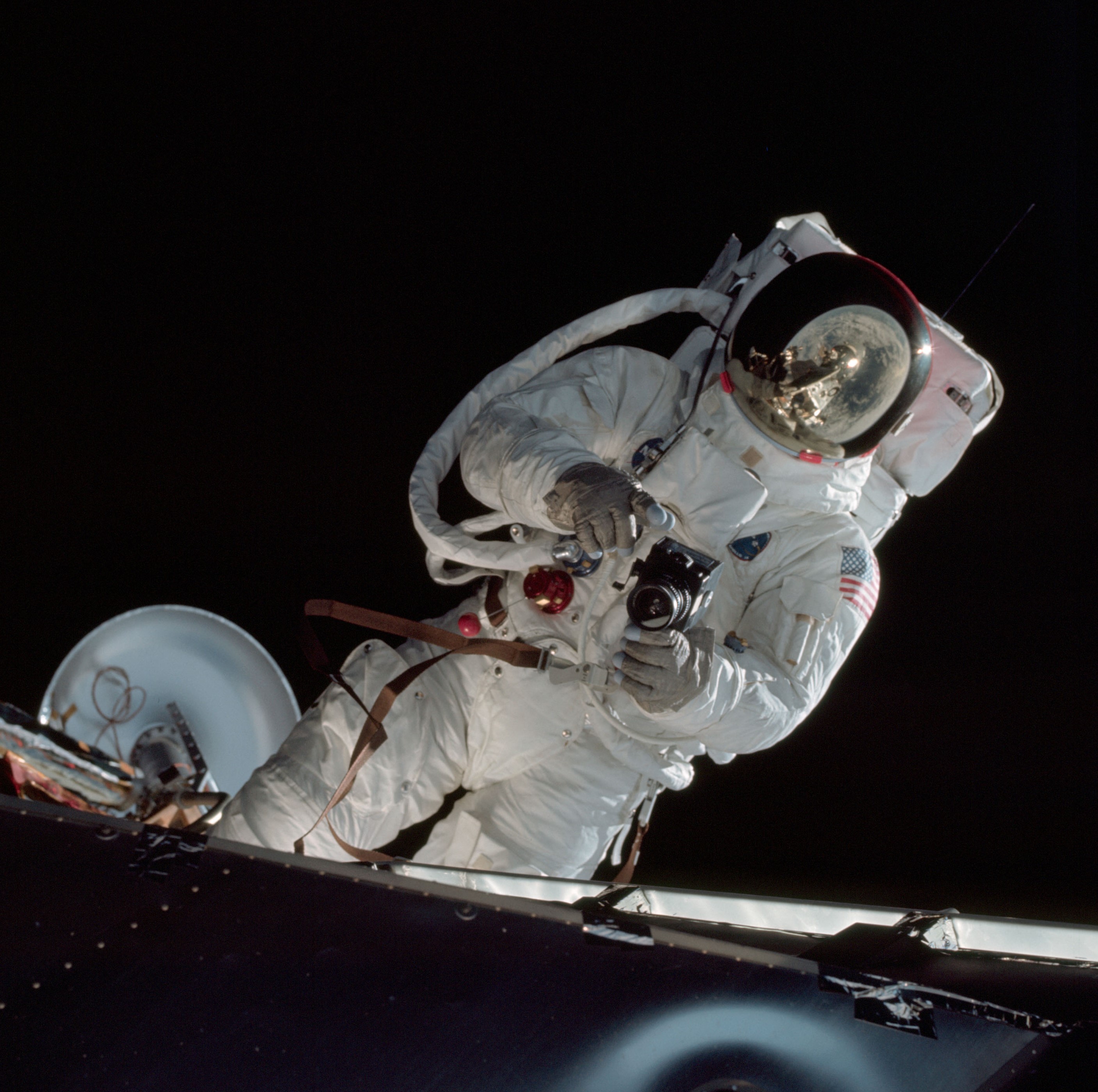
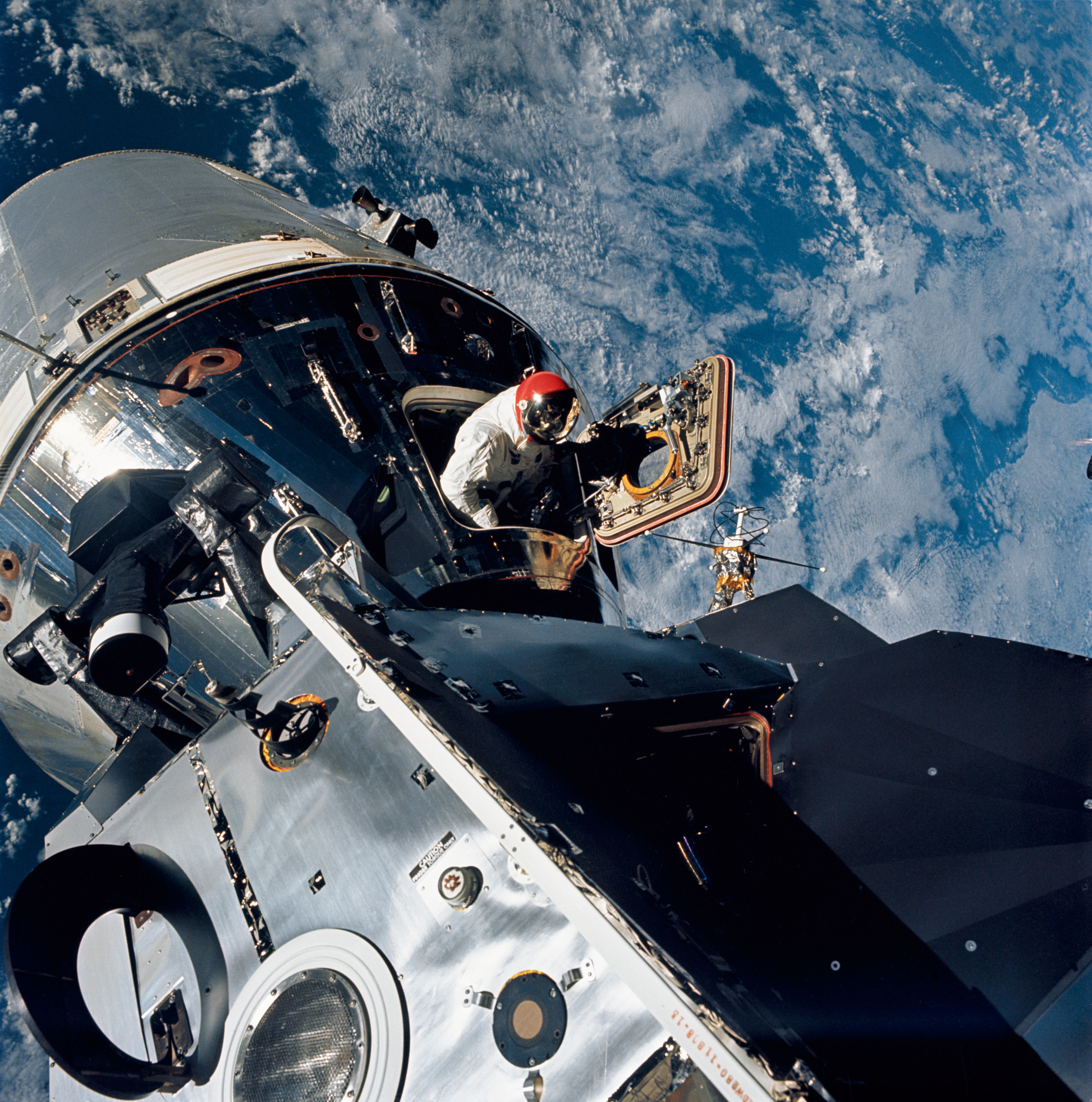
Left: The Lunar Module Spider still attached to the Saturn V rocket’s S-IVB third stage. Middle: Apollo 9 astronaut Russell L. Schweickart on Spider’s front porch during the mission’s dual spacewalk – note fellow astronaut David R. Scott reflected in Schweickart’s visor. Right: Scott in the open hatch of the Command Module Gumdrop.
Two hours and 41 minutes after launch, the Command and Service Module (CSM) separated from the S-IVB third stage and pulled a safe distance away to begin the Transposition and Docking maneuver. Scott turned Gumdrop around to face Spider, still attached to the S-IVB, and slowly closed the gap between the two spacecraft, completing the first successful docking of the Apollo program. About an hour later, springs ejected the docked spacecraft from the S-IVB. Over the next few hours, ground controllers twice restarted the S-IVB’s engine to simulate a Trans Lunar Injection, eventually sending the spent rocket stage into solar orbit. Meanwhile, the astronauts pressurized the tunnel between Gumdrop and Spider and connected umbilicals to power the LM while the two spacecraft remained docked. The astronauts next performed the first of eight planned burns of the Service Module’s (SM) Service Propulsion System (SPS) engine, a five-second maneuver that raised the spacecraft’s orbit. The burn validated that the docking mechanism between the two vehicles and that the LM itself could withstand the firing of the large SPS engine. The crew settled down for their first night’s sleep in space – for the first time in the Apollo Program, all crew members slept at the same time and not in shifts as on previous missions. The next day, the crew conducted three SPS engine burns of varying durations to demonstrate the controllability of the docked vehicles using the spacecraft’s digital autopilot.
The third day saw the initial activation of the LM Spider. Schweickart first and then McDivitt floated through the tunnel from Gumdrop. They closed the hatch, brought the LM’s systems to life, and extended the vehicle’s four landing legs. McDivitt informed Mission Control that Schweickart had experienced symptoms of space motion sickness, including vomiting twice, but that he now felt better. Mission Control, in consultation with flight surgeons and the crew, agreed that the mission could continue as planned, but out of an abundance of caution they curtailed the spacewalk scheduled for the next day. Instead of translating to Gumdrop and back as originally planned, Schweickart would remain on Spider’s front porch to evaluate the spacesuit and the Portable Life Support System (PLSS) backpack. Schweickart and McDivitt then began the first TV transmission of the mission, a seven-minute broadcast showing the duo in the confined space of the LM.
McDivitt and Schweickart moved on to perform the first test of the Descent Propulsion System (DPS) engine, the rocket used to land the LM on the Moon. Although successfully tested during the uncrewed Apollo 5 mission in January 1968, this test included a CSM docked to the LM. The burn evaluated if the LM’s engine could serve as a backup in case of a problem with the SPS – in retrospect a very useful test given Apollo 13 relied on the method just over a year later. After the 372-second burn, capsule communicator (capcom) Stuart A. Roosa called up to the crew, “Spider, that was a beautiful burn, man, you were right down the tube,” generating this response from McDivitt, “Looked pretty neat from here, too.” McDivitt and Schweickart deactivated Spider for the night and transferred back to Gumdrop. The crew conducted the 43-second fifth burn of the SPS to circularize the spacecraft’s orbit.
The Apollo 9 astronauts began their fourth day in space by donning their spacesuits and Schweicakrt and McDivitt once again transferred to Spider. In the LM, Schweickart, fully recovered from his earlier illness, donned the PLSS that provided him with oxygen during his spacewalk. Scott received his life support via umbilicals connected to the CM and McDivitt similarly used the LM’s life support system. McDivitt depressurized Spider, and minutes later Scott did the same with Gumdrop. Schweickart floated out through the LM’s side hatch onto the front porch, exclaiming “Hey, this is like spectacular.” He placed his feet into specialized gold-painted foot restraints dubbed the “golden slippers.” Scott then opened the CM side hatch and floated partway out of the spacecraft. Mission Control now communicated with three different parties, with Schweickart picking up the callsign Red Rover, a nod to his red hair. Scott retrieved thermal samples from the outside of Gumdrop. Schweickart did the same from the outside of Spider and tested out the handrails near the hatch and found them to be easy for maneuvering. Scott and Schweickart reentered their respective vehicles, having each spent about 37 minutes outside. Mission Control considered this first, and the only one before the Moon landing, test of the spacesuits and PLSS a complete success. After a 15-minute TV broadcast, McDivitt and Schweickart returned to Gumdrop to rejoin Scott for the night.
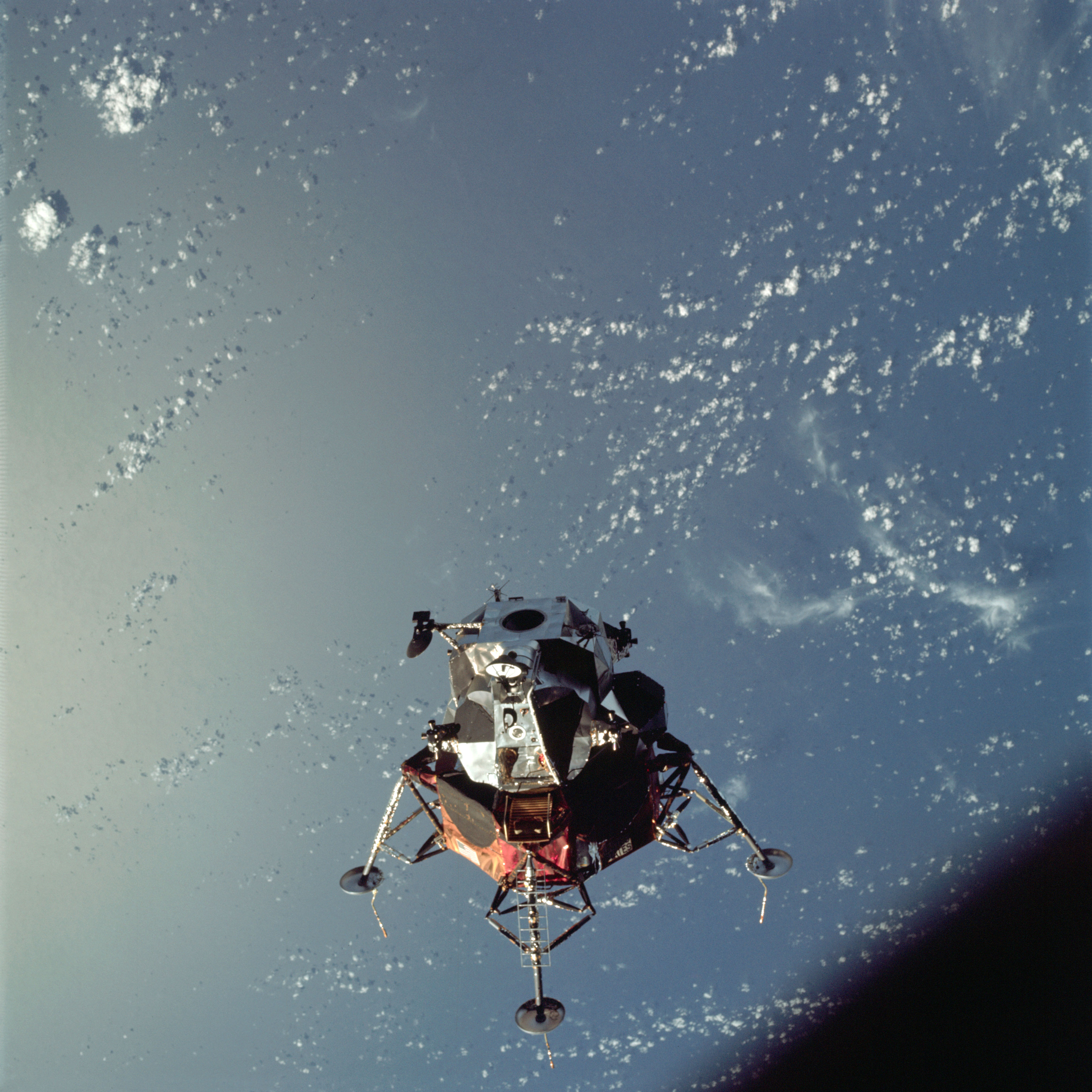
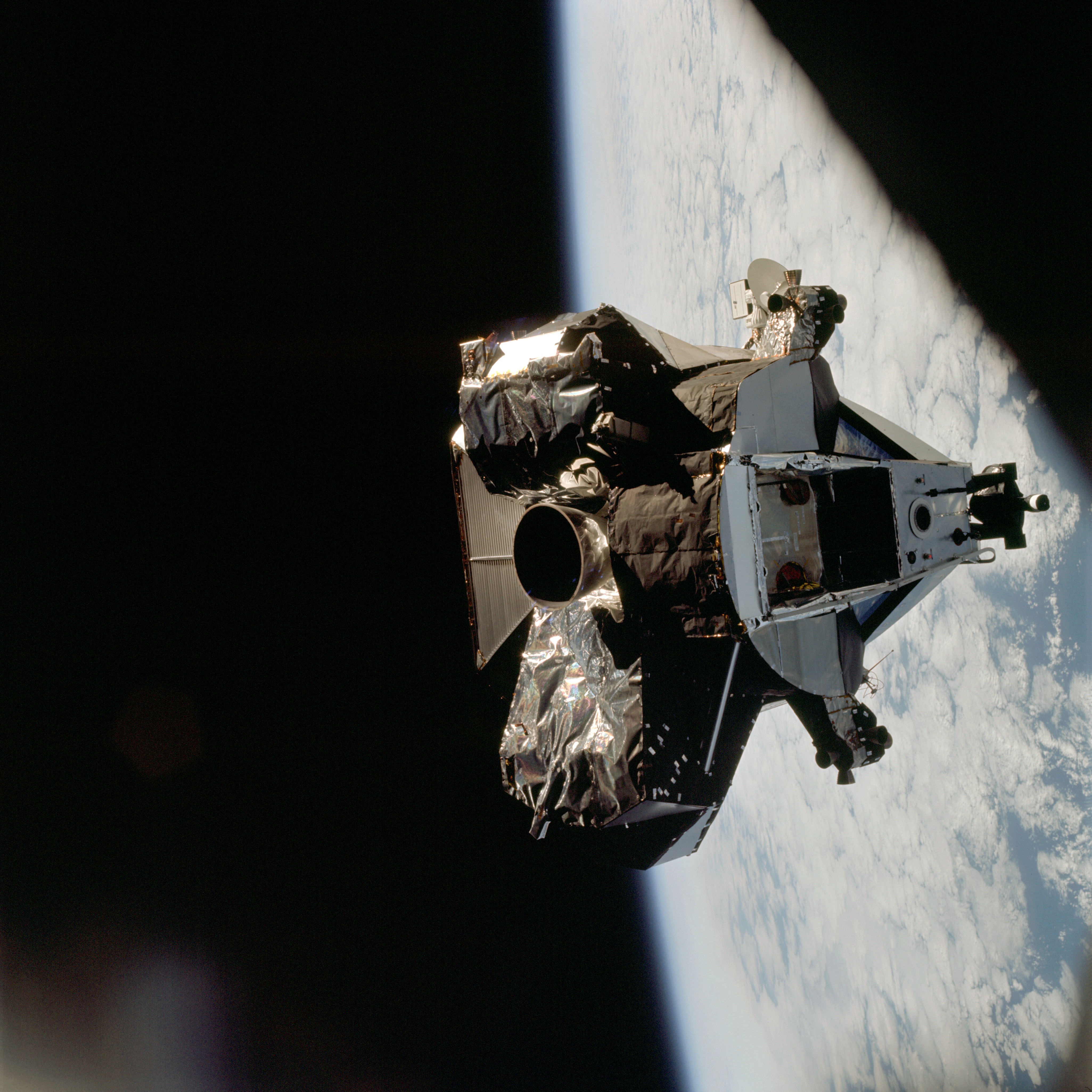
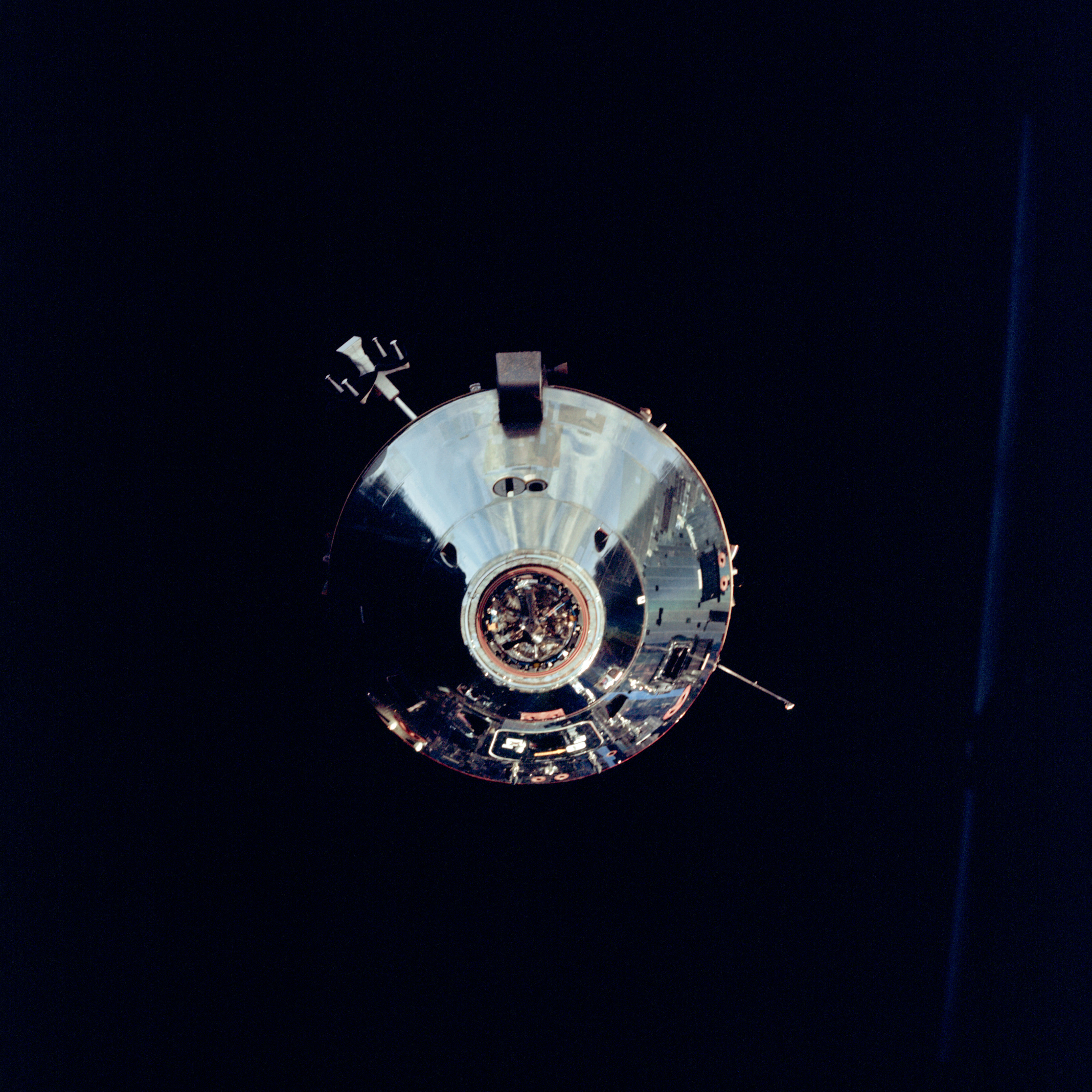
Left: The Lunar Module (LM) Spider with James A. McDivitt and Russell L. Schweickart aboard, begins its departure from the Command Module (CM) Gumdrop, with David R. Scott aboard. Middle: McDivitt and Schweickart aboard Spider’s ascent stage have returned to Gumdrop. Right: View of Gumdrop from Spider.
For their fifth day in space, the Apollo 9 crew had a full plate – undocking of Spider from Gumdrop, testing the LM’s Descent and Ascent Stage engines by conducting separation maneuvers followed by a rendezvous and docking with the CM. This marked the first time astronauts flew in a spacecraft not designed to reenter the Earth’s atmosphere, making redocking with Gumdrop essential. Spider backed away from Gumdrop to about 50 feet and began a slow turn so Scott in the CM could inspect it. He commented about Spider, “That’s a nice looking machine.” A small 10-second burn by the SM’s Reaction Control System (RCS) thrusters increased the separation distance to about three miles. About 45 minutes after undocking, McDivitt fired Spider’s DPS engine for 19 seconds, first at 10% thrust then throttling it up to 40% thrust, to begin the separation maneuver that placed it about 50 miles from Gumdrop before orbital mechanics brought the two spacecraft closer again. The next maneuver in the separation sequence, a 22-second DPS burn, opened the distance to about 100 miles.
To begin the rendezvous back to Gumdrop, McDivitt first fired Spider’s Ascent Stage RCS thrusters for 32 seconds, at the same time jettisoning the Descent Stage. It remained in orbit until March 22, burning up on reentry over the Indian Ocean. The next rendezvous maneuver, lasting three seconds, tested the Ascent Propulsion System (APS) engine for the first time, followed by a second APS burn lasting 38 seconds, putting Spider on an intercept course with Gumdrop. Two small course corrections refined the trajectory and Spider stopped about 100 feet from Gumdrop to begin a pitchover maneuver, allowing Scott to inspect the ascent stage including its engine, commenting, “You’re the biggest, friendliest, funniest looking Spider I’ve ever seen.” The two craft docked, having flown separately for six hours 23 minutes. Two hours after docking, McDivitt and Schweickart rejoined Scott in Gumdrop, and then they jettisoned Spider. Mission Control commanded Spider’s APS to fire for six minutes, placing it into a highly elliptical Earth orbit from which it did not decay until Oct. 23, 1981. The Apollo 9 astronauts had met their mission’s primary objectives, and they still had five more days in space.
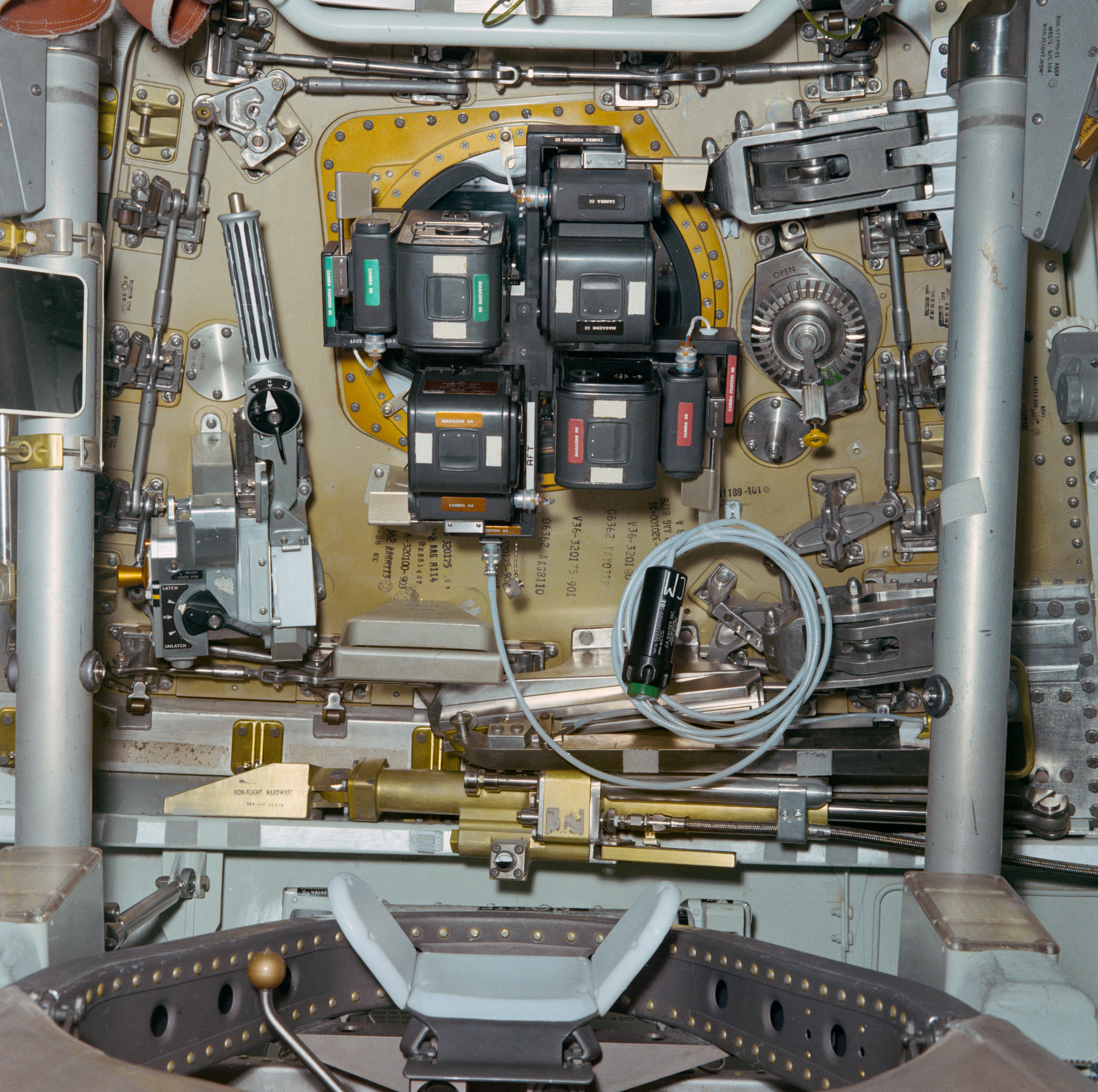
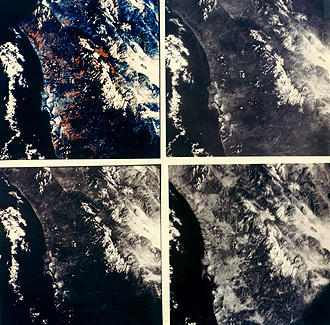

Left: Experiment S065 multispectral camera installed on the Command Module’s side hatch window. Middle: Multispectral image of the San Diego area. Right: Color infrared image of the Salton Sea area in California.
The first major task of flight day six involved the sixth SPS engine. This brief one and a half second burn lowered the low point of Gumdrop’s orbit, to enhance a backup capability to use the RCS thrusters for the deorbit burn at the end of the mission, should a problem arise with the SPS. Shortly after this burn, the crew set up the one formal scientific investigation of their mission – Experiment S065 Multispectral Terrain Photography, a cluster of four Hasselblad 70 mm cameras mounted in Gumdrop’s round hatch window. The experiment provided photographs taken simultaneously in four specific portions of the visible and near infrared spectrum. The experiment served as a precursor for the Earth Resources Technology Satellite (ERTS), later renamed Landsat, and for multispectral photography conducted aboard the Skylab space station in the early 1970s. Over the next four days, the astronauts continued observations with the S065 camera system, exposing 127 complete four-frame sets.
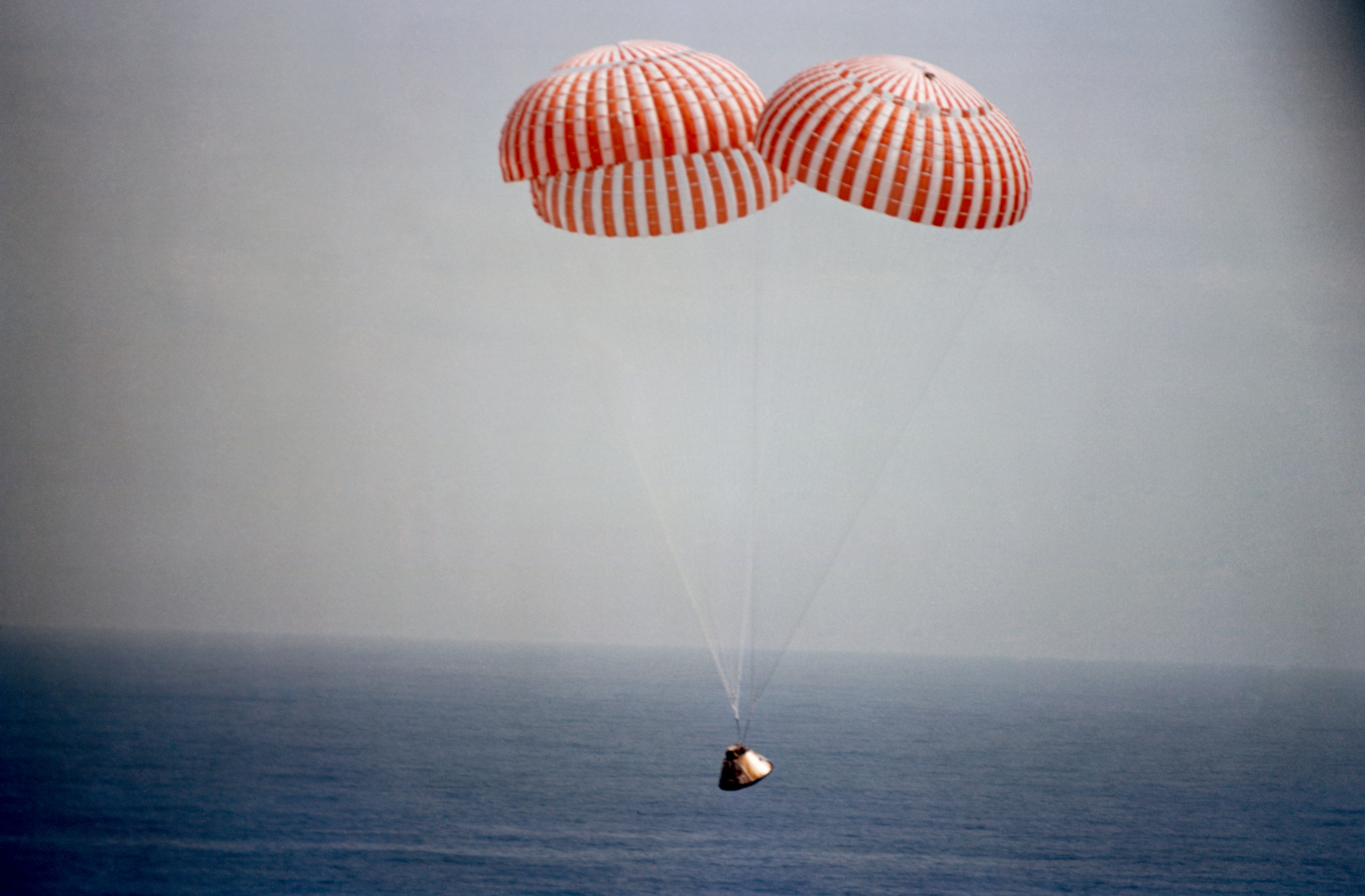
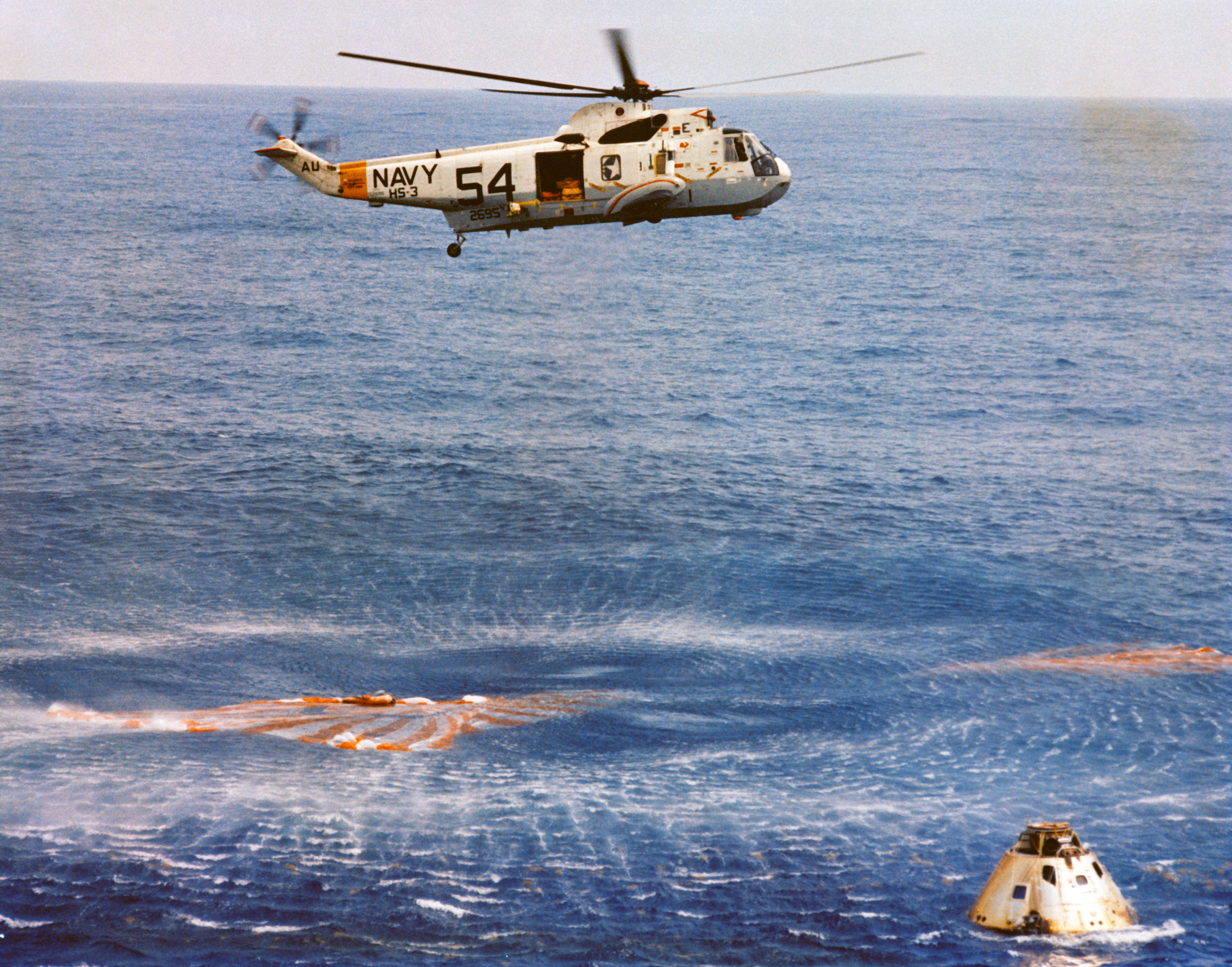
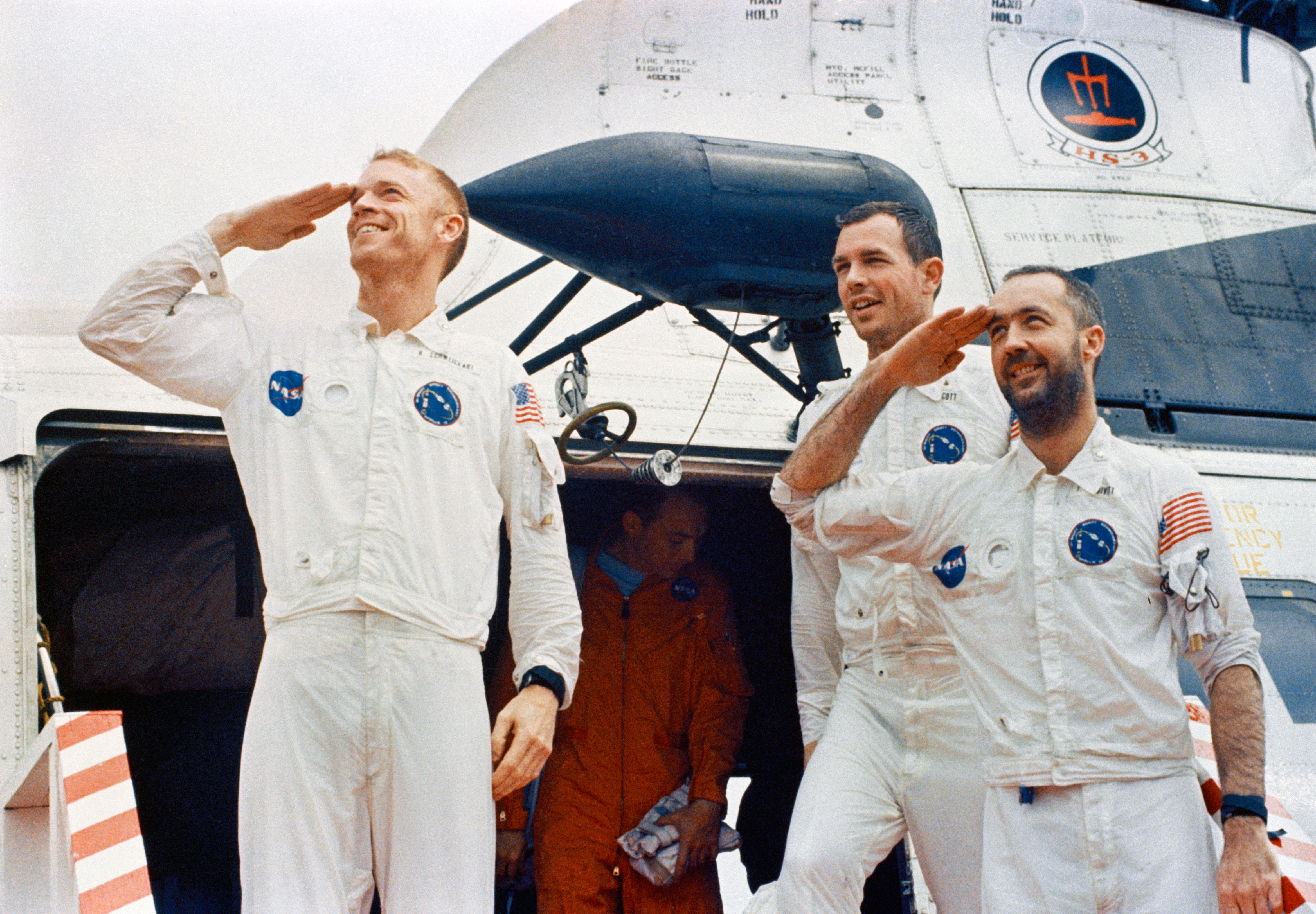
Left: The Apollo 9 Command Module Gumdrop descends on its three main parachutes just moments before touchdown. Middle: Minutes after splashdown, the rescue helicopter from the U.S.S. Guadalcanal prepares to drop swimmers into the water to safe the capsule and retrieve the astronauts. Right: Apollo 9 astronauts Russell L. Schweickart, left, David R. Scott, and James A. McDivitt safely aboard the Guadalcanal.
On flight day eight, the crew completed the seventh SPS burn, a 25-second firing to establish the proper trajectory for the deorbit burn. On Mar. 13, 1969, after 151 revolutions around the Earth and while passing over Hawaii, the crew fired the SPS engine for the eighth and final time. Lasting just under 12 seconds, the burn brought Apollo 9 out of orbit. Gumdrop separated from its SM and pointed its heat shield in the direction of flight. During reentry, a sheath of ionized gas formed around the capsule by the rapid deceleration led to a 4-minute radio blackout, after which the drogue parachutes deployed. The three main parachutes opened at 10,000 feet altitude, slowing the spacecraft to about 22 miles per hour at splashdown.
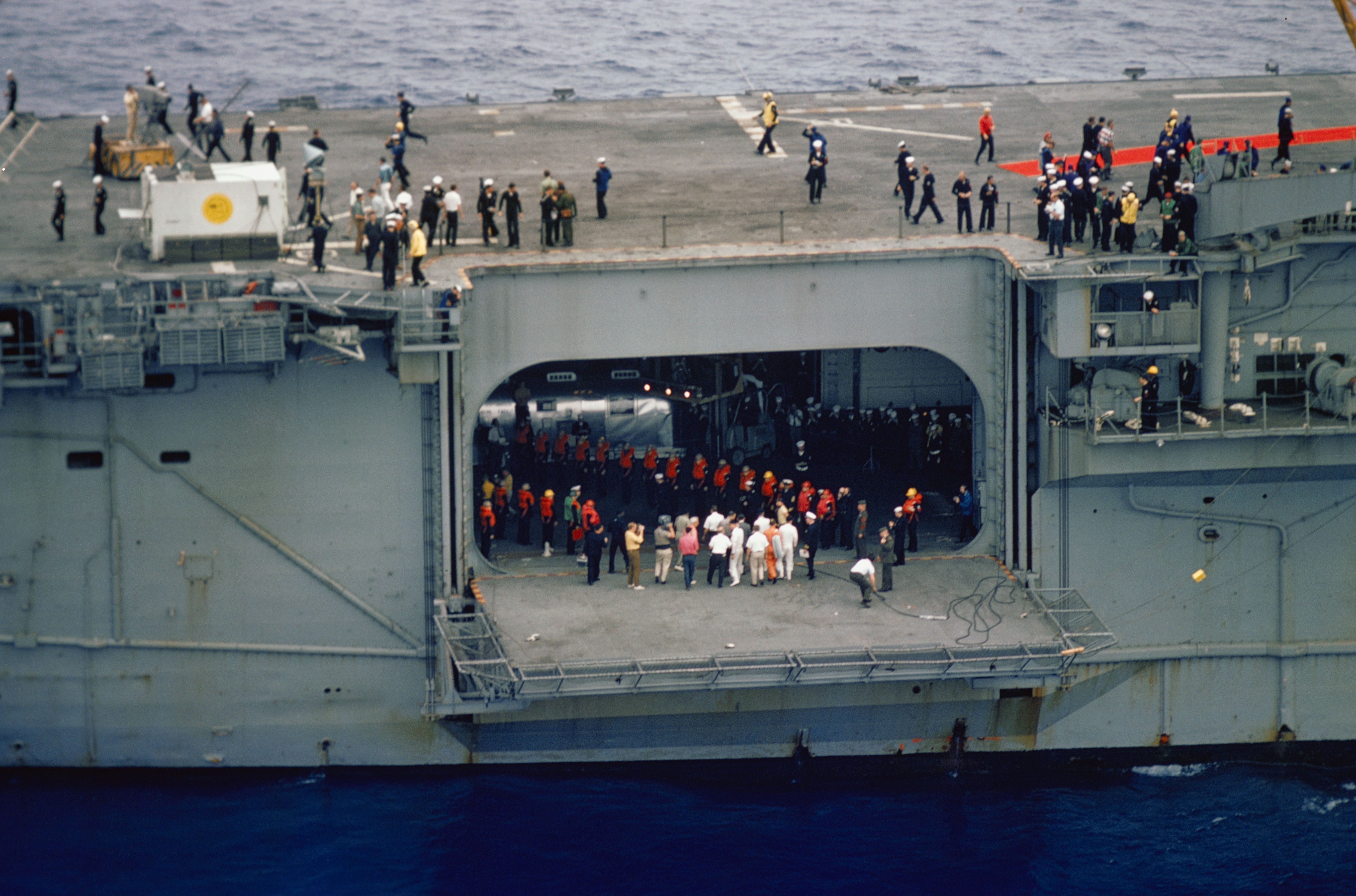
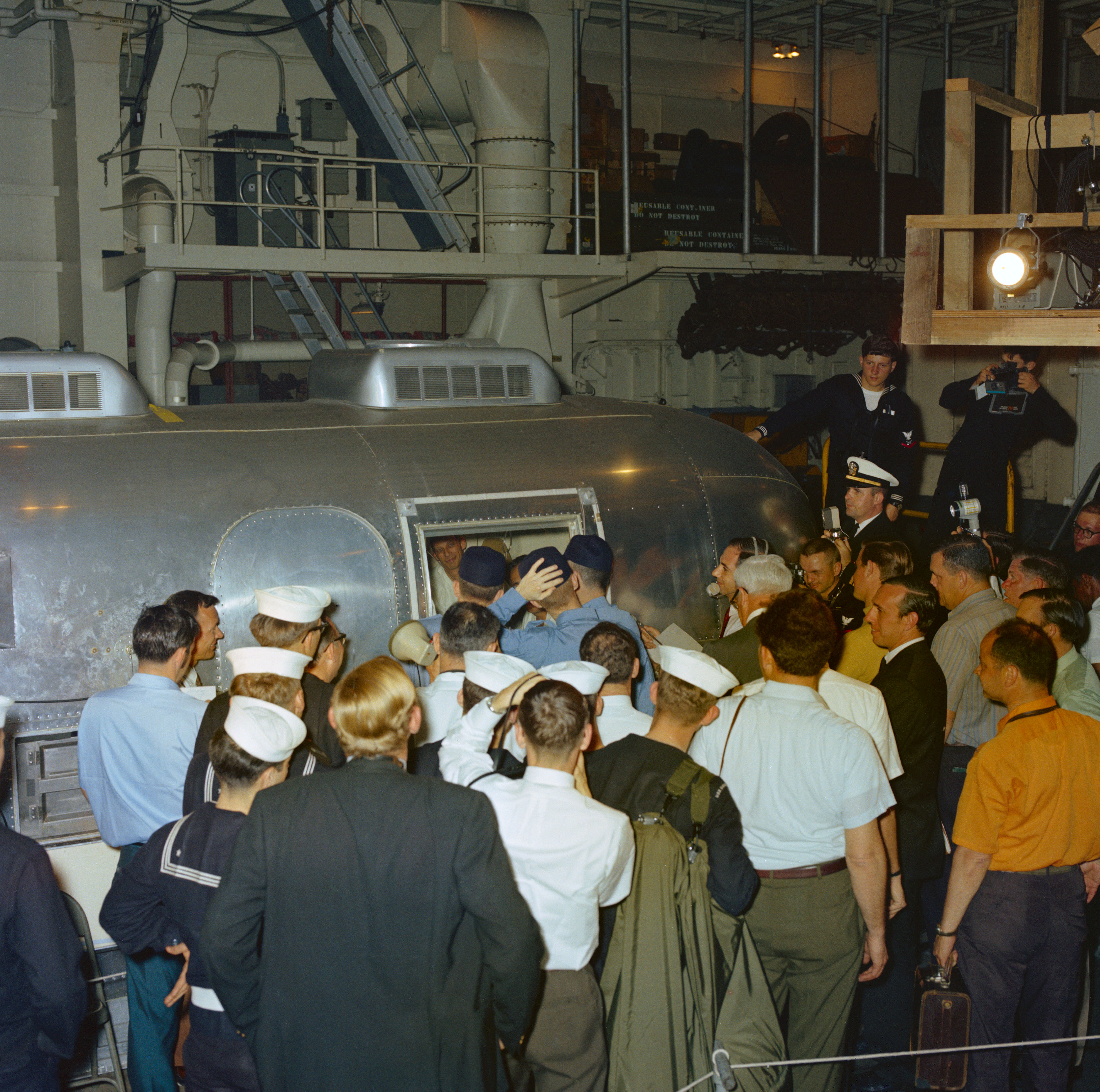
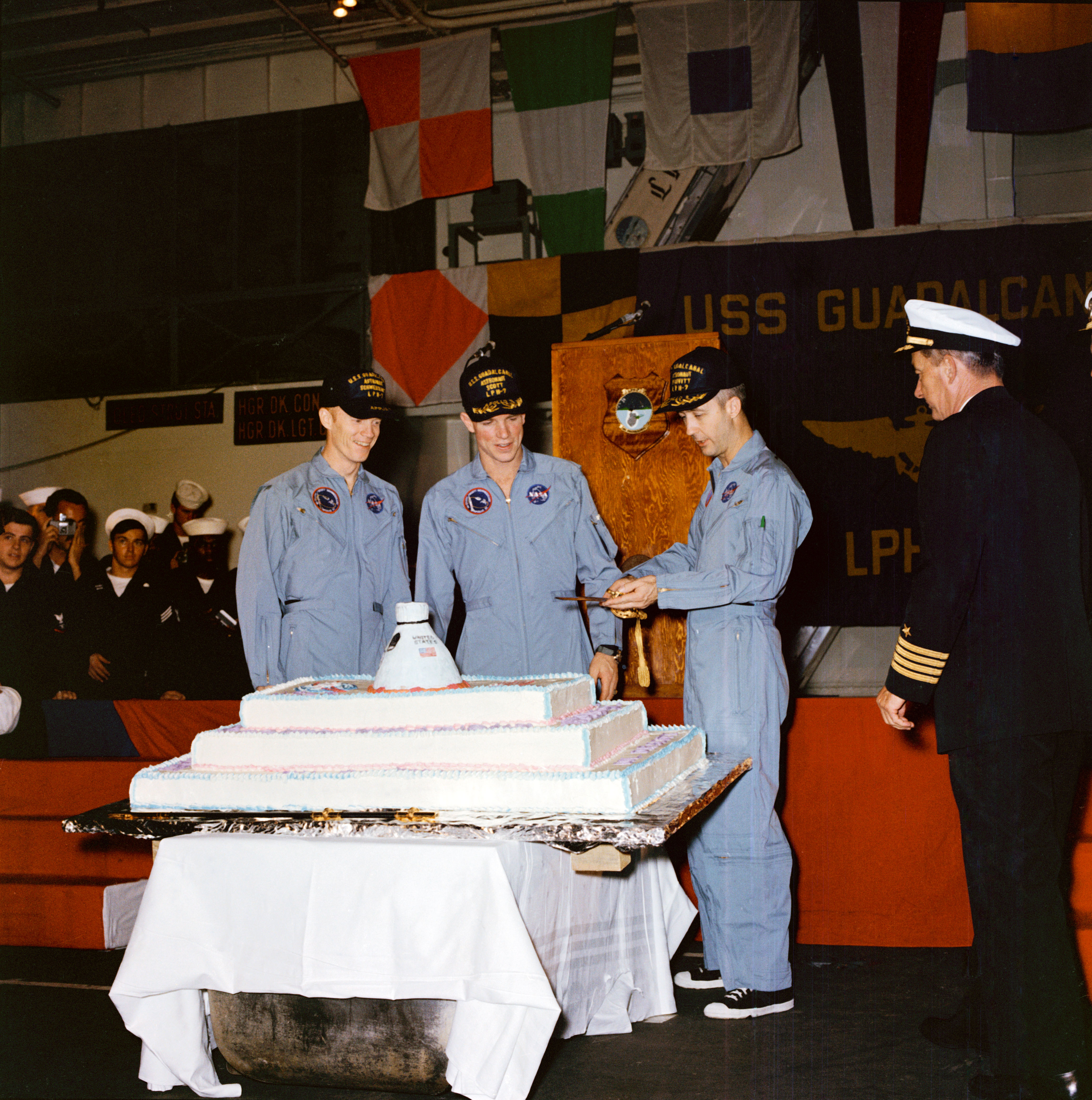
Left: The Apollo 9 astronauts, in white overalls, on the elevator deck of the U.S.S. Guadalcanal, with the Mobile Quarantine Facility (MQF) visible in the background. Middle: The Apollo 9 astronauts, wearing blue baseball caps, peer into the window of the MQF and greet the occupants. Right: Apollo 9 astronauts Russell L. Schweickart, left, David R. Scott, and James A. McDivitt prepare to cut the cake in their honor aboard the Guadalcanal.
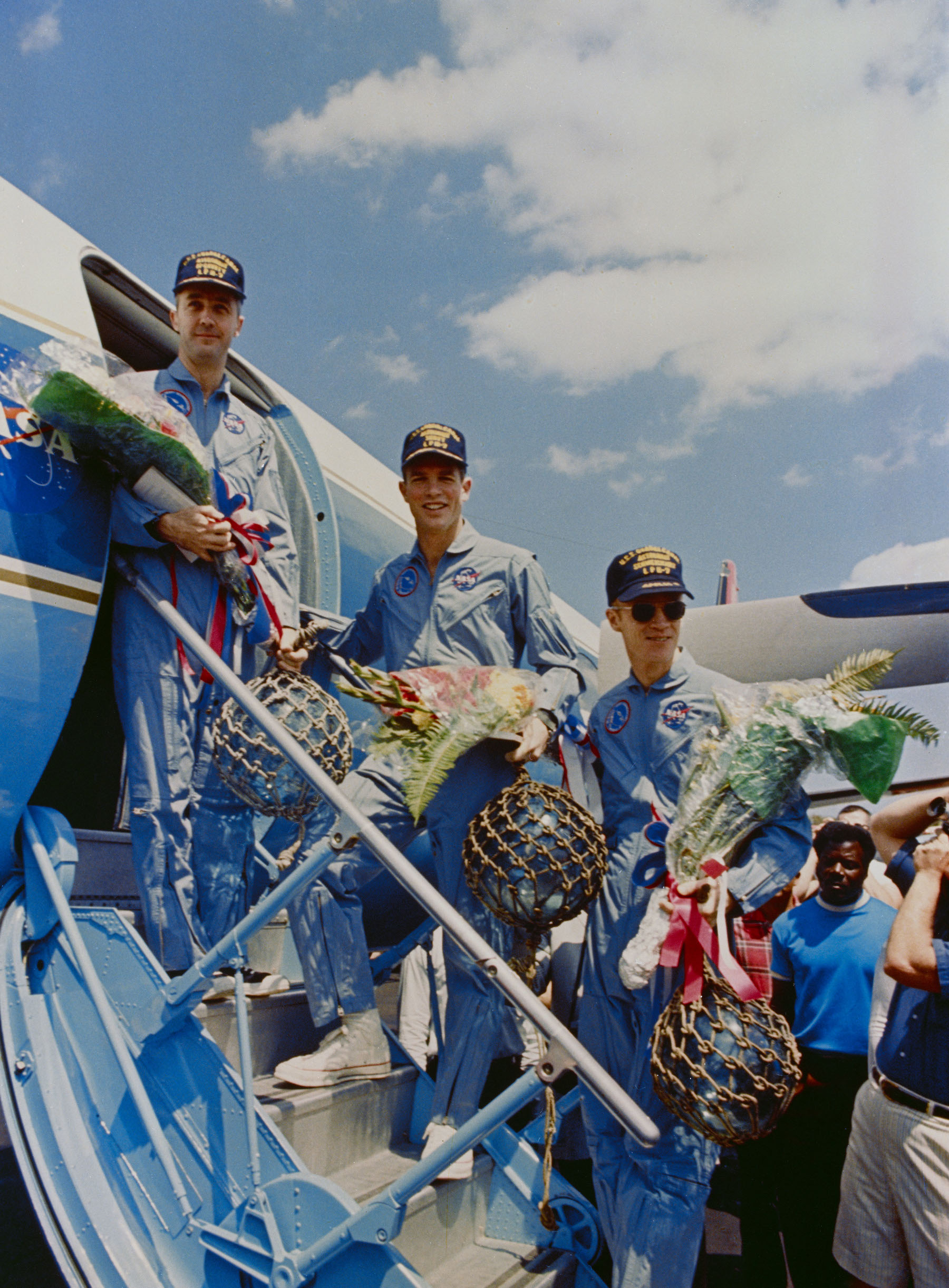
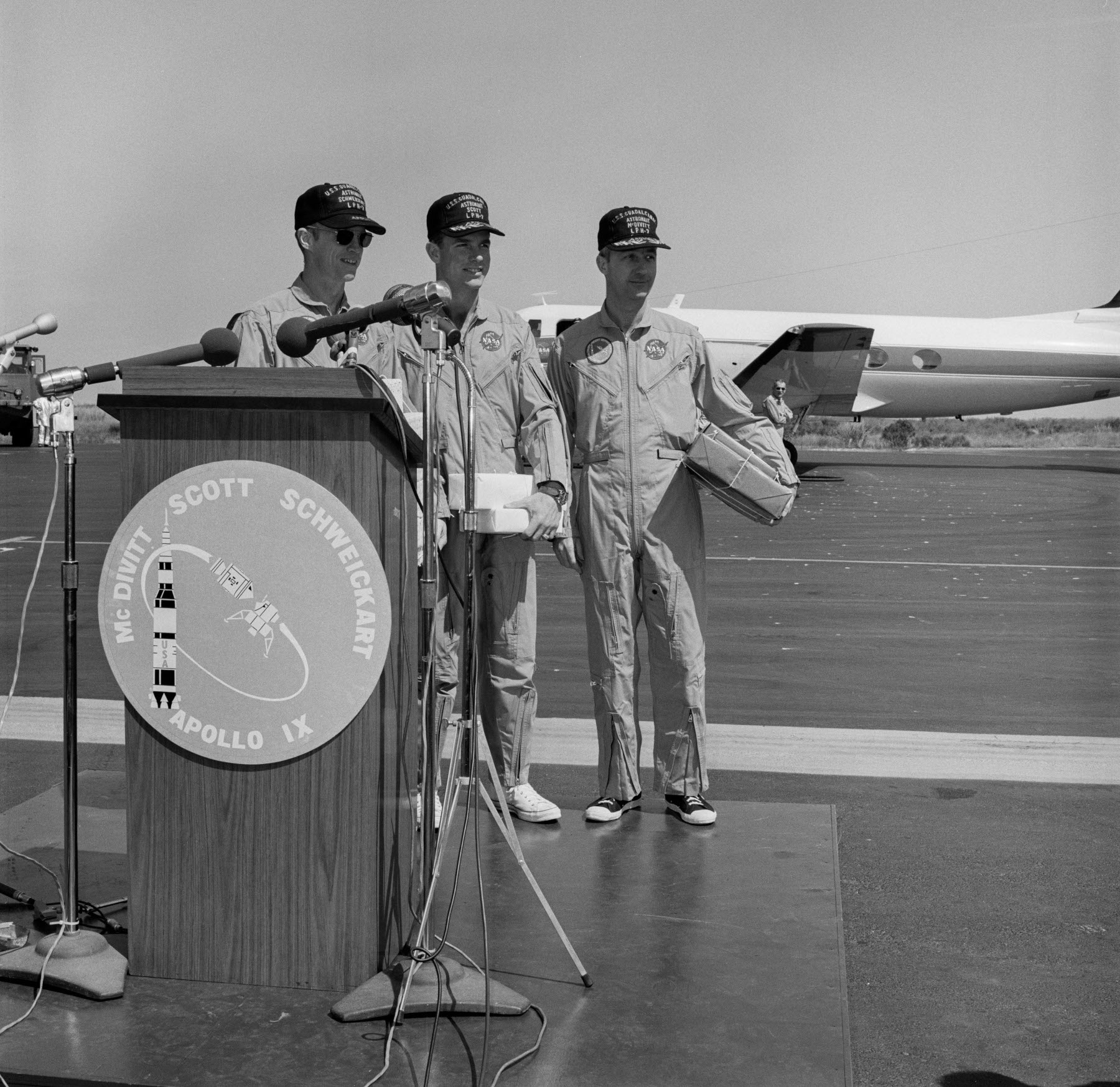
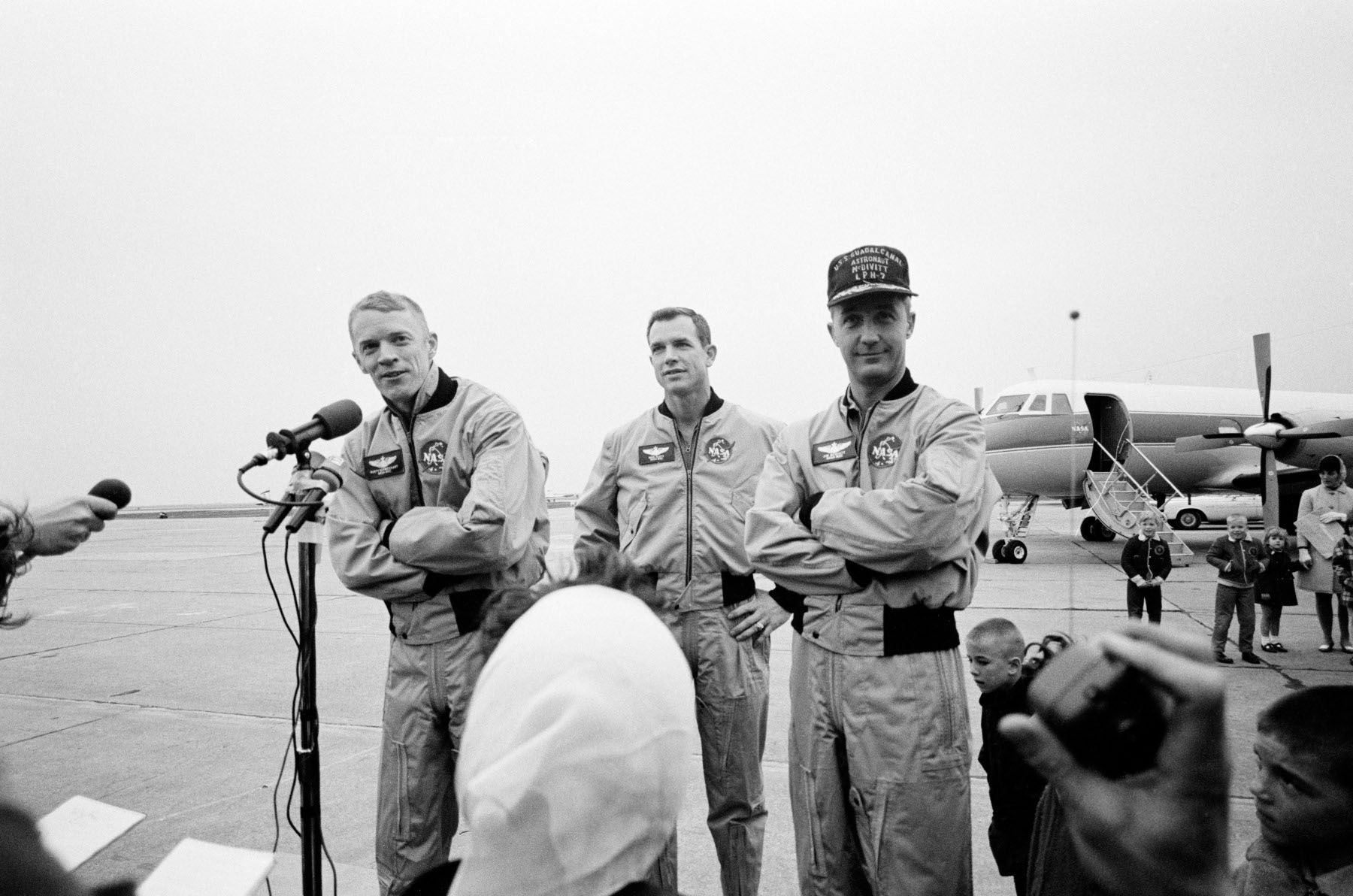
The Apollo 9 astronauts’ return trip from the U.S.S. Guadalcanal to Houston. Left: Carrying flowers after a stopover on Eleuthera in The Bahamas. Middle: A brief layover at NASA’s Kennedy Space Center in Florida. Right: Arriving at Ellington Air Force Base in Houston.
The splashdown occurred in the Atlantic Ocean about 670 miles south-southwest of Bermuda, and about 3 miles from the prime recovery ship the U.S.S. Guadalcanal (LPH-7). McDivitt, Scott, and Schweickart had spent 241 hours and 54 seconds in space. Forty-nine minutes after splashdown, recovery teams had the crew aboard the recovery ship. The next day, a helicopter flew them to Eleuthera in the Bahamas, where they boarded a plane to KSC for a brief ceremony, and then back to Houston for a large welcome home reception and a reunion with their families at Ellington Air Force Base. The successful Apollo 9 mission, the most complex crewed space mission flown to that time, brought the Moon landing one step closer.
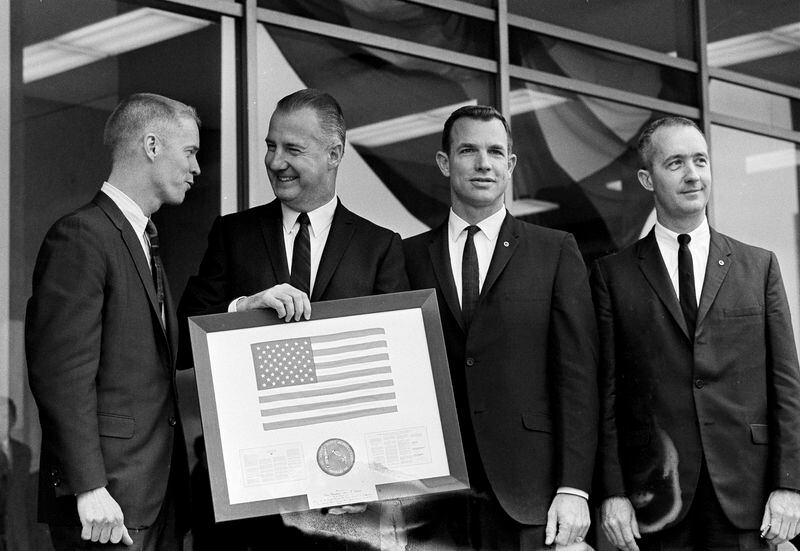
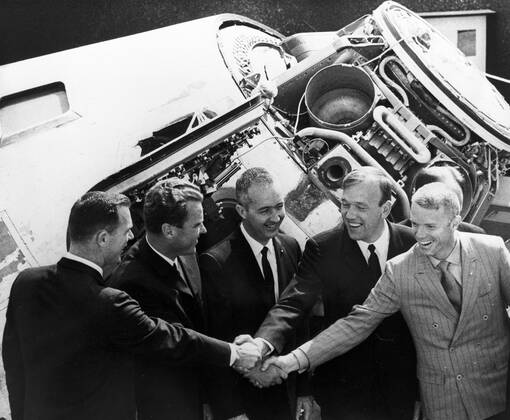
Left: In Washington, D.C., Vice President Spiro T. Agnew, second from left, accepts a framed American flag flown in space by Apollo 9 astronauts Russell L. Schweickart, left, David R. Scott, and James A. McDivitt. Right: In front of the Apollo 8 Command Module at the 1969 Paris Air Show, astronauts meet cosmonauts – Scott, Vladimir A. Shatalov, McDivitt, Aleksei S. Yeliseyev, and Schweickart.
Following postflight debriefs, McDivitt, Scott, and Schweickart traveled to Washington, D.C., where on March 26, Vice President Agnew presented them with Distinguished Service Medals for their execution of the historic Apollo 9 mission. They in turn presented the Vice President with a framed American flag they had taken to space. Among other postflight events and celebrations, the trio attended the Paris Air Show and on May 29 met Soviet cosmonauts Vladimir A. Shatalov and Aleksei S. Yeliseyev who had flown as part of the Soyuz 4 and 5 docking and spacewalk crew exchange mission in January 1969.
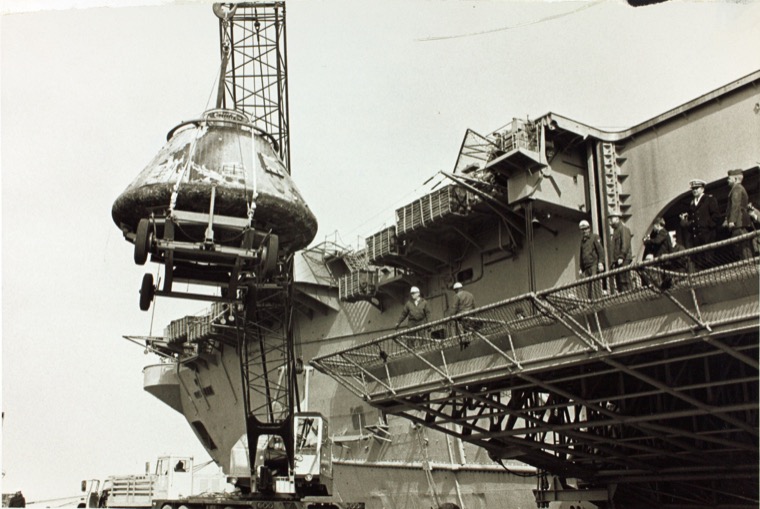
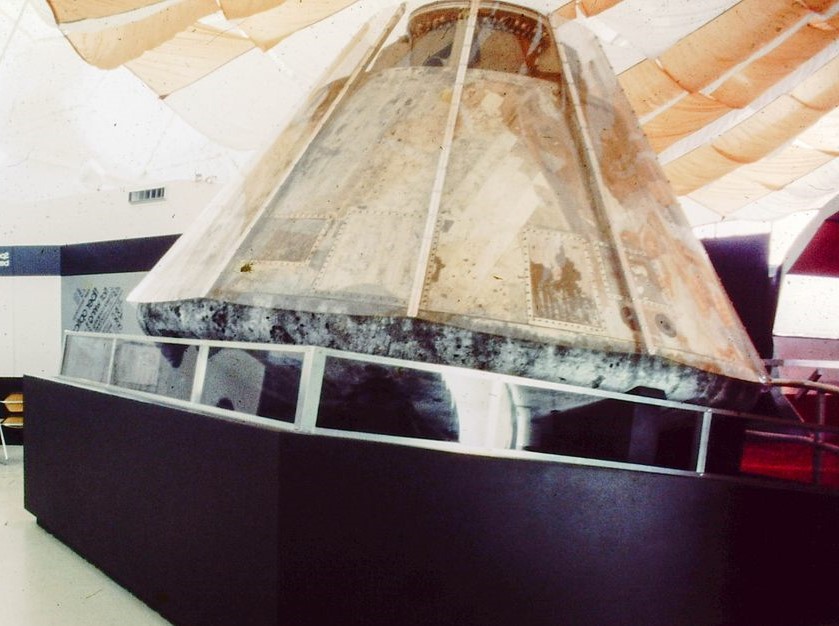
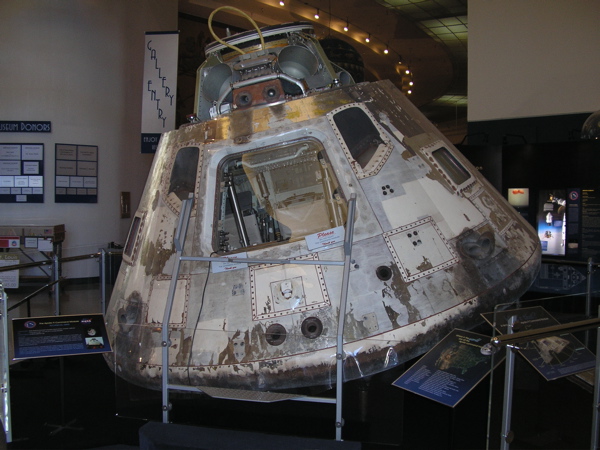
Left: Workers at Norfolk Naval Air Station in Virginia offload the Apollo 9 Command Module Gumdrop from the U.S.S. Guadalcanal for its cross country trip to California. Middle: Gumdrop on display at the Michigan Space and Science Center in Jackson. Image credit: courtesy Atlas Obscura. Right: Gumdrop on display at the San Diego Air & Space Museum.
Workers offloaded Gumdrop from the Guadalcanal in Norfolk, Virginia, for transport aboard a U.S. Air Force cargo jet to Long Beach, California, from where they trucked it to the North American Rockwell plant in Downey for postflight inspection. NASA transferred Gumdrop to the Smithsonian Institution in 1973. In 1977, it went on display at the Michigan Space and Science Center in Jackson, Michigan, McDivitt’s hometown. When that facility closed in 2004, Gumdrop transferred to the San Diego Air & Space Museum, where visitors can view it today.
Apollo 10
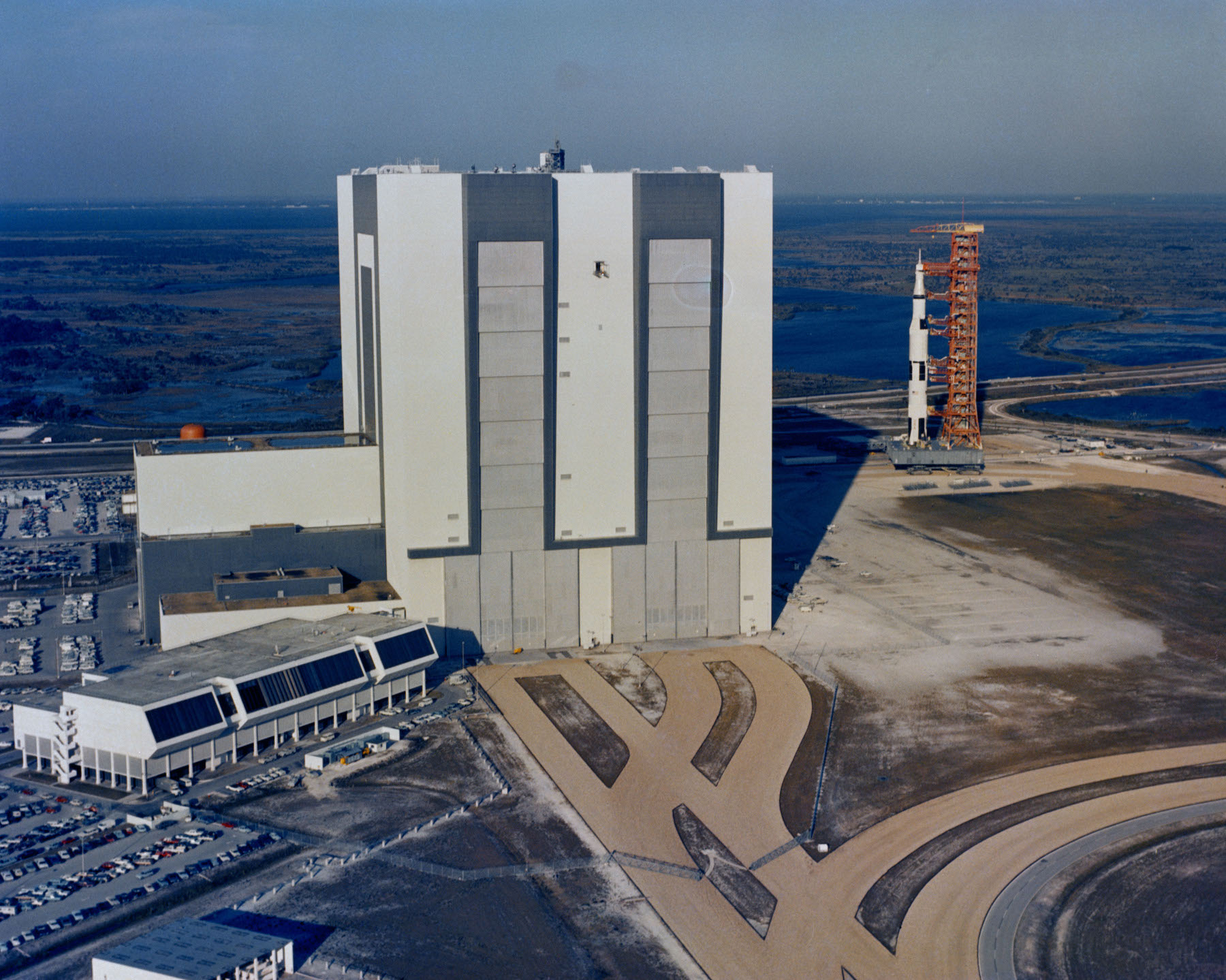
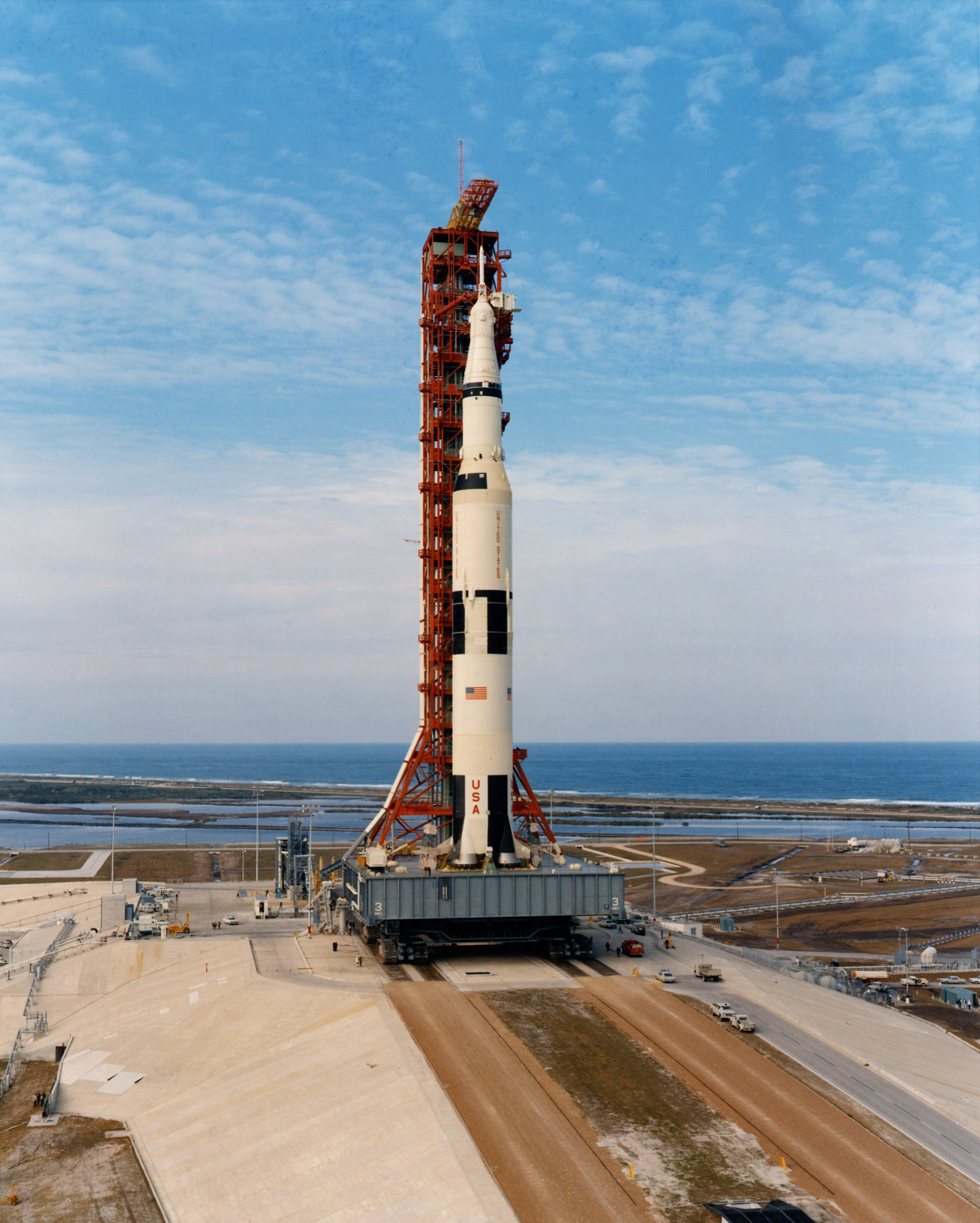
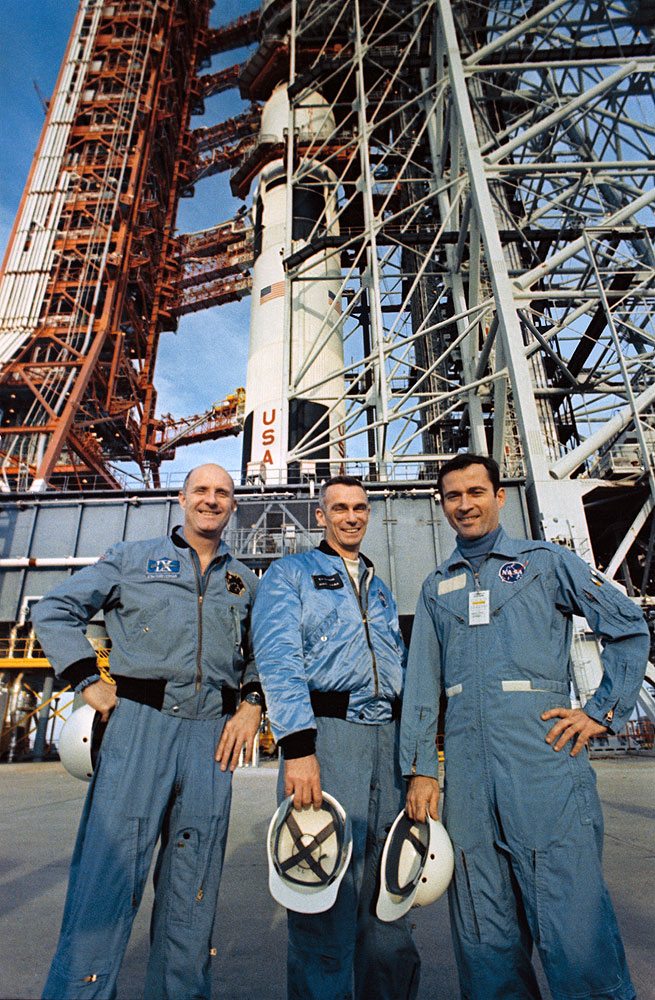
Left: The Apollo 10 Saturn V leaves the Vehicle Assembly Building at NASA’s Kennedy Space Center in Florida. Middle: The Apollo 10 Saturn V has reached Launch Pad 39B. Right: Apollo 10 astronauts John W. Young, left, Eugene A. Cernan, and Thomas P. Stafford pose before their Saturn V rocket.
On March 11, as the Apollo 9 astronauts neared the end of their mission, workers at KSC rolled the Apollo 10 Saturn V vehicle from the Vehicle Assembly Building (VAB) to its launch pad. Apollo 10’s assembly marked the first use of the VAB’s High Bay 2, requiring the stack to exit the VAB’s rear and make a sweeping loop around the building to reach the crawlerway to the launch pads. Apollo 10 also marked the first use of Pad 39B. On March 17, NASA managers formally set Apollo 10’s launch date as May 18. Apollo 10 astronauts Thomas P. Stafford, John W. Young, and Eugene A. Cernan and their backups L. Gordon Cooper, Donn F. Eisele, and Edgar D. Mitchell continued training in spacecraft simulators and testing their spacesuits in vacuum chambers. On March 27, the prime crew conducted a walk-through of Pad 39B and trained on emergency escape procedures. The next day, the backup crew practiced water egress training in the Water Immersion Facility in MSC’s Building 260, and repeated the training in the Gulf of Mexico the following week.
Apollo 11
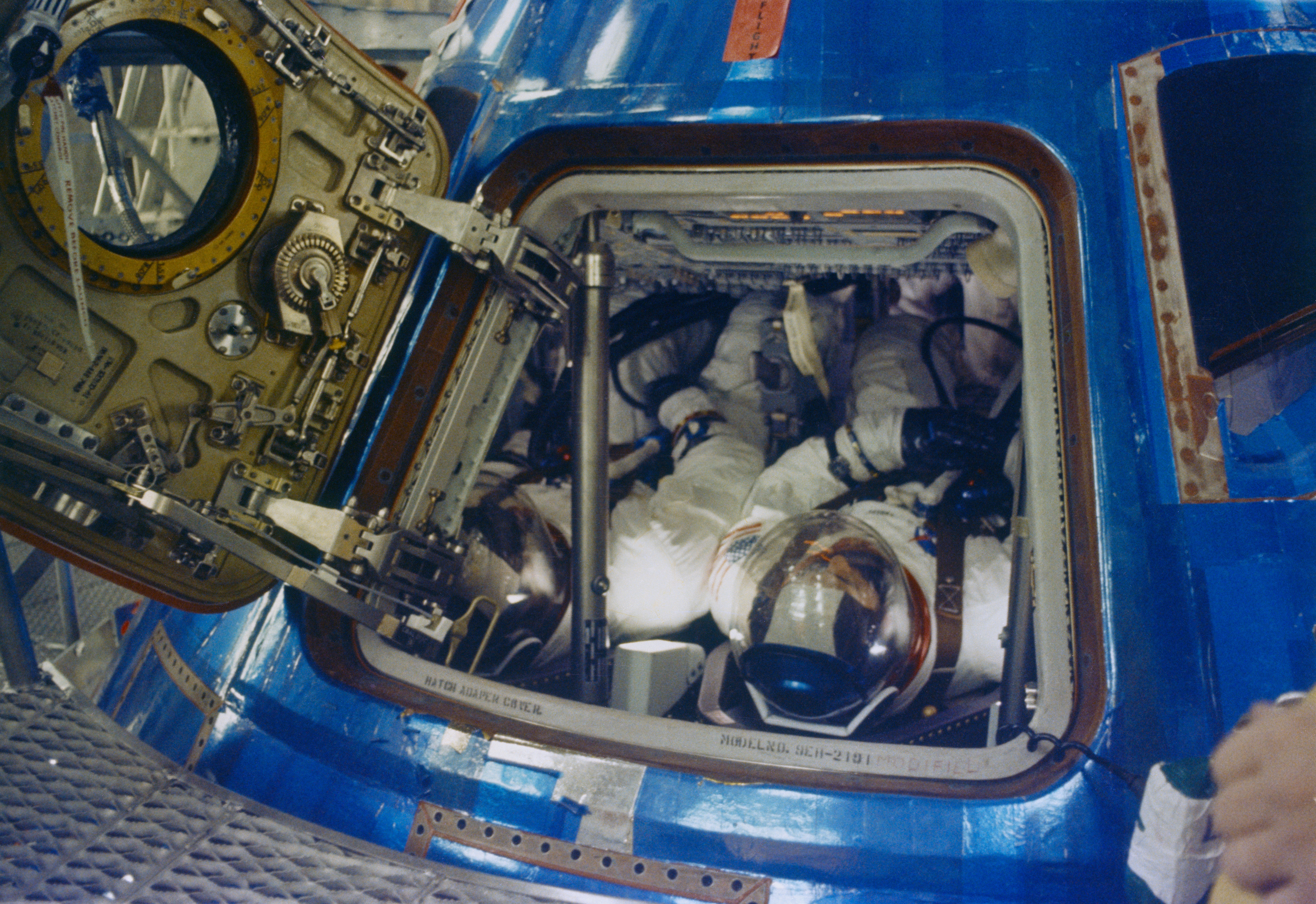
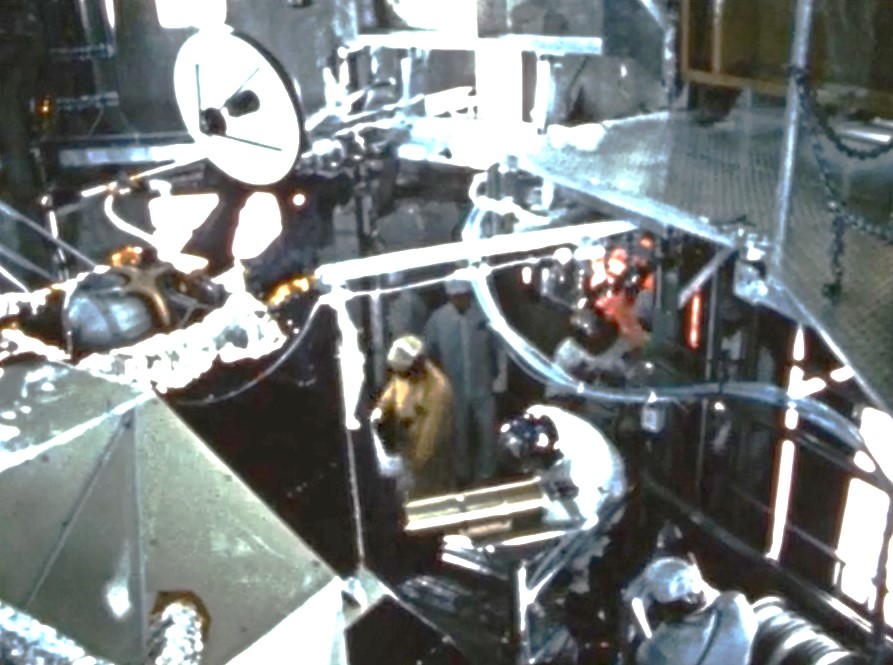
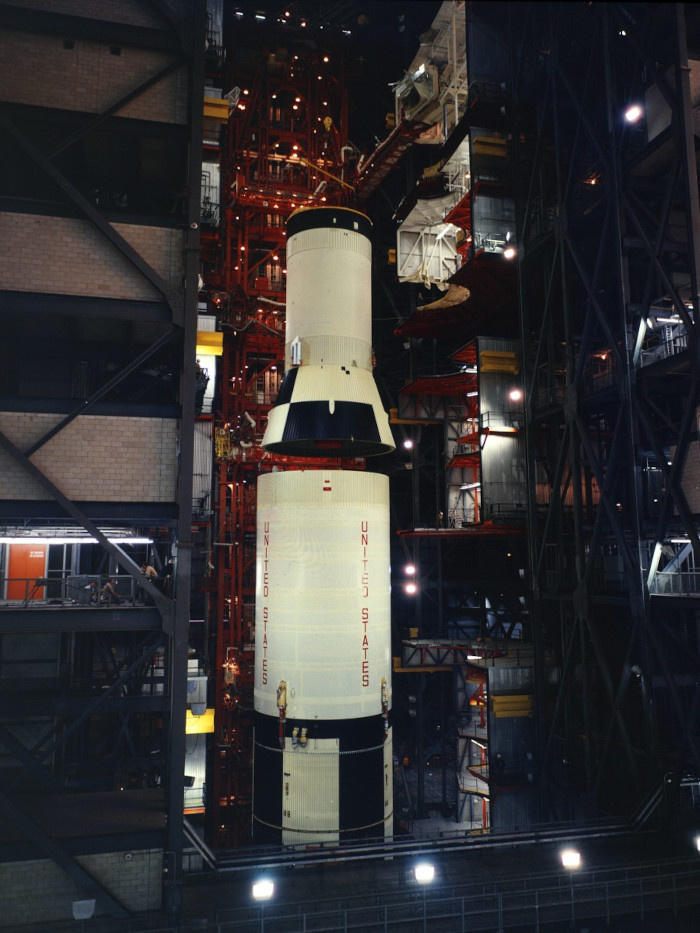
Left: Apollo 11 astronauts Neil A. Armstrong, left, Edwin E. “Buzz” Aldrin, and Michael Collins, not visible, prepare for an altitude chamber test of their Command Module at NASA’s Kennedy Space Center (KSC) in Florida. Middle: Apollo 11 backup crew members James A. Lovell and Frew W. Haise have entered the chamber for a Lunar Module altitude test. Right: In KSC’s Vehicle Assembly Building, workers lower the S-IVB third stage onto the Apollo 11 Saturn V rocket.
Workers in the VAB’s High Bay 3 stacked the Apollo 11 Saturn V’s S-IC first stage on Feb. 21. They added the S-II second stage and S-IVB third stage on March 4 and 5, respectively. The spacecraft for Apollo 11 continued testing in KSC’s Manned Spacecraft Operations Building (MSOB). With their historic mission only five months away, the Apollo 11 prime crew of Neil A. Armstrong, Michael Collins, and Edwin E. “Buzz” Aldrin and their backups James A. Lovell, William A. Anders, and Fred W. Haise busied themselves training for the Moon landing, spending time in spacecraft simulators. The prime and backup crews participated in altitude chamber tests of both their CM and LM.
Mobile Quarantine Facility, Lunar Receiving Laboratory, and Lunar Module Drop Tests
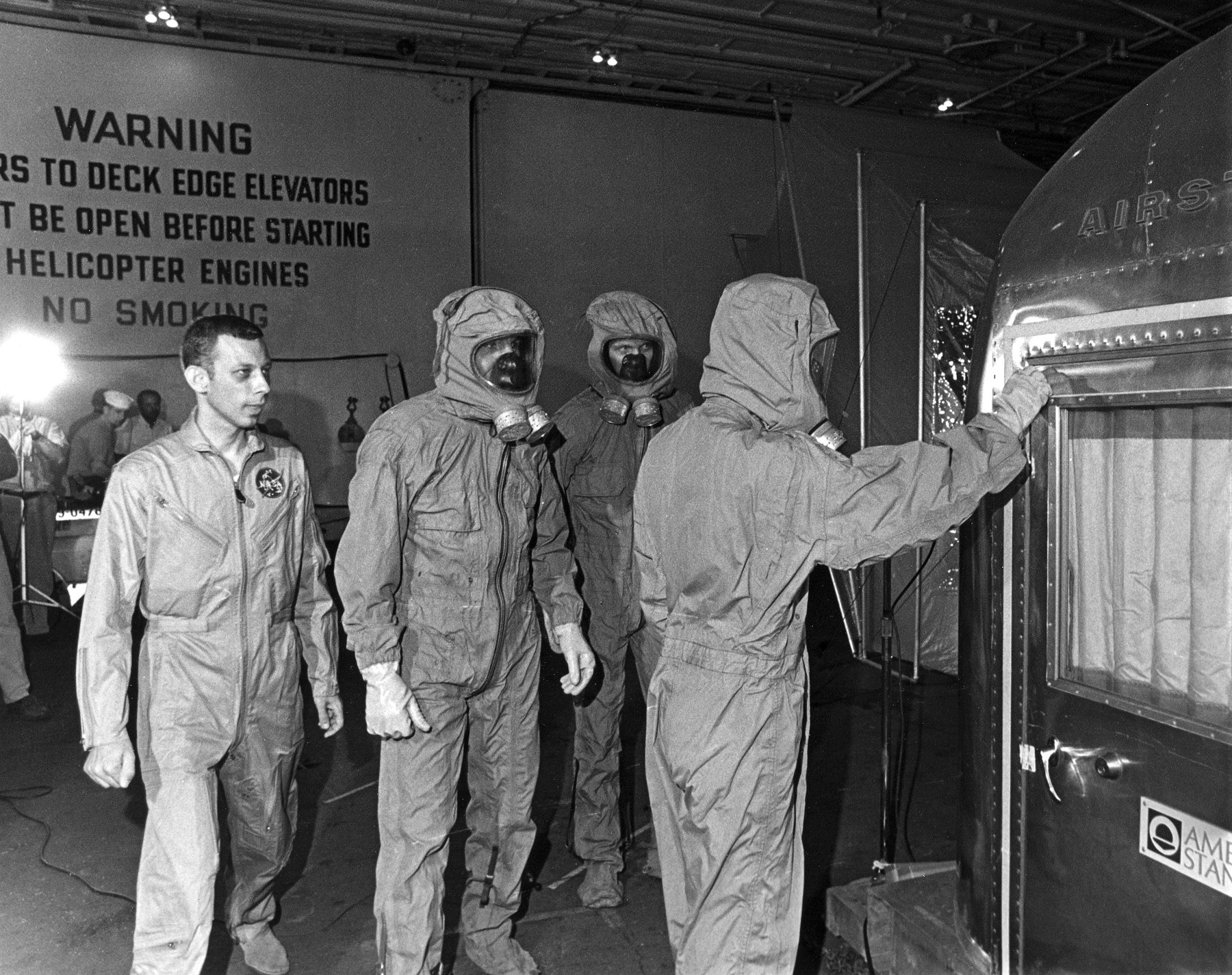
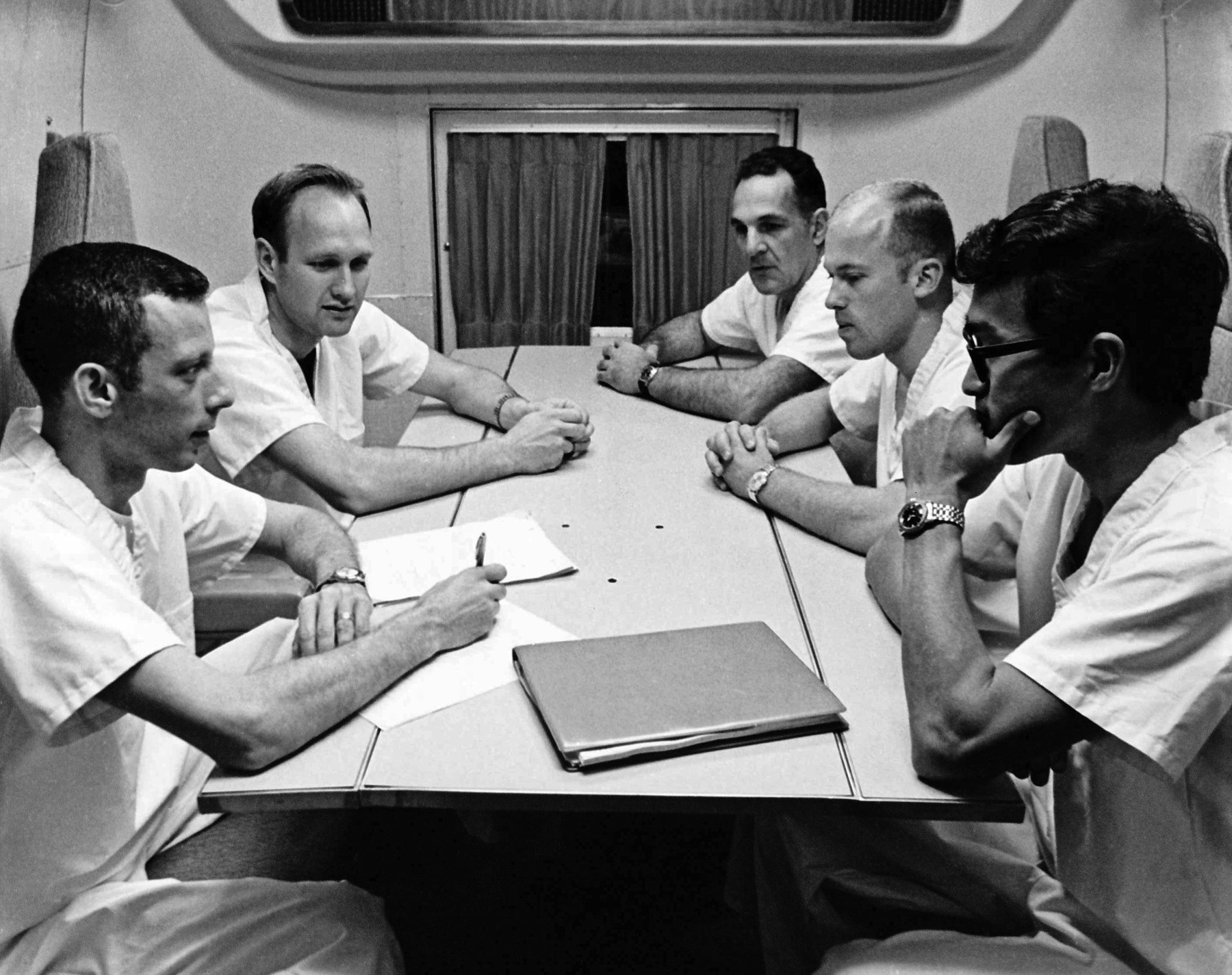
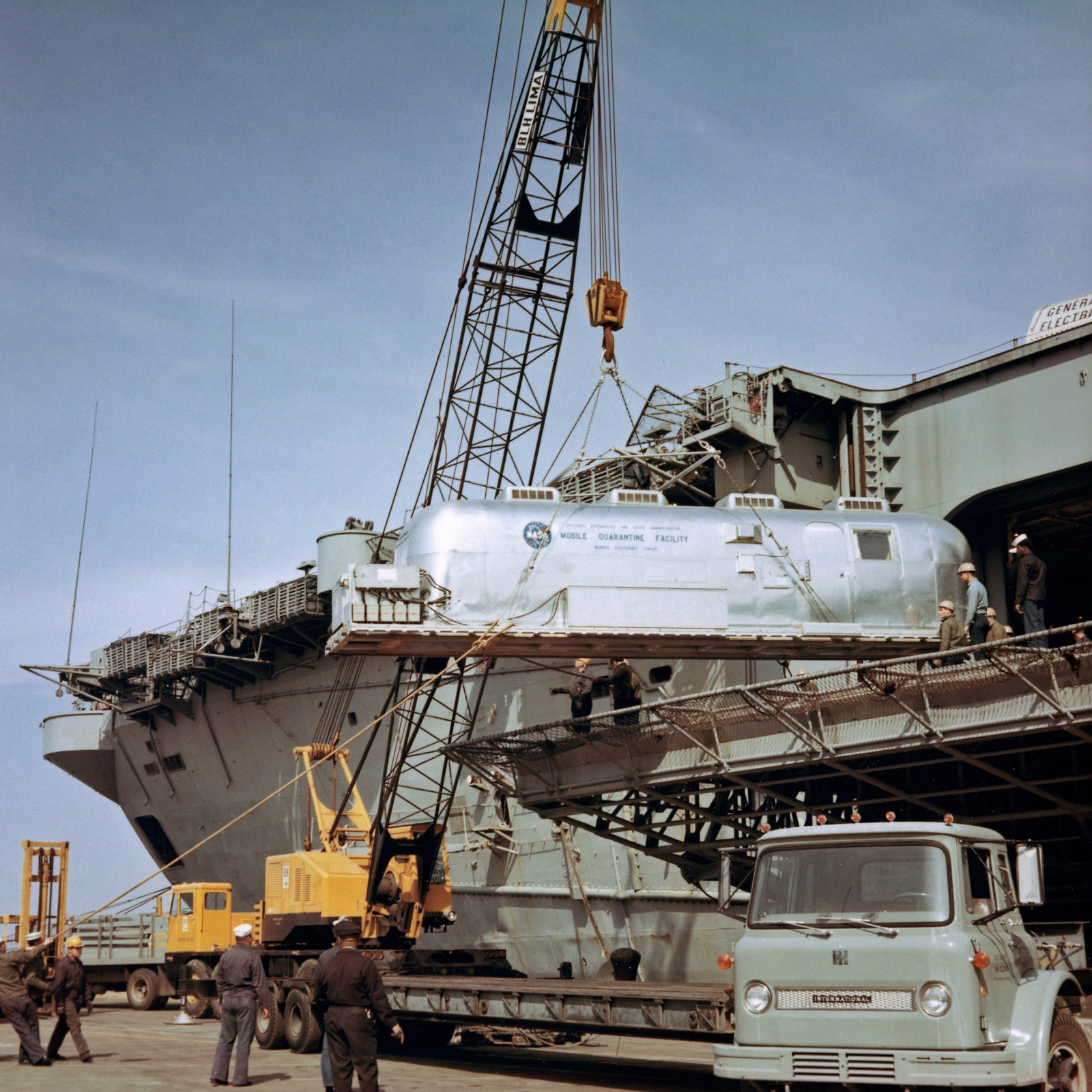
Left: Flight surgeon Dr. William R. Carpentier, left, and the three astronaut surrogates wearing Biological Isolation Garments, prepare to enter the Mobile Quarantine Facility (MQF) aboard the U.S.S. Guadalcanal. Middle: Dr. Carpentier, left, astronaut surrogates Paul H. Kruppenbacher, Arthur E. Lizza, and Michael T. “Tex” Ward, and engineer John K. Hirasake inside the MQF aboard the Guadalcanal. Right: Workers at Norfolk Naval Air Station in Virginia lift the MQF off the Guadalcanal onto a truck for its return to Houston.
Preparations for ground support facilities for the first lunar landing mission continued. In conjunction with the Apollo 9 splashdown and recovery operations aboard the Guadalcanal, NASA conducted a simulation of recovery operations of astronauts returning from a lunar mission. NASA Flight Surgeon Dr. William R. Carpentier, project engineer John K. Hirasaki, and three astronaut stand-ins, Paul H. Kruppenbacher, Michael T. “Tex” Ward, and Arthur E. Lizza, spent 10 days inside a Mobile Quarantine Facility (MQF), a modified Airstream trailer designed to temporarily house astronauts returning from the Moon. The three astronaut surrogates began the simulation by entering a mockup CM that sailors placed in the ocean and recovered as if returning from a space mission. The trio donned Biological Isolation Garments (BIG), meant to prevent contamination of Earth by any possible lunar organisms. Once on board the Guadalcanal, the three accompanied by Carpentier and Hirasaki entered the MQF for four days, where the just-recovered Apollo 9 crew visited them through the window of the trailer. The five stayed inside the MQF except for the short time it was transferred from the Guadalcanal to a waiting transport aircraft at Norfolk Naval Air Station and flown back to Houston. After offloading, the MQF and its five inhabitants transferred to the Lunar Receiving Laboratory (LRL) in MSC’s Building 37 to begin a simulated quarantine. Overall, the exercise tested the procedures for the activities after the first lunar landing mission, with many lessons learned.
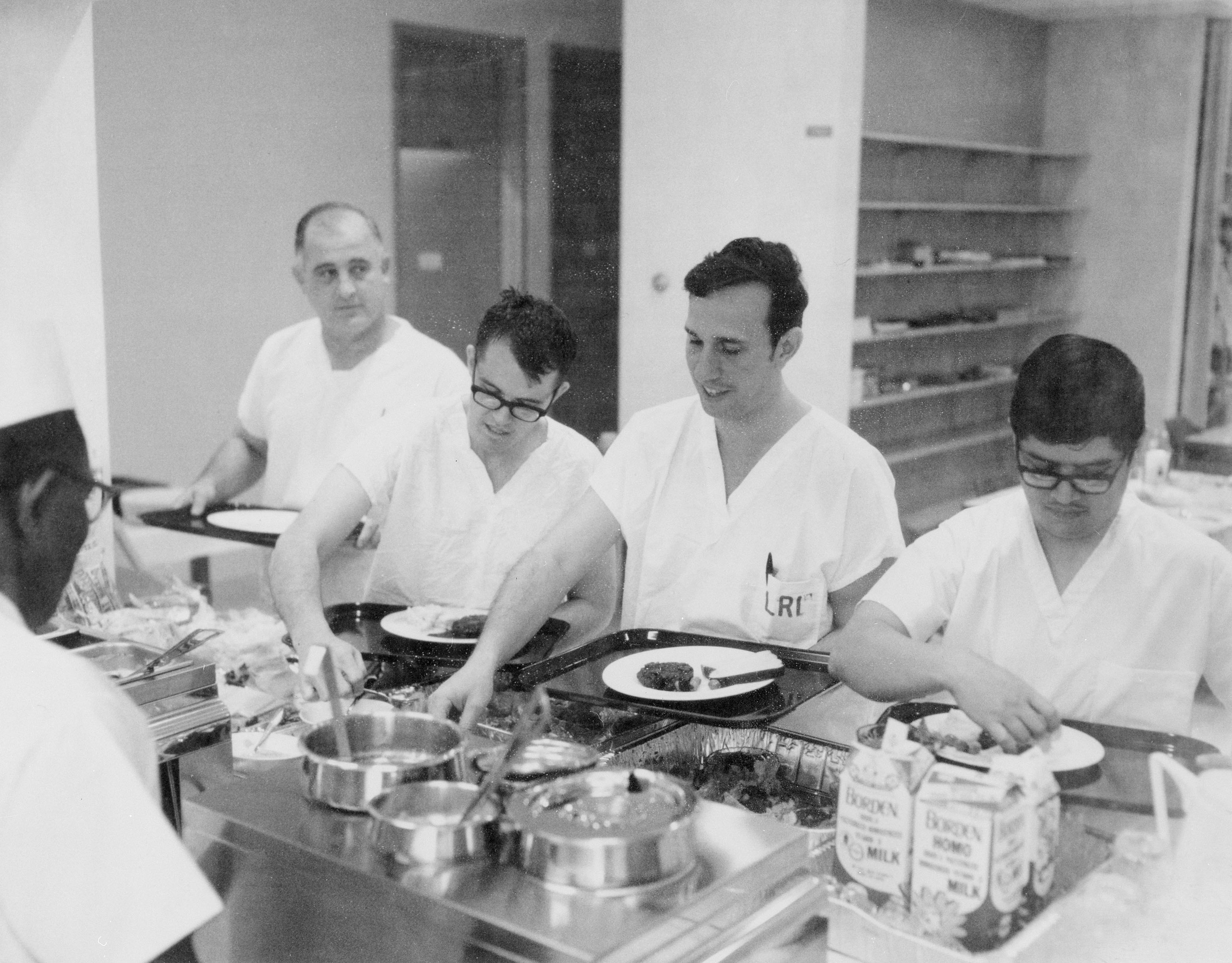
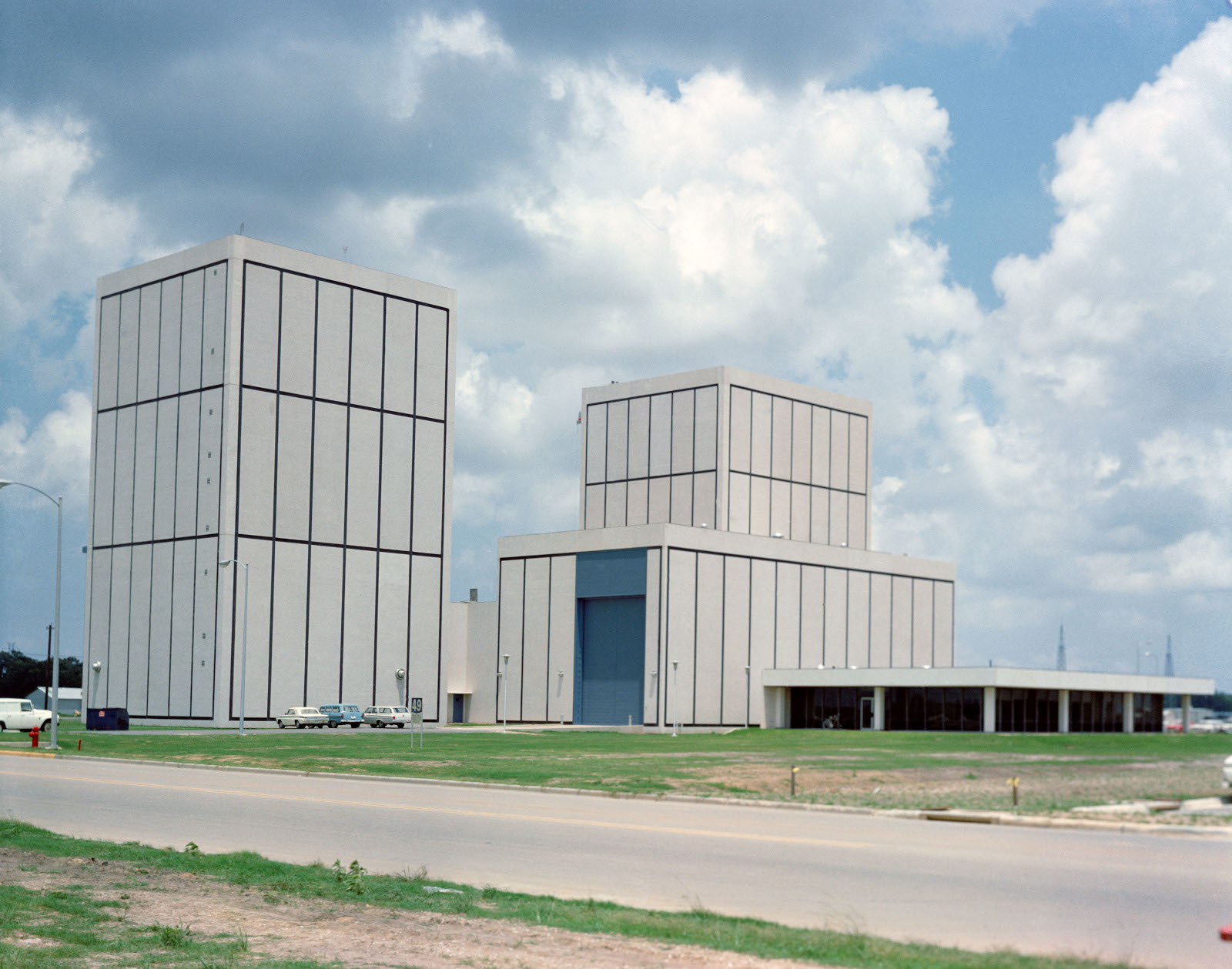
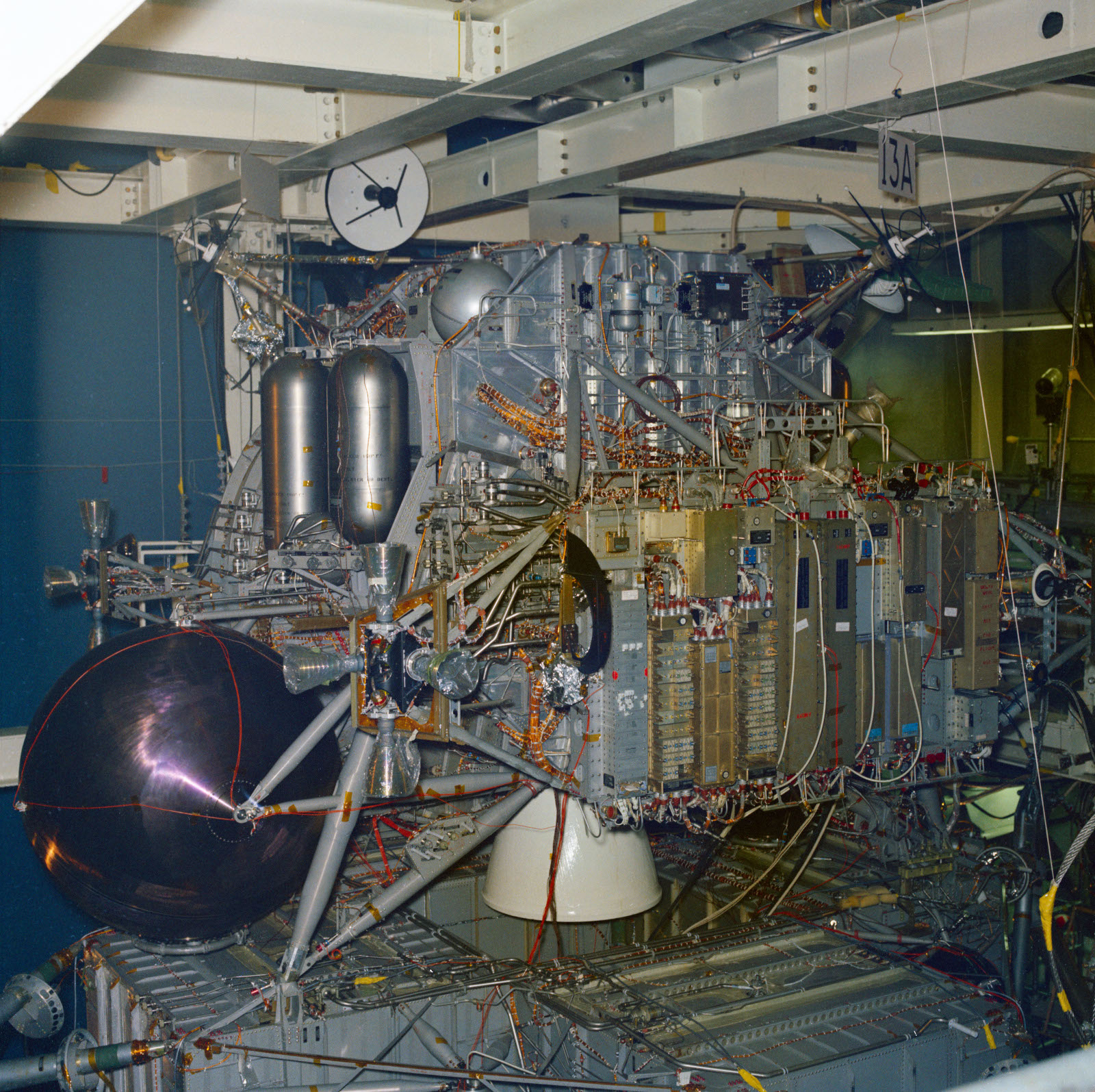
Left: During a simulation, workers line up in the kitchen of the Crew Reception Area of the Lunar Receiving Laboratory at the Manned Spacecraft Center (MSC), now NASA’s Johnson Space Center in Houston. Middle: The Vibration and Acoustics Test Facility (VATF) at MSC. Right: The Lunar Module during drop testing in the VATF.
Managers, scientists, technicians, and engineers conducted a 30-day simulation in the LRL, the most complex test of the facility to verify that all its components would be ready to support crewmembers and their samples returning from the Moon, possibly by July 1969. A separate seven-day simulation of the astronaut quarantine capabilities in the LRL’s Crew Reception Area began on March 25. Fifteen NASA and contractor employees, most of whom would participate in the activities following the actual lunar landing mission, demonstrated the logistics of maintaining astronauts and support staff in isolation. All biological barriers operated during the simulation, and the only contact test personnel had with the outside world was via telephone or through glass walls. The first part of the test included the simulated arrival of lunar materials and film, followed the next day by the arrival of the stand-in crew. The last part of the test included the process for releasing the crew and personnel from quarantine.
The Structures and Mechanics Division at MSC conducted a series of drop tests in the Vibration and Acoustic Test Facility (VATF) to verify that the LM’s systems would operate following a lunar landing. The LM’s manufacturer, the Grumman Aircraft Engineering Corporation, located in Bethpage, New York, provided technical support for the tests using LM-2, a flight qualified vehicle with all subsystems installed. To simulate the LM’s configuration at landing, workers filled the tanks in the ascent stage with inert fluid to mimic a full load of fuel, while keeping the descent stage tanks mostly empty as they would be following the powered descent from orbit. The series of five tests began on March 21, 1969, and finished on May 7. Engineers dropped LM-2 from heights ranging from eight to 24 inches onto artificial slopes and obstructions to simulate landings on rough lunar terrain. Successful completion of the drop tests removed a constraint from carrying out the first lunar landing. Visitors can view LM-2 on display at the Smithsonian Institution’s National Air and Space Museum in Washington, D.C.
Apollo 12
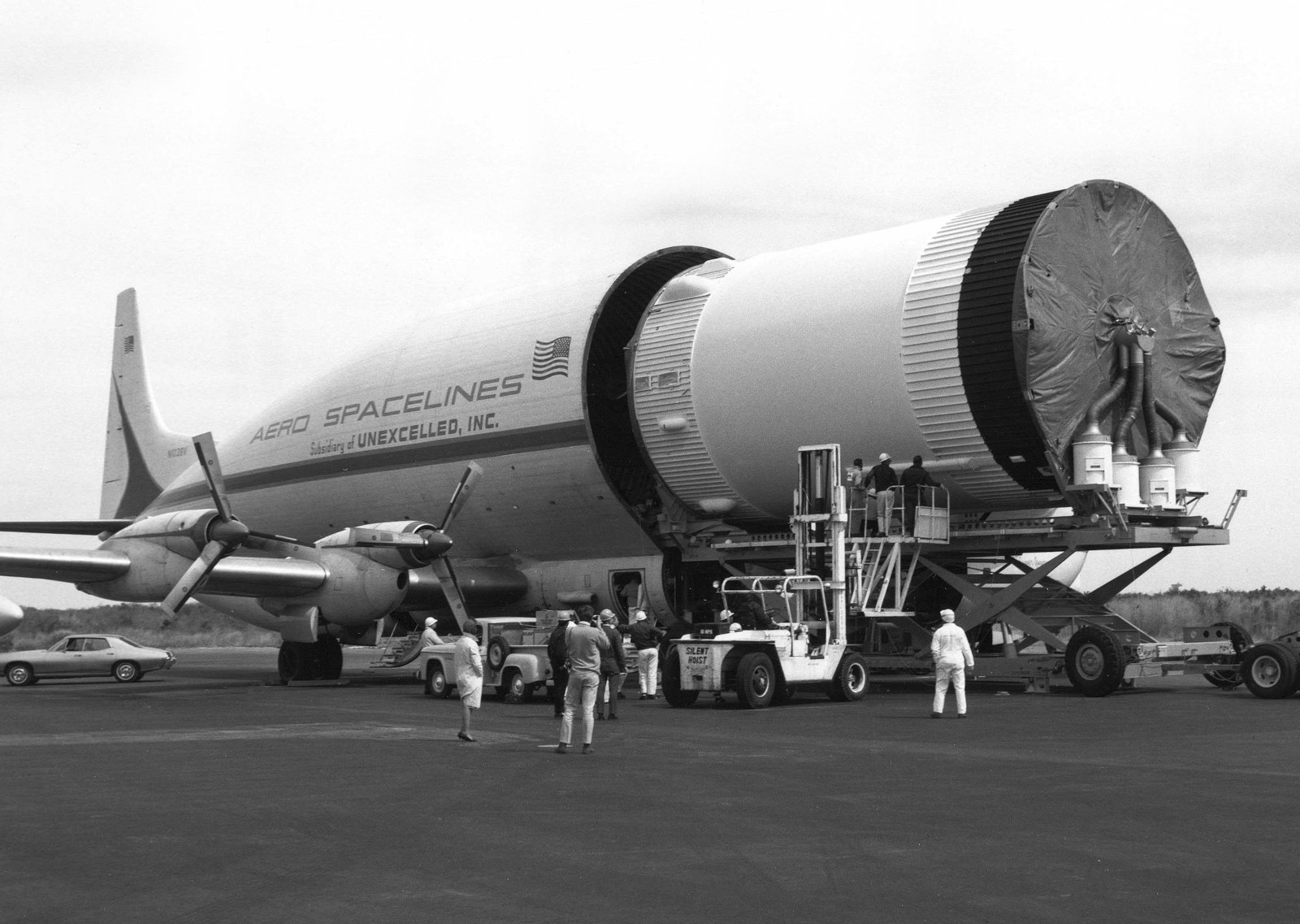
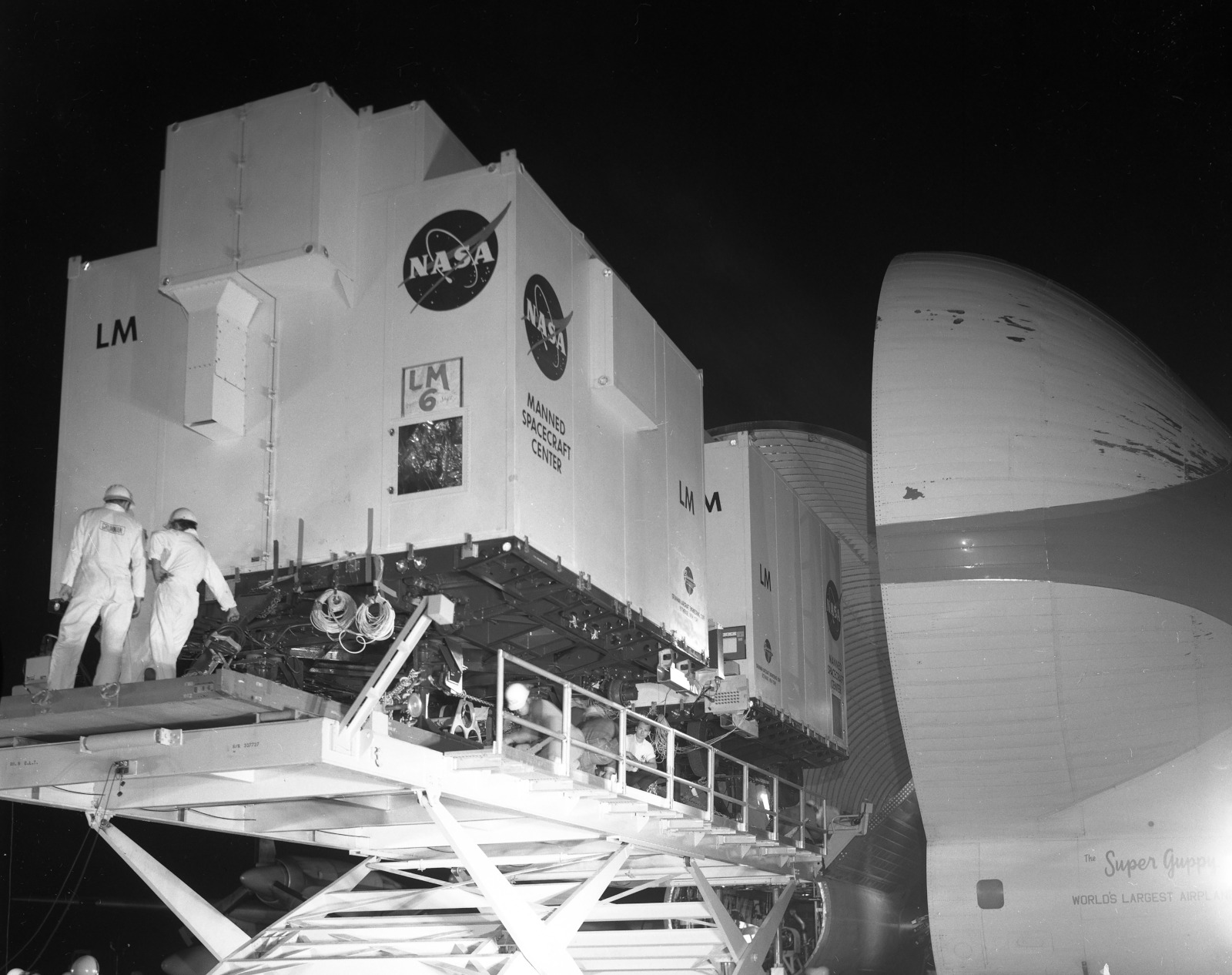
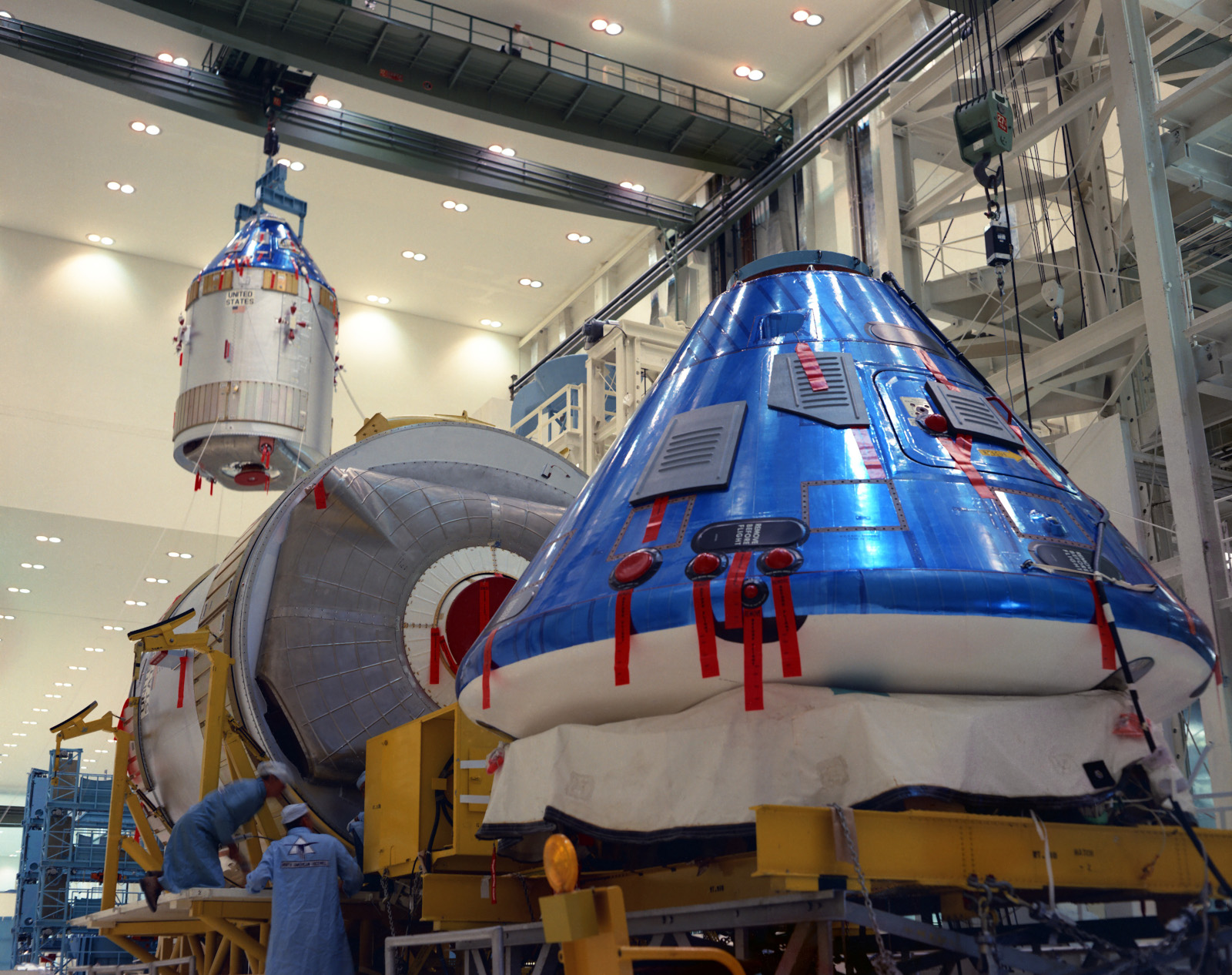
Left: The S-IVB third stage for the Apollo 12 Saturn V arrives at NASA’s Kennedy Space Center (KSC) in Florida. Middle: The Apollo 12 Lunar Module arrives at KSC. Right: In KSC’s Manned Spacecraft Operations Building, workers uncrate the Apollo 12 Command and Service Modules, foreground, as they continue work on the Apollo 11 spacecraft.
In case Apollo 11 could not achieve the Moon landing in July, NASA planned to try again with Apollo 12 in September. To protect for that launch date, components of the rocket and spacecraft began arriving at KSC. The Saturn V’s S-IVB third stage arrived on March 10 and workers placed it in storage in the VAB until the other two stages arrived in April and May. The Apollo 12 LM’s two stages arrived on March 24, and workers transported them to the MSOB. The CM and SM arrived four days later, and they shared space in the MSOB with the Apollo 11 spacecraft undergoing testing.
To be continued …
News from around the world in March 1969:
March 2 – First test flight of the Anglo-French Concorde supersonic jet transport in Toulouse.
March 3 – The U.S. Navy established the Navy Fighter Weapons School, better known as Top Gun, at Naval Air Station Miramar in California.
March 16 – Historical musical “1776” opens, runs for 1,217 performances, and wins three Tony Awards
March 17 – Golda Meir becomes Israel’s fourth and first, and so far only, woman prime minister.
March 26 – “Marcus Welby, M.D.” debuts as a TV movie on ABC, then becomes a series.
March 27 – Mariner 7 joins Mariner 6 on a journey to fly by Mars.
March 28 – Dwight D. Eisenhower, 34th president of the U.S., died at age 78.
March 31 – Kurt Vonnegut’s novel “Slaughterhouse-Five” was published.
Powered by WPeMatico
Get The Details…
Kelli Mars