Hubble Spots the Spider Galaxy

Hubble Spots the Spider Galaxy

2 min read

Hubble Spots the Spider Galaxy

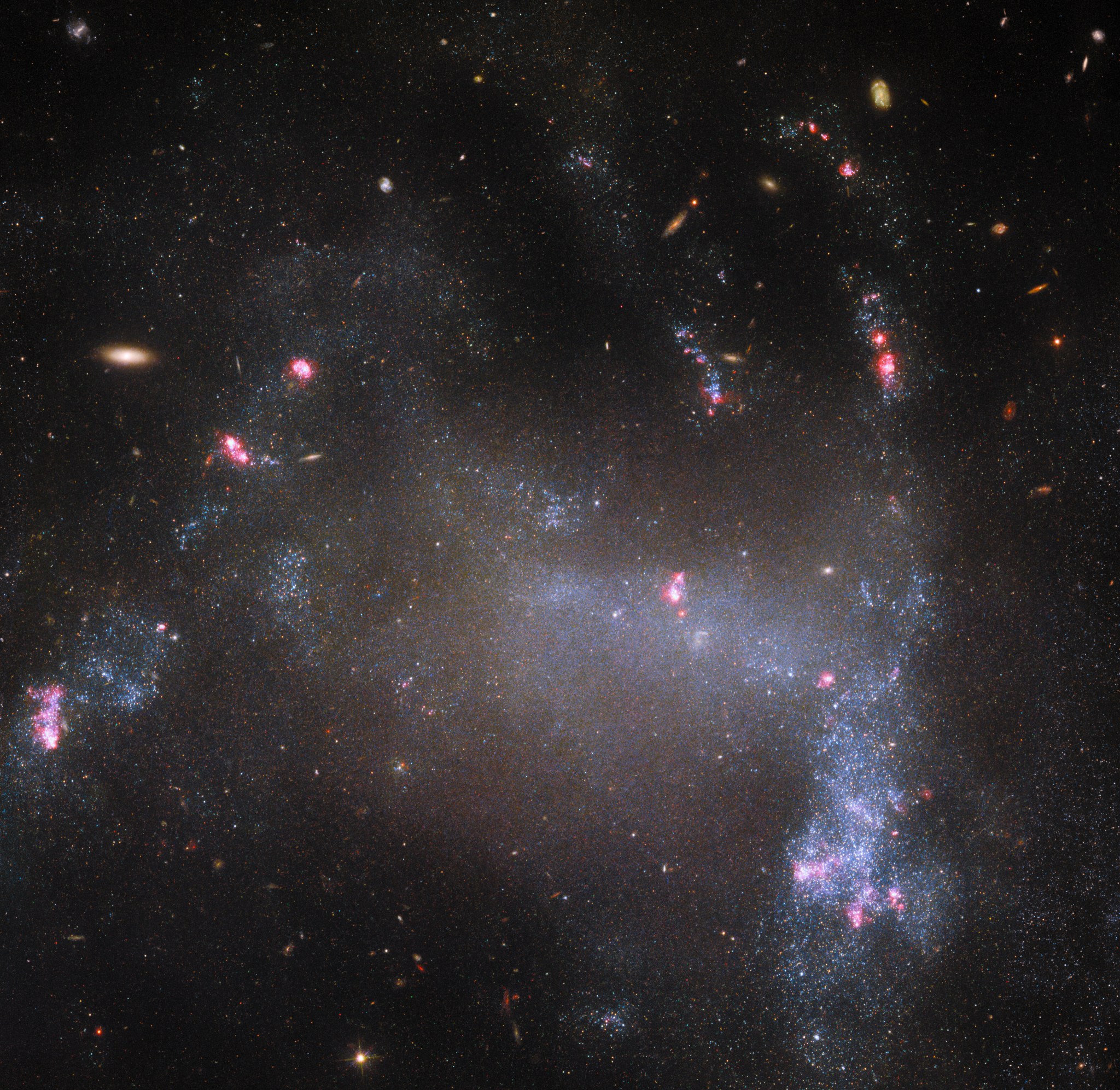
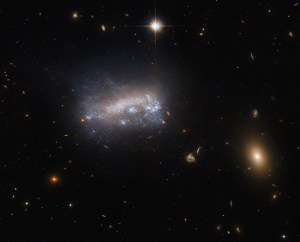
An irregular galaxy with a large central body of dull-colored stars and distorted arms around it. Brightly glowing pink areas where stars are forming dot the arms, along with bluish gas that is brighter than the galactic core. Two large arms flank the left and right of the body, and smaller streams of stars emerge from the top. Other distant galaxies are visible on the edges of the image.
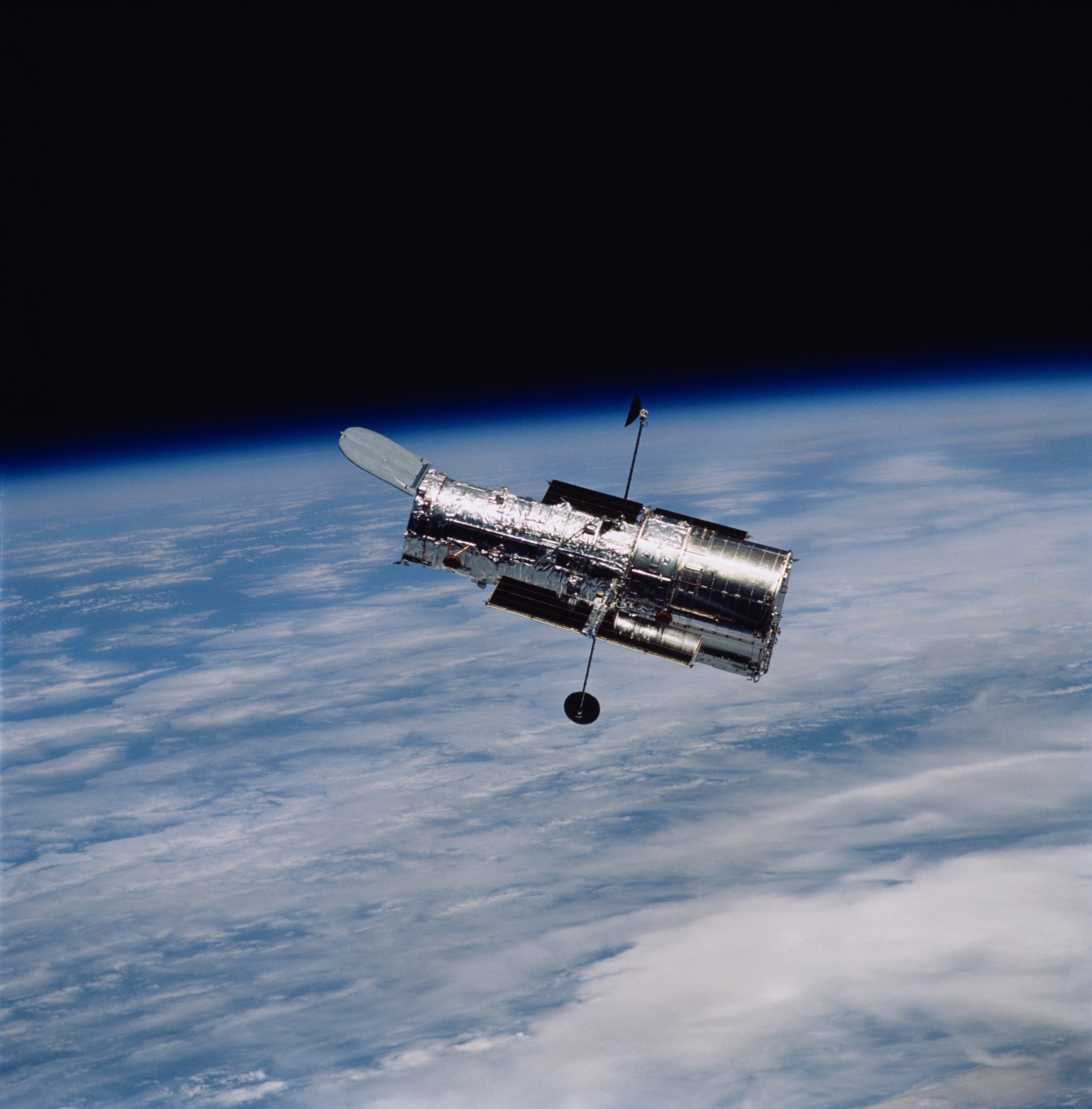
This image from the NASA/ESA Hubble Space Telescope shows the irregular galaxy UGC 5829.
ESA/Hubble & NASA, R. Tully, M. Messa

This image from the NASA/ESA Hubble Space Telescope shows the gauzy-looking celestial body UGC 5829, an irregular galaxy that lies about 30 million light-years away. Despite the lack of observations of this relatively faint galaxy, UGC 5829 has a distinct and descriptive name: the Spider Galaxy. Perhaps its distorted galactic arms with their glowing, star-forming tips hint at the clawed legs of an arachnid.

The data in this image come from two Hubble observing programs. The first used Hubble’s Advanced Camera for Surveys to look at relatively nearby galaxies in an effort to build color versus brightness diagrams of the stars in these galaxies. Each observation only took one Hubble orbit (about 95 minutes) but provided a valuable archival record of the types of stars in different galaxies and therefore different environments.

The second program used Hubble’s Wide Field Camera 3 to look at star clusters in dwarf galaxies. Their observations leveraged Hubble’s ultraviolet capabilities along with its ability to see fine details to better understand the environment where stars form in dwarf galaxies. The star-forming regions of UGC 5829 are readily visible in this image as bright-pink nebulae or clouds.

Text credit: European Space Agency (ESA)

Media Contact:

Claire Andreoli
NASA’s Goddard Space Flight CenterGreenbelt, MD
claire.andreoli@nasa.gov

Share

Details

Last Updated
Mar 22, 2024
Editor
Andrea Gianopoulos

Powered by WPeMatico

Get The Details…

45 Years Ago: Space Shuttle Columbia Arrives at NASA’s Kennedy Space Center

45 Years Ago: Space Shuttle Columbia Arrives at NASA’s Kennedy Space Center

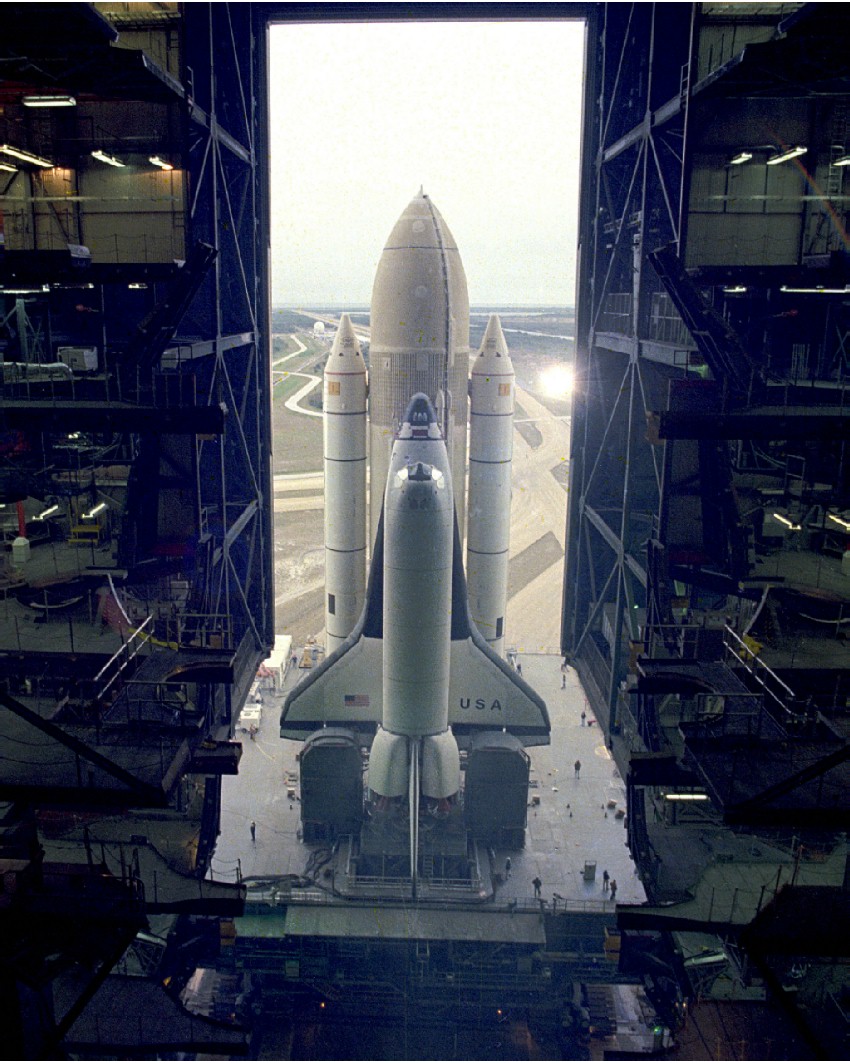
On March 24, 1979, space shuttle Columbia arrived at NASA’s Kennedy Space Center (KSC) for the very first time. Following Presidential direction to build the space shuttle in 1972, Congress quickly approved and funded the program later that year. Construction of the first orbital vehicle, later named Columbia, began in 1975. Four years later, Columbia completed its first transcontinental flight, arriving at KSC to begin preparations for its first mission. The first shuttle flight in April 1981 ushered in an era of reusable space transportation.
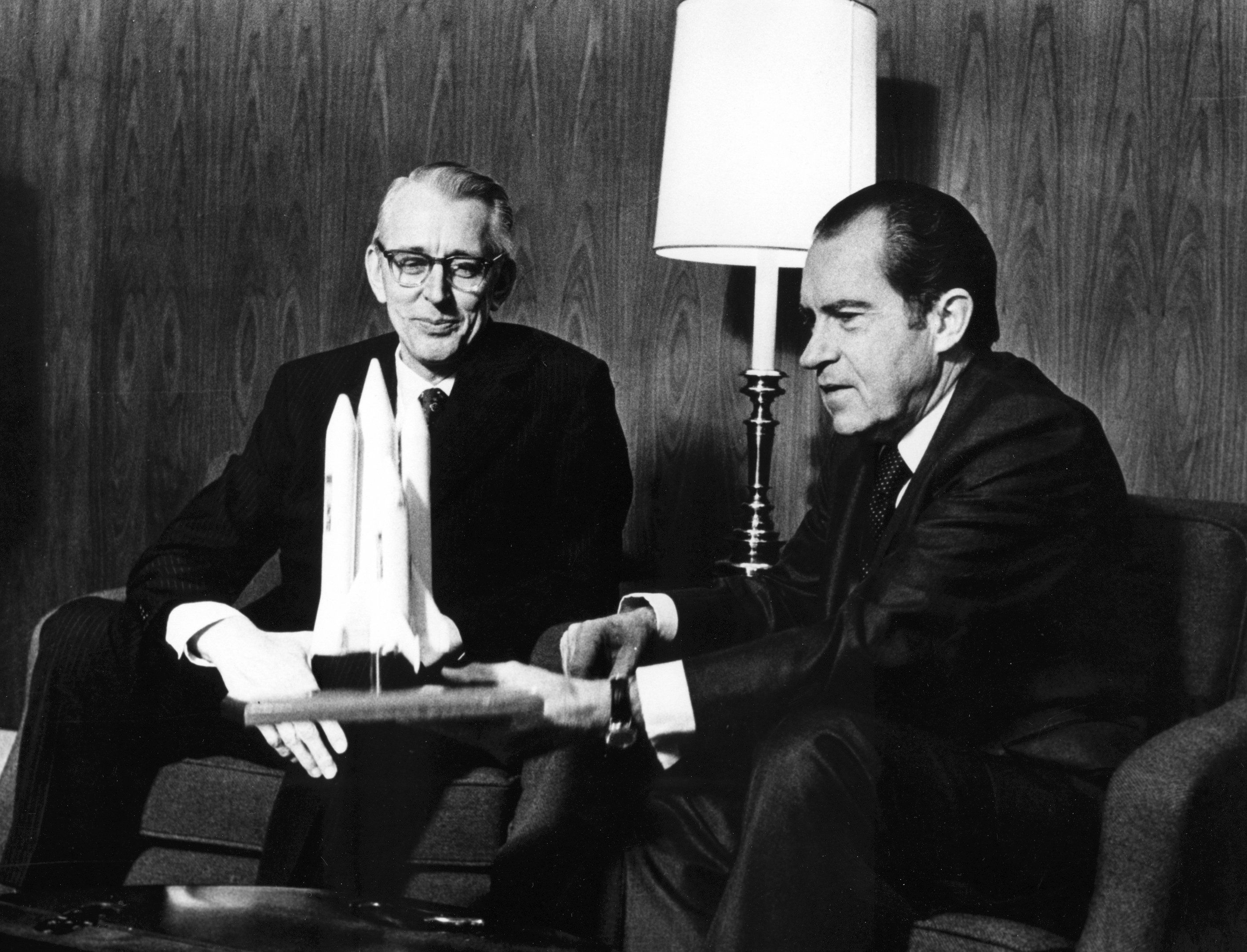
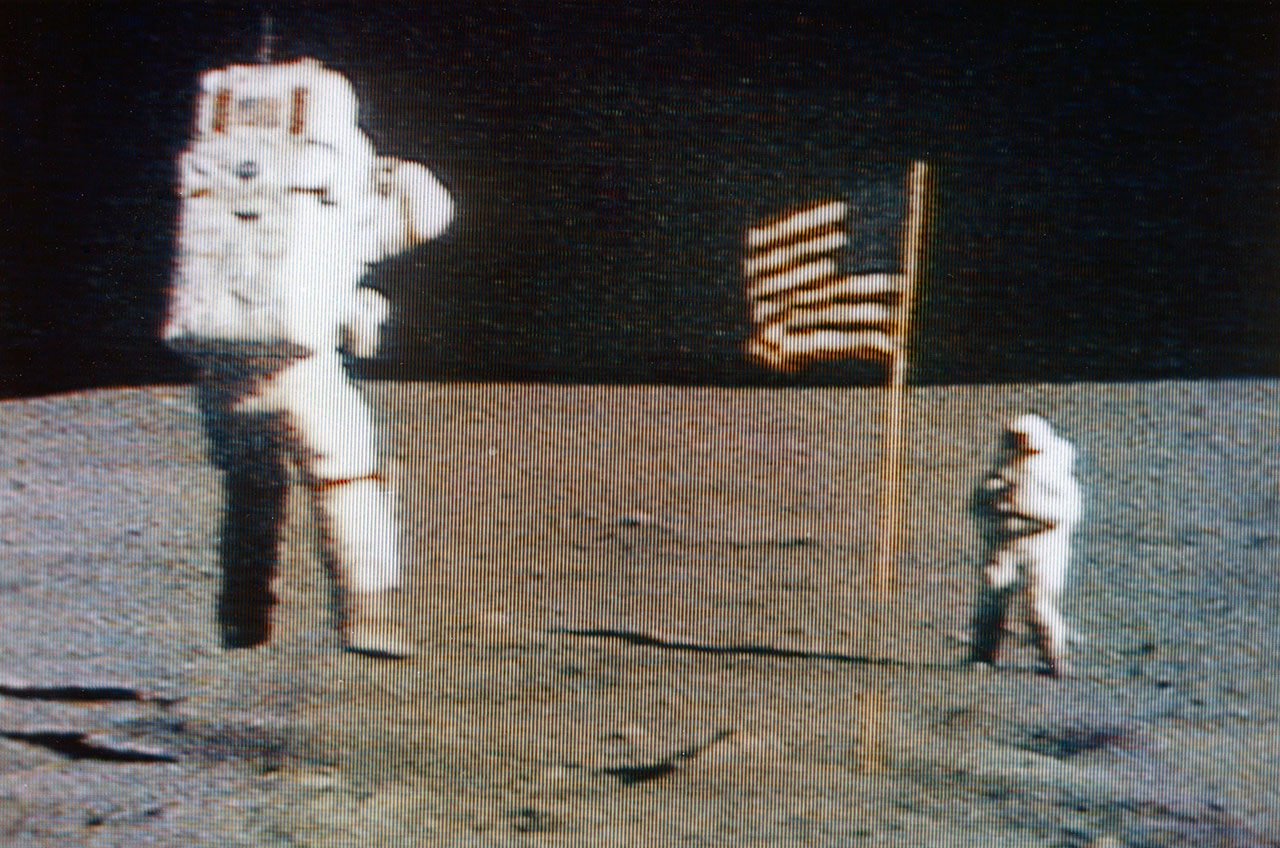
NASA Administrator James C. Fletcher, left, presents a model of the space shuttle to President Richard M. Nixon in January 1972 Apollo 16 astronauts John W. Young, left, and Charles M. Duke on the Moon in April 1972
Left: NASA Administrator James C. Fletcher, left, presents a model of the space shuttle to President Richard M. Nixon in January 1972. Right: Apollo 16 astronauts John W. Young, left, and Charles M. Duke on the Moon in April 1972.

On Jan. 5, 1972, President Richard M. Nixon directed NASA to build the space shuttle, formally called the Space Transportation System (STS), stating that “it would revolutionize transportation into near space.” NASA Administrator James C. Fletcher hailed the President’s decision as “an historic step in the nation’s space program,” adding that it would change what humans can accomplish in space. Apollo 16 astronauts John W. Young and Charles M. Duke learned of the space shuttle’s approval while exploring the Moon in April 1972. Mission Control informed them that Congress had authorized the development of the space shuttle. Young and Duke both enthusiastically responded to the positive news with “Beautiful! Wonderful! Beautiful!” Young added with some foresight, “The country needs that shuttle mighty bad. You’ll see.” He had no way of knowing that nine years later, he would command the first ship of the space shuttle fleet, Columbia, on its maiden voyage.
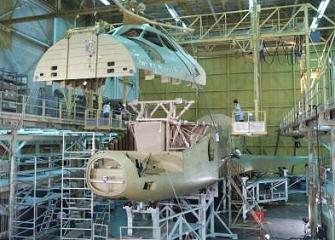
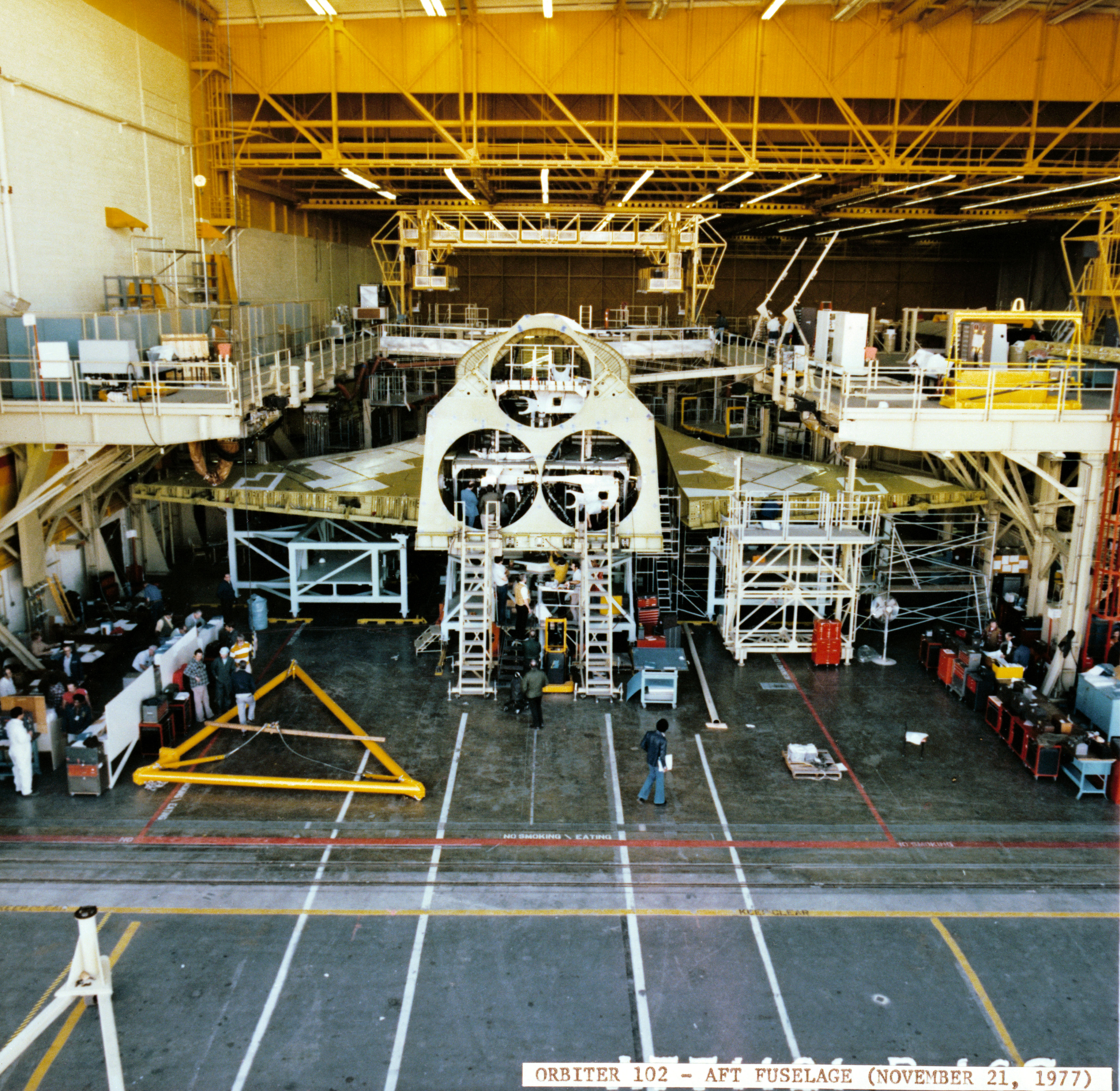
Space Shuttle Columbia’s crew compartment during assembly in 1976 Columbia’s aft fuselage and wings during assembly in November 1977 Space Shuttle Columbia just prior to rollout from Rockwell’s plant in Palmdale in March 1979
Left: Columbia’s crew compartment during assembly in 1976. Middle: Columbia’s aft fuselage and wings during assembly in November 1977. Right: Columbia just prior to rollout from Rockwell’s plant in Palmdale in March 1979.

Once Congress authorized the funds, on July 26, 1972, NASA awarded the contract to the North American Rockwell Corporation of Downey, California, to begin construction of the first orbital vehicle. Officially known as Orbital Vehicle-102 (OV-102), in January 1979 NASA named it Columbia after Captain Robert Gary’s sloop that explored the Pacific Northwest in the 1790s and took the honor as the first American ship to circumnavigate the globe, as well as after the Apollo 11 Command Module. Construction of Columbia’s first components at Rockwell’s Palmdale, California, plant began on March 25, 1975.
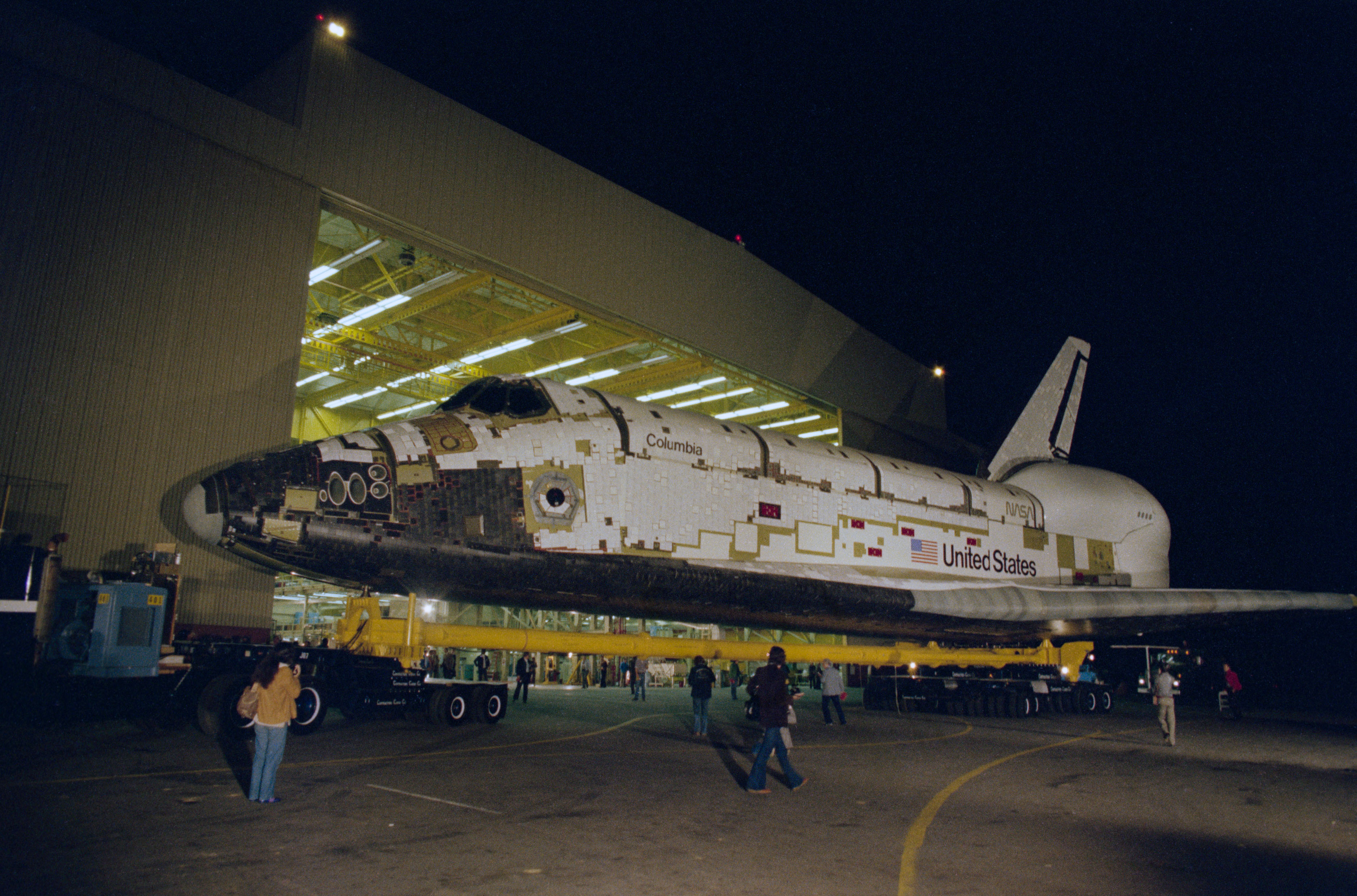
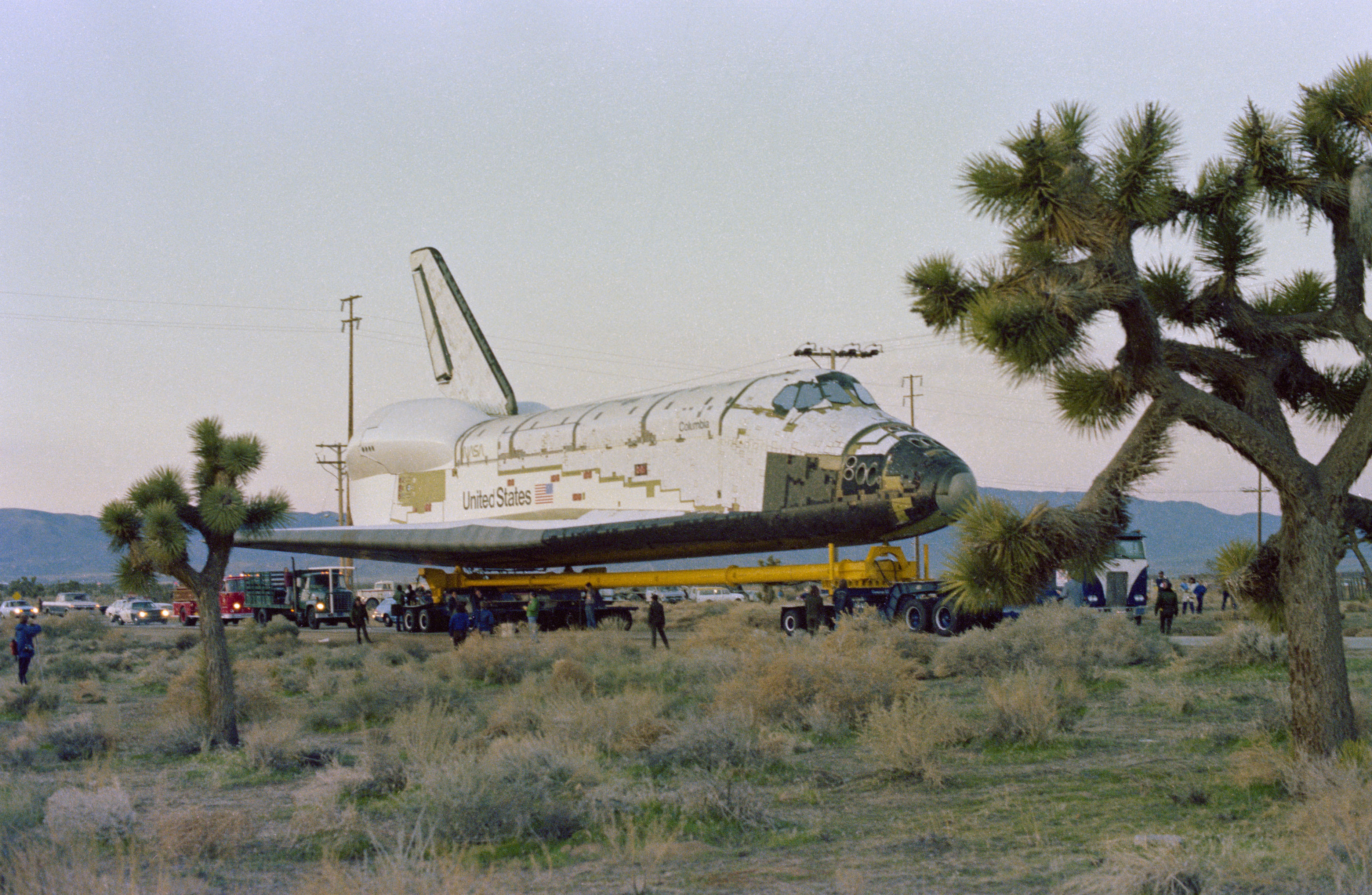
Workers roll Columbia out from its hangar at Rockwell’s Palmdale, California, plant Workers transport Columbia from Rockwell’s Palmdale facility to NASA’s Dryden, now Armstrong, Flight Research Center Columbia atop the Shuttle Carrier Aircraft takes off from Dryden to begin the cross-country ferry flight
Left: Workers roll Columbia out from its hangar at Rockwell’s Palmdale, California, plant. Middle: Workers transport Columbia from Rockwell’s Palmdale facility to NASA’s Dryden, now Armstrong, Flight Research Center. Right: Columbia atop the Shuttle Carrier Aircraft takes off from Dryden to begin the cross-country ferry flight. 

Nearly four years later, on March 8, 1979, Columbia rolled out of the Palmdale facility to begin its multi-day transcontinental journey to KSC. For the first step of the journey, workers towed Columbia from Palmdale overland to NASA’s Dryden, now Armstrong, Flight Research Center at Edwards Air Force Base (AFB) 36 miles away. Two days later, workers there hoisted Columbia onto the Shuttle Carrier Aircraft (SCA), a Boeing 747 aircraft modified to transport space shuttle orbiters. During a test flight, thousands of the orbiter’s thermal protection system tiles fell off. Workers returned Columbia to a hangar where over 100 men and women worked for nine days reapplying the tiles. Weather then delayed Columbia’s departure until March 20, when the SCA/shuttle duo flew from Dryden to Biggs AFB in El Paso, Texas.
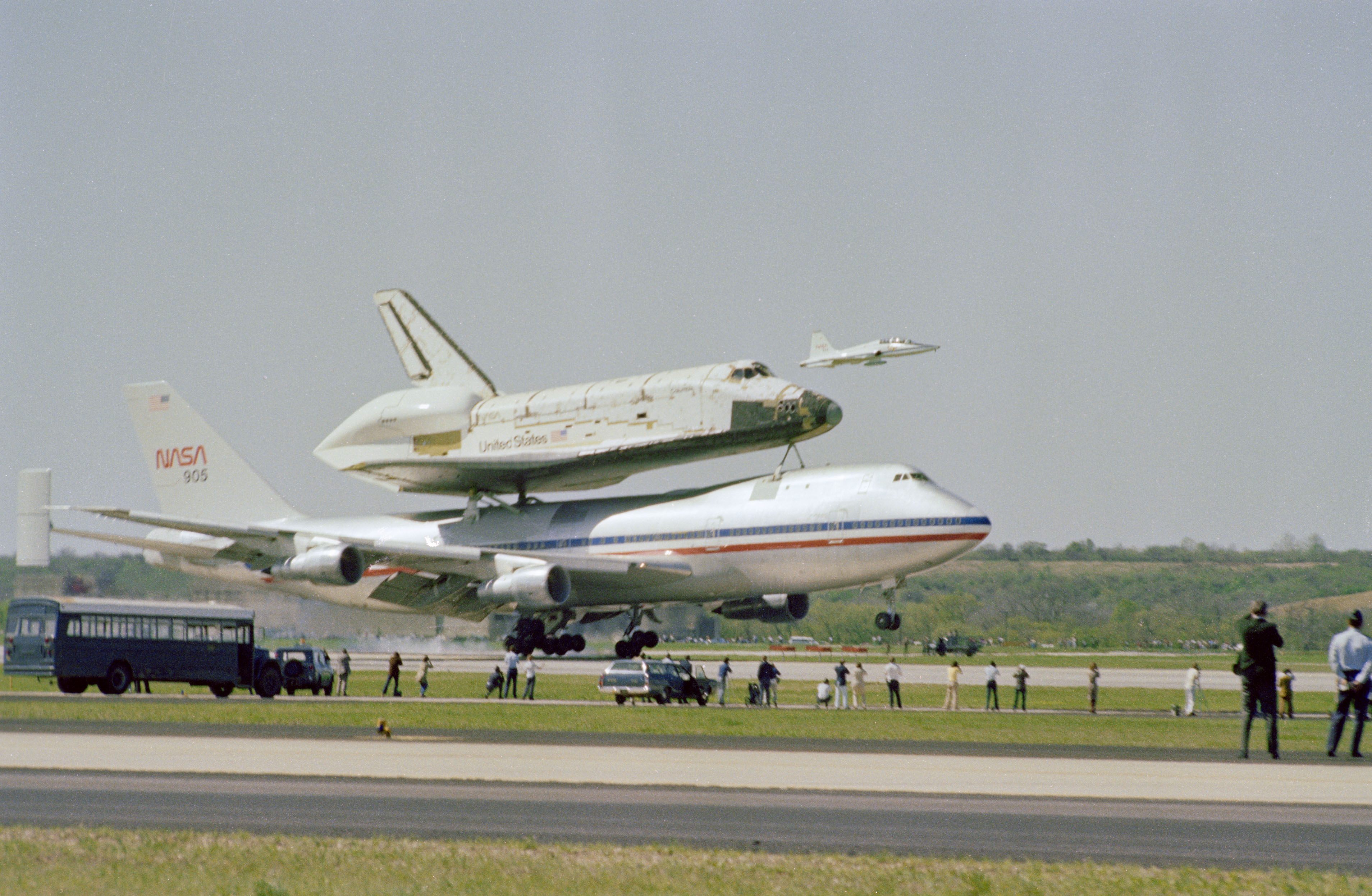
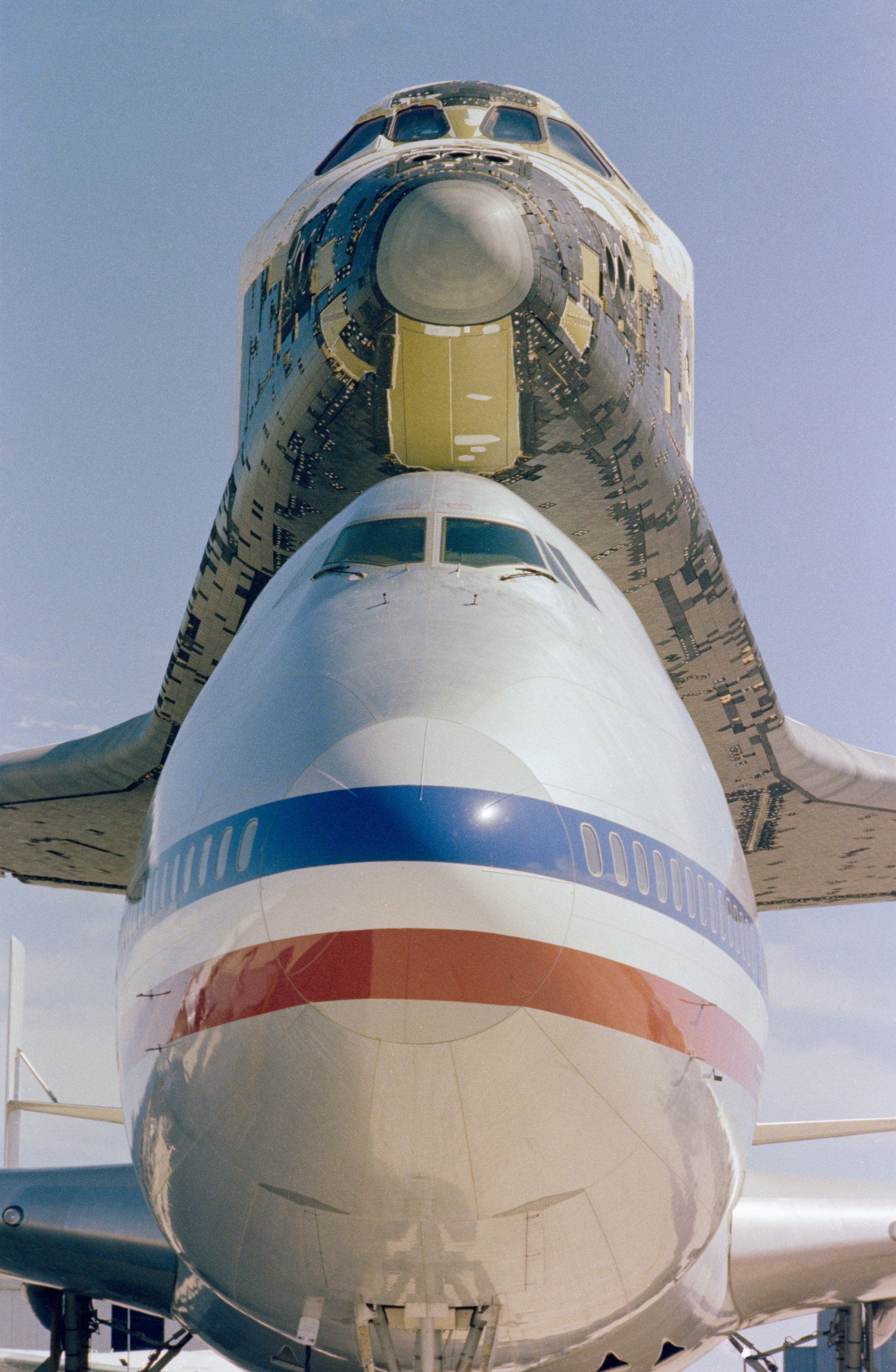
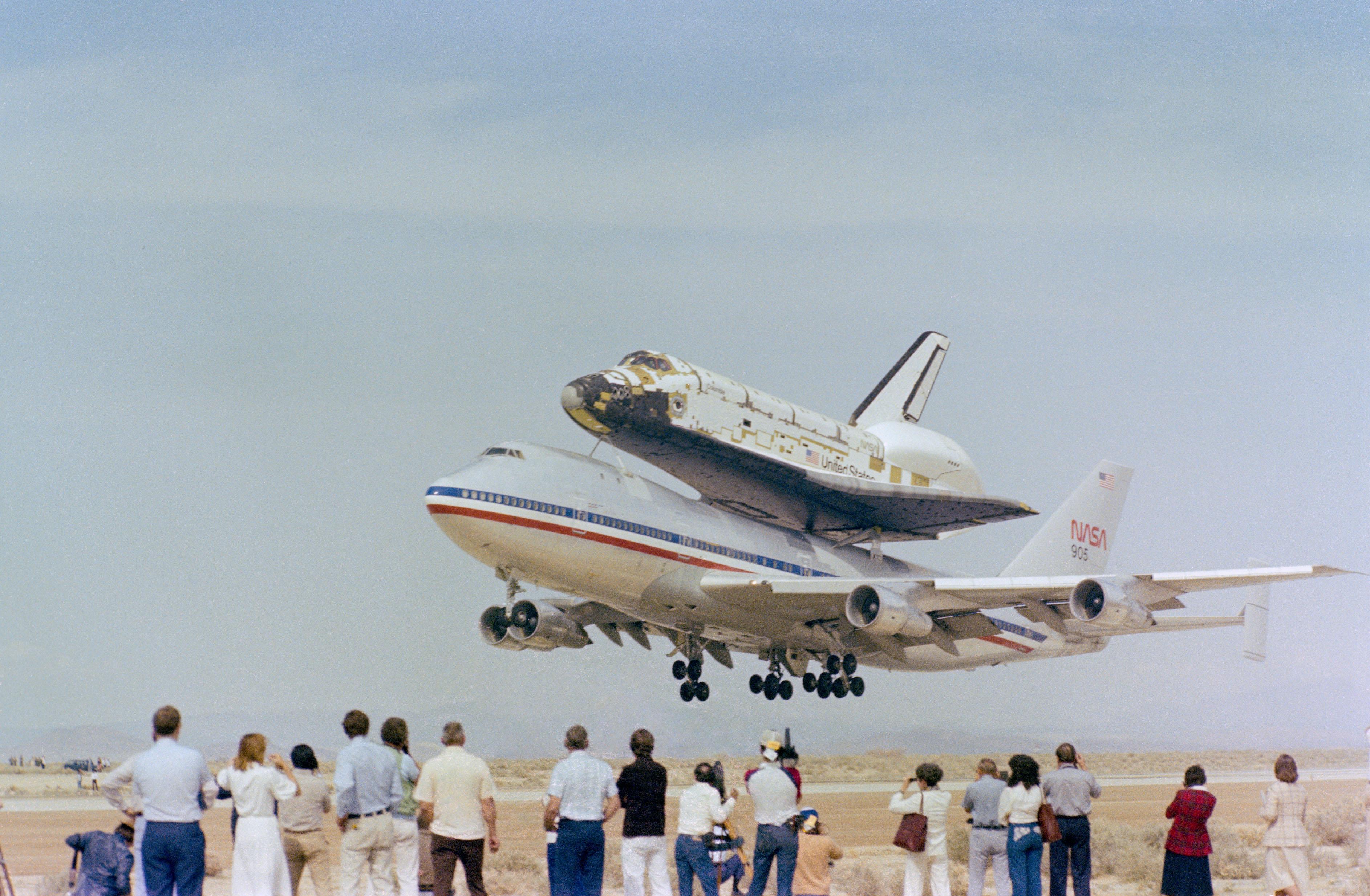
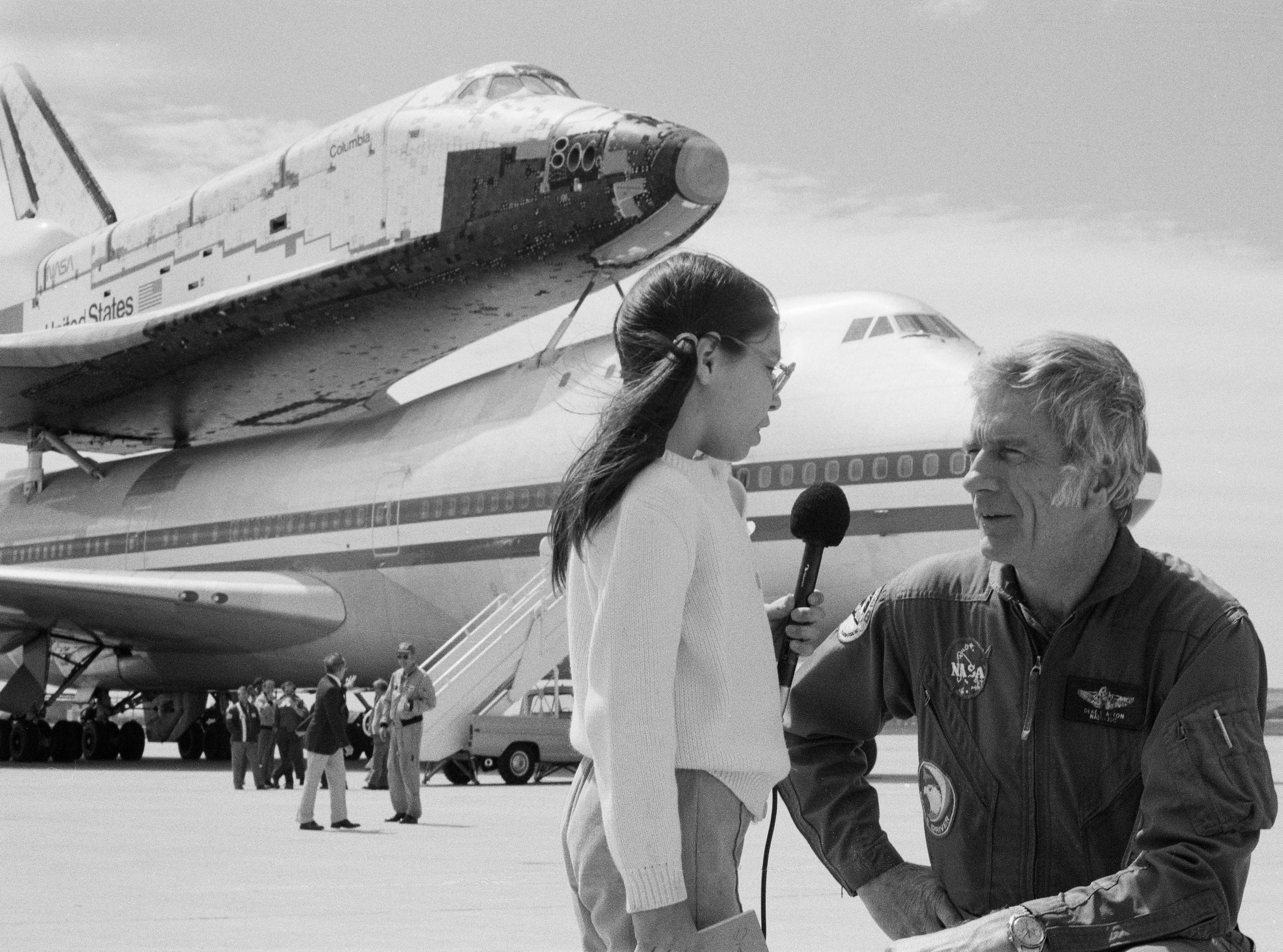
Space shuttle Columbia atop its Shuttle Carrier Aircraft (SCA) touches down at Kelly Air Force Base (AFB) in San Antonio for an overnight stop Head on view of Space Shuttle Columbia atop the SCA Tina Aguilar, age nine, an aspiring young reporter, interviews astronaut Donald K. “Deke” Slayton in front of Columbia and the SCA at Kelly AFB
Left: Space shuttle Columbia atop its Shuttle Carrier Aircraft (SCA) touches down at Kelly Air Force Base (AFB) in San Antonio for an overnight stop. Middle: Head on view of Columbia atop the SCA. Right: Tina Aguilar, age nine, an aspiring young reporter, interviews astronaut Donald K. “Deke” Slayton in front of Columbia and the SCA at Kelly AFB.

Weather delayed Columbia’s departure for the planned refueling stop at Kelly AFB in San Antonio, until the next day. About 200,000 people went to view the shuttle during its overnight layover in San Antonio prior to its departure on March 23.
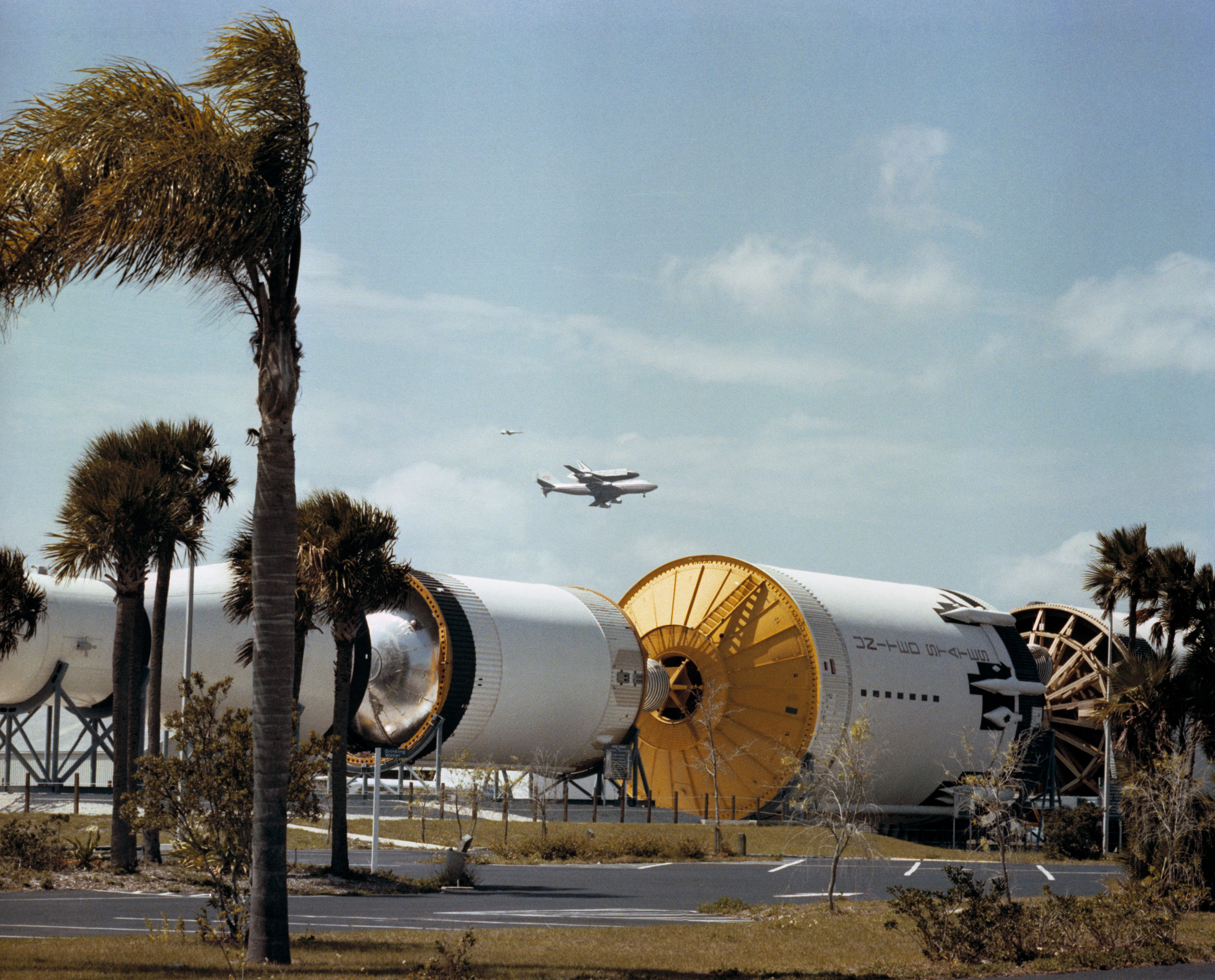
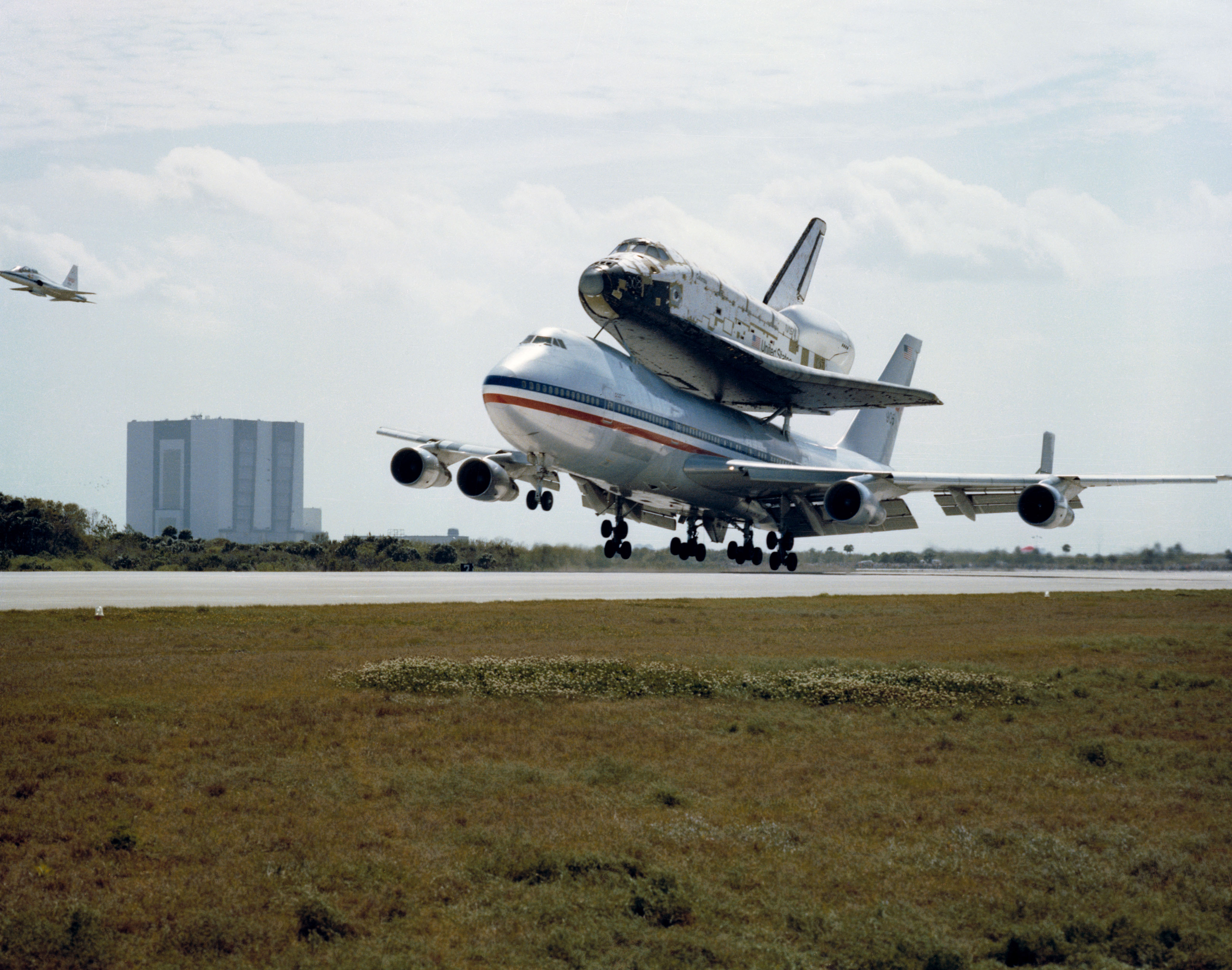
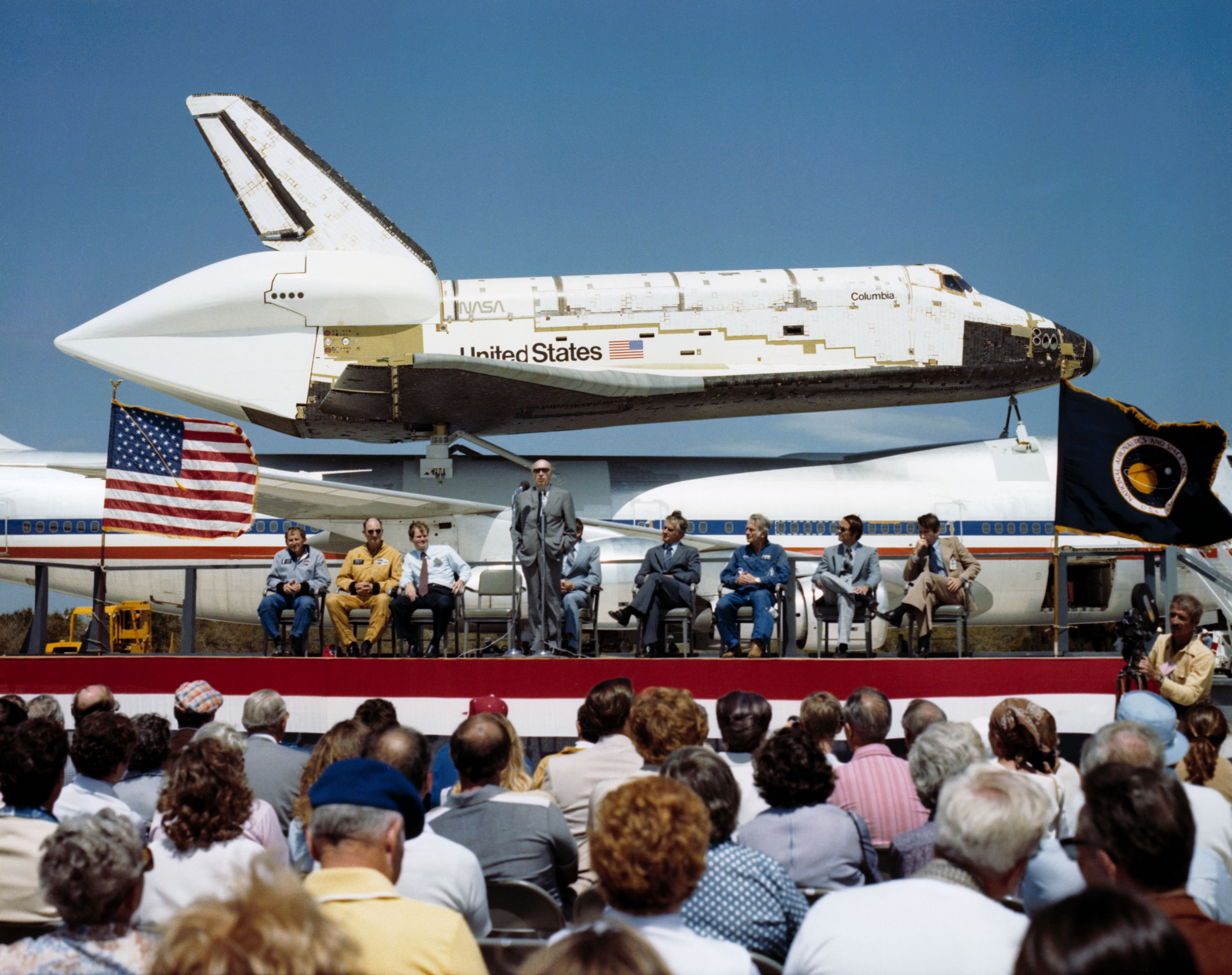
Space shuttle Columbia atop its Shuttle Carrier Aircraft (SCA) flies over the Saturn V display at NASA’s Kennedy Space Center (KSC) in Florida Columbia atop the SCA touches down at KSC’s Shuttle Landing Facility (SLF), with the Vehicle Assembly Building visible in the background At the SLF, NASA Administrator Robert A. Frosch addresses the crowd assembled to welcome Columbia to KSC, as other dignitaries listen
Left: The past meets the future, as space shuttle Columbia atop its Shuttle Carrier Aircraft (SCA) flies over the Saturn V display at NASA’s Kennedy Space Center (KSC) in Florida. Middle: Columbia atop the SCA touches down at KSC’s Shuttle Landing Facility (SLF), with the Vehicle Assembly Building visible in the background. Right: At the SLF, NASA Administrator Robert A. Frosch addresses the crowd assembled to welcome Columbia to KSC, as other dignitaries listen.

After another overnight stop at Eglin AFB in Florida, Columbia atop the SCA touched down at KSC’s Shuttle Landing Facility (SLF) on March 24, a crowd of about 3,000 cheering its arrival. Dignitaries in attendance at a brief welcoming ceremony at the SLF included NASA Administrator Robert A. Frosch, KSC Director Lee R. Scherer, SCA pilots Joseph S. Algranti and Fitzhugh L. Fulton, program manager for Shuttle Flight Test Operations NASA astronaut Donald K. “Deke” Slayton, and astronauts John W. Young and Robert L. Crippen, designated as the commander and pilot for STS-1, the first space shuttle mission. Also in attendance, U.S. Congressman C. William “Bill” Nelson whose district included KSC and now serves as NASA’s 14th administrator, and Florida Lieutenant Governor J. Wayne Mixson.
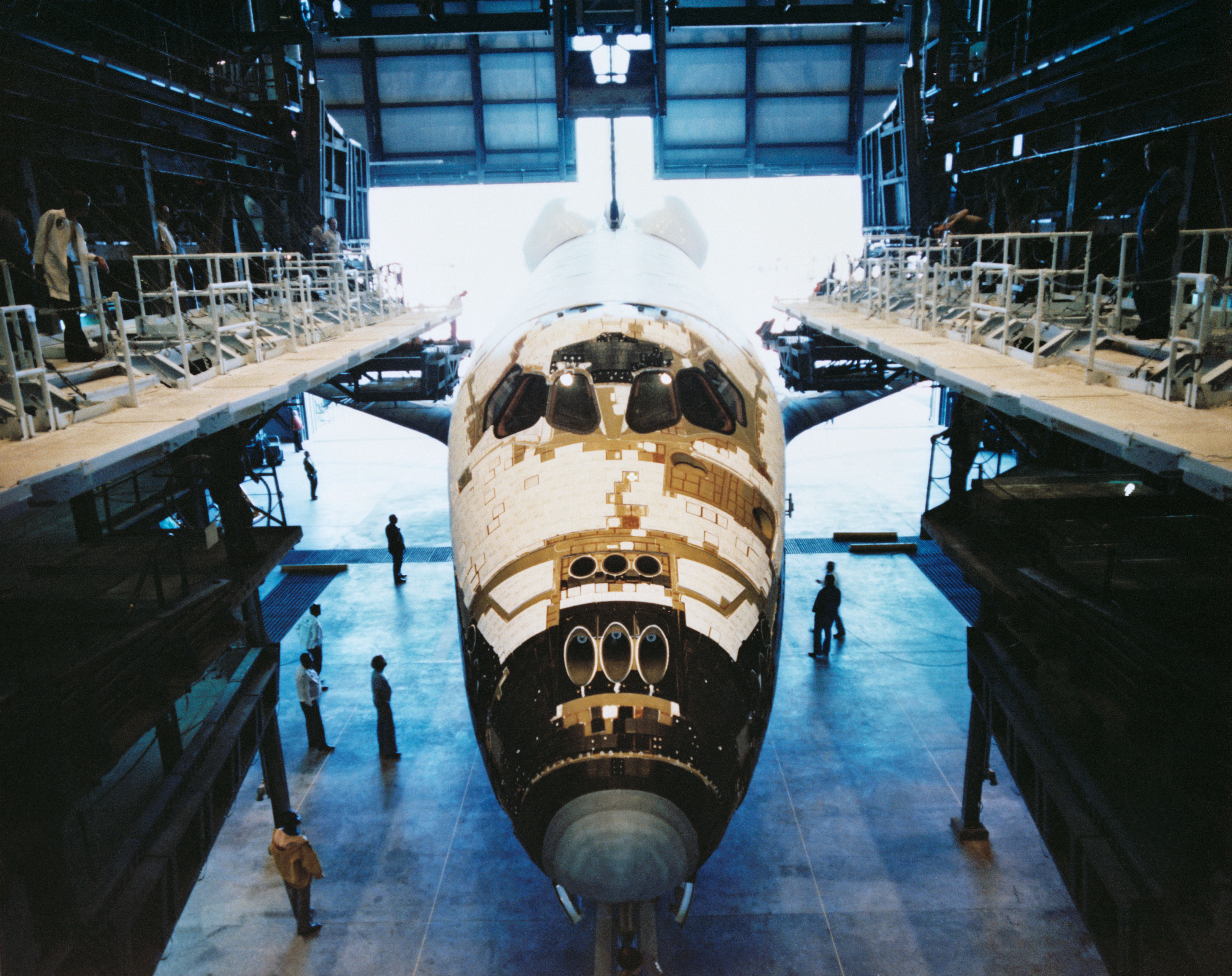
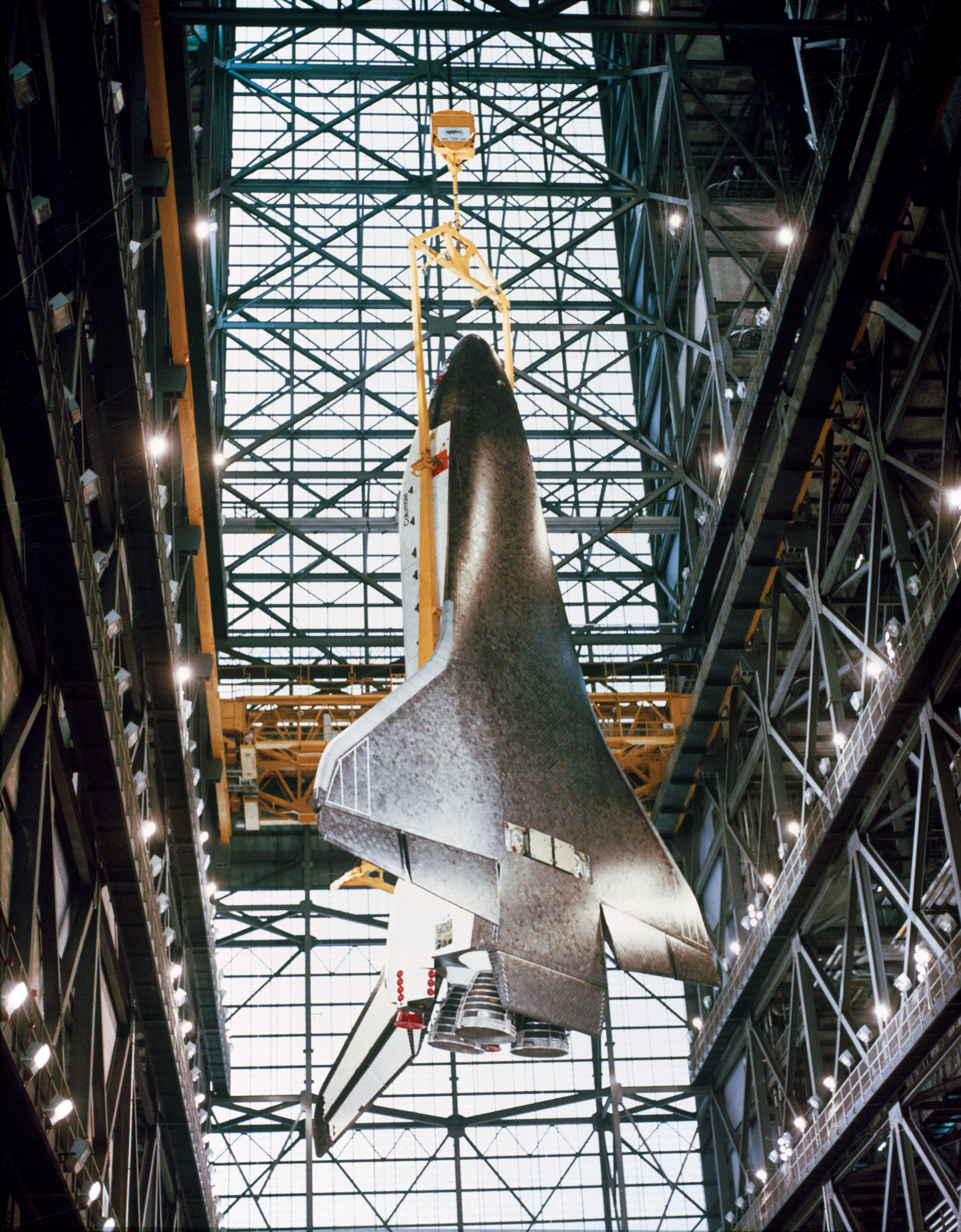
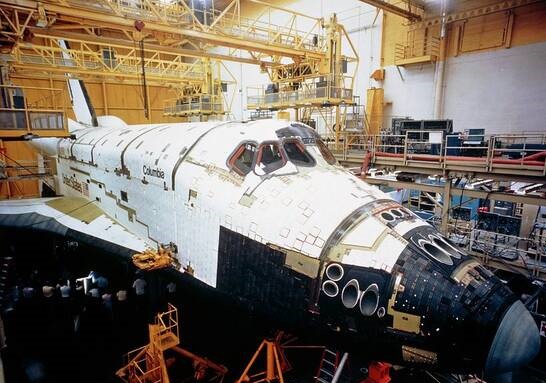
Columbia in the Orbiter Processing Facility at NASA’s Kennedy Space Center (KSC) in Florida Workers hoist Columbia in KSC’s Vehicle Assembly Building (VAB) for mating with its external tank and solid rocket boosters Space Shuttle Columbia rolls out of the VAB on its way to Launch Pad 39A
Left: Columbia in the Orbiter Processing Facility at NASA’s Kennedy Space Center (KSC) in Florida. Middle: Workers hoist Columbia in KSC’s Vehicle Assembly Building (VAB) for mating with its external tank and solid rocket boosters. Right: Columbia rolls out of the VAB on its way to Launch Pad 39A.

The next day, after removing Columbia from the back of the SCA, workers towed it into the Orbiter Processing Facility, where the orbiter spent the next 19 months preparing for its first flight. Rollover to the Vehicle Assembly Building (VAB) for mating with its External Tank and the two Solid Rocket Boosters took place Nov. 24, 1980. After a series of integrated tests, the shuttle stack rolled out of the VAB and made the 3.5-mile trip to Launch Pad 39A on Dec. 29, 1980. Young and Crippen flew Columbia’s historic first mission, STS-1, in April 1981, ushering in an era of reusable space transportation.

Share

Details

Last Updated

Mar 21, 2024

Related Terms

Powered by WPeMatico

Get The Details…
Kelli Mars

NASA’s Tiny BurstCube Mission Launches to Study Cosmic Blasts

NASA’s Tiny BurstCube Mission Launches to Study Cosmic Blasts

4 min read

NASA’s Tiny BurstCube Mission Launches to Study Cosmic Blasts

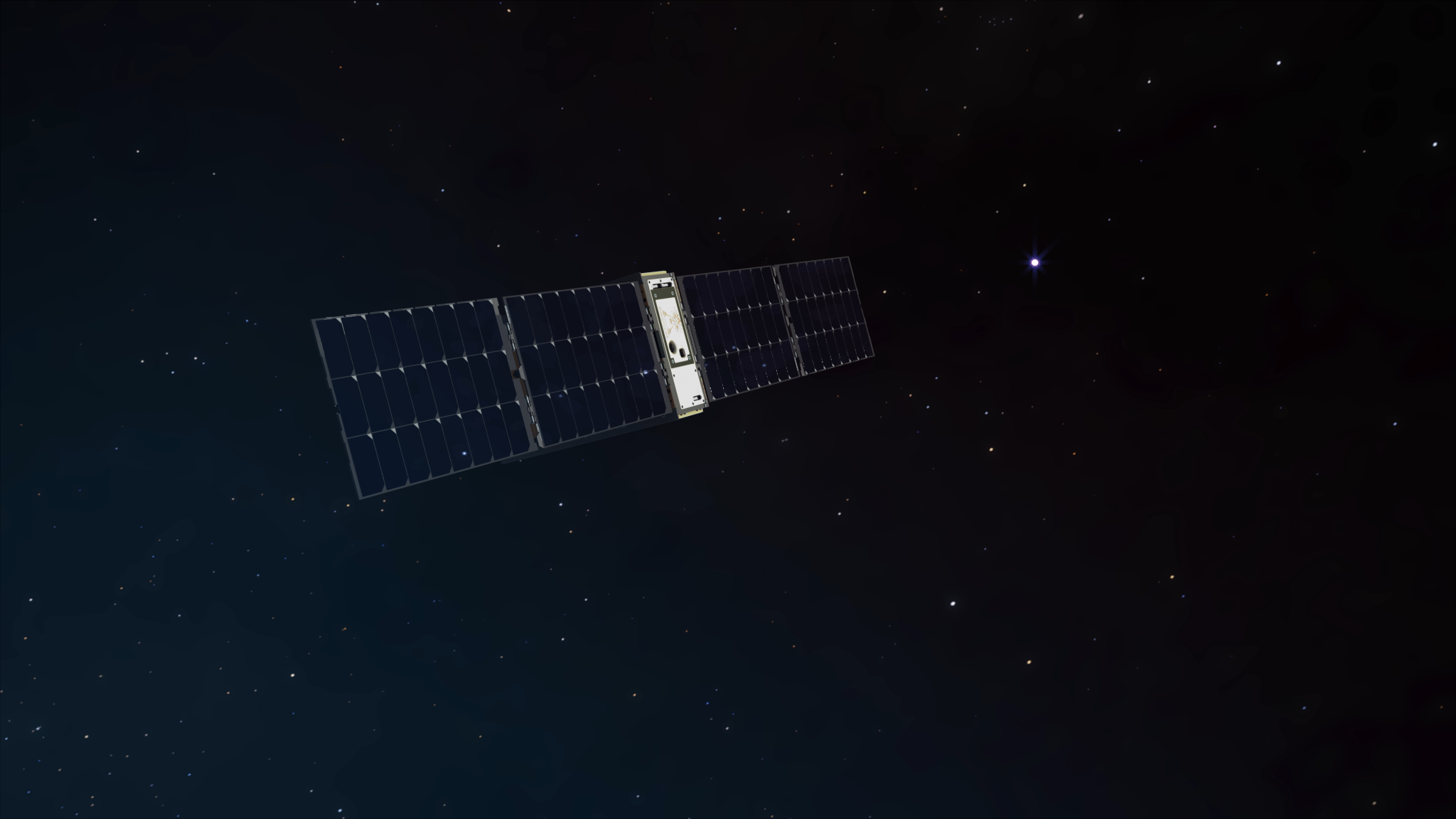
This artist’s concept shows the BurstCube satellite in orbit against a background of stars.
BurstCube, shown in this artist’s concept, will orbit Earth as it hunts for short gamma-ray bursts.
NASA’s Goddard Space Flight Center Conceptual Image Lab

NASA’s BurstCube, a shoebox-sized satellite designed to study the universe’s most powerful explosions, is on its way to the International Space Station.

The spacecraft travels aboard SpaceX’s 30th Commercial Resupply Services mission, which lifted off at 4:55 p.m. EDT on Thursday, March 21, from Launch Complex 40 at Cape Canaveral Space Force Station in Florida. After arriving at the station, BurstCube will be unpacked and later released into orbit, where it will detect, locate, and study short gamma-ray bursts – brief flashes of high-energy light.

“BurstCube may be small, but in addition to investigating these extreme events, it’s testing new technology and providing important experience for early career astronomers and aerospace engineers,” said Jeremy Perkins, BurstCube’s principal investigator at NASA’s Goddard Space Flight Center in Greenbelt, Maryland.

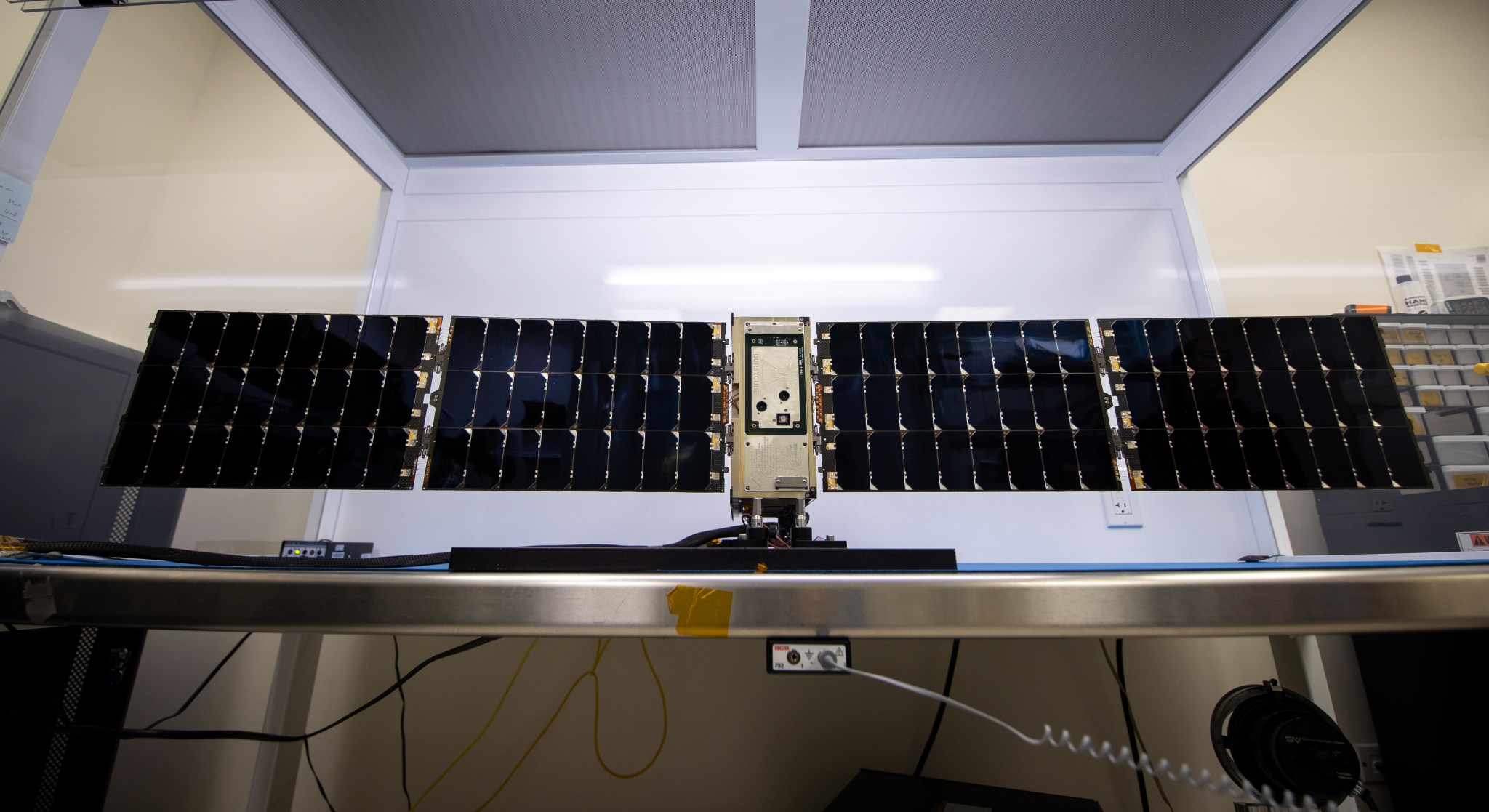
The BurstCube satellite sits on a table with its solar panels extended.
The BurstCube satellite sits in its flight configuration in this photo taken in the Goddard CubeSat Lab in 2023.
NASA/Sophia Roberts

Short gamma-ray bursts usually occur after the collisions of neutron stars, the superdense remnants of massive stars that exploded in supernovae. The neutron stars can also emit gravitational waves, ripples in the fabric of space-time, as they spiral together.

Astronomers are interested in studying gamma-ray bursts using both light and gravitational waves because each can teach them about different aspects of the event. This approach is part of a new way of understanding the cosmos called multimessenger astronomy.

The collisions that create short gamma-ray bursts also produce heavy elements like gold and iodine, an essential ingredient for life as we know it.

Currently, the only joint observation of gravitational waves and light from the same event – called GW170817 – was in 2017. It was a watershed moment in multimessenger astronomy, and the scientific community has been hoping and preparing for additional concurrent discoveries since.

“BurstCube’s detectors are angled to allow us to detect and localize events over a wide area of the sky,” said Israel Martinez, research scientist and BurstCube team member at the University of Maryland, College Park and Goddard. “Our current gamma-ray missions can only see about 70% of the sky at any moment because Earth blocks their view. Increasing our coverage with satellites like BurstCube improves the odds we’ll catch more bursts coincident with gravitational wave detections.”

BurstCube’s main instrument detects gamma rays with energies ranging from 50,000 to 1 million electron volts. (For comparison, visible light ranges between 2 and 3 electron volts.)

When a gamma ray enters one of BurstCube’s four detectors, it encounters a cesium iodide layer called a scintillator, which converts it into visible light. The light then enters another layer, an array of 116 silicon photomultipliers, that converts it into a pulse of electrons, which is what BurstCube measures. For each gamma ray, the team sees one pulse in the instrument readout that provides the precise arrival time and energy. The angled detectors inform the team of the general direction of the event.

BurstCube belongs to a class of spacecraft called CubeSats. These small satellites come in a range of standard sizes based on a cube measuring 10 centimeters (3.9 inches) across. CubeSats provide cost-effective access to space to facilitate groundbreaking science, test new technologies, and help educate the next generation of scientists and engineers in mission development, construction, and testing.

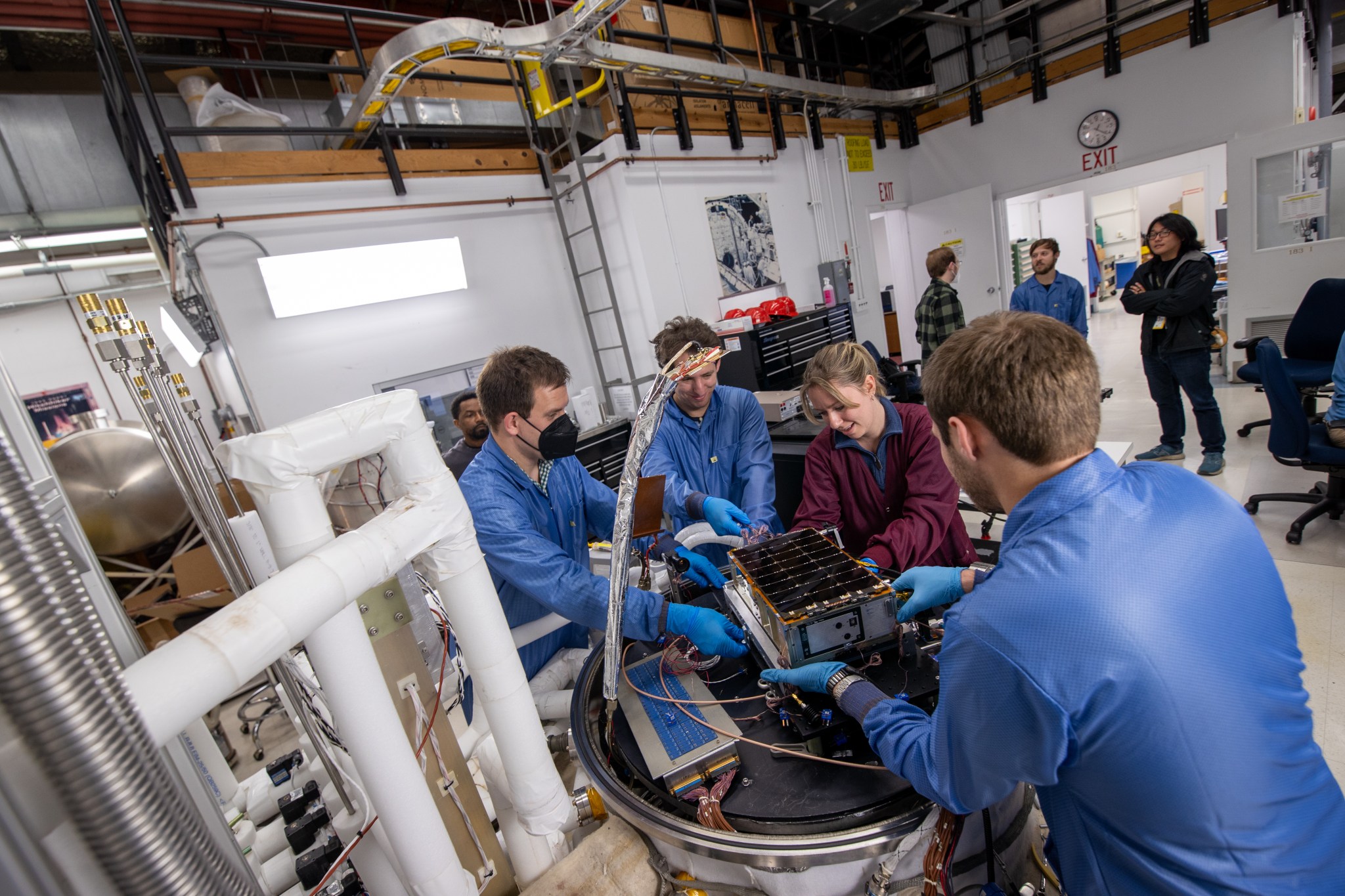
This photograph shows four people preparing the BurstCube satellite for thermal vacuum testing.
Engineers attach BurstCube to the platform of a thermal vacuum chamber at Goddard ahead of testing.
NASA/Sophia Roberts

“We were able to order many of BurstCube’s parts, like solar panels and other off-the-shelf components, which are becoming standardized for CubeSats,” said Julie Cox, a BurstCube mechanical engineer at Goddard. “That allowed us to focus on the mission’s novel aspects, like the made-in-house components and the instrument, which will demonstrate how a new generation of miniaturized gamma-ray detectors work in space.”

BurstCube is led by NASA’s Goddard Space Flight Center in Greenbelt, Maryland. It’s funded by the Science Mission Directorate’s Astrophysics Division at NASA Headquarters. The BurstCube collaboration includes: the University of Alabama in Huntsville; the University of Maryland, College Park; the University of the Virgin Islands; the Universities Space Research Association in Washington; the Naval Research Laboratory in Washington; and NASA’s Marshall Space Flight Center in Huntsville.

By Jeanette Kazmierczak
NASA’s Goddard Space Flight Center, Greenbelt, Md.

Media Contact:
Claire Andreoli
(301) 286-1940
claire.andreoli@nasa.gov
NASA’s Goddard Space Flight Center, Greenbelt, Md.

Keep Exploring

Discover More Topics From NASA

Powered by WPeMatico

Get The Details…

NASA Science to Launch on SpaceX’s Dragon, Soyuz Crew Launch Update

NASA Science to Launch on SpaceX’s Dragon, Soyuz Crew Launch Update

The SpaceX Falcon 9 rocket blasts off with the Cargo Dragon resupply ship attached atop from the Kennedy Space Center on June 3, 2021. Credit: NASA/Kim Shiflett
The SpaceX Falcon 9 rocket blasts off with the Dragon cargo resupply spacecraft attached atop from the Kennedy Space Center. Credit: NASA/Kim Shiflett

New research and technology demonstrations for NASA are set to launch aboard the agency’s SpaceX 30th commercial resupply services mission to the International Space Station. Launch is targeted for 4:55 p.m. EDT Thursday, lifting off from Space Launch Complex 40 at Cape Canaveral Space Force Station in Florida. The U.S. Space Force 45th Weather Squadron predicts a 90% chance of favorable weather conditions at the launch pad for liftoff.

Live launch coverage will air on NASA+, NASA Television, the NASA app, YouTube, and the agency’s website. Learn how to stream NASA TV through a variety of platforms including social media.

SpaceX’s Dragon spacecraft will carry more than 6,000 pounds of cargo, including new science investigations, supplies, and equipment to the international crew aboard the orbiting laboratory. NASA and its partners will send studies aboard the mission on plant metabolism in space and a set of new sensors for free-flying Astrobee robots to provide 3D mapping capabilities. Other research includes a fluid physics study that could benefit solar cell technology and a university project from CSA (Canadian Space Agency) that will monitor sea ice and ocean conditions.

At the Baikonur Cosmodrome in Kazakhstan, the March 21 launch of the crewed Soyuz-25 spacecraft to the International Space Station with NASA astronaut Tracy C. Dyson, Roscosmos cosmonaut Oleg Novitskiy, and spaceflight participant Marina Vasilevskaya of Belarus was automatically scrubbed by ground support equipment due to low voltage reading in the Soyuz rocket electrical system. The next available launch opportunity is Saturday, March 23, pending completion of State Commission review for the Roscosmos launch. More information will be provided as available.


Learn more about station activities by following the space station blog, @space_station and @ISS_Research on X, as well as the ISS Facebook and ISS Instagram accounts.

Get weekly updates from NASA Johnson Space Center at: https://roundupreads.jsc.nasa.gov/

Get the latest from NASA delivered every week. Subscribe here: www.nasa.gov/subscribe

Powered by WPeMatico

Get The Details…

Abby Graf

NASA Science, Hardware Aboard SpaceX’s 30th Resupply Launch to Station

NASA Science, Hardware Aboard SpaceX’s 30th Resupply Launch to Station

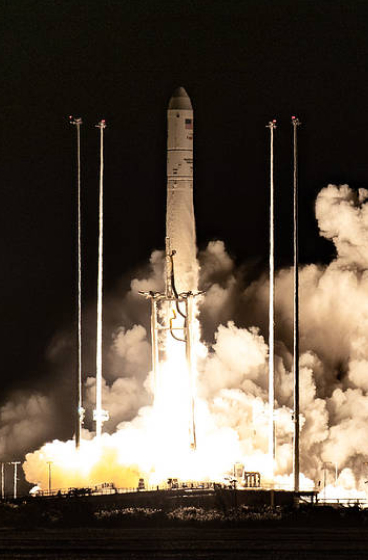
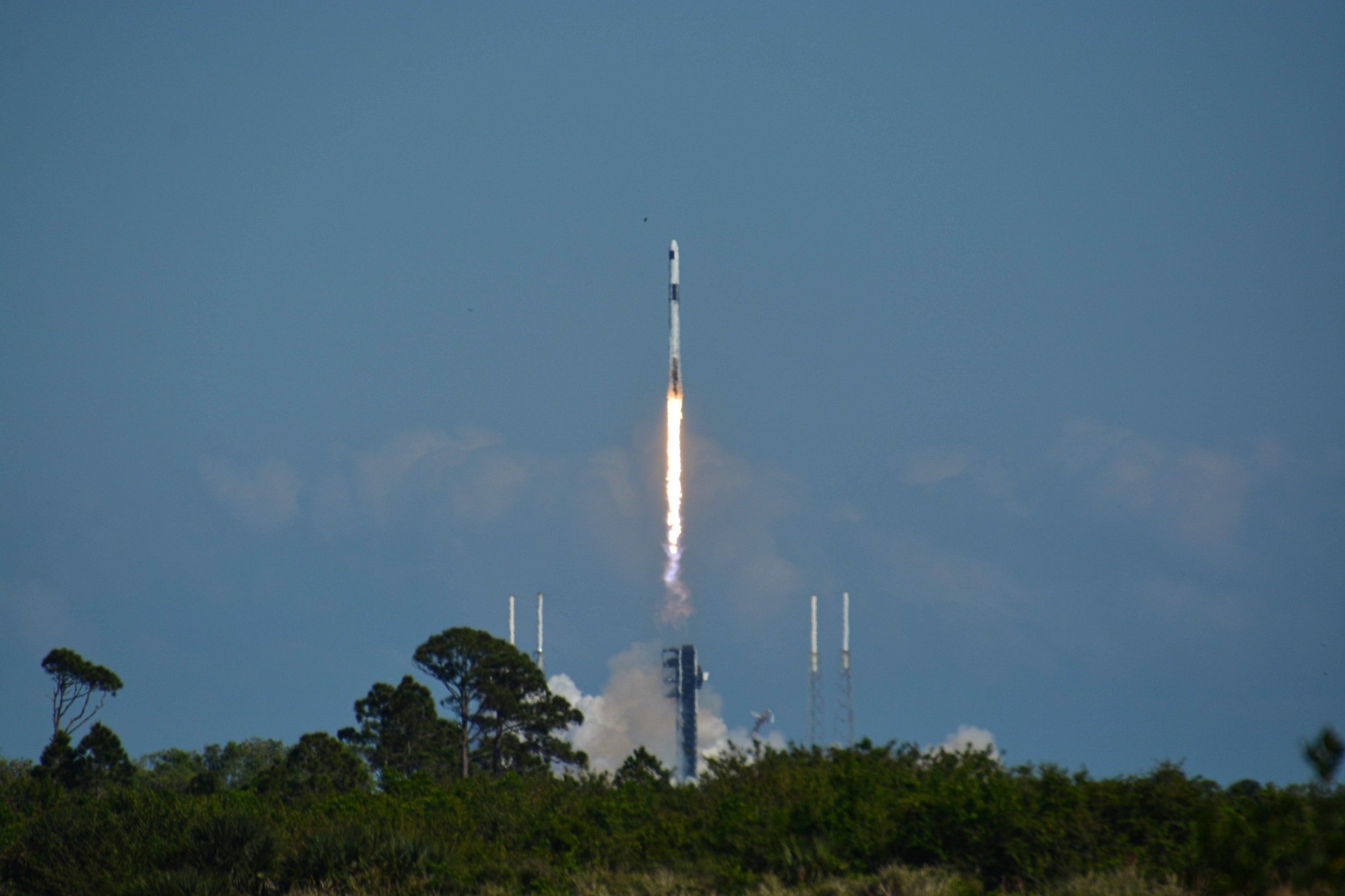
NASA’s SpaceX 30th commercial resupply mission launched at 4:55 p.m. EDT, Thursday, March 21 , from Space Launch Complex 40 at Cape Canaveral Space Force Station in Florida.
Credit: NASA/Madison Tuttle

Following a successful launch of NASA’s SpaceX 30th commercial resupply mission, new scientific experiments and technology demonstrations for the agency are on the way to the International Space Station, including studies of technologies to measure sea ice and plant growth in space.

SpaceX’s Dragon resupply spacecraft, carrying more than 6,000 pounds of cargo to the orbiting laboratory, launched on the company’s Falcon 9 rocket at 4:55 p.m. EDT Thursday, from Space Launch Complex 40 at Cape Canaveral Space Force Station in Florida.

The cargo spacecraft is scheduled to autonomously dock at the space station on Saturday, March 23, at approximately 7:30 a.m. and remain at the orbital outpost for about a month.

Live coverage of the arrival will begin at 5:30 a.m. on NASA+, NASA Television, and on the agency’s website. Learn how to stream NASA TV through a variety of platforms.

The Dragon will deliver a new set of sensors for Astrobee robots to support automated 3D sensing, mapping, and situational awareness functions. These systems could support future Gateway and lunar surface missions by providing automated maintenance and surface scanning using rovers. Additionally, the spacecraft will deliver BurstCube, a small satellite that is designed to study gamma-ray bursts that occur when two neutron stars collide. This satellite could widen our coverage of the gamma-ray sky, improving our chances of studying bursts both with light and gravitational waves, or ripples in space-time, detected by ground-based observatories.

Finally, the spacecraft also will deliver sampling hardware for Genomic Enumeration of Antibiotic Resistance in Space (GEARS), an initiative that will test different locations of the space station for antibiotic-resistant microbes. In-flight gene sequencing could show how these bacteria adapt to the space environment, providing knowledge that informs measures to protect astronauts on future long-duration missions.

These are just a few of the hundreds of investigations conducted aboard the orbiting laboratory in the areas of biology and biotechnology, physical sciences, and Earth and space science. Advances from this scientific research will help keep astronauts healthy during long-duration space travel and demonstrate technologies for future human and robotic exploration beyond low Earth orbit to the Moon through NASA’s Artemis campaign, in advance of the first crewed mission to Mars.

Get breaking news, images and features from the space station on Instagram, Facebook, and X.

Learn more about NASA commercial resupply services missions at:

https://www.nasa.gov/international-space-station/commercial-resupply/

-end-

Josh Finch / Julian Coltre / Claire O’Shea
Headquarters, Washington
202-358-1100
joshua.a.finch@nasa.gov / julian.n.coltre@nasa.gov / claire.a.o’shea@nasa.gov

Stephanie Plucinsky / Steven Siceloff 
Kennedy Space Center, Florida 
321-876-2468
stephanie.n.plucinsky@nasa.gov / steven.p.siceloff@nasa.gov 

Sandra Jones
Johnson Space Center, Houston 
281-483-5111
sandra.p.jones@nasa.gov

Powered by WPeMatico

Get The Details…
Lauren E. Low