NASA Conducts Full-Duration Artemis Moon Rocket Engine Test

NASA Conducts Full-Duration Artemis Moon Rocket Engine Test
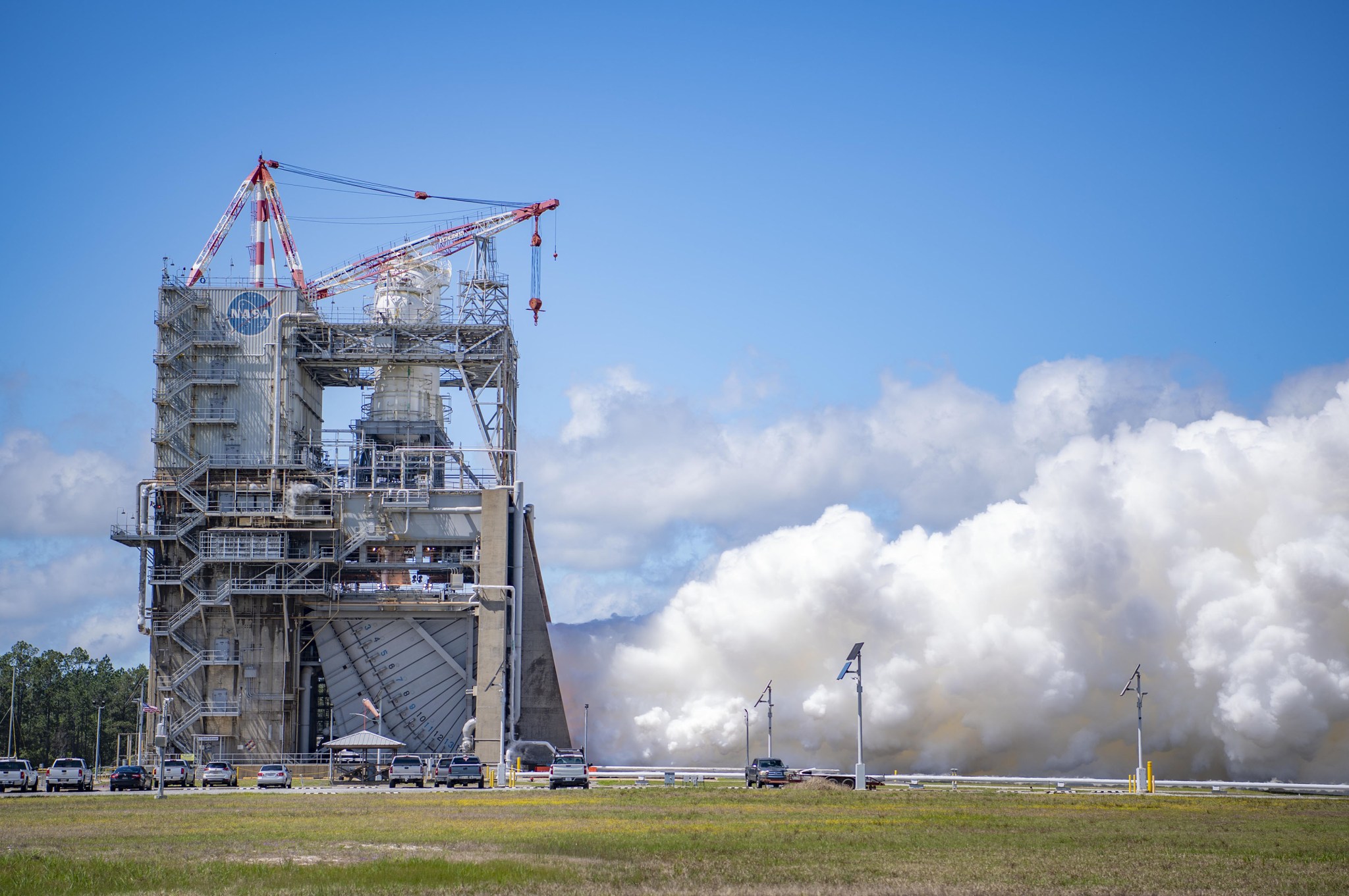
a view of the Fred Haise Test Stand during a hot fire
NASA continued a key RS-25 engine test series for future Artemis flights of the agency’s powerful SLS (Space Launch System) rocket March 22 with a hot fire on the Fred Haise Test Stand at NASA’s Stennis Space Center near Bay St. Louis, Mississippi.
NASA/Danny Nowlin
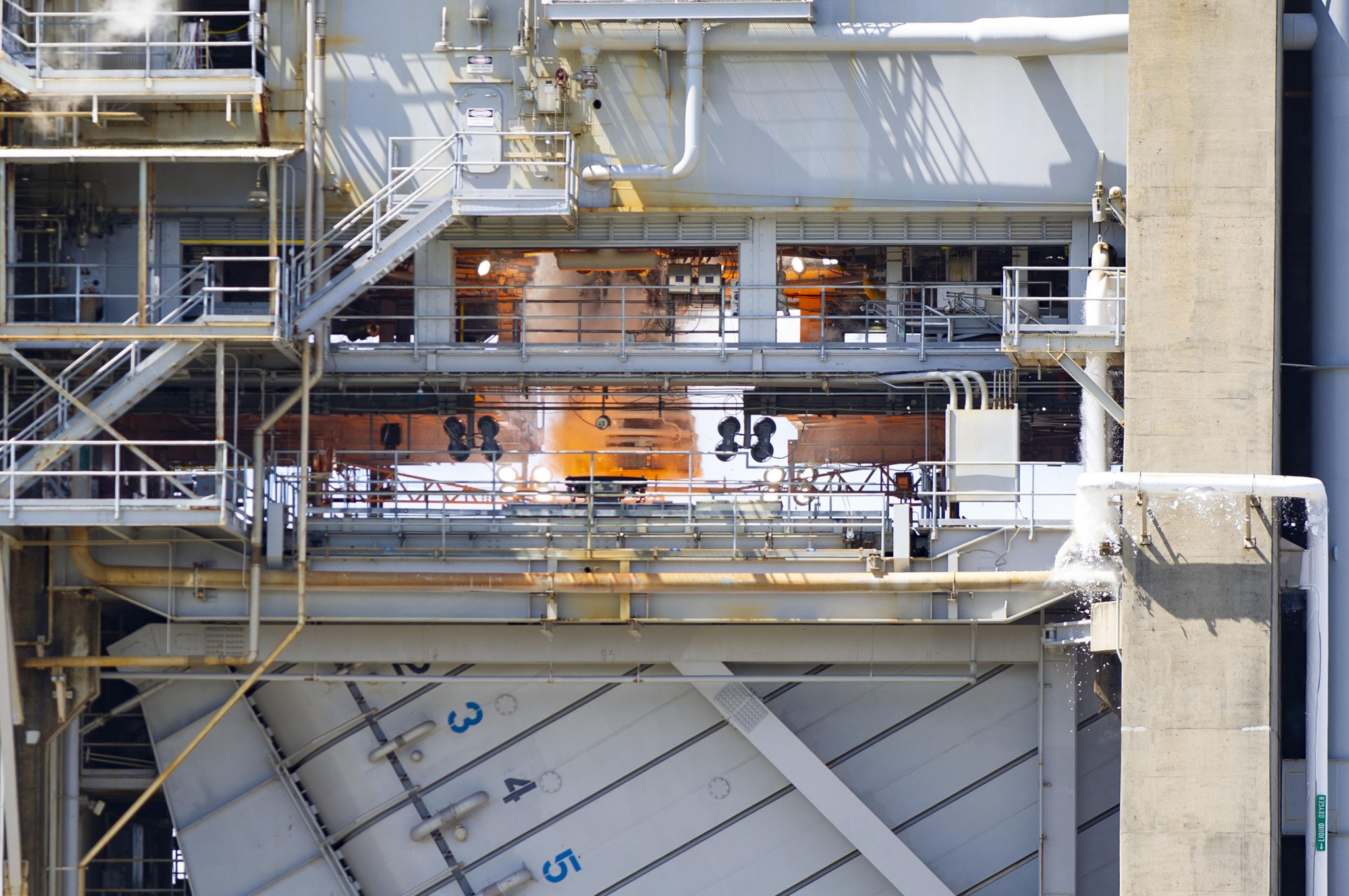
a closer view of the Fred Haise Test Stand during a hot fire
Full-duration RS-25 engine hot fire
NASA/Danny Nowlin
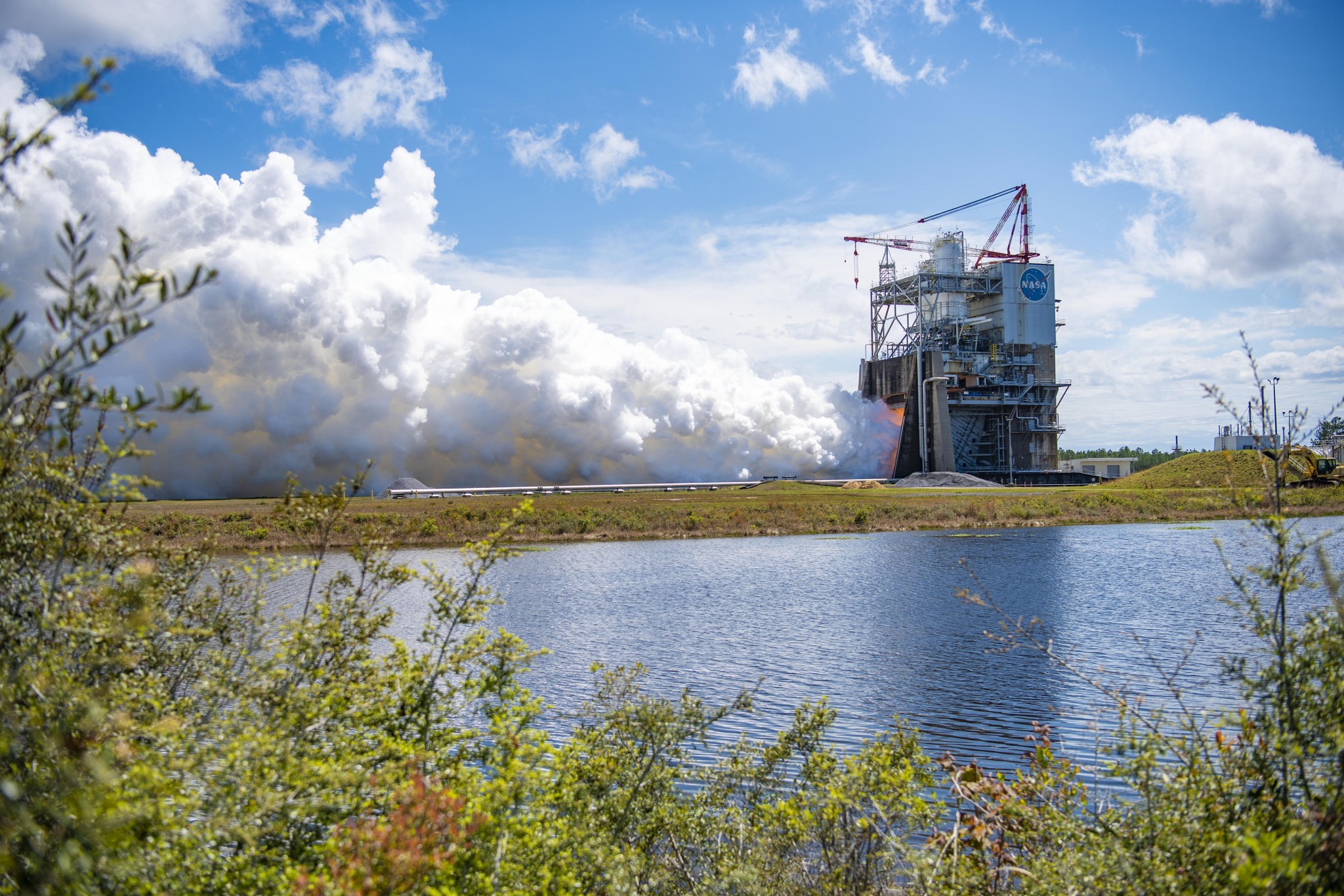
a view of the Fred Haise Test Stand during a hot fire in the background framed by green brush and young trees in the forefront.
Full-duration RS-25 engine hot fire
NASA/Danny Nowlin

NASA continued a key RS-25 engine test series for future Artemis flights of the agency’s powerful SLS (Space Launch System) rocket March 22 with a hot fire on the Fred Haise Test Stand at NASA’s Stennis Space Center near Bay St. Louis, Mississippi. It marked the 10th hot fire in a 12-test series to certify production of new RS-25 engines by lead contractor Aerojet Rocketdyne, an L3 Harris Technologies company. The NASA Stennis test team fired the certification engine for 500 seconds, or the same amount of time engines must fire to help launch the SLS rocket to space with astronauts aboard the Orion spacecraft. Operators powered the engine up to a level of 113%, which is beyond the 111% power level new RS-25 engines use to provide additional thrust. Testing up to the 113% power level provides a margin of operational safety. Newly produced engines will power NASA’s SLS rocket on Artemis missions to the Moon and beyond, beginning with Artemis V. For Artemis missions I-IV, NASA and Aerojet Rocketdyne modified 16 former space shuttle engines for use on the SLS rocket. Four RS-25 engines fire simultaneously to help launch each SLS rocket, producing up to 2 million pounds of combined thrust. Through Artemis, NASA will establish the foundation for long-term scientific exploration at the Moon, land the first woman, first person of color, and first international partner astronaut on the lunar surface, and prepare for human expeditions to Mars for the benefit of all. RS-25 tests at NASA Stennis are conducted by a diverse team of operators from NASA, Aerojet Rocketdyne, and Syncom Space Services, prime contractor for site facilities and operations.

Powered by WPeMatico

Get The Details…
LaToya Dean
NASA Johnson Space Center to Host Visit by Texas Governor Greg Abbott

NASA Johnson Space Center to Host Visit by Texas Governor Greg Abbott

March 22, 2024

NASA circular logo
NASA logo

NASA Johnson Space Center to Host Visit by Texas Governor Greg Abbott

NASA’s Johnson Space Center in Houston will host a Tuesday, March 26, visit by Texas Governor Greg Abbott, who will make a major announcement on the future of the space industry in Texas.

Media are invited to document the governor’s tour of NASA’s Mission Control Center when he speaks with native Texan and NASA astronaut Loral O’Hara aboard the International Space Station.

Abbott will be joined by NASA Johnson Space Center Director Vanessa Wyche, Texas House Speaker Dade Phelan, Texas Representative Greg Bonnen and other state and space industry leaders.

U.S. media wishing to attend in person must respond to NASA’s Johnson Space Center by 5 p.m. CDT Monday, March 25, by calling the Johnson Newsroom at 281-483-5111 or e-mailing jsccommu@mail.nasa.gov. Media must arrive at Johnson’s main gate no later than 9:30 a.m. March 26 to pick up credentials and receive instructions.

NASA will provide live coverage of the Mission Control tour and call to the space station beginning at 10:15 a.m. on NASA+, NASA Television, the NASA app, and the agency’s website. Learn how to stream NASA TV through a variety of platforms including social media.

The space industry announcement is scheduled for 11:30 a.m. in NASA’s Space Vehicle Mockup Facility.

Discover more about NASA Johnson, the hub of human spaceflight, at:

https://www.nasa.gov/johnson/about-johnson/

-end-

Kelly Humphries
Johnson Space Center, Houston
281-483-5111

kelly.humphries@nasa.gov

Powered by WPeMatico

Get The Details…
Wendy K. Avedisian

Women’s History Month: Meet Denise Ryan

Women’s History Month: Meet Denise Ryan

3 min read

Preparations for Next Moonwalk Simulations Underway (and Underwater)

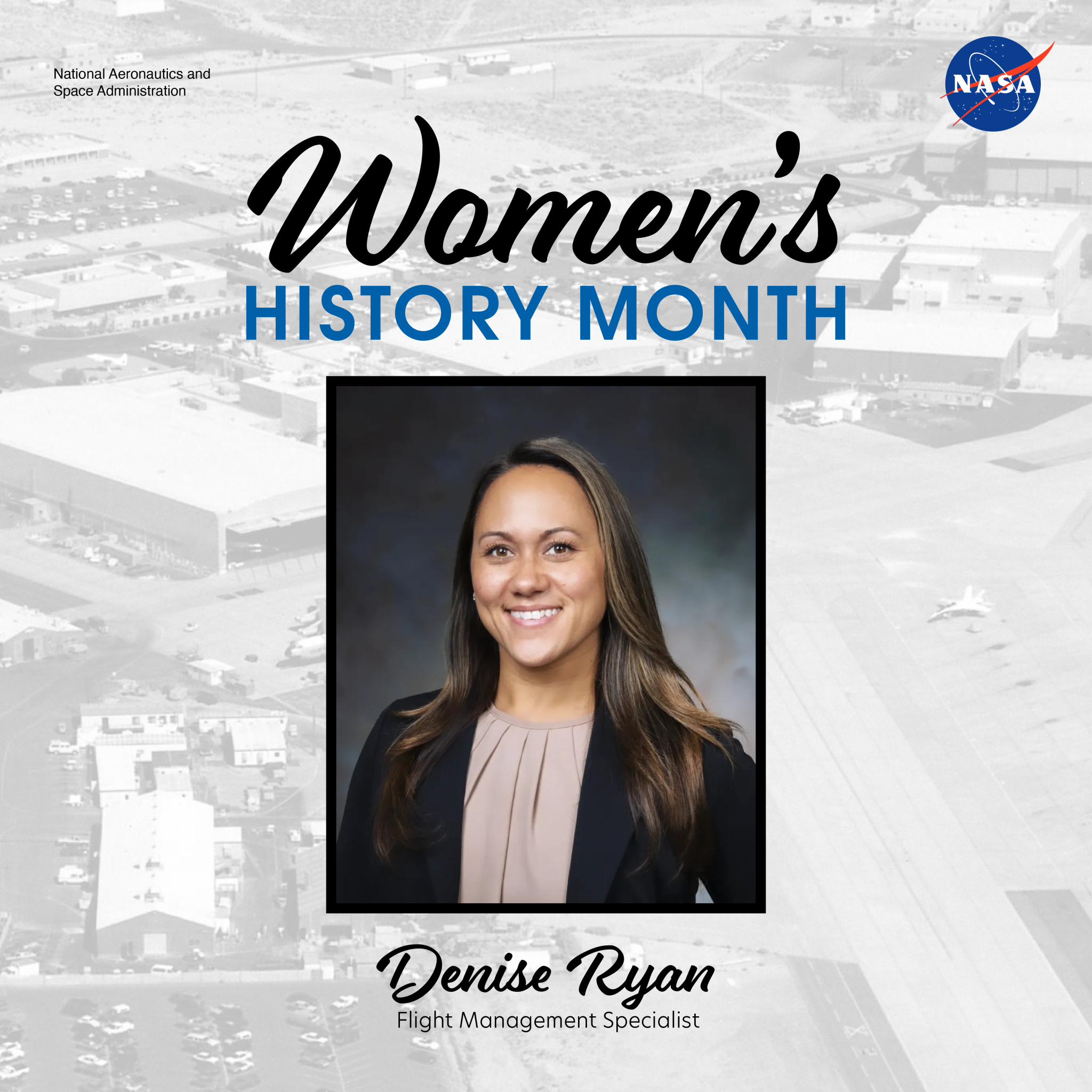
Headshot of Denise Ryan over a faded black and white aerial image of NASA Armstrong. There is text that reads “Women’s History Month – Denise Ryan, Flight Management Specialist.”
Denise Ryan
NASA Graphics

In honor of Women’s History Month, we recently sat down with Denise Ryan, flight management specialist and member of the Women’s Networking Group (WNG) at NASA’s Armstrong Flight Research Center in Edwards, California, to learn more about her role and working at NASA.

What do you do at NASA and how do you help support Armstrong’s mission?

I am a Flight Management Specialist and work in the Flight Operations Office where we schedule various ground and flight operations for Armstrong Flight Research Center. I manage the scheduling activities for our diverse fleet of aircraft ranging from a simplistic TG-14 motor-glider to a complex airborne science platform such as the DC-8.

Why did you choose to work at NASA and how long have you worked here?

I chose to work here at Armstrong because I needed a change – prior to getting a job here I was a Trust Operation Manager for a trust company and teleworking fulltime after moving to the area. Since I prefer in-person interaction, when I was offered a job as an Acquisition Specialist, I took it. From there another opportunity opened in the Flight Operations Directorate, where I was hired as a Flight Operations Scheduler. I’ve worked here at Armstrong for 13 years; 11 years as a contractor and 2 years as a Civil Servant.

What has been your proudest accomplishment or highlight of your career?

The highlight of my career is the NASA Honor Award for Exceptional Public Service that I received in 2020 for “Exceptional service as Flight Operations Scheduler”.

Do you have any advice for others like yourself who may be contemplating a career at NASA?

Go for it! I’ve enjoyed my time working at NASA and would always encourage people to apply for opportunities here when they’re available.

What is the most exciting aspect of your job?

In Flight Ops, the most exciting thing about my job, besides the people I get to interact with every day, is that we are part of all the flight missions that take place at Armstrong. From ground test to first flights and even last, we are involved in many different aspects. I have a unique job that allows us to not necessarily be tied to one mission or one project, but almost all of them, and that’s exciting.

What did you want to be when you were growing up? Did you think you would ever work for NASA?

I honestly didn’t have a solid plan – I remember telling people that my goal was to be happy and would find out what would bring me that happiness as I went through life. That eventually got me to NASA and I would say I’m pretty happy, so that’s a win.

What’s the strangest tradition in your family? Or a unique family tradition?

We have a tradition that if it’s your birthday, after we sing, we smear frosting on your face. The other traditional that isn’t strange, but I think is valuable is that we sit together for dinner as a family.

If you could master a skill without any work, what would it be?

I think mastering a musical instrument would be my choice – specifically the Cello. I can play basic chords on a Ukulele and Guitar, but I’m far from being a master, more like a beginner.

Powered by WPeMatico

Get The Details…
Dede Dinius

Find Your Place In Space Week

Find Your Place In Space Week

The National Space Council invites you to join us for Find Your Place in Space Week.

From April 6-13, 2024 museums, science centers, companies, schools, and organizations will engage with communities across the nation to highlight all that space is, has to offer, and the benefits of space for Earth. We know that too many people are unaware of the importance of space to their everyday lives, to Earth, or know that their expertise and talents are needed in the industry.  Through this effort, we want people from all communities and backgrounds to experience space and find their place in space!

Visit the Find Your Place in Space Week website, which includes:

  • A map and list of planned events.  Our goal is for there to be events in every state and Puerto Rico.
  • A social media toolkit and graphics that are helpful for amplifying the importance of space online throughout the week (and beyond).
  • A  page with an activity toolkit and online resources from across the federal departments and agencies.

Please consider hosting an event in your community. If you do, share the information with us to be added to the list of events. You can also use the list to join an event near you. Hope to see you there!

Powered by WPeMatico

Get The Details…
Jermaine Walker

NASA, Agencies to Brief Plans for April 2024 Total Solar Eclipse

NASA, Agencies to Brief Plans for April 2024 Total Solar Eclipse

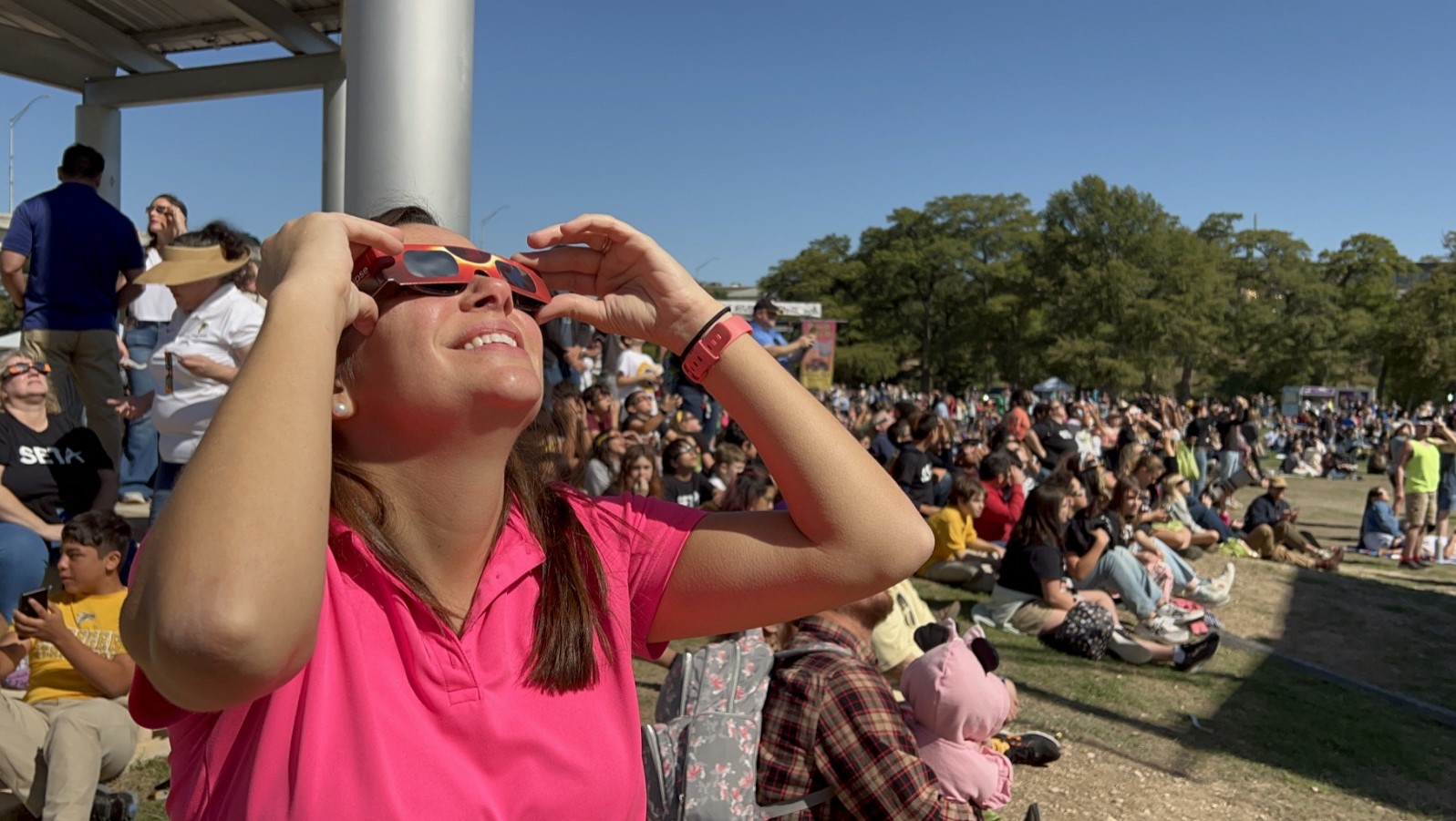
A person watches the annular solar eclipse of October 14, 2023, in Kerrville, Texas.
Credits: NASA

Millions of people across North America will experience a rare celestial sight on Monday, April 8: a total solar eclipse. NASA will host a media briefing with other government agencies at 10 a.m. EDT on Tuesday, March 26, at NASA Headquarters in Washington.

The briefing will air live on NASA+, NASA Television, and the agency’s website. Learn how to stream NASA TV through a variety of platforms including social media.

Over the course of about an hour, viewers in 15 states across the United States will experience up to four and half minutes of darkness when the Moon moves fully in front of the Sun, revealing the Sun’s faint outer atmosphere: the corona. Outside of the path of totality, people in the contiguous United States will have the opportunity to see a partial eclipse, when the Moon covers only a portion of the Sun. Learn how to safely view this celestial event on NASA’s eclipse website.

NASA is joining with scientific and transportation agencies to engage the public, share safety information, and conduct science during the upcoming total solar eclipse. Representatives from these agencies will brief media about plans for the solar eclipse.

Briefing participants include:

  • NASA Administrator Bill Nelson
  • NASA Deputy Administrator Pam Melroy
  • NASA Associate Administrator Jim Free
  • Kelly Korreck, eclipse program manager, NASA Headquarters
  • Shailen Bhatt, administrator, Federal Highway Administration
  • Elsayed Talaat, director, National Oceanic and Atmospheric Administration’s Office of Space Weather Observations

Media interested in attending in person must RSVP by 5 p.m., Monday, March 25, to Tiernan Doyle at tiernan.doyle@nasa.gov. All media interested in participating by phone must request details no later than two hours before the start of the event.  NASA’s media accreditation policy is online.

On April 8, NASA will host live coverage of the eclipse on NASA+, the agency’s website, and the NASA app beginning at 1 p.m. NASA will also stream the broadcast live on its FacebookXYouTube, and Twitch social media accounts, as well as have a telescope-only feed of eclipse views on the NASA TV media channel and YouTube.

To learn more about the total solar eclipse, visit:

go.nasa.gov/Eclipse2024

-end-

Karen Fox
Headquarters, Washington
202-358-1100
karen.c.fox@nasa.gov

Sarah Frazier
Goddard Space Flight Center, Greenbelt, Maryland
202-853-7191
sarah.frazier@nasa.gov

Share

Details

Last Updated

Mar 22, 2024

Powered by WPeMatico

Get The Details…
Tiernan P. Doyle