Meltwater Turns Iceberg A-23A Blue

Meltwater Turns Iceberg A-23A Blue

A satellite image captured on December 26, 2025, centers on iceberg A-23A adrift in dark Southern Ocean waters. The iceberg appears as a bright white, roughly rectangular slab with jagged edges and parallel blue stripes across its surface. The blue areas are meltwater ponds. A thick patch of ice fragments known as brash ice is visible along one edge of the main iceberg in an area where meltwater is leaking from it, while patches of small icebergs and clouds are also visible around it.
December 26, 2025

The year that iceberg A-23A first broke away from Antarctica’s Filchner Ice Shelf, Ronald Reagan was president of the United States, and the movie Top Gun was setting box office records. Forty years later, the massive tabular berg—one of the largest and longest-lived bergs ever tracked by scientists—is sopping with blue meltwater and on the verge of complete disintegration as it drifts in the South Atlantic between the eastern tip of South America and South Georgia island.

When it first detached from Antarctica in 1986, the berg was nearly twice the size of Rhode Island—about 4,000 square kilometers. Estimates from the U.S. National Ice Center put the berg’s area at 1,182 square kilometers (456 square miles) in early January 2026, following the breakup of several sizable pieces in July, August, and September of 2025 as it moved into relatively warm summer conditions by December.

When the MODIS (Moderate Resolution Imaging Spectroradiometer) on NASA’s Terra satellite captured this image of what remained of the waterlogged berg on December 26, 2025, extensive pools of blue meltwater were visible on its surface. Though much smaller than it once was, what remains is still among the largest icebergs in the ocean, covering an area larger than New York City. An astronaut aboard the International Space Station captured a photograph showing a closer view (below) of the iceberg a day later, with an even more extensive melt pool.

The “blue-mush” areas are likely the result of ongoing disintegration events, explained Ted Scambos, a senior research scientist at the University of Colorado Boulder. “You have the weight of the water sitting inside cracks in the ice and forcing them open,” he said. Note also the thin white line around the outer edge of the iceberg seemingly holding in blue meltwater—a “rampart-moat” pattern caused by an upward bending of the iceberg plate as its edges melt at the waterline.

A photograph taken by an astronaut aboard the International Space Station on December 27, 2025, shows a closer view of the iceberg. Striking blue melt ponds cover nearly the surface top of A-23A except for a thin boundary of white along the edge—an area where the ice has warped upward. Wispy clouds run diagonally across the image, partially obscuring the view.
December 27, 2025

The striking linear patterns of blue and white across the berg are likely related to striations that were scoured hundreds of years ago when the ice was part of a glacier dragging across Antarctic bedrock.

“The striations formed parallel to the direction of flow, which ultimately created subtle ridges and valleys on the top of the iceberg that now direct the flow of meltwater,” explained Walt Meier, a senior research scientist at the National Snow & Ice Data Center. “It’s impressive that these striations still show up after so much time has passed, massive amounts of snow have fallen, and a great deal of melting has occurred from below,” added retired University of Maryland Baltimore County scientist Chris Shuman.

The MODIS image suggests that the ailing iceberg has also sprung a leak. The white area to its left may be the result of what Shuman described as a “blowout.” The weight of the water pooling at the top of the towering iceberg would have created enough pressure at the edges to punch through. The blowout may have allowed meltwater to spill tens of meters down to the ocean surface in what researchers call a “freshwater discharge plume,” where it mixed with the mélange of ice bits floating next to the iceberg.

Scientists say these signs indicate the iceberg could be just days or weeks from disintegrating completely. “I certainly don’t expect A-23A to last through the austral summer,” said Shuman, noting that the season typically brings clearer skies and warmer air and water temperatures—factors that accelerate the disintegration process in an area known among ice experts as a “graveyard” for icebergs. It’s already in water that’s about 3 degrees Celsius and riding currents that are pushing it toward even warmer waters that will eat away at it quickly, added Meier.

Even by Antarctic standards, A-23A has had a long, winding journey full of unexpected chapters that have improved scientists’ understanding of the “megabergs” occasionally released into the Southern Ocean. After grounding in the shallow waters of the Weddell Sea for more than 30 years, A-23A broke free in 2020, then spent several months in a twirling ocean vortex called a Taylor column. It eventually spun away and headed north, nearly colliding with South Georgia island and lodging in shallow waters for several months before escaping into the open ocean, where it has been rapidly breaking apart throughout 2025.

Scientists who have been tracking the berg for their entire careers see its imminent demise as a bittersweet moment. “I’m incredibly grateful that we’ve had the satellite resources in place that have allowed us to track it and document its evolution so closely,” said Shuman. “A-23A faces the same fate as other Antarctic bergs, but its path has been remarkably long and eventful. It’s hard to believe it won’t be with us much longer.”

Even as A-23A fades, other massive bergs are parked or drifting along the Antarctic shoreline. Several, including A-81, B22A, and D15A, are each larger than 1,500 square kilometers and sit waiting for their moment to break free and begin their journey north.

NASA Earth Observatory image by Michala Garrison, using MODIS data from NASA EOSDIS LANCE and GIBS/Worldview. ISS Astronaut photograph ISS074-E-8943 was acquired on December 27, 2025, with a Nikon Z 9 digital camera using a focal length of 500 millimeters. It is provided by the ISS Crew Earth Observations Facility and the Earth Science and Remote Sensing Unit at NASA Johnson Space Center. The image was taken by a member of the Expedition 74 crew. The image has been cropped and enhanced to improve contrast, and lens artifacts have been removed. The International Space Station Program supports the laboratory as part of the ISS National Lab to help astronauts take pictures of Earth that will be of the greatest value to scientists and the public, and to make those images freely available on the Internet. Additional images taken by astronauts and cosmonauts can be viewed at the NASA/JSC Gateway to Astronaut Photography of Earth. Story by Adam Voiland.

References and Resources

You may also be interested in:

Stay up-to-date with the latest content from NASA as we explore the universe and discover more about our home planet.

A Giant Iceberg’s Final Drift

3 min read

After a long, turbulent journey, Antarctic Iceberg A-23A is signaling its demise as it floats in the South Atlantic.

Article

Antarctic Iceberg Downsizes

3 min read

Iceberg A-23A continued to lose sizable pieces of ice during the 2025 austral winter, but it remained the planet’s largest…

Article

Antarctic Sea Ice Saw Its Third-Lowest Maximum

2 min read

Sea ice around the southernmost continent hit one of its lowest seasonal highs since the start of the satellite record.


Article

Powered by WPeMatico

Get The Details…

NASA Postpones Jan. 8 Spacewalk

NASA Postpones Jan. 8 Spacewalk

NASA is postponing the Thursday, Jan. 8, spacewalk outside the International Space Station. The agency is monitoring a medical concern with a crew member that arose Wednesday afternoon aboard the orbital complex. Due to medical privacy, it is not appropriate for NASA to share more details about the crew member. The situation is stable. NASA will share additional details, including a new date for the upcoming spacewalk, later.

Powered by WPeMatico

Get The Details…

Joseph Zakrzewski

NASA Celebrates Artemis II During Houston Texans Space City Day 

NASA Celebrates Artemis II During Houston Texans Space City Day 

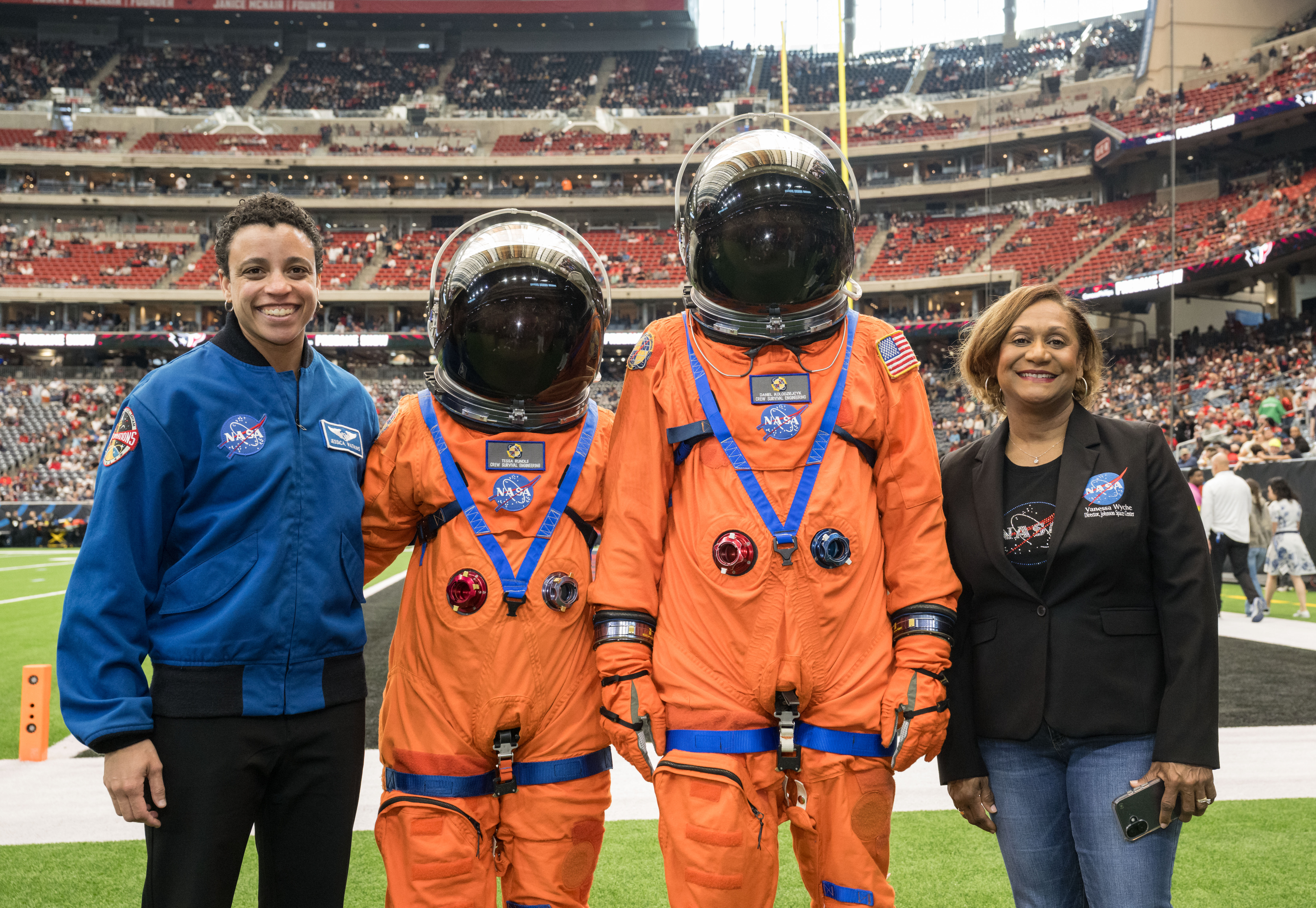
Four people pose in front of a stadium. The two people in the middle are wearing an orange spacesuit.
From left, NASA astronaut Jessica Watkins, Johnson Space Center employees Tessa Rundle and Daniel Kolodziejcyk wearing Orion Crew Survival System suits, and Johnson Director Vanessa Wyche stand on the field during the Houston Texans’ Space City Day game Jan. 4, 2026.
NASA/James Blair

NASA’s Johnson Space Center was front and center Jan. 4, 2026, as the Houston Texans faced the Indianapolis Colts during Space City Day at NRG Stadium. Fans watched the Texans win while getting a close look at NASA’s Artemis II mission, the first crewed flight of the Artemis campaign. 

The Artemis II mission will send four astronauts—NASA astronauts Reid Wiseman, Victor Glover, and Christina Koch, along with CSA (Canadian Space Agency) astronaut Jeremy Hansen—around the Moon and back to Earth to test Orion spacecraft systems in deep space and help lay the groundwork for future lunar missions. 

NASA connected fans with the agency’s next giant leap, reinforcing Space City’s role in shaping the future of human exploration.   

A group of volunteers wearing dark clothes hold a large U.S. flag on the stadium's 50-yard line.
NASA’s Johnson Space Center employees hold the American flag on the field during the national anthem at NRG Stadium in Houston.
Image courtesy of the Houston Texans

Before kickoff, 27 Johnson employees helped unfurl the U.S. flag for the national anthem, marking the start of an evening that blended football, exploration, and Houston pride.  

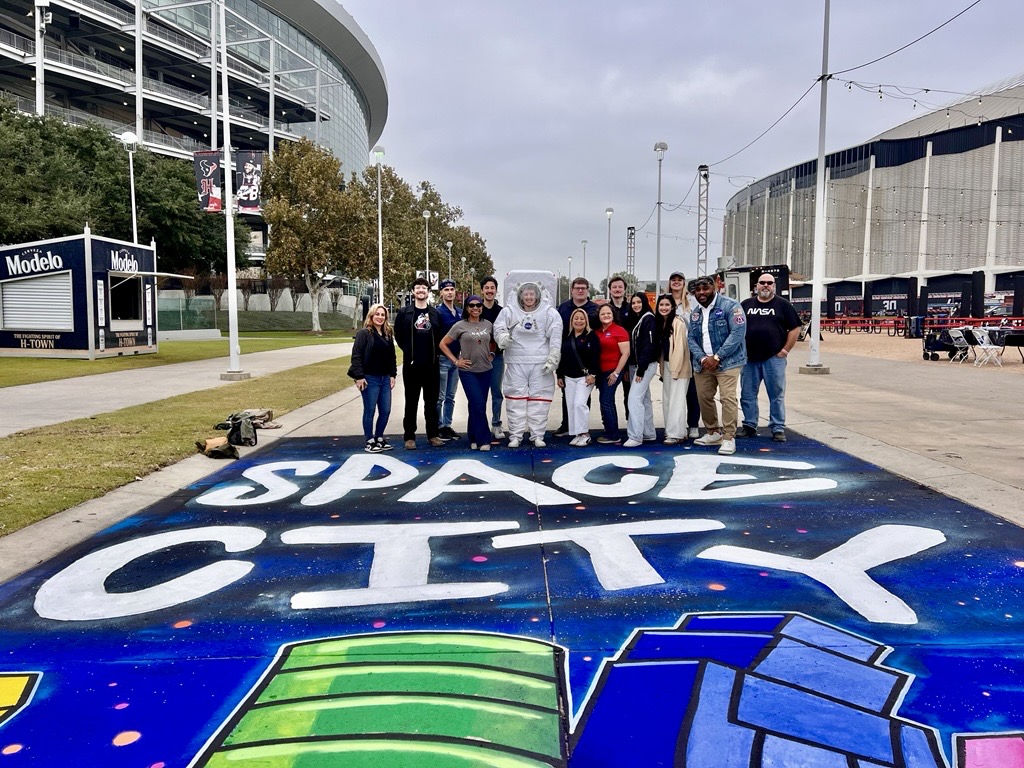
Johnson employees gather on the BULLevard to share the excitement of space exploration with football fans.

On the BULLevard, Johnson employees engaged with fans at a NASA activation area, where visitors explored the agency’s Mobile Exhibit Trailer and learned more about Artemis II. Team members answered questions and shared how NASA is preparing to send humans back to the Moon.  

From left, Johnson Community Engagement Lead Jessica Cordero, NASA astronaut Jessica Watkins, Johnson Space Center Director Vanessa Wyche, NASA Flight Controller Jonathan Guthmiller wearing the Extravehicular Mobility Unit (EMU), Multimedia Developer Jessica Krenzel, and NASA Flight Controller Sarah Hill stand together during the outdoor engagement on the BULLevard outside NRG Stadium.

Johnson Director Vanessa Wyche and NASA astronaut Jessica Watkins visited the exhibit and the Extravehicular Activity and Human Surface Mobility Program booth, where they greeted team members and thanked volunteers supporting the event. 

The International Space Station Program joined the celebration with a prerecorded message from the Expedition 74 crew, marking over 25 years of continuous human presence in low Earth orbit. 

An image of a full stadium at a football game with a video playing on the jumbotron.
The Expedition 74 crew aboard the International Space Station deliver a prerecorded message to fans on the stadium jumbotron during the Houston Texans’ Space City Day game.

“Even from 250 miles above the Earth, we’re proud to represent Houston and celebrate the mission of this incredible city on and off the field,” said NASA astronaut Mike Fincke.  

“Today’s game reminds us how connected Houston, NASA, and the Texans truly are,” said NASA astronaut Zena Cardman.  

Cardman highlighted how research aboard the International Space Station has led to innovations that benefit life on Earth, including applications now used in sports and athletic safety. Advances in materials developed for spacesuits and astronaut protection have influenced the design of modern helmets and padding, while cooling technologies originally created for extreme environments are used in training gear and protective equipment. 

“Space innovation doesn’t remain in orbit, sometimes it ends up on the 50-yard line.” 

Three people pose with their hands in the air on the football field. Two people are wearing an orange spacesuit and the person in the middle is wearing a blue flight jacket.
NASA astronaut Jessica Watkins, center, and Johnson employees Tessa Rundle and Daniel Kolodziejcyk, wearing Orion Crew Survival System spacesuits, take the field during the Texans’ “Reppin’ H-Town” appearance.
Image courtesy of the Houston Texans
An image from the January 4th, 2026 regular season week 18 home game against the Indianapolis Colts at NRG Stadium in Houston, TX. The Texans won 38-30.
Johnson Director Vanessa Wyche waves to fans after participating in the ceremonial coin toss.
Image courtesy of the Houston Texans

Jessica Watkins took the field for the Texans’ “Reppin’ H-Town” appearance, joined by Johnson employees Tessa Rundle and Daniel Kolodziejcyk wearing NASA’s Orion Crew Survival System spacesuits. The bright orange pressure suits are designed to protect astronauts during launch, flight, and reentry aboard NASA’s Orion spacecraft.  

The pregame continued with Center Director Vanessa Wyche joining the festivities on the field and participating in the ceremonial coin toss, where she called heads. 

About 30 seconds into halftime, the Artemis Fueling the Fire video played on the stadium jumbotron, sharing NASA’s plans to return humans to the Moon and marking a major step in the agency’s Moon to Mars campaign.  

Center Director Vanessa Wyche and NASA astronaut Jessica Watkins are interviewed on the field during halftime.

The video led into a live interview with Vanessa Wyche and Jessica Watkins, where Wyche discussed the Artemis II mission and Watkins highlighted similarities between astronaut training and football training. At the conclusion of the interview, the host invited fans to take part in NASA’s “Send Your Name with Artemis II” initiative, which allows the public to have their names stored on a small chip aboard the Orion spacecraft during the mission. Participants receive a digital boarding pass and virtual guest access to select NASA launches. While the names remain stored electronically inside the spacecraft, the effort symbolically gives participants a place on Orion’s journey around the Moon. 

Powered by WPeMatico
Get The Details…
Sumer Loggins

Expedition 74 Ready for Thursday Spacewalk and Continuing Research

Expedition 74 Ready for Thursday Spacewalk and Continuing Research

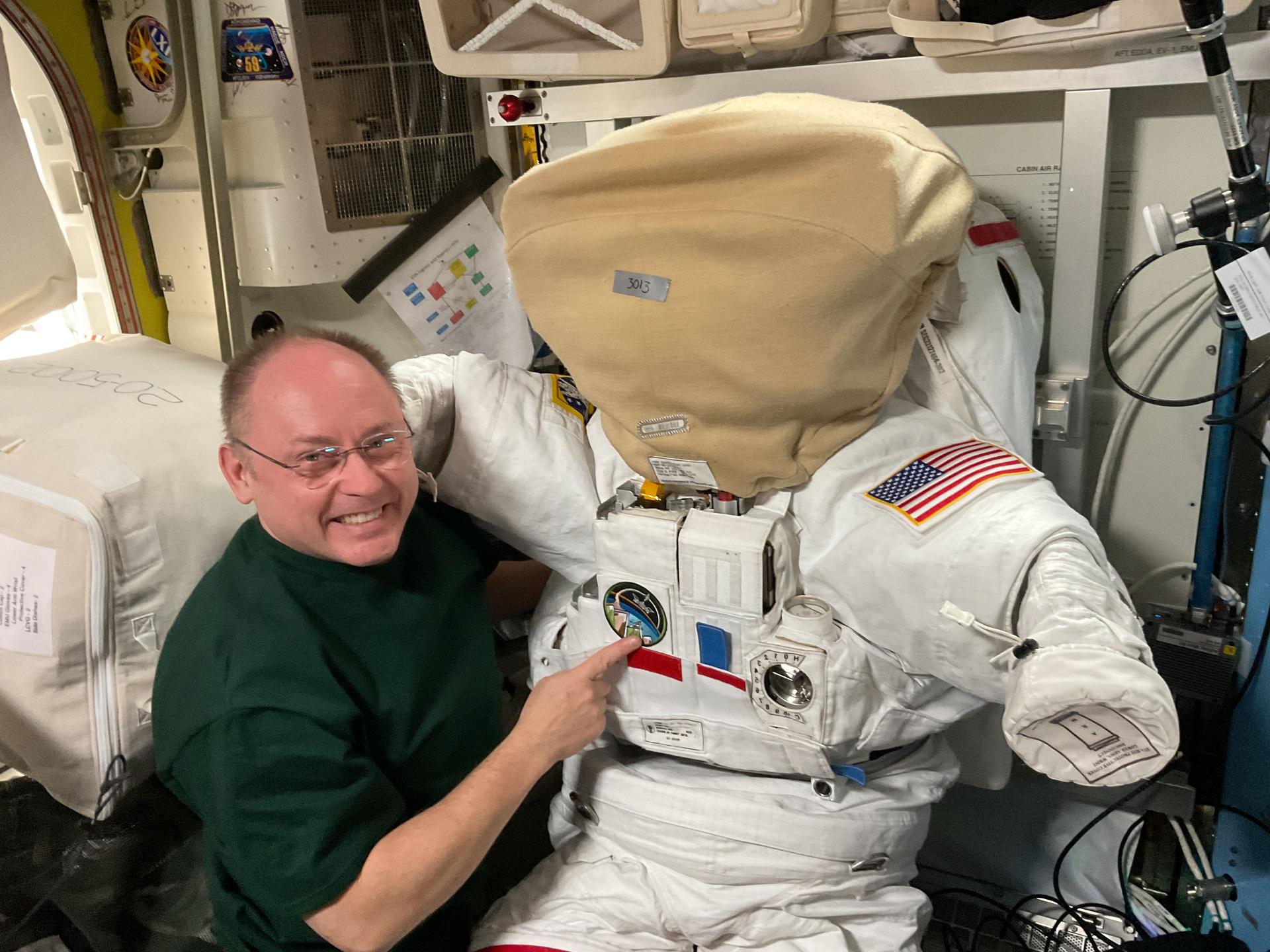
NASA astronaut and Expedition 74 Commander Mike Fincke poses inside the International Space Station’s Quest airlock next to a spacesuit. The helmet is secured with a protective cover designed to prevent scratches and contamination when the suit is not in use, ensuring the visor remains clear for spacewalks.
NASA astronaut Mike Fincke poses inside the International Space Station’s Quest airlock next to a spacesuit. The helmet is secured with a protective cover designed to prevent scratches and contamination when the suit is not in use, ensuring the visor remains clear for spacewalks.
NASA

Expedition 74 is making final preparations for the first spacewalk of 2026 that will see two NASA astronauts exit the International Space Station for power upgrade work on Thursday. Science also continued aboard the orbital outpost with Wednesday’s research focusing on physics, microbiology, artificial intelligence, and Earth observations.

Station Commander Mike Fincke and Flight Engineer Zena Cardman are on track to conduct their mission’s first spacewalk set to begin at 8 a.m. EST on Thursday. The duo’s primary task during the six-and-a-half-hour spacewalk will be installing a modification kit and routing cables for a future roll-out solar array. Secondary tasks include installing jumper cables, taking hardware photos, and collecting microorganism samples. NASA will begin its live spacewalk coverage at 6:30 a.m. on NASA+Amazon Prime, and the agency’s YouTube channel.

Fincke and Cardman began Wednesday organizing their spacewalking tools and supplies inside the Quest airlock where they will exit the orbital outpost on the following day. Next, they finished configuring their spacesuits and the associated life support and emergency components. At the end of their shift, they were joined by Flight Engineers Chris Williams of NASA and Kimiya Yui of JAXA (Japan Aerospace Exploration Agency) for a final spacewalk procedures review and a readiness conference with mission controllers on the ground. Williams and Yui will assist the astronauts in and out of their spacesuits, pressurize and depressurize the Quest airlock, and monitor the spacewalkers as they work outside the orbiting lab.

Before wrapping up Wednesday’s spacewalk preparations, Williams and Yui worked on physics and microbiology research. Williams worked in the Destiny laboratory module’s Microgravity Science Glovebox testing ways to preserve cryogenic fluids and maintain tank pressure—research that could lead to improved spacecraft designs and advanced storage systems on Earth. Yui serviced microbe samples in the Kibo laboratory module’s Life Science Glovebox, exploring the use of ultraviolet light to disinfect spacecraft surfaces and protect crew health and hardware.

Roscosmos Flight Engineers Sergey Kud-Sverchkov and Oleg Platonov investigated using artificial intelligence to transcribe audio files documenting daily crew activities and improve crew operations aboard spacecraft. Roscosmos Flight Engineer Sergei Mikaev concluded an overnight Earth observation session by uninstalling a camera that photographed landmarks from Australia to South America during the crew’s sleep shift and downlinking the imagery to researchers on the ground. The cosmonaut trio will continue normal research and maintenance operations in the station’s Roscosmos segment during Thursday’s spacewalk.

The three flight engineers will set up another automated overnight Earth observation session photographing islands in the Indian and Pacific Oceans, inspect and audit tools, emergency gear, and cargo, and maintain life support systems.

Learn more about station activities by following the space station blog, @space_station on X, as well as the ISS Facebook and ISS Instagram accounts.

Get the latest from NASA delivered every week. Subscribe here.

Powered by WPeMatico

Get The Details…

Mark A. Garcia

25 Years in Orbit: Science, Innovation, and the Future of Exploration 

25 Years in Orbit: Science, Innovation, and the Future of Exploration 

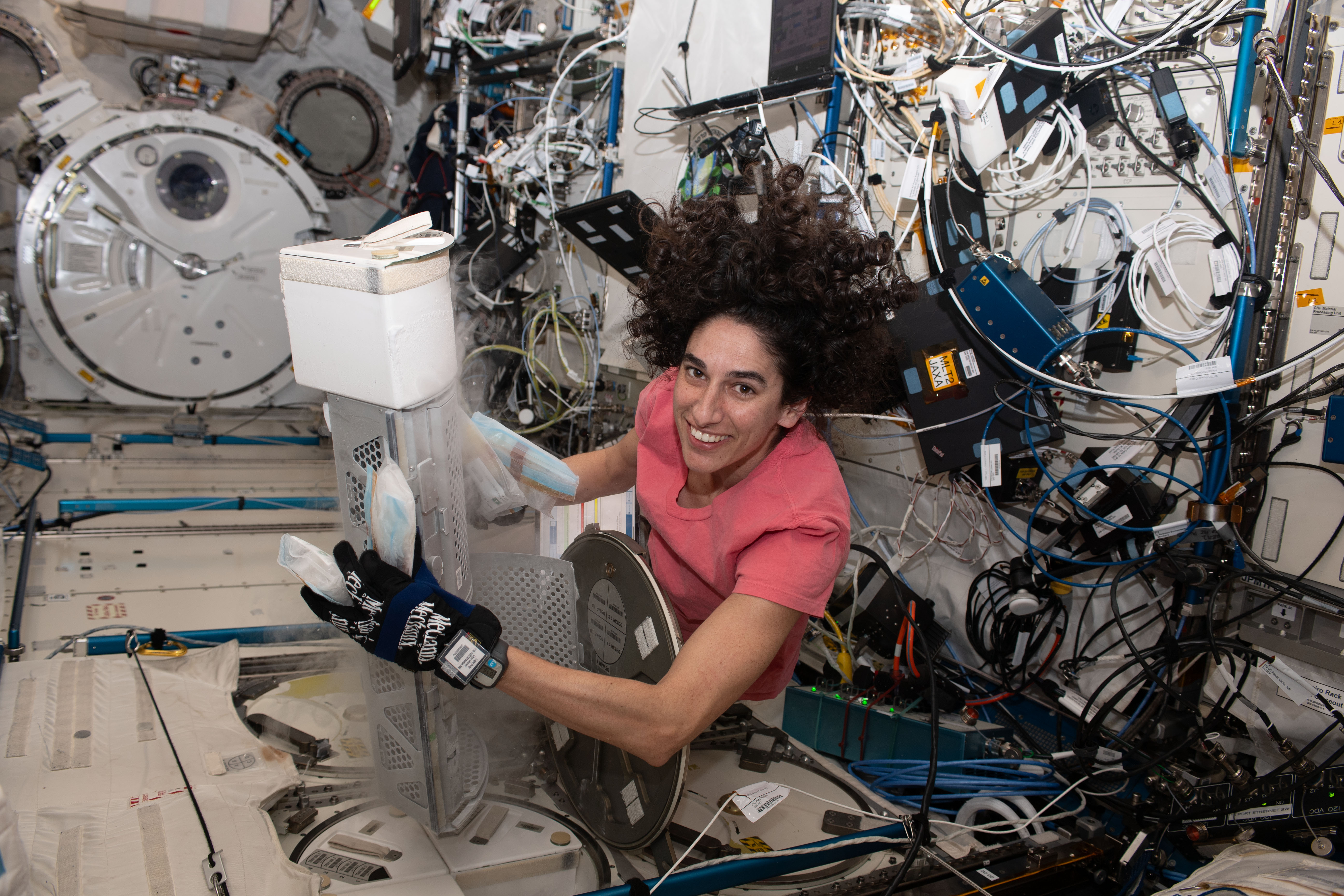
NASA astronaut Jasmin Moghbeli retrieves media bags inside the International Space Station’s Kibo laboratory module for Emory University’s Project EAGLE investigation.
NASA

NASA and its partners have supported humans continuously living and working in space since November 2000. A truly global endeavor, the International Space Station has been visited by more than 290 people from 26 countries and a variety of international and commercial spacecraft. The unique microgravity laboratory has hosted more than 4,000 experiments from over 5,000 researchers from 110 countries. The space station also is facilitating the growth of a commercial market in low Earth orbit for research, technology development, and crew and cargo transportation. 

After a quarter of century of human presence in orbit, the station remains a symbol of international cooperation and a proving ground for humanity’s next giant leaps to the Moon and, eventually, Mars.  

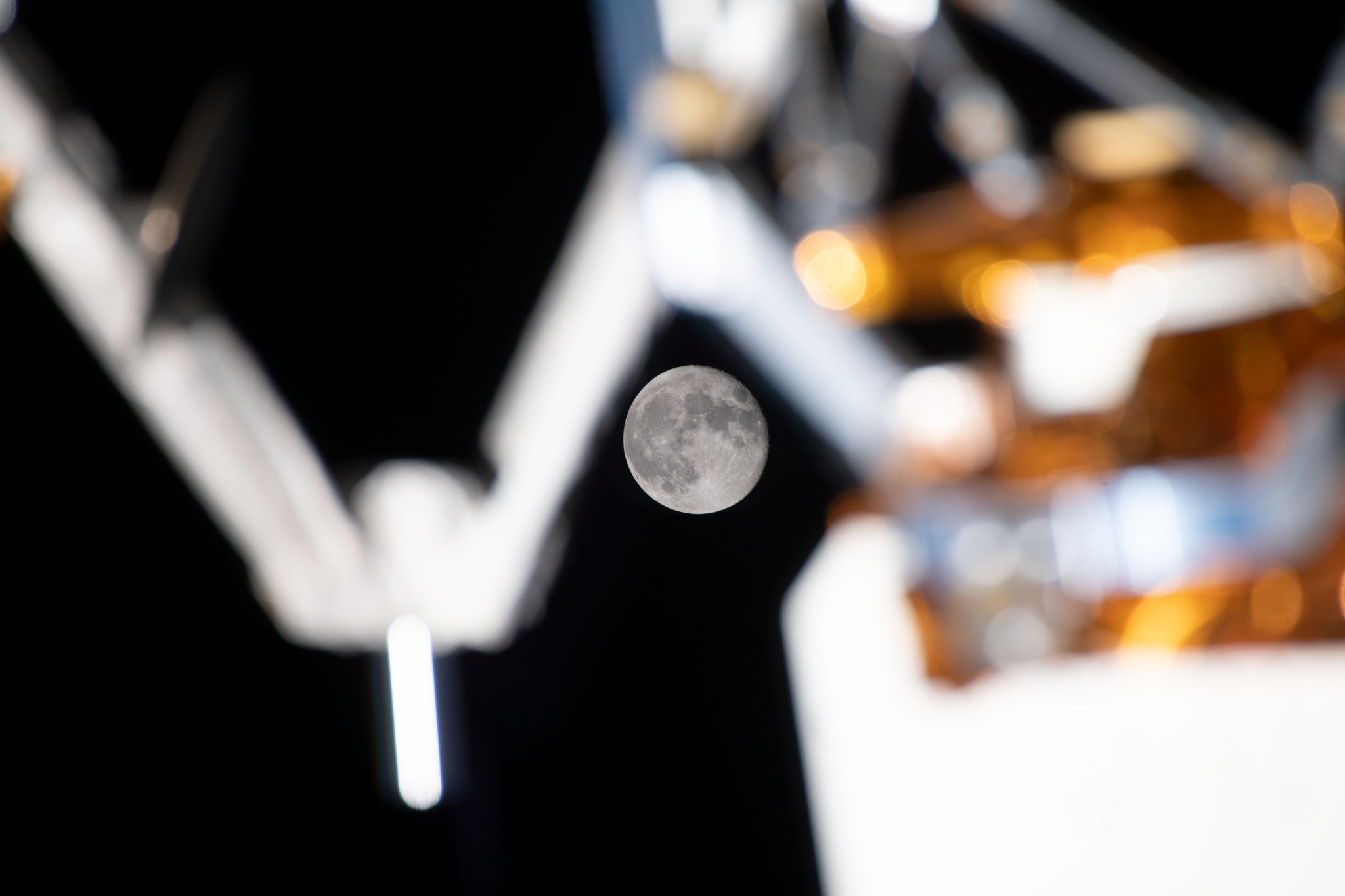
September's full Moon, the Harvest Moon, is photographed from the International Space Station, perfectly placed in between exterior station hardware
September’s full Moon, the Harvest Moon, is photographed from the space station, placed in between exterior station hardware.
NASA

The microgravity environments aboard the space station unlocks discoveries that benefit life on Earth and prepare humans for deep space missions. NASA’s Human Research Program (HRP) works to understand the changes astronauts face aboard the orbital outpost and to develop interventions to keep crews healthy before, during, and after flight.  

Astronauts aboard the station exercise for roughly two hours a day to protect bone density, muscle strength, and the cardiovascular system, but the longer they are in microgravity, the harder it can be for the brain and body to readapt to gravity’s pull. After months in orbit, returning astronauts often describe Earth as heavy, loud, and strangely still. Some reacclimate within days, while other astronauts take longer to fully recover. 

Through HRP-led studies, scientists track these changes and test solutions—from improved exercise regimens to medical monitoring and nutritional strategies. The results inspire new medical technologies, while teaching scientists how the human body adapts to long-duration spaceflights—knowledge that helps keep astronauts healthy on future missions.

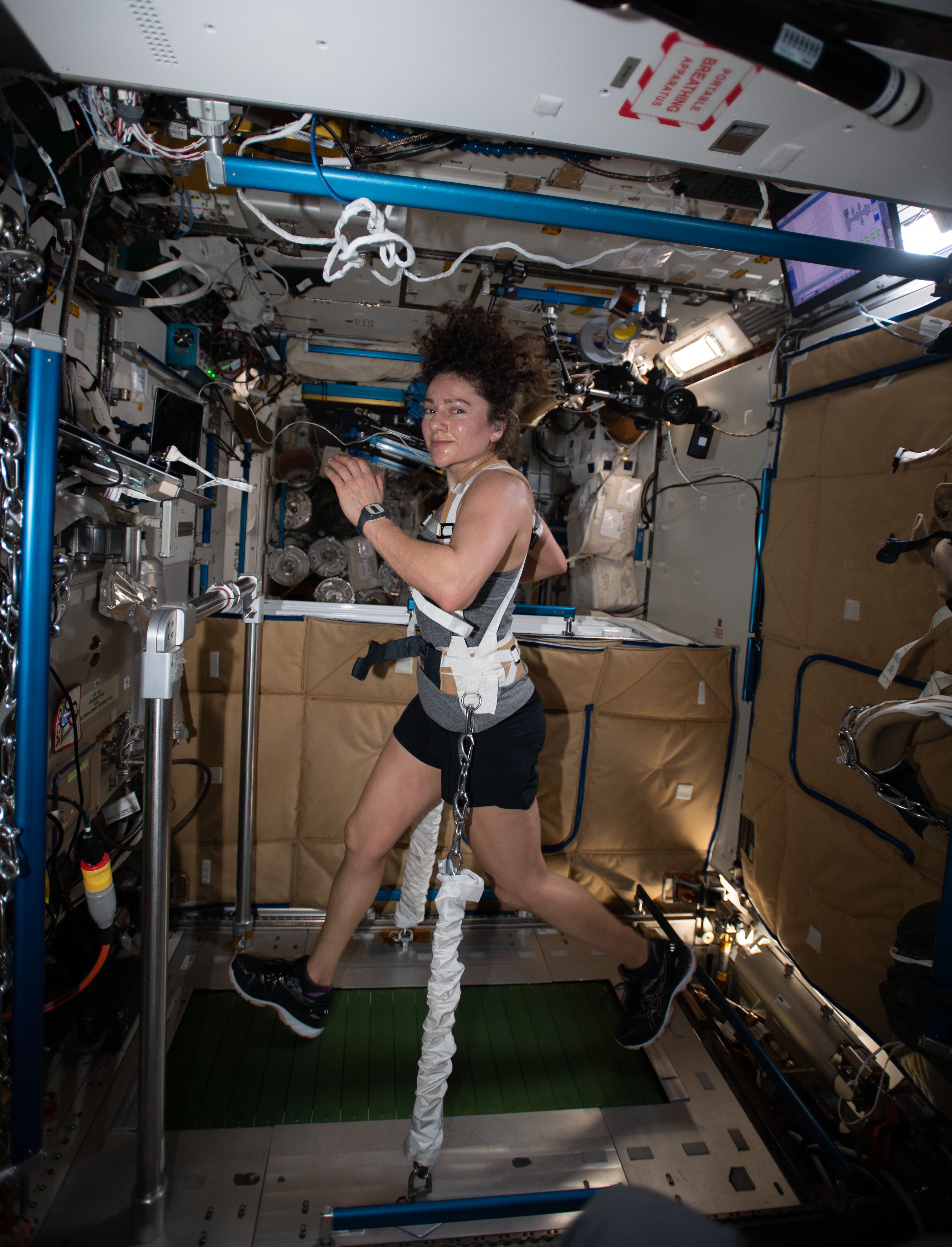
A woman runs on a treadmill in space.
In the Tranquility node of the orbiting laboratory, NASA astronaut Jessica Meir exercises on the Combined Operational Load Bearing External Resistance Treadmill (COLBERT), technically named the Treadmill 2 and abbreviated as T2.
NASA

The space station continues to be a critical platform for sharpening skills, technology, and understanding that will prepare humanity to return to the Moon with NASA’s Artemis campaign and journey on to Mars and beyond. 

Since space presents an entirely new physical environment with a distinct set of challenges, the orbiting laboratory is uniquely positioned to support research and preparations not possible on Earth. That includes: 

  • Mastering techniques for basic tasks like drinking water, sleeping, exercising, and handling various materials.  
  • Developing solutions to microgravity-induced changes to and challenges for the human body. 
  • Testing reliable technologies and self-sustaining ecosystems necessary for deep space travel, from life support systems to in-orbit agriculture and 3D printing of materials. 
  • Refining techniques and procedures for data and imagery collection and analysis.  

Read more about how the space station has enabled significant strides in our journey farther into the final frontier. 

The first decade of the space station was the decade of construction. The second decade moved from initial studies to fully using the orbiting laboratory. Now we are in the decade of results. 

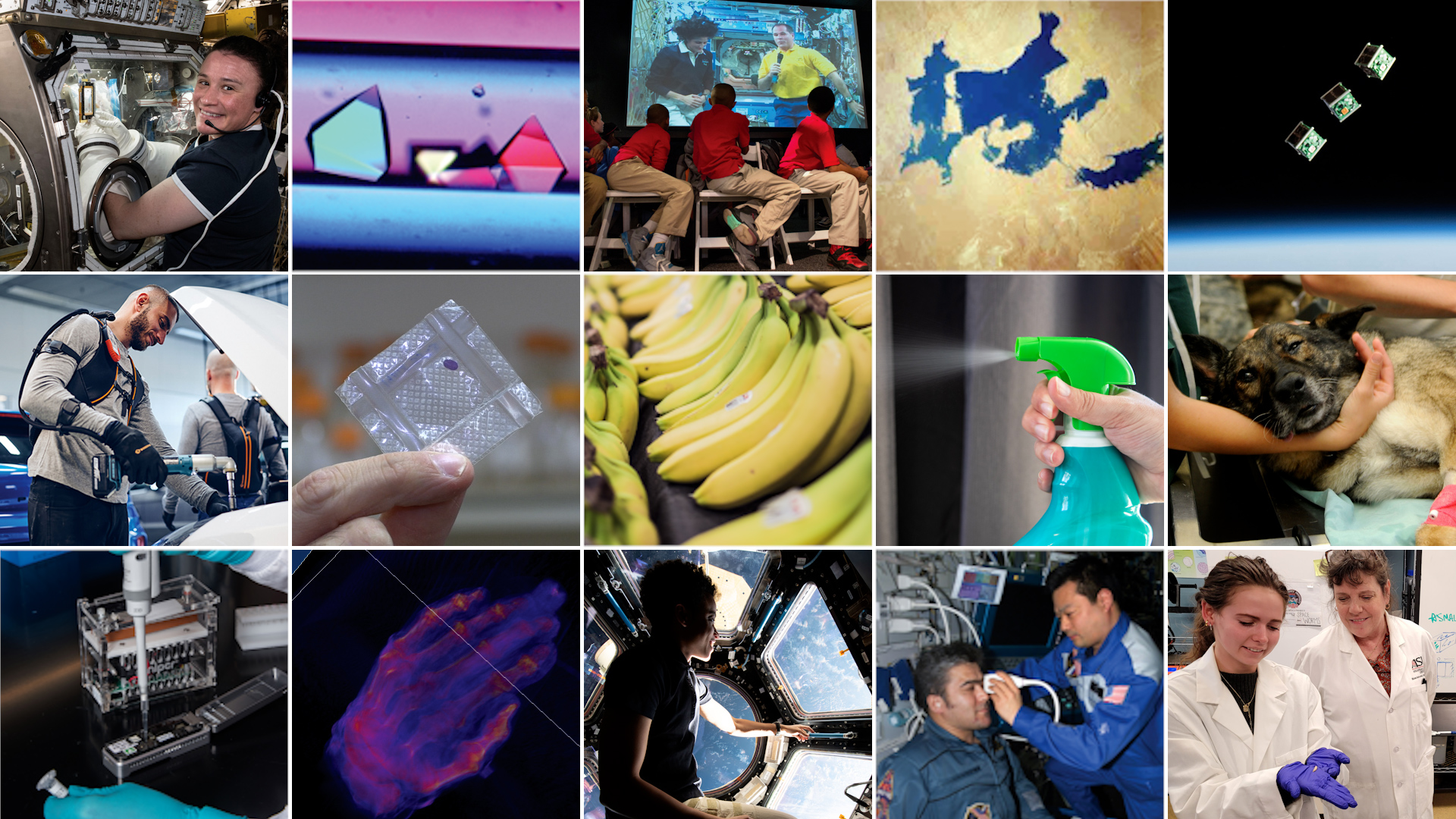
With nearly 25 years of experiments conducted aboard the station, more breakthroughs are materializing than ever before. These scientific discoveries and technological advancements are benefiting humanity on the ground, contributing to the growing low Earth orbit economy, and helping to prepare for future exploration of the Moon and Mars.  

Innovations include: 

  • Advances in X-ray technologies, developed to create a space station telescope, are helping unravel the mysteries of our universe while improving medical devices on Earth. 
  • Temperature-change data that has been employed in efforts to reduce heat absorbed by city surfaces, reduce fire risk, and help farmers efficiently water their fields. 
  • Demonstrations of robotic technologies with the potential to relieve repetitive movement and other workplace-related stressors. 
  • Development of a small ultrasound unit for crew health monitoring that has since been adapted to provide diagnostic care in remote areas on Earth. 

Find more information about the space station’s benefits for humanity here

Powered by WPeMatico

Get The Details…
Linda E. Grimm