Efficient Large Displacement/Large Rotation Dynamic Simulations Using Nonlinear Dynamic Substructures

Efficient Large Displacement/Large Rotation Dynamic Simulations Using Nonlinear Dynamic Substructures

Download PDF: Efficient Large Displacement/Large Rotation Dynamic Simulations Using Nonlinear Dynamic Substructures

Utilizing reduced-order dynamic math models (DMM) in linear system-level dynamic analyses is a well-known practice that enables extreme computational efficiencies. But what about nonlinear system dynamics? Reduced-order DMMs have found their way into contact dynamics. The engineer must look no further than the Henkel-Mar pad separation analysis methodology to verify this fact. More sophisticated applications of DMMs in contact dynamics are possible when certain repetitive geometry pattens are present. For example, Figure 1 shows a type of pipe known as a “flexible” pipe used by the subsea industry. This design features four layers of helically wound steel wires that provide the pipe with its stick/slip behavior during bending, thereby enabling a longer fatigue life in harsh ocean environments. With these helically wound armor layers presenting a repetitive contact topology, contact surfaces can be constructed and tracked enabling the friction logic to operate resulting in the friction hysteretic moment-curvature plot provided in Figure 1 (top). 

Flexible pipe used in subsea industry; moment-curvature of the flexible pipe using reduced-order dynamic math models for surface contact
Flexible pipe used in subsea industry; moment-curvature of the flexible pipe using reduced-order dynamic math models for surface contact 

As seen from Figure 1, the pipe was subjected to many bending cycles and executed in essentially a real-time computation. A single bending cycle of the same pipe in full finite element model (FEM) resolution (i.e., no use of DMMs) would require 48 hours of computation on 36 central processing units (CPUs) running in parallel given the very large order of the FEM.   

What about utilizing DMMs for computationally efficient nonlinear dynamics involving large displacements and rotations? Before addressing this question, the residual flexibility mixed boundary transformation (RFMB1) must be defined. The RFMB coordinate transformation is given as follows: 

The RFMB transformation connects physical and modal degrees of freedom (DoFs) to a reduced set of generalized coordinates

The transformation is a mix of the following submatrices: constraint modes (ψ) due to unit displacements on the b-set boundary degrees of freedom (DoFs) that remain fixed during the eigenvalue problem, residual flexibility (g) due to unit forces at the c-set boundary DoFs that remain free during the eigenvalue problem, and a truncated set of normal modes (φ) computed with the b-set DoFs constrained. It can be shown that the transformation retains full flexibility at the DMM physical DoFs and retains the full dynamics of the FEM up to the user-selected truncation frequency for the normal modes. The reduction of DoFs, and hence the computational efficiency, arises from the number of kept modes (k) being significantly less than the number of interior FEM DoFs. 

Cantilever beam model composed of 20 DMMs
Cantilever beam rolled up using the 20 NDS DMMs
Same beam bent into “catenary-like” configuration by turning on gravity

To enable DMM large displacements/rotations, four coordinates are added to the above RFMB to track large rotations. These quaternions replace the rigid-body modes that are only valid for infinitesimal rotations. With this process, the RFMB is transformed into a nonlinear dynamic substructure (NDS). Solution algorithms need to be modified accordingly as well to allow for equilibrium iterations since the problem now is highly nonlinear. As an example, consider the undeformed cantilever beam model (Figure 2) composed of 20 DMMs (single DMM of a beam composed of 5 CBAR elements repeated 20x).   

A moment is applied at the free end (right end) of Figure 2. While small displacement theory is limited and breaks down after a few degrees of rotation, the cantilever beam can be completely rolled up using NDS (see Figure 3) in a highly nonlinear dynamic simulation. Also note that the entire nonlinear dynamic simulation was executed in seconds on a laptop and included all dynamic effects. Similarly, the beam can be bent into a “catenary-like2” shape by turning on gravity and enforcing displacements at each end to the required coupling location (see Figure 4). 

One application for this large displacement/rotation NDS capability has been to include umbilical models in the coupled loads analysis (CLA) framework. Figure 5 shows the Interim Cryogenic Propulsion Stage (ICPS) umbilical that was integrated into the Space Launch System (SLS) CLA. The SLS CLA is an integrated assembly of various component DMMs (boosters, core stage, mobile launcher (ML), upper stage, etc.) to which the ICPS umbilical (ICPSU) and its hoses as NDS DMMs can now be added. For each hose, one end connects to the SLS vehicle and the other end to the ML structure. As an example, Figure 6 shows the evolution of the deformations of the forward vent hose (modeled with 20 NDS DMMs) as it goes from the undeformed geometry (straight line) into its prelaunch geometry during the initial condition setup in the CLA. 

As the timed command for umbilical separation is given, the vehicle-side ground plate separates (using the Henkel-Mar contact/separation algorithm) and the ML gantry rotates the separating umbilical away from the already lifting vehicle (the gantry was brought into the CLA as a NDS capable of large rotations). Figure 7 captures the post-separation forward vent hose dynamics (extracted from the CLA). From this, 100  ICPSU hose clearances to the lifting vehicle can be computed. 

The power of the reduced-order models does not end with linear dynamics. It is possible to introduce large displacements and rotations into reduced-order models to enable seamless integration into large substructured integrated system dynamic analyses such as a CLA. For the specific case of the SLS, this capability allowed us to integrate umbilicals into the CLA to more accurately capture the impact of system flexibilities, dynamic response to forcing functions, pad separation “twang” effects, ML dynamics, and gantry/umbilical timings on clearances.  

For information, contact Dr. Dexter Johnson.  dexter.johnson@nasa.gov 

ICPSU model integratedinto the SLS CLA
ICPSU forward vent hose evolution of deformations from undeformed (straight line) to prelaunch configuration (locking in preloads) during the CLA initial conditions setup (extracted from the CLA)
Forward vent hose post-separation dynamics (extracted from the CLA)

Powered by WPeMatico

Get The Details…
Meagan Chappell

Dust Outbreak Reaches Europe

Dust Outbreak Reaches Europe

March 1–9, 2026

Winter winds lofted clouds of dust from the Sahara Desert, carrying it north toward the Mediterranean and dispersing it widely across Europe in March 2026. When the dust combined with moisture-laden weather systems, a dirty rain fell in parts of Spain, France, and the United Kingdom.

This animation highlights the concentration and movement of dust throughout the region from March 1 to March 9. It depicts dust column mass density—a measure of the amount of dust contained in a column of air—produced with a version of the GEOS (Goddard Earth Observing System) model. The model integrates satellite data with mathematical equations that represent physical processes in the atmosphere.

The animation shows dust plumes originating in northwestern Africa being blown both to the west across the Atlantic Ocean and north toward the Mediterranean. As plumes spread throughout Western Europe over several days, people observed hazy skies from southern England, where sunrises and sunsets took on an eerie glow, to the Alps in Switzerland and Italy, where a dust layer encroached on the Matterhorn.

Not all of the dust remained aloft. Storms encountered some of the dust, causing particles to fall to the ground with rain and coat surfaces with a brownish residue. A low-pressure system, named Storm Regina by Portugal’s weather service, moved across the Iberian Peninsula and brought so-called blood rain to southern and eastern Spain, along with parts of France and the southern UK in early March, according to news reports.

Over the Mediterranean, areas of “dusty cirrus” clouds developed higher in the atmosphere, where dust particles can act as condensation nuclei for ice crystals, according to MeteoSwiss, Switzerland’s Federal Office for Meteorology and Climatology. Scientists are studying these clouds to better understand their formation and how they affect weather, climate, and even solar power generation.

In a new analysis, researchers used NASA’s MERRA-2 (Modern-Era Retrospective Analysis for Research and Applications, Version 2), observations from MODIS (Moderate Resolution Imaging Spectroradiometer), and other satellite products to parse the effect of airborne Saharan dust on solar power in Hungary. They found that photovoltaic performance dropped to 46 percent on high-dust days, compared with 75 percent or more on low-dust days. They determined the greatest losses occurred because dust enhanced the presence and reflectance of cirrus clouds and reduced the amount of radiation that reached solar panels.

Some research suggests more frequent and intense wintertime dust events have affected Europe in recent years. Researchers have proposed several factors contributing to these outbreaks, including drier-than-normal conditions in northwestern Africa and weather patterns more often driving winds north from the Sahara.

NASA Earth Observatory animation by Lauren Dauphin, using GEOS-FP data from the Global Modeling and Assimilation Office at NASA GSFC. Story by Lindsey Doermann.

References & Resources

You may also be interested in:

Stay up-to-date with the latest content from NASA as we explore the universe and discover more about our home planet.
Dust in the “Eye” of the Tarim Basin

3 min read

Satellites have observed episodes of dust swirling across the basin in western China for decades.

Article

Finding Freshwater in Great Salt Lake

4 min read

Reed-covered mounds exposed by declining water levels reveal an unexpected network of freshwater springs that feed directly into the lake…

Article

The Galaxy Next Door

3 min read

The Large Magellanic Cloud—one of our closest neighboring galaxies—is a hotbed of star formation that is visible to both astronauts…

Article

Powered by WPeMatico

Get The Details…

Cardiac Research and Spacewalk Preps Before Cygnus XL Spacecraft Departs

Cardiac Research and Spacewalk Preps Before Cygnus XL Spacecraft Departs

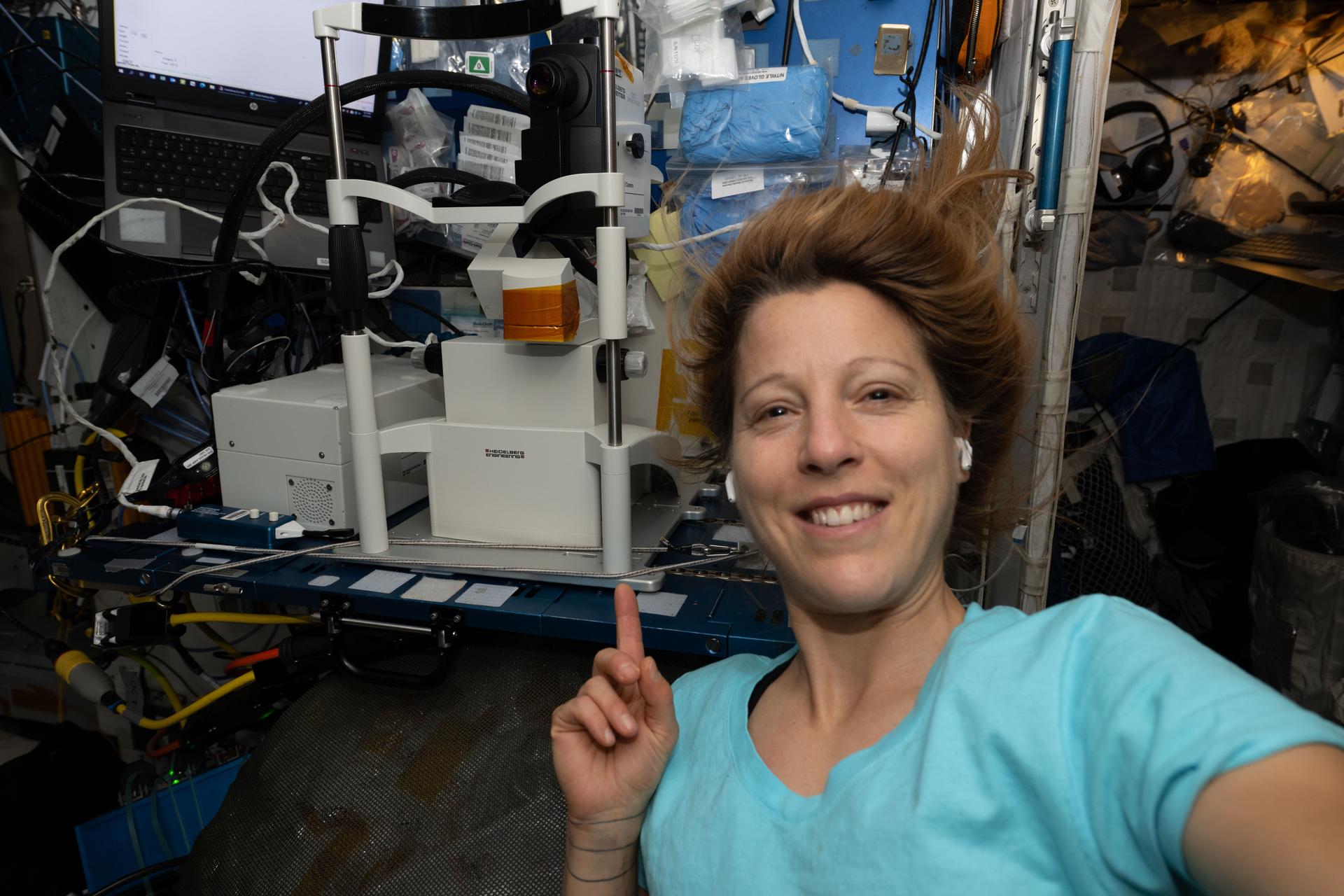
NASA astronaut and Expedition 74 flight engineer Jessica Meir works inside the International Space Station's Quest airlock, installing leg and arm components on a spacesuit and swapping components from one suit to another.
NASA astronaut Jessica Meir works inside the International Space Station’s Quest airlock, installing leg and arm components on a spacesuit and swapping components from one suit to another to prepare for a spacewalk.
NASA/Jack Hathaway

The Expedition 74 crew members spent Wednesday studying the cardiovascular system while preparing for a spacewalk to upgrade the orbital outpost’s power generation system. A U.S. cargo spacecraft is also packed and ready for its departure from the International Space Station on Thursday.

NASA flight engineers Jessica Meir and Jack Hathaway kicked off their shift with vein scans inside the Columbus laboratory module. Meir led the Venous Flow biomedical study operating the new Ultrasound 3 device and scanning Hathaway’s veins while he wore electrodes on his chest measuring his heart activity. Doctors are investigating space-caused blood flow changes that may lead to an increased risk of blood clots in astronauts.

Meir also partnered with flight engineer Sophie Adenot of ESA (European Space Agency) and filled out a questionnaire to document their sleep patterns then collected their saliva samples for preservation in a science freezer and later analysis. Meir later took a cognition test to understand how living in weightlessness affects a crew member’s spatial orientation, visual tracking, decision making, and more for the Standard Measures study.

Adenot and Meir worked together throughout Wednesday readying the Cygnus XL cargo spacecraft for its detachment from the Unity module and release into Earth orbit at 7:05 a.m. on Thursday with the Canadarm2 robotic arm. Adenot configured hardware that will enable Cygnus XL to be disconnected from Unity then closed the spacecraft’s hatch. Meir set up the equipment that will depressurize Cygnus XL in advance of its departure. NASA’s live coverage of undocking and departure begins at 6:45 a.m. on NASA+Amazon Prime, and the agency’s YouTube channel. Learn how to watch NASA content through a variety of online platforms, including social media.

Meir’s main task, however, was working with NASA flight engineer Chris Williams in the Quest airlock to configure the tools they will use on an upcoming spacewalk to ready the orbital outpost for a new roll-out solar array. Meir and Williams will work in the vacuum of space to install a modification kit and route cables on the port side of the orbital outpost. The external maintenance work will enable the next roll-out solar array to be installed on a later spacewalk after it is delivered on a SpaceX Dragon spacecraft. Williams and Hathaway then joined flight engineer Sophie Adenot of ESA (European Space Agency) and trained on a computer for the Canadarm2 robotic arm maneuvers necessary to support the spacewalkers.

The Roscosmos cosmonauts also worked on their portion of cardiac research adding to the biomedical data scientists from around the world collect and use to understand how living in space affects vascular health. Commander Sergey Kud-Sverchkov and flight engineer Sergei Mikaev once again took turns wearing sensors on their forehead, fingers, and toes that sent their blood flow data by Bluetooth adaptor to a laptop computer for analysis. Flight engineer Andrey Fedyaev began a 24-hour health monitoring session wearing electrodes and cuffs that recorded his heart’s electrical activity and blood pressure.

Learn more about station activities by following the space station blog, @space_station on X, as well as the ISS Facebook and ISS Instagram accounts.

Get the latest from NASA delivered every week. Subscribe here.

Powered by WPeMatico

Get The Details…

Mark A. Garcia

2026 William T. Pecora Award Nominations Now Being Accepted

2026 William T. Pecora Award Nominations Now Being Accepted

Posed portrait of William T. Pecora writing at a desk while smiling
William T. Pecora was Director of the USGS from 1965 to 1971 and Under Secretary of the Interior from 1971 to 1972.

By USGS Landsat Missions 

The William T. Pecora Award is presented annually to individuals or teams using satellite or aerial remote sensing that make outstanding contributions toward understanding the Earth (land, oceans, and air), educating the next generation of scientists, informing decision-makers, or supporting natural or human-induced disaster response. Both national and international nominations are welcome.

The award is sponsored jointly by the U.S. Department of the Interior and the National Aeronautics and Space Administration and was established in 1974 to honor the memory of Dr. William T. Pecora, former Director of the U.S. Geological Survey and Under Secretary, Department of the Interior.  

Dr. Pecora was a motivating force behind the establishment of a program for civil remote sensing of the Earth from space.  His early vision and support helped establish what we know today as the Landsat satellite program. 

Nominations for the 2026 award will be accepted until May 29, 2026.

Visit the William T. Pecora Awards webpage for eligibility requirements and the nomination process.  

Explore More

2026 William T. Pecora Award Nominations Now Being Accepted

1 min read

The William T. Pecora Award is presented annually to individuals or teams using satellite or aerial remote sensing that make…

Mar 11, 2026
Article

A Most Unusual Lake

4 min read

Lake Unter-See in Antarctica, sealed beneath thick ice, contains unusually high levels of dissolved oxygen and cone-shaped microbial reefs resembling…

Mar 11, 2026
Article

A Little Town with a Long Name

3 min read

A NASA luminary from the Apollo era grew up in Wales near Llanfairpwllgwyngyllgogerychwyrndrobwllllantysiliogogogoch.

Mar 5, 2026
Article

Powered by WPeMatico

Get The Details…