Station Crew Expands to Ten, Begins Working Together

Station Crew Expands to Ten, Begins Working Together

Astronaut Matthew Dominick receives a haircut from astronaut Loral O'Hara.
Astronaut Matthew Dominick receives a haircut from astronaut Loral O’Hara.

Ten crewmates now reside aboard the International Space Station after the arrival of the Soyuz MS-25 crew ship on Monday. They will live and work together the next several days before returning to a seven-member crew again and beginning the Expedition 71 mission in early April.

NASA astronaut Tracy C. Dyson arrived at the orbital lab on Monday with Roscosmos cosmonaut Oleg Novitskiy and Belarus spaceflight participant Marina Vasilevskaya. Dyson will stay in space for about six months as a member of the station crew. Novitskiy and Vasilevskaya will return to Earth with NASA astronaut Loral O’Hara on April 6.

The trio will return to Earth inside the Soyuz MS-24 spacecraft that has been docked to the Rassvet module since Sept. 15, 2023. O’Hara will have lived and worked on the orbital outpost for six-and-a-half months having conducted advanced space research and one spacewalk.

Dyson and her two Soyuz crewmates will be spending the next few days familiarizing themselves with space station systems. Next, they will turn their attention to a host of science and educational activities before returning home while Dyson stays in space until later this year.

Station flight engineers Matthew Dominick, Mike Barratt, Jeanette Epps, and Alexander Grebenkin are in the first month of their mission having arrived at the station on March 5 aboard the SpaceX Dragon Endeavour. They will stay in space until mid-summer researching a wide variety of phenomena including neurodegenerative diseases, the effects of microgravity and radiation on plants, and preventing space-caused fluid shifts in astronauts.

Cosmonauts Oleg Kononenko and Nikolai Chub are due to stay in space for just over a year helping doctors understand how living long-term in microgravity affects the human body. The duo will depart the space station inside the Soyuz MS-25 spacecraft and bring home Tracy Dyson in early fall.


Learn more about station activities by following the space station blog@space_station and @ISS_Research on X, as well as the ISS Facebook and ISS Instagram accounts.

Get weekly video highlights at: https://roundupreads.jsc.nasa.gov/videoupdate/

Get the latest from NASA delivered every week. Subscribe here: www.nasa.gov/subscribe

Powered by WPeMatico

Get The Details…

Mark Garcia

New NASA Software Simulates Science Missions for Observing Terrestrial Freshwater

New NASA Software Simulates Science Missions for Observing Terrestrial Freshwater

4 min read

New NASA Software Simulates Science Missions for Observing Terrestrial Freshwater

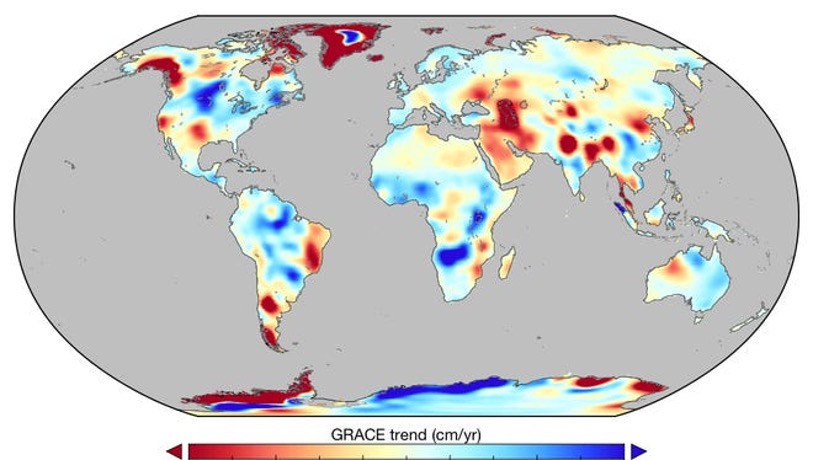
Global map; different colored areas on each continent show the varying levels of freshwater
A map describing freshwater accumulation (blue) and loss (red), using data from NASA’s Gravity Recovery and Climate Experiment (GRACE) satellites. A new Observational System Simulation Experiment (OSSE) will help researchers design science missions dedicated to monitoring terrestrial freshwater storage. Image Credit: NASA
Image Credit: NASA

From radar instruments smaller than a shoebox to radiometers the size of a milk carton, there are more tools available to scientists today for observing complex Earth systems than ever before. But this abundance of available sensors creates its own unique challenge: how can researchers organize these diverse instruments in the most efficient way for field campaigns and science missions?

To help researchers maximize the value of science missions, Bart Forman, an Associate Professor in Civil and Environmental Engineering at the University of Maryland, and a team of researchers from the Stevens Institute of Technology and NASA’s Goddard Space Flight Center, prototyped an Observational System Simulation Experiment (OSSE) for designing science missions dedicated to monitoring terrestrial freshwater storage.

“You have different sensor types. You have radars, you have radiometers, you have lidars – each is measuring different components of the electromagnetic spectrum,” said Bart Forman, an Associate Professor in Civil and Environmental Engineering at the University of Maryland. “Different observations have different strengths.”

Terrestrial freshwater storage describes the integrated sum of freshwater spread across Earth’s snow, soil moisture, vegetation canopy, surface water impoundments, and groundwater. It’s a dynamic system, one that defies traditional, static systems of scientific observation.

Forman’s project builds on prior technology advancements he achieved during an earlier Earth Science Technology Office (ESTO) project, in which he developed an observation system simulation experiment for mapping terrestrial snow. 

It also relies heavily on innovations pioneered by NASA’s Land Information System (LIS) and NASA’s Trade-space Analysis Tool for Designing Constellations (TAT-C), two modeling tools that began as ESTO investments and quickly became staples within the Earth science community.

Forman’s tool incorporates these modeling programs into a new system that provides researchers with a customizable platform for planning dynamic observation missions that include a diverse collection of spaceborne data sets.

In addition, Forman’s tool also includes a “dollars-to-science” cost estimate tool that allows researchers to assess the financial risks associated with a proposed mission.

Together, all of these features provide scientists with the ability to link observations, data assimilation, uncertainty estimation, and physical models within a single, integrated framework.

“We were taking a land surface model and trying to merge it with different space-based measurements of snow, soil moisture, and groundwater to see if there was an optimal combination to give us the most bang for our scientific buck,” explained Forman.

While Forman’s tool isn’t the first information system dedicated to science mission design, it does include a number of novel features. In particular, its ability to integrate observations from spaceborne passive optical radiometers, passive microwave radiometers, and radar sources marks a significant technology advancement.

Forman explained that while these indirect observations of freshwater include valuable information for quantifying freshwater, they also each contain their own unique error characteristics that must be carefully integrated with a land surface model in order to provide estimates of geophysical variables that scientists care most about.

Forman’s software also combines LIS and TAT-C within a single software framework, extending the capabilities of both systems to create superior descriptions of global terrestrial hydrology.

Indeed, Forman stressed the importance of having a large, diverse team that features experts from across the Earth science and modeling communities.

“It’s nice to be part of a big team because these are big problems, and I don’t know the answers myself. I need to find a lot of people that know a lot more than I do and get them to sort of jump in and roll their sleeves up and help us. And they did,” said Forman.

Having created an observation system simulation experiment capable of incorporating dynamic, space-based observations into mission planning models, Forman and his team hope that future researchers will build on their work to create an even better mission modeling program.

For example, while Forman and his team focused on generating mission plans for existing sensors, an expanded version of their software could help researchers determine how they might use future sensors to gather new data.

“With the kinds of things that TAT-C can do, we can create hypothetical sensors. What if we double the swath width? If it could see twice as much space, does that give us more information? Simultaneously, we can ask questions about the impact of different error characteristics for each of these hypothetical sensors and explore the corresponding tradeoff.” said Forman.

PROJECT LEAD

Barton Forman, University of Maryland, Baltimore County

SPONSORING ORGANIZATION

NASA’s Advanced Information Systems Technology (AIST) program, a part of NASA’s Earth Science Technology Office (ESTO), funded this project

Powered by WPeMatico

Get The Details…

Soyuz Hatches Open, Expedition 70 Welcomes Crew Aboard Station

Soyuz Hatches Open, Expedition 70 Welcomes Crew Aboard Station

The Soyuz MS-25 crew joins the Expedition 70 crew aboard the International Space Station. Credit: NASA TV

The hatches between the International Space Station and the newly arrived Soyuz MS-25 spacecraft officially opened at 1:26 p.m. EDT. The arrival of three new crew members to the existing seven people already aboard for Expedition 70 temporarily increases the station’s population to 10.

NASA astronaut Tracy C. Dyson, Roscosmos cosmonaut Oleg Novitskiy, and spaceflight participant Marina Vasilevskaya of Belarus joined NASA astronauts Loral O’Hara, Matthew Dominick, Mike Barratt, and Jeanette Epps, as well as Roscosmos cosmonauts Oleg Kononenko, Nikolai Chub, and Alexander Grebenkin, already living and working aboard the space station.

Dyson will spend six months aboard the station as an Expedition 70 and 71 flight engineer, returning to Earth in September with Oleg Kononenko and Nikolai Chub of Roscosmos, who will complete a year-long mission on the laboratory.

Novitskiy and Vasilevskaya will be aboard the station for 12 days, providing the ride home for O’Hara on Saturday, April 6, aboard Soyuz MS-24 for a parachute-assisted landing on steppe of Kazakhstan. O’Hara will have spent 204 days in space when she returns.


Learn more about station activities by following the space station blog, @space_station and @ISS_Research on X, as well as the ISS Facebook and ISS Instagram accounts.

Get weekly updates from NASA Johnson Space Center at: https://roundupreads.jsc.nasa.gov/

Get the latest from NASA delivered every week. Subscribe here: www.nasa.gov/subscribe

Powered by WPeMatico

Get The Details…

Abby Graf

NASA Remembers Former NASA Johnson Director George W. S. Abbey

NASA Remembers Former NASA Johnson Director George W. S. Abbey

March 25, 2024

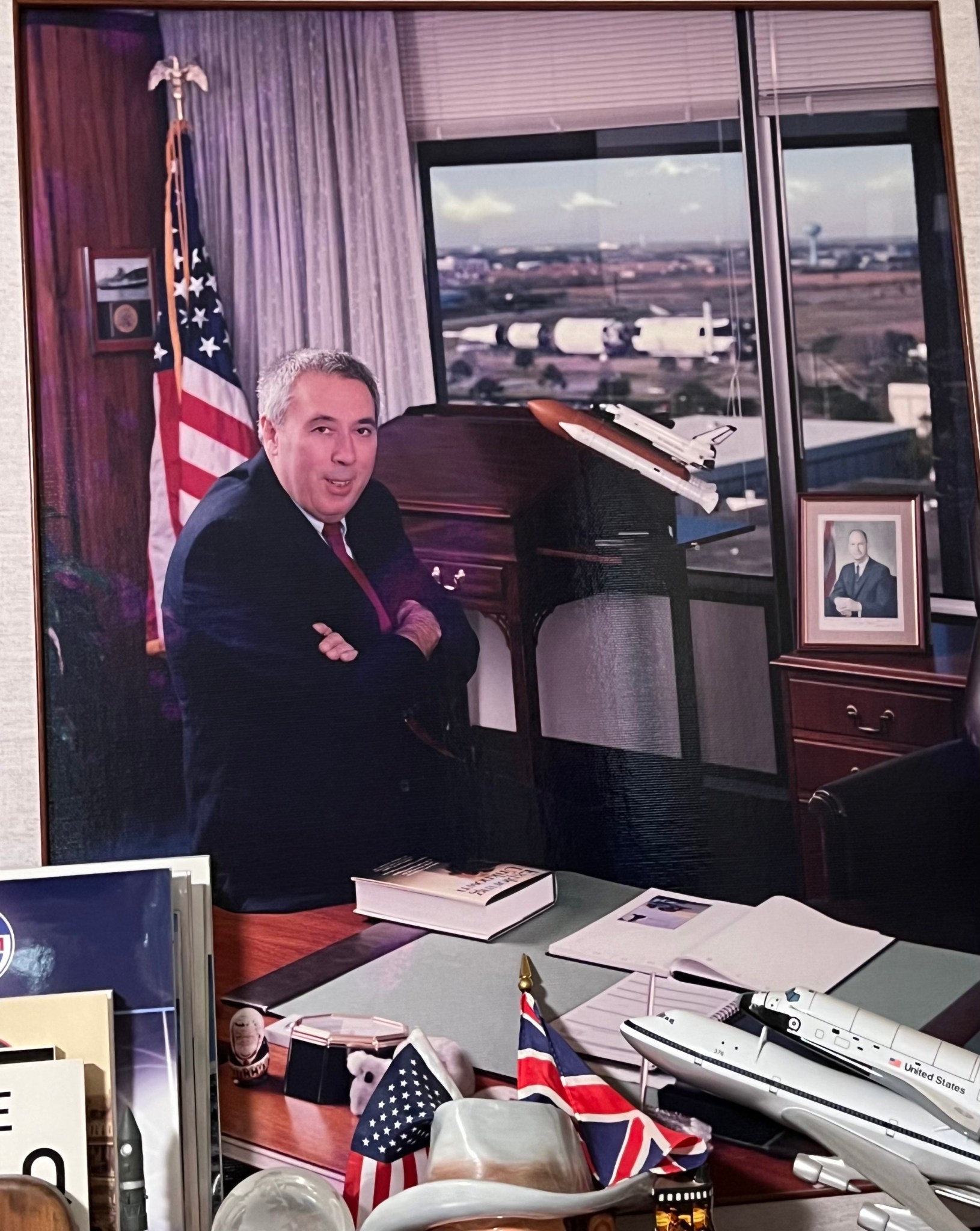
Johnson Space Center Director George Abbey
Former NASA Johnson Space Center Director George W. S. Abbey

RELEASE J24-008

NASA Remembers Former NASA Johnson Director George W. S. Abbey

George W. S. Abbey, former director of NASA’s Johnson Space Center, died Sunday, March 24, in Houston after an illness. The Seattle native was 91. 

“A true visionary, Mr. Abbey demonstrated transformational leadership as Johnson’s seventh center director. During his tenure, the space shuttle flew more than 25 successful missions; the joint U.S. and Russian Shuttle-Mir Program was completed, providing important information for long-duration spaceflight,” said Vanessa Wyche, director of NASA Johnson. “He was instrumental in the Johnson team’s involvement in developing and launching the first elements of the International Space Station, which marked the beginning of a new era in space exploration. On behalf of NASA’s Johnson Space Center, we send our condolences to Mr. Abbey’s loved ones during this difficult time.”

Abbey had a long and storied career in human spaceflight that began with NASA in 1964 and continued beyond his retirement from the agency. As the director of flight operations, he oversaw selection of NASA’s first space shuttle astronauts, mission operations, and the new shuttle program’s approach and landing tests.

From 1987 to 1993, Abbey supported NASA Headquarters in Washington, serving in key roles in human spaceflight, and on the National Space Council. He returned to Johnson in 1994, first as deputy director, then director, leading the development and launch of the space station. Abbey retired from the agency in 2003.

In December 2021, NASA named the Saturn V rocket display park outside Johnson’s main gate for Abbey. Abbey instituted the Longhorn Project, a vital STEM program that provides students with hands-on agricultural experiences and academic scholarships. He leaves behind a legacy of excellence and lasting impact as he will continue to inspire over 1.2 million visitors who visit the George W.S. Abbey Rocket Park annually.

“Abbey’s dedication to human spaceflight remained steadfast. As the NASA family mourns his passing, we are grateful for his leadership and the legacy he leaves behind,” Wyche said.

Abbey is survived by his five children, his eight grandchildren, three great-grandchildren, nieces, and nephews.

Learn more about Abbey’s career in support of NASA at:

https://www.nasa.gov/people/george-w-s-abbey/

-end-

Kelly Humphries / Nilufar Ramji

Kelly.o.humphries@nasa.gov / niliufar.ramji@nasa.gov

281-483-5111

Powered by WPeMatico

Get The Details…
Wendy K. Avedisian

NASA to Launch Sounding Rockets into Moon’s Shadow During Solar Eclipse

NASA to Launch Sounding Rockets into Moon’s Shadow During Solar Eclipse

5 min read

NASA to Launch Sounding Rockets into Moon’s Shadow During Solar Eclipse

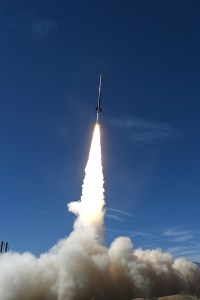
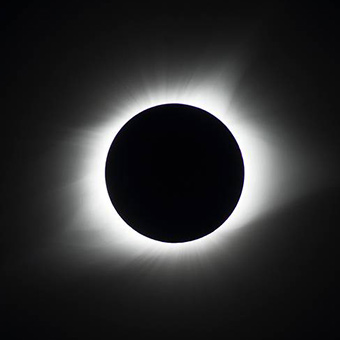
NASA will launch three sounding rockets during the total solar eclipse on April 8, 2024, to study how Earth’s upper atmosphere is affected when sunlight momentarily dims over a portion of the planet.

The Atmospheric Perturbations around Eclipse Path (APEP) sounding rockets will launch from NASA’s Wallops Flight Facility in Virginia to study the disturbances in the ionosphere created when the Moon eclipses the Sun. The sounding rockets had been previously launched and successfully recovered from White Sands Test Facility in New Mexico, during the October 2023 annular solar eclipse. They have been refurbished with new instrumentation and will be relaunched in April 2024. The mission is led by Aroh Barjatya, a professor of engineering physics at Embry-Riddle Aeronautical University in Florida, where he directs the Space and Atmospheric Instrumentation Lab.

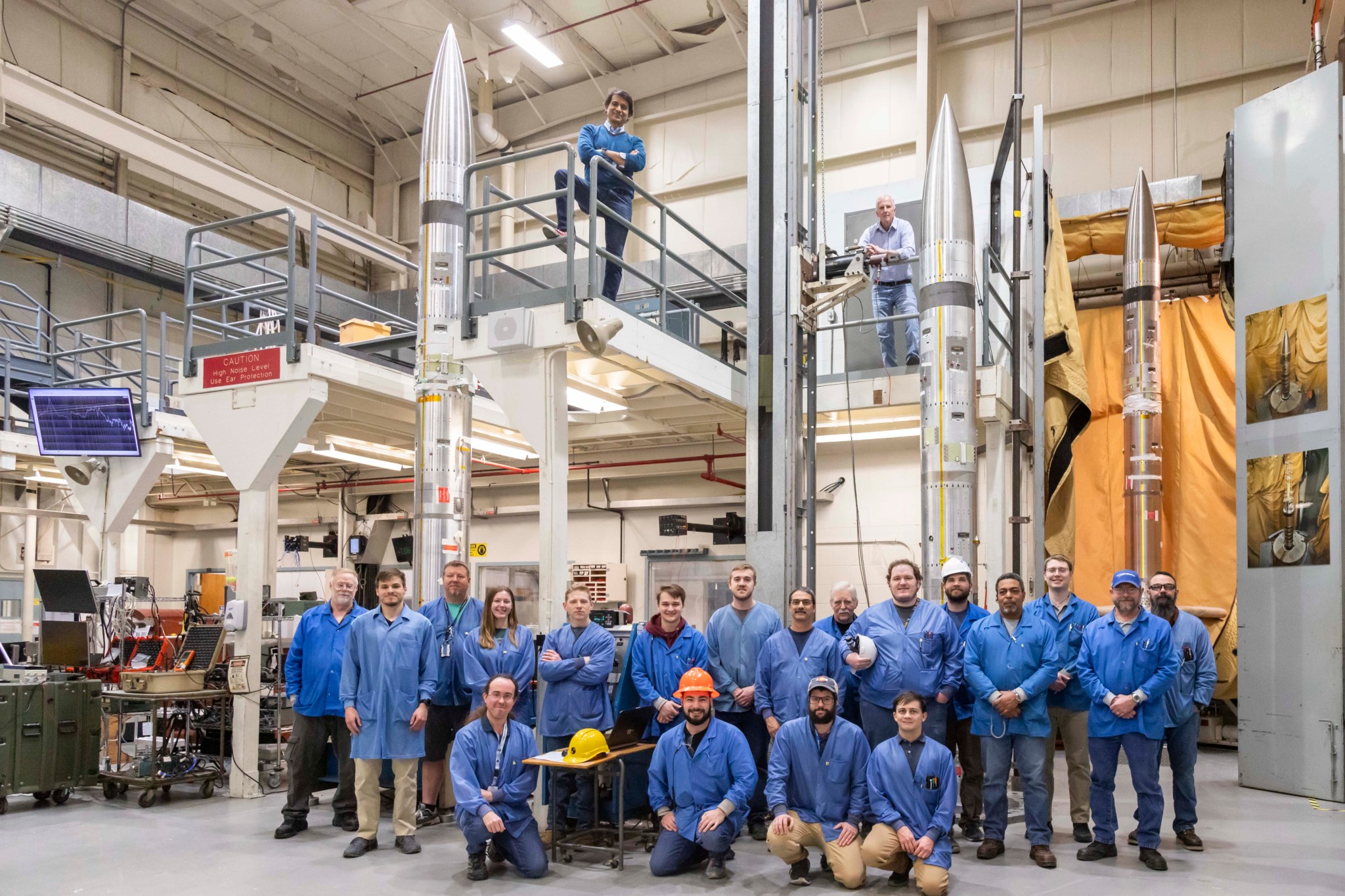
A group of people wearing blue jackets pose for the picture. They stand inside a tall, industrial room. Three silver rockets are behind them.
This photo shows the three APEP sounding rockets and the support team after successful assembly. The team lead, Aroh Barjatya, is at the top center, standing next to the guardrails on the second floor.
NASA/Berit Bland

The sounding rockets will launch at three different times: 45 minutes before, during, and 45 minutes after the peak local eclipse. These intervals are important to collect data on how the Sun’s sudden disappearance affects the ionosphere, creating disturbances that have the potential to interfere with our communications.

This conceptual animation is an example of what observers might expect to see during a total solar eclipse, like the one happening over the United States on April 8, 2024.
NASA’s Scientific Visualization Studio.

The ionosphere is a region of Earth’s atmosphere that is between 55 to 310 miles (90 to 500 kilometers) above the ground. “It’s an electrified region that reflects and refracts radio signals, and also impacts satellite communications as the signals pass through,” said Barjatya. “Understanding the ionosphere and developing models to help us predict disturbances is crucial to making sure our increasingly communication-dependent world operates smoothly.”

The ionosphere forms the boundary between Earth’s lower atmosphere – where we live and breathe – and the vacuum of space. It is made up of a sea of particles that become ionized, or electrically charged, from the Sun’s energy, or solar radiation. When night falls, the ionosphere thins out as previously ionized particles relax and recombine back into neutral particles. However, Earth’s terrestrial weather and space weather can impact these particles, making it a dynamic region and difficult to know what the ionosphere will be like at a given time. 

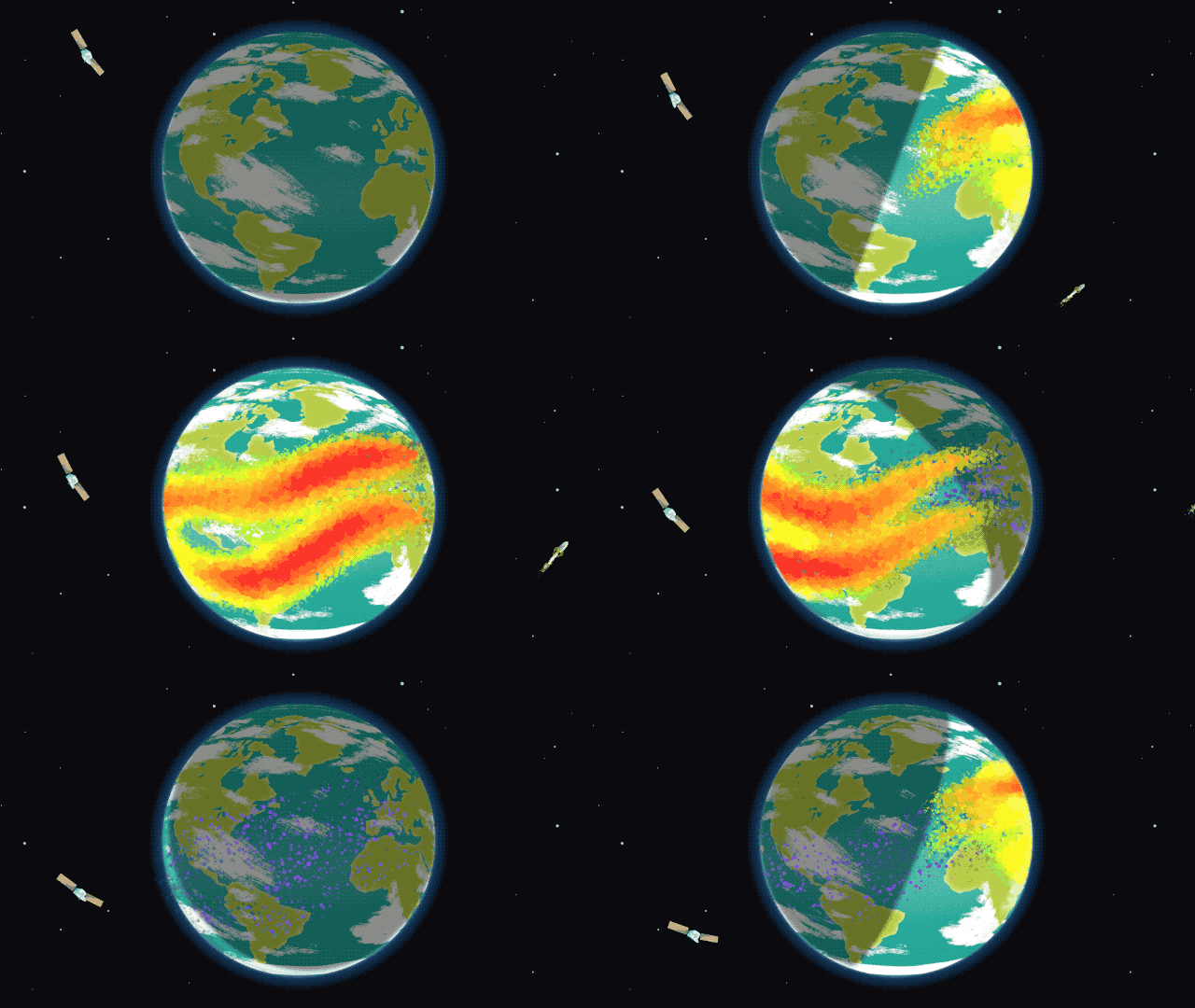
A cartoon Earth becomes shadowed as it turns from day to night, to day again. Red swirls sweep across the planet when it's daytime. Satellites orbit around the planet.
An animation depicts changes in the ionosphere over a 24-hour period. The red and yellow swaths represent high-density ionized particles during the day. The purple dots represent neutral, relaxed particles at night.
NASA/Krystofer Kim

It’s often difficult to study short-term changes in the ionosphere during an eclipse with satellites because they may not be at the right place or time to cross the eclipse path. Since the exact date and times of the total solar eclipse are known, NASA can launch targeted sounding rockets to study the effects of the eclipse at the right time and at all altitudes of the ionosphere.

As the eclipse shadow races through the atmosphere, it creates a rapid, localized sunset that triggers large-scale atmospheric waves and small-scale disturbances, or perturbations. These perturbations affect different radio communication frequencies. Gathering the data on these perturbations will help scientists validate and improve current models that help predict potential disturbances to our communications, especially high frequency communication. 

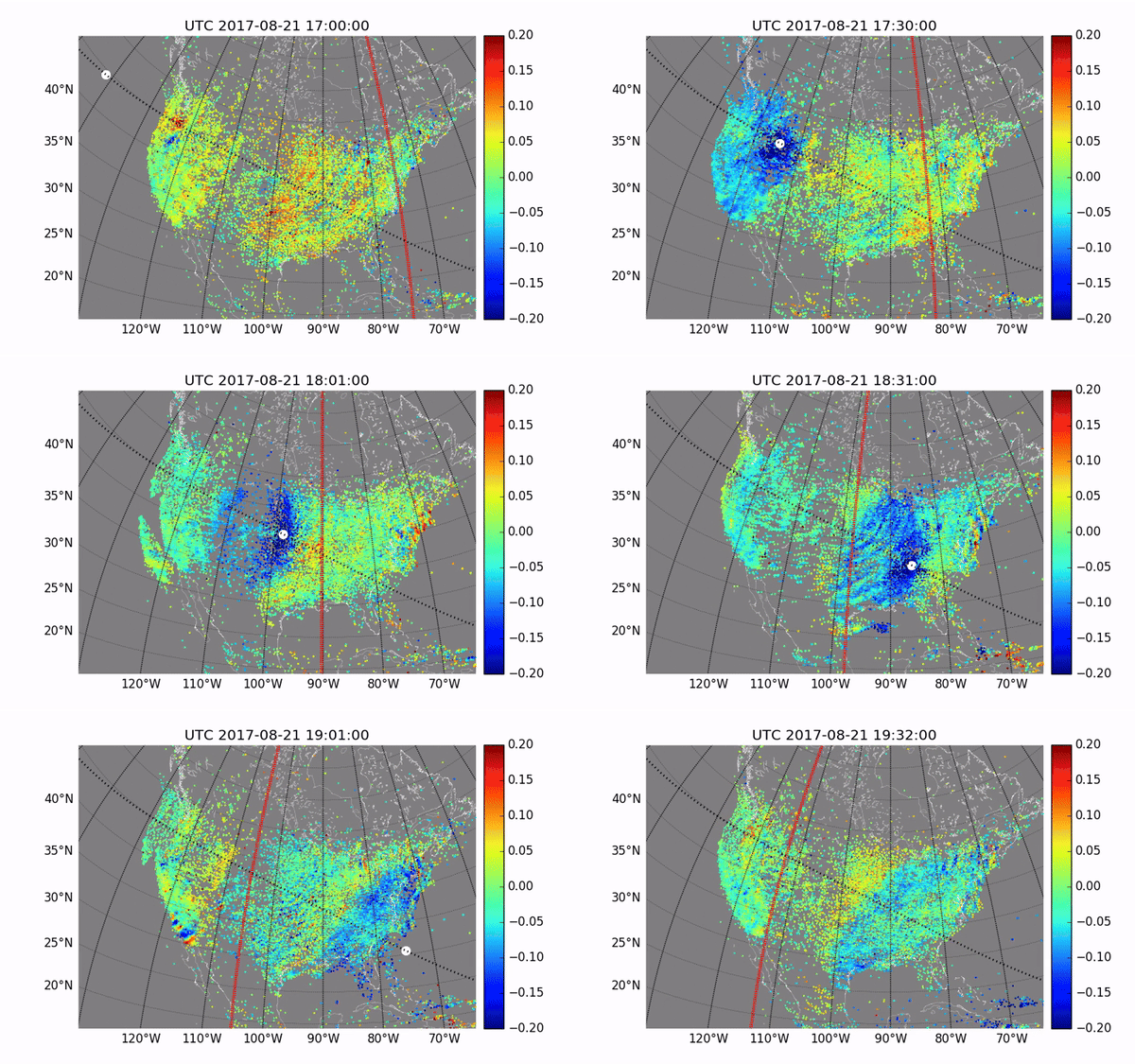
A map of the U.S. on a graph. The map is covered with light green, teal, and yellow dots. As the path of the Moon's shadow sweeps from the northwest US to the southeast US, the dots changed to a dark blue color.
The animation depicts the waves created by ionized particles during the 2017 total solar eclipse.
MIT Haystack Observatory/Shun-rong Zhang. Zhang, S.-R., Erickson, P. J., Goncharenko, L. P., Coster, A. J., Rideout, W. & Vierinen, J. (2017). Ionospheric Bow Waves and Perturbations Induced by the 21 August 2017 Solar Eclipse. Geophysical Research Letters, 44(24), 12,067-12,073. https://doi.org/10.1002/2017GL076054.

The APEP rockets are expected to reach a maximum altitude of 260 miles (420 kilometers). Each rocket will measure charged and neutral particle density and surrounding electric and magnetic fields. “Each rocket will eject four secondary instruments the size of a two-liter soda bottle that also measure the same data points, so it’s similar to results from fifteen rockets, while only launching three,” explained Barjatya. Three secondary instruments on each rocket were built by Embry-Riddle, and the fourth one was built at Dartmouth College in New Hampshire.

In addition to the rockets, several teams across the U.S. will also be taking measurements of the ionosphere by various means. A team of students from Embry-Riddle will deploy a series of high-altitude balloons. Co-investigators from the Massachusetts Institute of Technology’s Haystack Observatory in Massachusetts, and the Air Force Research Laboratory in New Mexico, will operate a variety of ground-based radars taking measurements. Using this data, a team of scientists from Embry-Riddle and Johns Hopkins University Applied Physics Laboratory are refining existing models. Together, these various investigations will help provide the puzzle pieces needed to see the bigger picture of ionospheric dynamics.

A sounding rocket is able to carry science instruments between 30 and 300 miles above Earth’s surface. These altitudes are typically too high for science balloons and too low for satellites to access safely, making sounding rockets the only platforms that can carry out direct measurements in these regions.
NASA’s Goddard Space Flight Center

When the APEP sounding rockets launched during the 2023 annular solar eclipse, scientists saw a sharp reduction in the density of charged particles as the annular eclipse shadow passed over the atmosphere. “We saw the perturbations capable of affecting radio communications in the second and third rockets, but not during the first rocket that was before peak local eclipse” said Barjatya. “We are super excited to relaunch them during the total eclipse, to see if the perturbations start at the same altitude and if their magnitude and scale remain the same.”

The next total solar eclipse over the contiguous U.S. is not until 2044, so these experiments are a rare opportunity for scientists to collect crucial data.

The APEP launches will be live streamed via NASA’s Wallops’ official YouTube page and featured in NASA’s official broadcast of the total solar eclipse. The public can also watch the launches in person from 1-4 p.m. at the NASA Wallops Flight Facility Visitor Center.

By Desiree Apodaca
NASA’s Goddard Space Flight Center, Greenbelt, Md.

Powered by WPeMatico

Get The Details…