Hubble Finds a Field of Stars

Hubble Finds a Field of Stars

2 min read

Hubble Finds a Field of Stars
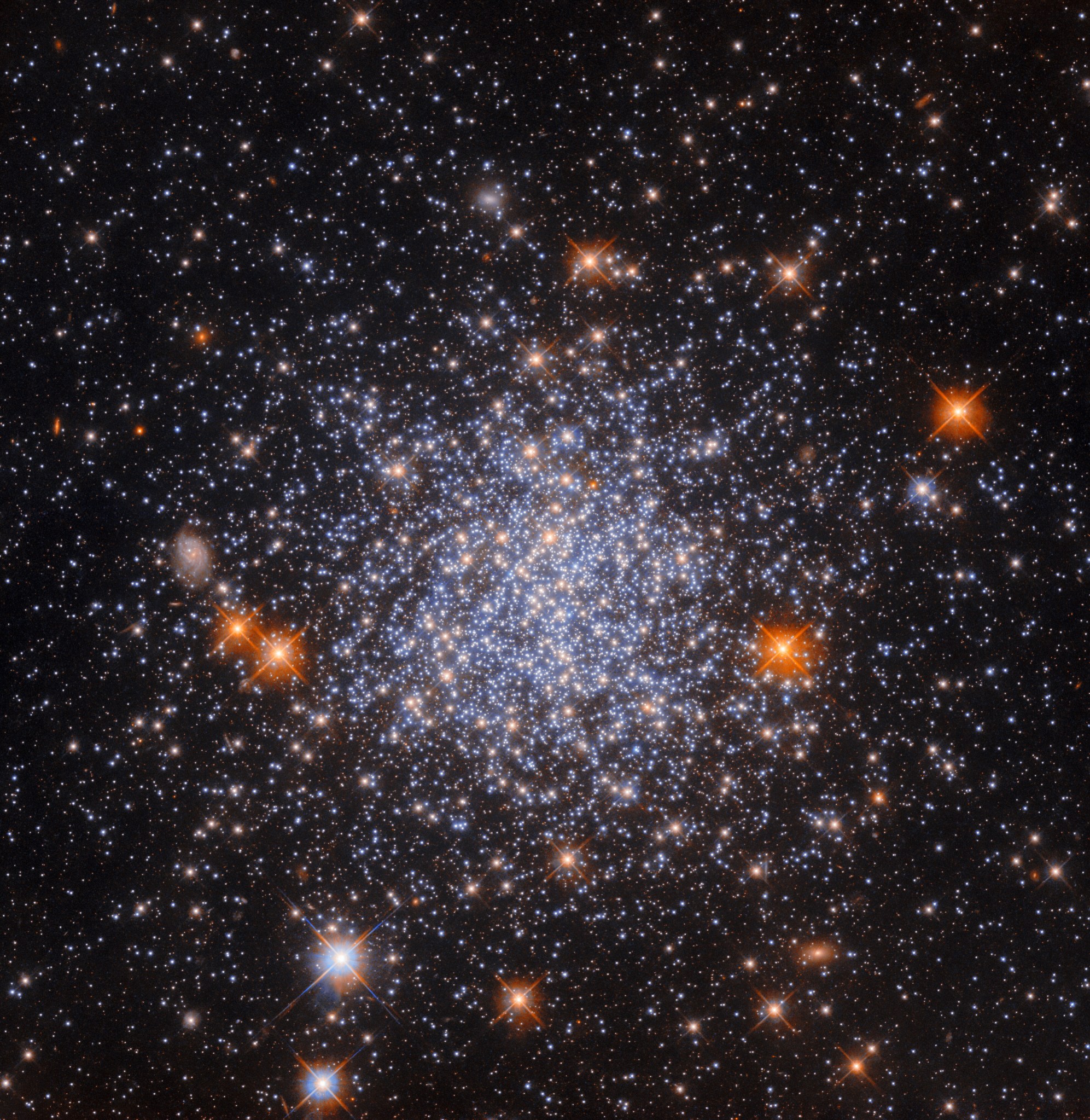
A spherical collection of stars fills the image. The stars merge into a bright, bluish core at image center and form a sparse band around the core and out to the edges of the image. A few stars lie in front of the cluster, with visible diffraction spikes. The background is dark black.
This image from the NASA/ESA Hubble Space Telescope shows a globular cluster called NGC 1651.
ESA/Hubble & NASA, L. Girardi, F. Niederhofer

This image from the NASA/ESA Hubble Space Telescope shows a globular cluster called NGC 1651. Like another recent globular cluster image, NGC 1651 is about 162,000 light-years away in the largest and brightest of the Milky Way’s satellite galaxies, the Large Magellanic Cloud (LMC). One notable feature of this image: the roughly 120-light-year diameter globular cluster nearly fills the entire frame. In contrast, other Hubble images feature entire galaxies – which can be tens or hundreds of millions of light-years in diameter – that also more or less fill the whole image.

A common misconception is that Hubble and other large telescopes observe wildly differently sized celestial objects by zooming in on them, as one would with a specialized camera here on Earth. While small telescopes might have the option to zoom in and out to a certain extent, large telescopes do not. Each telescope’s instrument has a fixed ‘field of view’ (the size of the region of sky that it can observe in a single observation). For example, the ultraviolet/visible light channel of Hubble’s Wide Field Camera 3 (WFC3), the channel and instrument that collected the data used in this image, has a field of view roughly one twelfth the diameter of the Moon as seen from Earth. When WFC3 makes an observation, its field of view is the size of the region of sky that it can observe.

The reason that Hubble can observe objects of such wildly different sizes is two-fold. First, the distance to an object will determine how big it appears from Earth, so entire galaxies that are relatively far away might take up the same amount of space in the sky as a globular cluster like NGC 1651 that is relatively close by. In fact, there’s a distant spiral galaxy lurking in this image, directly left of the cluster – though undoubtedly much larger than this star cluster, it appears small enough here to blend in with foreground stars! Secondly, images processors can stitch together multiple images spanning different parts of the sky into a mosaic to create a single image of objects that are too big for Hubble’s field of view.

Text credit: European Space Agency (ESA)

Media Contact:

Claire Andreoli
NASA’s Goddard Space Flight CenterGreenbelt, MD
claire.andreoli@nasa.gov

Share

Details

Last Updated
Mar 29, 2024
Editor
Andrea Gianopoulos

Powered by WPeMatico

Get The Details…

Space Health Tops Station Research Schedule on Thursday

Space Health Tops Station Research Schedule on Thursday

NASA astronauts (from left) Mike Barratt, Matthew Dominick, and Jeanette Epps enjoy breakfast inside the International Space Station's Unity Module.
NASA astronauts (from left) Mike Barratt, Matthew Dominick, and Jeanette Epps enjoy breakfast inside the International Space Station’s Unity Module.

Brand new science is underway at the International Space Station with two new crews and a cargo ship arriving in March to replenish the Expedition 70 crew. The orbital residents explored a variety of space health technologies and more on Thursday.

NASA Flight Engineer Tracy C. Dyson, who is on her third spaceflight, worked in the Columbus laboratory module swapping hardware for a new experiment seeking to demonstrate 3D printing of antimicrobial parts in space. The investigation named Copper Anti-Microbial Prints, or CAMP, is examining the effectiveness of producing medical devices on-demand and how microgravity affects their anti-microbial properties.

NASA Flight Engineer Loral O’Hara processed messenger RNA (mRNA) and protein samples in the Life Science Glovebox for an experiment, recently delivered aboard the SpaceX Dragon cargo craft, to investigate nanomaterials that mimic DNA. The study, called DNA Nano Therapeutics-Demo 2, is exploring space-manufactured DNA nanomaterials in order to produce therapeutics that may benefit travelers in space and humans on Earth.

One space-caused phenomenon that concerns researchers is the headward fluid shifts that occur in astronauts. Once in space, a crewmember’s body fluids begin to flow upward affecting their eye structure and vision. Another more visible result is commonly called “puffy face.” NASA astronauts Matthew Dominick and Jeanette Epps partnered together Thursday afternoon and tested a specialized thigh cuff that may counteract these fluid shifts. Dominick wore the cuff on his leg and took ultrasound scans with assistance from Epps and doctors on Earth. Results may also impact treatments for fluid accumulations caused by Earth-bound conditions.

NASA astronaut Mike Barratt spent his day on space biology participating in the CIPHER suite of 14 human research studies. He participated in a series of cognition and robotics tests then collected his blood and urine samples for analysis. Results from the expansive investigation may provide scientists insights into the physiological and psychological effects of living in space long-term.

Roscosmos cosmonaut Oleg Novitskiy and Belarus spaceflight participant Marina Vasilevskaya, along with Dyson, are in their first week aboard the orbital outpost. Novitskiy and Vasilevskaya will return to Earth on April 6 bringing home O’Hara who has been aboard the station since Sept. 15. Dyson will stay in space until early fall.

Novitskiy joined his fellow cosmonauts Oleg Kononenko and Nikolai Chub and replaced hardware components inside the Soyuz MS-24 and MS-25 crew ships. Chub then teamed up with new cosmonaut Alexander Grebenkin and studied blood flow and cell respiration for a Roscosmos life science study. Vasilevskaya, with assistance from Chub, recorded her heart rate and tested a specialized suit’s theorized ability to help a crew member readjust to Earth’s gravity.


Learn more about station activities by following the space station blog@space_station and @ISS_Research on X, as well as the ISS Facebook and ISS Instagram accounts.

Get weekly video highlights at: https://roundupreads.jsc.nasa.gov/videoupdate/

Get the latest from NASA delivered every week. Subscribe here: www.nasa.gov/subscribe

Powered by WPeMatico

Get The Details…

Mark Garcia

I Am Artemis: Mat Bevill

I Am Artemis: Mat Bevill

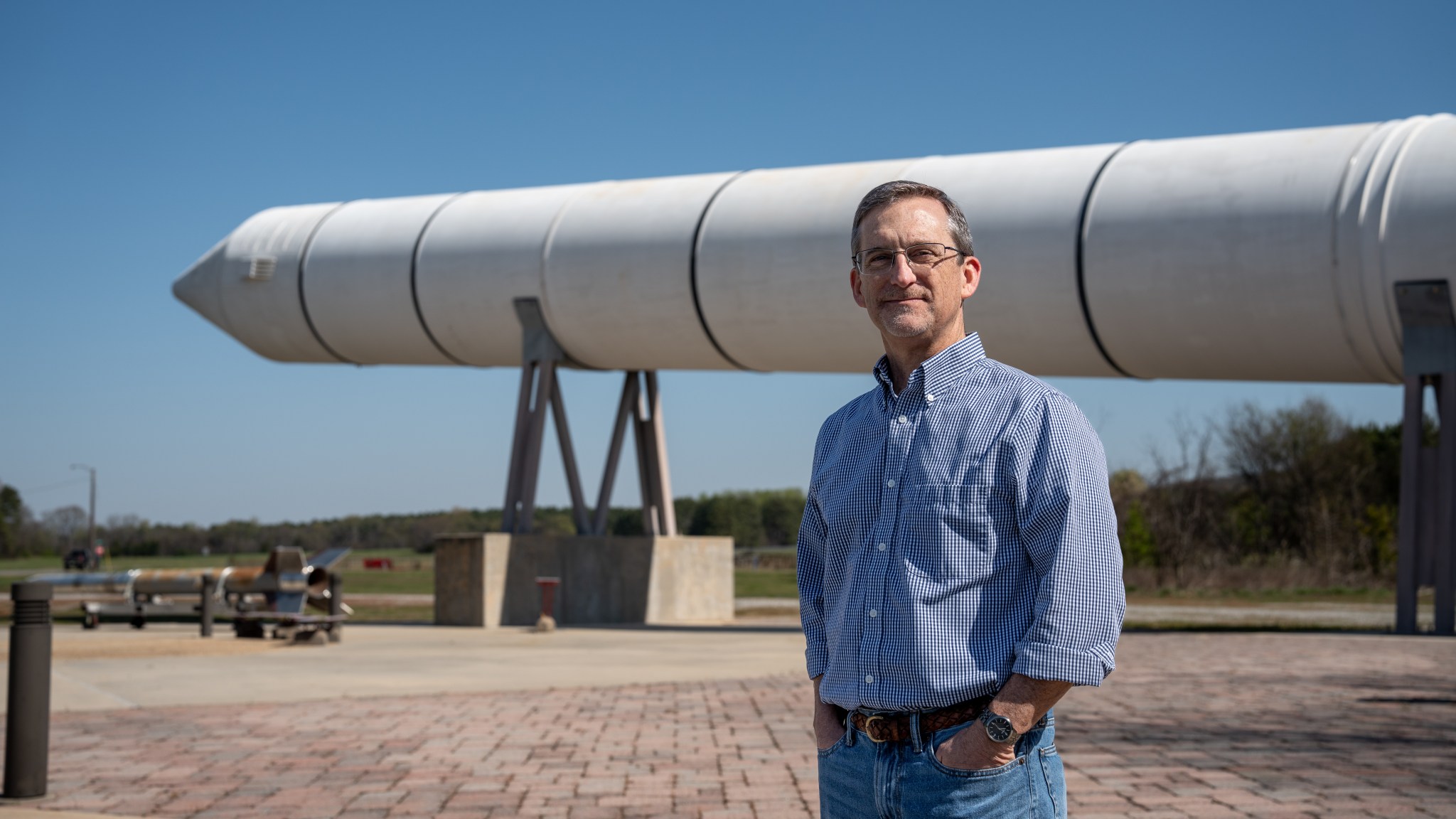
Mat Bevill, the associate chief engineer for NASA’s SLS (Space Launch System) Program, plays a crucial role in the development and flight of the SLS mega rocket. His NASA journey started as an intern, led him to have hands-on experience with solid rocket boosters, and landed him in the position of supporting the SLS Chief Engineer’s Office.
Mat Bevill, the associate chief engineer for NASA’s SLS (Space Launch System) Program, stands in front of a four-segment solid rocket booster that powered the space shuttle at NASA’s Marshall Space Flight Center in Huntsville, Alabama. 
NASA/Brandon Hancock

Significant events in history keep finding Mat Bevill. As the associate chief engineer for NASA’s SLS (Space Launch System) Program, Bevill assists the program chief engineer by interfacing with each of the element chief engineers and helping make critical decisions for the development and flight of the SLS mega rocket that will power NASA’s Artemis campaign. With the launch of Artemis II, the first crewed test flight of SLS and the Orion spacecraft, Bevill’s technical leadership and support for the SLS Chief Engineer’s Office will place him, once again, at a notable moment in time.

“Think of me as the assistant coach. While the head coach is on the front line leading the team, I’m on the sidelines providing feedback and advising those efforts,” said Bevill. As a jack-of-all-trades, he enables progress in any way that he can, something he’s familiar with after 37 years with NASA. And, on Nov. 16, 2022, as the SLS rocket roared to life for the first time with the Artemis I test flight, Bevill couldn’t help but reflect on a lifetime of experiences and lessons that led to that moment.

Bevill began his NASA career while he was still attending the University of Tennessee at Chattanooga. During his sophomore year as a mechanical engineer student, he applied for the agency’s internship program at NASA’s Marshall Space Flight Center in Huntsville, Alabama.

Just a few months before Bevill began his journey with NASA, the Challenger accident occurred, taking the lives of all seven crewmembers in January 1986. Bevill joined the Solid Motor Branch at Marshall as teams across the agency worked to understand the cause of the accident. It was a fast-paced environment, and Bevill had to learn quickly about the solid rocket boosters.

“It was a surreal experience, but I was privileged to work with those people. We were figuring out tough lessons together and working toward a common goal,” Bevill recalls.

Those tough lessons provided Bevill with tremendous hands-on experience related to the solid rocket booster hardware that would not only shape his career, but, later, the SLS rocket. The five-segment solid rocket boosters that provide more than 75% of thrust for SLS to go to the Moon are based on the same four-segment design that powered 135 shuttle missions to low Earth orbit. His experience from his time with the shuttle led him to deputy chief engineer for the SLS Boosters Office.

Just as for Artemis I, Bevill will be standing by and serving as the “assistant coach” for Artemis II as the SLS rocket, once again, takes flight and sends the first crewed Artemis mission around the Moon. “SLS has been the crowning jewel of my career, and I consider myself blessed to be a part of NASA’s history,” Bevill said.

SLS is part of NASA’s backbone for deep space exploration, along with the Orion spacecraft, advanced spacesuits and rovers, the Gateway in orbit around the Moon, and commercial human landing systems. SLS is the only rocket that can send Orion, astronauts, and supplies to the Moon in a single launch.

Powered by WPeMatico

Get The Details…
Lee Mohon

NASA Awards Promote Science, Technology, Engineering, Math Nationwide

NASA Awards Promote Science, Technology, Engineering, Math Nationwide

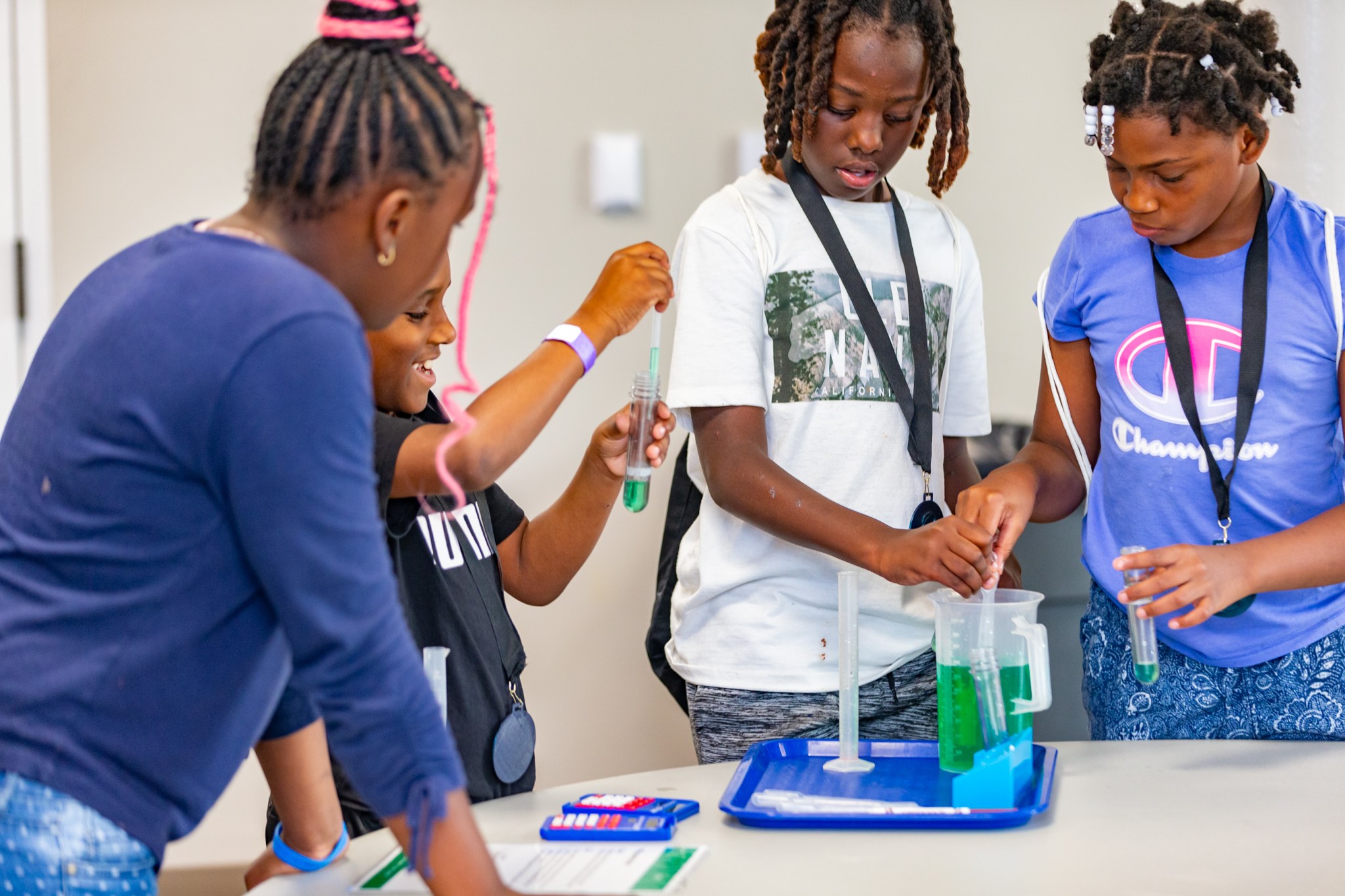
Orlando Science Center brings STEM engagement to the community via a weekly after school series, culminating in an Engineering Design Challenge.
Credits: Orlando Science Center

NASA is awarding approximately $3.7 million to 17 museums, science centers, and other informal education institutions as part of an initiative to ignite STEM excitement. The money will go toward projects that inspire students and their learning support systems to take an active role in the wonder of science, technology, engineering, and math.  

“We’re excited to grow the community of informal education organizations through these awards,” said Torry Johnson, deputy associate administrator of STEM Engagement Programs at NASA Headquarters in Washington. “These organizations bring the excitement of STEM and spaceflight to students where they are, helping us inspire the Artemis Generation of future explorers and innovators. These awards are a real catalyst for partnerships that connect STEM education and NASA’s missions to communities across the nation.”

Projects were selected for NASA’s Teams Engaging Affiliated Museums and Informal Institutions (TEAM II) program and TEAM II Community Anchor Awards. Both are funded through NASA’s Next Generation STEM project, which supports kindergarten to grade 12 students, caregivers, and formal and informal educators in engaging the Artemis Generation in the agency’s missions and discoveries. The selected projects will particularly engage students from underserved communities in a variety of STEM learning opportunities including exhibits, mentorship, educational content, and hands-on activities.

TEAM II Awards

NASA’s vision for TEAM II is to enhance the capability of informal education institutions to host NASA-based learning activities while increasing the institutions’ capacity to bring NASA resources to students. The agency has selected four institutions to receive approximately $3.2 million in cooperative agreements for projects they will implement during the next three to four years.

The selected institutions and their proposed projects are:

  • Franklin Institute, Philadelphia: NASA’s Next Advocates: Connecting Youth to NASA Through a Co-Created Near-Peer Mentorship Program
  • WEX Foundation, San Antonio: New Worlds Await You – Next Generation
  • Astrobotic Foundation, Pittsburgh: Cosmic Careers from the Earth to the Moon
  • EcoExploratorio, Inc., San Juan, Puerto Rico – Innovative Space Learning Activities Center: Living On and Beyond Earth

Community Anchor Awards

The designation as a Community Anchor recognizes institutions as locations that will bring NASA STEM and space science to students and families in traditionally underserved areas. The agency has selected 13 institutions to receive approximately $510,000 in grants to help make these one-to-two-year projects a reality, enhancing the local impact and strengthening their ability to build sustainable connections between their communities and NASA.
 
The selected institutions and their proposed projects are:

  • Exploration Works, Helena, Montana: Moon to Mars to Montana      
  • Montshire Museum of Science, Norwich, Vermont: Empowerment Through Climate Action     
  • Intrepid Museum Foundation, Inc., New York: NASA Explore Days
  • Discovery Place, Inc., Charlotte, North Carolina: NASA Community Space Stations
  • The Discovery Museum, Bridgeport, Connecticut: Using Community Science to Engage Underrepresented Youth in Authentic STEM Engagement and Research
  • Museum of Discovery and Science, Inc., Fort Lauderdale, Florida: Delivering NASA STEM Education Programs to Underserved Communities in Broward County
  • GrowingGreat, Manhattan Beach, California: Food in Space and in the City: Teens Tackle Food Security in Their Los Angeles Community
  • Cleveland Museum of Natural History, Cleveland: Expanding STEM/Astronomy Learning to Underserved Youth Communities
  • Evergreen Aviation & Space Museum, McMinnville, Oregon: Spaced Out! Fostering STEM Literacy in Students Grades 5 to 8: Through Immersive Space Science Learning Experiences
  • Ocean County College, Toms River, New Jersey: Family on Campus Using Science
  • San Diego Air & Space Museum, San Diego: Imagine the Future of Space
  • FL Newspaper in Educ Coordinator, Deerfield Beach, Florida: Increasing STEM Engagement Among Underserved Youth in Tampa Bay, Florida
  • STEM Advancement, Inc., Pinola, Mississippi: Equipping and Inspiring Rural Students with Space‐Related Experience

Next Gen STEM is a project within NASA’s Office of STEM Engagement, which develops unique resources and experiences to spark student interest in STEM and build a skilled and diverse next generation workforce.

For the latest NASA STEM events, activities, and news, visit:

https://stem.nasa.gov

-end-

Gerelle Dodson
Headquarters, Washington
202-358-4637
gerelle.q.dodson@nasa.gov

Powered by WPeMatico

Get The Details…
Lauren E. Low

NASA Selects Construction Management Services Acquisition Contractor

NASA Selects Construction Management Services Acquisition Contractor

NASA logo

NASA has selected small business Firelake-Arrowhead NASA Services Joint Venture of Lawrence, Kansas, to acquire construction management, inspection, surveying, and testing services at NASA centers across the country.

The Construction Management, Inspection, Surveying, and Testing (CMIST-II) contract was competed as a Small Business 8(a) set-aside, and the maximum contract value is approximately $38.8 million.

This is a hybrid contract with firm-fixed-price and cost-plus-fixed-fee for base services plus a firm-fixed price indefinite-delivery/indefinite aspect performed at NASA’s Glenn Research Center at Lewis Field in Cleveland and Neil Armstrong Test Facility in Sandusky, Ohio. It also will have a firm-fixed price indefinite-delivery/indefinite-quantity aspect, which can be performed at any NASA center.

The performance period begins Monday, April 1, and includes a 30-day phase-in period, a two-year base period, a two-year option, a one-year option, and a six-month option, with the potential to extend services through Nov. 30, 2029.

The contractor will manage construction projects and maintenance tasks from initial concepts through completion, including requirements development, design, construction, commissioning, activation, and turnover. Leidos, Inc., of Reston, Virginia, is a subcontractor.

For information about NASA and other agency programs, visit:

https://www.nasa.gov

-end-

Cheryl Warner
Headquarters, Washington
202-358-1600
cheryl.m.warner@nasa.gov

Jan Wittry
Glenn Research Center, Cleveland
216-433-5466
jan.m.wittry-1@nasa.gov

Share

Details

Last Updated

Mar 28, 2024

Powered by WPeMatico

Get The Details…
Abbey A. Donaldson