NASA Shares Two New Moon to Mars Architecture White Papers

NASA Shares Two New Moon to Mars Architecture White Papers

2 min read

Preparations for Next Moonwalk Simulations Underway (and Underwater)

View of the Nova-C landing area near Malapert A in the South Pole region of the Moon. North is to the right. Taken by LROC (Lunar Reconnaissance Orbiter Camera) NAC (Narrow Angle Camera). Credits: NASA/GSFC/Arizona State University
View of the Nova-C landing area near Malapert A in the South Pole region of the Moon. North is to the right. Taken by LROC (Lunar Reconnaissance Orbiter Camera) NAC (Narrow Angle Camera).
NASA/GSFC/Arizona State University

NASA has released two white papers associated with the agency’s Moon to Mars architecture efforts. The papers, one on lunar mobility drivers and needs, and one on lunar surface cargo, detail NASA’s latest thinking on specific areas of its lunar exploration strategy.

While NASA has established a yearly cadence of releasing new documents associated with its Moon to Mars architecture, the agency occasionally releases mid-cycle findings to share essential information in areas of interest for its stakeholders.

“Lunar Mobility Drivers and Needs” discusses the need to move cargo and assets on the lunar surface, from landing sites to points of use, and some of the factors that will significantly impact mobility systems.

“Lunar Surface Cargo” analyses some of the current projected needs — and identifies current capability gaps — for the transportation of cargo to the lunar surface.

The Moon to Mars architecture approach incorporates feedback from U.S. industry, academia, international partners, and the NASA workforce. The agency typically releases a series of technical documents at the end of its annual analysis cycle, including an update of the Architecture Definition Document and white papers that elaborate on frequently raised topics.

Under NASA’s Artemis campaign, the agency will establish the foundation for long-term scientific exploration at the Moon, land the first woman, first person of color, and its first international partner astronaut on the lunar surface, and prepare for human expeditions to Mars for the benefit of all.

You can find all of NASA’s Moon to Mars architecture documents at:

https://www.nasa.gov/moontomarsarchitecture

Share

Details

Last Updated

Jun 28, 2024

Related Terms

Powered by WPeMatico

Get The Details…
Gregory Mercer
Hubble Examines an Active Galaxy Near the Lion’s Heart

Hubble Examines an Active Galaxy Near the Lion’s Heart

2 min read

Hubble Examines an Active Galaxy Near the Lion’s Heart

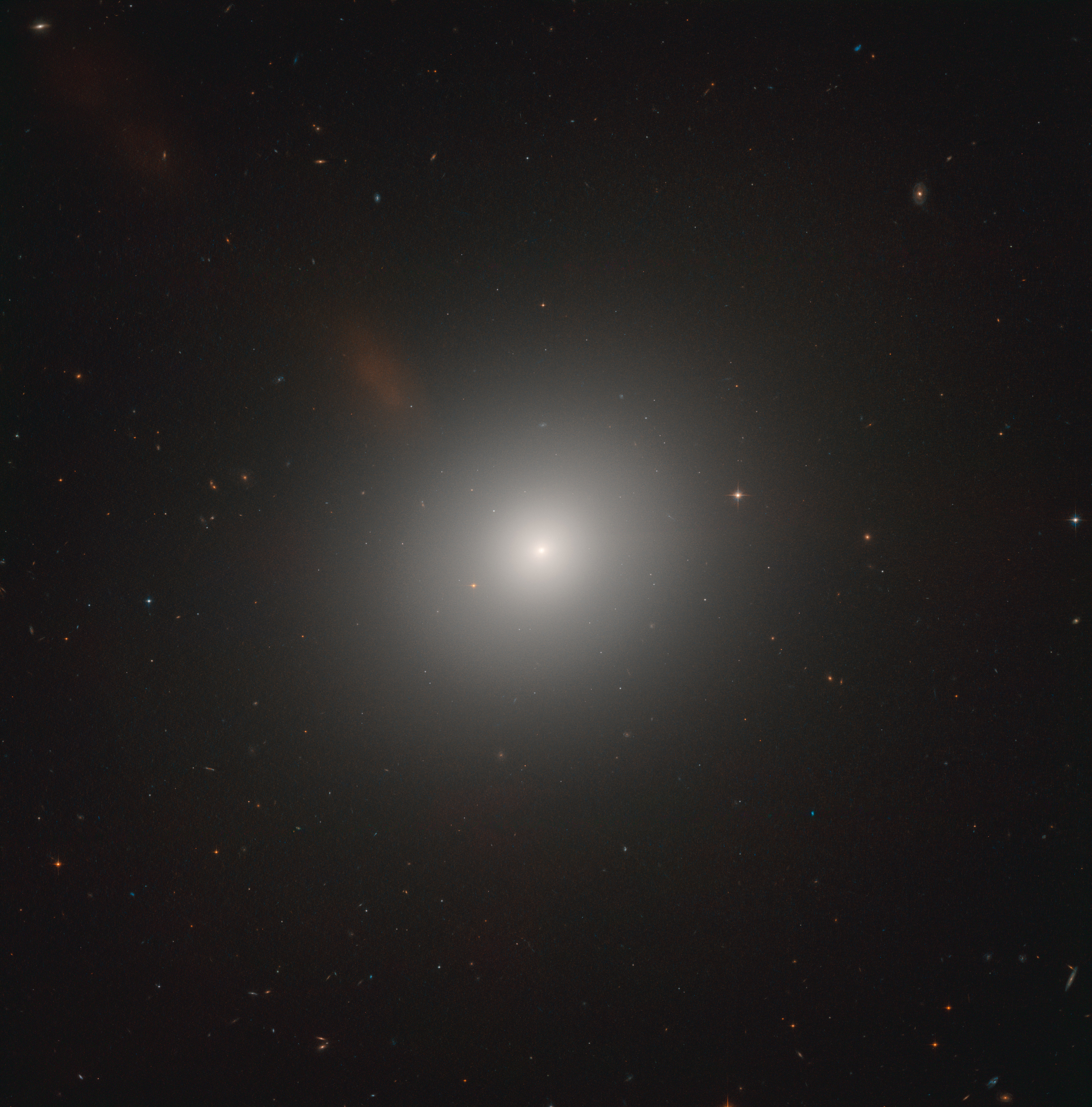
The bright-white, diffuse glow of an elliptical galaxy sits at image center. The galaxy's core appears as an intense-white circle that gets more diffuse as you move outward from the core. A rusty-red, diffuse cloud is visible to the upper-left of the galaxy. It extends to the upper-left corner of the image, where it is very faint. Black background dotted with foreground stars and distant galaxies.
This NASA/ESA Hubble Space Telescope features the elliptical galaxy Messier 105.
ESA/Hubble & NASA, C. Sarazin et al.

It might appear featureless and unexciting at first glance, but NASA/ESA Hubble Space Telescope observations of this elliptical galaxy — known as Messier 105 — show that the stars near the galaxy’s center are moving very rapidly. Astronomers have concluded that these stars are zooming around a supermassive black hole with an estimated mass of 200 million Suns! This black hole releases huge amounts of energy as it consumes matter falling into it, making the system an active galactic nucleus that causes the galaxy’s center to shine far brighter than its surroundings.

Hubble also surprised astronomers by revealing a few young stars and clusters in Messier 105, a galaxy thought to be “dead” and incapable of star formation. Astronomers now think that Messier 105 forms roughly one Sun-like star every 10,000 years. Astronomers also spotted star-forming activity in a vast ring of hydrogen gas encircling both Messier 105 and its closest neighbor, the lenticular galaxy NGC 3384.

Discovered in 1781, Messier 105 lies about 30 million light-years away in the constellation of Leo (The Lion) and is the brightest elliptical galaxy within the Leo I galaxy group.

Text Credit: European Space Agency (ESA)

Explore More

Media Contact:

Claire Andreoli
NASA’s Goddard Space Flight Center, Greenbelt, MD
claire.andreoli@nasa.gov

Powered by WPeMatico

Get The Details…

Sols 4226-4228: A Powerful Balancing Act

Sols 4226-4228: A Powerful Balancing Act

2 min read

Sols 4226-4228: A Powerful Balancing Act

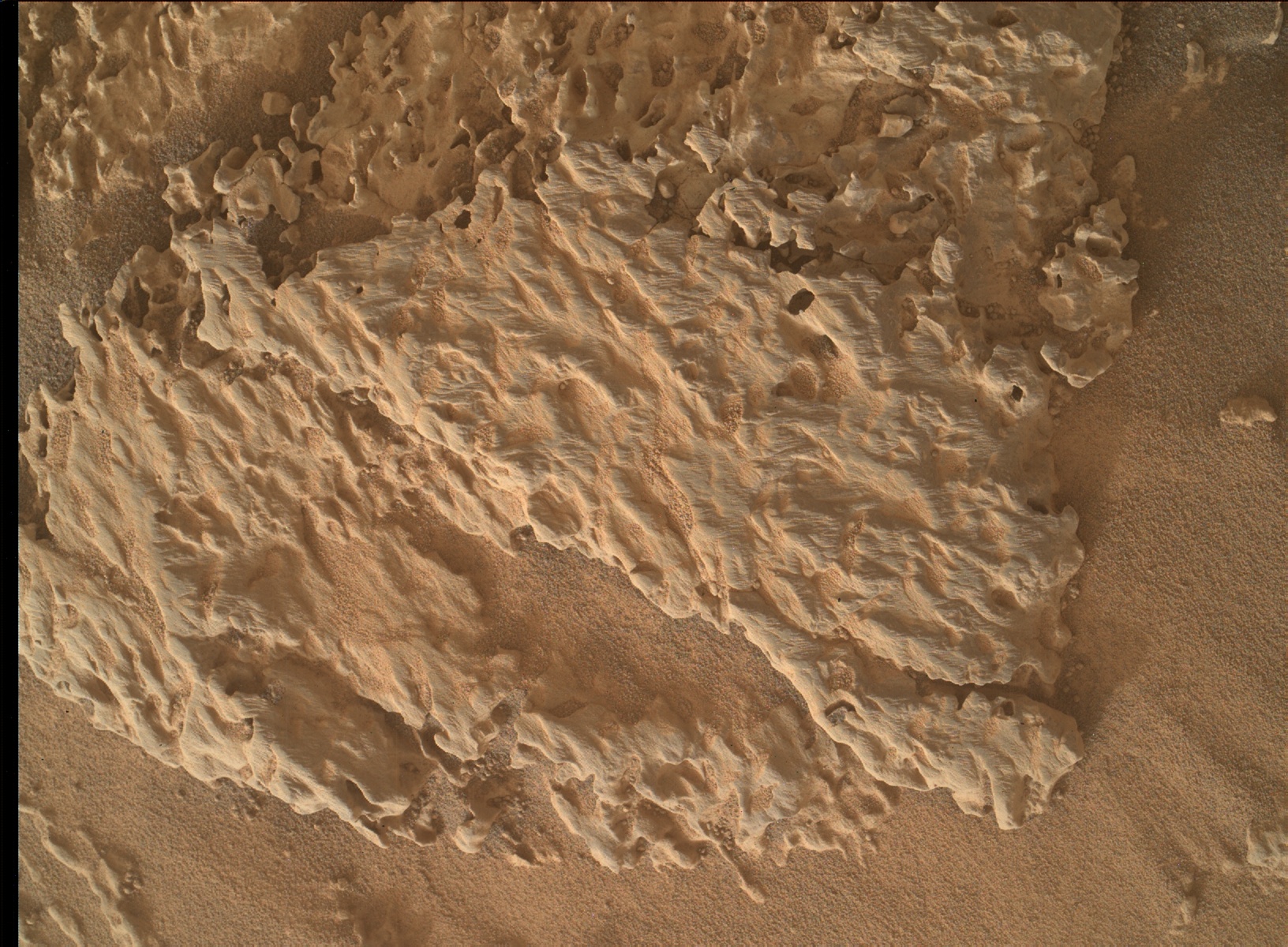
Pale orange terrain on the surface of Mars, with a sandy area creating a reverse
NASA’s Mars rover Curiosity acquired this image about 10 inches (25 centimeters) from the “Loch Leven” target using its Mars Hand Lens Imager (MAHLI) close-up camera, located on the turret at the end of the rover’s robotic arm, in daylight on June 16, 2024, sol 4216 (or Martian day 4,216) of the Mars Science Laboratory Mission, at 05:12:12 UTC.

Earth planning date: Tuesday, June 25, 2024

As documented in a previous blog last week, we continue to juggle power constraints as we focus on analyzing our newest drilled sample on Mars: “Mammoth Lakes 2.” Today, the star of the show is a planned dropoff to SAM (Sample Analysis at Mars instrument suite) and evolved gas analysis of the drill sample. This activity requires significant power so the team had to be judicious in planning other science observations and balancing the power needs of the different activities.

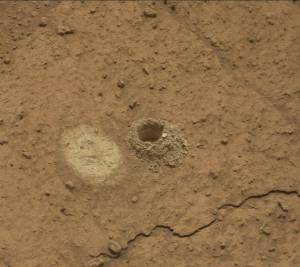
While the team eagerly awaits the outcome of the SAM and CheMin (Chemistry and Mineralogy X-Ray Diffraction instrument) analyses of Mammoth Lakes 2, we continue to acquire other observations in this fascinating area that will assist in our interpretations of the mineralogical data. ChemCam (the Chemistry and Camera instrument) will fire its laser at the “Loch Leven” target to get more chemical data on a target that was previously analyzed by APXS (the Alpha Particle X-Ray Spectrometer). “Loch Leven” is an example of gray material that rims the Mammoth Lakes drill block. The remote imaging capabilities of the ChemCam instrument will also be utilized to acquire a mosaic of a nearby area with interesting lighter- and darker-toned patches within the exposed rocks. Mastcam (Mast camera, for color stills and video) will document the ChemCam “Loch Leven” target and image the Mammoth Lakes 2 drill hole and surrounding fines to monitor any changes resulting from wind. We will also acquire extensions to two previous Mastcam mosaics: “Camp Four” and “Falls Ridge.”

To continue monitoring atmospheric conditions, the team also planned a Navcam (grayscale, stereoscopic Navigation cameras) large dust devil survey and Mastcam tau observation, an overhead image to measure dust in the atmosphere above Curiosity. Standard DAN (Dynamic Albedo of Neutrons instrument), REMS (Rover Environmental Monitoring Station), and RAD (Radiation Assessment Detector) activities round out the plan.

Written by Lucy Thompson, Planetary Geologist at University of New Brunswick

Share

Details

Last Updated
Jun 27, 2024

Related Terms

Powered by WPeMatico

Get The Details…

Interesting Rock Textures Galore at Bright Angel

Interesting Rock Textures Galore at Bright Angel

2 min read

Interesting Rock Textures Galore at Bright Angel

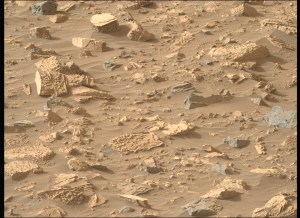
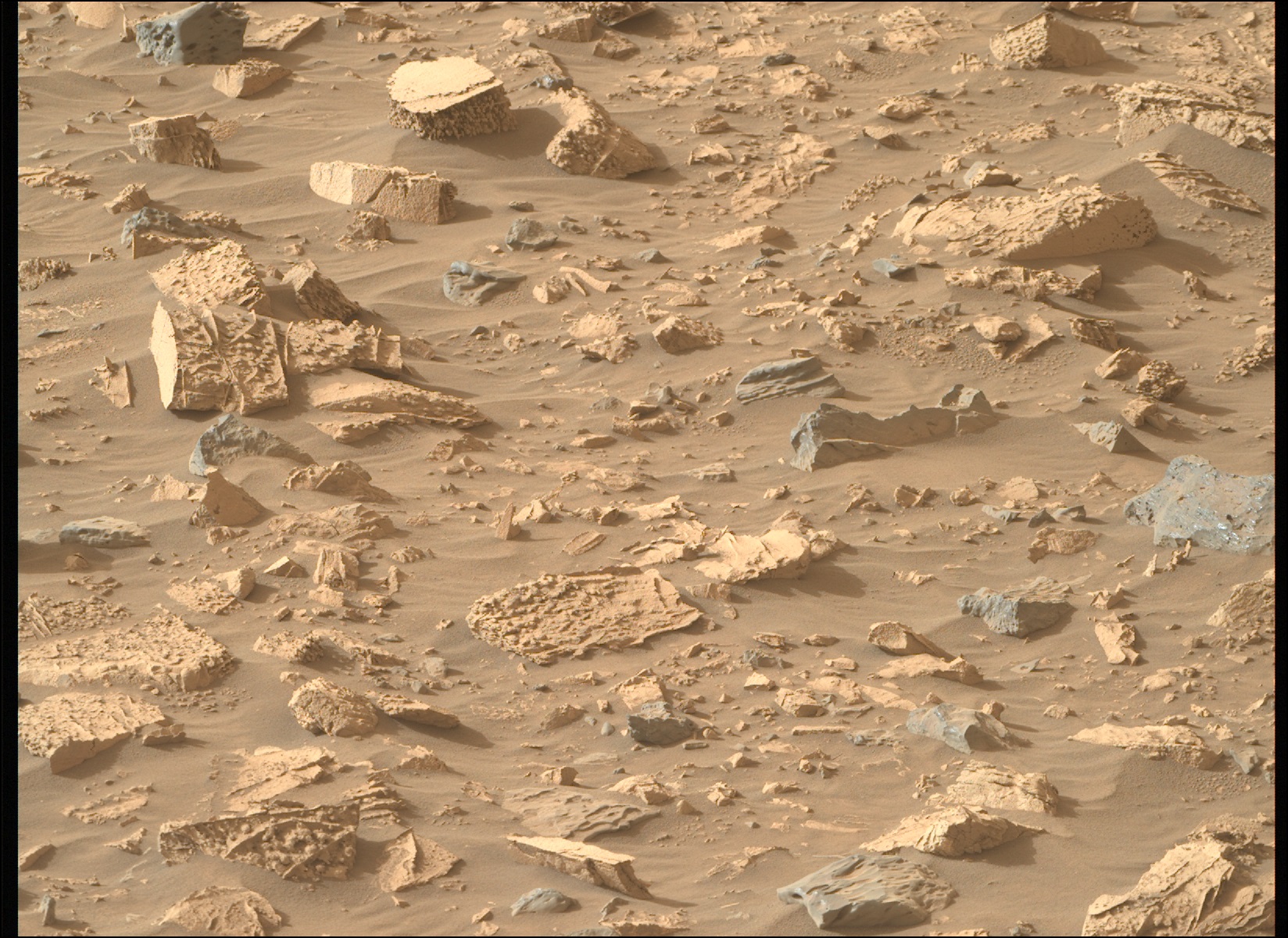
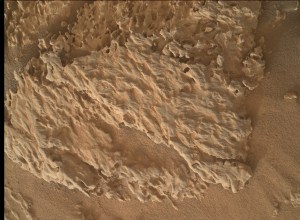
Rocky, pale-orange-colored terrain on Mars. What looks like fine-gran sand is interspersed with many jagged rocks pointing out of the ground; a few of the rocks are gray, not orange.
NASA’s Mars Perseverance rover acquired this image using its Right Mastcam-Z camera. Mastcam-Z is a pair of cameras located high on the rover’s mast. This image was acquired on June 10, 2024 (Sol 1175, or Martian day 1,175 of the Mars 2020 mission) at the local mean solar time of 14:04:57.

Upon the rover’s arrival at Bright Angel, it was so exciting to see all the interesting features in the rocks of this interval! In particular, these rocks contain an abundance of veins and nodules. Veins are linear features containing mineral crystals that often form thin plates or sheets that cut through the rocks and across other veins. Veins are often more resistant to erosion than the rocks they are found in so they stand out in raised relief. Nodules are small, rounded protrusions in the rocks. Nodules are often sites of mineral formation distinct from the surrounding rock.

Veins and nodules form when water flows through a rock, and minerals crystallize from this water in cracks and empty spaces within the rock. Features like this were previously observed by Perseverance during its exploration of the sedimentary rocks of the western fan, particularly during the “Fan Front Campaign” at Hogwallow Flats. However, these features have been sparse in the margin unit. The omnipresence of veins and nodules in the rocks of Bright Angel is truly striking. We hope to get more data on these interesting features over the next few weeks because they may signify intense water-rock interaction at this site!

Written by Hemani Kalucha, Ph.D. student at Caltech

Share

Details

Last Updated
Jun 27, 2024

Related Terms

Powered by WPeMatico

Get The Details…

Ongoing Spacewalk Preps, Science, and Plumbing Keep Crews Busy

Ongoing Spacewalk Preps, Science, and Plumbing Keep Crews Busy

NASA's Boeing Crew Flight Test astronauts Suni Williams and Butch Wilmore (at center) pose with Expedition 71 Flight Engineers (far left) Mike Barratt and Tracy C. Dyson (far right), both NASA astronauts, in their spacesuits.
NASA’s Boeing Crew Flight Test astronauts Suni Williams and Butch Wilmore (at center) pose with Expedition 71 Flight Engineers (far left) Mike Barratt and Tracy C. Dyson (far right), both NASA astronauts, in their spacesuits.

Preparations continue for the next spacewalk at the International Space Station planned for next week. In the meantime, the orbital residents are rebuilding advanced plumbing gear and servicing video and science hardware.

Beginning around 8:45 p.m. EDT on Wednesday, June 26 NASA instructed crews aboard the space station to shelter in their respective spacecraft as a standard precautionary measure after it was informed of a satellite break-up at an altitude near the station’s earlier Wednesday. Mission Control continued to monitor the path of the debris, and after about an hour, the crew was cleared to exit their spacecraft and the station resumed normal operations.

NASA Flight Engineers Tracy C. Dyson and Mike Barratt began Thursday morning reviewing procedures for a spacewalk that will see hardware replacements and installations, preparations for future upgrades on science gear, and photographic inspections of station pipelines. After lunchtime, the two astronauts turned on a computer that visualized the upcoming spacewalk tasks using 3D graphics. NASA will release an advisory soon announcing the spacewalking details and NASA TV coverage times.

NASA Flight Engineers Matthew Dominick and Jeanette Epps had a busy day with spacesuit maintenance, computer updates, and orbital plumbing. Dominick then worked in the Quest airlock during the afternoon recharging spacesuit batteries and dumping and filling the suit water tanks. Epps swapped out a hard drive on a science laptop computer then replaced plumbing components in the Tranquility module’s bathroom, also called the water and hygiene compartment.

Astronauts Butch Wilmore and Suni Williams, both from NASA’s Boeing Crew Flight Test, were back on orbital plumbing duty Thursday. The Starliner Commander and Pilot spent the afternoon preparing the rebuilt pressure control and pump assembly motor for installation in Tranquility’s bathroom.

The orbital outpost’s three cosmonauts relaxed part of Thursday morning before going right into their standard science maintenance tasks. Commander Oleg Kononenko and Flight Engineer Nikolai Chub first began outfitting cables on video cameras. Kononenko then replaced video systems hardware in the Zvezda service module as Chub studied ways to create new materials on the lunar surface. Flight Engineer Alexander Grebenkin photographed microbe samples, dismantled a science cooler, then cleaned air ducts in the Nauka science module.


Learn more about station activities by following the space station blog, @space_station and @ISS_Research on X, as well as the ISS Facebook and ISS Instagram accounts.

Get weekly video highlights at: https://roundupreads.jsc.nasa.gov/videoupdate/

Get the latest from NASA delivered every week. Subscribe here: www.nasa.gov/subscribe

Powered by WPeMatico

Get The Details…

Mark Garcia