NASA Shares Medical Expertise with New Space Station Partners

NASA Shares Medical Expertise with New Space Station Partners
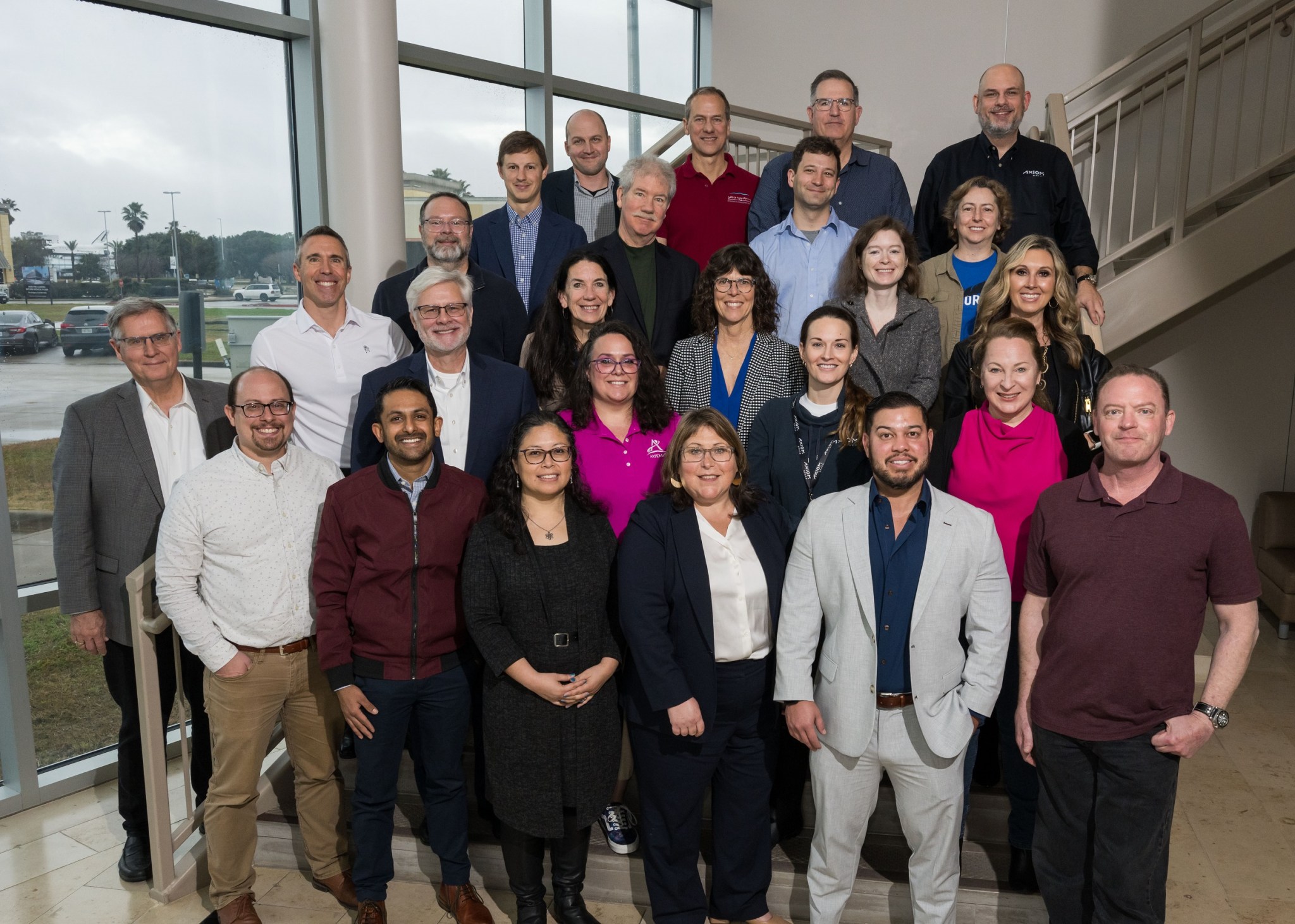
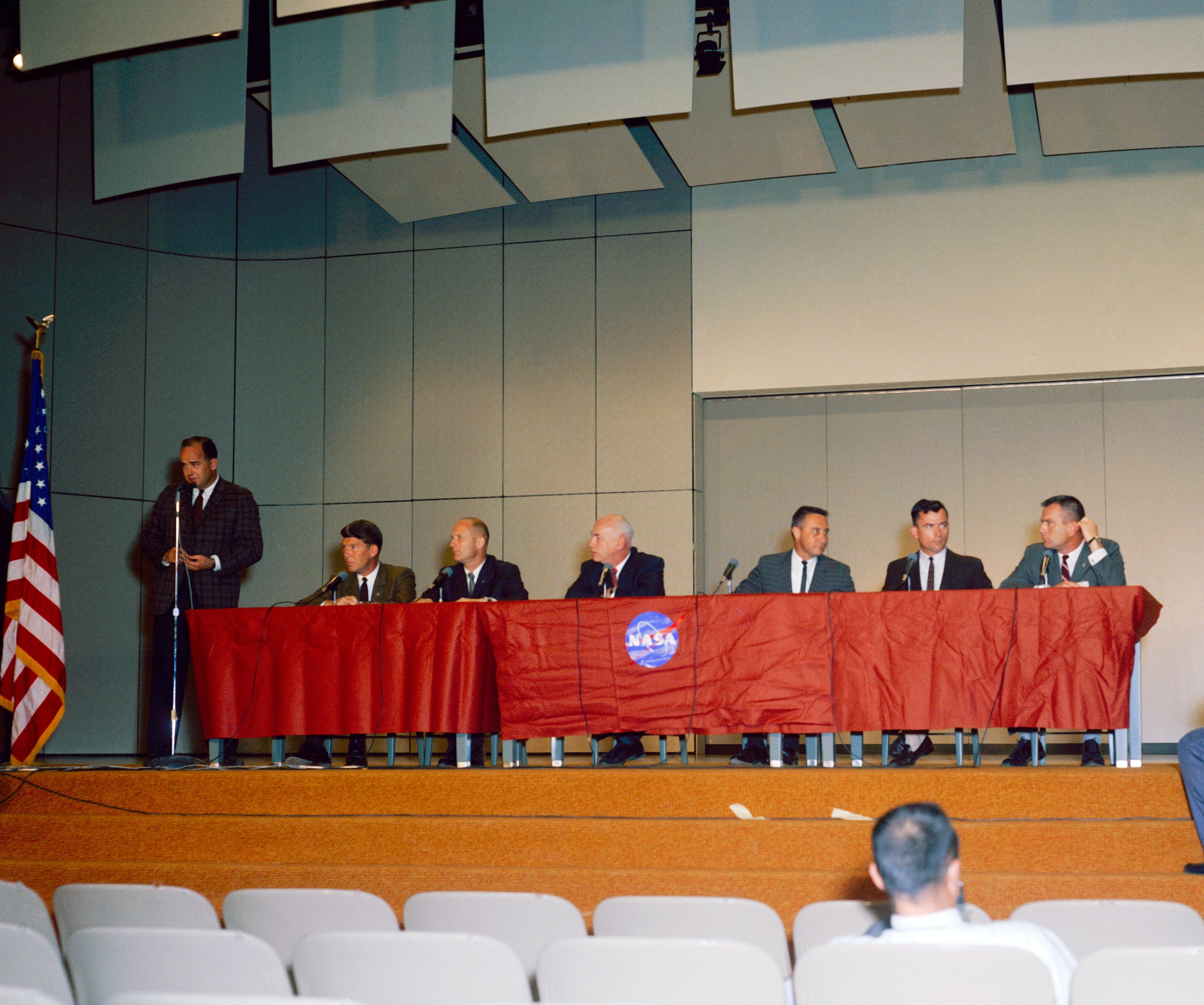
NASA experts from the Commercial Low Earth Orbit Development Program and Human Health and Performance Directorate with the agency’s commercial space station partners at the medical operations meeting series at Johnson Space Center in Houston (from top to bottom, left to right: Ben Easter, Dan Buckland, Tom Marshburn, Brian Musselman, Ted Duchesne, Darren Locke, Stephen Hart, Dana Levin, Liz Warren, Kris Lehnhardt, Kristin Coffey, Mary Van Baalan, Molly McCormick, Stephanne Plogger, John Allen, Brad Rhodes, Kimberly-Michelle Price Lowe, Lindsey Hieb, Anna Grinberg, Jay Boucher, Rahul Suresh, Jackeylynn Silva-Martinez, Melinda Hailey, Joey Arias, Wayne Surrett).
NASA/David DeHoyos

NASA is opening access to space for more people by working with private industry on the development of new commercial space stations for low Earth orbit where the agency’s astronauts could fly in the future.

New commercial space stations will be available to people beyond government or professional astronauts with years of specialized training and evaluation, so NASA is sharing its lessons learned from decades of human spaceflight experience, including more than 25 years of International Space Station operations, to help ensure future flights are as safe as possible for potential fliers.

“Since the majority of orbital human spaceflight programs have been owned and operated by governments, there are few industry best practices or established government regulations that inform maintaining the health and safety of humans during orbital spaceflight missions,” said Dr. Rahul Suresh, medical officer, Commercial Low Earth Orbit Development Program, NASA Johnson Space Center in Houston. “NASA is keen to fill this void by sharing its practices to assist and inform nascent commercial spaceflight programs and to ensure they are prepared to host future agency crewed missions aboard their platforms.”

Dr. Rahul Suresh, NASA Commercial Low Earth Orbit Development Program medical officer, participates in a discussion during the medical operations meeting series. Topics of discussion included medical risk management, medical selection standards, medical system design, and more.
NASA/David DeHoyos

NASA recently hosted a meeting series at the agency’s Johnson’s Space Center in Houston to share a variety of medical standards, processes, best practices, along with providing access to subject matter experts. Commercial companies in attendance included Axiom Space, Blue Origin, Sierra Space, SpaceX, Vast, and Voyager Space. All companies are working with the agency through funded or unfunded agreements for commercial space station development.

During the meetings and overall development process, the agency is offering guidance for evaluation of potential spaceflight participants from selection and training to in-flight and post-flight support, which are crucial to a platform’s success.

People may be living and working the commercial destinations for different purposes and for different lengths of time. Commercial providers will need to ensure people are ready to fly their mission for the safety of the individual, other fliers, and the destination.

Astronaut selection, training
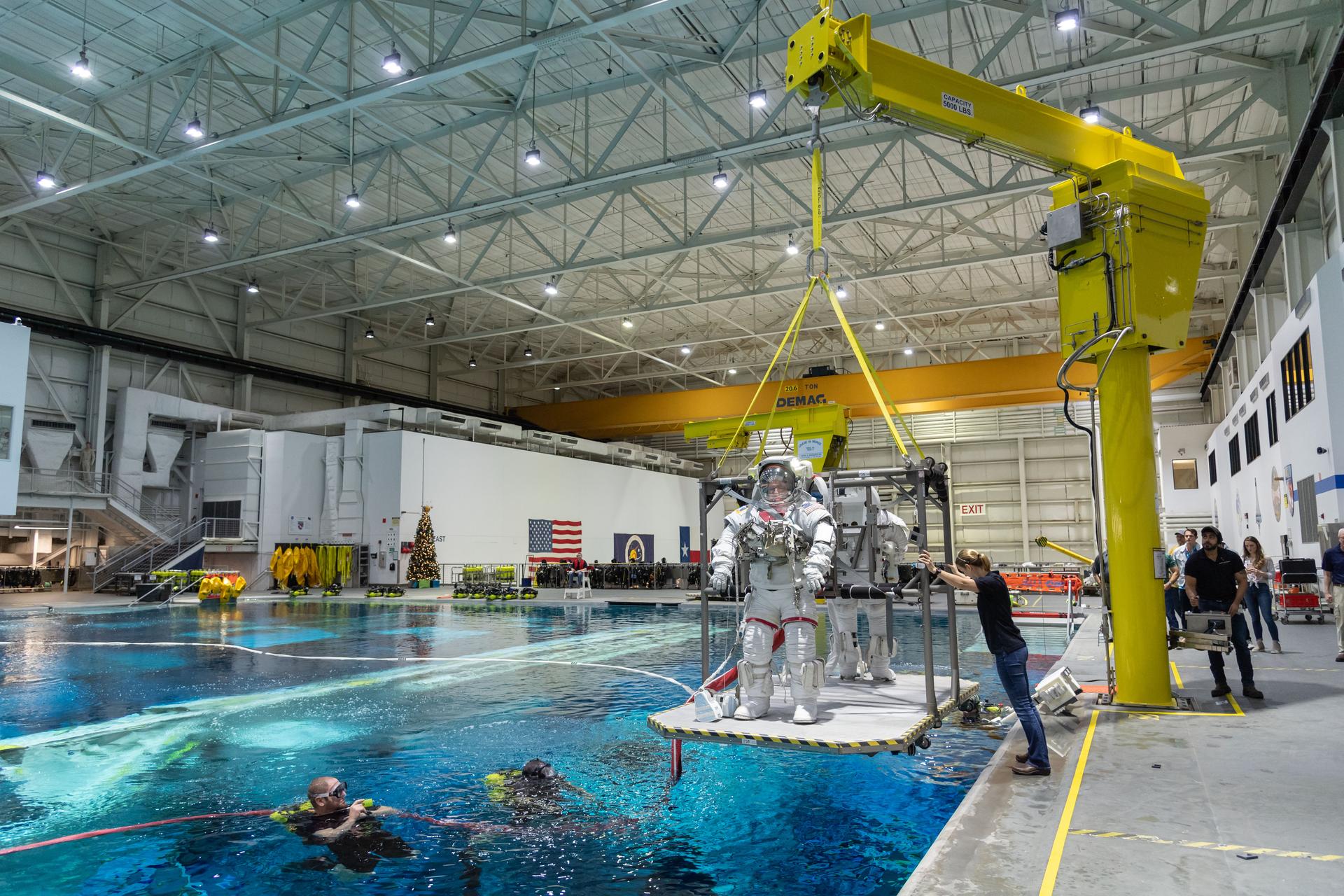
Commercial Crew Program astronaut Barry “Butch” Wilmore prepares for Expedition 62 International Space Station spacewalk maintenance training at NASA’s Neutral Buoyancy Lab in Houston on Nov. 30, 2018.
NASA/Robert Markowitz

NASA astronauts undergo a rigorous selection process and years of training prior to a mission. For example, the astronaut candidate selection process includes a behavioral health screening program implemented by qualified psychologists and psychiatrists through multiple evaluation methods including validated screen tests, structured interviews, and observation of operational simulations to ensure that the assessments provide a comprehensive measure of a candidate’s behavioral health.

These evaluations help identify important traits such as problem-solving, teamwork, leadership, self-regulation, resilience, and adaptability – traits that NASA has found are directly related to success during training and spaceflight. They also identify disqualifying psychiatric conditions.

NASA has already shared and implemented similar screening requirements, including psychiatric evaluations and psychological testing, for recent private astronaut missions. The agency has publicly released its astronaut medical selection standards that includes both physiological and psychological testing requirements with screening criteria to enable success of these future platforms and commercial missions.

In-flight and post-flight support
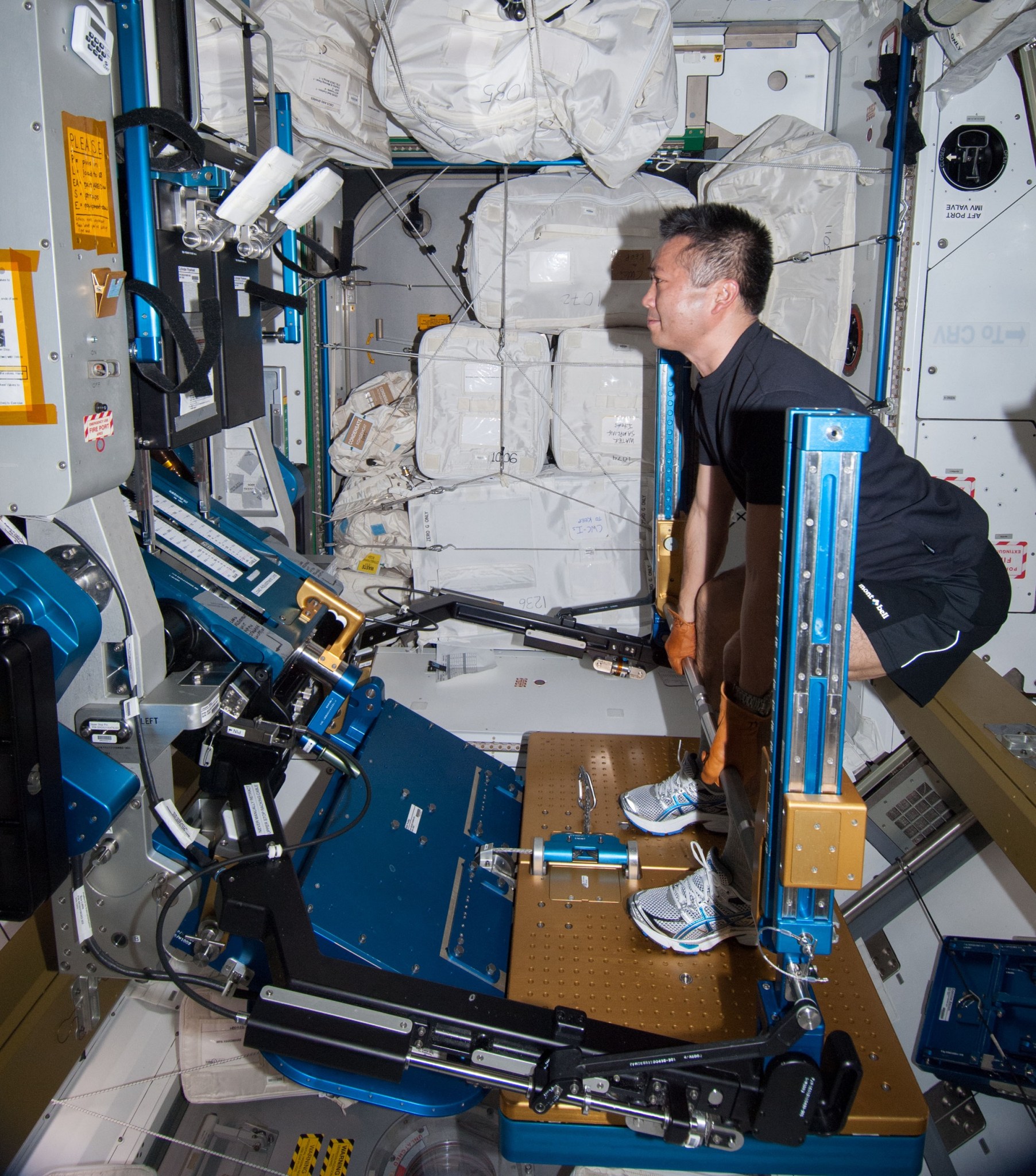
View of Koichi Wakata, Expedition 38 flight engineer, exercising on the Advanced Resistive Exercise Device, in Node 3 on the International Space Station on Nov. 15, 2013.
NASA

Additionally, spaceflight poses numerous risks to maintaining the health and performance of astronauts during their missions. For example, the microgravity environment in low Earth orbit can cause bones and muscles to weaken, elevated radiation increases the long-term risk of conditions such as cancer and cataracts, and even otherwise healthy astronauts can develop life-threatening medical conditions such as kidney stones.

NASA has gained a wealth of knowledge over the years on the impacts of space on the human body and has been able to employ countermeasures to prevent these issues and maintain astronaut performance to ensure mission success. For instance, astronauts aboard the station exercise about one hour per day and eat a will balanced nutritional diet to combat bone density and muscle mass losses.

Even with countermeasures in place, astronauts still experience some physiological changes during a mission. Therefore, once an astronaut crew returns to Earth, there is a period of post-flight reconditioning, which begins on landing day and lasts for about 45 days. This reconditioning program is designed to return astronauts to their pre-flight physical condition.

The complex medical operations that go into any spaceflight mission, starting with astronaut selection and training though post-flight support, are critical for commercial space station partners to understand.

“After the success of our payload operations meeting series hosted at the agency’s Marshall Space Flight Center in Huntsville, Alabama, earlier this year, this medical operations series is another great example of how we are providing immense value to our commercial low Earth orbit partners to ensure their success,” said Angela Hart, manager for NASA’s Commercial Low Earth Orbit Development Program. “By enabling companies to have unique access to NASA experts and data, we are actively supporting those build schedules to be ready for the retirement of the space station.”
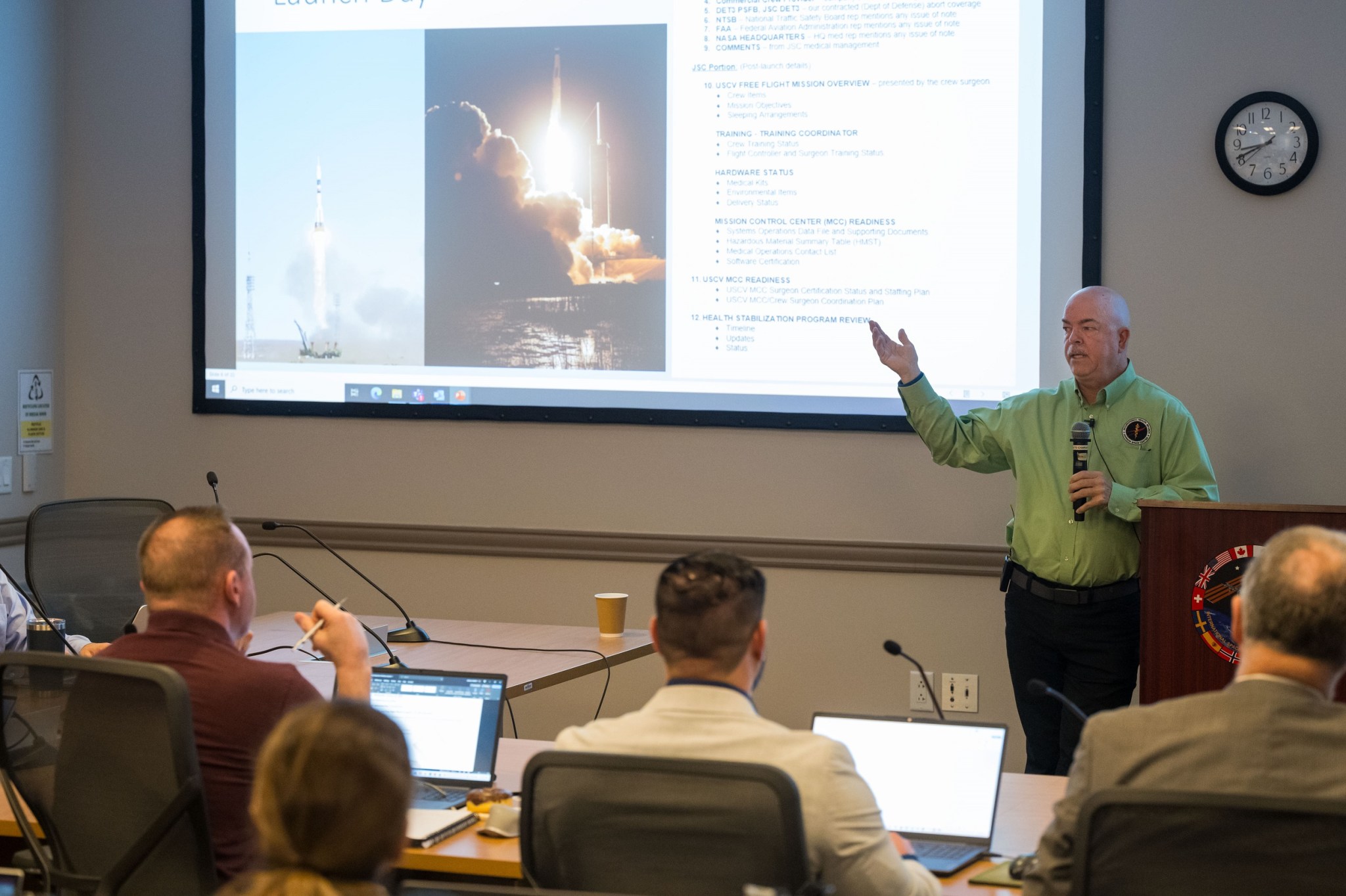
NASA flight surgeon Dr. William Tarver delivers a presentation on post-launch medical support, mission readiness, and NASA’s health stabilization program.
NASA/David DeHoyos

NASA plans to continue providing best practices documents on its public website along with offering additional meeting series in the future to commercial partners to continue the sharing of knowledge to enable a successful commercial space ecosystem.

For more information about NASA’s commercial space strategy, visit:

https://www.nasa.gov/humans-in-space/commercial-space/
Powered by WPeMatico

Get The Details…
Ana Guzman

NASA’s Lola Fatoyinbo Receives Royal Geographical Society Prize

NASA’s Lola Fatoyinbo Receives Royal Geographical Society Prize

3 min read

Preparations for Next Moonwalk Simulations Underway (and Underwater)

A woman is centered in the image seen from the waist up and is wearing a bright red colored short. She also has a black backpack on her back. Her body is facing towards the right side of the image while her head is facing the camera. Surrounding and behind the woman are several branches, criss-crossing in different directions.
During a research trip to Fiji, Dr. Lola Fatoyinbo poses in a cluster of coastal mangroves, just one of the aspects of forested and coastal ecosystems that she studies.
Courtesy of Dr. Lola Fatoyinbo

Dr. Lola Fatoyinbo, a research scientist at NASA’s Goddard Space Flight Center in Greenbelt, Maryland, received the Esmond B. Martin Royal Geographical Society (RGS) Prize on April 8 in London. The prize, according to the RGS, recognizes “outstanding achievement by an individual in the pursuit and/or application of geographical research, with a particular emphasis on wildlife conservation and environmental research studies.”

The late and renowned conservationist Esmond Bradley Martin founded the annual prize via a bequest; Fatoyinbo is the second recipient. The Esmond B. Martin Royal Geographical Society Prize recognizes outstanding achievement by individuals undertaking research into wildlife conservation and environmental studies, reflecting Esmond’s tireless work for the protection of wildlife and our natural environment.

Fatoyinbo is part of the Biospheric Sciences Lab at NASA Goddard, where she develops and uses advanced remote sensing technologies and data to understand forested and coastal ecosystems. The lab also studies mathematical modelling and advanced analytical techniques that allows scientists to characterise and predict environmental changes due to natural and anthropogenic processes at local to global scales.

“I am deeply honored and grateful to receive this award,” Fatoyinbo said. “Being the recipient right after Dr. Paula Kahumbu, whose work and mission I admire, and in the name of Esmond Bradley Martin, is inspiring and humbling. This recognition also profoundly motivates me to continue producing the environmental data and knowledge that I believe will help protect life on our planet.”

Fatoyinbo has authored or co-authored 60 publications in scientific journals, and she has also partnered with organizations to help protect ecosystems and provide pathways for her research to inform policy decisions.

“In her work, Lola manages to accomplish something of an engineering-theoretical, ecology applications trifecta,” said Woody Turner, NASA’s program manager for ecological conservation, NASA Headquarters in Washington. “By using complex active remote sensing from radars and lidars, she tests cutting edge theories of how tropical and subtropical coastal systems function. But she does all that without losing sight of the practical applications of her team’s work for real people making real decisions in dynamic environments. That kind of synthesis is very difficult to achieve and arises only from an extremely curious individual. Lola brings it all together.”

Her work on airborne light detection and ranging, or lidar, and satellite imagery campaigns after Hurricane Irma in the Caribbean, the impact of oil exploration in the Niger Delta, and studies of mangrove forests across the Americas, Africa, and Asia, have increased global understanding of some of Earth’s most critical systems and supported the voices of those that depend on them.

Fatoyinbo said she is also dedicated to training and mentoring the next generation of scientists looking to understand and help protect our home planet, starting with the junior researchers in her lab.

“Lola’s work exemplifies how geographical research has a real-world impact,” said Nigel Clifford, RGS president and chair of the awarding panel. “Her commitment to ensuring that scientific study influences policy shows true leadership in conservation and environmental research and makes her the perfect recipient for the Esmond B. Martin Royal Geographical Society Prize.”

The Royal Geographical Society (with the Institute of British Geographers) is the learned society and professional body for geography. Formed in 1830, their Royal Charter of 1859 is for the advancement of geographical science.

By Jake Richmond
NASA’s Goddard Space Flight Center, Greenbelt, MD

Share

Details

Last Updated

Apr 08, 2024

Location
Goddard Space Flight Center

Powered by WPeMatico

Get The Details…
Erica McNamee

60 Years Ago: Gemini 1 Flies a Successful Uncrewed Test Flight

60 Years Ago: Gemini 1 Flies a Successful Uncrewed Test Flight

On April 8, 1964, Gemini 1 successfully completed the first uncrewed test flight of the Gemini spacecraft and its Titan II booster. The three-orbit mission proved the structural integrity of the spacecraft and the launch vehicle, paving the way for a second uncrewed test flight and ultimately missions with astronauts. The primary goals of Project Gemini included proving the techniques required for the Apollo Program to fulfill President John F. Kennedy’s goal of landing a man on the Moon and returning him safely to Earth before the end of the decade. Of primary importance, Gemini demonstrated the rendezvous and docking techniques necessary to implement the Lunar Orbit Rendezvous method NASA chose for the Moon landing mission. Additionally, Gemini proved that astronauts could work outside their spacecraft during spacewalks and that spacecraft and astronauts could function for at least eight days, considered the minimum time for a roundtrip lunar mission.

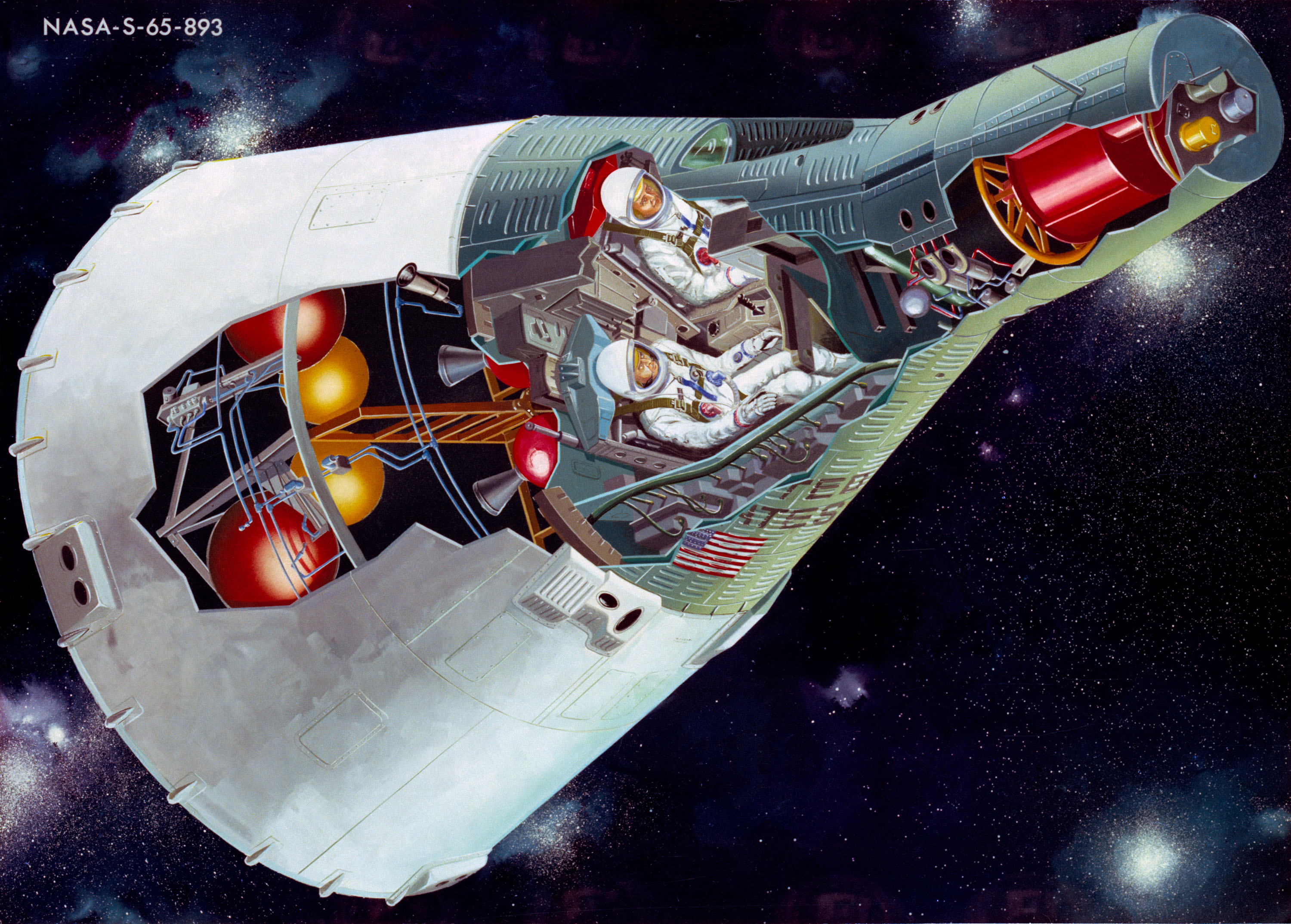
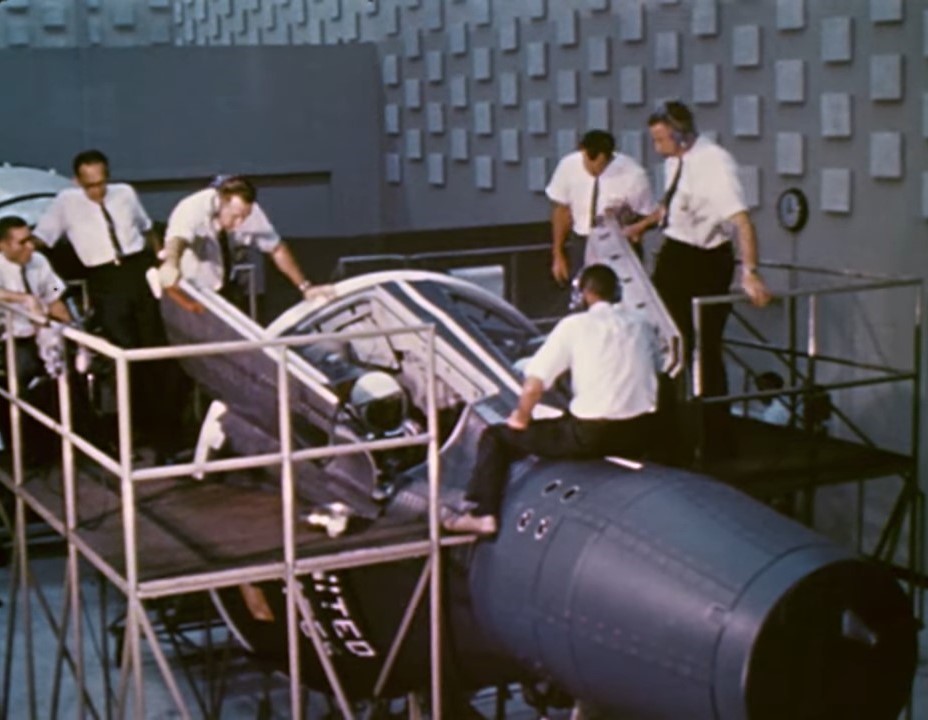
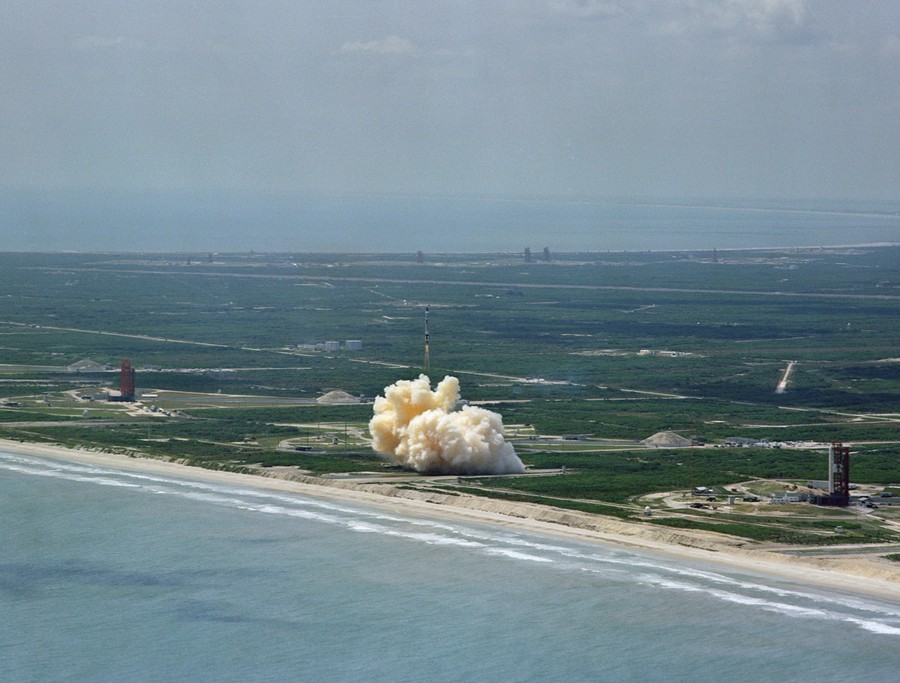
Cutaway diagram of the Gemini spacecraft Workers at the McDonnell plant in St. Louis examine a Gemini spacecraft mockup Workers at Martin Marietta’s Baltimore facility test Gemini 1’s Titan II rocket
Left: Cutaway diagram of the Gemini spacecraft. Middle: Workers at the McDonnell plant in St. Louis examine a Gemini spacecraft mockup. Right: Workers at Martin Marietta’s Baltimore facility test Gemini 1’s Titan II rocket.

Wedged between the pioneering Project Mercury and the historic Apollo missions to the Moon lies the less-heralded Project Gemini. The project’s 12 missions, two uncrewed test flights and 10 crewed missions, bridged the gap between Mercury that proved human spaceflight possible, and that Apollo could achieve President Kennedy’s goal. The Gemini missions flown between April 1964 and November 1966 demonstrated all the techniques required to make Apollo possible and gave astronauts the necessary training and flight experience while maturing the ground support infrastructure. The Gemini spacecraft grew out of studies for an upgraded Mercury capsule with an extended orbital life that could carry two astronauts and maneuver in space. On Dec. 7, 1961, NASA approved the development of the two-seat spacecraft, giving the contract to the McDonnell Corporation of St. Louis, the same company that built Mercury. To launch the spacecraft, NASA ordered the modification of the U.S. Air Force’s Titan II missile, built by the Martin Marietta Corporation in Baltimore. On Jan. 13, 1962, NASA officially named the project Gemini and established a formal Gemini Project Office later that month. But before any astronauts took flight aboard a Gemini spacecraft, it required thorough testing with a crew.

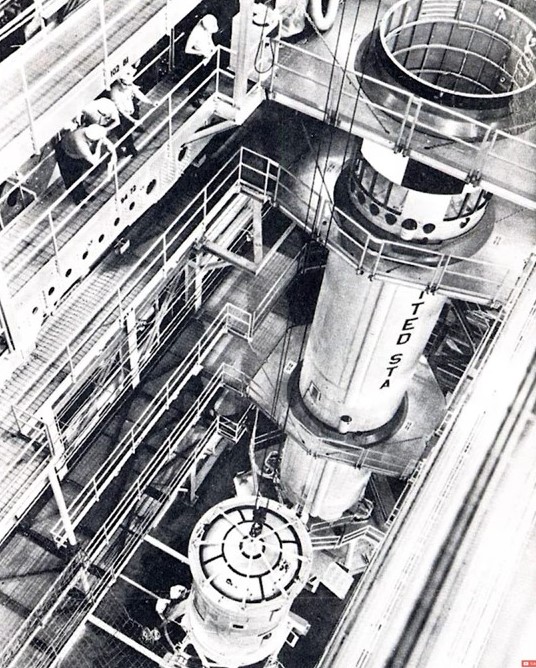
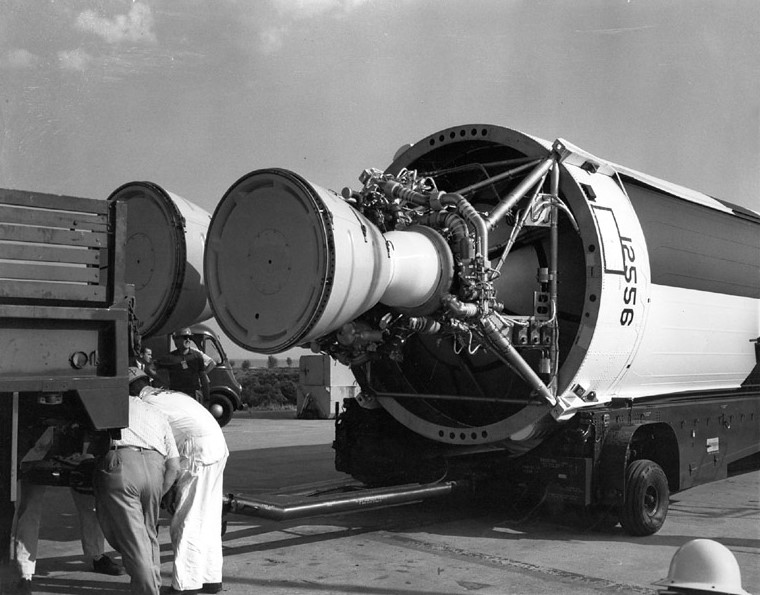
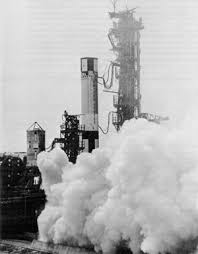
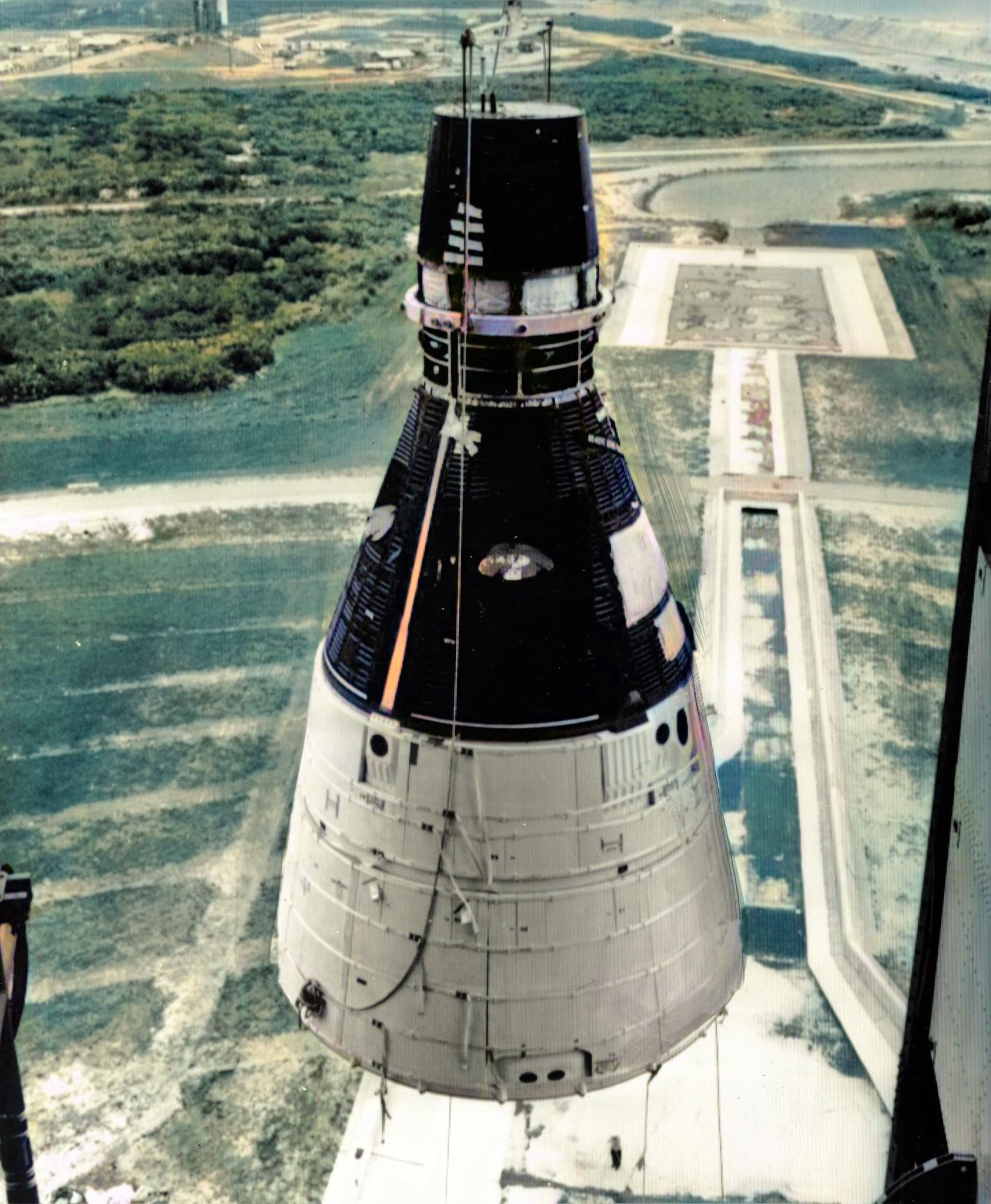
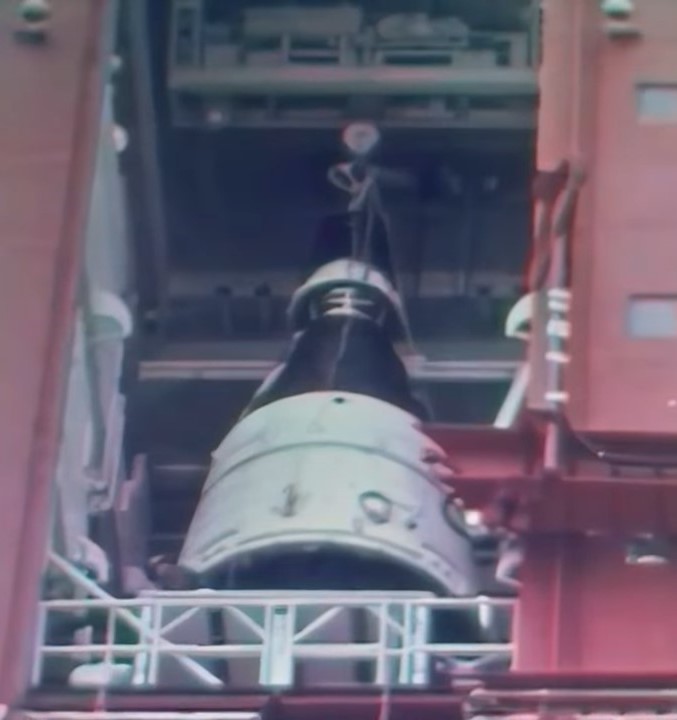
The first stage of Gemini 1’s Titan II rocket arrives at Cape Canaveral’s Launch Pad 19 Static test of the Titan II’s two stages Workers lift Gemini 1 to mate it with its Titan II rocket Workers lower Gemini 1 onto its Titan II rocket
Left: The first stage of Gemini 1’s Titan II rocket arrives at Cape Canaveral’s Launch Pad 19. Middle left: Static test of the Titan II’s two stages. Middle right: Workers lift Gemini 1 to mate it with its Titan II rocket. Right: Workers lower Gemini 1 onto its Titan II rocket.

The agency approved the Gemini spacecraft design on March 31, 1962. The first spacecraft for the uncrewed Gemini 1 test mission arrived at Cape Canaveral on Oct. 4, 1963. In lieu of the two crew ejection seats, the spacecraft contained instrument pallets to monitor and record conditions during the mission. The Titan II rocket for Gemini 1 arrived at Cape Canaveral on Oct. 26 and three days later workers first stacked its two stages in a side-by-side configuration on Launch Pad 19 to prepare for the sequence compatibility test. That test, successfully carried out on Jan. 21, 1964, consisted of 30-second sequential static firings of the two stages. Following the test, workers vertically stacked the two stages and on March 5 mounted and mechanically mated the Gemini spacecraft to the second stage. Engineers completed a simulated countdown on April 2 and a simulated flight test on April 5, leading to the start of the countdown to launch on April 7.

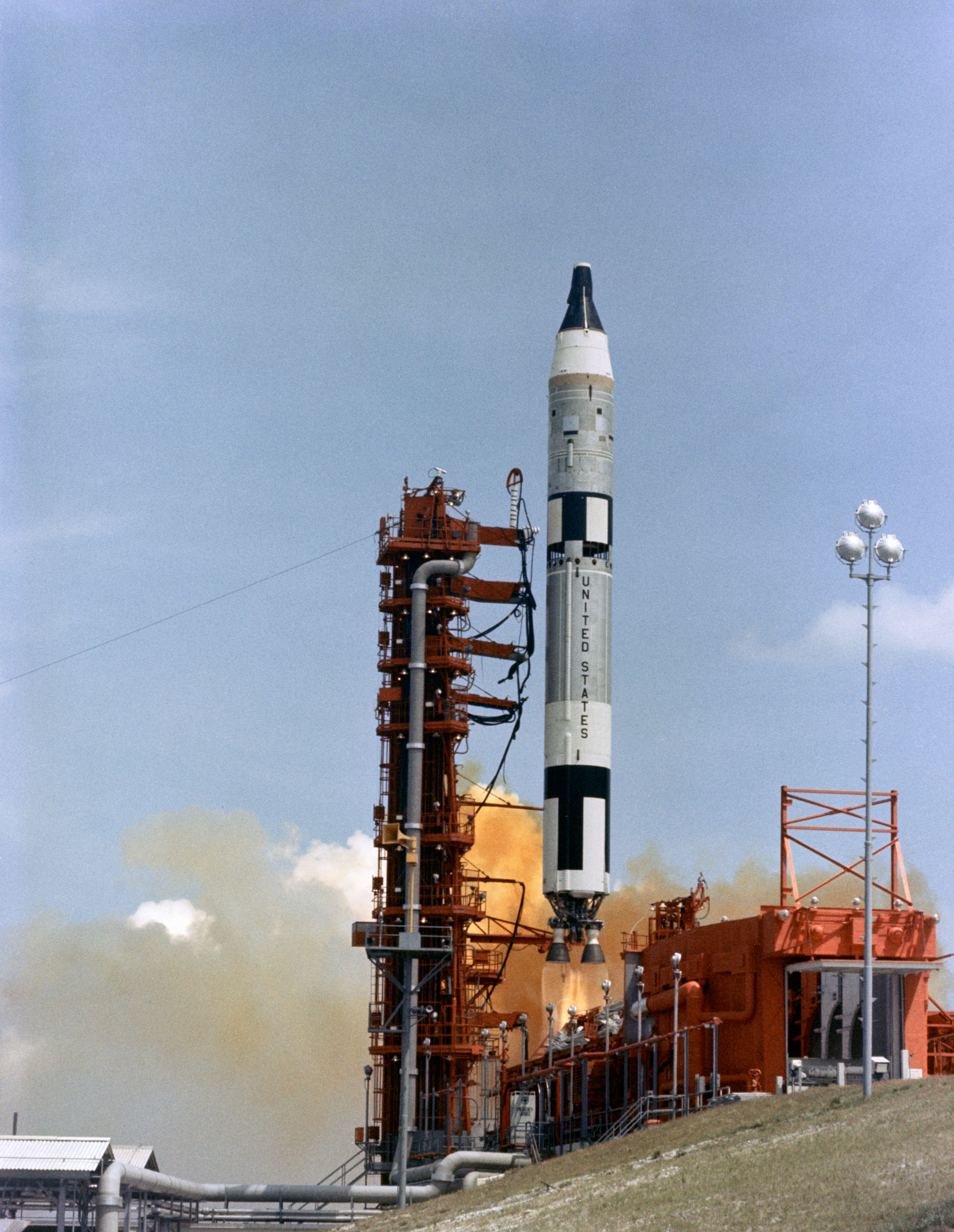
Liftoff of Gemini 1 from Launch Pad 19 Aerial view of Gemini 1 rising from Launch Pad 19 Gemini 1 continues its ascent to space
Left: Liftoff of Gemini 1 from Launch Pad 19. Middle: Aerial view of Gemini 1 rising from Launch Pad 19. Right: Gemini 1 continues its ascent to space.

On April 8, 1964, at 11:00 a.m. EST, Gemini 1 lifted off from Launch Pad 19. The primary objectives of the mission included verifying the structural integrity of the Titan II launch vehicle and the Gemini spacecraft, and the ability of the rocket to place the spacecraft into the proper orbit. After five minutes and 37 seconds of powered flight, during which the expended first stage dropped away and the second stage completed the ascent, Gemini 1, still attached to the second stage, achieved orbit. The slightly higher than expected velocity imparted to the spacecraft resulted in placing it in an orbit 21 miles higher than expected, an anomaly not considered serious.

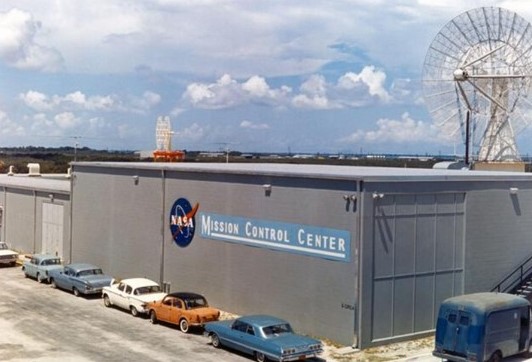
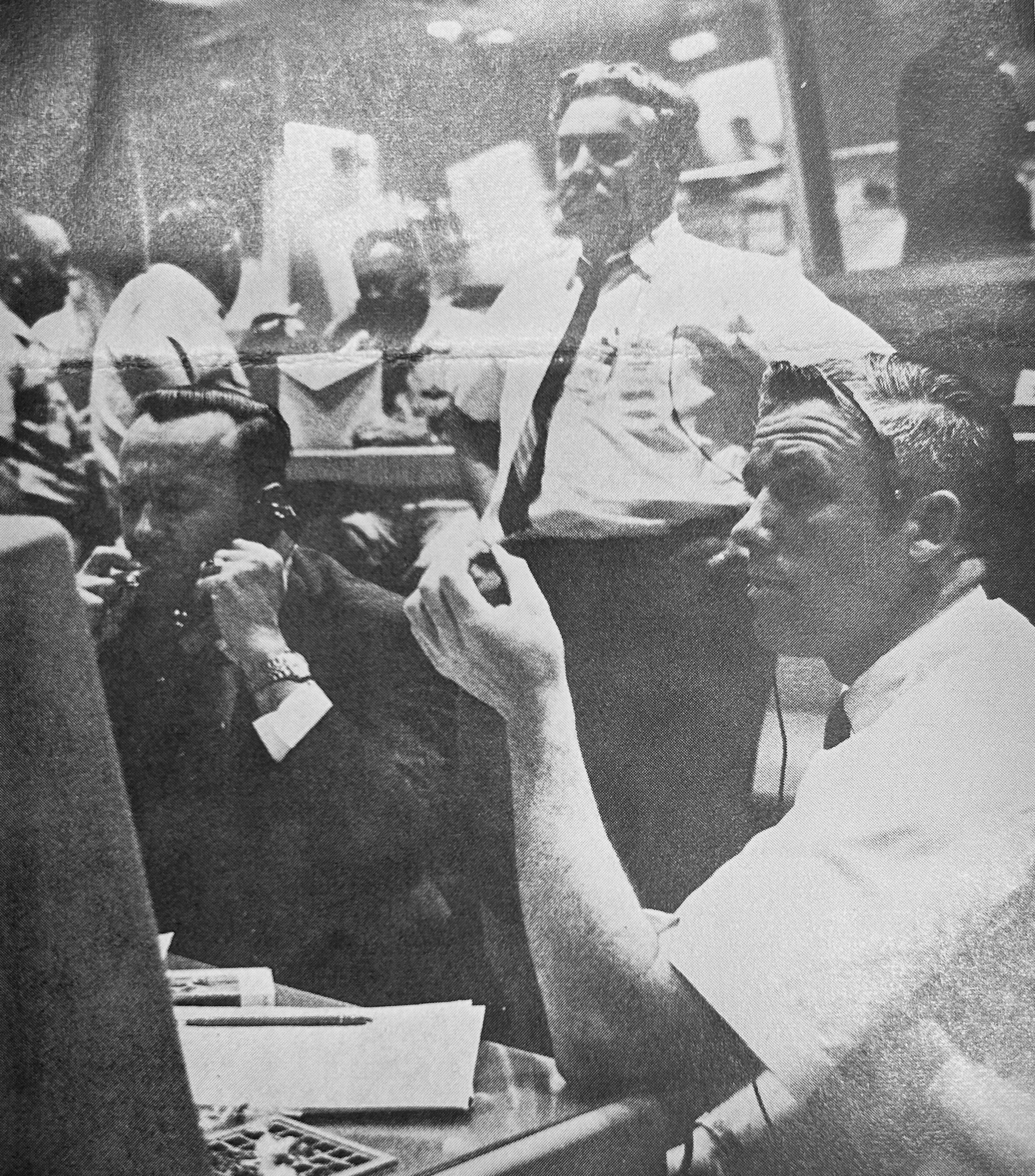
The Mission Control Center (MCC) at NASA’s Kennedy Space Center in Florida In the MCC, Flight Directors Christopher C. Kraft, left, and John D. Hodge, monitor the Gemini 1 mission In the auditorium of the Manned Spacecraft Center (MSC), now NASA’s Johnson Space Center in Houston, MSC Director Robert R. Gilruth introduces the Gemini 3 crew to the press
Left: The Mission Control Center (MCC) at NASA’s Kennedy Space Center in Florida. Middle: In the MCC, Flight Directors Christopher C. Kraft, left, and John D. Hodge, monitor the Gemini 1 mission. Right: In the auditorium of the Manned Spacecraft Center (MSC), now NASA’s Johnson Space Center in Houston, MSC Director Robert R. Gilruth introduces the Gemini 3 crew to the press.

In the Gemini Mission Control Center at NASA’s Kennedy Space Center in Florida, Flight Director Christopher C. Kraft led a team of flight controllers that monitored all aspects of the flight. The flight plan called for Gemini 1 to remain attached to its second stage for the duration of its mission that included only the first three orbits and ended about 4 hours 50 minutes after launch, with no plans to recover the spacecraft. The worldwide network continued to track Gemini 1 until it reentered the atmosphere on April 12, on its 64th orbit, over the southern Atlantic Ocean. Program managers declared the mission an unqualified success. The success of Gemini 1 led to optimism that NASA could carry out Gemini 2, a suborbital uncrewed test flight, in August 1964, followed by Gemini 3, the first crewed mission in November – the missions actually took place in January and March 1965, respectively. Riding on the optimism, on April 13, just five days after Gemini 1, in the newly open auditorium at the Manned Spacecraft Center (MSC), now NASA’s Johnson Space Center in Houston, MSC Director Robert R. Gilruth introduced the Gemini 3 crew to the press. NASA assigned Mercury 4 veteran Virgil I. “Gus” Grissom and Group 2 astronaut John W. Young as the prime crew, with Mercury 8 veteran Walter M. Schirra and Group 2 astronaut Thomas P. Stafford serving as their backups.

Powered by WPeMatico

Get The Details…
Kelli Mars

From NASA’s First Astronaut Class to Artemis II: The Importance of Military Jet Pilot Experience

From NASA’s First Astronaut Class to Artemis II: The Importance of Military Jet Pilot Experience

6 min read

Preparations for Next Moonwalk Simulations Underway (and Underwater)

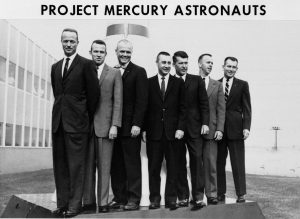
The 7 Project Mercury astronauts
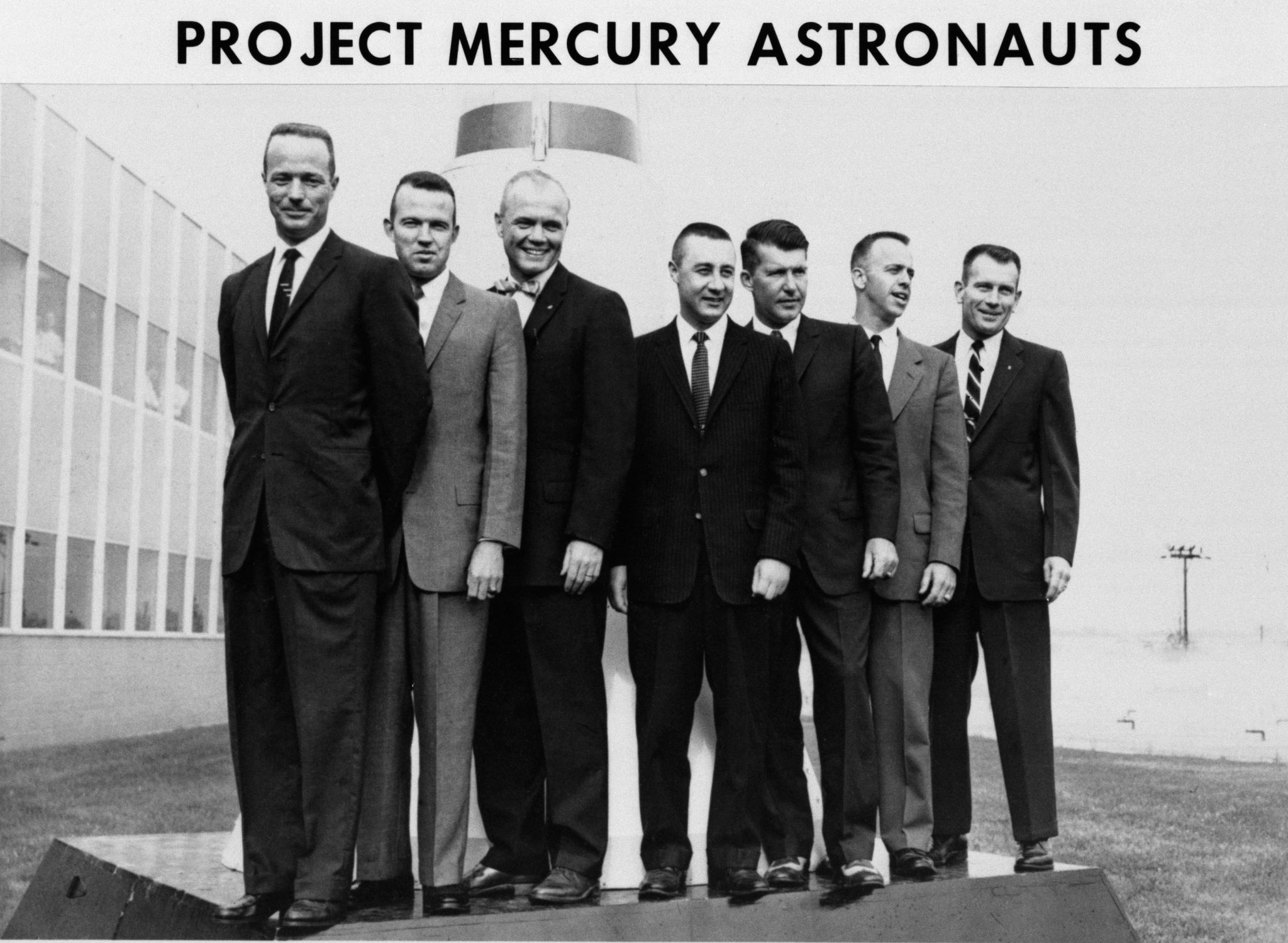
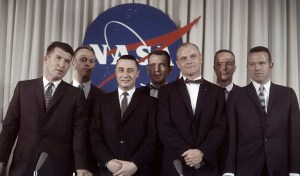
The original Mercury astronauts at the McDonnell Aircraft Corp. in May 1959. The astronauts are left to right: M. Scott Carpenter, L. Gordon Cooper Jr., John H. Glenn Jr., Virgil I. “Gus” Grissom, Walter M. “Wally” Schirra, Alan B. Shepard Jr., and Donald K. “Deke” Slayton.
NASA

The Mercury 7

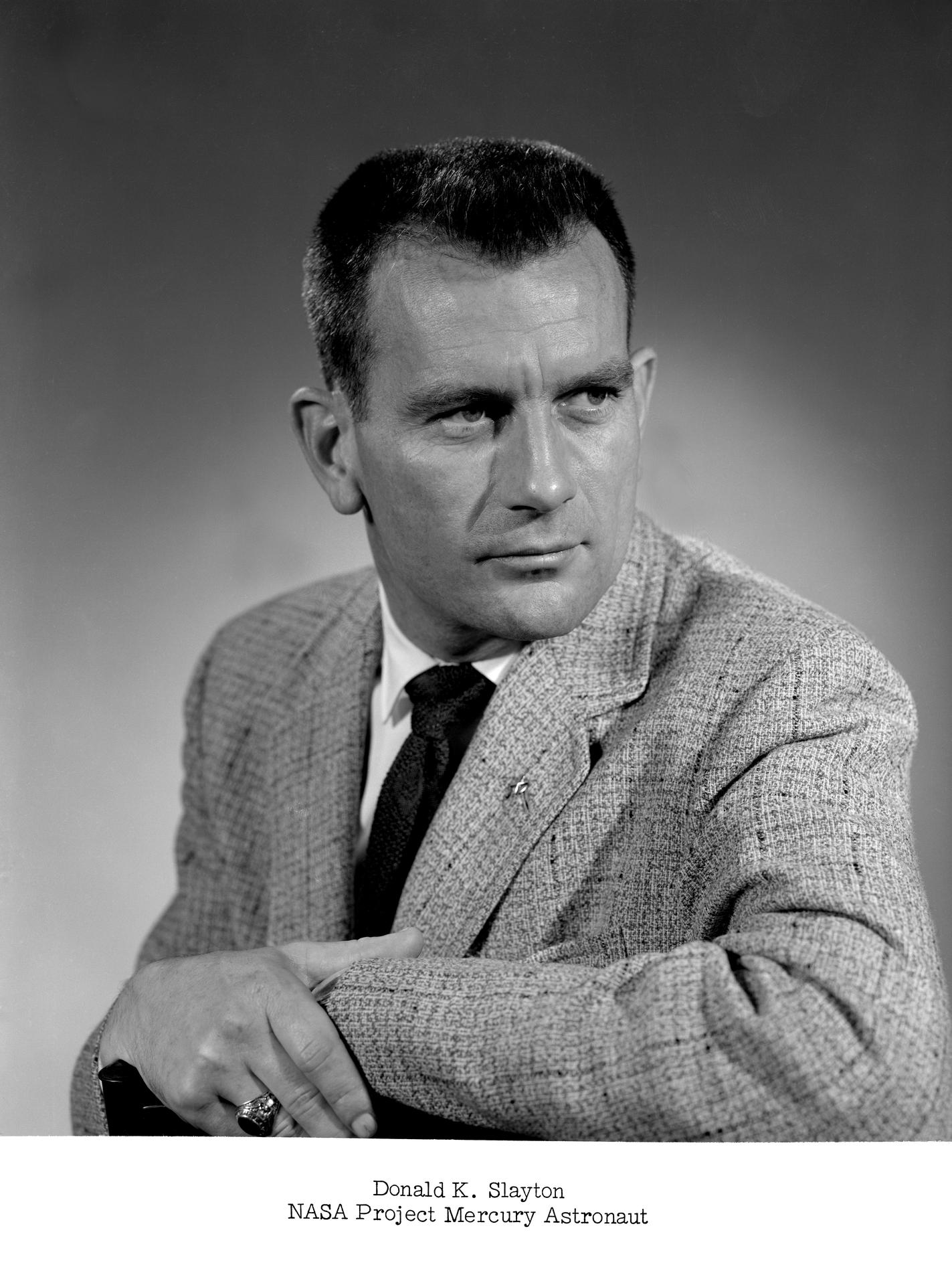
On April 9, 1959, reporters and news media crammed into the ballroom of the Dolley Madison House in Washington—the location of NASA Headquarters at that time—to learn the names of the first American astronauts who came to be known as the Mercury 7. Public Information Director Walter Bonney kicked off the announcement by pointing to the seven men sitting on stage. “These are our astronaut volunteers,” he announced. “Take your pictures as you will, gentlemen.” One of those men on the dais, Deke Slayton, a test pilot from Edwards Air Force Base, recalled the pandemonium he witnessed. “I’ve never seen anything like it, before or since.” He described the event as, “a frenzy of light bulbs and questions…it was some kind of roar.” His colleague, Wally Schirra, a test pilot from Naval Air Station Patuxent River, called the media’s interest scary because he soon came to realize that their, “private lives were in jeopardy.”

I’ve never seen anything like it, before or since.

Deke Slayton

Deke Slayton

Former NASA Astronaut

The first class of astronauts were all test pilots: Scott Carpenter, Gordon Cooper, John Glenn, Gus Grissom, Wally Schirra, Alan Shepard, and Deke Slayton. The men, as the media reported, had similar backgrounds, education, and skills. Obvious connections also included their age and race: all were white men in their thirties. Every one of them was married, had children, and were Protestants. They even donned similar outfits that day: suits with white shirts and ties.

The Mercury 7 astronauts pose around a boilerplate capsule
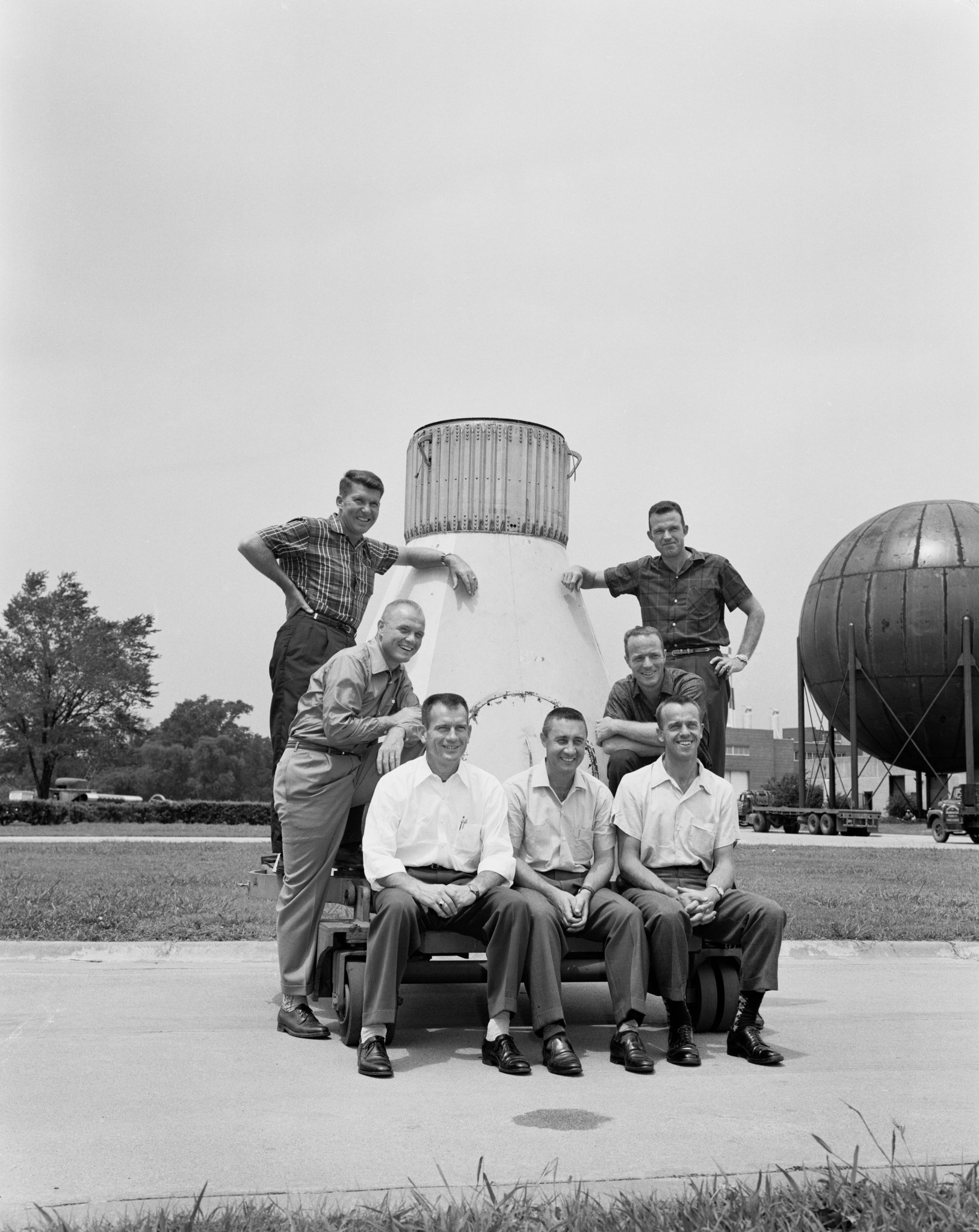
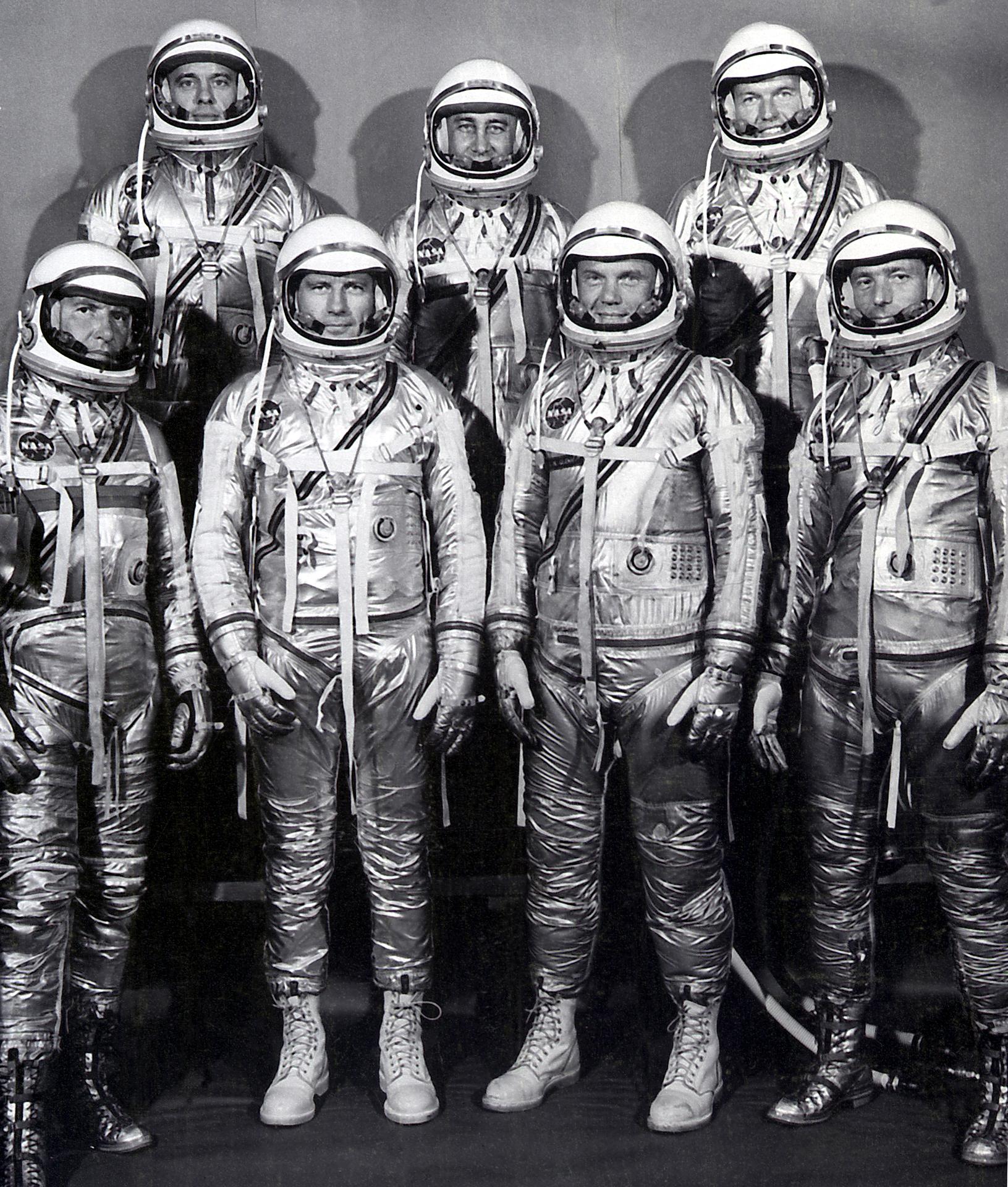
The seven Mercury astronauts pose around a boiler plate capsule. Counterclockwise from the top left they are Walter M. Schirra, John H. Glenn Jr., Donald K. Slayton, Virgil I. Grissom, Alan B. Shepard Jr., M. Scott Carpenter, and Gordon Cooper Jr.
NASA

Throughout the sixties, NASA considered jet pilot experience an important skill for anyone in the astronaut corps. Even when NASA selected two groups of scientist-astronauts, one in 1965 and another in 1967, they too learned to fly high-speed aircraft. Those without military jet pilot experience attended a year-long course that the Air Force called Undergraduate Pilot Training, and once they completed the program, they became military-qualified jet pilots.

Adding Diversity to the Astronaut Corps

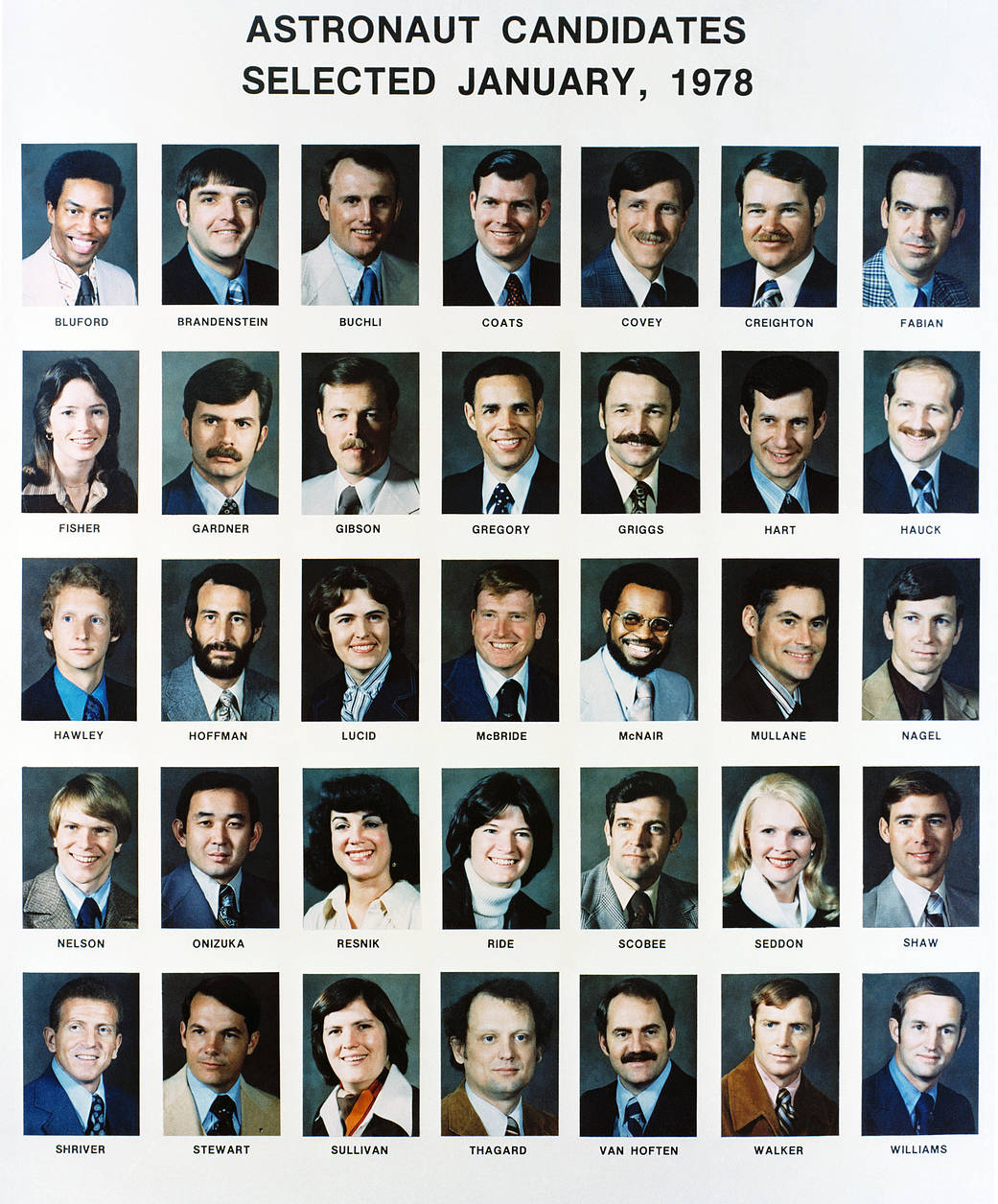
In the summer of 1976, NASA announced the space agency would be accepting applications for the first class of Space Shuttle astronauts, and encouraged women and minorities to apply. Almost 20 years after that first astronaut announcement, NASA included six women and four minority astronaut candidates in the 1978 class. Of the 35 selected, 15 were named pilots and 20 were mission specialists (scientists who would perform experiments in space and spacewalks). All the pilot astronauts named had similar backgrounds to the Mercury 7. Like their predecessors, they were white male test pilots with backgrounds in aviation, engineering, and science with one unique distinction: Frederick D. Gregory, an African American research test pilot from the NASA Langley Research Center in Virginia. It was not until 1990 that Eileen Collins, a graduate of U.S. Air Force Test Pilot School, became NASA’s first female pilot astronaut. Unlike the earlier scientist-astronauts, the mission specialists selected in 1978 and later classes did not have the opportunity to become military qualified jet pilots. They were required, however, to fly a certain number of hours per month in the back seat of a T-38, a jet trainer the pilot astronauts use to maintain their flight proficiency.

Montage of thirty-five portrait photos of 1978 astronaut class members
The astronaut class of 1978 was NASA’s first new group of astronauts since 1969. This class was notable for many reasons, including having the first African-American and Asian-American astronauts, and the first women.
NASA

Even as NASA encouraged women and minorities to apply to be astronauts over the years, and more met the basic qualifications as they earned advanced degrees in engineering, medicine, and science, neither group was ever a majority of those selected as candidates. It was more than fifty years before women made up half of those selected in 2013; people of color have never been a majority of any class. Recent astronaut classes are more likely to reflect America’s diverse population, including the last group to be selected in 2021. This group, called the “Flies,” included several minority candidates and four women. (The class, which graduated in March 2024, also included two international astronauts from the United Arab Emirates, and all are now eligible for a flight assignment.) Flight experience continues to remain important, however. Of the ten Americans selected, four were test pilots. Another, Major Nichole Ayers, was a combat aviator from the United States Air Force.

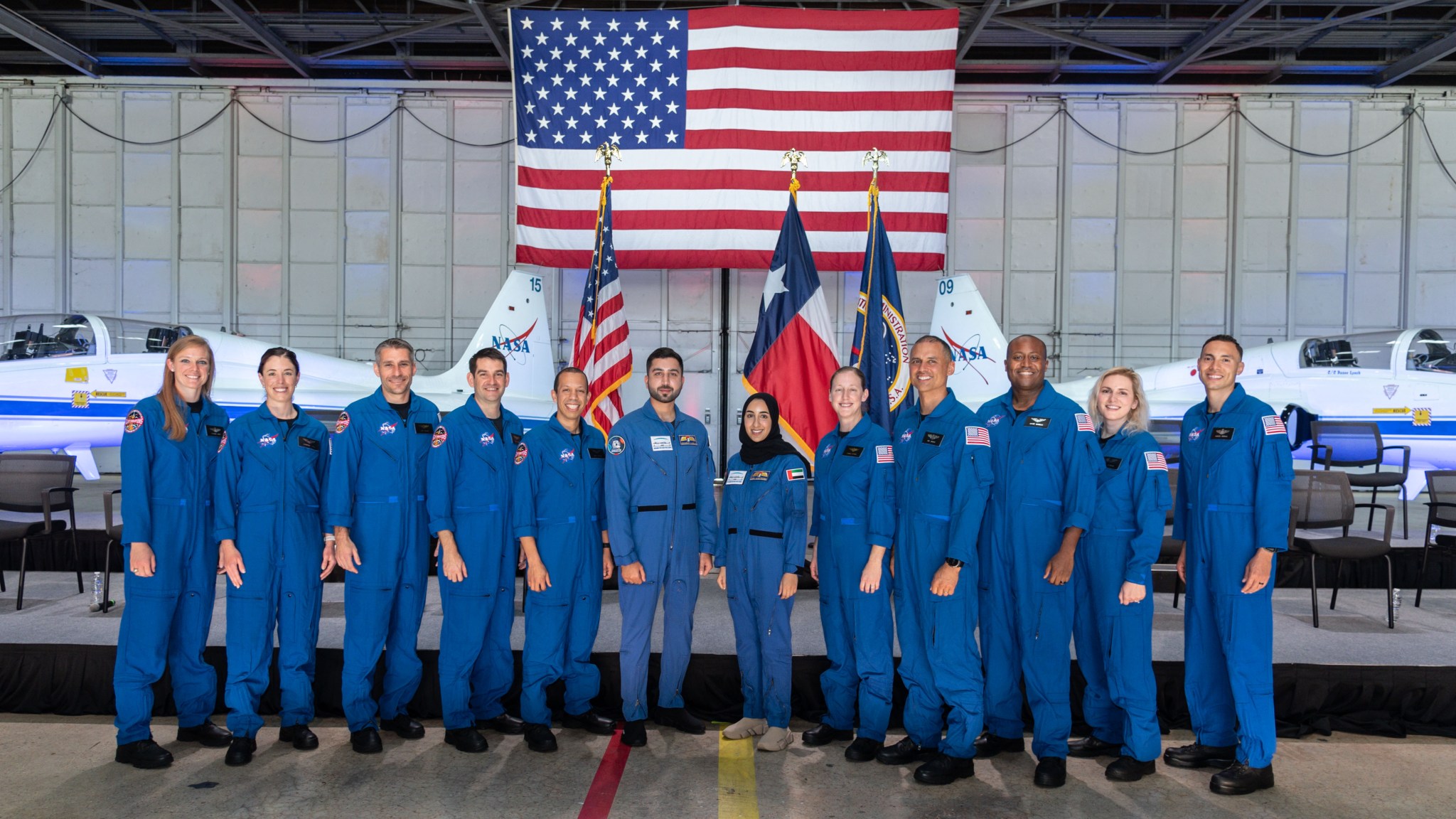
NASA announced its 2021 astronaut candidate class on Dec. 6, 2021. The 10 candidates, pictured here in an event at Ellington Field near NASA’s Johnson Space Center in Houston are Nichole Ayers, Christopher Williams, Luke Delaney, Jessica Wittner, Anil Menon, Marcos Berríos, Jack Hathaway, Christina Birch, Deniz Burnham, and Andre Douglas. UAE Astronaut Candidates Nora AlMatrooshi and Mohammad AlMulla stand alongside them. Credit: NASA/Robert Markowitz
NASA’s 2021 astronaut class graduated on Mar. 5, 2024. The 10 candidates, pictured here in an event at Ellington Field near NASA’s Johnson Space Center in Houston are Nichole Ayers, Christopher Williams, Luke Delaney, Jessica Wittner, Anil Menon, Marcos Berríos, Jack Hathaway, Christina Birch, Deniz Burnham, and Andre Douglas. UAE Astronaut Candidates Nora AlMatrooshi and Mohammad AlMulla stand alongside them.
NASA/Robert Markowitz

The Artemis II Crew

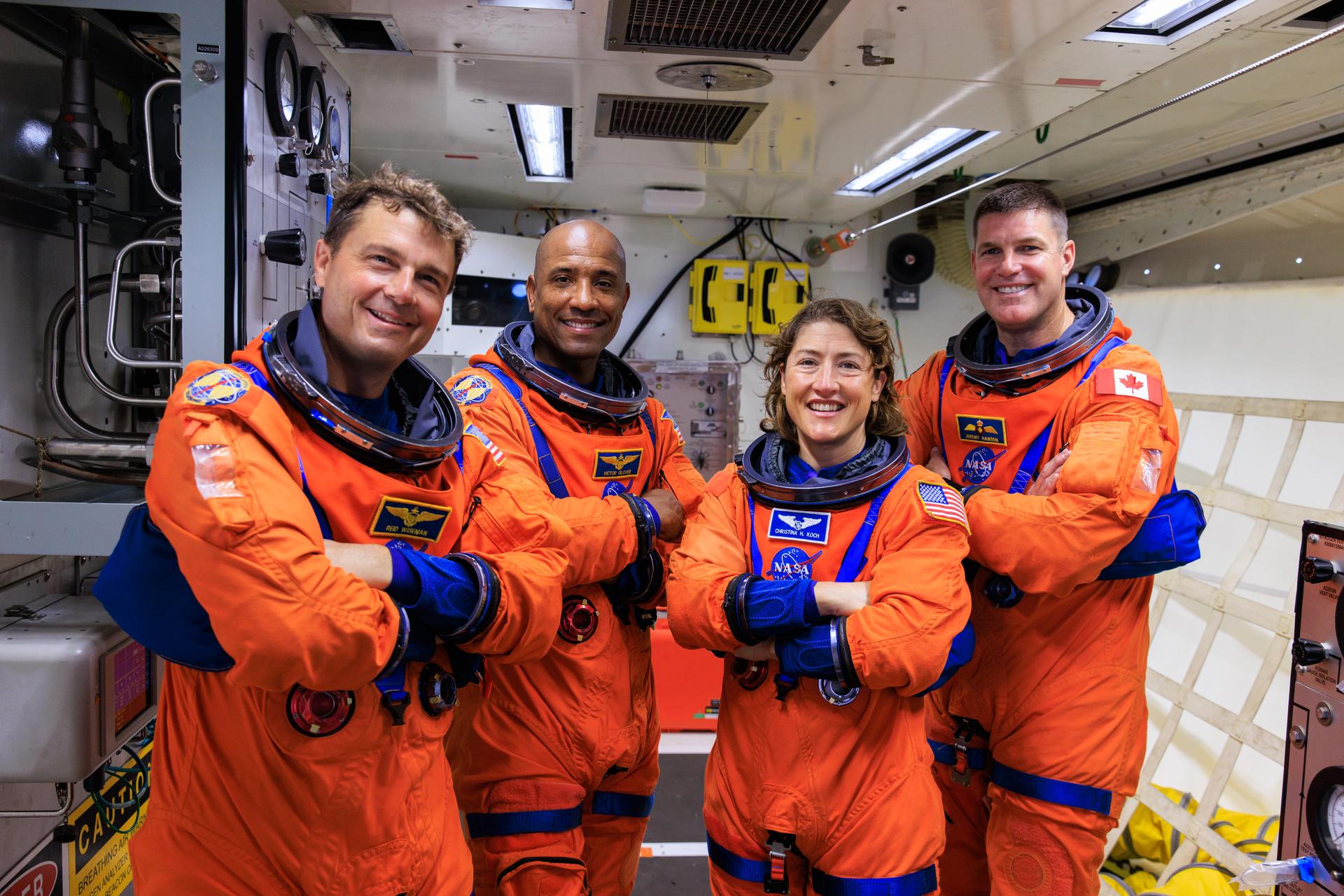
Almost 64 years to the day after the Mercury 7 announcement, NASA and CSA (Canadian Space Agency) revealed the names of the four astronauts assigned to the Artemis II mission. The flight will test and prove that the Orion spacecraft’s systems—including its life support, communication, and navigation systems—function as they were designed while a crew is aboard, ahead of future crewed missions to the Moon.

As NASA Administrator Bill Nelson introduced the crew, which included a woman, a person of color, and a Canadian national, he identified them as representatives of America’s creed: “E pluribus unum—out of many, one.” The four-member team included Commander Reid Wiseman, Pilot Victor Glover, and Mission Specialists Christina Koch and Jeremy Hansen. (Half of this crew came from the 2013 astronaut class, which was equally weighted between men and women.) Artemis II will be the first crewed mission to circle the Moon since Apollo. NASA’s Artemis Generation represents a distinct shift from the sixties—when white men from the United States of America landed on the Moon—and hopes to inspire and engage the next generation by demonstrating that space is for everyone, no matter their race or gender. This crew exemplifies the global coalition NASA has built and its commitment to include international partners as well as commercial partners in this grand adventure.

The Artemis II crew during a September 2023 test
NASA astronauts (left to right) Reid Wiseman, Victor Glover, and Christina Koch, and CSA (Canadian Space Agency) astronaut Jeremy Hansen were assigned to fly on the Artemis II mission to the Moon.
NASA

Like many who came before them, three of the four astronauts assigned to this historic mission are military-qualified jet pilots. Wiseman and Glover were both test pilots; Hansen flew as a fighter pilot for the Canadian Air Force. Test pilots regularly assess how new vehicles perform and have experience evaluating experimental aircraft. Astronauts with backgrounds as test pilots have traditionally been among those selected to fly new spacecraft for the first time. They have a strong understanding of the systems that they are monitoring, which helps them to identify and gather the type of data the space agency is seeking from this flight. The safety of future Artemis crews depends on this information.

While the Astronaut Office might look different from how it did in 1959, the decision to select test pilots for the first class of astronauts continues to influence and shape ideas about who is best suited to be an astronaut and fly in space. They are accustomed to working in a fast-paced environment and thrive under pressure. Bob Gilruth, the father of human spaceflight, called the decision to select test pilots to fly on Project Mercury in 1959, “one of the best decisions in the program. It made it quite simple and logical to delegate flight control and command functions to the pilot,” of the spacecraft. The importance of that decision continues to endure today.

Share

Details

Last Updated

Apr 05, 2024

Powered by WPeMatico

Get The Details…
Jennifer Ross-Nazzal

Station Orbits into Eclipse, Crew Works Research and Spacesuits

Station Orbits into Eclipse, Crew Works Research and Spacesuits

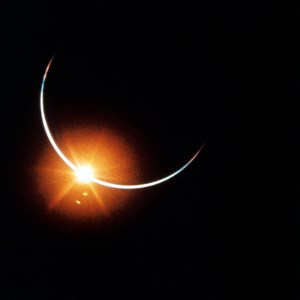
The Moon's shadow, or umbra, on Earth was visible from the space station as it orbited into the path of the solar eclipse over southeastern Canada.
The Moon’s shadow, or umbra, on Earth was visible from the space station as it orbited into the path of the solar eclipse over southeastern Canada.

The International Space Station soared into the Moon’s shadow during the solar eclipse on Monday afternoon. The Expedition 71 crew members had an opportunity to view the shadow at the end of their workday filled with cargo transfers, spacesuit maintenance, and microgravity research.

The windows on the cupola, the orbital outpost’s “window to the world,” were open and NASA Flight Engineers Matthew Dominick and Jeanette Epps were inside photographing and videotaping the Moon’s shadow on Earth, or umbra, beneath them. They were orbiting 260 miles above southeastern Canada as the Moon’s umbra was moving from New York state into Newfoundland.

The space station experienced a totality of about 90% during its flyover period. Views of the solar eclipse itself, the Moon orbiting directly between the sun and the Earth, were only accessible through a pair of windows in the space station’s Roscosmos segment which may not have been accessible due to cargo constraints.

Before the eclipse activities began on Monday, Dominick worked on orbital plumbing, serviced a pair of science freezers and swapped cargo in and out of the SpaceX Dragon spacecraft. Dominick then joined NASA astronaut Mike Barratt inspecting spacesuit tethers and organizing spacewalking tools.

Epps installed a small satellite orbital deployer inside the Kibo laboratory module’s airlock and also participated in the Dragon cargo work. NASA Flight Engineer Tracy C. Dyson assisted Epps with the small satellite installations and cargo transfers. Dyson also reviewed operations with the BioFabrication Facility and prepared research hardware for an upcoming session to print cardiac tissue cell samples.

Station Commander Oleg Kononenko spent Monday on inspection tasks in the aft end of the Zvezda service module and Progress 87 resupply ship He also jogged on a treadmill for about an hour while attached to sensors and electrodes for a periodic fitness test. Flight Engineer Nikolai Chub focused his attention on electronics and ventilation maintenance. Chub also spent a few moments assisting Flight Engineer Alexander Grebenkin as he attached sensors to himself measuring his heart activity for a long-running Roscosmos space cardiac investigation. He later turned on an ultrasound device and scanned surfaces inside Zvezda.

Powered by WPeMatico

Get The Details…

Mark Garcia