NASA Next-Generation Solar Sail Boom Technology Ready for Launch

NASA Next-Generation Solar Sail Boom Technology Ready for Launch
6 Min Read

NASA Next-Generation Solar Sail Boom Technology Ready for Launch

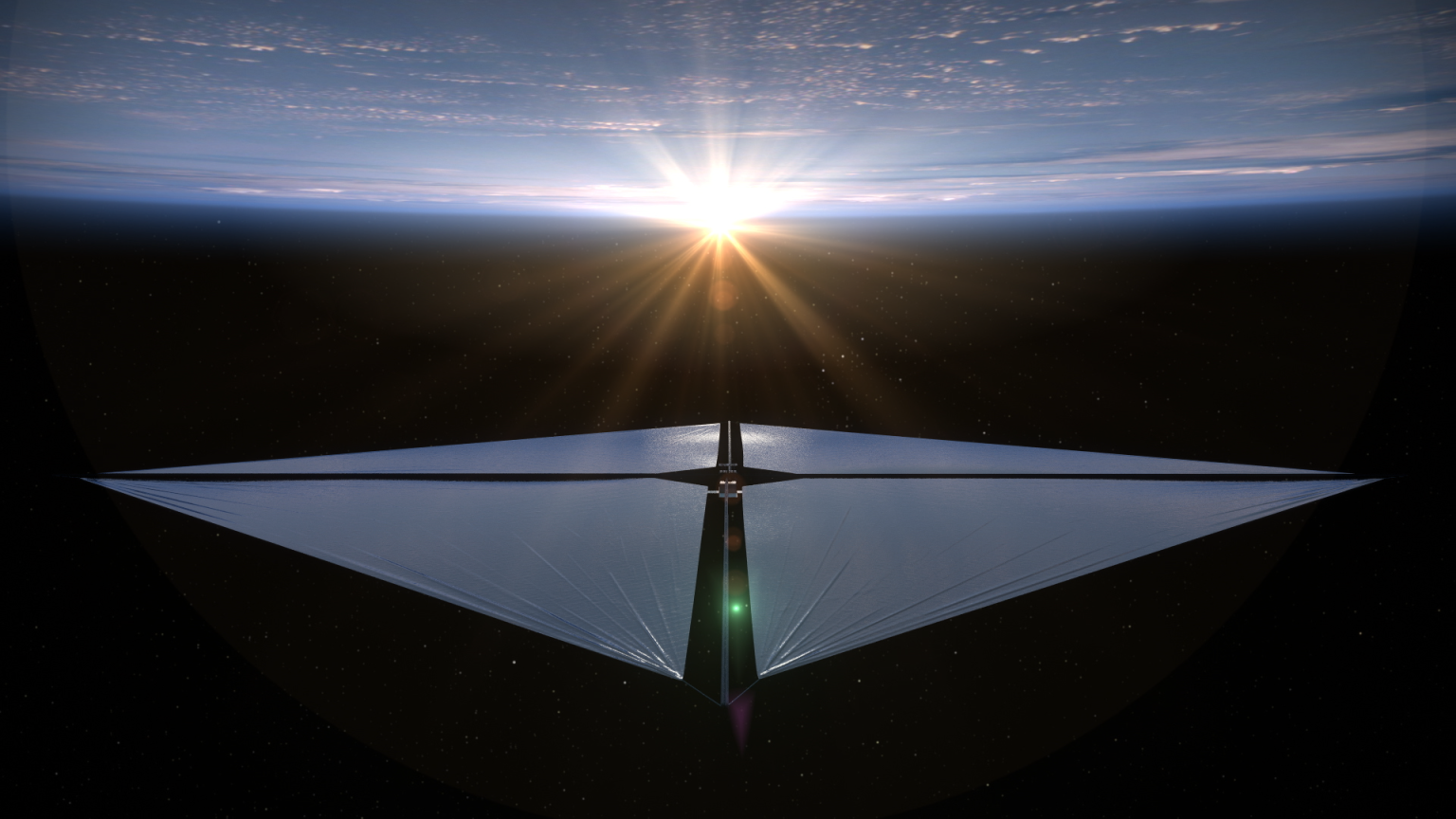
The Advanced Composite Solar Sail System spacecraft sailing over Earth as the sun "rises" in the distance.

An artist’s concept of NASA’s Advanced Composite Solar Sail System spacecraft in orbit as the Sun crests Earth’s horizon.

Credits:
NASA/Aero Animation/Ben Schweighart

Sailing through space might sound like something out of science fiction, but the concept is no longer limited to books or the big screen. In April, a next-generation solar sail technology – known as the Advanced Composite Solar Sail System – will launch aboard Rocket Lab’s Electron rocket from the company’s Launch Complex 1 in Māhia, New Zealand. The technology could advance future space travel and expand our understanding of our Sun and solar system.  

Solar sails use the pressure of sunlight for propulsion, angling toward or away from the Sun so that photons bounce off the reflective sail to push a spacecraft. This eliminates heavy propulsion systems and could enable longer duration and lower-cost missions. Although mass is reduced, solar sails have been limited by the material and structure of the booms, which act much like a sailboat’s mast. But NASA is about to change the sailing game for the future.  

NASA’s Advanced Composite Solar Sail System could advance future space travel and expand our understanding of our Sun and Solar System.
Credits: NASA’s Ames Research Center

NASA’s New Lightweight Sailor 

The Advanced Composite Solar Sail System demonstration uses a twelve-unit (12U) CubeSat built by NanoAvionics to test a new composite boom made from flexible polymer and carbon fiber materials that are stiffer and lighter than previous boom designs. The mission’s primary objective is to successfully demonstrate new boom deployment, but once deployed, the team also hopes to prove the sail’s performance.  

Like a sailboat turning to capture the wind, the solar sail can adjust its orbit by angling its sail. After evaluating the boom deployment, the mission will test a series of maneuvers to change the spacecraft’s orbit and gather data for potential future missions with even larger sails.

“Booms have tended to be either heavy and metallic or made of lightweight composite with a bulky design – neither of which work well for today’s small spacecraft. Solar sails need very large, stable, and lightweight booms that can fold down compactly,” said Keats Wilkie, the mission’s principal investigator at NASA’s Langley Research Center in Hampton, Virginia. “This sail’s booms are tube-shaped and can be squashed flat and rolled like a tape measure into a small package while offering all the advantages of composite materials, like less bending and flexing during temperature changes.”
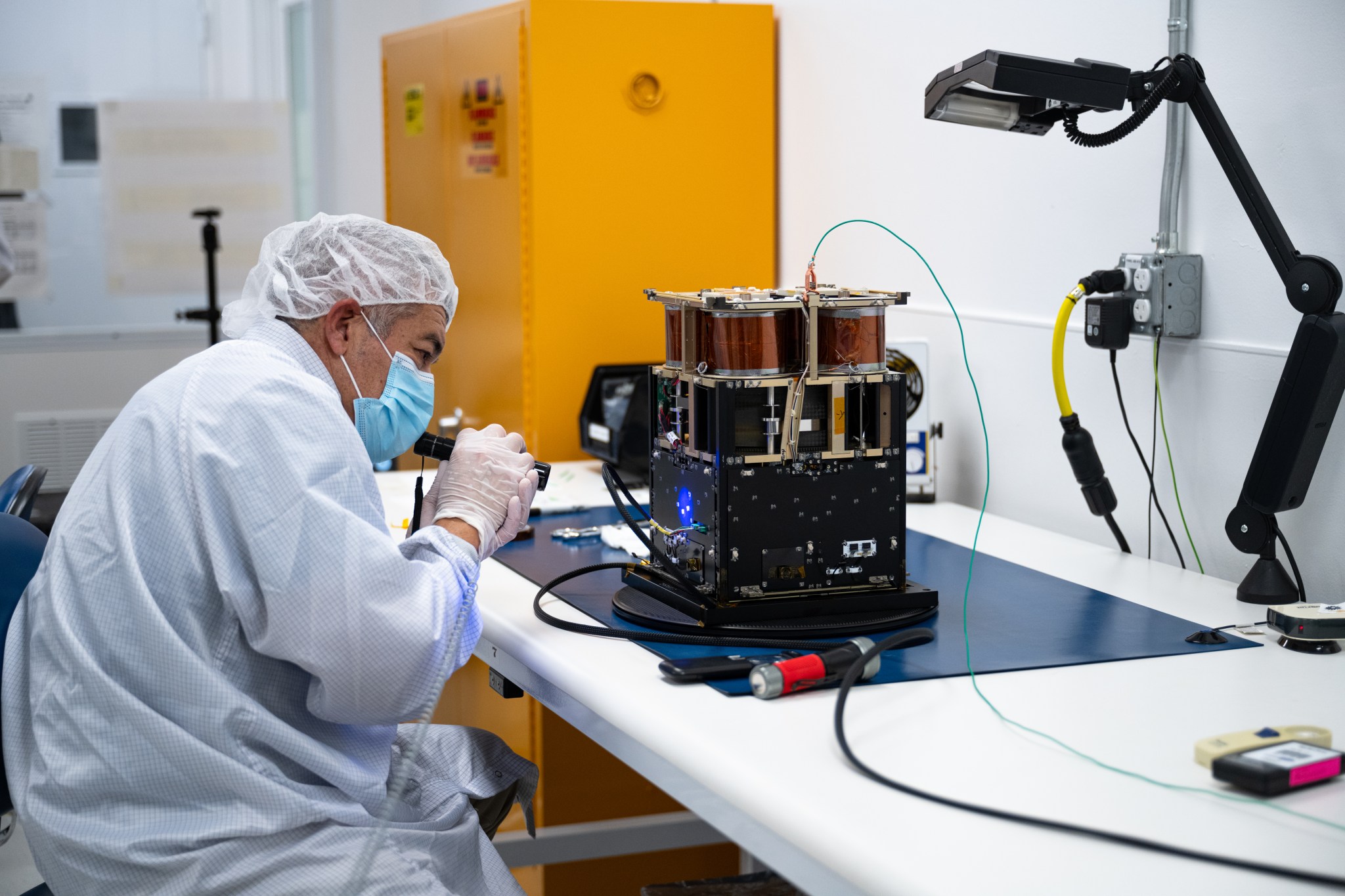
A man in protective gear, including a hair net and face mask, inspects the Advanced Composite Solar Sail System spacecraft with a UV flashlight in a laboratory environment.
Mariano Perez, quality assurance engineer at NASA Ames, inspects the Advanced Composite Solar Sail System spacecraft. When the composite booms and solar sail deploy in orbit, they will measure about 860 square feet (80 square meters) – about the size of six parking spots. Credit: NASA/Brandon Torres
NASA/Brandon Torres

After reaching its Sun-synchronous orbit, about 600 miles (1,000 kilometers) above Earth, the spacecraft will begin unrolling its composite booms, which span the diagonals of the polymer sail. After approximately 25 minutes the solar sail will fully deploy, measuring about 860 square feet (80 square meters) – about the size of six parking spots. Spacecraft-mounted cameras will capture the sail’s big moment, monitoring its shape and symmetry during deployment.

With its large sail, the spacecraft may be visible from Earth if the lighting conditions are just right. Once fully expanded and at the proper orientation, the sail’s reflective material will be as bright as Sirius, the brightest star in the night sky.

“Seven meters of the deployable booms can roll up into a shape that fits in your hand,” said Alan Rhodes, the mission’s lead systems engineer at NASA’s Ames Research Center in California’s Silicon Valley. “The hope is that the new technologies verified on this spacecraft will inspire others to use them in ways we haven’t even considered.”
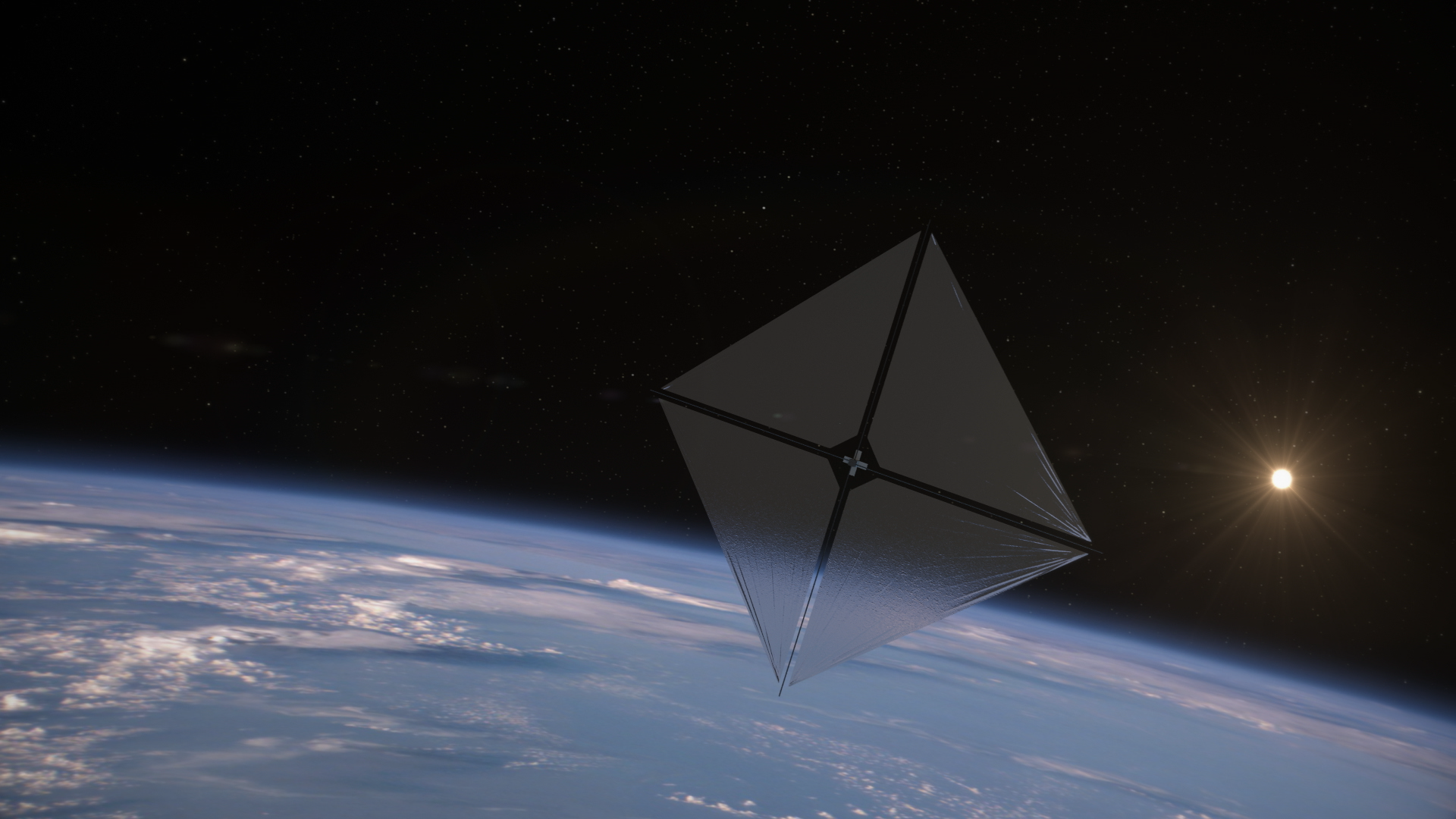
This artist’s concept shows the Advanced Composite Solar Sail System spacecraft sailing in space using the energy of the Sun. Credit: NASA/Aero Animation/Ben Schweighart

Enabling Future Solar Sails

Through NASA’s Small Spacecraft Technology program, successful deployment and operation of the solar sail’s lightweight composite booms will prove the capability and open the door to larger scale missions to the Moon, Mars, and beyond. 

This boom design could potentially support future solar sails as large as 5,400 square feet (500 square meters), about the size of a basketball court, and technology resulting from the mission’s success could support sails of up to 21,500 square feet (2,000 square meters) – about half a soccer field. 

“The Sun will continue burning for billions of years, so we have a limitless source of propulsion. Instead of launching massive fuel tanks for future missions, we can launch larger sails that use “fuel” already available,” said Rhodes. “We will demonstrate a system that uses this abundant resource to take those next giant steps in exploration and science.”  

Because the sails use the power of the Sun, they can provide constant thrust to support missions that require unique vantage points, such as those that seek to understand our Sun and its impact on Earth. Solar sails have long been a desired capability for missions that could carry early warning systems for monitoring solar weather. Solar storms and coronal mass ejections can cause considerable damage on Earth, overloading power grids, disrupting radio communications, and affecting aircraft and spacecraft. 

Composite booms might also have a future beyond solar sailing: the lightweight design and compact packing system could make them the perfect material for constructing habitats on the Moon and Mars, acting as framing structures for buildings or compact antenna poles to create a communications relay for astronauts exploring the lunar surface. 

“This technology sparks the imagination, reimagining the whole idea of sailing and applying it to space travel,” said Rudy Aquilina, project manager of the solar sail mission at NASA Ames. “Demonstrating the abilities of solar sails and lightweight, composite booms is the next step in using this technology to inspire future missions.” 

NASA Ames manages the Advanced Composite Solar Sail System project and designed and built the onboard camera diagnostic system. NASA Langley designed and built the deployable composite booms and solar sail system. NASA’s Small Spacecraft Technology (SST) program office based at NASA Ames and led by the agency’s Space Technology Mission Directorate (STMD), funds and manages the mission. NASA STMD’s Game Changing Development program developed the deployable composite boom technology. Rocket Lab USA, Inc of Long Beach, California is providing launch services. NanoAvionics is providing the spacecraft bus.  

Powered by WPeMatico

Get The Details…
Tara Friesen
NASA Technology Helps Guard Against Lunar Dust

NASA Technology Helps Guard Against Lunar Dust

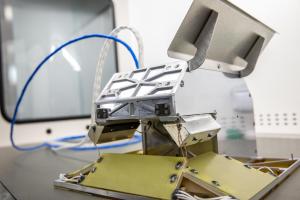
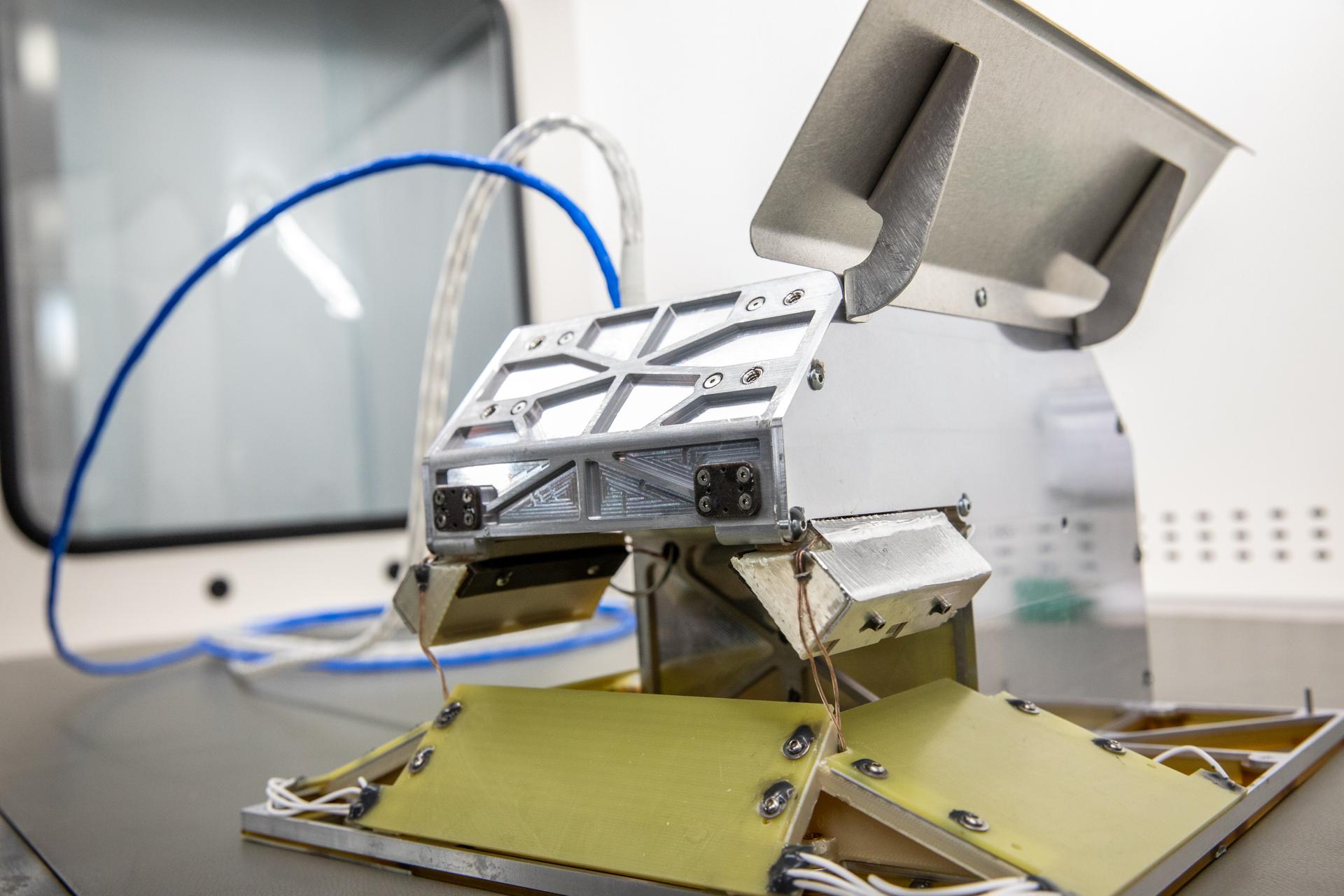
A electrodynamic dust shield device is centered in this photo with a blue wire in the background.
Inside of the Electrostatics and Surface Physics Laboratory at NASA’s Kennedy Space Center in Florida, an electrodynamic dust shield (EDS) is in view on Jan. 18, 2023. The dust shield is one of the payloads to fly aboard Firefly Aerospace’s Blue Ghost lunar lander as part of NASA’s Commercial Lunar Payload Services (CLPS) initiative.
Photo credit: NASA/Cory Huston

Defeating dust may be a small concern for most people on Earth, but for astronauts and spacecraft destined for the Moon or Mars, it is a significant hazard that must be mitigated. That’s why researchers at NASA’s Kennedy Space Center in Florida are seeking innovative ways to use Electrodynamic Dust Shield (EDS) technology.  

Using transparent electrodes and electric fields, EDS technology can electrically lift and remove dust from a variety of surfaces for space applications ranging from thermal radiators, solar panels, and camera lenses to spacesuits, boots, and helmet visors. Controlling and removing the statically-charged dust will be critical to the success of Moon missions under the agency’s’ CLPS (Commercial Lunar Payload Services) initiative and Artemis campaign.  

“For these CLPS and Artemis missions, dust exposure is a concern because the lunar surface is far different than what we’re used to here,” said Dr. Charles Buhler, lead research scientist at the Electrostatics and Surface Physics Laboratory at Kennedy. “Lunar regolith dust can get into gaskets and seals, into hatches, and even into habitats, which can pose a lot of issues for spacecraft and astronauts.”  

Unlike dust particles on Earth, dust on the Moon’s surface is sharp and abrasive – like tiny shards of glass – because it hasn’t been exposed to weathering and elements like water and oxygen.  

“Simply brushing lunar regolith across surfaces can make the problem worse because it’s also very electrostatically charged and highly insulating,” Buhler said.  

Based on the Electric Curtain concept developed by NASA in 1967, EDS technology has been in development at Kennedy since 2004.  

It first made its way to low Earth orbit aboard the NASA Materials International Space Station Experiment 11 mission in 2019. EDS technology was embedded in 12 different panels made of glass, polyimide, and prototype spacesuit fabric and sent to the International Space Station for testing in the vacuum of space. 

Before making it to space, EDS had been predominantly tested in vacuum chambers that produced promising results of removing simulants and samples of lunar regolith, collected during NASA’s Apollo missions, from surfaces within a second. 

Most recently, as part of Intuitive Machines’ first lunar lander mission, EDS technology was embedded in two lenses of EagleCam, a CubeSat camera system developed by students at Embry Riddle Aeronautical University in Daytona Beach, Florida. Following landing, the EagleCam instrument successfully deployed from Intuitive Machines’ Odysseus lander. The teams at Embry Riddle were unable to acquire images of the lander as they had hoped, but they were able to collect other data sets, including from the EDS technology. 

Later this year, another EDS technology demonstration is slated to land on the Moon as part of NASA’s CLPS initiative mission with commercial partner Firefly Aerospace. 

“The team has put in a tremendous amount of work and dedication. EDS is considered the leading technology and the best we have for the removal of dust for space applications,” Buhler said. “To fly as a dedicated payload on a mission to the Moon is very exciting.” 

According to Buhler, EDS technology could be a first line of defense for establishing an extended human presence on the Moon with future Artemis missions. 

From its applications with protecting tools, machinery, and spacesuits, the technology could potentially even help improve day-to-day tasks by being applied to small components like gaskets, seals, and hatches. This could save astronauts the hassle of traveling to the Moon with extra cleaning supplies. 

“EDS technology can be used outside of a habitat to help clean surfaces like railings and floors, but it can be used inside as well,” Buhler said. “All of those applications are being evaluated and tested.” 

Powered by WPeMatico

Get The Details…
Jamie Groh

3D Bioprinting and CubeSats Top Tuesday’s Science Schedule

3D Bioprinting and CubeSats Top Tuesday’s Science Schedule

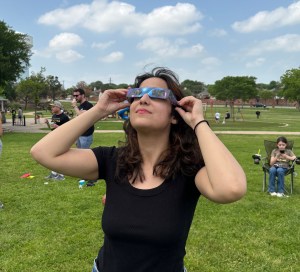
The Moon's shadow, or umbra, is pictured from the space station as it orbited into the path of the solar eclipse on April 8, 2024.
The Moon’s shadow, or umbra, is pictured from the space station as it orbited into the path of the solar eclipse on April 8, 2024.

Advanced space biology and CubeSat work topped the research schedule aboard the International Space Station on Tuesday. The Expedition 71 crew also continued its cargo work and lab maintenance to keep the orbital outpost in tip-top shape.

Scientists are taking advantage of the weightless environment to learn how to print 3D cardiac tissue samples. NASA Flight Engineers Tracy C. Dyson and Matthew Dominick took turns operating the BioFabrication Facility, swapping cassettes containing the bio-printed samples inside the device, then processing the samples for incubation. The tissue-engineering study that takes place inside the Columbus laboratory module may offer the ability to print food and medicines for future space crews. Results may also enable the bioprinting of replacement organs and tissues potentially alleviating the shortage of donor organs on Earth.

NASA Flight Engineer Jeanette Epps was on her second day of installing a small satellite orbital deployer inside the Kibo laboratory module’s airlock. Three CubeSats are packed into the device and will soon be deployed into Earth orbit for a variety of communications and technology studies. Afterward, Epps partnered with Dyson and NASA astronaut Mike Barratt transferring cargo in and out of the SpaceX Dragon cargo spacecraft.

Barratt began his day transferring spacewalking tools to the station’s Roscosmos segment before working on orbital plumbing duties. During the afternoon, the three-time station resident refilled the water supply inside the rodent research habitat located in the Destiny laboratory module. The mice living inside the biology device are being observed for a study testing a gene therapy to improve eye health in space.

Cosmonaut Nikolai Chub collected and stowed the spacewalking tools from Barratt. Those tools are being readied for a Roscosmos spacewalk planned for April 25. Afterward, he worked on life support tasks inside the Progress 86 resupply ship and the Zarya and Zvezda modules.

Fellow cosmonaut Alexander Grebenkin inspected video gear and an oxygen generator then scanned surfaces inside Zvezda with an ultrasound device. Station Commander Oleg Kononenko continued inspection activities inside Zvezda and the Progress 87 resupply ship. He also attached sensors and electrodes to himself and jogged on a treadmill for a periodic fitness test.


Learn more about station activities by following the space station blog@space_station and @ISS_Research on X, as well as the ISS Facebook and ISS Instagram accounts.

Get weekly video highlights at: https://roundupreads.jsc.nasa.gov/videoupdate/

Get the latest from NASA delivered every week. Subscribe here: www.nasa.gov/subscribe

Powered by WPeMatico

Get The Details…

Mark Garcia

NASA’s DC-8 Completes Final Mission, Set to Retire

NASA’s DC-8 Completes Final Mission, Set to Retire

2 min read

Preparations for Next Moonwalk Simulations Underway (and Underwater)

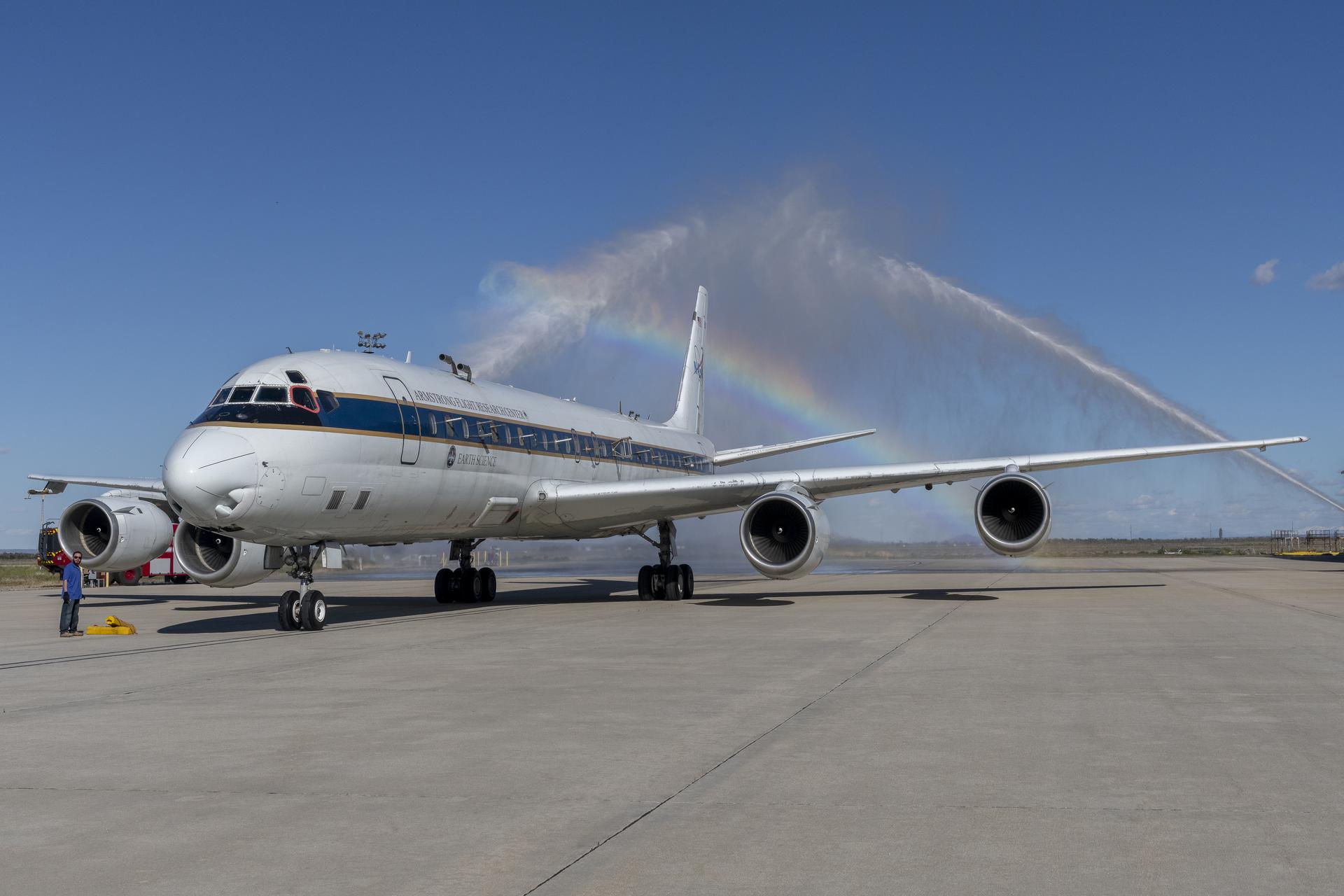
An aircraft taxis through a water salute streaming from water hoses from two firetrucks positioned on either side of the aircraft. The converging water streams create a rainbow above the aircraft as it passes under the arc of spraying water.
The DC-8 aircraft returned to NASA’s Armstrong Flight Research Center Building 703 in Palmdale, California, on April 1, 2024, after completing its final mission supporting Airborne and Satellite Investigation of Asian Air Quality (ASIA-AQ). The aircraft and crew were welcomed back with a celebratory water salute by the U.S. Air Force Plant 42 Fire Department.
NASA/Steve Freeman 

After 37 years of successful airborne science missions, NASA’s DC-8 aircraft completed its final mission and returned to the agency’s Armstrong Flight Research Center Building 703 in Palmdale, California, on April 1.

The DC-8 and crew were welcomed back with a celebratory water salute by the U.S Air Force Plant 42 Fire Department after completing an air quality study, the Airborne and Satellite Investigation of Asian Air Quality, or ASIA-AQ mission. The aircraft is set to retire after concluding operations in May.

As the largest flying science laboratory in the world, the DC-8 has been used to support the agency’s Airborne Science mission since 1987. This unique aircraft was first acquired by NASA in 1985 and collected data for experiments in support of scientific projects serving the world’s scientific community – including scientists, researchers, and students from NASA and other federal, state, academic, and foreign institutions.

The DC-8 will continue its educational legacy as it retires to its new home at Idaho State University in Pocatello, Idaho, where it will be used to train future aircraft technicians by providing real-world experience in the college’s Aircraft Maintenance Technology Program.

For more information about the DC-8 aircraft, visit:

https://www.nasa.gov/centers-and-facilities/armstrong/dc-8-aircraft/

Powered by WPeMatico

Get The Details…
Dede Dinius

NASA Astronaut Loral O’Hara to Discuss Space Station Mission

NASA Astronaut Loral O’Hara to Discuss Space Station Mission

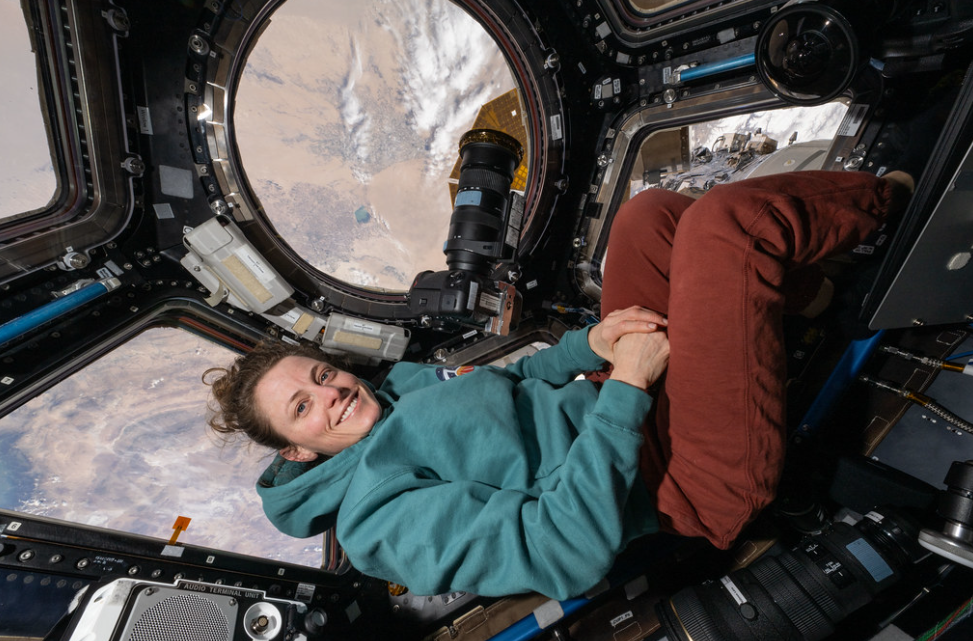
NASA astronaut Loral O’Hara is pictured inside the cupola aboard the International Space Station.
Credit: NASA

After spending six-and-a-half-months aboard the International Space Station, NASA astronaut Loral O’Hara will participate in a news conference at 10:45 a.m. EDT Monday, April 15, at the agency’s Johnson Space Center in Houston.

The news conference will air live on NASA+, NASA Television, the NASA app, YouTube, and the agency’s website. Learn how to stream NASA TV through a variety of platforms including social media.

Media interested in participating in person must contact the NASA Johnson newsroom no later than 5 p.m. Friday, April 12, by calling 281-483-5111 or emailing: jsccommu@mail.nasa.gov.

Media wishing to participate virtually must contact the newsroom no later than two hours before the start of the event. NASA’s media accreditation policy is available online. Questions may also be submitted on social media by using #AskNASA.

O’Hara launched Sept. 15, 2023, alongside Roscosmos cosmonauts Oleg Kononenko and Nikolai Chub, and returned to Earth April 6 with Roscosmos cosmonaut Oleg Novitskiy and spaceflight participant Marina Vasilevskaya of Belarus. Novitskiy and Vasilevskaya launched with NASA astronaut Tracy C. Dyson to the station aboard the Soyuz MS-25 spacecraft on March 23.

O’Hara completed 204 days in space, 3,264 orbits of the Earth, and 86.5 million miles during her first spaceflight. She witnessed the arrival of eight visiting spacecraft and the departure of seven visiting spacecraft, including both crewed and cargo missions. O’Hara also completed one spacewalk totaling six hours, 42 minutes.

While aboard the orbiting lab, O’Hara conducted dozens of science and technology activities to benefit future exploration in space and life back on Earth. O’Hara is among the first astronauts to participate in CIPHER, or the Complement of Integrated Protocols for Human Exploration Research program, an investigation that studies the psychological and physiological changes humans experience during spaceflight. Collecting data from astronauts on missions of different durations supports the development of ways to protect crew health on long-duration missions to the Moon and Mars.

O’Hara conducted experiments bioprinting cardiac tissues in microgravity which could advance technology for creating replacement organs and tissues for transplant on Earth. She also studied the effects of microgravity on bone marrow mesenchymal stem cells to improve our understanding of the mechanisms behind bone loss and support the development of ways to better protect crew members and people on Earth from its effects.

Get the latest NASA space station news, images, and features on Instagram, Facebook, and X.

-end-

Joshua Finch / Julian Coltre / Claire O’Shea
Headquarters, Washington
202-358-1100
joshua.a.finch@nasa.gov / julian.n.coltre@nasa.gov / claire.a.o’shea@nasa.gov

Courtney Beasley
Johnson Space Center, Houston
281-483-5111
courtney.m.beasley@nasa.gov

Powered by WPeMatico

Get The Details…
Lauren E. Low