NASA’s Ingenuity Mars Helicopter Team Says Goodbye … for Now

NASA’s Ingenuity Mars Helicopter Team Says Goodbye … for Now
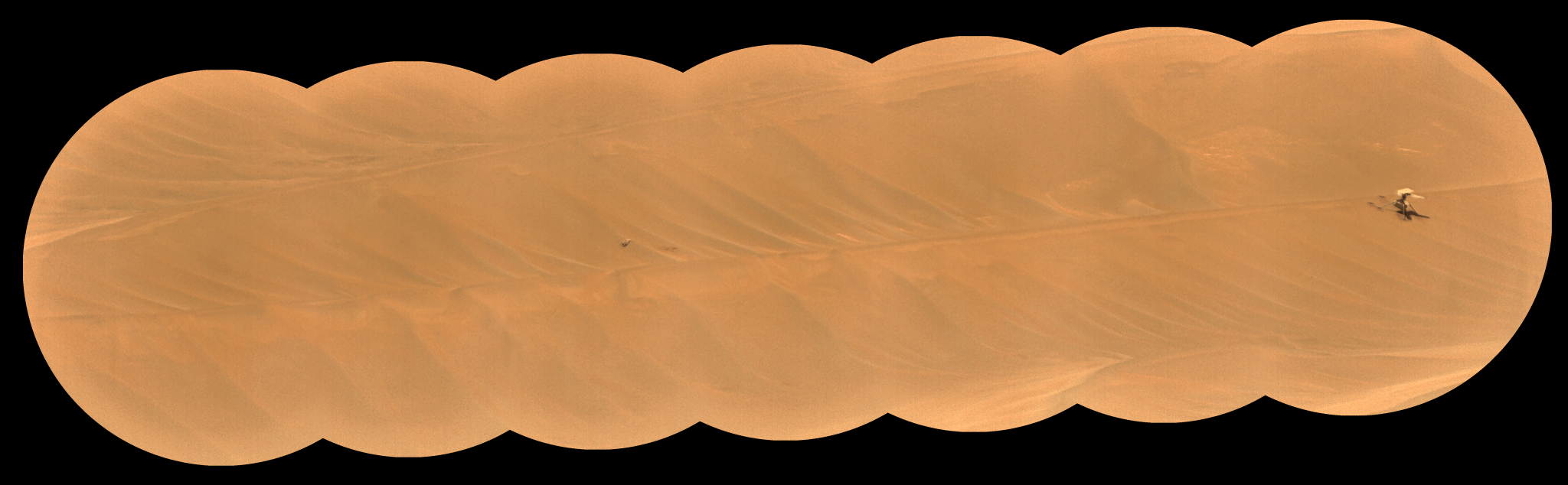
NASA’s Ingenuity Mars Helicopter, right, stands near the apex of a sand ripple in an image taken by Perseverance on Feb. 24, about five weeks after the rotorcraft’s final flight. Part of one of Ingenuity’s rotor blades lies on the surface about 49 feet (15 meters) west of helicopter (left of center in the image).
NASA/JPL-Caltech/LANL/CNES/CNRS

The final downlink shift by the Ingenuity team was a time to reflect on a highly successful mission — and to prepare the first aircraft on another world for its new role.

Engineers working on NASA’s Ingenuity Mars Helicopter assembled for one last time in a control room at the agency’s Jet Propulsion Laboratory in Southern California on Tuesday, April 16, to monitor a transmission from the history-making helicopter. While the mission ended Jan. 25, the rotorcraft has remained in communication with the agency’s Perseverance Mars rover, which serves as a base station for Ingenuity. This transmission, received through the antennas of NASA’s Deep Space Network, marked the final time the mission team would be working together on Ingenuity operations.

Now the helicopter is ready for its final act: to serve as a stationary testbed, collecting data that could benefit future explorers of the Red Planet.

Throughout its mission on the Red Planet, NASA’s Ingenuity Mars Helicopter received thousands of electronic postcards filled with well wishes from all over the world via the mission’s website. In this video, members of the helicopter team read some of those messages. Credit: NASA/JPL-Caltech 

“With apologies to Dylan Thomas, Ingenuity will not be going gently into that good Martian night,” said Josh Anderson, Ingenuity team lead at JPL. “It is almost unbelievable that after over 1,000 Martian days on the surface, 72 flights, and one rough landing, she still has something to give. And thanks to the dedication of this amazing team, not only did Ingenuity overachieve beyond our wildest dreams, but also it may teach us new lessons in the years to come.”

Originally designed as a short-lived technology demonstration mission that would perform up to five experimental test flights over 30 days, the first aircraft on another world operated from the Martian surface for almost three years, flew more than 14 times farther than the distance expected, and logged more than two hours of total flight time.

Ingenuity’s mission ended after the helicopter experienced a hard landing on its last flight, significantly damaging its rotor blades. Unable to fly, the rotorcraft will remain at “Valinor Hills” while the Perseverance rover drives out of communications range as it continues to explore the western limb of Jezero Crater.

Bytes and Cake

The team enjoyed some “Final Comms” chocolate cake while reviewing the latest data from over 189 million miles (304 million kilometers) away. The telemetry confirmed that a software update previously beamed up to Ingenuity was operating as expected. The new software contains commands that direct the helicopter to continue collecting data well after communications with the rover have ceased.
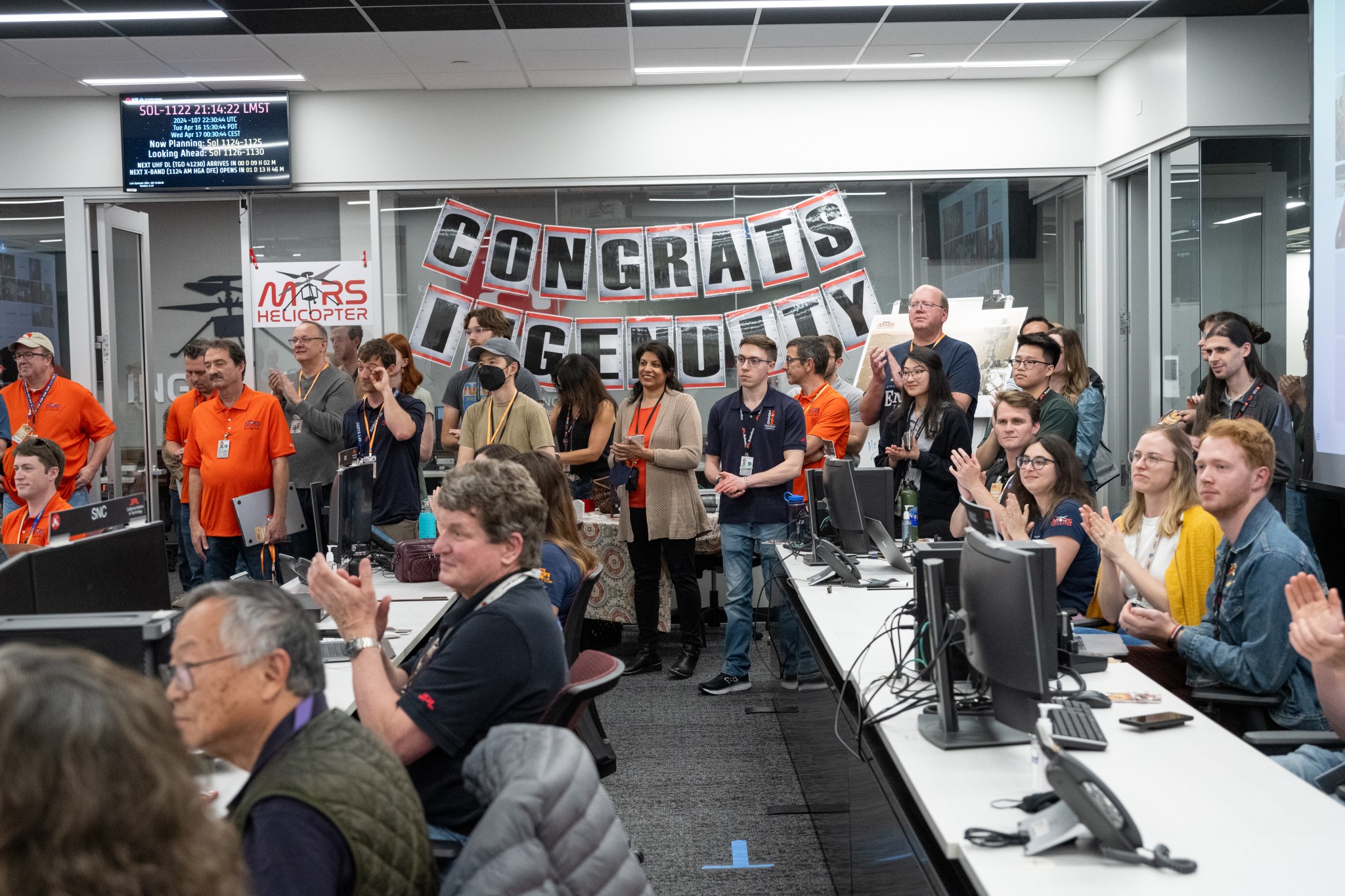
Engineers working on NASA’s Ingenuity
Engineers working on NASA’s Ingenuity together monitored a transmission from the history-making helicopter in a JPL control room on April 16. They confirmed the operation of a software patch that will allow the helicopter to act as a stationary testbed and collect data that could benefit future Mars explorers.
NASA/JPL-Caltech

With the software patch in place, Ingenuity will now wake up daily, activate its flight computers, and test the performance of its solar panel, batteries, and electronic equipment. In addition, the helicopter will take a picture of the surface with its color camera and collect temperature data from sensors placed throughout the rotorcraft. Ingenuity’s engineers and Mars scientists believe such long-term data collection could not only benefit future designers of aircraft and other vehicles for the Red Planet, but also provide a long-term perspective on Martian weather patterns and dust movement.

During this final gathering, the team received a farewell message from Ingenuity featuring the names of people who worked on the mission. Mission controllers at JPL sent the message to Perseverance the day before, which handed it off to Ingenuity so that it could transmit the farewell back to Earth.

Decades of Room

If a critical electrical component on Ingenuity were to fail in the future, causing data collection to stop, or if the helicopter eventually loses power because of dust accumulation on its solar panel, whatever information Ingenuity has collected will remain stored on board. The team has calculated Ingenuity’s memory could potentially hold about 20 years’ worth of daily data.

“Whenever humanity revisits Valinor Hills — either with a rover, a new aircraft, or future astronauts — Ingenuity will be waiting with her last gift of data, a final testament to the reason we dare mighty things,” said Ingenuity’s project manager, Teddy Tzanetos of JPL. “Thank you, Ingenuity, for inspiring a small group of people to overcome seemingly insurmountable odds at the frontiers of space.”

Tzanetos and other Ingenuity alumni are currently researching how future Mars helicopters — including the Mars Science Helicopter concept — could benefit explorations of the Red Planet and beyond.

More About the Mission

The Ingenuity Mars Helicopter was built by JPL, which also manages the project for NASA Headquarters. It is supported by NASA’s Science Mission Directorate. NASA’s Ames Research Center in California’s Silicon Valley and NASA’s Langley Research Center in Hampton, Virginia, provided significant flight performance analysis and technical assistance during Ingenuity’s development. AeroVironment Inc., Qualcomm, and SolAero also provided design assistance and major vehicle components. Lockheed Space designed and manufactured the Mars Helicopter Delivery System. At NASA Headquarters, Dave Lavery is the program executive for the Ingenuity Mars helicopter.

For more information about Ingenuity:

https://mars.nasa.gov/technology/helicopter

News Media Contacts

DC Agle
Jet Propulsion Laboratory, Pasadena, Calif.
818-393-9011
agle@jpl.nasa.gov

Karen Fox / Alana Johnson
NASA Headquarters, Washington
301-286-6284 / 202-358-1501
karen.c.fox@nasa.gov / alana.r.johnson@nasa.gov

2024-044

Powered by WPeMatico

Get The Details…
Naomi Hartono
A Clinical Decision Support System for Earth-independent Medical Operations

A Clinical Decision Support System for Earth-independent Medical Operations

Exploration Medical Capability

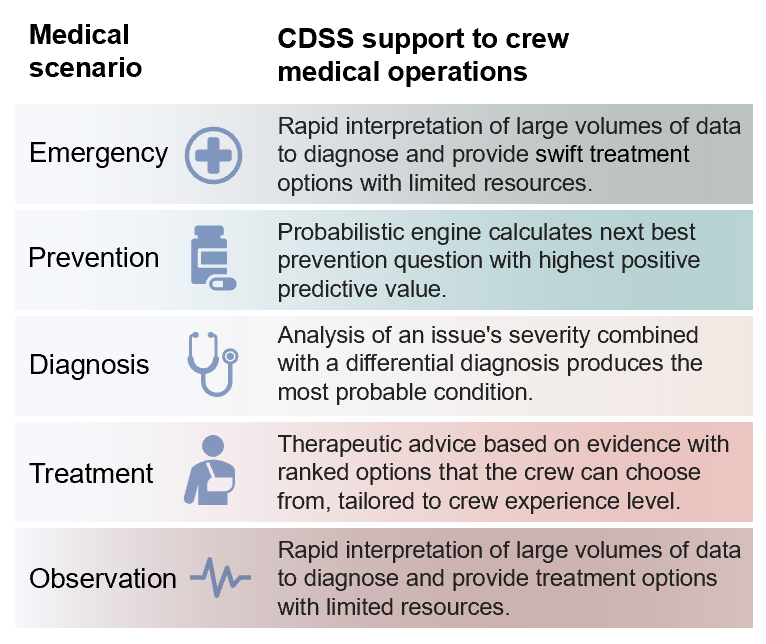
Deep space exploration requires a paradigm shift in astronaut medical support toward Earth-independent medical operations. Currently, astronauts rely on real-time communication with ground-based medical providers. However, as the distance from Earth increases, so do communication delays and disruptions. Deep space exploration crews will need to autonomously detect, diagnose, treat, and prevent medical conditions. One potential solution is to augment the long duration exploration crew’s knowledge, skills, and abilities with a digital clinical decision support system, or CDSS. The Exploration Medical Capability (ExMC) element of NASA’s Human Research Program is investigating the feasibility and value of advanced capabilities to promote and enhance EIMO.

Main findings: The ExMC research team has produced a CDSS concept in which medical data would be continuously gathered, through both passive and active monitoring, and delivers real-time guidanance. This helps improve patient outcomes and reduce the workload of health maintenance.

Impact: The assistive technology of ExMC’s envisioned CDSS stands to significantly enhance a crew’s medical capability. Private applications for this approach are currently being considered by commercial space flight programs, a timely example of how ARC Space Biosciences research benefits the entire space sector.

Reference: Russell, B., Burian, B., …, Beard, B., Martin, K., Pletcher, D., … The value of a spaceflight clinical decision support system for earth-independent medical operations. Nature: NPJ Microgravity 9, 46 (2023).

Powered by WPeMatico

Get The Details…
Elizabeth E. Keller

Space Life Science Highlights

Space Life Science Highlights

1 min read

Preparations for Next Moonwalk Simulations Underway (and Underwater)

NASA astronaut Sunita Williams exercises
Spaceflight Atrophy Studied with Machine Learning

Multi-Drug Resistant Bacteria Found on
ISS Mutating to Become Functionally Distinct
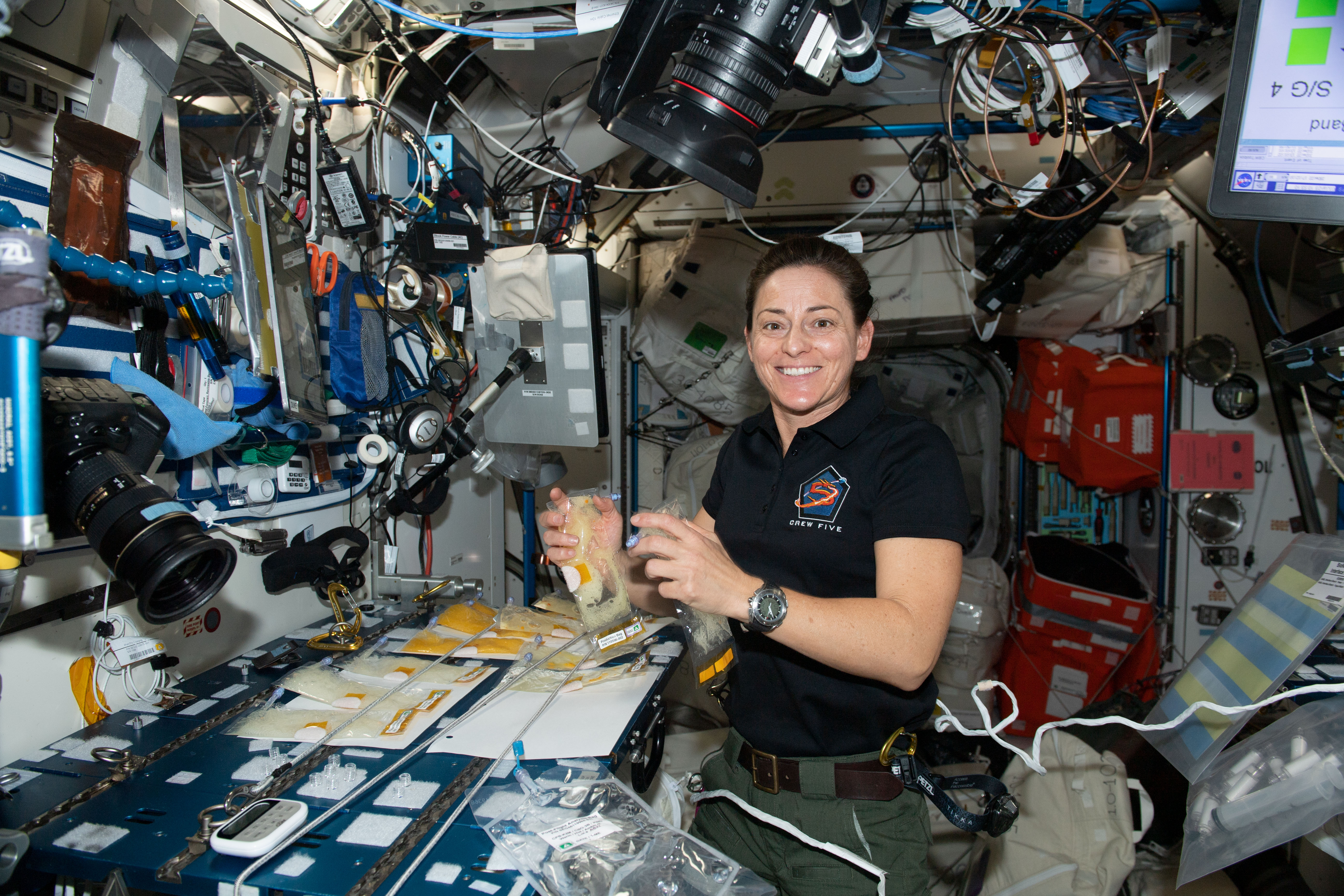
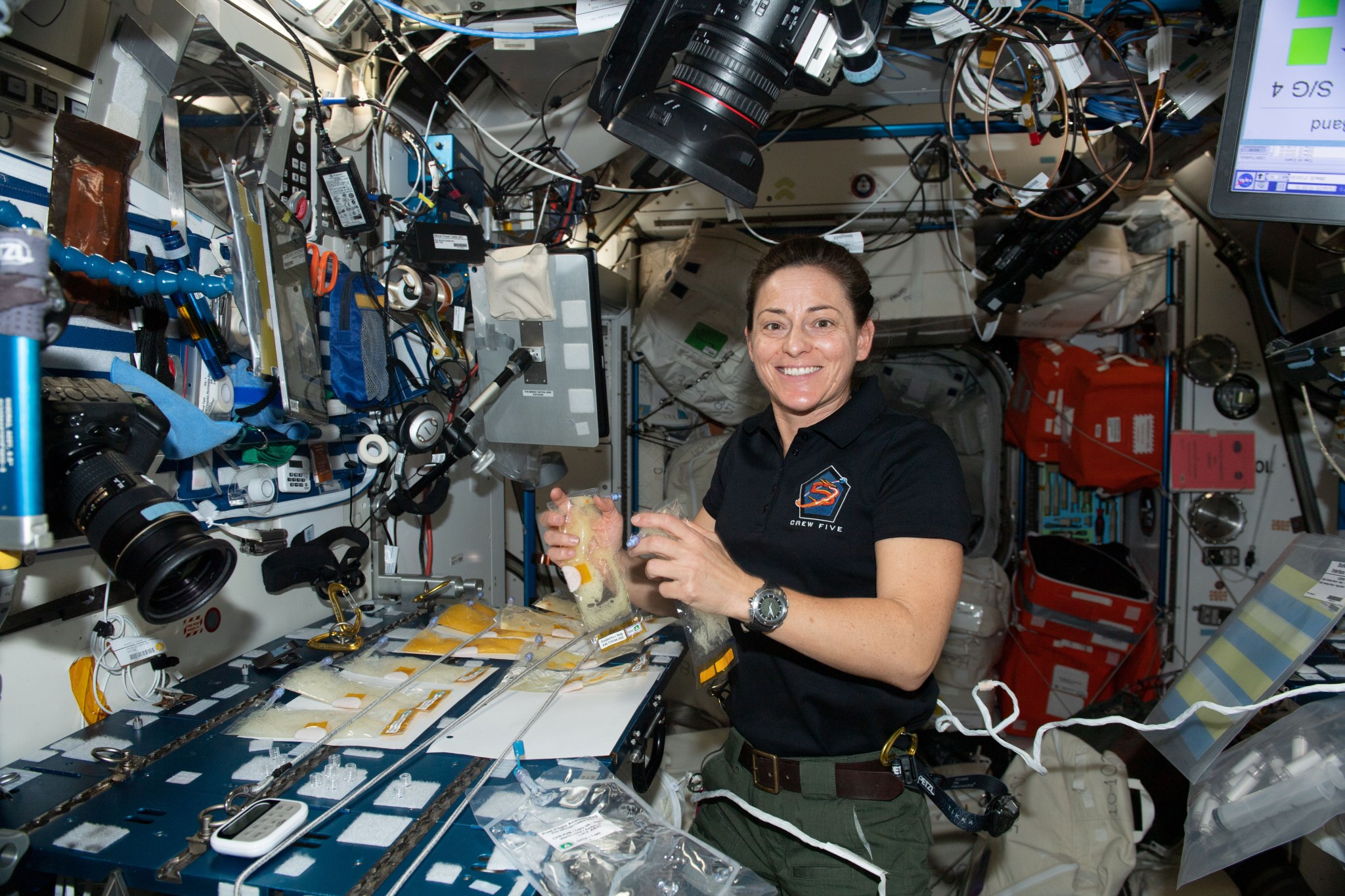
iss068e036727 (Jan. 3, 2023) --- NASA astronaut and Expedition 68 Flight Engineer Nicole Mann works in the International Space Station's Harmony module on the BioNutrients-2 investigation that uses genetically engineered microbes to provide nutrients, and potentially other compounds and pharmaceuticals, on demand in space.
On-demand Nutrient Production System
for Long-duration Missions
Exploration Medical Capability
A Clinical Decision Support System for
Earth-independent Medical Operations in Space

Powered by WPeMatico

Get The Details…
Elizabeth E. Keller

BioNutrients Flight Experiments

BioNutrients Flight Experiments

iss068e036727 (Jan. 3, 2023) --- NASA astronaut and Expedition 68 Flight Engineer Nicole Mann works in the International Space Station's Harmony module on the BioNutrients-2 investigation that uses genetically engineered microbes to provide nutrients, and potentially other compounds and pharmaceuticals, on demand in space.
iss068e036727 (Jan. 3, 2023) — NASA astronaut and Expedition 68 Flight Engineer Nicole Mann works in the International Space Station’s Harmony module on the BioNutrients-2 investigation that uses genetically engineered microbes to provide nutrients, and potentially other compounds and pharmaceuticals, on demand in space.
NASA

On-demand nutrient production system for long-duration missions

When astronauts embark on long space missions, they’ll need to grow their own food because pre-packaged meals from Earth lose their nutritional value over time. The BioNutrients project at Ames Research Center’s Space Biosciences Division has solved this problem by using genetic engineering to create microbially-based food that can produce nutrients and compounds, such as medicines, with minimal resources. The process involves storing dried microbes and food-grade media in small bioreactors, which can be rehydrated and grown years later. The project has already produced carotenoids for antioxidants, follistatin for muscle loss, and yogurt and kefir for a healthy gut biome.

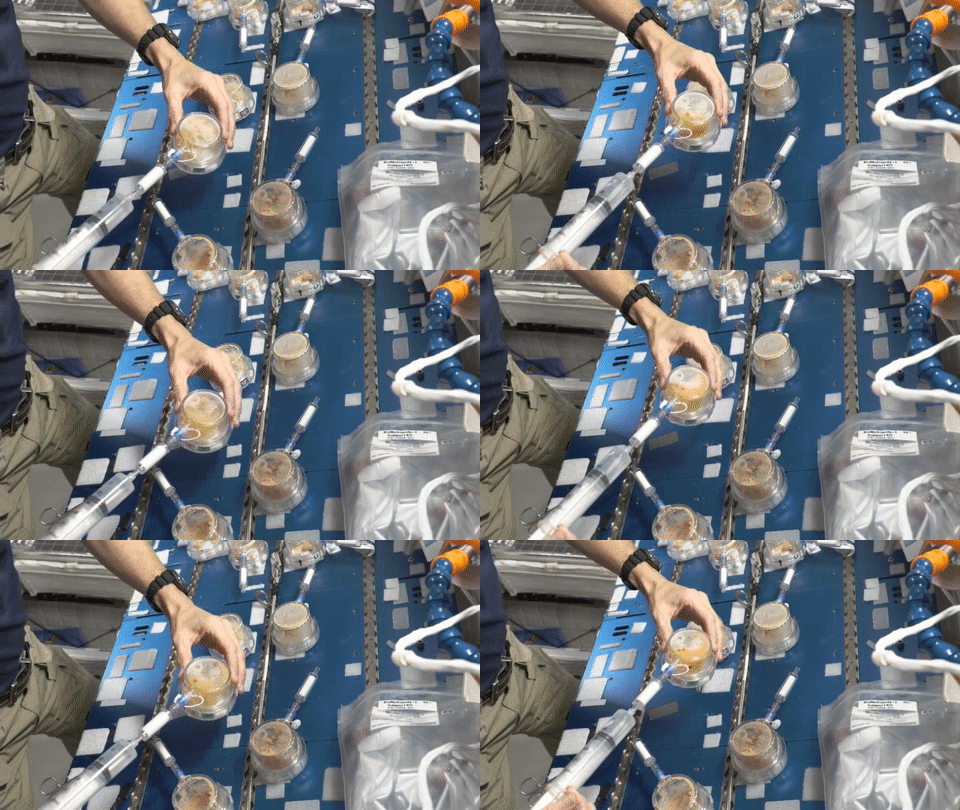
moving image of astronaut working on an experiment
Astronaut mixing the yeast cultures in the Gen-0 bioreactors from the Bionutrients-1 ISS experiment. After a successful first mission, a more compact container was designed as the flat-pack Gen-1 bioreactors.

Main Findings: Two different engineered baker’s yeasts were cultured in the BioNutrients-1 (BN-1) Gen-0 bioreactors, producing beta-carotene and zeaxanthin, and their ambient shelf life on the International Space Station (ISS) has now been demonstrated out to 3.9 years. Four additional organism types and products were flown on BioNutrients-2 (BN-2), demonstrating the production of carotenoids, follistatin, yogurt, and kefir products in the Gen-1 bioreactors which have a 91% reduced mass and a flat pack design. The shelf life of yeast-based products is expected to meet 5 years at ambient storage conditions. Analysis of yogurt and kefir is underway.

Impact: BN-1 and BN-2 successes pave the way for further biomanufacturing processes that will ensure the safe consumption of essential nutrients and compounds for long-duration space missions.

Co-Investigators: John Hogan and Frances Donovan

Team: Ball, N., Sharif, S., Downing, S., Gresser, A., Hami, R., Oscar, R., Hindupur, A., Hiromi, K., Kostakis, A., Levri, J., Murikami, M., Settles, A.M., Sims, K., Villanueva, A., Vu, S.

Powered by WPeMatico

Get The Details…
Elizabeth E. Keller

Spaceflight Atrophy Studied with Machine Learning

Spaceflight Atrophy Studied with Machine Learning

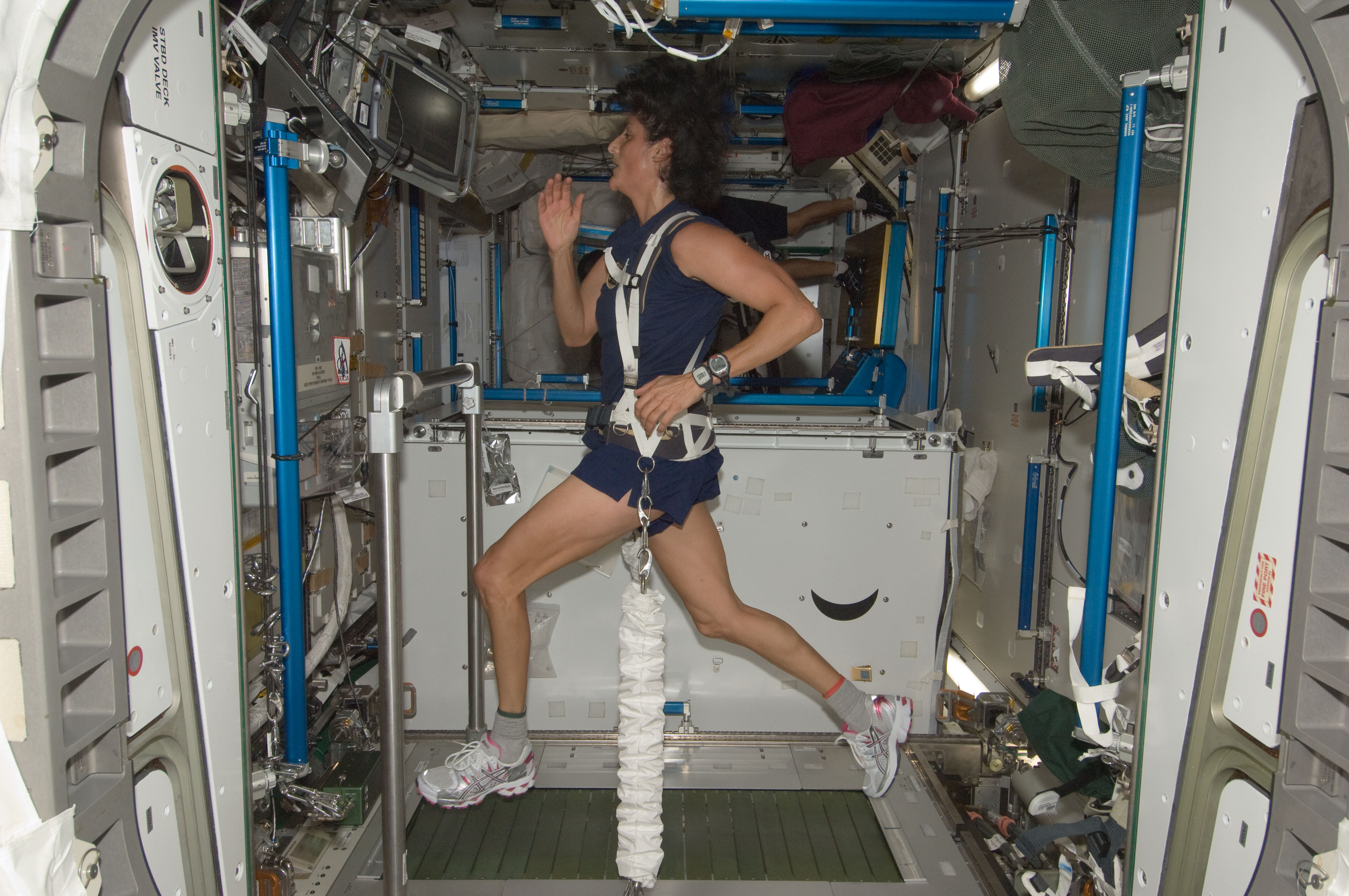
NASA astronaut Sunita Williams exercises
ISS032-E-011701 (4 Aug. 2012) — NASA astronaut Sunita Williams, Expedition 32 flight engineer, equipped with a bungee harness, exercises on the Combined Operational Load Bearing External Resistance Treadmill (COLBERT) in the Tranquility node of the International Space Station.
NASA

Background: Even intense exercise by astronauts cannot compensate for muscle atrophy caused by microgravity. Atrophy occurs, in part, by way of an underlying mechanism that regulates calcium uptake. Recent research has shown exposure to spaceflight alters the uptake of calcium in muscles. However, the molecular mechanisms that drive these changes are not well studied.

Researchers at Ames Research Center investigated these mechanisms by applying Machine Learning (ML) to identify patterns in datasets on mice exposed to microgravity. ML methods are particularly effective in identifying patterns in complex biological data and are suited for space biological research where small datasets are often combined to increase statistical power.

In the image above, NASA astronaut Sunita Williams, Expedition 32 flight engineer, exercises on the load-bearing treadmill in the ISS. Resistance training can counteract the negative health effects of microgravity on muscle atrophy, but new Ames Research Center research seeks to understand the physiological mechanisms at play to identify biomarkers that can inform innovative counter measures. The study was a project of NASA’s Space Life Sciences Training Program at Ames Research Center, which provided funding.

Findings: Machine Learning analysis shows molecular drivers to physiological changes in the calcium channel sarcoplasmic/ endoplasmic reticulum (SERCA) pump, leading to muscle changes and muscle loss in spaceflight rodents. ML models were created to identify proteins that could predict an organism’s resilience to microgravity with respect to calcium uptake in muscles. Specific proteins, Acyp1 and Rps7, were found to be the most predictive biomarkers associated with enhanced calcium intake in fast-twitch muscles.

Impact: This study offered a first look at the use of ML on calcium uptake in muscle when exposed to microgravity conditions. This study demonstrated the role of NASA’s open science initiative in accelerating space biology by its reliance on ARC’s Open Science Data Repository (OSDR) and Analysis Working Groups, as well as the involvement of an international research team from the US, Canada, Denmark, and Australia. Notably, the article’s first author was an undergraduate at UC Berkeley, demonstrating the unlimited potential of NASA-Berkeley collaborations in life sciences research with the upcoming Berkeley Space Center at NASA Research Park.

Reference: Li, K., Desai, R., Scott, R., Steele, J.,… Sanders, L., Costes, S. Explainable machine learning identifies multi-omics signatures of muscle response to spaceflight in micenpj Microgravity 9, 90 (December 2023).

Powered by WPeMatico

Get The Details…
Elizabeth E. Keller