The Earth Observer’s 35th Anniversary

The Earth Observer’s 35th Anniversary

The Earth Observer 35th Anniversary Banner

3 min read

The Earth Observer’s 35th Anniversary

Welcome to a new era for The Earth Observer newsletter! Our 35th anniversary also marks the official public release of our new website. Over the past year and a half, The Earth Observer has migrated from a print publication (the last printed issue was November–December 2022) to publishing PDFs online only (final PDF issue published in May 2024) to publishing individual articles on our new site. While this move shifts The Earth Observer’s format to be more in line with that of other online publications, our intent is for the content to remain distinctive. Readers can expect to continue receiving the same quality reporting on NASA Earth Science activities that they have come to depend on from The Earth Observer for over 35 years.

The release of the website coincides with a historical milestone for The Earth Observer. It was 35 years ago – in March 1989 – that the first print issue of the newsletter was produced. At that time, The Earth Observer was a crucial communication tool for the initial group of investigators for the Earth Observing System (EOS), which had been selected that same year. They depended on the periodic delivery of the newsletter to their physical mailboxes to keep them informed about decisions made at recent science team and payload panel meetings, and other activities related to the program.  

As communication technologies have evolved, so has The Earth Observer. The interweaving tale of the evolution of EOS and The Earth Observer has been told in previous issues of our publication. (For example, see  The Earth Observer: Twenty-Five Years Telling NASA’s Earth Science Story in the March–April 2014 issue [Volume 26, Issue 2, pp. 4–13] and  A Thirtieth Anniversary Reflection by the Executive Editor in the March–April 2019 issue [Volume 31, Issue 2 – online version, pp. 1–4.) Publishing content online marks the next step in the evolution of The Earth Observer. 

On the new website, readers will find overlapping content from our November–December 2023 and final PDF issues – as well as original content. To maintain a sense of continuity with our past, the content is organized much like previous issues. There are separate sections for Feature Articles, Meeting Summaries, News Content, and “The Editor’s Corner,” as well as Calendars for NASA and Global Science Community activities. 

Given The Earth Observer’s focus on history, and in keeping with the organization of our previous website, the new site also includes an Archives section where readers can view PDFs of all previous issues of The Earth Observer. There is also a listicle in which our team has compiled links to many of our most popular historical articles. In addition to articles written to mark anniversaries of The Earth Observer (including the two referenced earlier), the page contains a link to the popular Perspectives on EOS Series. These articles originally ran in The Earth Observer from 2008–2011, with each article focusing on a particular aspect (or aspects) of the early history of EOS from the perspective of someone who lived it. There are also links to articles that have been written to mark milestone anniversaries for satellite missions and observing networks, and to summaries of several symposia that include historical information.

We hope readers find this collection of historical information a useful link to the past as The Earth Observer moves full speed ahead into its digital future.

Share

Details

Last Updated

Jul 18, 2024

Related Terms

Powered by WPeMatico
Get The Details…

Artemis II Core Stage on the Move

Artemis II Core Stage on the Move

An aerial view of the Artemis II SLS core stage on a road. The core stage is a massive orange and white cylinder with four silver and red engines at the bottom. There are two vehicles on the road behind the core stage, highlighting its size. The road curves up from bottom left of the photo to the top middle, where it ends at a body of water. The land surrounding the road is a bright green.
NASA/Eric Bordelon & Michael DeMocker

On July 16, 2024, the first core stage of NASA’s SLS (Space Launch System) rocket for the agency’s Artemis II mission began a journey from NASA’s Michoud Assembly Facility in New Orleans. The core stage was moved onto the agency’s Pegasus barge, where it will be ferried 900 miles to NASA’s Kennedy Space Center in Florida. Once at Kennedy, engineers will prepare it in the Vehicle Assembly Building for attachment to other rocket and Orion spacecraft elements.

The SLS rocket’s core stage is the largest NASA has ever produced. At 212 feet tall, it consists of five major elements, including two huge propellant tanks that collectively hold more than 733,000 gallons of super-chilled liquid propellant to feed four RS-25 engines. During launch and flight, the stage will operate for just over eight minutes, producing more than 2 million pounds of thrust to propel four astronauts inside NASA’s Orion spacecraft toward the Moon.

Watch a timelapse video of the SLS core stage rollout.

Image credit: NASA/Eric Bordelon & Michael DeMocker

Powered by WPeMatico

Get The Details…
Monika Luabeya

Registration Opens for the 2024 NASA International Space Apps Challenge

Registration Opens for the 2024 NASA International Space Apps Challenge

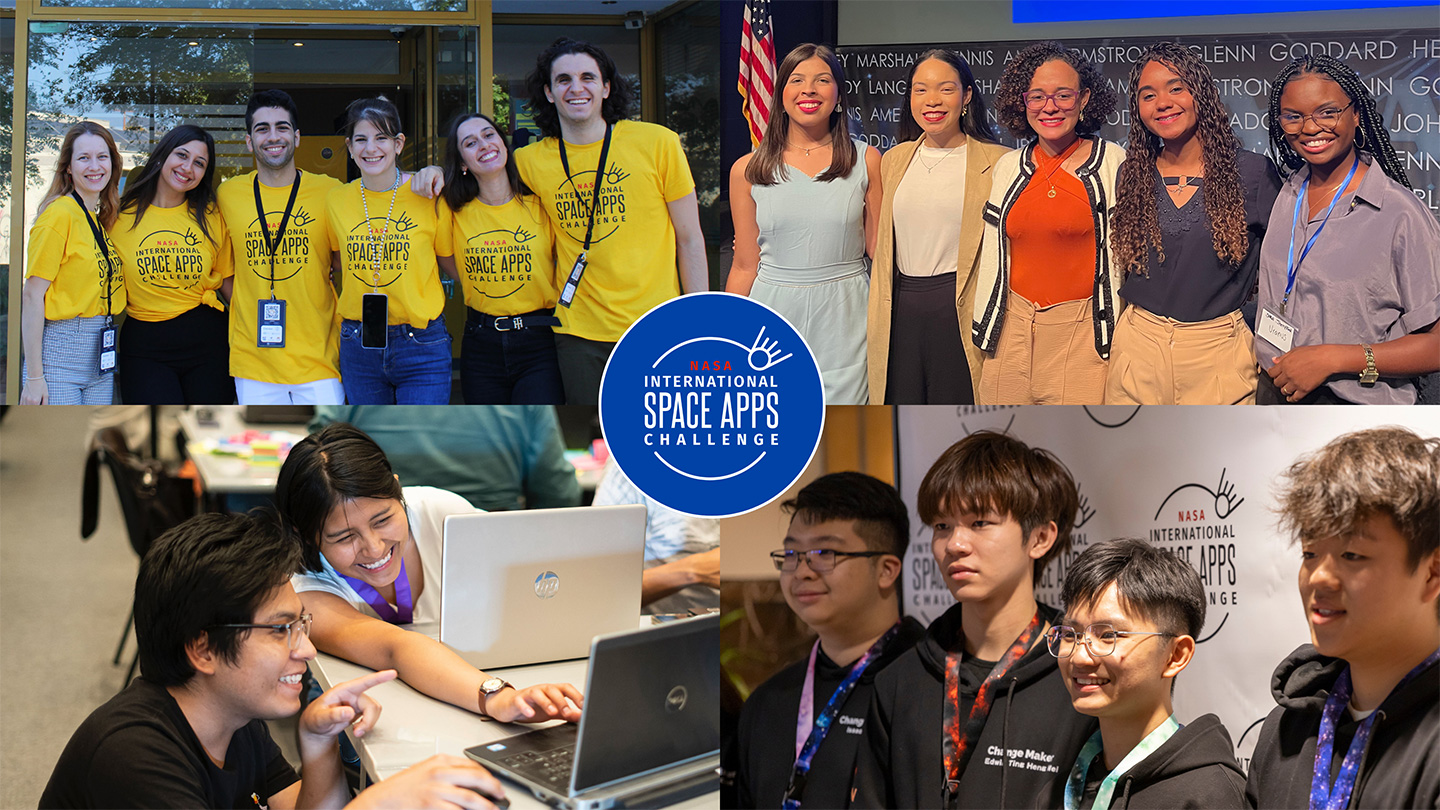
A montage showing several participants in NASA's Space Apps Challenge.

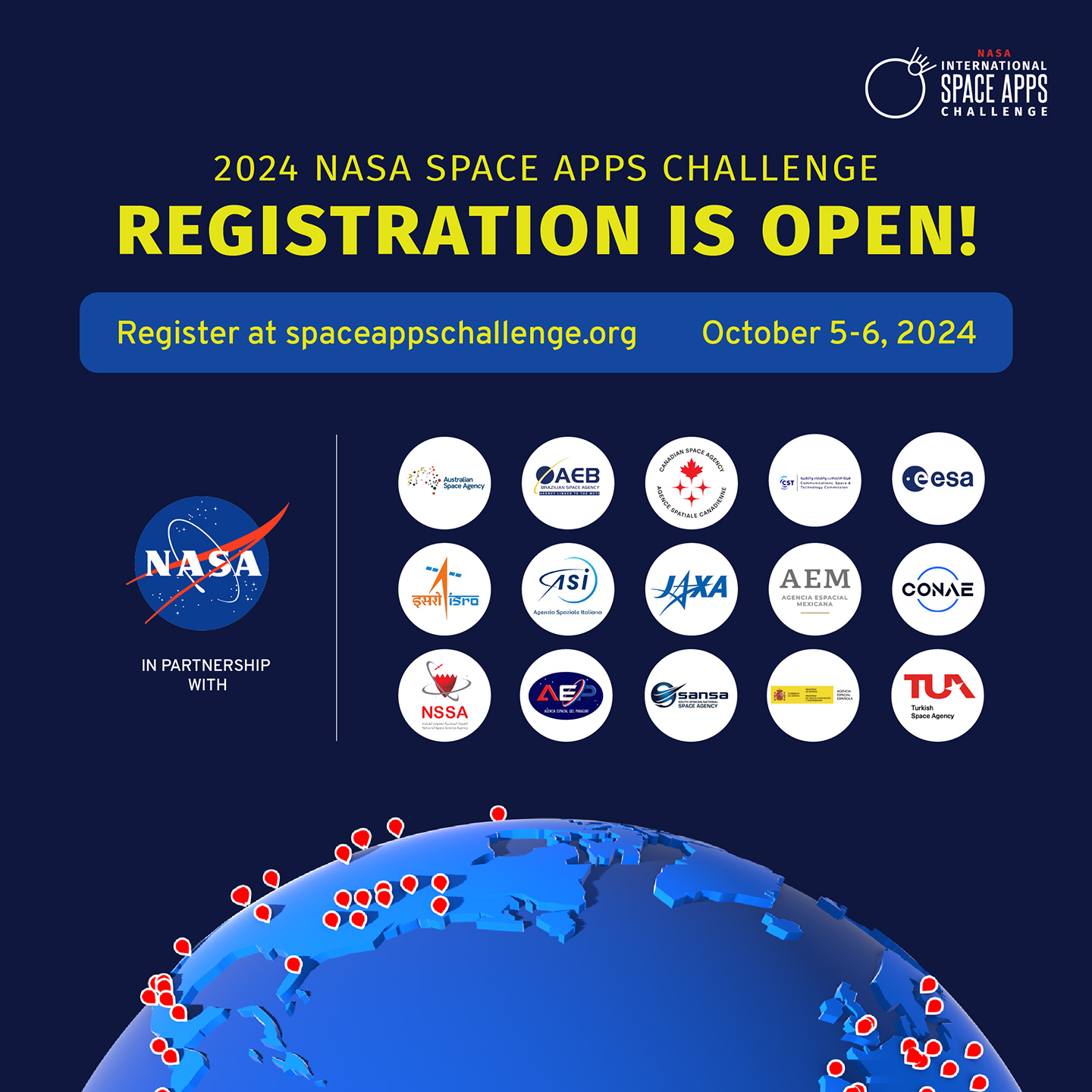
NASA invites a global community of innovators, technologists, storytellers, and problem solvers to register for the 2024 NASA Space Apps Challenge, the largest annual global hackathon. The annual event,  held this year on October 5-6, fosters innovation through international collaboration by providing an opportunity for participants to utilize NASA’s free and open data and space-based data from space agency partners.

“It takes a variety of skills and perspectives to launch a mission into space, and NASA’s Space Apps Challenge brings people together across cultures and borders toward solving real world problems on Earth and in space,” said Nicky Fox, associate administrator for the Science Mission Directorate at NASA Headquarters in Washington. “I am excited that this year’s NASA Space Apps Challenge participants will join in our global Heliophysics Big Year celebration. I look forward to seeing all the innovative ideas that our future generation puts forth.”

This year, the NASA Space Apps Challenge welcomes 15 international space agency partners, including two new agencies: the Communications, Space & Technology Commission of Saudi Arabia and the Spanish Space Agency. NASA Space Apps also welcomes back the Australian Space Agency, Brazilian Space Agency, Canadian Space Agency, European Space Agency, Indian Space Research Organization, Italian Space Agency, Japan Aerospace Exploration Agency, Mexican Space Agency, National Space Activities Commission of Argentina, National Space Science Agency of Bahrain, Paraguayan Space Agency, South African National Space Agency, and the Turkish Space Agency.

2023 NASA Space Apps Challenge registration is open -- Register at spaceappschallenge.org

During the NASA Space Apps Challenge, participants around the world gather at hundreds of simultaneous in-person and virtual local events to address challenges submitted by subject matter experts across NASA divisions. These challenges range in complexity and topic, tasking participants with everything from creating artistic visualizations of NASA data to conceptualizing and developing informational apps and software programs.

In keeping with this year’s theme, “The Sun Touches Everything,” NASA Space Apps invites participants to consider the far-reaching influence of the Sun on Earth and space science. The theme connects participants with NASA’s Heliophysics Division’s celebration of the Helio Big Year.

After the hackathon, project submissions are judged by space agency experts. Winners are selected for one of 10 global awards and invited to an in-person celebration with NASA leadership and subject matter experts.

NASA Space Apps is funded by NASA’s Earth Science Division through a contract with Booz Allen Hamilton, Mindgrub, and SecondMuse. The theme for the 2024 NASA Space Apps Challenge is funded by NASA Heliophysics Division.

We invite you to register for the 2024 NASA Space Apps Challenge and choose a virtual or in-person local event near you at:

 spaceappschallenge.org

Stay up to date with #SpaceApps by following these accounts:

X: @SpaceApps

Instagram: @nasa_spaceapps

Facebook: @spaceappschallenge

YouTube: @NASASpaceAppsChallenge

Powered by WPeMatico

Get The Details…

NASA Ames Welcomes New Zealand Prime Minister, Celebrates Partnership 

NASA Ames Welcomes New Zealand Prime Minister, Celebrates Partnership 

1 min read

Preparations for Next Moonwalk Simulations Underway (and Underwater)

Ames Center Director Eugene Tu, left, and New Zealand Prime Minister Christopher Luxon, left, pose in front of the NASA Advanced Supercomputing facility hyperwall as it displays New Zealand and Earth’s ocean currents.
NASA/ Brandon Torres Navarrete

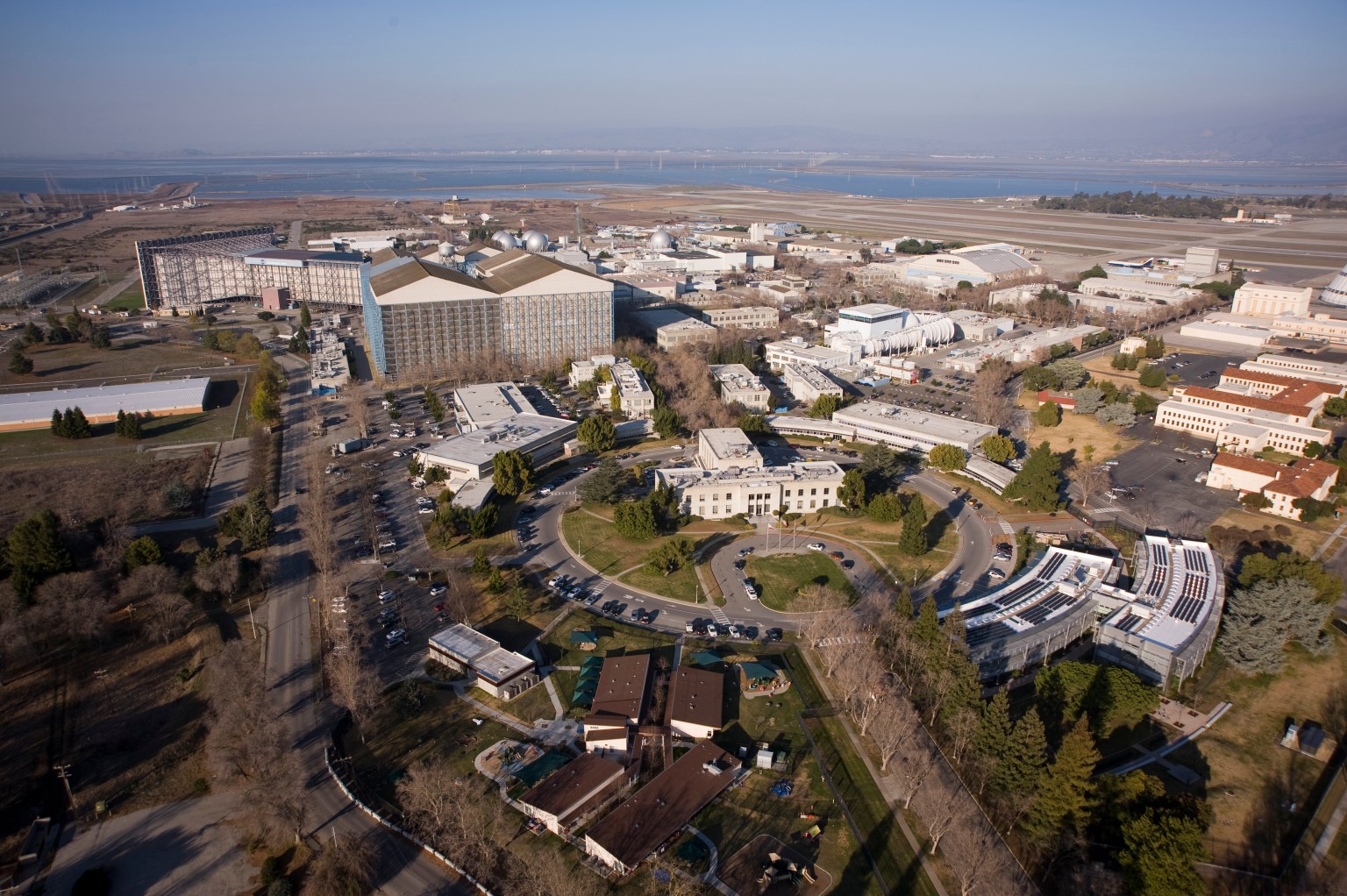
As one of eight nations that helped to develop the Artemis Accords, New Zealand is a valuable NASA partner. On July 12, New Zealand Prime Minister Christopher Luxon visited NASA’s Ames Research Center in California’s Silicon Valley to learn more about how Ames supports efforts to return humans to the Moon and the ongoing collaboration between NASA and New Zealand to observe and study Earth’s interconnected systems. 

Share

Details

Last Updated

Jul 18, 2024

Powered by WPeMatico

Get The Details…
Tara Friesen

NASA: Life Signs Could Survive Near Surfaces of Enceladus and Europa

NASA: Life Signs Could Survive Near Surfaces of Enceladus and Europa

5 min read

NASA: Life Signs Could Survive Near Surfaces of Enceladus and Europa

Europa, a moon of Jupiter, and Enceladus, a moon of Saturn, have evidence of oceans beneath their ice crusts. A NASA experiment suggests that if these oceans support life, signatures of that life in the form of organic molecules (e.g. amino acids, nucleic acids, etc.) could survive just under the surface ice despite the harsh radiation on these worlds. If robotic landers are sent to these moons to look for life signs, they would not have to dig very deep to find amino acids that have survived being altered or destroyed by radiation.

“Based on our experiments, the ‘safe’ sampling depth for amino acids on Europa is almost 8 inches (around 20 centimeters) at high latitudes of the trailing hemisphere (hemisphere opposite to the direction of Europa’s motion around Jupiter) in the area where the surface hasn’t been disturbed much by meteorite impacts,” said Alexander Pavlov of NASA’s Goddard Space Flight Center in Greenbelt, Maryland, lead author of a paper on the research published July 18 in Astrobiology. “Subsurface sampling is not required for the detection of amino acids on Enceladus – these molecules will survive radiolysis (breakdown by radiation) at any location on the Enceladus surface less than a tenth of an inch (under a few millimeters) from the surface.”

The frigid surfaces of these nearly airless moons are likely uninhabitable due to radiation from both high-speed particles trapped in their host planet’s magnetic fields and powerful events in deep space, such as exploding stars. However, both have oceans under their icy surfaces that are heated by tides from the gravitational pull of the host planet and neighboring moons. These subsurface oceans could harbor life if they have other necessities, such as an energy supply as well as elements and compounds used in biological molecules.

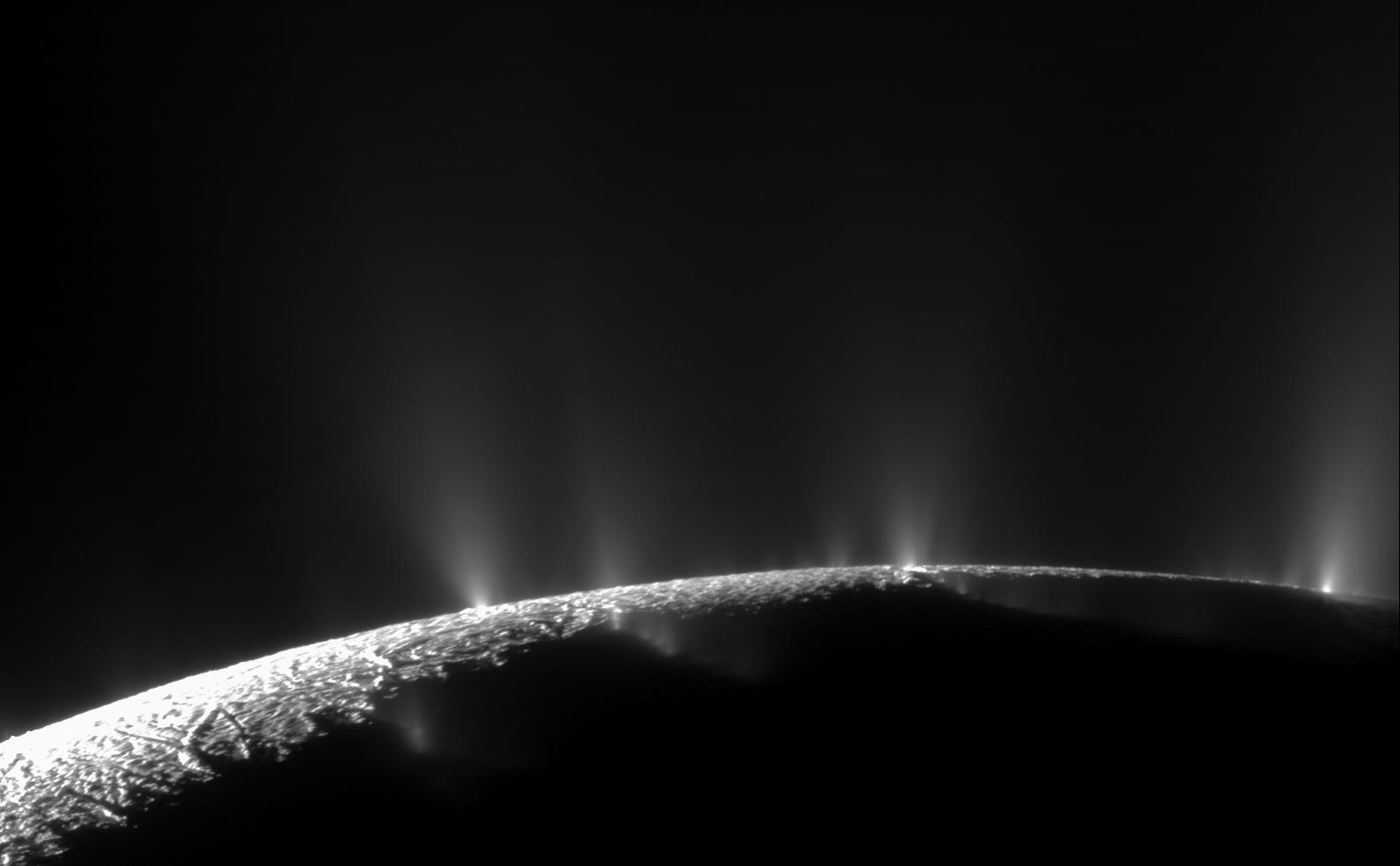
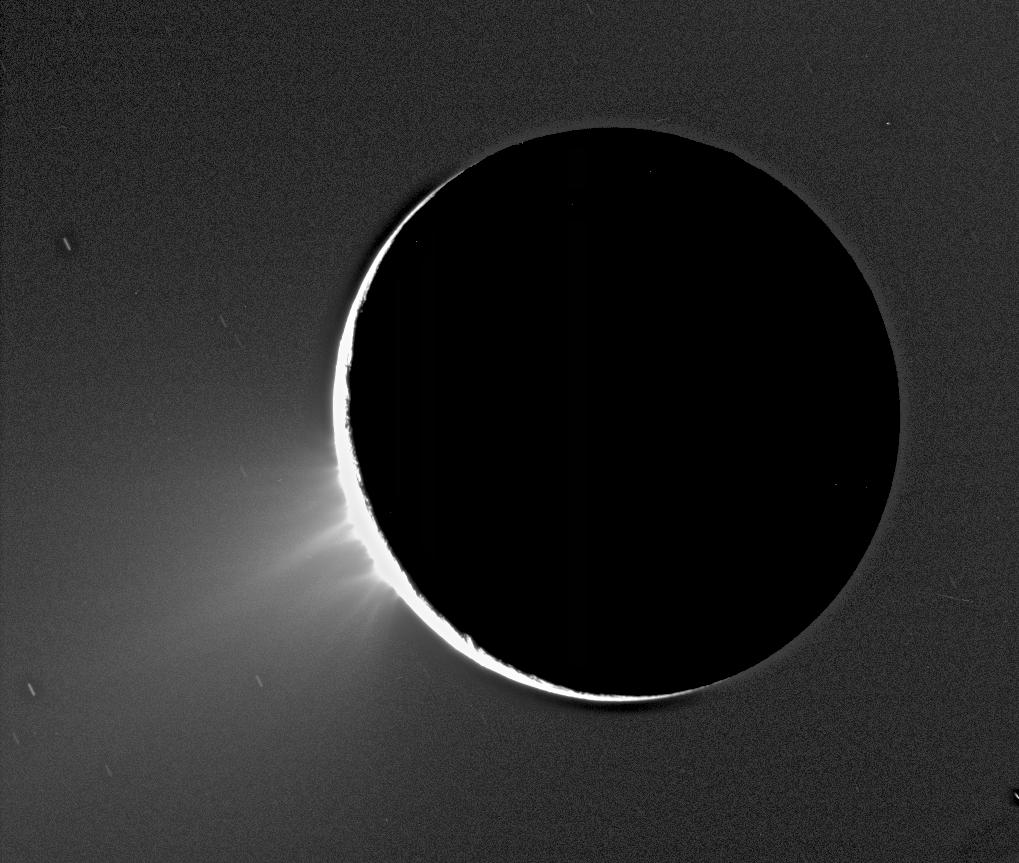
Fountains of ice erupt from the surface of Enceladus. The small moon is mostly in shadow, which makes the geysers illuminated by sunlight stand out.
Dramatic plumes, both large and small, spray water ice and vapor from many locations along the famed “tiger stripes” near the south pole of Saturn’s moon Enceladus.
NASA/JPL/Space Science Institute

The research team used amino acids in radiolysis experiments as possible representatives of biomolecules on icy moons. Amino acids can be created by life or by non-biological chemistry. However, finding certain kinds of amino acids on Europa or Enceladus would be a potential sign of life because they are used by terrestrial life as a component to build proteins. Proteins are essential to life as they are used to make enzymes which speed up or regulate chemical reactions and to make structures. Amino acids and other compounds from subsurface oceans could be brought to the surface by geyser activity or the slow churning motion of the ice crust.

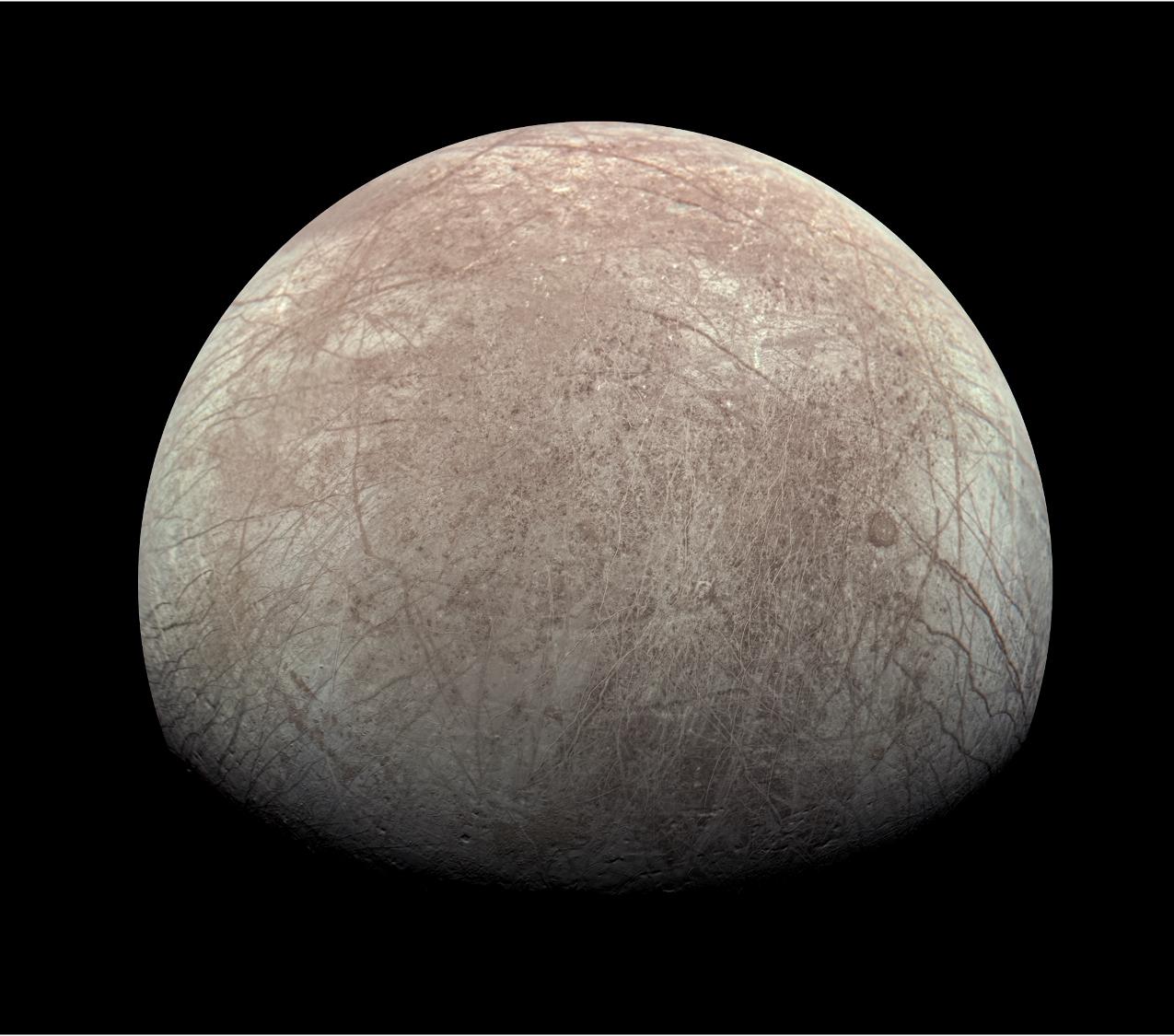
Europa has reddish brown lines and patches in this image from Juno.
This view of Jupiter’s icy moon Europa was captured by JunoCam, the public engagement camera aboard NASA’s Juno spacecraft, during the mission’s close flyby on Sept. 29, 2022. The picture is a composite of JunoCam’s second, third, and fourth images taken during the flyby, as seen from the perspective of the fourth image. North is to the left.

The images have a resolution of just over 0.5 to 2.5 miles per pixel (1 to 4 kilometers per pixel).

As with our Moon and Earth, one side of Europa always faces Jupiter, and that is the side of Europa visible here. Europa’s surface is crisscrossed by fractures, ridges, and bands, which have erased terrain older than about 90 million years.

Citizen scientist Kevin M. Gill processed the images to enhance the color and contrast.

NASA/JPL-Caltech/SwRI/MSSS Image processing: Kevin M. Gill CC BY 3.0

To evaluate the survival of amino acids on these worlds, the team mixed samples of amino acids with ice chilled to about minus 321 Fahrenheit (-196 Celsius) in sealed, airless vials and bombarded them with gamma-rays, a type of high-energy light, at various doses. Since the oceans might host microscopic life, they also tested the survival of amino acids in dead bacteria in ice. Finally, they tested samples of amino acids in ice mixed with silicate dust to consider the potential mixing of material from meteorites or the interior with surface ice.

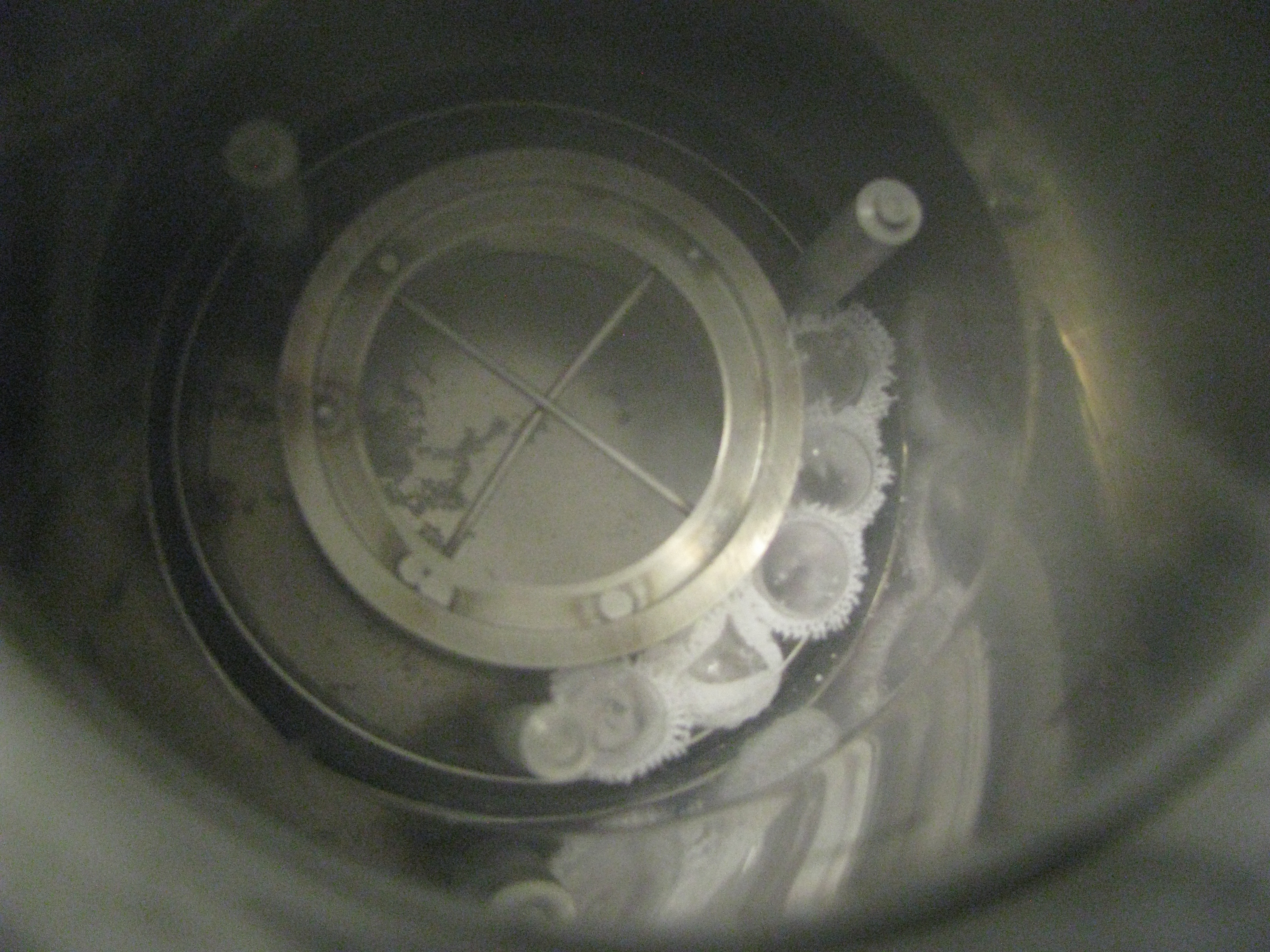
Image showing samples loaded in a dewar before being chilled with liquid nitrogen.
This image shows experiment samples loaded in the specially designed dewar which will be filled with liquid nitrogen shortly after and placed under gamma radiation. Notice that the flame-sealed test tubes are wrapped in cotton fabric to keep them together because test tubes become buoyant in liquid nitrogen and start floating around in the dewar, interfering with the proper radiation exposure.
Candace Davison

The experiments provided pivotal data to determine the rates at which amino acids break down, called radiolysis constants. With these, the team used the age of the ice surface and the radiation environment at Europa and Enceladus to calculate the drilling depth and locations where 10 percent of the amino acids would survive radiolytic destruction.

Although experiments to test the survival of amino acids in ice have been done before, this is the first to use lower radiation doses that don’t completely break apart the amino acids, since just altering or degrading them is enough to make it impossible to determine if they are potential signs of life. This is also the first experiment using Europa/Enceladus conditions to evaluate the survival of these compounds in microorganisms and the first to test the survival of amino acids mixed with dust.

The team found that amino acids degraded faster when mixed with dust but slower when coming from microorganisms.

“Slow rates of amino acid destruction in biological samples under Europa and Enceladus-like surface conditions bolster the case for future life-detection measurements by Europa and Enceladus lander missions,” said Pavlov. “Our results indicate that the rates of potential organic biomolecules’ degradation in silica-rich regions on both Europa and Enceladus are higher than in pure ice and, thus, possible future missions to Europa and Enceladus should be cautious in sampling silica-rich locations on both icy moons.”

A potential explanation for why amino acids survived longer in bacteria involves the ways ionizing radiation changes molecules — directly by breaking their chemical bonds or indirectly by creating reactive compounds nearby which then alter or break down the molecule of interest. It’s possible that bacterial cellular material protected amino acids from the reactive compounds produced by the radiation.

The research was supported by NASA under award number 80GSFC21M0002, NASA’s Planetary Science Division Internal Scientist Funding Program through the Fundamental Laboratory Research work package at Goddard, and NASA Astrobiology NfoLD award 80NSSC18K1140.

Share

Details

Last Updated

Jul 18, 2024

Editor
wasteigerwald
Contact

Powered by WPeMatico

Get The Details…