Sols 4161-4163: Double Contact Science

Sols 4161-4163: Double Contact Science

2 min read

Sols 4161-4163: Double Contact Science
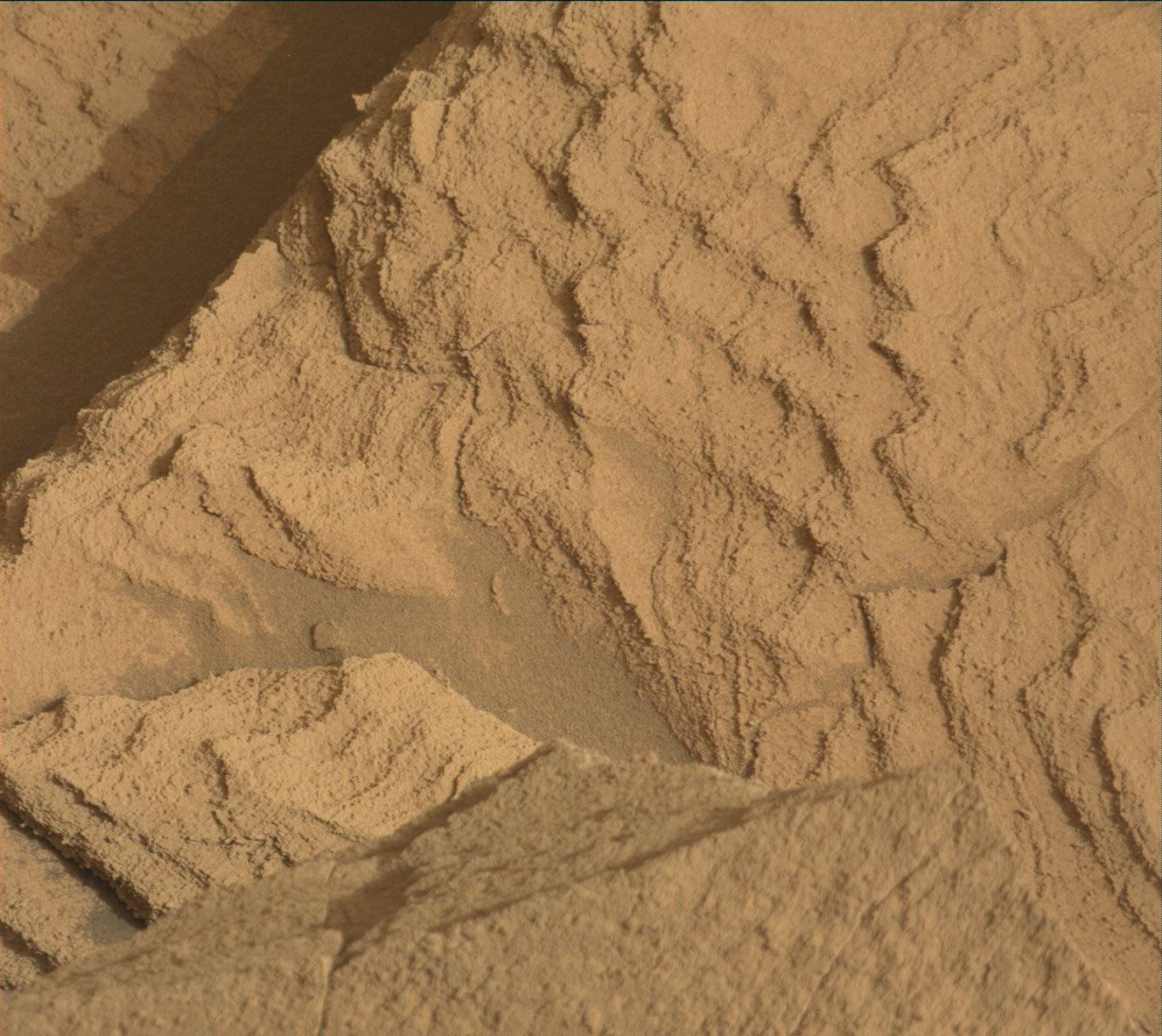
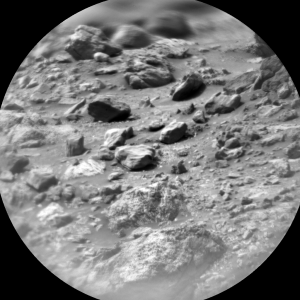
Image of Mars
This image was taken by Mast Camera (Mastcam) onboard NASA’s Mars rover Curiosity on Sol 4159 (2024-04-18 13:24:29 UTC).
NASA/JPL-Caltech/MSSS

Earth planning date: Friday, April 19, 2024

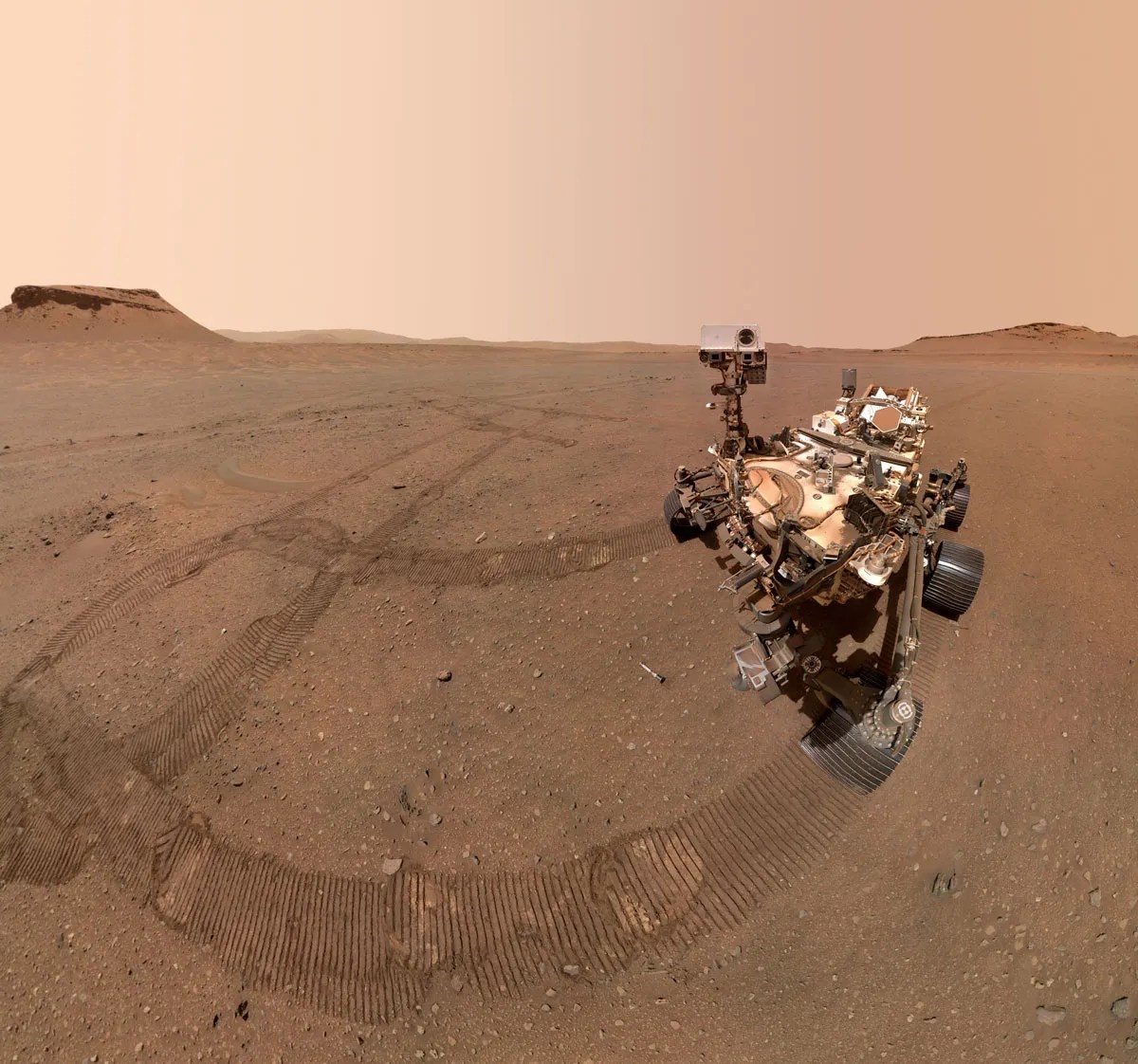
Curiosity has a three-sol weekend plan coming up as it makes progress along the edge of upper Gediz Vallis ridge. We have observations planned to investigate multiple bedrock targets with interesting rippled textures, dark-toned float, and the ridge. With two contact science targets, lots of targeted and untargeted remote observations, and a drive scheduled, Curiosity will have a busy three-sol plan ahead!

On the first sol of the plan, we have two contact science bedrock targets for MAHLI and APXS to analyze. MAHLI will image these targets up close, and APXS will acquire spectra from the targets for analysis of their elemental compositions. One of these bedrock targets (“Florence Lake”) is light-toned with laminations and will be brushed first to remove the dust on its surface. The other contact science target (“Mist Falls”) is a block of unbrushed, light-toned bedrock with a rippled texture. MAHLI also has a rotational stereo observation of “Castle Rock Spire” (a light-toned block of bedrock) and observations of the REMS UV sensor. In addition to bedrock observations by MAHLI and APXS, ChemCam has a LIBS observation of dark-toned float target “Silver Peak” on the first sol of this plan. ChemCam will also acquire long-distance RMIs of the rim of upper Gediz Vallis ridge and Fascination Turret to document stratigraphy. Mastcam will acquire mosaics to document exposed bedding, Kukenan butte, and Pinnacle Ridge.

Observations of Pinnacle Ridge by Mastcam will complement the ChemCam long-distance RMI observation of it on the second sol of the plan. This sol also has a ChemCam LIBS observation of “Needle Lake” to document different degrees of erosion of bedrock across laminations and a ChemCam passive dark test. Mastcam will image the two LIBS targets and will also acquire several mosaics of “Pahoa Island”, “Quail Flat”, and “The Nose” to document light-toned laminated bedrock, ripple structures, and characteristics of a dark float rock, respectively. On the second sol Curiosity will drive away. The third sol of the plan features untargeted remote observations, including ChemCam Passive Sky activities, dust devil observations, and Mastcam tau measurements.

Written by Abigail Knight, Graduate Student at Washington University

Share

Details

Last Updated
Apr 22, 2024

Related Terms

Powered by WPeMatico

Get The Details…

Neurology Study and Spacewalk Preps Kickoff Week

Neurology Study and Spacewalk Preps Kickoff Week

Astronaut Mike Barratt processes brain organoid samples inside the BioServe Tissue Chamber to learn how microgravity affects the central nervous system.

The Expedition 71 crew kicked off a busy schedule on Monday exploring ways to treat neurological diseases while gearing up for a spacewalk planned for Thursday. Cargo operations are also picking up as a U.S. cargo craft gets ready for its departure from the International Space Station.

Researchers use the orbital outpost’s weightless environment to gain insights impossible to achieve on Earth’s surface. Results extrapolated from the space investigations can be applied not only to promoting living in space for crews but also improving health and industry on Earth for humans.

On Monday, NASA Flight Engineers Tracy C. Dyson and Mike Barratt took turns processing brain organoid samples for a neurodegenerative disorder study. Dyson first serviced the specimens and injected a drug treatment into the sample cultures for a microscopic analysis of the therapy’s ability to counteract the effects of microgravity. Barratt processed the samples at the end of the day preparing them for stowage and later analysis. Doctors will use the results to learn how protect a crew member’s central nervous system and provide treatments for neurodegenerative conditions on Earth.

The duo then joined fellow NASA astronauts Matthew Dominick and Jeanette Epps and helped pack the SpaceX Dragon spacecraft with cargo ahead of its targeted undocking on Friday, April 26. Soon the crewmates will begin concentrating on stowing completed science experiments, including the brain organoid study, and their critical research samples inside Dragon for the ride back to Earth and analysis in laboratories.

Station Commander Oleg Kononenko and Flight Engineer Nikolai Chub are getting ready for the year’s first spacewalk at the orbital lab set to begin at 10:55 a.m. EDT on Thursday. The duo tried on their Orlan spacesuits today checking for pressure leaks and testing their communications and medical systems. The cosmonauts will spend about seven hours in the vacuum of space configuring hardware and installing experiments on the Roscosmos segment of the space station.

Cosmonaut Alexander Grebenkin assisted his cosmonaut crewmates helping the duo in and out of their Orlan spacesuits and checking the suits’ components and batteries. Grebenkin then spent the rest of Monday servicing Roscosmos life support hardware and ventilation systems.


Learn more about station activities by following the space station blog@space_station and @ISS_Research on X, as well as the ISS Facebook and ISS Instagram accounts.

Get weekly video highlights at: https://roundupreads.jsc.nasa.gov/videoupdate/

Get the latest from NASA delivered every week. Subscribe here: www.nasa.gov/subscribe

Powered by WPeMatico

Get The Details…

Mark Garcia

NASA Astronaut to Inspire Artemis Generation in Boston

NASA Astronaut to Inspire Artemis Generation in Boston

Astronaut doing work on ISS
Astronaut Stephen Bowen
NASA

April 22, 2024 

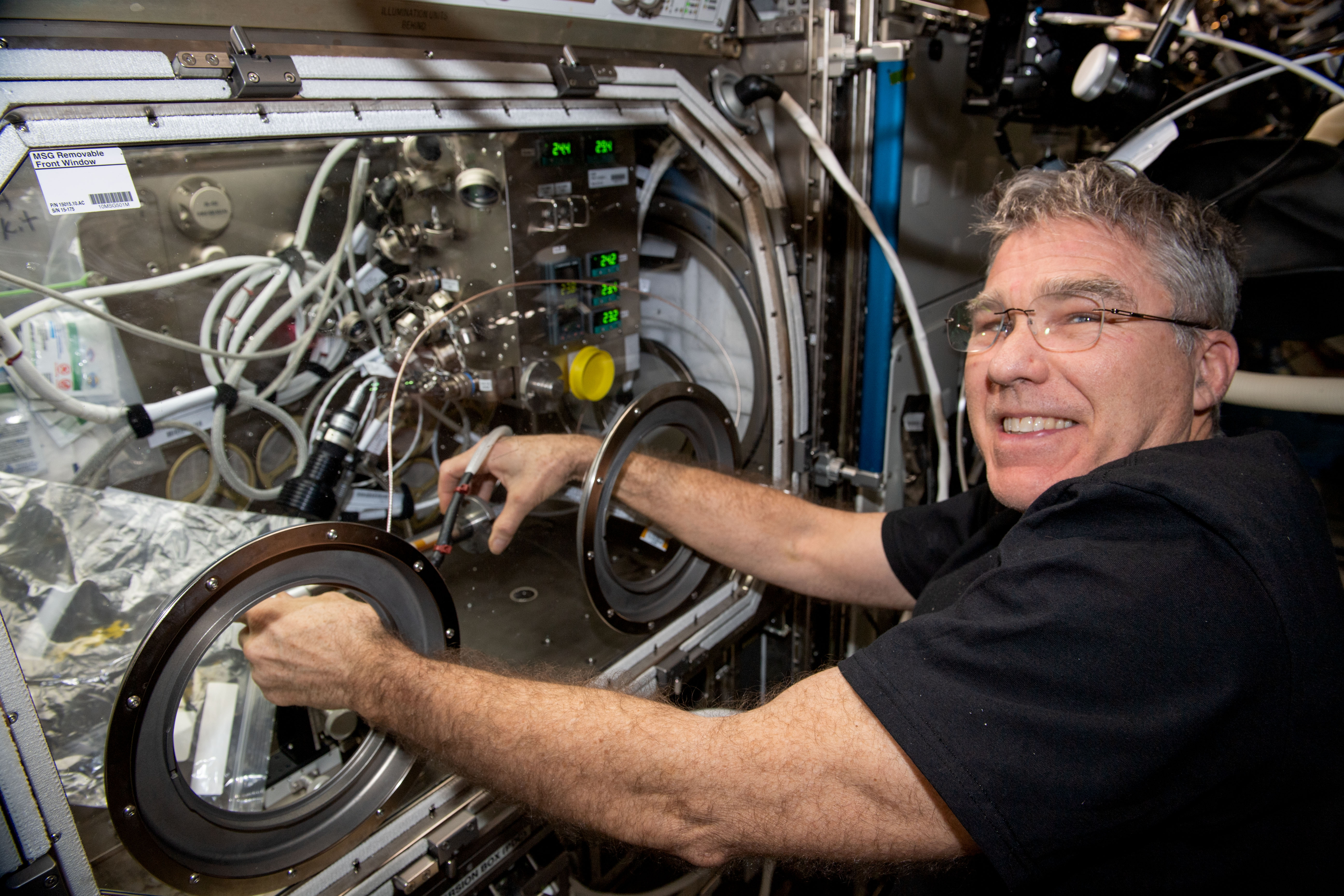
NASA astronaut Stephen Bowen, along with representatives from NASA and the International Space Station National Laboratory, will visit Boston on Wednesday, April 24, and Thursday, April 25, as part of the agency’s Destination Station to highlight research opportunities aboard the station.

Destination Station was created to educate the public and engage prospective researchers about the benefits, capabilities, and opportunities to use the space station. The space station has been continuously inhabited for more than 23 years, enabling more than 5,000 researchers to conduct more than 3,500 innovative experiments in the areas of biology and biotechnology, human health, space and physical science, and technology.

Throughout the week, NASA and the ISS National Lab will meet with a variety of academic institutions, business incubators, and private-sector companies with ties to the Boston community. During the visits, Bowen will provide perspectives on living and working in space.

Media who wish interview Bowen during the outreach events in Boston, should contact Kara Slaughter at kara.c.slaughter@nasa.gov or 281-483-5111.

Bowen was the first submarine officer selected to be a NASA astronaut. He most recently served as commander of NASA’s SpaceX Crew-6 mission to the station where he was part of a six-month research mission, Expedition 69. He is a veteran of three space shuttle flights to the station, including STS-126, STS-132, and STS-133. Bowen has logged a total of 227 days in space and conducted 10 extravehicular activities in his career. His 10 spacewalks make him one of five humans who have conducted that many spacewalks and he is third on the all-time list for most cumulative spacewalking time. Bowen and the crews of Expedition 68 and 69 conducted more than 200 science experiments including tissue chip research, bioprinting human cells and tissues in space, and studying antibodies in microgravity. Bowen is a Massachusetts native and earned his bachelor’s degree from the United States Naval Academy in Annapolis, Maryland, and his master’s degree from the Massachusetts Institute of Technology in Cambridge.

Over the years, NASA’s Destination Station has led to research collaborations aboard the orbiting laboratory with a variety of academic and commercial companies. This visit also is a prelude to the 13th annual International Space Station Research and Development Conference at the Boston Marriott Copley Square from July 29 – Aug. 1, 2024.

Learn more about the International Space Station and its crews at:

http://www.nasa.gov/station

Discover the International Space Station U.S. National Laboratory at:

https://www.issnationallab.org

-end-

Kara Slaughter

Johnson Space Center, Houston

281-483-5111

kara.c.slaughter@nasa.gov

Powered by WPeMatico

Get The Details…
Wendy K. Avedisian

NASA Invites Media to Learn About New Tech Mission Powered by the Sun

NASA Invites Media to Learn About New Tech Mission Powered by the Sun

A new NASA mission is testing a new way to navigate our solar system by hoisting its sail into space – not to catch the wind, but the propulsive power of sunlight.

NASA’s Advanced Composite Solar Sail System is led by the agency’s Ames Research Center in California’s Silicon Valley. The microwave oven-sized CubeSat is scheduled to launch aboard a Rocket Lab Electron rocket from the company’s Launch Complex 1 on the Mahia Peninsula of New Zealand. The launch window opens at 3 p.m. PDT on Tuesday, April 23 (10 p.m. UTC). Successful deployment and operation of the solar sail’s lightweight composite booms will prove the capability and open the door to larger scale missions to the Moon, Mars, and beyond.  

Once it arrives in its orbit, roughly 600 miles above Earth, the CubeSat will deploy a lightweight sunlight-powered composite solar sail system that measures more than 800 square feet. Much like a sailboat uses wind to traverse the ocean, the solar sail technology will use the pressure of sunlight to travel through space and perform a series of maneuvers to demonstrate orbit raising and lowering. Throughout the demonstration, the spacecraft may be visible to the naked eye in the night sky.

Media interested in scheduling an interview with one of the NASA Ames engineers involved with the development of the CubeSat should email the NASA Ames Office of Communications at arc-dl-newsroom@mail.nasa.gov.

A media resource reel including animated clips of the solar sail system is available here

Get launch updates, breaking news, and images on the small satellites blog as well as NASA Ames’ InstagramFacebook, and X.

For more information about NASA’s Ames Research Center, visit:

https://www.nasa.gov/ames

-end-

Rachel Hoover

Ames Research Center, Silicon Valley, Calif.
650-604-4789

rachel.hoover@nasa.gov

Powered by WPeMatico

Get The Details…
Rachel Hoover

NASA Announces 30th Human Exploration Rover Challenge Winners

NASA Announces 30th Human Exploration Rover Challenge Winners

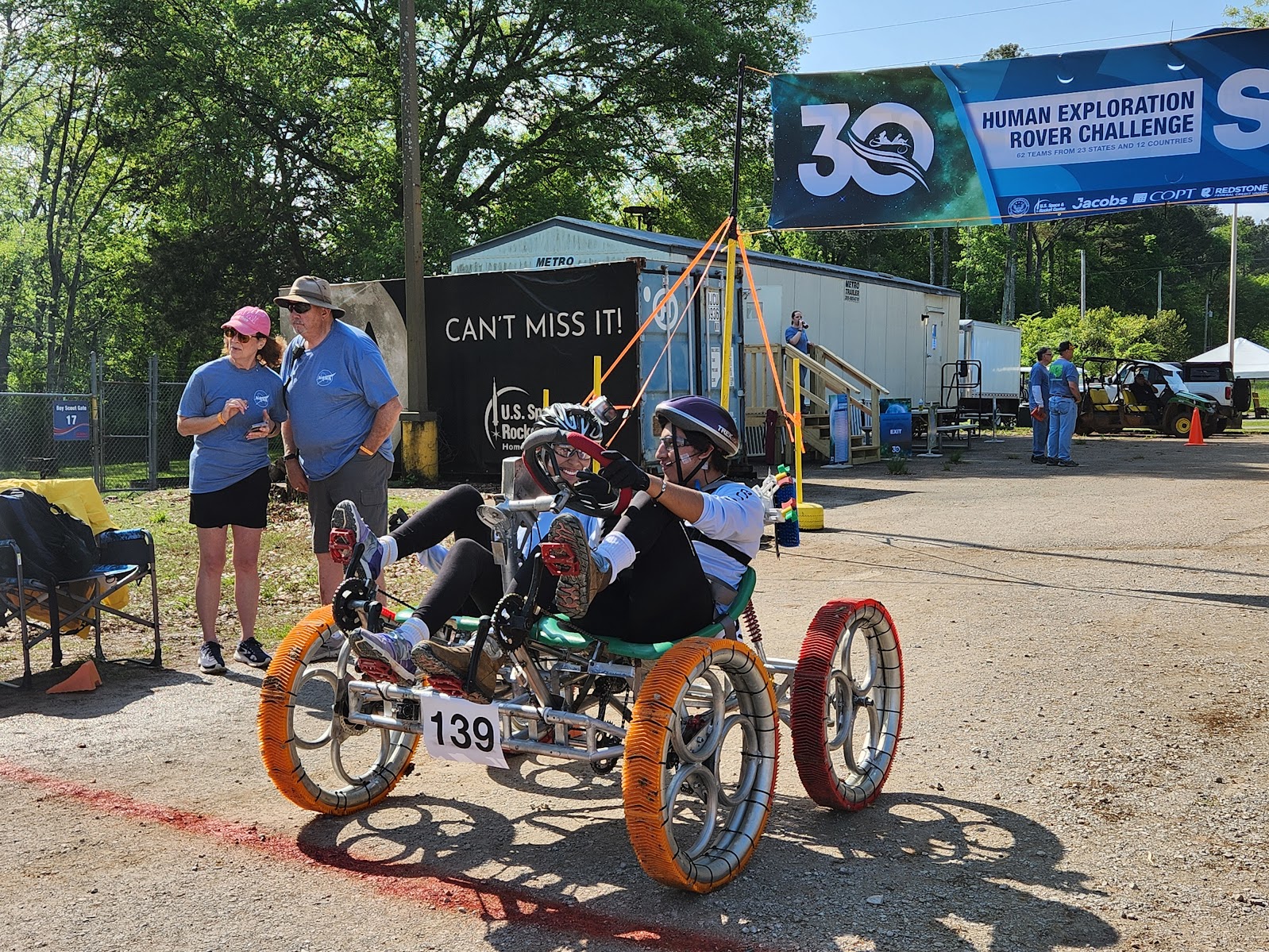
Students from Universidad Católica Boliviana prepare to traverse the course at the 2024 Human Exploration Rover Challenge at the U.S. Space & Rocket Center in Huntsville, Alabama, near NASA’s Marshall Space Flight Center.
Credits: NASA/Taylor Goodwin

NASA announced the winners of the 30th Human Exploration Rover Challenge (HERC) April 22, with Parish Episcopal School, from Dallas, winning first place in the high school division, and the University of Alabama in Huntsville, capturing the college/university title.

The annual engineering competition – one of NASA’s longest standing challenges – held its concluding event April 19 and April 20, at the U.S. Space & Rocket Center in Huntsville, Alabama, near NASA’s Marshall Space Flight Center. The complete list of 2024 award winners is provided below:

High School Division 

  • First Place: Parish Episcopal School, Dallas
  • Second Place: Academy of Arts, Careers and Technology, Reno, Nevada
  • Third Place: Escambia High School, Pensacola, Florida

College/University Division 

  • First Place: University of Alabama in Huntsville
  • Second Place: Instituto Tecnológico de Santo Domingo, Dominican Republic
  • Third Place: Campbell University, Buies Creek, North Carolina

Ingenuity Award 

  • University of West Florida, Pensacola, Florida

Phoenix Award 

  • High School Division: East Central High School, Moss Point, Mississippi
  • College/University Division: North Dakota State University, Fargo, North Dakota

Task Challenge Award 

  • High School Division: Erie High School, Erie, Colorado
  • College/University Division: South Dakota School of Mines and Technology, Rapid City, South Dakota

Project Review Award 

  • High School Division: Parish Episcopal School, Dallas
  • College/University Division: University of Alabama in Huntsville

Featherweight Award 

  • Rhode Island School of Design, Providence, Rhode Island

Safety Award 

  • High School Division: NPS International School, Singapore
  • College/University Division: Instituto Especializado de Estudios Superiores Loyola, San Cristobal, Dominican Republic

Crash and Burn Award 

  • KIET Group of Institutions, Delhi-NCR, India

Jeff Norris and Joe Sexton Memorial Pit Crew Award 

Team Spirit Award 

  • Instituto Tecnológico de Santo Domingo, Dominican Republic

Most Improved Performance Award

  • High School Division: Jesco von Puttkamer School, Leipzig, Germany
  • College/University Division: Universidad Católica Boliviana – San Pablo, La Paz, Bolivia

Social Media Award 

  • High School Division: Bledsoe County High School, Pikeville, Tennessee
  • College/University DivisionUniversidad de Piura, Peru

STEM Engagement Award 

  • High School Division: Princess Margaret Secondary School, Surrey, British Columbia
  • College/University Division: Trine University, Angola, Indiana

Artemis Educator Award

  • Sadif Safarov from Istanbul Technical University, Turkey

Rookie of the Year

  • Kanakia International School, Mumbai, India

More than 600 students with 72 teams from around the world participated as HERC celebrated its 30th anniversary as a NASA competition. Participating teams represented 42 colleges and universities and 30 high schools from 24 states, the District of Columbia, Puerto Rico, and 13 other nations from around the world. Teams were awarded points based on navigating a half-mile obstacle course, conducting mission-specific task challenges, and completing multiple safety and design reviews with NASA engineers. 

“This student design challenge encourages the next generation of scientists and engineers to engage in the design process by providing innovative concepts and unique perspectives,” said Vemitra Alexander, HERC activity lead for NASA’s Office of STEM Engagement at Marshall. “While celebrating the 30th anniversary of the challenge, HERC also continues NASA’s legacy of providing valuable experiences to students who may be responsible for planning future space missions including crewed missions to other worlds.”

HERC is one of NASA’s eight Artemis Student Challenges reflecting the goals of the Artemis program, which seeks to land the first woman and first person of color on the Moon while establishing a long-term presence for science and exploration. NASA uses such challenges to encourage students to pursue degrees and careers in the fields of science, technology, engineering, and mathematics. 

HERC is managed by NASA’s Southeast Regional Office of STEM Engagement at Marshall. Since its inception in 1994, more than 15,000 students have participated in HERC – with many former students now working at NASA, or within the aerospace industry.    

To learn more about HERC, please visit: 

https://www.nasa.gov/roverchallenge/home/index.html   

-end-

Gerelle Dodson
NASA Headquarters, Washington
202-358-4637
gerelle.q.dodson@nasa.gov

Taylor Goodwin 
Marshall Space Flight Center, Huntsville, Ala. 
256-544-0034
taylor.goodwin@nasa.gov

Powered by WPeMatico

Get The Details…
Tiernan P. Doyle