Astronauts Prep for May Spacewalk Amid Human Research and Crew Departure

Astronauts Prep for May Spacewalk Amid Human Research and Crew Departure

918I0913.NEF
Astronaut Anne McClain works inside the Quest airlock assembling hardware that will be installed during an upcoming spacewalk to prepare the International Space Station for a new rollout solar array.
NASA

Two NASA astronauts are preparing their spacesuits for a spacewalk planned for the beginning of May to ready the International Space Station for a new rollout solar array. In the meantime, the rest of the Expedition 72 crew on Tuesday kept up its ongoing vision, respiratory, and circulatory system research ahead of this weekend’s crew departure.

Flight Engineers Anne McClain and Nichole Ayers have been tapped by mission managers to exit the orbital outpost’s Quest airlock on May 1 for a spacewalk and work six-and-half hours in the vacuum of space. The NASA duo will install a modification kit on the port side of the station’s truss structure enabling the future installation of the orbiting lab’s seventh rollout solar array. They will also relocate an antenna that communicates with approaching and departing commercial crew and cargo spacecraft. McClain will be going on her third spacewalk and Ayers will be conducting her first spacewalk.

McClain and Ayers spent Tuesday inside Quest adjusting the spacesuits ensuring the helmets, boots, and arm and leg assemblies they will wear fit together. Next, the pair powered up and checked the functionality of suit components such as  glove heaters, data recorders, cameras, and helmet lights. Finally, McClain and Ayers began collecting and configuring the tools they will use during the upcoming maintenance spacewalk.

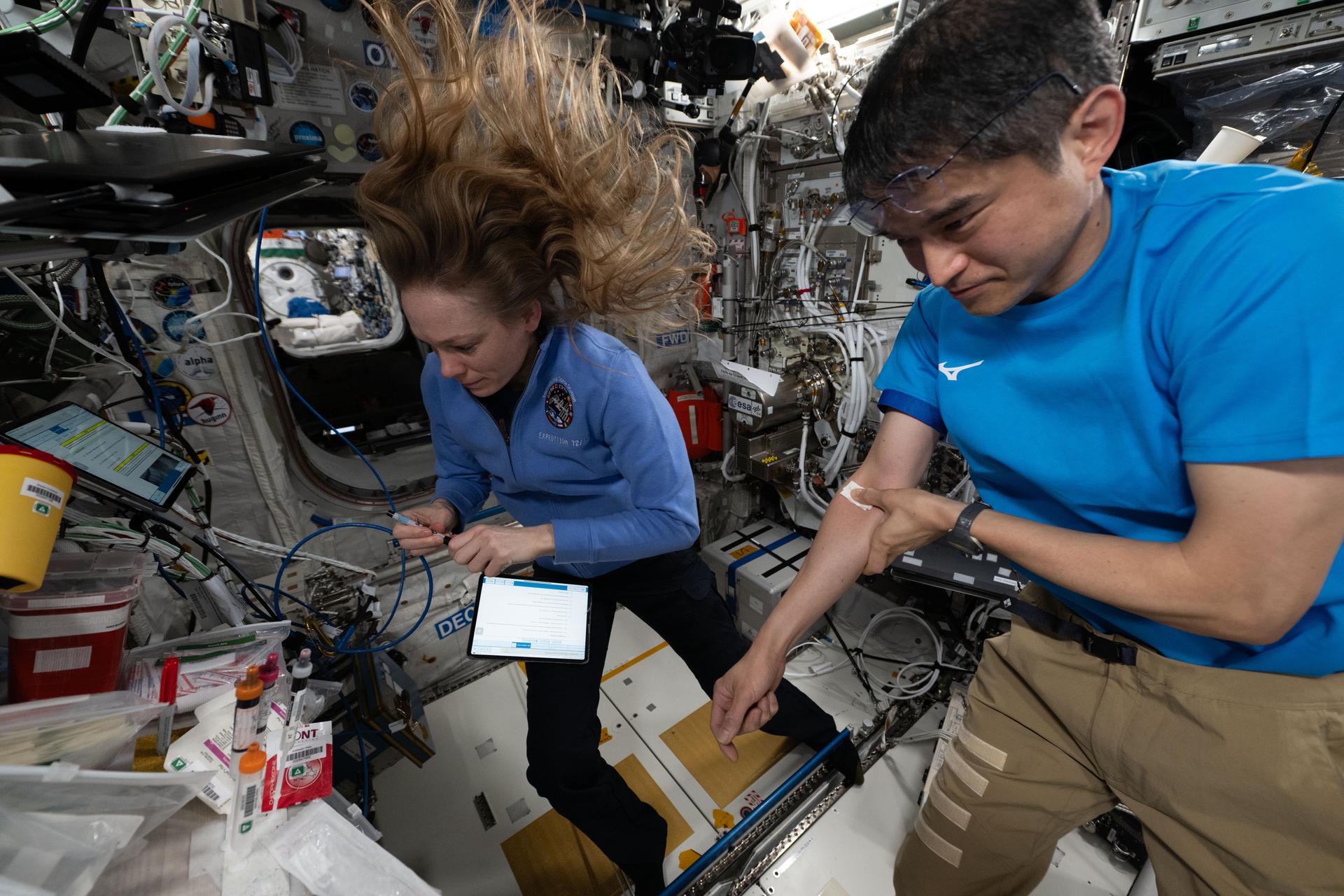
Ayers earlier assisted NASA Flight Engineer Jonny Kim during the CIPHER investigation on Tuesday checking his blood pressure and performing an ultrasound scan. Kim wore electrodes as Ayers measured his blood pressure and scanned his chest using the Ultrasound 2 device. Doctors will use the data to determine if longer spaceflights lead to changes in vascular structure and function that may affect an astronaut’s eyes and vision. Ayers, Onishi, and McClain later took a vision test reading characters off a standard eye chart.

Kim also took turns with JAXA (Japan Aerospace Exploration Agency) astronaut Takuya Onishi and trained for the arrival of the SpaceX Dragon cargo craft next week. The duo reviewed the different approach and rendezvous profiles Dragon may use based on the station’s position in space and the techniques used to monitor the spacecraft before it docks to the orbital outpost. Dragon is scheduled to launch from NASA’s Kennedy Space Center at 4:15 a.m. on Monday, April 21, and dock to the station’s space-facing port on the Harmony module at 8:20 a.m. the next day.

Roscosmos Flight Engineers Sergey Ryzhikov and Alexander Zubritsky continued their human research studies first measuring their exhalation rate for a respiratory study then observing how blood flows back and forth from the head to the limbs. Doctors will use the insights to understand how microgravity affects the human body and learn how to keep crews healthy on long duration spaceflights. Flight Engineer Kirill Peskov started Tuesday with orbital plumbing work then checked the station’s Roscosmos segment for stowage space and inspected batteries and electronics components.

NASA astronaut Don Pettit and Roscosmos cosmonauts Alexey Ovchinin and Ivan Vagner continue preparing for their return to Earth planned for 9:20 p.m. on Saturday, Aug. 19 (6:20 a.m. on Sunday, May 20, Kazakh time). The trio is cleaning crew quarters, packing personal items, and handing over responsibilities to the crewmates staying behind. Ovchinin will also turn his station command over to Onishi the day before he leaves. Expedition 72 will end and Expedition 73 will officially begin when Pettit, Ovchinin, and Vagner undock from the Rassvet module inside the Soyuz MS-26 crew ship at 5:57 p.m. on Saturday.

Learn more about station activities by following the space station blog, @space_station and @ISS_Research on X, as well as the ISS Facebook and ISS Instagram accounts.

Get the latest from NASA delivered every week. Subscribe here: https://www.nasa.gov/subscribe

Powered by WPeMatico

Get The Details…

Mark A. Garcia

Crew Studies Space-Caused Eye Changes as Trio Preps for Departure

Crew Studies Space-Caused Eye Changes as Trio Preps for Departure

939N0282.NEF
This long duration photograph taken from the International Space Station highlights star trails and Earth’s atmospheric glow moments before the orbital outpost soared into a sunrise. In the foreground (from left), are the Soyuz MS-26 spacecraft docked to the Rassvet module, a set of the station’s main solar arrays, and the Canadarm2 robotic arm.
NASA

The Expedition 72 crew began the week exploring what happens to a crew member’s eyes after living in space for months or years at a time. The International Space Station residents also kept up a host of other microgravity research, continued servicing spacesuits, and prepared for the departure of three crewmates.

Astronauts on future missions to the Moon or Mars will experience increased risk to their vision and eye structure due to longer periods of exposure to microgravity. The CIPHER study, composed of 14 human research investigations, looks at the physical and psychological health of astronauts living in space and applies the knowledge to keep crews healthy on long term missions farther away from Earth.

One portion of the CIPHER investigation seeks to identify how much a crew member’s brain and eye structure changes the longer they stay in space. NASA Flight Engineers Anne McClain led that study today peering into the eyes of NASA Flight Engineer Jonny Kim. She first measured how his retinas respond to light activity using electrodes and eye drops. Next, she took a closer look at his retina, optic nerve, and cornea using medical imaging hardware. Scientists will use the insights gained from the research data to understand how the human body adapts to spaceflight and provide countermeasures.

Earlier, McClain partnered with Flight Engineers Nichole Ayers of NASA and Takuya Onishi of JAXA (Japan Aerospace Exploration Agency) and worked on a variety of spacesuit hardware. McClain and Onishi first checked out the functionality of controllers that display the operational status of a spacesuit during a spacewalk. Next, Onishi joined Ayers and organized spacewalking tools inside the Quest airlock where spacewalks in U.S. spacesuits are staged.

Kim studied procedures to monitor a SpaceX Dragon cargo spacecraft as it approaches the orbital outpost for a docking. Kim then reviewed the various approach and rendezvous scenarios Dragon may encounter during its upcoming mission this month to deliver several thousand pounds of science and supplies to the crew.

NASA Flight Engineer Don Pettit is nearing the end of his mission with station Commander Alexey Ovchinin and Flight Engineer Ivan Vagner of Roscosmos. The trio will undock aboard the Soyuz MS-26 spacecraft at 5:57 p.m. EDT on Saturday, April 19, and land in Kazakhstan about 9:20 p.m. (6:20 a.m. on Sunday, May 20, Kazakh time) ending the Expedition 72 mission. Ovchinin and Vagner prepared for the end of their mission by testing the lower body negative pressure suit that may help them adjust quicker to Earth’s gravity. Pettit packed his personal belongings for the ride back to Earth and found time to disassemble, service, and stow a variety of space physics hardware onboard the orbiting lab.

Roscosmos cosmonauts Sergey Ryzhikov and Alexey Zubritsky who, along with Kim, are in their second week in space, continued studying how their circulatory system is adjusting to microgravity. Once again, the duo attached sensors to their foreheads, fingers, and toes measuring how blood flows back and forth from the head to the limbs in space. Flight Engineer Kirill Peskov assisted Ovchinin and Vagner as they tested the lower body negative pressure suit then cleaned and disinfected the Nauka science module.

Learn more about station activities by following the space station blog, @space_station and @ISS_Research on X, as well as the ISS Facebook and ISS Instagram accounts.

Get the latest from NASA delivered every week. Subscribe here: https://www.nasa.gov/subscribe

Powered by WPeMatico

Get The Details…

Mark A. Garcia

Crew Works on Spacesuits, Studies How Space Affects Breathing, Blood System

Crew Works on Spacesuits, Studies How Space Affects Breathing, Blood System

NASA astronaut and Expedition 72 Flight Engineer Don Pettit inspects a spacesuit aboard the International Space Station's Quest airlock.
Astronaut Don Pettit inspects a spacesuit aboard the International Space Station’s Quest airlock.
NASA

Spacesuit checks and breath and blood circulation studies wrapped up the week for the Expedition 72 crew aboard the International Space Station. Meanwhile, three new crewmates are getting used to life in space while another trio is preparing to return to Earth.

NASA Flight Engineers Anne McClain and Nichole Ayers worked throughout Friday inside the Quest airlock installing display and control modules on a pair of spacesuits. The liquid crystal electronics gear features controllers and displays the operational status of the spacesuit. Next, NASA Flight Engineers Jonny Kim and Don Pettit reviewed procedures to ensure the spacesuits are ready to wear and the necessary suit hardware is installed.

Kim has been in space less than a week having arrived aboard the Soyuz MS-27 spacecraft on April 8 with Roscosmos cosmonauts Sergey Ryzhikov and Alexey Zubritsky. The trio has been getting used to life in weightlessness, learning how to operate space station systems, and rapidly getting to work on standard maintenance and research tasks.

Kim spent a portion of Friday installing orbital plumbing gear and transferring fluids in the Tranquility module. Ryzhikov and Zubritsky were back together at the end of the week working on two different space biology experiments. The pair first explored how microgravity affects their breathing rate. Next, the two cosmonauts wore sensors on their forehead, fingers, and toes measuring how their blood circulates in space.

Pettit is turning his attention to his upcoming departure with station Commander Alexey Ovchinin and Flight Engineer Ivan Vagner who have been aboard the station since Sept. 11, 2024. Pettit is gradually handing over his responsibilities to his new crewmates and spent a few moments on Friday training them how to use the advanced resistive exercise device. Ovchinin and Vagner practiced on a computer the techniques they will use when they into Earth’s atmosphere inside the Soyuz MS-26 spacecraft. The threesome will undock aboard the Soyuz from the Rassvet module and land in Kazakhstan on April 19 ending the Expedition 72 mission.

Pettit had spent the first part of Friday studying how water, liquid salt, and olive oil droplets transition from a frozen state to a liquid state in microgravity for a student experiment. He then scanned JAXA (Japan Aerospace Exploration Agency) astronaut Takuya Onishi’s neck, shoulder, and leg veins using the Ultrasound 2 device to understand how his body is adapting to space.

Ovchinin and Vagner also partnered with Roscosmos Flight Engineer Kirill Peskov and tested the lower body negative pressure suit that may pull body fluids toward the feet and prevent space-caused head and eye pressure. The specialized suit may also help crews quickly readjust to Earth’s gravity after living in space for months or years at a time.

Learn more about station activities by following the space station blog, @space_station and @ISS_Research on X, as well as the ISS Facebook and ISS Instagram accounts.

Get the latest from NASA delivered every week. Subscribe here: https://www.nasa.gov/subscribe

Powered by WPeMatico

Get The Details…

Mark A. Garcia

Cardiovascular Research Continues Before Crew Departure, Next Cargo Mission

Cardiovascular Research Continues Before Crew Departure, Next Cargo Mission

The boot of Italy well-defined by the nation's city lights stands in contrast to the Tyrrhenian Sea (left) and the Adriatic Sea (right) with the Balkans at far right underneath an atmospheric glow blanketing Earth's horizon. The International Space Station was orbiting 262 miles above southern Europe at 10:57 p.m. local time when this photograph was taken.
The boot of Italy well-defined by the nation’s city lights stands in contrast to the Tyrrhenian Sea (left) and the Adriatic Sea (right) with the Balkans at far right underneath an atmospheric glow blanketing Earth’s horizon.
NASA

Preventing space-caused head and eye pressure and observing how blood flows in weightlessness were the top research objectives aboard the International Space Station on Thursday. The Expedition 72 crew is also preparing to split up while getting ready for the next U.S. cargo mission this month.

Doctors are testing a specialized thigh cuff for its ability to reduce blood flow toward an astronaut’s upper body caused by microgravity. Nichole Ayers of NASA assisted Takuya Onishi of JAXA (Japan Aerospace Exploration Agency) while he wore a pair of the thigh cuffs on his left and right legs. Ayers then scanned Onishi’s legs with the Ultrasound 2 device and collected blood pressure measurements to determine the effectiveness of the thigh cuffs. She also checked his eyes using medical imaging hardware to detect potential eye structure changes, a possible symptom of living in space. Knowledge gained from the biomedical study could protect crews on long duration missions to the Moon, Mars, and beyond.

Roscosmos Flight Engineers Sergey Ryzhikov and Alexey Zubritsky participated in another circulatory system study that observes how blood flows from the head to the limbs and back again in weightlessness. The two cosmonauts, who just arrived at the orbital outpost on Tuesday, took turns wearing sensors on their forehead, fingers, and toes revealing how blood circulation adapts to microgravity. Doctors will use the data to monitor crew health and provide countermeasures to the effects of living and working in weightlessness. Ryzhikov and Zubritsky also continued unpacking cargo stowed aboard the Soyuz MS-27 spacecraft that launched the duo, along with NASA Flight Engineer Jonny Kim, to the station.

NASA Flight Engineer Don Pettit joined station Commander Alexey Ovchinin and Flight Engineer Ivan Vagner, both from Roscosmos, and checked their Sokol launch and entry suits for leaks. The trio wore the suits when they launched together aboard the Soyuz MS-26 crew ship and docked to the Rassvet module on Sept. 11, 2024. They will wear the suits again when they return to Earth on April 19 inside the Soyuz MS-26 completing a seven-month space research mission.

The next cargo mission from SpaceX is due to launch later this month replenishing Expedition 72 with new science experiments and crew supplies. Pettit and Kim worked together preparing for the Dragon spacecraft’s arrival gathering items for stowage aboard Dragon when it returns to Earth about four weeks later. Pettit also assisted Kim, who is in his third day aboard the orbital lab, as he worked out on the advanced resistive exercise device for the first time. NASA Flight Engineer Anne McClain spent her day in the Quest airlock cleaning life support components and swapping hardware on a pair of spacesuits. Working in the orbiting lab’s Roscosmos segment, Roscosmos Flight Engineer Kirill Peskov serviced plumbing gear and an oxygen generator throughout his shift on Thursday.

Learn more about station activities by following the space station blog, @space_station and @ISS_Research on X, as well as the ISS Facebook and ISS Instagram accounts.

Get the latest from NASA delivered every week. Subscribe here: https://www.nasa.gov/subscribe

Powered by WPeMatico

Get The Details…

Mark A. Garcia

Cardiovascular Research Underway as New Crew Gets Used to Station Life

Cardiovascular Research Underway as New Crew Gets Used to Station Life

NASA astronaut and Expedition 72 Flight Engineer Jonny Kim enters the International Space Station shortly after docking to the Prichal module aboard the Soyuz MS-27 spacecraft. Kim is greeted by station Commander Alexey Ovchinin of Roscosmos (at left) and flight engineer Don Pettit of NASA (at right).
NASA astronaut Jonny Kim enters the International Space Station shortly after docking to the Prichal module aboard the Soyuz MS-27 spacecraft. Kim is greeted by Expedition 72 crew members welcoming him aboard the orbital outpost.
NASA

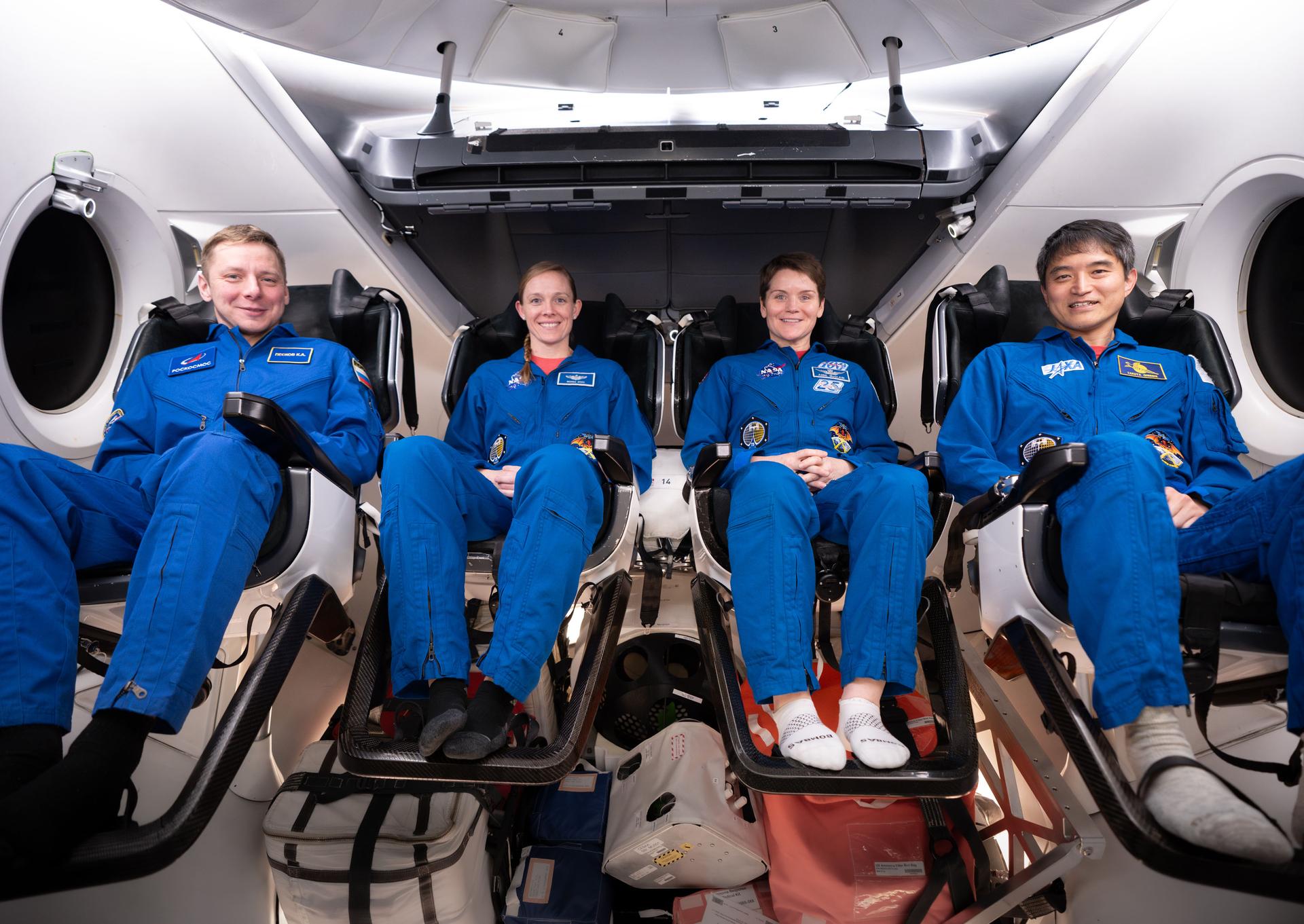
Ten residents are living aboard the International Space Station today following the arrival of a NASA astronaut and two Roscosmos cosmonauts on Tuesday. The new Expedition 72 crewmates are beginning an eight-month research mission in low Earth orbit and getting used to life in microgravity.

New station flight engineers Jonny Kim of NASA and Sergey Ryzhikov and Alexey Zubritsky, both from Roscosmos, are in their second day aboard the orbital outpost. They arrived aboard the Soyuz MS-27 spacecraft docking to the Prichal module at 4:57 a.m. EDT on Tuesday after a three-hour, ten-minute trip that began with a lift off from Kazakhstan.

The new trio will spend the next several days getting up to speed with space station systems, orbital safety procedures, and living and working in weightlessness. On Wednesday, they joined the other seven orbiting crew members and reviewed roles and responsibilities in the unlikely event of an emergency such as a fire or pressure and chemical leaks. Kim, on his first spaceflight, also got to work checking life support gear and servicing spacesuit batteries. Ryzhikov, a veteran cosmonaut on his third station mission, and first-time space flyer Zubritsky partnered together wearing sensors measuring how blood flows from the head to the limbs and back. Scientists will use the data to understand how living long-term in microgravity affects the cardiovascular system and protect crews living in space.

The other space station residents kept up ongoing advanced space research and lab maintenance. Flight Engineers Don Pettit, Anne McClain, and Nichole Ayers, all three from NASA, and Takuya Onishi of JAXA (Japan Aerospace Exploration Agency) took turns on Wednesday for scanning each other’s neck, shoulder, and leg veins using the Ultrasound 2 device. McClain also trained to use virtual reality gear while Onishi tested the operations of a free-flying, spherical robot camera. Ayers wore electrodes for another experiment monitoring how blood flows from the brain to the heart. Pettit loaded items for stowage inside a decommissioned life support rack.

Station Commander Alexey Ovchinin and Flight Engineers Ivan Vagner and Kirill Peskov of Roscosmos trained to use the lower body negative pressure suit that may prevent space-caused head and pressure. The specialized suit may also help crews quickly readjust to Earth’s gravity after living in space for months or years at a time. Ovchinin also participated in the circulatory system study with Ryzhikov and Zubritsky. Vagner explored how spaceflight affects fungus cell cultures for a Roscosmos biotechnology experiment. Kirill focused on life support maintenance collecting drinking water samples for analysis.

Learn more about station activities by following the space station blog, @space_station and @ISS_Research on X, as well as the ISS Facebook and ISS Instagram accounts.

Get the latest from NASA delivered every week. Subscribe here: https://www.nasa.gov/subscribe

Powered by WPeMatico

Get The Details…

Mark A. Garcia