Advanced Health Tech Research Continues to Protect Astronaut Health

Advanced Health Tech Research Continues to Protect Astronaut Health
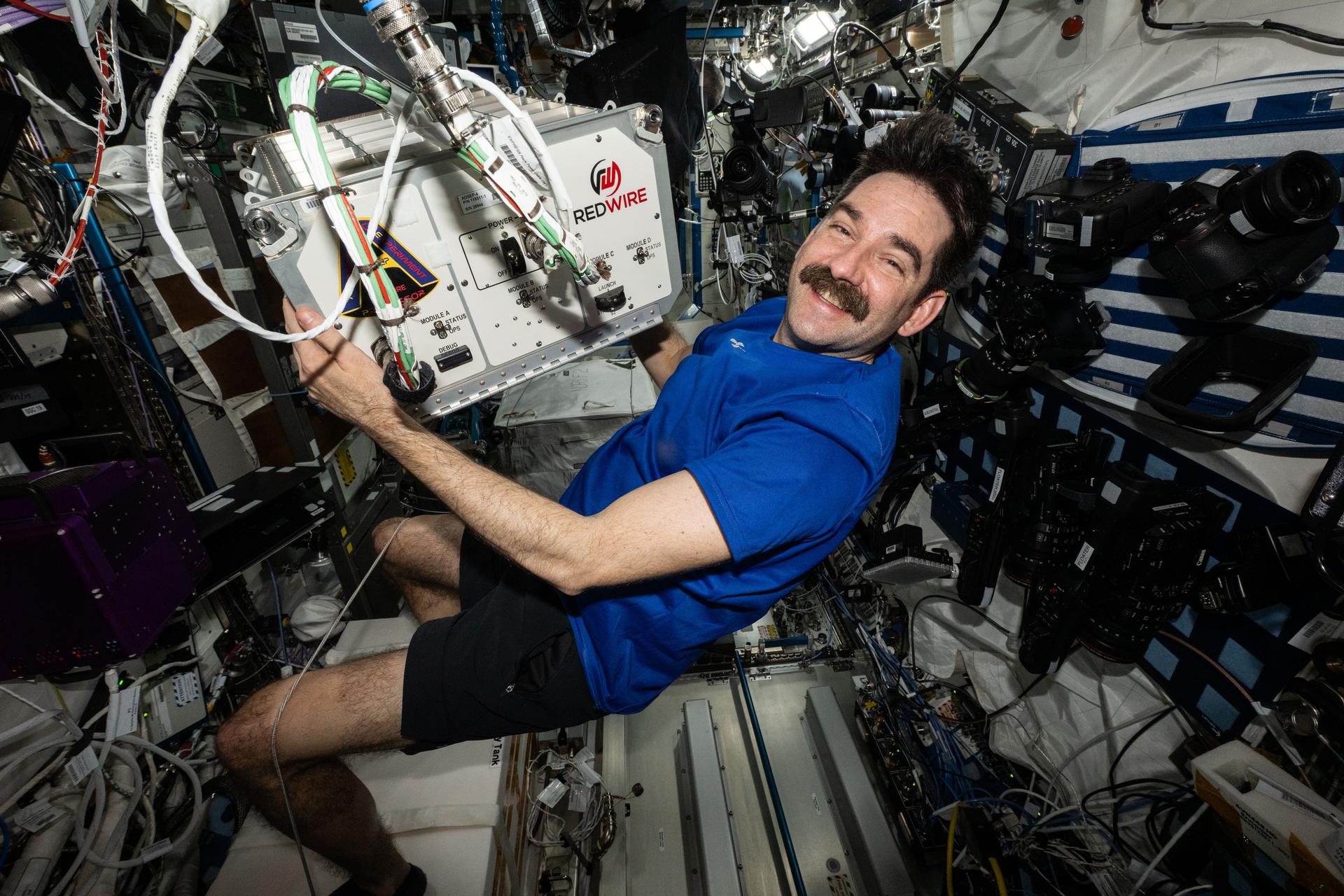
NASA astronaut and Expedition 75 flight engineer Jack Hathaway carries the Advanced Space Experiment Processer-4 (ADSEP-4) and relocates it for installation inside the International Space Station's Destiny laboratory module. ADSEP-4 houses research samples for processing in microgravity, can be launched aboard a SpaceX Dragon or Northrop Grumman's Cygnus XL spacecraft for powered science, and installed in EXPRESS racks aboard the orbital outpost for experimentation.
NASA astronaut Jack Hathaway relocates sample processing hardware and prepares it for installation inside the International Space Station’s Destiny laboratory module.
NASA/Jessica Meir

Advanced health research, including ultrasound scans, blood tests, and exercise studies, using the latest technology in microgravity was on Thursday’s schedule for the Expedition 75 crew. The orbital residents also continued their ongoing cargo operations and maintenance tasks aboard the International Space Station.

Station commander Jessica Meir conducted the EchoFinder-2 space health study for a second day, this time with NASA flight engineer Jack Hathaway. The duo took turns inside the Columbus laboratory module scanning each other’s organs with the Echo ultrasound hardware as a technician on the ground monitored in real time. The investigation uses a computer tablet and a combination of augmented reality and artificial intelligence to correctly position the probe then detect and visualize the organs. Results may enable future crews to use medical monitoring tools without guidance from doctors on the ground as they travel farther away from Earth.

An immune system study was under way for a third day inside the Harmony module as NASA flight engineer Anil Menon processed blood samples after a 24-hour incubation period. Menon first retrieved tubes, specially designed for use in microgravity, containing blood samples from the Kubik incubator. Next, he spun the sample tubes in a centrifuge separating the blood into red and white blood cells, platelets, and plasma. At the completion of the experiment, he placed the sample tubes in a science freezer for preservation and later analysis. The samples will be analyzed aboard the orbital complex to learn how living in space affects an astronaut’s ability to fight infections and disease.

Flight engineer Sophie Adenot of ESA (European Space Agency) strapped on the sensor-packed Bio-Monitor vest and headband then pedaled for an hour on the Destiny laboratory module’s exercise cycle. The wearable sensors comfortably monitored Adenot’s blood pressure, heart rate, and breathing rate during her workout. Afterward, she prepared her biomedical data for downloading to give doctors insight into space-influenced physiological changes and how lunar and planetary gravity environments may affect crew health.

Adenot later took turns with Menon and transferred cargo in and out of the Cygnus XL cargo spacecraft from Northrop Grumman. Cygnus XL launched on April 14 carrying over 11,000 pounds of science and supplies for the crew. It arrived at the station two days later for a capture with the Canadarm2 robotic arm and installation to the Unity module’s Earth-facing port.

The Progress 96 cargo spacecraft, which arrived with nearly three tons of food, fuel, and supplies on Sept. 19, is still being unloaded by Roscosmos flight engineers Pyotr Dubrov, Anna Kikina, and Andrey Fedyaev. The three cosmonauts also split their Thursday shift jogging on a treadmill for a fitness assessment, replacing power system components inside the Zvezda service module, and synchronizing neutron radiation detection hardware with mission controllers on Earth.

Learn more about station activities by following the space station blog, @space_station on X, as well as the ISS Facebook and ISS Instagram accounts.

Get the latest from NASA delivered every week. Subscribe here.

Powered by WPeMatico

Get The Details…

Mark A. Garcia

Crew Studies Advanced Health Tech and Gears Up for Next Crew Swap

Crew Studies Advanced Health Tech and Gears Up for Next Crew Swap

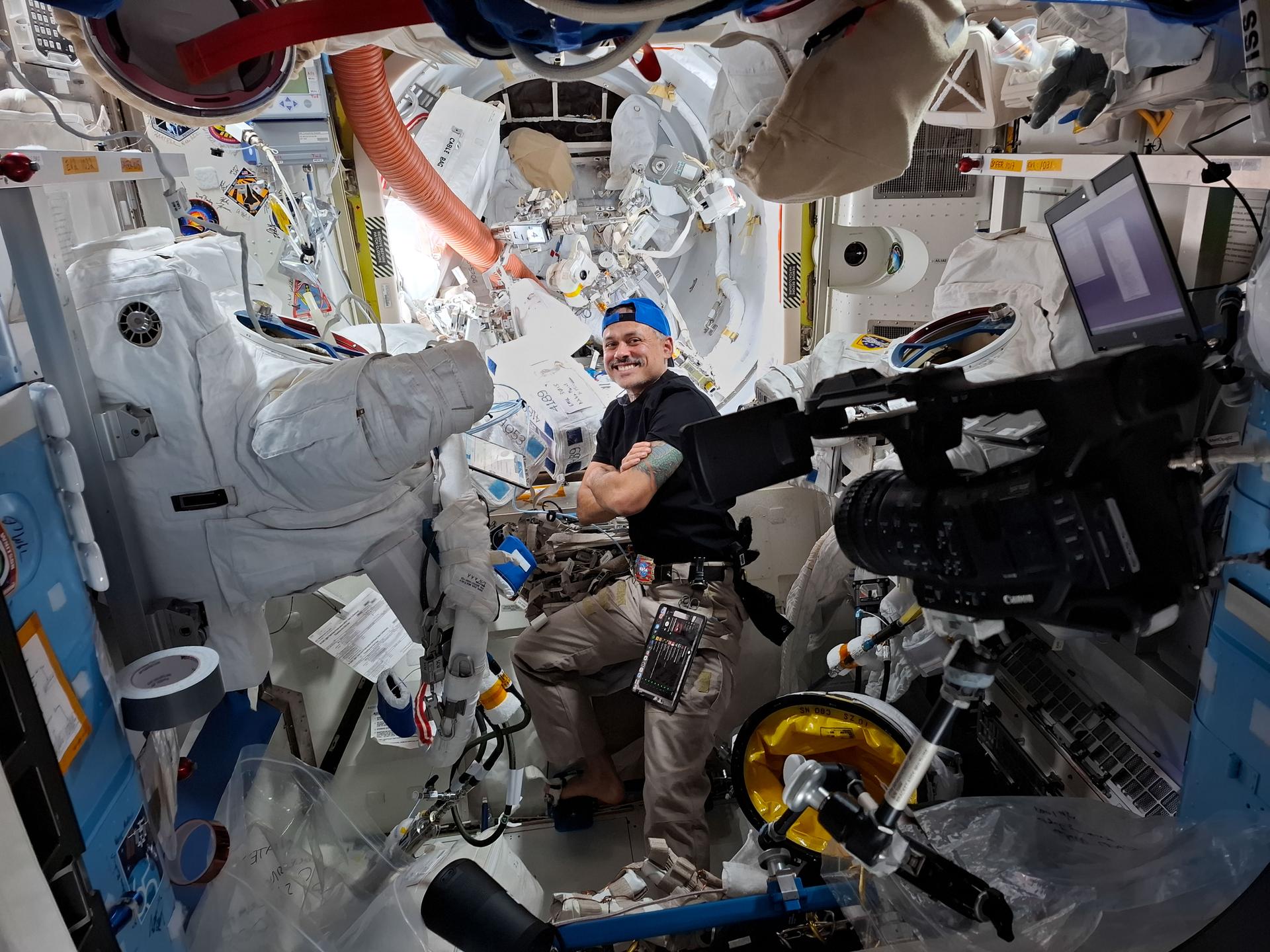
NASA astronaut and Expedition 75 flight engineer Anil Menon smiles for a portrait while conducting spacesuit maintenance inside the International Space Station's Quest airlock. Menon cleaned the spacesuit’s water-cooling loops that keep a spacewalker comfortable while working in the extreme environment of space.
NASA astronaut Anil Menon smiles for a portrait while conducting spacesuit maintenance inside the International Space Station’s Quest airlock.
Roscosmos/Anna Kikina

Ultrasound scans using augmented reality and artificial intelligence topped the health research schedule aboard the International Space Station on Wednesday. The Expedition 75 crew also collected blood and saliva samples to study how the immune system adapts to weightlessness. The orbital residents are now preparing for a crew swap as NASA’s SpaceX Crew-13 mission announces a launch date.

The EchoFinder-2 space health study uses augmented reality and artificial intelligence coupled with Echo ultrasound hardware to scan a crew member’s organs. Augmented reality uses markers displayed on a computer tablet screen to confirm correct positioning of the Echo probe during the scan. Artificial intelligence verifies the probe can detect and visualize the specific organ. Crewmates Jessica Meir of NASA and Sophie Adenot of ESA (European Space Agency), station commander and flight engineer respectively, took turns scanning each other using the probe inside the Columbus laboratory module as an ultrasound technician remotely guided them in real time. Results may enable future crews to use medical monitoring tools without guidance from doctors on the ground as they travel farther away from Earth.

NASA flight engineer Anil Menon continued processing his blood samples for the Immunity Assay biomedical experiment. Menon worked inside the Harmony module and drew his own blood sample, placed it inside a centrifuge, then spun the device to separate the blood components. Afterward, he placed the specimen in a science freezer for preservation and later analysis. The samples will be analyzed aboard the orbital outpost to learn how living in space affects an astronaut’s ability to fight infections and disease.

NASA flight engineer Jack Hathaway assisted Menon during his scientific work collecting sample hardware components and placing them inside the Kubik incubator for additional processing. Next, Hathaway collected samples from the Destiny laboratory module’s Exploration Potable Water Dispenser (xPWD) for incubation. The samples will be returned to Earth for microbial analysis to help engineers verify the water’s purity and the xPWD’s operation for future space exploration missions.

Hathway and Meir, pilot and commander of NASA’s SpaceX Crew-12 mission, are nearing the end of their stay at the orbital outpost with Adenot and Roscosmos flight engineer Andrey Fedyaev, both Crew-12 mission specialists. The quartet has begun packing personal items for loading inside the Dragon spacecraft that will fly the crew back to Earth after the Crew-13 mission arrives no earlier than October 1. The foursome also joined Menon and trained to use emergency respirator masks at the end of their shift on Wednesday.

Fedyaev began his shift testing a specialized suit from Roscosmos that reverses space-caused fluid shifts from the head toward the feet. Cosmonaut and flight engineer Anna Kikina assisted Fedyaev as he wore the lower body negative pressure suit that may ease his adjustment to Earth’s gravity after the completion of his nearly eight-month spaceflight.

Kikina later joined Menon and Roscosmos flight engineer Pyotr Dubrov and practiced procedures in the unlikely event an emergency would require the crew to evacuate the space station inside the Soyuz MS-29 spacecraft. Afterward, Kikina collected her saliva samples that will be analyzed to understand how the immune system adapts to microgravity. Dubrov continued unpacking some of the new food, fuel, and supplies recently delivered aboard the Progress 96 cargo spacecraft.

Learn more about station activities by following the space station blog, @space_station on X, as well as the ISS Facebook and ISS Instagram accounts.

Get the latest from NASA delivered every week. Subscribe here.

Powered by WPeMatico

Get The Details…

Mark A. Garcia

NASA, SpaceX Move to Final Crew-13 Prelaunch Prep for Oct. 1 Liftoff 

NASA, SpaceX Move to Final Crew-13 Prelaunch Prep for Oct. 1 Liftoff 

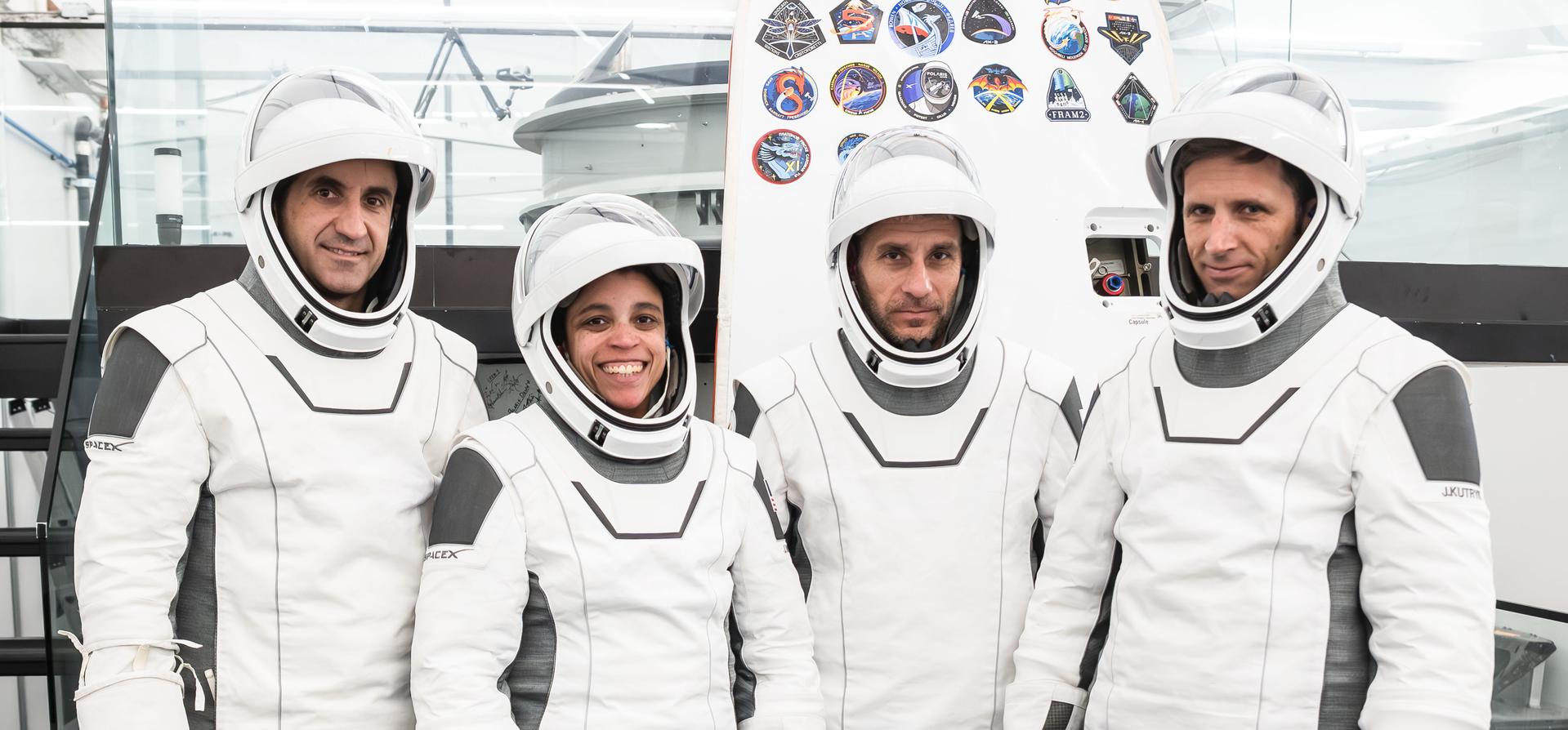
The SpaceX Crew-13 members pose for a portrait in their pressure suits during a preflight training session at the company's headquarters in Hawthorne, California. From left are, Roscosmos Sergey Teteryatnikov, NASA astronauts Jessica Watkins and Luke Delaney, and CSA (Canadian Space Agency) astronaut Joshua Kutryk.
The SpaceX Crew-13 members pose for a portrait in their pressure suits during a preflight training session at the company’s headquarters in Hawthorne, California. From left are, Roscosmos Sergey Teteryatnikov, NASA astronauts Jessica Watkins and Luke Delaney, and CSA (Canadian Space Agency) astronaut Joshua Kutryk.
SpaceX

NASA and SpaceX are targeting 11:10 a.m. EDT, Thursday, Oct. 1, as the earliest launch opportunity for the Crew-13 mission to the International Space Station. Over the next several days, teams will complete a series of prelaunch activities and intensive reviews to confirm the crew, the space station, and SpaceX’s Dragon spacecraft, and Falcon 9 rocket are ready for liftoff from Space Launch Complex 40 at Cape Canaveral Space Force Station in Florida.

For an Oct. 1 launch, Crew-13 will arrive at the orbiting laboratory less than nine hours later, with docking planned for about 8 p.m., to the forward-facing port of the Harmony module. 

NASA astronauts Jessica Watkins and Luke Delaney will serve as spacecraft commander and pilot, respectively, and CSA (Canadian Space Agency) astronaut Joshua Kutryk and Roscosmos cosmonaut Sergey Teteryatnikov will serve as mission specialists. After arriving at the orbiting laboratory, Crew-13 will become members of the space station’s Expedition 75. Crew-13 is in quarantine at the agency’s Johnson Space Center in Houston and will travel to NASA Kennedy on Saturday, Sept. 26. 

Learn more about the mission by following the commercial crew blog, @NASASpaceOps and @space_station on X, as well as the International Space Station’s Facebook and Instagram accounts.

Powered by WPeMatico

Get The Details…

Elyna Niles-Carnes

Station Nears Upcoming Crew Swap During Biomedicine, Cargo Duties

Station Nears Upcoming Crew Swap During Biomedicine, Cargo Duties

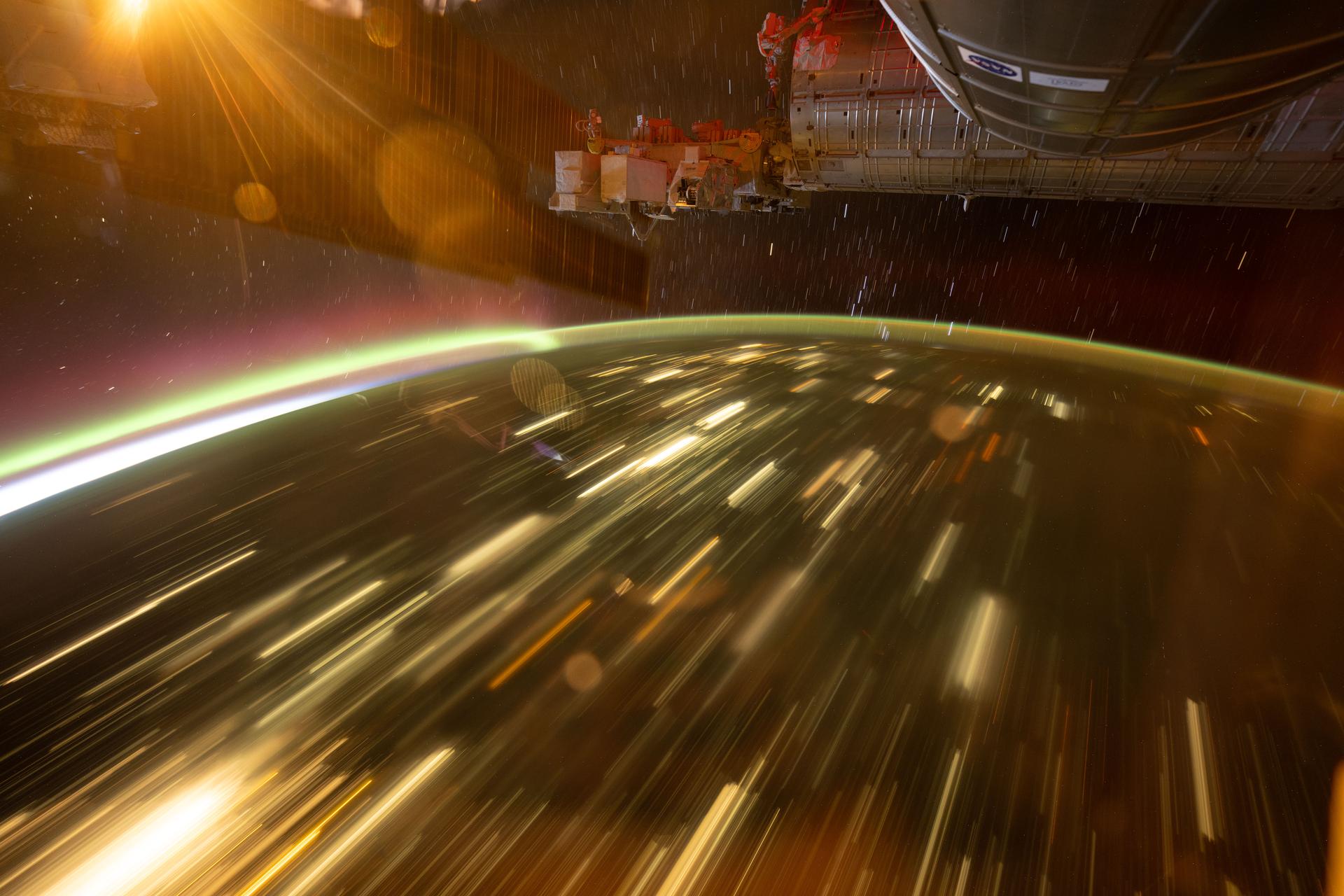
This long-duration image shows star trails above Earth, an aurora arcing across the atmosphere, and the city lights of Central Asia stretching below the International Space Station as it orbited 262 miles above Earth.
NASA/Anil Menon

Four Expedition 75 crewmates are preparing for their return to Earth aboard a SpaceX Dragon next month as their replacement crew gets ready for launch. Meanwhile, aboard the International Space Station the orbital residents continued studying biomedicine, activating Earth imagery hardware, and unpacking a cargo craft.

NASA’s SpaceX Crew-12 mission launched on Feb. 13 carrying NASA astronauts Jessica Meir and Jack Hathaway, ESA (European Space Agency) astronaut Sophie Adenot, and Roscosmos cosmonaut Andrey Fedyaev to the orbital outpost the following day. The quartet is now nearing the end of its mission awaiting the arrival of the Crew-13 mission as soon as early October.

Meir and Hathaway, Crew-12 commander and pilot respectively, took turns on Tuesday training on a computer and reviewing procedures for their upcoming undocking and the descent into Earth’s atmosphere inside Dragon. The duo then joined Crew-12 mission specialists Adenot and Fedyaev and checked the pressure suits they will wear inside Dragon as they return to Earth and splashdown in the Pacific Ocean. The foursome ensured the suits were a good fit, tested the suits’ communication systems, and inspected the suits’ condition.

Meir also gathered emergency breathing gear and staged it ahead of Crew-13’s arrival. She inspected the masks, installed filter cartridges, and stowed them in bags for quick access. The standard operating procedure will see the masks stowed inside Dragon after Crew-13 arrives. Meir also joined her returning crewmates for waist and leg measurements and entered the data into the EveryWear app on a computer tablet before trying on their Dragon pressure suits.

NASA flight engineer Anil Menon, who has been aboard the space station since July 14, started his shift collecting his blood and saliva samples for the Immunity Assay investigation. He spun his blood sample in a centrifuge then stowed his samples in a science freezer for preservation. The samples will be analyzed in space to help doctors understand how microgravity affects an astronaut’s ability to fight infections and disease.

Roscosmos flight engineers Pyotr Dubrov and Annan Kikina, who launched to space with Menon aboard the Soyuz MS-29 spacecraft, continued unloading some of the nearly three tons of food, fuel, and supplies delivered on Saturday inside the Progress 96 cargo spacecraft. Dubrov then configured automated Earth imaging gear to photograph deserts, lakes, and glaciers across Africa and Asia.

In the middle of his Crew-12 departure preparations on Tuesday, Fedyaev downloaded Earth imagery automatically captured during the station crew’s sleep shift, uninstalled the camera gear, and swapped the camera’s battery and memory card. He later helped his cosmonaut crewmates unload the new cargo stowed inside Progress 96.

Learn more about station activities by following the space station blog, @space_station on X, as well as the ISS Facebook and ISS Instagram accounts.

Get the latest from NASA delivered every week. Subscribe here.

Powered by WPeMatico

Get The Details…

Mark A. Garcia

Crew Biology Research, Spacecraft Cargo Jobs Kick Off Week on Station

Crew Biology Research, Spacecraft Cargo Jobs Kick Off Week on Station

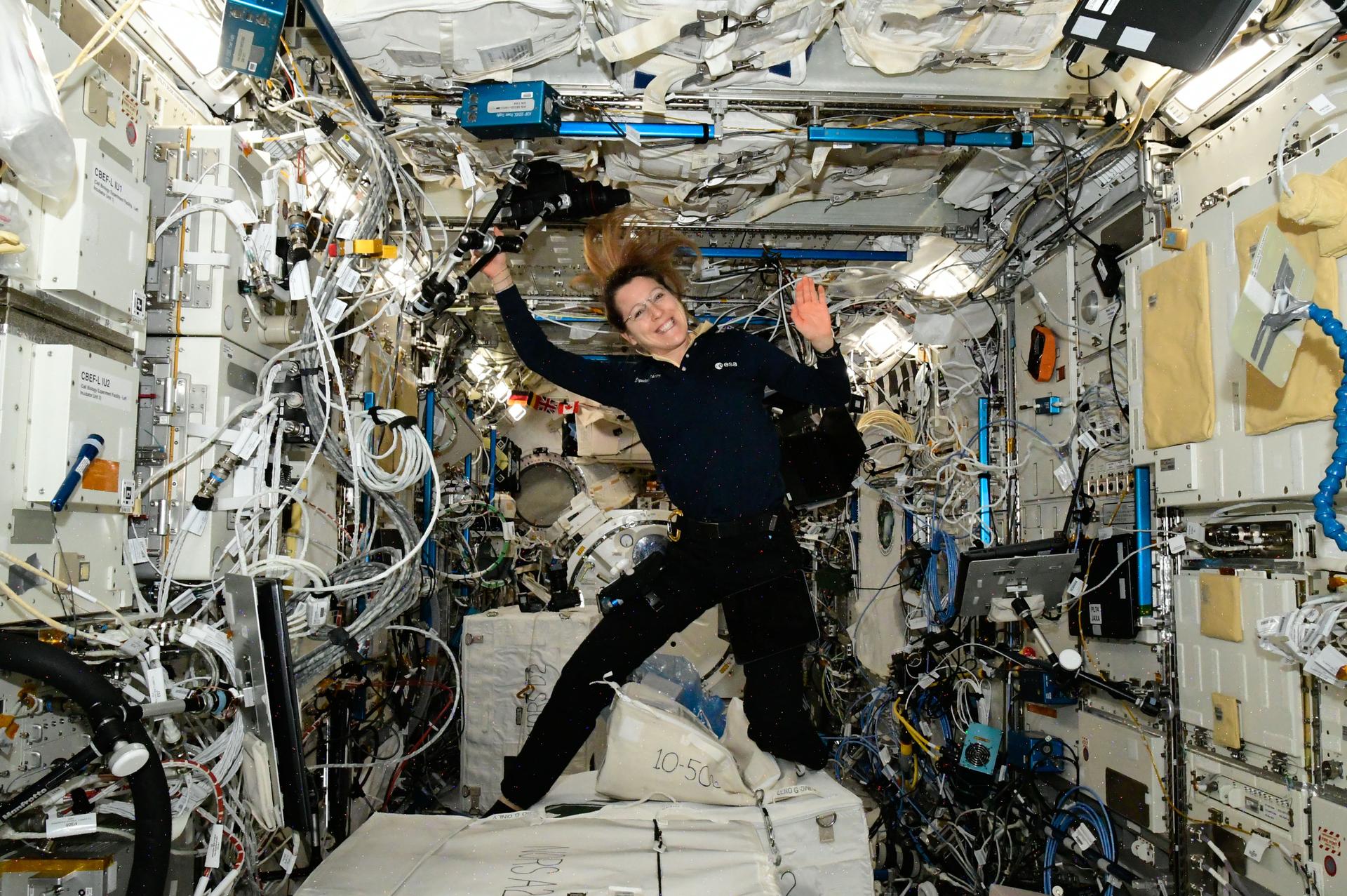
ESA (European Space Agency) astronaut and Expedition 75 flight engineer Sophie Adenot poses for a portrait inside the International Space Station's Kibo laboratory module.
Expedition 75 flight engineer Sophie Adenot of ESA poses for a portrait inside the International Space Station’s Kibo laboratory module.
Roscosmos/Anna Kikina

A variety of human research encompassing body measurements, exercise monitoring, and breath rate recording kicked off the week aboard the International Space Station. The Expedition 75 crew members also prepared for an upcoming crew swap, worked inside a pair of cargo spacecraft, and activated automated Earth observation hardware on Monday.

Station commander Jessica Meir and flight engineer Jack Hathaway, both of NASA, joined each other in the Columbus laboratory module for body measurements using a tape measure. The duo then entered the results into the EveryWear app on a computer tablet and downloaded the data for analysis by doctors on the ground. Results will help researchers understand how weightlessness affects an astronaut’s height and circumference for better suit sizing and health monitoring. Space-caused physical changes can include spinal elongation, circumference changes, and fluid shifts toward the head.

Meir later partnered with NASA flight engineer Anil Menon and transferred cargo in and out of the Cygnus XL cargo spacecraft that has been berthed to the Unity module’s Earth-facing port since April 13. Meir and Menon also took turns packing and staging cargo that will return to Earth aboard the SpaceX Dragon spacecraft when NASA’s SpaceX Crew-12 ends its mission next month. Menon then trained on the tools used to monitor the approach and rendezvous of a Dragon spacecraft. The next SpaceX Dragon is targeted to arrive at the orbital outpost when the Crew-13 mission launches as soon as early October.

Hathway assisted Meir and Menon with the Cygnus XL and Crew-12 cargo operations throughout his shift on Monday. He wrapped up his shift with scientific photography in the Harmony module imaging 3D colloidal crystals, or tiny particles suspended in a liquid, to help promote space-based manufacturing of advanced materials benefitting Earth and space industries.

Flight engineer Sophie Adenot of ESA (European Space Agency) began her shift setting up a motion capture system to record her work out on the Tranquility module’s advanced resistive exercise system. She calibrated the research hardware, wore specialized markers, and performed a series of resistance exercises on the device that mimics the inertial forces of free weights on Earth. Researchers will analyze her movements to understand the muscle forces and bone stresses an astronaut experiences while exercising in microgravity. Insights may lead to more effective workouts to keep crews healthy on long-term missions to the Moon, Mars, and beyond.

Progress 96, the newest cargo craft that docked to the Poisk module on Saturday delivering nearly three tons of food, fuel, and supplies, is currently being unpacked by Roscosmos flight engineers Pyotr Dubrov and Anna Kikina. The pair also studied microgravity’s effect on the respiratory system and took turns wearing an acoustic monitor around the neck that recorded their rapid exhalation rate on Monday.

Roscosmos flight engineer Andrey Fedyaev tested the lower body negative pressure suit, with assistance from Kikina, that reverses space-caused fluid shifts from the head toward the feet. The specialized suit may offset the effects of microgravity and ease the adjustment to Earth’s gravity after a long-term spaceflight. Next, Fedyaev joined his cosmonaut crewmates and helped unload the Progress 96. Fedyaev also activated automated Earth-imaging gear to capture imagery from Asia, the Pacific Ocean, and North America during the crew’s sleep shift.

Learn more about station activities by following the space station blog, @space_station on X, as well as the ISS Facebook and ISS Instagram accounts.

Get the latest from NASA delivered every week. Subscribe here.

Powered by WPeMatico

Get The Details…

Mark A. Garcia