Crew Swaps Commanders, Waits for Departure, and Conducts Muscle and Blood Research

Crew Swaps Commanders, Waits for Departure, and Conducts Muscle and Blood Research
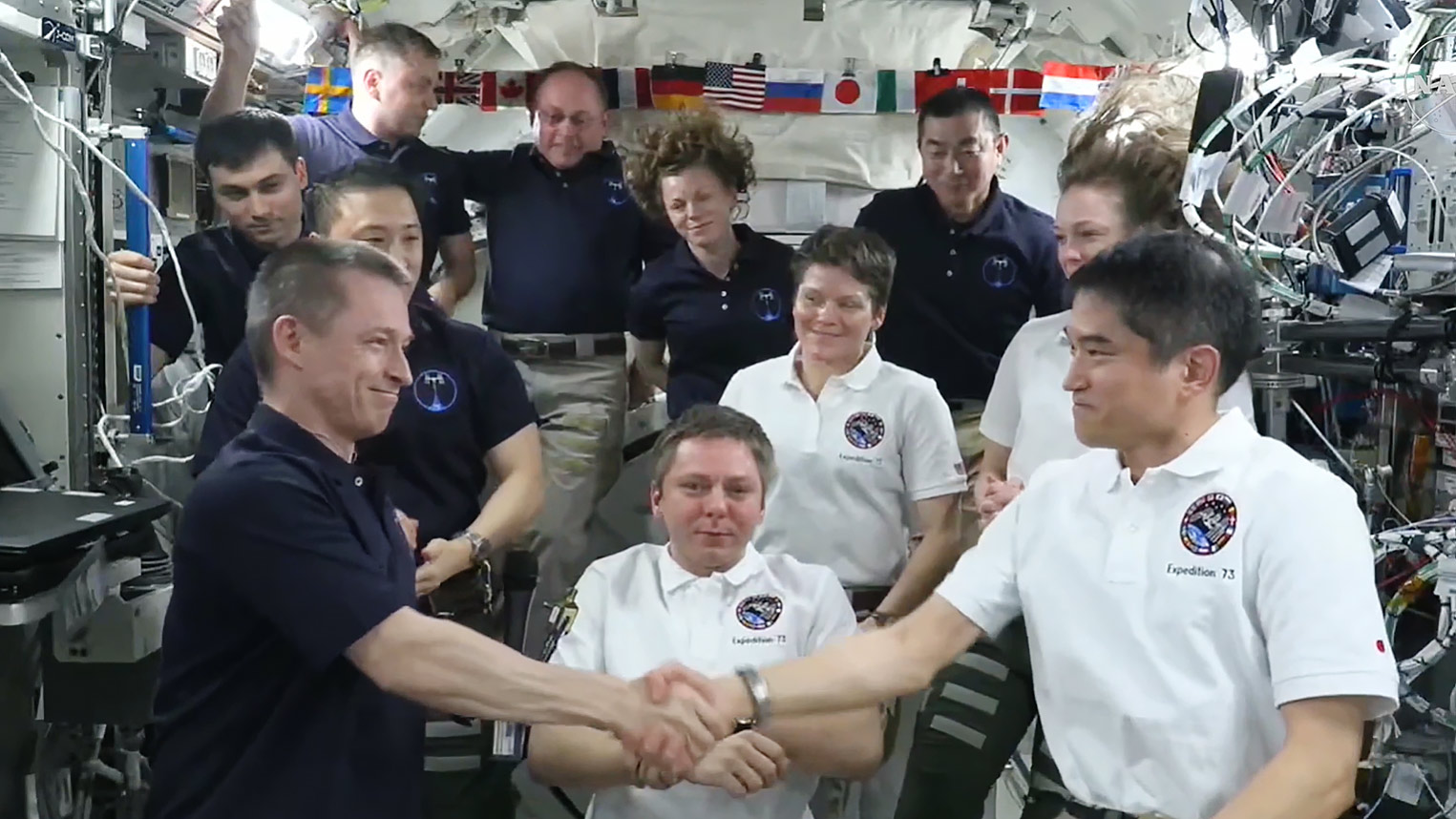
JAXA astronaut Takuya Onishi (right) shakes hands with Roscosmos cosmonaut Sergey Ryzhikov (left) after handing him command of the International Space Station during the Change of Command Ceremony as the rest of the Expedition 73 crew observes.

Muscle stimulation and blood circulation research topped the 11-member Expedition 73 crew’s schedule on Tuesday helping doctor’s ensure astronauts stay fit and healthy on long-duration missions. The International Space Station residents also swapped commanders as four crewmates prepare for return to Earth.

Astronauts living and working in space exercise seven days a week to prevent space-caused bone loss and muscle atrophy. Careful attention by specialists on the ground and sophisticated workout gear on the station help protect a crew member’s bones and muscles, as well as their cardiovascular and respiratory systems. Now researchers are exploring electronic muscle stimulation as a way to supplement space exercise and reduce the reliance on bulky, complicated training equipment. For the muscle study, NASA Flight Engineer Nichole Ayers attached electrodes to her legs after working out on the advanced resistive exercise device and jogging on the COLBERT treadmill. Next, NASA Flight Engineer Jonny Kim sent small electrical signals to the electrodes using biomedical gear that stimulated the leg muscles. Doctors will review the data to understand how the muscular system responds to electrical stimulation to potentially benefit future missions.

The orbital outpost’s newest flight engineers, Mike Fincke from NASA and Kimiya Yui from JAXA (Japan Aerospace Exploration Agency), took turns researching how blood flows from the brain to the heart in microgravity. Sensors on their neck and chest measured blood volume changes in their upper body caused by body fluids pooling toward an astronaut’s head. Results may help prevent cardiovascular disorders both on Earth and in space.

Roscosmos cosmonauts Sergey Ryzhikov and Alexey Zubritsky also explored how living in space affects blood circulation monitoring how blood flows from the heart to the arms and hands. The duo used electrodes and blood pressure measurements to give doctors new insights and prevent space-linked symptoms such as vascular stiffness and stress caused by microgravity and radiation.

Ryzhikov took command of the orbital outpost today during a short ceremony when JAXA astronaut Takuya Onishi handed over his leadership responsibilities to the veteran cosmonaut. Ryzhikov will lead the Expedition 73 mission until December when he, Zubritsky, and Kim enter their Soyuz MS-27 spacecraft, undock from the Prichal module, and ride back to Earth. Onishi now turns his attention to returning to Earth this week with Ayers, NASA astronaut Anne McClain, and Roscosmos cosmonaut Kirill Peskov.

Following a weather review on Tuesday, NASA and SpaceX now are targeting undocking no earlier than 12:05 p.m. EDT, Thursday, Aug. 7. For this undocking opportunity, splashdown is targeted at approximately 11:58 a.m., Friday, Aug. 8, off the coast of California. Mission teams elected to skip an undocking opportunity on Wednesday, Aug. 6, due to high wind predictions in the splashdown zones.

McClain joined Zena Cardman, NASA’s SpaceX Crew-11 commander, on Tuesday and transferred space station emergency hardware from the departing Dragon to the newly-arrived Dragon. The Dragon commanders also partnered together inside the Columbus laboratory module setting up research gear to explore manufacturing high-quality optical fibers in space to overcome Earth-induced imperfections.

New Roscosmos Flight Engineer Oleg Platonov began his shift setting up Earth observation gear to image Earth landmarks in a variety of wavelengths. He then joined departing cosmonaut Peskov to begin relieving him of his orbital duties.

Learn more about station activities by following the space station blog, @space_station on X, as well as the ISS Facebook and ISS Instagram accounts.

Get the latest from NASA delivered every week. Subscribe here.

Powered by WPeMatico

Get The Details…

Mark A. Garcia

Station Expands to 11 Before Next Crew Leaves This Week

Station Expands to 11 Before Next Crew Leaves This Week

Expedition 73 welcomes NASA's SpaceX Crew-11 mission aboard the International Space Station. In the front from left are, Crew-11 members Oleg Platonov, Mike Fincke, Zena Cardman, and Kimiya Yui. In the back are, Expedition 73 members Takuya Onishi, Kirill Peskov, Alexey Zubritsky, Sergey Ryzhikov, Jonny Kim, Nichole Ayers, and Anne McClain.
Expedition 73 welcomes NASA’s SpaceX Crew-11 mission aboard the International Space Station. In the front from left are, Crew-11 members Oleg Platonov, Mike Fincke, Zena Cardman, and Kimiya Yui. In the back are, Expedition 73 members Takuya Onishi, Kirill Peskov, Alexey Zubritsky, Sergey Ryzhikov, Jonny Kim, Nichole Ayers, and Anne McClain.
@Astro_Ayers

Four new crew members are adjusting to life on the International Space Station and gearing up for several months of microgravity research to benefit humans living on and off the Earth. Meanwhile, another quartet that has been orbiting Earth since March is packing up and handing over responsibilities to the new crew before returning to Earth this week.

Expedition 73 expanded to eleven individuals on Saturday when NASA’s SpaceX Crew-11 mission docked to the orbital outpost aboard the Dragon spacecraft after launching from Florida about 15 hours earlier. Crew 11’s Commander and Pilot, Zena Cardman and Mike Fincke, both from NASA, and Mission Specialists Kimiya Yui from JAXA (Japan Aerospace Exploration Agency) and Oleg Platonov from Roscosmos spent the weekend unpacking their Dragon spacecraft, reviewing safety procedures, and getting familiar with space station systems.

The crew is well trained for its space research program and will soon begin investigating a wide variety of microgravity phenomena to gain insights only achievable in space. They will explore manufacturing high quality stem cells, alternatives to antibiotics to treat bacterial infections, cell division in plants to promote space agriculture, and more.

NASA astronauts Anne McClain and Nichole Ayers along with JAXA astronaut Takuya Onishi and Roscosmos cosmonaut Kirill Peskov are helping their new crewmates get up to speed with living and working on the orbital lab. NASA’s SpaceX Crew-10 crewmates also will be going home this week aboard another Dragon spacecraft completing a five-month mission. During their stay in space, the crew studied space-caused mental and physical changes in astronauts, blood flow from the brain to the heart, future lunar navigation techniques, and more.

The homebound foursome has spent the last two weeks gathering personal items and cargo for loading inside Dragon. Over the next couple of days, Crew-10 will also pack critical research samples stowed in portable science freezers inside Dragon for retrieval and analysis back on Earth. During the final cargo-packing and scientific sample-stowing duties, the crew will also review departure procedures before entering Dragon and undocking.

NASA astronaut Jonny Kim and Roscosmos cosmonauts Sergey Ryzhikov and Alexey Zubritsky will continue their mission aboard the station and conduct their complement of space research until December. The trio have been assisting with the crew swap activities as Kim helped Fincke learn to work out on the advanced resistive exercise device. Ryzhikov showed the Crew-11 foursome the location of emergency hardware and how to use NASA and Roscosmos station hardware. Zubritsky helped Peskov as he tested the lower body negative pressure suit that may counteract space-caused head and eye pressure and help crews adjust quicker to the return to Earth’s gravity.

Learn more about station activities by following the space station blog, @space_station on X, as well as the ISS Facebook and ISS Instagram accounts.

Get the latest from NASA delivered every week. Subscribe here.

Powered by WPeMatico

Get The Details…

Mark A. Garcia

Hatches Open, Crew-11 Enters Station and Joins Expedition 73

Hatches Open, Crew-11 Enters Station and Joins Expedition 73

The four Crew-11 members are greeted by the seven-member Expedition 73 crew aboard the International Space Station.
NASA+

At 3:46 a.m. EDT, hatches opened between the International Space Station and the SpaceX Dragon spacecraft. NASA’s live coverage continues through the welcome ceremony on NASA+.

Learn how to watch NASA content through a variety of platforms, including social media. 

Learn more about station activities by following the space station blog, @space_station on X, as well as the ISS Facebook and ISS Instagram accounts.

Get the latest from NASA delivered every week. Subscribe here.

Powered by WPeMatico

Get The Details…

Mark A. Garcia

Crew-11 Docks to Station Aboard SpaceX Dragon

Crew-11 Docks to Station Aboard SpaceX Dragon

The International Space Station is viewed from the SpaceX Dragon as it approaches carrying four NASA SpaceX Crew-11 members.
The International Space Station is viewed from the SpaceX Dragon during its approach carrying four NASA SpaceX Crew-11 members.
NASA+

NASA astronauts Zena Cardman and Mike Fincke, JAXA (Japan Aerospace Exploration Agency) astronaut Kimiya Yui, and Roscosmos cosmonaut Oleg Platonov arrived at the International Space Station as the SpaceX Dragon spacecraft docked to the orbiting complex at 2:27 a.m. EDT on Saturday.

Following Dragon’s link up to the space-facing port of the station’s Harmony module, the crew members aboard Dragon and the space station will begin conducting standard leak checks and pressurization between the spacecraft and the station in preparation for hatch opening scheduled for approximately 4:15 a.m.

NASA’s live coverage continues on NASA+. Learn how to watch NASA content through a variety of platforms, including social media.

Learn more about station activities by following the space station blog, @space_station on X, as well as the ISS Facebook and ISS Instagram accounts.

Get the latest from NASA delivered every week. Subscribe here.

Powered by WPeMatico

Get The Details…

Mark A. Garcia

Crew-11 Approaching Station for a Docking Live on NASA+

Crew-11 Approaching Station for a Docking Live on NASA+

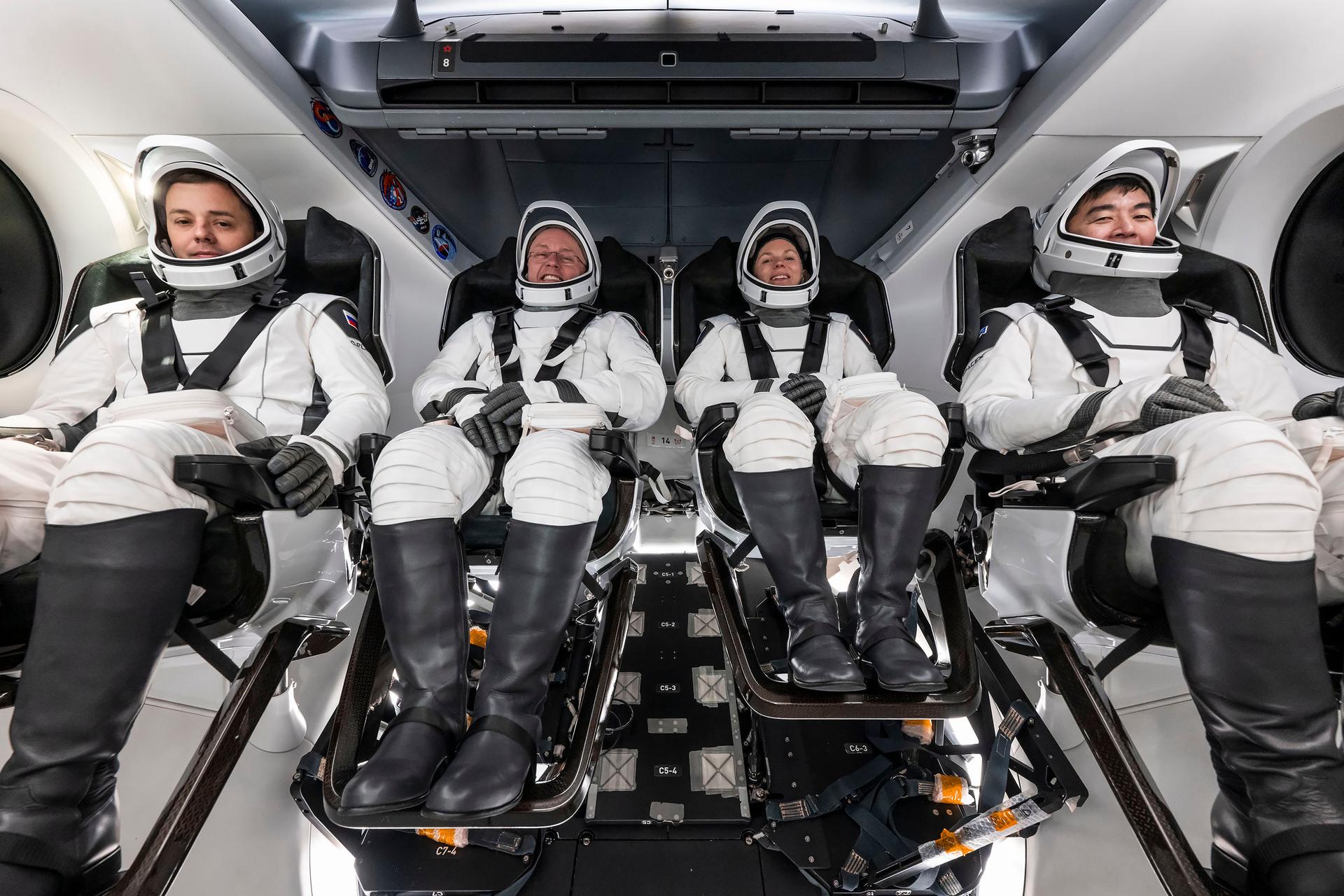
The crew of NASA’s SpaceX Crew-11 mission train for their upcoming trip to the International Space Station at SpaceX facilities in Florida. From left: Oleg Platonov, Mike Fincke, Zena Cardman, and Kimiya Yui.
The crew of NASA’s SpaceX Crew-11 mission trains for their trip to the International Space Station at SpaceX facilities in Florida on July 3, 2025. From left, Oleg Platonov, Mike Fincke, Zena Cardman, and Kimiya Yui.
SpaceX

NASA’s live arrival coverage of the agency’s SpaceX Crew-11 mission is underway on NASA+ as NASA astronauts Zena Cardman and Mike Fincke, JAXA (Japan Aerospace Exploration Agency) astronaut Kimiya Yui, and Roscosmos cosmonaut Oleg Platonov make their way to the International Space Station. 

The SpaceX Dragon spacecraft is scheduled to dock at approximately 2:26 a.m. EDT. Dragon is designed to dock autonomously, but the crew aboard the spacecraft and the space station will monitor as it approaches and docks to the space-facing port of the station’s Harmony module. 

When the hatches open at about one hour and 45 minutes after docking, Crew-11 will join the Expedition 73 crew. 

Learn more about station activities by following the space station blog, @space_station on X, as well as the ISS Facebook and ISS Instagram accounts.

Get the latest from NASA delivered every week. Subscribe here.

Powered by WPeMatico

Get The Details…

Mark A. Garcia