Crew Preps for Fourth Axiom Private Mission, Keeps up Human Research

Crew Preps for Fourth Axiom Private Mission, Keeps up Human Research

NASA astronaut and Expedition 73 Flight Engineer Jonny Kim works inside the SpaceX Dragon cargo spacecraft completing cargo operations before it undocked from the International Space Station's Harmony module several hours later.
NASA astronaut Jonny Kim works inside the SpaceX Dragon cargo spacecraft completing cargo operations before it undocked from the International Space Station’s Harmony module on May 23, 2025.
NASA

The Expedition 73 crew members are turning their attention to the upcoming fourth private mission from Axiom Space. While the International Space Station crewmates prepare for the Ax-4 quartet’s arrival aboard a SpaceX Dragon they also continued studying how their bodies are adapting to weightlessness in the midst of ongoing lab maintenance duties.

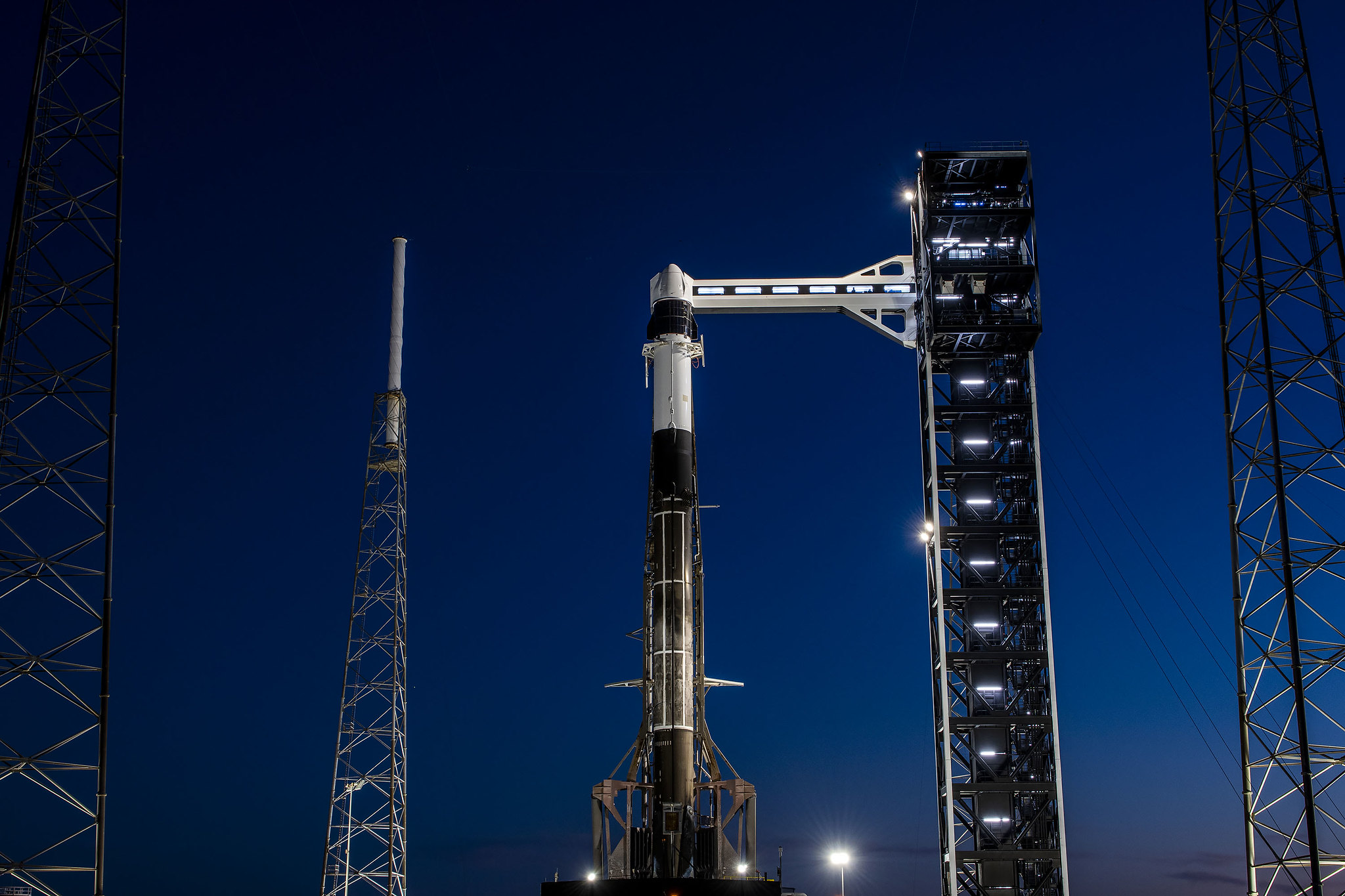
Axiom Mission-4 (Ax-4) is preparing for its launch to the orbital outpost this month carrying experienced astronaut Peggy Whitson as commander and three first-time space flyers including Pilot Shubhanshu Shukla from India and Mission Specialists Sławosz Uzanański-Wiśniewksi from Poland and Tibor Kapu from Hungary to the orbital outpost. NASA Flight Engineers Anne McClain and Nichole Ayers spent a portion of their shift on Monday reviewing procedures they will use from inside the space station when the Ax-4 crew aboard the Dragon approaches the space station to begin a two-week space research mission.

Earlier during her shift, McClain opened up the Destiny laboratory module’s Combustion Integrated Rack and replaced experiment samples and research components inside the sealed chamber that allows exploration of how fuels and flames behave in weightlessness. Ayers relocated and inspected hardware that monitors airborne particles in the station’s atmosphere then staged hardware that will soon be stowed inside BEAM, or the Bigelow Expandable Activity Module.

NASA Flight Engineer Jonny Kim began a 48-hour session wearing a biomedical vest and headband being tested for their ability to comfortably measure a crew member’s health data during daily activities. Next, he wrapped up his shift stowing bags and cleaning up packing materials following the departure of the SpaceX Dragon cargo craft on May 23.

Station Commander Takuya Onishi of JAXA (Japan Aerospace Exploration Agency) worked on standard human research duties Monday collecting his blood, saliva, and urine samples for stowage in a science freezer and later analysis. He also swapped a memory card inside radio frequency identification hardware, downloaded station acoustic data, and serviced the water storage system.

Veteran cosmonaut Sergey Ryzhikov assisted fellow Roscosmos Flight Engineer Alexey Zubritskiy who wore virtual reality glasses for an investigation of how a crew member’s sense of balance and visual tracking adjust to microgravity. Cosmonaut Kirill Peskov pointed a camera outside a window on the orbital outpost’s Roscosmos segment and photographed landmarks including the Amazon delta, the Volga River delta, the Aral Sea, and more.

Learn more about station activities by following the space station blog, @space_station and @ISS_Research on X, as well as the ISS Facebook and ISS Instagram accounts.

Get the latest from NASA delivered every week. Subscribe here.

Powered by WPeMatico

Get The Details…

Mark A. Garcia

Week Ends with Vein Scans, Brain Research, and 3D Microscope Test

Week Ends with Vein Scans, Brain Research, and 3D Microscope Test

The International Space Station was soaring 259 miles above central Mexico with a faint atmospheric glow crowning Earth's horizon at approximately 2:58 a.m. local time when this photograph was taken. The city lights of Mexico City, the nation's capital and largest city with a population of 9.21 million, and its surrounding suburbs dominate the nightscape.
The International Space Station soars above central Mexico with a faint atmospheric glow crowning Earth’s horizon. The city lights of Mexico City, the nation’s capital and largest city with a population of 9.21 million, and its surrounding suburbs dominate the nightscape.
NASA

Vein scans and hearing checks were the main human research activities aboard the International Space Station on Friday ensuring the Expedition 73 crew remains healthy. The orbital residents also tested a 3D microscope and kept up the maintenance of the orbital outpost at the end of the week.

NASA Flight Engineer Jonny Kim activated the Ultrasound 2 device inside the Columbus laboratory module and scanned the neck, shoulder, and leg veins of Roscosmos cosmonauts Sergey Ryzhikov and Alexey Zubritskiy. Afterward, station Commander Takuya Onishi of JAXA (Japan Aerospace Exploration Agency) took control of the biomedical activities and scanned the veins of Kim. Doctors on the ground monitored the downlinked ultrasound imagery in real time gaining insight into the condition of the crew’s cardiovascular system in microgravity.

Kim also took turns with Ryzhikov and Zubritskiy and participated in a computerized hearing exam with remote support from doctors on the ground. Space station systems run continuously at different volumes and researchers are studying how the orbiting lab’s acoustic environment affects a crew member’s hearing.

NASA Flight Engineer Nichole Ayers worked on a pair of different studies on Friday, first looking at how blood flows from the brain to the heart then demonstrating the operation of an advanced biology microscope. Ayers began the day attaching sensors to her neck and chest measuring the volume of blood flowing back and forth. Scientists are using the data to test a tool that can check an astronaut’s cardiovascular health in different gravity environments. Next, Ayers treated samples of deep-sea bacteria that will be viewed inside a holographic, fluorescence imaging microscope. Known as the Extant Life Volumetric Imaging System, or ELVIS, the specialized 3D imaging device could be used to monitor water quality, detect potentially infectious organisms, and study liquid mixtures and microorganisms in space and on Earth.

NASA Flight Engineer Anne McClain spent her day on lab maintenance. She began her shift monitoring the airflow between the modules of the station’s U.S. segment ensuring the operability of the ventilation system. Next, she verified the functionality of computer tablets that will be used once the private crew of Axiom Mission-4 arrives at the station in June. At the end of her shift, McClain downloaded data collected from wearable radiation detectors, documented her meals for the day, and swapped drying agents inside a science freezer.

Before his vein scans, Ryzhikov, a three-time station resident, tested communication systems in the Zvezda service module then charged Soyuz spacecraft phone batteries. Zubritskiy inspected the Zarya module’s power supply system with an infrared camera as part of troubleshooting procedures. Roscosmos Flight Engineer Kirill Peskov turned off ultraviolet atmospheric observation gear after an overnight imaging session then inventoried medical hardware in the station’s Roscosmos segment.

Learn more about station activities by following the space station blog, @space_station and @ISS_Research on X, as well as the ISS Facebook and ISS Instagram accounts.

Get the latest from NASA delivered every week. Subscribe here.

Powered by WPeMatico

Get The Details…

Mark A. Garcia

Crew Works on Spacesuits, Life Support as Human Research Continues

Crew Works on Spacesuits, Life Support as Human Research Continues

NASA astronaut and Expedition 73 Flight Engineer Nichole Ayers replaces components on an experimental carbon dioxide removal device. Also called the Thermal Amine Scrubber, the advanced life support mechanism is testing a new method that removes carbon dioxide from the station’s atmosphere and recovers water for oxygen generation.
NASA astronaut Nichole Ayers replaces components on an experimental carbon dioxide removal device, called the Thermal Amine Scrubber. The advanced life support mechanism is testing a new method that removes carbon dioxide from the station’s atmosphere and recovers water for oxygen generation.
NASA

Spacesuit and life support maintenance were the main focus on Thursday while the Expedition 73 still had time set aside for space biology research aboard the International Space Station.

NASA Flight Engineers Jonny Kim and Anne McClain partnered together throughout Thursday servicing a pair of spacesuits in the Quest airlock. The duo took turns scrubbing cooling loops, installing components that clean suits, and checking out the suits’ radio gear. The pair wrapped up the suit maintenance at the end of the day uninstalling the cleaning gear and stowing the equipment in Quest.

Before the spacesuit work, Kim began his day collecting his blood and urine samples for processing, cold stowage, and later analysis as part of the CIPHER suite of 14 human research investigations. Next, he took a cognition test, also a part of CIPHER, measuring his mental adaptation to living in space. McClain powered up the KERMIT fluorescence microscope and installed a test sample slide so ground controllers could remotely checkout the operations of the state-of-the-art imaging device.

NASA Flight Engineer Nichole Ayers spent her shift inside the Destiny laboratory module replacing and cleaning components on the oxygen generation system. She also swapped out an advanced hydrogen sensor being tested for its ability last longer than previous sensors in the oxygen generator.

Station Commander Takuya Onishi kicked off his day swabbing his body and stowing the samples in a science freezer for later analysis. Onishi then set up a 3D imaging microscope, also known as the Extant Life Volumetric Imaging System, or ELVIS, in the Kibo laboratory module to view samples of deep-sea bacteria. The advanced imaging device could be used to monitor water quality, detect potentially infectious organisms, and study liquid mixtures and microorganisms in space and on Earth.

Three-time space station visitor Sergey Ryzhikov of Roscosmos worked on a pair of different experiments exploring physics and biology. He first synced up hardware that measures neutron radiation from sources such as solar flares and how it impacts crew members. Next, he attached sensors to his arm and hands and measured his blood pressure to understand how microgravity affects blood flow to the extremities.

Roscosmos Flight Engineer Alexey Zubritskiy wrapped up an Earth observation session stowing imaging hardware and downlinking photographs of landmarks across the Pacific Ocean. Cosmonaut Kirill Peskov spent his shift inside the Nauka science module replacing orbital plumbing gear and cleaning ventilation hardware.

Learn more about station activities by following the space station blog, @space_station and @ISS_Research on X, as well as the ISS Facebook and ISS Instagram accounts.

Get the latest from NASA delivered every week. Subscribe here.

Powered by WPeMatico

Get The Details…

Mark A. Garcia

Vision, Immune System Studies and Hardware Inspections Keep Crew Busy

Vision, Immune System Studies and Hardware Inspections Keep Crew Busy

(From left) Expedition 73 Flight Engineers Anne McClain and Nichole Ayers, both NASA astronauts, take a break and pose for a portrait aboard the International Space Station Destiny laboratory module.
(From left) Expedition 73 Flight Engineers Anne McClain and Nichole Ayers, both NASA astronauts, take a break and pose for a portrait aboard the International Space Station’s Destiny laboratory module.
NASA

Life science was back on the schedule for Wednesday as the Expedition 73 crew studied how living in space affects eye structure and cellular immunity. The International Space Station residents also maintained the upkeep of exercise gear, life support components, and orbital plumbing hardware.

The ongoing space biology investigations aboard the orbital lab constantly informs doctors how astronauts adapt to months of living and working in weightlessness. Scientists extrapolate the continuous research data and are using the insights to protect future crews on longer spaceflight missions to the Moon, Mars, and beyond.

Doctors are exploring potential space-caused changes to crew eye structure and function since vision is critical whether piloting a spacecraft, conducting advanced space science, or performing other mission critical tasks. NASA Flight Engineers Jonny Kim and Nichole Ayers kicked off their shift with a test measuring the electrical responses of the retina to light stimuli. Kim attached electrodes to his forehead and around his eyes and Ayers operated the specialized, data-collecting hardware to understand how the eye adjusts to long-term weightlessness. The study is just one part of the CIPHER suite of 14 human research investigations to learn how to keep crews healthy in space.

Kim later collected and stowed his urine samples in a science freezer for later analysis then swapped a pair of research incubators in the Columbus laboratory module. Ayers moved on to the Tranquility module and replaced orbital plumbing gear that removes inorganic impurities from the station’s water.

Station Commander Takuya Onishi of JAXA (Japan Aerospace Exploration Agency) continued studying how the stress of spaceflight affects cellular immunity helping doctors defend crews against infections. Onishi started his day his processing his blood samples that were incubating for 24 hours inside the Kubik research incubator. Next, he stowed the samples in a science freezer to later analyze the blood cells for signs of space-caused cellular stress or tissue damage. Onishi finally inspected and cleaned an experimental carbon dioxide removal device that also recovers water for oxygen generation.

NASA Flight Engineer Anne McClain spent her day inside Tranquility servicing and inspecting the COLBERT treadmill. The regularly scheduled maintenance activities take place every six months as McClain greased axles, cleaned components, and measured the acoustic volume of the workout device while operating with a crew member. McClain wrapped up her shift in the Quest airlock preparing spacesuit hardware for stowage.

Earth observations were back on the schedule as Roscosmos Flight Engineer Alexey Zubritskiy pointed a camera out a station window and photographed islands in the Pacific Ocean and other landmarks across the Pacific coasts of Asia and North America. Veteran cosmonaut Sergey Ryzhikov deactivated imaging hardware that observes Earth’s nighttime atmosphere in ultraviolet wavelengths. Flight Engineer Kirill Peskov wrapped up several days of training, checkouts, and inspections on the European robotic arm (ERA) attached to the Nauka science module. The ERA can be used to maneuver spacewalkers, payloads, and external hardware on the orbital outpost’s Roscosmos segment.

Learn more about station activities by following the space station blog, @space_station and @ISS_Research on X, as well as the ISS Facebook and ISS Instagram accounts.

Get the latest from NASA delivered every week. Subscribe here.

Powered by WPeMatico

Get The Details…

Mark A. Garcia

Crew Works Space Health and Robotics for Station Upkeep

Crew Works Space Health and Robotics for Station Upkeep

The International Space Station soars into an orbital sunset 259 miles above a cloudy Pacific Ocean northwest of the Hawaiian island chain. At left, the Soyuz MS-26 crew ship is pictured docked to the Rassvet module. At center, the Prichal docking module and the European robotic arm are pictured attached to the Nauka science module.
The European robotic arm (top center) is pictured attached to the Nauka science module as the International Space Station soared into an orbital sunset above a cloudy Pacific Ocean. At left, the Soyuz MS-26 crew ship is pictured docked to the Rassvet module on Nov. 23, 2024.
NASA

Biomedical research topped the science schedule aboard the International Space Station on Tuesday helping doctors understand how weightlessness affects the cardiovascular and immune systems. The Expedition 73 crew members also continued their Earth observation studies, robotic inspection duties, and advanced life support maintenance.

Humans continue to learn how to survive in space after a millennia evolving in Earth’s gravity. Doctors are studying every aspect of an astronaut’s physiology before, during, and after a spaceflight. Data is constantly collected from the numerous human research studies aboard the orbiting lab and added to the ever-growing knowledge base of space biology insights. This gives doctors a clearer picture into how the human body adapts to microgravity helping them design exercise programs, nutritious diets, advanced therapies, and more to keep astronauts healthy on long term space missions.

Astronauts Jonny Kim of NASA and Takuya Onishi of JAXA (Japan Aerospace Exploration Agency), station flight engineer and commander respectively, contributed to the ongoing space biology studies looking at cardiac function and cellular immunity. Kim worked in the Columbus laboratory module as ground surgeons remotely scanned his chest using the ECHO tele-operated ultrasound system. The medical operators were looking for potential space-caused changes in Kim’s heart and artery function for the CIPHER suite of 14 human research investigations. Onishi collected and processed his blood and saliva samples in the Harmony module for the Immunity Assay study. Afterward, he stowed his saliva samples in a science freezer then installed his blood specimens in the Kubik incubator for later analysis. The experiment is observing how spaceflight factors such as weightlessness and radiation affect cellular immune function.

Kim and Onishi later teamed up with NASA Flight Engineer Nichole Ayers and assisted her as she replaced components on an experimental carbon dioxide removal device. Also called the Thermal Amine Scrubber, the advanced life support mechanism is testing a new method that removes carbon dioxide from the station’s atmosphere and recovers water for oxygen generation.

NASA Flight Engineer Anne McClain’s first half of her shift was packed with science supporting physics and robotics research. She first swapped sample cartridges inside the Materials Science Laboratory, a furnace used for discovering new applications for existing materials and new or improved materials. Next, she installed imaging hardware on an Astrobee robotic free-flyer so ground controllers could monitor its autonomous docking maneuvers inside the Kibo laboratory module. McClain then spent the rest of her day on maintenance setting up a wearable radiation monitor, filling water tanks, and finally swapping out a computer hard drive.

Roscosmos Flight Engineer Sergey Ryzhikov, a veteran of two previous space station missions, installed photographic hardware for a pair of Earth observations studies, one looking at the effects of natural and man-made disasters and the other imaging Earth’s nighttime atmosphere in ultraviolet wavelengths. Ryzhikov also joined Flight Engineer Alexey Zubritskiy searching for extra stowage space in the Zvezda and Rassvet modules. Zubritsky later transferred water from the Progress 90 cargo craft docked to the Poisk module into station orbital tanks. Flight Engineer Kirill Peskov activated the European robotic arm (ERA) and monitored its operations using a computer interface and visually inspected the Rassvet module’s docking port.

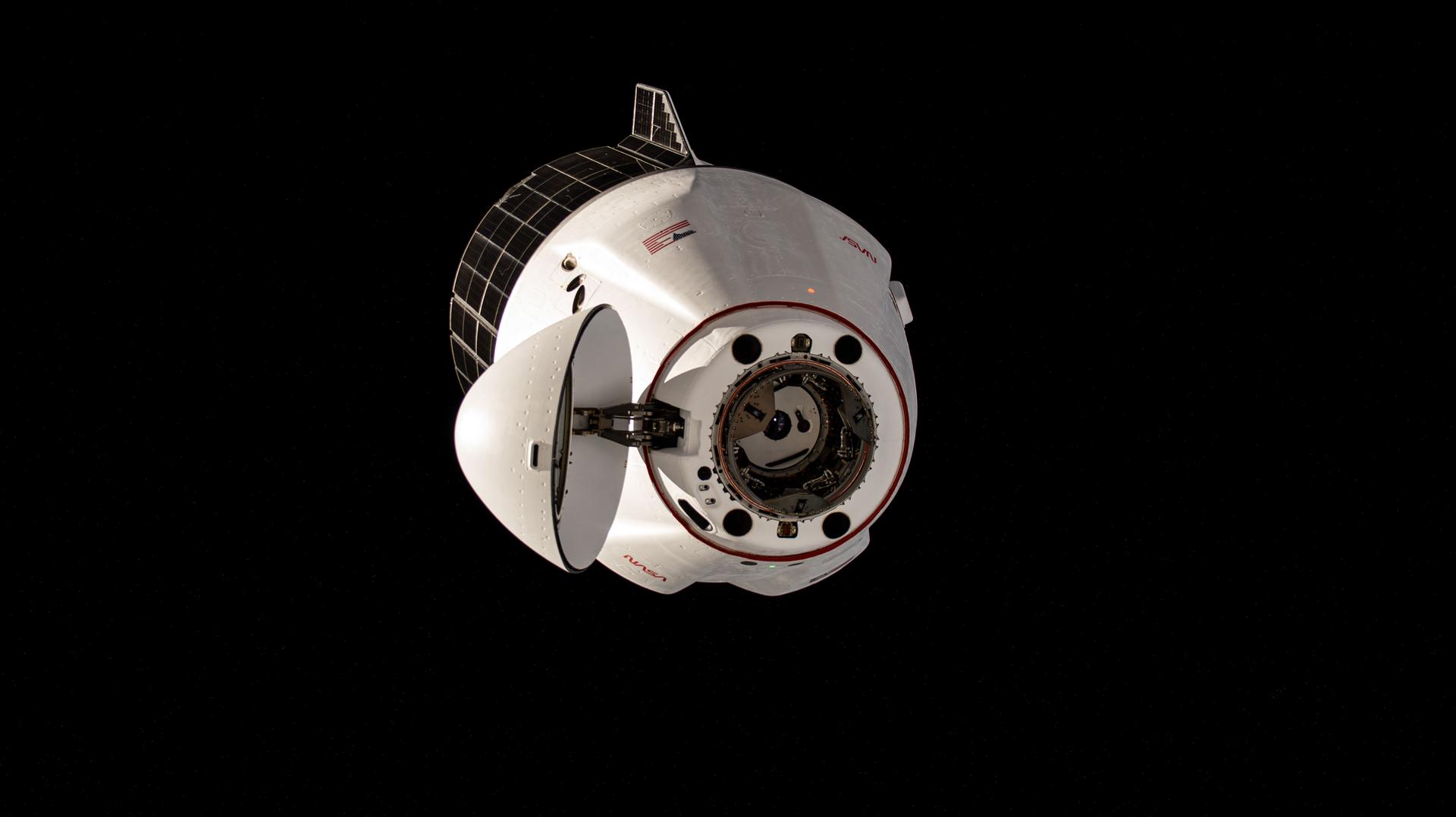
The SpaceX Dragon cargo spacecraft completed its mission on May 25 after splashing down off the coast of California completing a month-long stay docked to the Harmony module’s space-facing port. Dragon parachuted to Earth returning several tons of completed science experiments, time-critical research samples, and lab hardware for analysis back on Earth.

Learn more about station activities by following the space station blog, @space_station and @ISS_Research on X, as well as the ISS Facebook and ISS Instagram accounts.

Get the latest from NASA delivered every week. Subscribe here.

Powered by WPeMatico

Get The Details…

Mark A. Garcia