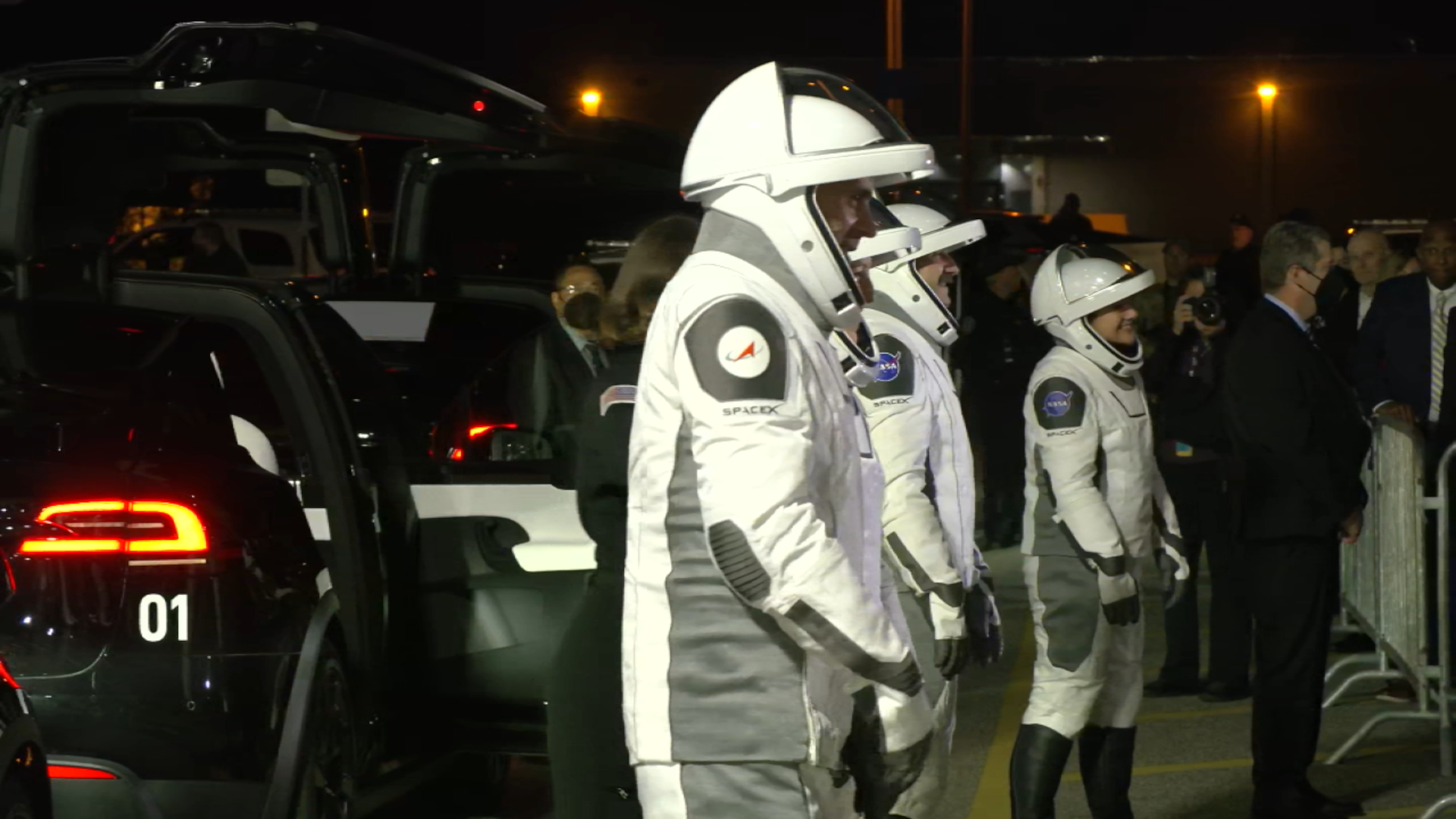
Meet NASA’s SpaceX Crew-12
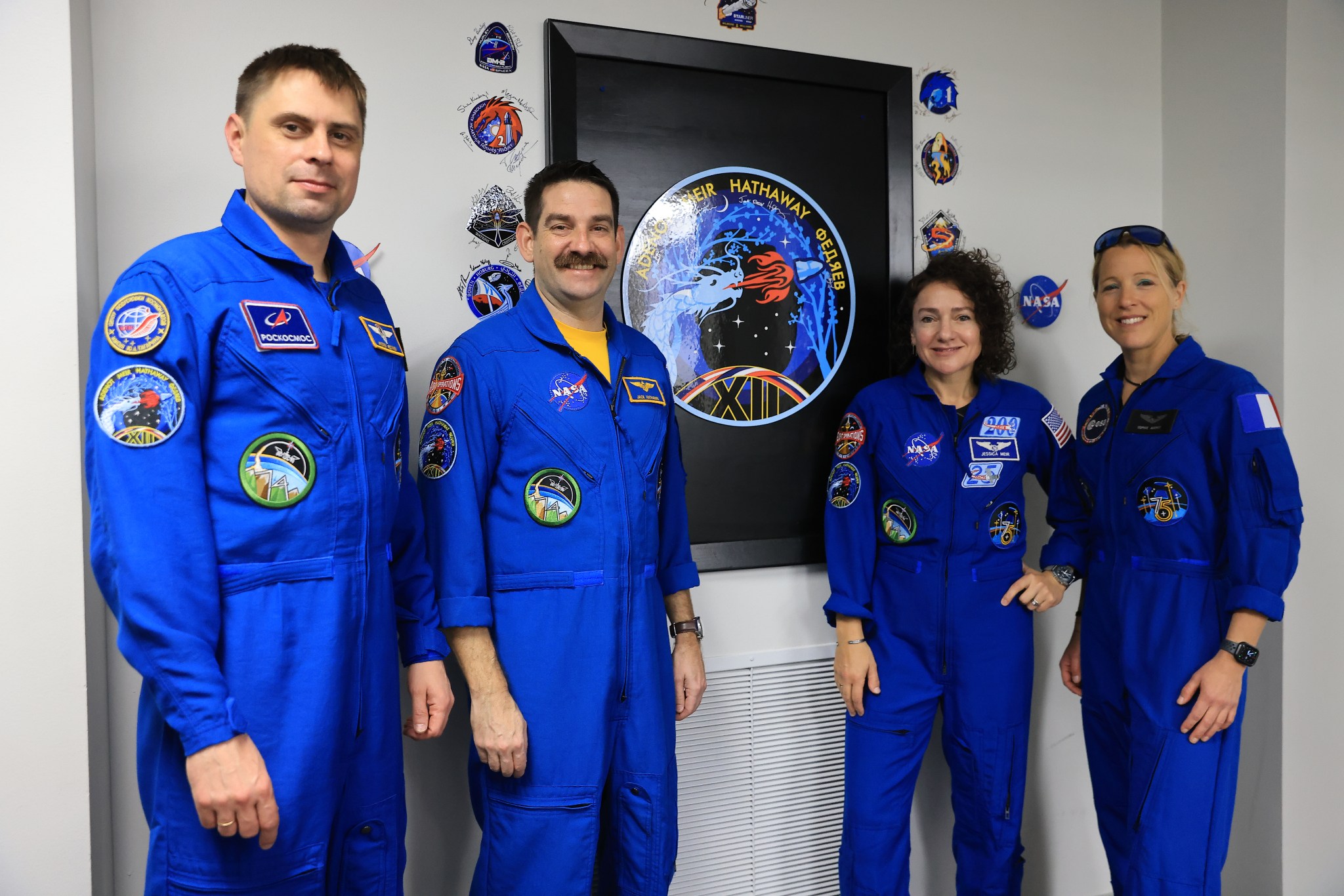
NASA astronaut Jessica Meir will serve as the spacecraft commander for NASA’s SpaceX Crew-12 mission.
This will be the second flight to the International Space Station for Meir, who was selected as a NASA astronaut in 2013. The Caribou, Maine, native earned a bachelor’s degree in biology from Brown University in Providence, Rhode Island, a master’s degree in space studies from the International Space University in Illkirch-Graffenstraden, France, and a doctorate in marine biology from Scripps Institution of Oceanography in San Diego, California. Follow Meir on X for updates on the mission.
Meir previously spent 205 days as a flight engineer during Expedition 61/62, and she completed the first three all-woman spacewalks with fellow NASA astronaut Artemis II Mission Specialist Christina Koch, totaling 21 hours and 44 minutes outside of the station. Since then, she has served in various roles, including assistant to the chief astronaut for commercial crew (SpaceX), deputy for the Flight Integration Division, and assistant to the chief astronaut for the human landing system.
For his first spaceflight, NASA astronaut Jack Hathaway will serve as the spacecraft pilot. A commander in the United States Navy, Hathaway was selected as part of the 2021 astronaut candidate class.
The South Windsor, Connecticut, native holds a bachelor’s degree in physics and history from the U.S. Naval Academy in Maryland, and master’s degrees in flight dynamics from Cranfield University in England, and national security and strategic studies from the U.S. Naval War College in Newport, Maryland, respectively. Hathaway also is a graduate of the Empire Test Pilot’s School, Fixed Wing Class 70 in 2011. At the time of his selection, Hathaway was deployed aboard the USS Truman, serving as Strike Fighter Squadron 81’s prospective executive officer. He has accumulated more than 2,500 flight hours in 30 different aircraft, including more than 500 carrier arrested landings and 39 combat missions.
The Crew-12 mission will be ESA (European Space Agency) astronaut Sophie Adenot’s first spaceflight. Before her selection as an ESA astronaut in 2022, Adenot earned a degree in engineering from ISAE-SUPAERO in Toulouse, France, specializing in spacecraft and aircraft flight dynamics. She also earned a master’s degree in human factors engineering at Massachusetts Institute of Technology in Cambridge.
After earning her master’s degree, she became a helicopter cockpit design engineer at Airbus Helicopters and later served as a search and rescue pilot at Cazaux Air Base from 2008 to 2012. She then joined the High Authority Transport Squadron in Villacoublay, France, and served as a formation flight leader and mission captain from 2012 to 2017. Between 2019 and 2022, Adenot worked as a helicopter experimental test pilot in Cazaux Flight Test Center with DGA (Direction Générale de l’Armement – the French Defence Procurement Agency). She has logged more than 3,000 hours flying 22 different helicopters.
This will be Roscosmos cosmonaut Andrey Fedyaev’s second long-duration stay aboard the orbiting laboratory. He graduated from the Krasnodar Military Aviation Institute in 2004, specializing in aircraft operations and air traffic organization, and earned qualifications as a pilot engineer. Prior to his selection as a cosmonaut, he served as deputy commander of an Ilyushin-38 aircraft unit in the Kamchatka Region, logging more than 600 flight hours and achieving the rank of second-class military pilot.
Fedyaev was selected for the Gagarin Research and Test Cosmonaut Training Center Cosmonaut Corps in 2012 and has served as a test cosmonaut since 2014. In 2023, he flew to the space station as a mission specialist during NASA’s SpaceX Crew-6 mission, spending 186 days in orbit, as an Expedition 69 flight engineer. For his achievements, Fedyaev was awarded the title Hero of the Russian Federation and received the Yuri Gagarin Medal.
For more than 25 years, people have lived and worked continuously aboard the International Space Station, advancing scientific knowledge and making research breakthroughs that are not possible on Earth. The station is a critical testbed for NASA to understand and overcome the challenges of long-duration spaceflight and to expand commercial opportunities in low Earth orbit. As commercial companies concentrate on providing human space transportation services and destinations as part of a robust low Earth orbit economy, NASA is focusing its resources on deep space missions to the Moon as part of the Artemis campaign in preparation for future human missions to Mars.
Powered by WPeMatico
Get The Details…
Elyna Niles-Carnes