US Cargo Ship Preps to Depart as Crew Studies Bioprinting and Time Perception

US Cargo Ship Preps to Depart as Crew Studies Bioprinting and Time Perception

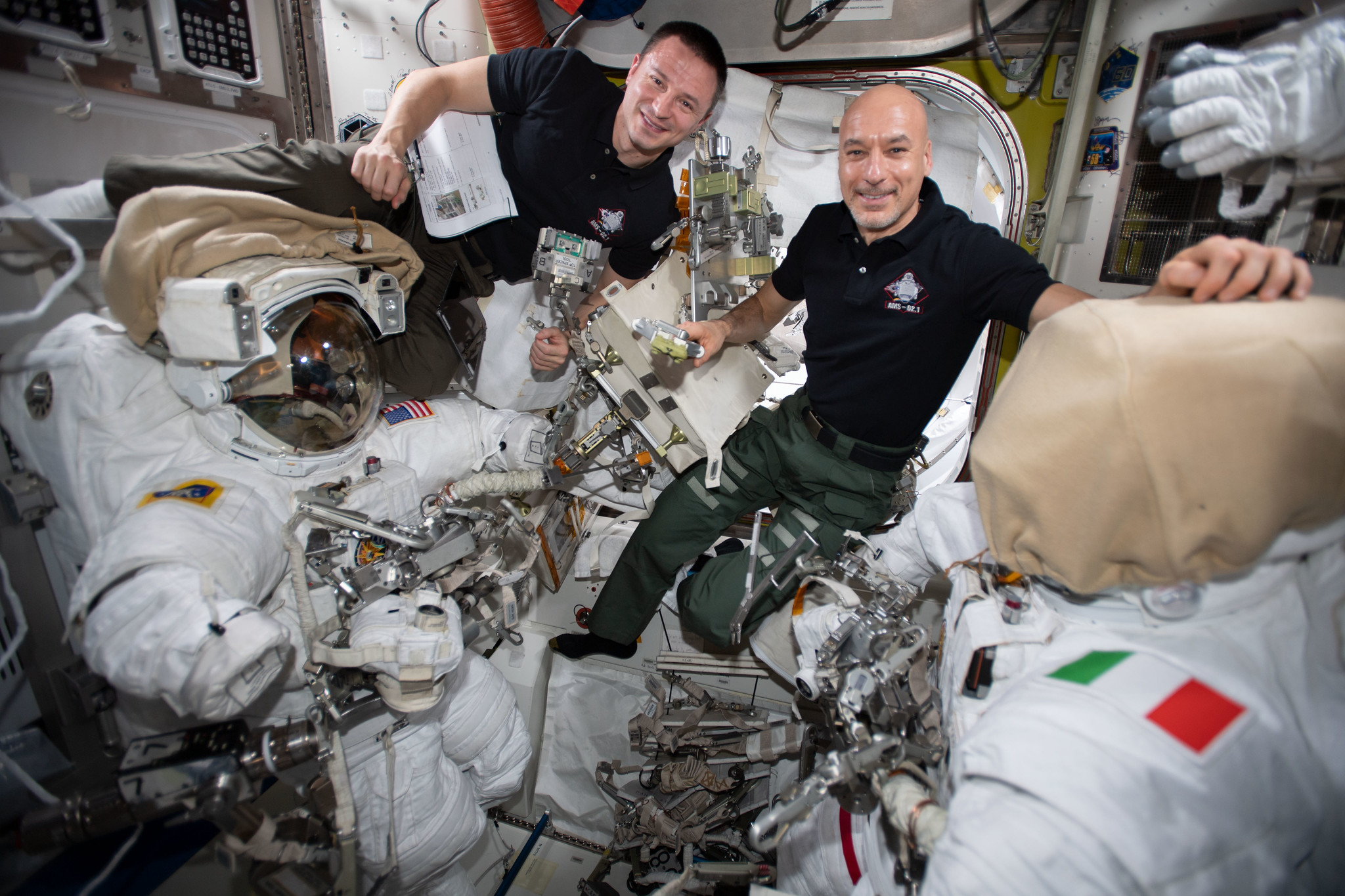
Astronauts Luca Parmitano, Andrew Morgan and Nick Hague
Expedition 60 Flight Engineers (clockwise from top) Luca Parmitano, Andrew Morgan and Nick Hague work on life support maintenance inside the U.S. Destiny laboratory module.

A U.S. resupply ship is packed and ready to depart the International Space Station on Tuesday. The Expedition 60 crew is also testing the viability of printing organ-like tissue and exploring the impact of microgravity on time perception today.

NASA astronauts Nick Hague and Christina Koch finished loading and closed the hatches to the Cygnus space freighter from Northrop Grumman today. Hague will lead the robotics activities and command its release from the Canadarm2 on Tuesday at 12:15 p.m. EDT. NASA TV begins its live broadcast of Cygnus’ departure at noon after 109 days at the station.

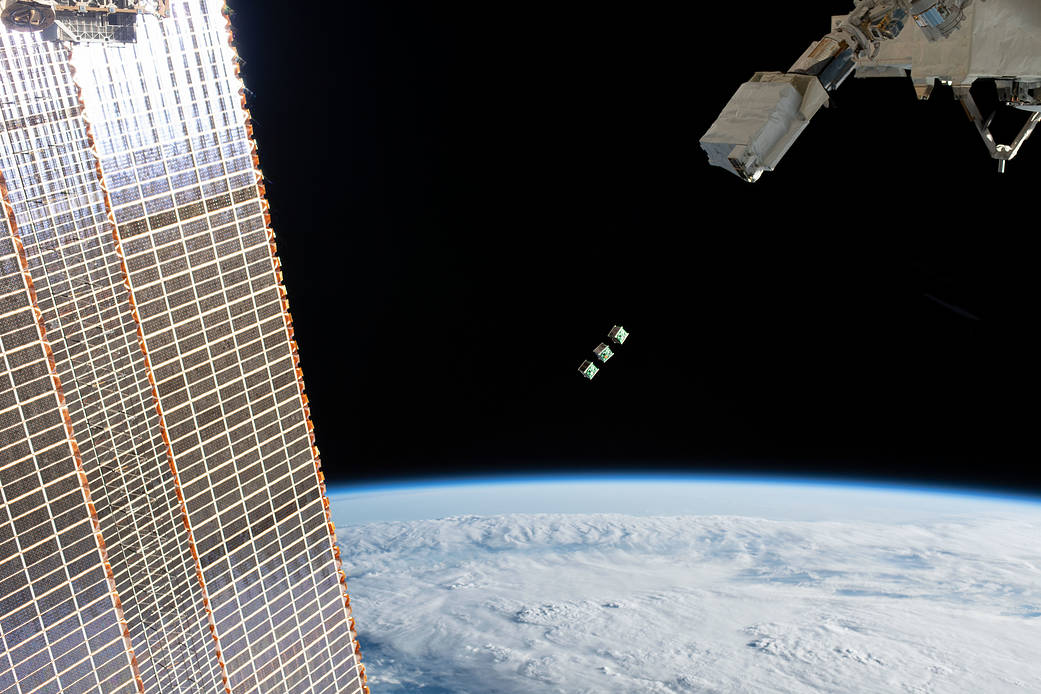
The crew outfitted Cygnus with the SlingShot Deployer that will eject a series of nanosatellites once the spacecraft reaches a safe distance and a higher altitude from the station. Cygnus will continue orbiting Earth for a few more months of systems tests before it reenters the atmosphere above the Pacific Ocean for a fiery demise.

3-D bioprinting has proven a challenge for scientists on Earth seeking to replicate complex cellular structures. NASA astronaut Andrew Morgan is researching today whether the weightless environment of space may support the fabrication of human organs in space. He set up the station’s new BioFabrication Facility to begin test-printing tissues today. An incubator houses the tissue samples to promote cohesive cellular growth over several weeks.

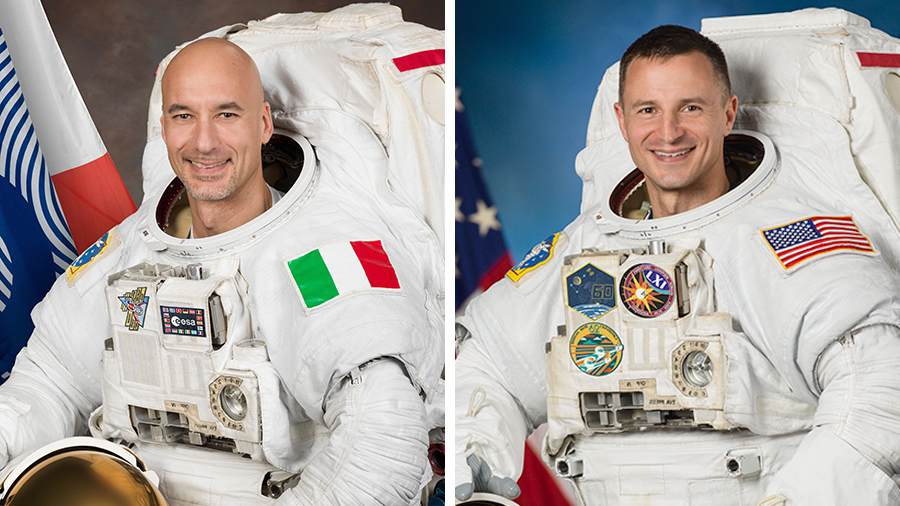
Flight Engineer Luca Parmitano of the European Space Agency started Monday collecting his blood samples and stowing them in a science freezer for later analysis. Next, he wore virtual reality goggles for an experiment testing his ability to judge the duration of time. Results are collected before, during and after a spaceflight to understand how time perception is affected in space. The impacts could potentially affect space navigation and other mission-oriented tasks.

Commander Alexey Ovchinin tested Russian smoke detectors, conducted a fit check of the Soyuz MS-12 crew ship seats and worked on space biology gear. Cosmonaut Alexander Skvortsov checked out video gear then studied how microgravity affects pain sensation.

Get The Details…

Mark Garcia

Powered by WPeMatico

3-D Bioprinting, Grip Studies on Station May Benefit Earth and Space Systems

3-D Bioprinting, Grip Studies on Station May Benefit Earth and Space Systems

Expedition 60 Flight Engineer Christina Koch of NASA
Expedition 60 Flight Engineer Christina Koch of NASA works with the BioFabrication Facility that will soon be tested for its ability to print organ-like tissues.

The Expedition 60 crewmembers are busy conducting new and advanced science experiments today aboard the International Space Station. A U.S. space freighter will begin its secondary mission after it departs the station on Tuesday.

3-D bioprinting in space may become a viable platform in the future for fabricating human organs. NASA astronaut Christina Koch activated the new BioFabrication Facility in the morning testing its ability to print cells.

Flight Engineer Nick Hague is researching the thermophysical properties of ultra-heated materials in microgravity and installed samples into the Electrostatic Levitation Furnace. He then fueled up the Bioculture System to support the Cell Science-02 bone healing and tissue regeneration study.

Hague and Koch are also training for next week’s robotic release of the Cygnus space freighter after 109 days in space. Cygnus will depart the station Tuesday and eject a set of CubeSats for space research after it reaches a safe distance from the station. The commercial cargo craft will orbit Earth for a few months of systems tests and nanosatellite deployments before its fiery, but safe atmospheric destruction above the Pacific Ocean.

Flight Engineers Andrew Morgan and Luca Parmitano continued to explore how microgravity affects their ability to grip and manipulate objects. The GRIP study, from the European Space Agency, may inform the design of future spacecraft control devices and interfaces.

Commander Alexey Ovchinin and Flight Engineer Alexander Skvortsov continue configuring the new Progress 73 resupply ship and offloading its new cargo. The duo also took turns servicing Russian science hardware and life support systems.

Get The Details…

Norah Moran

Powered by WPeMatico

August Brings More Spaceship Traffic and a Spacewalk

August Brings More Spaceship Traffic and a Spacewalk

July 31, 2019: International Space Station Configuration
July 31, 2019: International Space Station Configuration. Five spaceships are parked at the space station including the SpaceX Dragon cargo craft, Northrop Grumman’s Cygnus space freighter, and Russia’s Progress 73 resupply ship and Soyuz MS-12 and MS-13 crew ships.

The International Space Station is hosting five spaceships today as August ramps up for more orbital traffic activity. Six Expedition 60 crewmembers are also unloading U.S. and Russian cargo, activating new science experiments and stocking the station’s galley.

Russia’s Progress 73 (73P) cargo craft completed a fast-track delivery mission early Wednesday docking to the Pirs Docking Compartment just three hours and nineteen minutes after launching from Kazakhstan. Cosmonaut Alexander Skvortsov opened the 73P hatch shortly afterward starting its four-month stay. He and station Commander Alexey Ovchinin then began unloading nearly three tons of new consumables, fuel and supplies.

Two U.S. space freighters occupy the station’s Earth-facing Harmony and Unity module ports. Harmony will open up Tuesday when Northrop Grumman’s Cygnus resupply ship departs after 109 days in space. The Canadarm2 robotic arm installed the SpaceX Dragon to Unity on Saturday after its arrival and capture beginning a month of cargo operations.

NASA astronauts Christina Koch and Nick Hague are tending to mice today shipped aboard Dragon for ongoing biological research. The reusable vehicle will return the mice back to Earth at the end of the month, including other cargo, so scientists can analyze a variety of changes that only occur in microgravity.

Dragon also delivered a new commercial crew vehicle port, the International Docking Adapter-3 (IDA-3), in its unpressurized trunk. Robotics controllers will soon extract the IDA-3 before two spacewalkers install it to Unity’s space-facing port a few days later.

A few days before Dragon departs, Russia will launch an unpiloted Soyuz MS-14 crew ship to the orbiting lab for a test of its upgraded 2.1a Soyuz booster. It will dock to the Poisk module for a two-week stay before parachuting back to Earth in the vast steppe of Kazakhstan.

Get The Details…

Mark Garcia

Powered by WPeMatico

Russian Progress Cargo Ship Reaches Station in Just Two Orbits

Russian Progress Cargo Ship Reaches Station in Just Two Orbits

Russia's Progress 73 resupply ship
This image from an external high definition video camera shows Russia’s Progress 73 resupply ship nearing its docking port on the space station.

Traveling about 259 miles over northwest China, the unpiloted Russian Progress 73 cargo ship docked at 11:29 a.m. EDT to the Pirs docking compartment on the Russian segment of the complex.

In addition to the arrival of Progress today, the six crewmembers aboard the space station welcomed SpaceX’s cargo Dragon spacecraft on July 27, two days after launching on a Falcon 9 rocket from Launch Complex 40 on Cape Canaveral Air Force Station in Florida.

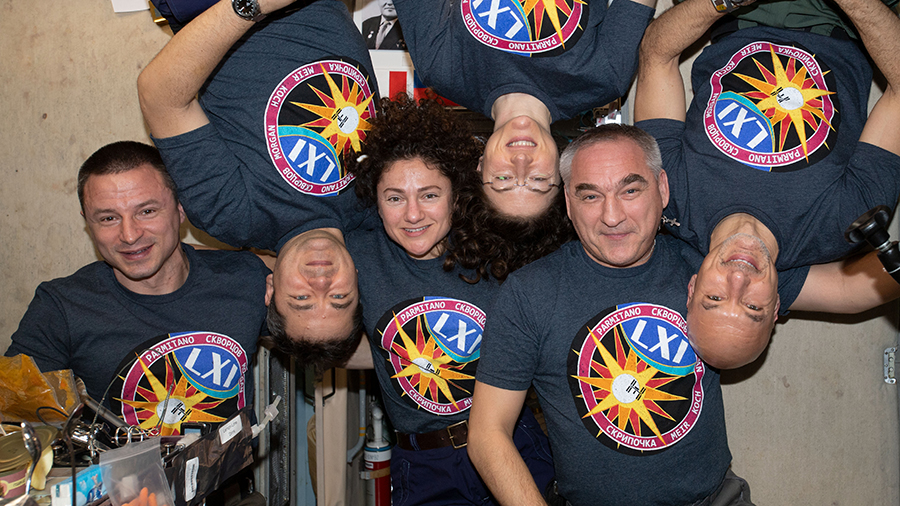
On July 20, the Soyuz MS-13 spacecraft arrived to the space station carrying NASA astronaut Andrew Morgan and Luca Parmitano of ESA (European Space Agency) and Alexander Skvortsov of the Russian space agency Roscosmos. Their arrival restored the station’s crew complement to six. They joined NASA astronauts Nick Hague, Christina Koch and Expedition 60 Commander Alexey Ovchinin of Roscosmos.

Learn more about station activities by following @space_station and @ISS_Research Twitter as well as the ISS Facebook and ISS Instagram accounts.

Get The Details…

Mark Garcia

Powered by WPeMatico

Russia’s Progress Cargo Craft Racing Toward Space Station

Russia’s Progress Cargo Craft Racing Toward Space Station

Progress 73 cargo craft launch
Russsia’s Progress 73 cargo craft launches on time from the Baikonur Cosmodrome in Kazakhstan to the International Space Station.

Carrying almost three tons of food, fuel and supplies for the International Space Station crew, the unpiloted Russian Progress 73 cargo spacecraft launched at 8:10 a.m. EDT (5:10 p.m. Baikonur time) from the Baikonur Cosmodrome in Kazakhstan.

The resupply ship reached preliminary orbit and deployed its solar arrays and navigational antennas as planned. Following a 2-orbit rendezvous, the Russian cargo spacecraft will dock to the orbiting laboratory at 11:35 a.m. NASA Television coverage of rendezvous and docking will begin at 10:45 a.m.

Progress 73 will remain docked at the station for five months before departing in December for its deorbit in Earth’s atmosphere.

The Progress is the second of two cargo resupply ships delivering supplies to the six crewmembers aboard the space station this month. SpaceX’s cargo Dragon spacecraft attached to station on Saturday, July 27, two days after launching on a Falcon 9 rocket from Launch Complex 40 on Cape Canaveral Air Force Station in Florida.

Learn more about station activities by following @space_station and @ISS_Research Twitter as well as the ISS Facebook and ISS Instagram accounts.

Get The Details…

Mark Garcia

Powered by WPeMatico