Dragon Splashes Down and Returns Science, Cargo

Dragon Splashes Down and Returns Science, Cargo

Official insignia of the National Aeronautics and Space Administration.
NASA

At 11:44 p.m. PST, the unpiloted SpaceX Dragon spacecraft splashed down off the coast of California, marking the return of the company’s 33rd Commercial Resupply Services mission to the International Space Station for NASA.

Loaded with thousands of pounds of crew supplies, science experiments, and equipment, the spacecraft undocked at 11:05 a.m. CST on Feb. 26, from the forward-facing port of the space station’s Harmony module.

Several scientific investigations are returning aboard Dragon, offering insights that could help shape future space exploration and life on Earth. The Euro Material Ageing study exposed 141 samples to space for a year to examine how coatings, insulation, and 3D-printed materials degrade, while Thailand’s Liquid Crystals experiment observed the stability of films used in electronics in microgravity. Both could lead to stronger spacecraft, better displays, and improved optical devices on future missions. 

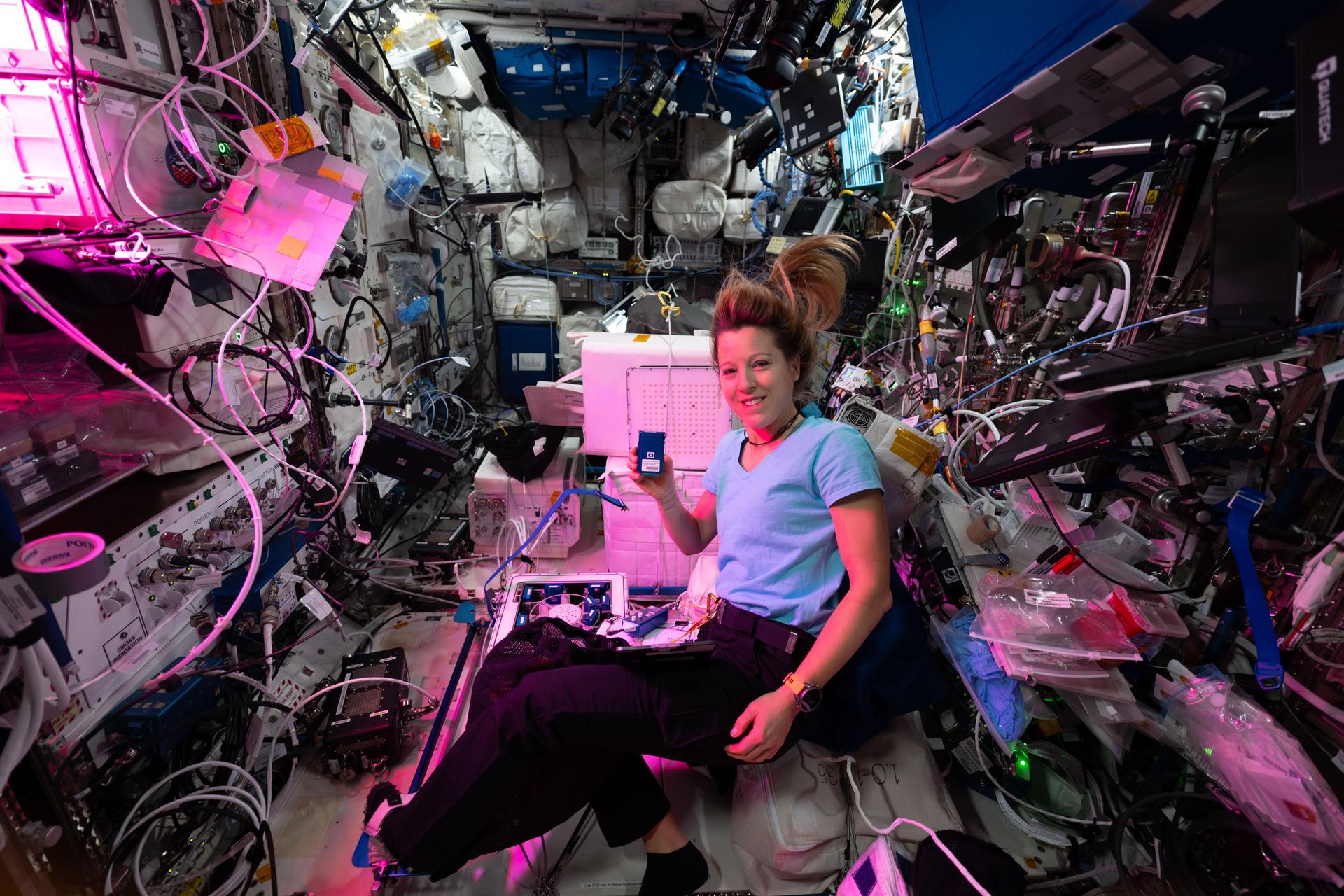
Frozen samples from the Stellar Stem Cells Mission 2 experiment are helping study how microgravity affects brain and heart stem cell growth, which could improve treatments for diseases such as ALS and Parkinson’s disease. The SpaceDuino project is paving the way for more low-cost instruments after successfully measuring vibrations using a commercially available single-board computer and open-source software. The Moon Microscope also successfully tested a portable diagnostic kit for blood analysis in space that could support future missions to the Moon and Mars. 

The Dragon spacecraft supporting the mission also introduced a new capability to reboost the space station, helping maintain its altitude and counter atmospheric drag, which is critical for safe operations and the long-term sustainability of the orbital complex. During its time docked to the station, Dragon performed six reboosts — five in 2025 and a final maneuver on Jan. 23 — before preparations for its departure began.

The spacecraft arrived at the station on Aug. 25, 2025, following its launch a day earlier on a Falcon 9 rocket from Space Launch Complex 40 at Cape Canaveral Space Force Station in Florida. 

Learn more about station activities by following the space station blog, @space_station on X, as well as the ISS Facebook and ISS Instagram accounts.

Get the latest from NASA delivered every week. Subscribe here.

Powered by WPeMatico

Get The Details…

Mark A. Garcia

Science-Packed Dragon Departs Station, Heads for Splashdown

Science-Packed Dragon Departs Station, Heads for Splashdown

A SpaceX Dragon (center) backs away from the International Space Station after undocking from the Harmony module's forward port.
A SpaceX Dragon (center) backs away from the International Space Station after undocking from the Harmony module’s forward port.
NASA+

At 12:05 p.m. EST, the unpiloted SpaceX Dragon spacecraft undocked from the forward-facing port of the International Space Station’s Harmony module following a command from ground controllers at SpaceX.

After re-entering Earth’s atmosphere, the spacecraft is scheduled to splash down at approximately 11:44 p.m. PST (2:44 a.m. EST Friday, Feb. 27), off the coast of California. NASA will not stream splashdown but will post updates on its space station blog.

Learn more about station activities by following the space station blog, @space_station on X, as well as the ISS Facebook and ISS Instagram accounts.

Get the latest from NASA delivered every week. Subscribe here.

Powered by WPeMatico

Get The Details…

Mark A. Garcia

Cargo-Filled Dragon Departs Station Soon on NASA+

Cargo-Filled Dragon Departs Station Soon on NASA+

A SpaceX Dragon cargo spacecraft with its nosecone open and carrying over 5,000 pounds of science, supplies, and hardware for NASA's SpaceX CRS-33 mission approaches the International Space Station for an automated docking to the Harmony module's forward port. Both spacecraft were flying 262 miles above the Atlantic Ocean east of the Canadian province of Newfoundland at the time of this photograph.
A SpaceX Dragon cargo spacecraft carrying over 5,000 pounds of science, supplies, and hardware approaches the International Space Station for an automated docking on Aug. 25, 2025.
NASA

NASA’s live coverage of undocking and departure of the agency’s SpaceX 33rd Commercial Resupply Services mission is underway on NASA+. Learn how to watch NASA content through a variety of platforms.

The unpiloted SpaceX Dragon spacecraft will undock at 12:05 p.m. EST from the forward-facing port of the International Space Station’s Harmony module and fire its thrusters to move safely away from the orbiting complex. NASA will not stream splashdown but will post updates on its space station blog

The Dragon spacecraft supporting the mission also introduced a new capability to reboost the space station, helping maintain its altitude and counter atmospheric drag, which is critical for safe operations and the long-term sustainability of the orbital complex. During its time docked to the station, Dragon performed six reboosts — five in 2025 and a final maneuver on Jan. 23 — before preparations for its departure began.

Loaded with thousands of pounds of crew supplies, science experiments, and equipment, the spacecraft arrived at the station Aug. 25, 2025. It launched a day earlier on a Falcon 9 rocket from Space Launch Complex 40 at Cape Canaveral Space Force Station in Florida for NASA’s 33rd SpaceX Commercial Resupply Services mission. 

Learn more about station activities by following the space station blog, @space_station on X, as well as the ISS Facebook and ISS Instagram accounts.

Get the latest from NASA delivered every week. Subscribe here.

Powered by WPeMatico

Get The Details…

Mark A. Garcia

Human Research, Advanced Tech Keep Crew Busy Before Dragon Departs

Human Research, Advanced Tech Keep Crew Busy Before Dragon Departs

NASA astronaut and Expedition 74 Flight Engineer Chris Williams calls down to mission controllers during Crew Medical Officer training inside the International Space Station’s Destiny laboratory module. Williams trained to use medical hardware, including an automated external defibrillator, and reviewed procedures such as conducting eye exams and administering medicine.
NASA astronaut Chris Williams calls down to mission controllers during Crew Medical Officer training inside the International Space Station’s Destiny laboratory module.
NASA/Jessica Meir

Human research, advanced robotics, and experimental workout gear filled the schedule for the Expedition 74 crew aboard the International Space Station on Wednesday. The orbital residents also continued packing a SpaceX Dragon with science experiments and space hardware for its departure on Thursday.

Flight Engineers Jessica Meir of NASA and Sophie Adenot of ESA (European Space Agency) kicked off their shift together answering a questionnaire about their sleep quality and collecting their saliva samples for analysis. Researchers will use the biomedical data to understand the stress and behavioral risks during a spaceflight, devise meditation and relaxation techniques for crews, and improve the experience of a long-term mission.

Meir then collected and processed her blood samples with assistance from NASA Flight Engineer Jack Hathaway for the Venous Flow study that examines the risk of space-caused blood clots. Next, Meir inspected and cleaned the Enhanced European Exploration Exercise Device, an advanced, compact all-in-one workout device being tested for use on deep space missions. Adenot partnered with Hathaway at the end of their shift loading hardware packed with research samples into a SpaceX Dragon scheduled to undock from the orbital outpost’s Harmony module at 12:05 p.m. EST on Thursday.

NASA Flight Engineer Chris Williams started his shift inside the Kibo laboratory module installing and configuring a pair of small robotic arms. The advanced robotic technology is demonstrating precision mobility and experiment automation in microgravity to reduce astronaut workloads. Williams then joined Meir in the Tranquility module and replaced components on the advanced resistive exercise device that mimics free weights on Earth.

Station Commander Sergey Kud-Sverchkov, attached to electrodes, pedaled on an exercise cycle for a cardiovascular assessment while Flight Engineer Sergei Mikaev monitored and assisted. The Roscosmos cosmonauts then split up their day with semiconductor research, an artificial intelligence investigation, and photographic inspections of windows on the Zvezda service module.

Roscosmos Flight Engineer Andrey Fedyaev closed out an automated photography session that imaged Earth landmarks in a variety of wavelengths during the crew’s sleep shift. The two-time station visitor then spent the rest of his day servicing the Nauka science module’s ventilation system and inventorying hardware located in the Zarya module.

Learn more about station activities by following the space station blog, @space_station on X, as well as the ISS Facebook and ISS Instagram accounts.

Get the latest from NASA delivered every week. Subscribe here.

Powered by WPeMatico

Get The Details…

Mark A. Garcia

Crew Packs Dragon for Thursday Departure, Keeps Up Human Research

Crew Packs Dragon for Thursday Departure, Keeps Up Human Research

The sun begins setting above Earth's atmospheric glow blanketing a cloudy Atlantic Ocean. The International Space Station was orbiting 260 miles above the Earth off the coast of Florida when this photograph was taken. In the foreground, are a SpaceX Dragon spacecraft (lower left) and a set of the orbital outpost's solar arrays (right).
The sun begins setting above Earth’s atmospheric glow blanketing a cloudy Atlantic Ocean. In the foreground, are a SpaceX Dragon spacecraft (lower left) and a set of the orbital outpost’s solar arrays (right).
JAXA/Kimiya Yui

The Expedition 74 crew will finalize the packing of a SpaceX Dragon spacecraft as it nears its departure later this week. Science operations were still underway aboard the International Space Station on Tuesday as the orbital residents explored how living and working in weightlessness is affecting their bodies.

NASA and SpaceX have scheduled Dragon to undock from the Harmony module’s forward port at 12:05 p.m. EST on Thursday. Live streaming coverage begins at 11:45 a.m. on NASA+Amazon Prime, and the agency’s YouTube channel. Learn how to watch NASA content on a variety of online platforms, including social media.

Dragon will be returning numerous science experiments completed aboard the orbital outpost for retrieval and analysis on Earth. Packed inside the spacecraft will be samples of materials exposed to the harsh environment of space, flat liquid crystal films, stem cells programmed to become cardiac and brain cells, and more. Results from the investigations may lead to advanced Earth and space technologies and improved human health. Dragon’s parachute-assisted splashdown off the coast of California a half-a-day later will not be broadcast.

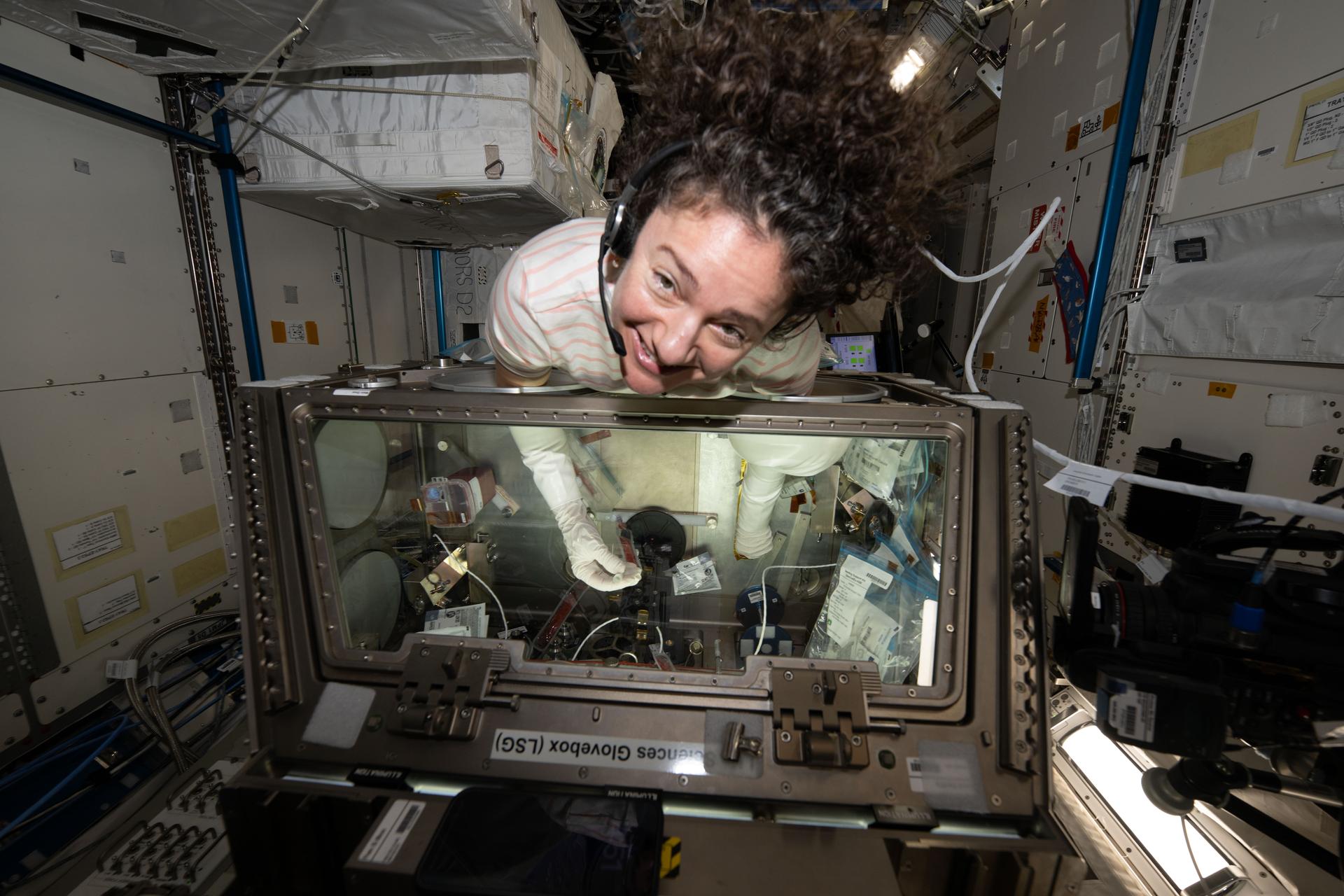
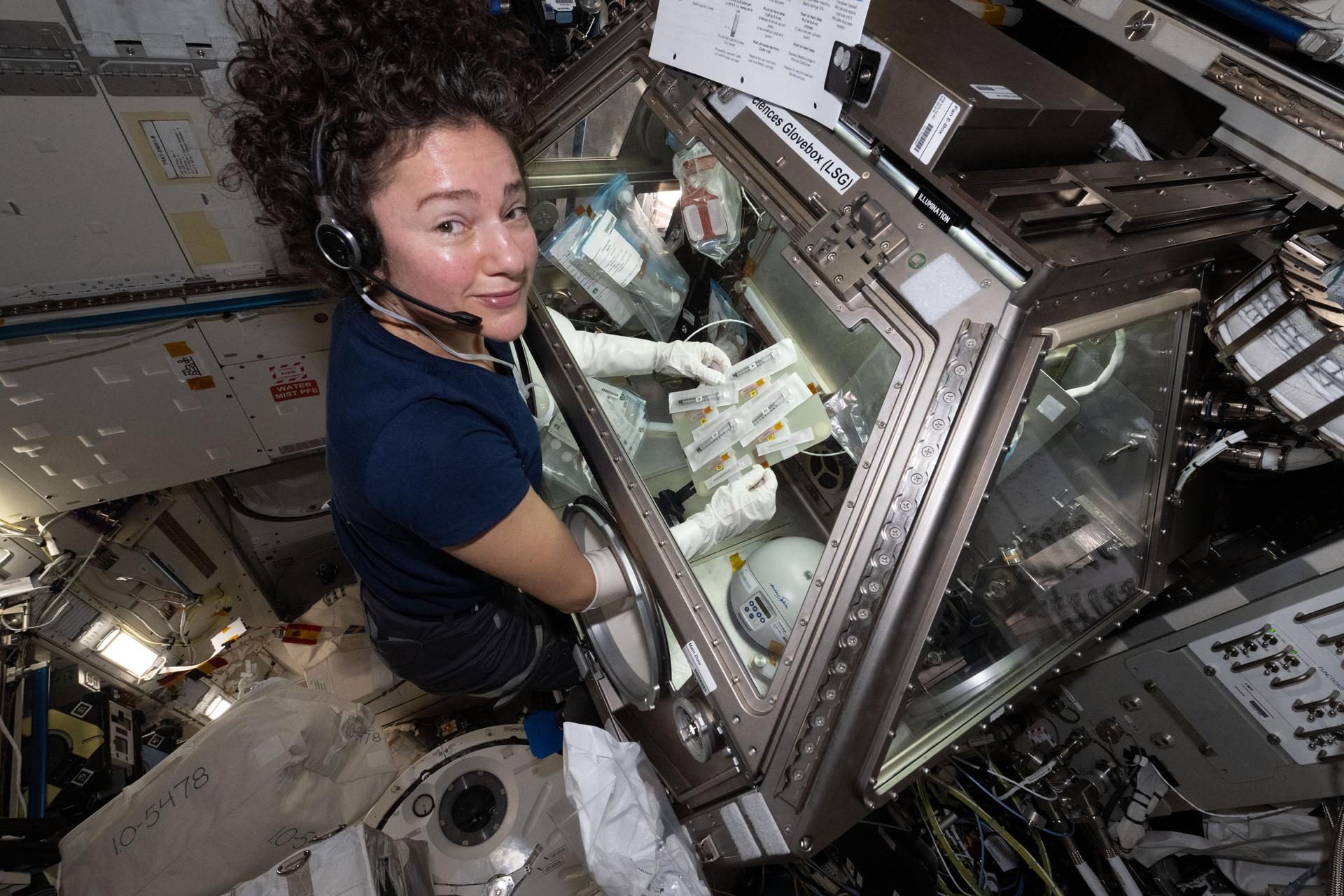
NASA Flight Engineers Chris Williams and Jessica Meir transferred portable science freezers containing numerous research samples, including stem cells and microbes, into Dragon on Tuesday. The duo also partnered with Flight Engineer Sophie Adenot of ESA (European Space Agency) continuing to load and secure station hardware inside Dragon for the ride back to Earth. Adenot also collected her saliva samples for immunological analysis then continued familiarizing herself with living and working aboard the space station.

NASA Flight Engineer Jack Hathaway began his shift inside the Kibo laboratory module servicing the small satellite orbital deployer that is regularly placed outside the orbital outpost to eject CubeSats into Earth orbit for public, private, and educational research. Hathaway then joined Meir at the end of their shift and continued studying station systems and procedures such as using exercise gear, handling safety equipment, and performing medical procedures.

Station Commander Sergey Kud-Sverchkov and Flight Engineer Sergei Mikaev, both Roscosmos cosmonauts, worked together on a pair of human research experiments on Tuesday. Kud-Sverchkov and Sergei Mikaev took turns wearing chest electrodes and arm, wrist, and thumb cuffs measuring their cardiac activity and blood pressure. Doctors are assessing microgravity’s effect on blood flow regulation, clot prevention, and inflammation responses. The duo also wore virtual reality goggles and responded to visual and audio signals to test a crew member’s sense of balance and orientation in space.

Roscosmos Flight Engineer Andrey Fedyaev kicked off his shift wearing an acoustic sensor attached to his neck that recorded his rapid exhalation to understand how microgravity affects his breathing. Next, Fedyaev set up a space physics experiment and used molecular beams to explore semiconductor growth in microgravity. Results may lead to advanced electronics systems and scientific instruments for spacecraft and satellites. At the end of his shift, Fedyaev installed Earth observation gear for an automated overnight photography session to capture ground targets in a variety of wavelengths.

Learn more about station activities by following the space station blog, @space_station on X, as well as the ISS Facebook and ISS Instagram accounts.

Get the latest from NASA delivered every week. Subscribe here.

Powered by WPeMatico

Get The Details…

Mark A. Garcia