Station Resupply Mission Launching Live on NASA TV
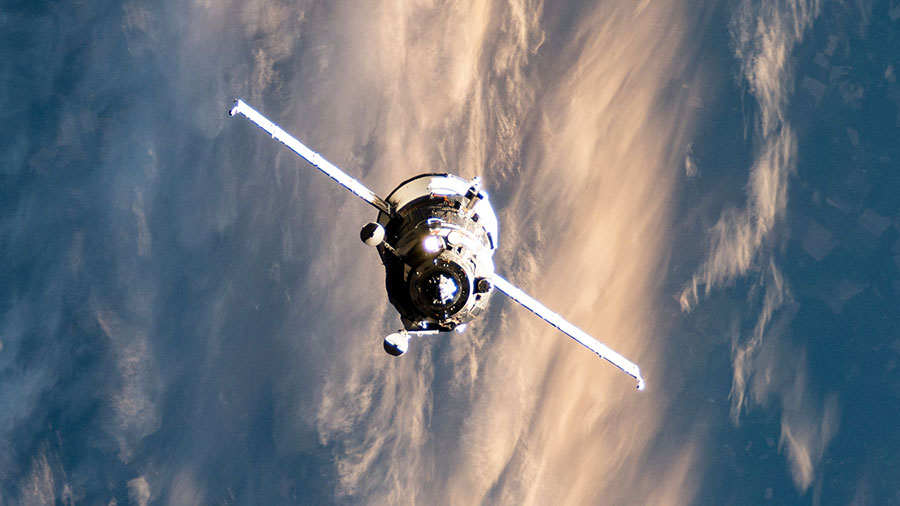
Russia’s Progress 76 resupply ship is pictured approaching the station in July of 2020 packed with nearly three tons of food, fuel and supplies.
NASA Television, the NASA app, and the agency’s website now are providing live coverage of the launch of a Roscosmos cargo spacecraft to the International Space Station.
The uncrewed Progress 84 is scheduled to lift off on a Soyuz rocket at 8:56 a.m. EDT Wednesday, May 24 (5:56 p.m. Baikonur time) from the Baikonur Cosmodrome in Kazakhstan.
After a two-orbit journey, Progress will dock to the station’s Poisk module at 12:20 p.m. NASA coverage will resume at 11:30 a.m. for rendezvous and docking
Station Welcomes Axiom Astronauts and Preps for Next Cargo Mission
The SpaceX Freedom Dragon crew ship with four Axiom Mission-2 private astronauts aboard is pictured approaching the International Space Station.
11 crew members are living aboard the International Space Station with four spaceships now docked to the orbiting lab. A fifth spaceship is due to launch Wednesday and arrive a few hours later with cargo to replenish the Expedition 69 crew.
Two SpaceX Dragon crew ships are docked adjacent to each other on the station’s Harmony module after the arrival of Axiom Mission-2 (Ax-2) aboard Dragon Freedom on Monday at 9:12 a.m. EDT. The four private astronauts from Axiom Space opened Freedom’s hatch at 11 a.m. and entered the station beginning eight days of docked operations.
The private quartet consisting of Commander Peggy Whitson, Pilot John Shoffner, and Mission Specialists Al Alqarni and Rayyanah Barnawi spent Tuesday getting familiar with station operations. They practiced preparing food and drinks, conducting hygiene practices, performing safety procedures, and operating lab equipment while getting used to living in space.
At the end of the day, the foursome joined the seven-member Expedition 69 crew and reviewed roles and responsibilities in the unlikely event of an emergency. The international crew of 11 located safety gear such as fire extinguishers and portable breathing gear, followed escape routes, and coordinated communications with mission controllers in response to fire, ammonia leak, or pressure leak events.
In the middle of the new crew adaptation activities, there was still time for ongoing space science and lab maintenance activities. NASA Flight Engineer Frank Rubio serviced a variety of components and swapped samples inside a research furnace and a fluorescence microscope. NASA Flight Engineer Woody Hoburg configured gear supporting a pharmaceutical study, while UAE (United Arab Emirates) astronaut Sultan Alneyadi set up the Stellar Stem Cells experiment, an Ax-2 investigation, that will explore regenerative medicine therapies.
NASA Flight Engineer Stephen Bowen spent his day with the Ax-2 crew and joined Commander Whitson transferring emergency gear and configuring safety hardware between Dragon Freedom and the space station. Bowen and former NASA astronaut Whitson are both Dragon crew ship commanders with Bowen leading the SpaceX Crew-6 mission aboard the Dragon Endeavour spacecraft.
The next mission to launch to the orbital outpost is an uncrewed cargo mission from Roscosmos counting down to its liftoff at 8:56 a.m. EDT on Wednesday from the Baikonur Cosmodrome in Kazakhstan. The ISS Progress 84 (84P) cargo craft will dock to the Poisk module just under three-and-a-half hours later at 12:20 p.m. delivering about three tons of food, fuel, and supplies to the orbital residents. Expedition 69 Commander Sergey Prokopyev and Flight Engineer Dmitri Petelin will be on duty monitoring 84P’s arrival then open its hatch several hours later to begin offloading the new cargo.
Mission Specialist Assigned to NASA’s SpaceX Crew-7 Mission
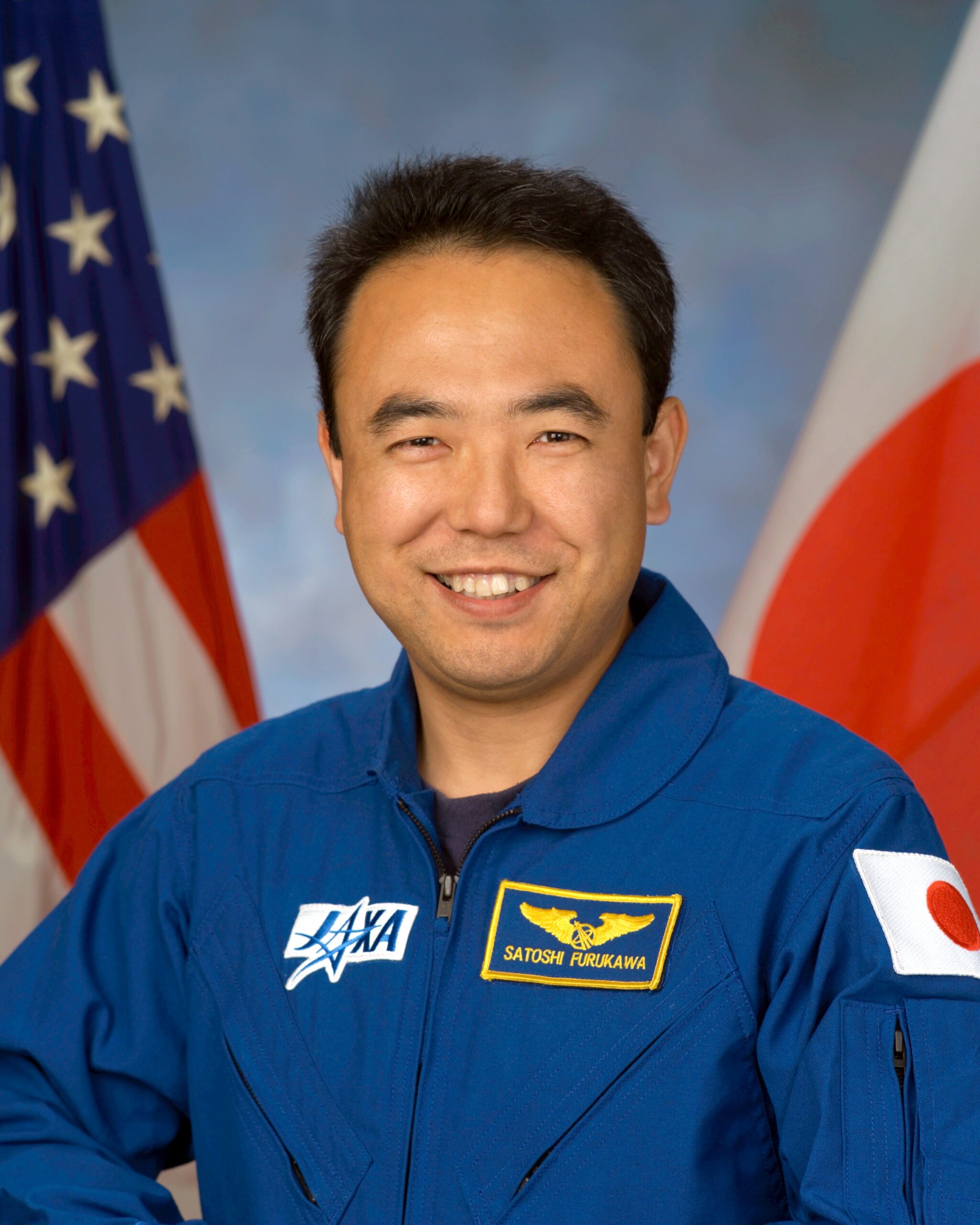
JAXA (Japanese Aerospace Exploration Agency) astronaut Satoshi Furukawa was named a mission specialist for NASA’s SpaceX Crew-7 mission. Photo credit: NASA
Astronaut Satoshi Furukawa from JAXA (Japan Aerospace Exploration Agency) has been selected as a mission specialist for NASA’s SpaceX Crew-7 mission – the agency’s seventh rotational mission to the International Space Station.
Furukawa joins NASA astronaut Jasmin Moghbeli and ESA (European Space Agency) astronaut Andreas Mogensen, who will serve as spacecraft commander and pilot, respectively. An additional crew member will be assigned at a later date.
Furukawa spent 165 days aboard the orbiting laboratory in 2011 as a flight engineer with Expeditions 28 and 29. As part of his duties, he helped support the final space shuttle mission, STS-135.
This will be the first spaceflight for Moghbeli, who became a NASA astronaut in 2017, and the first long-duration mission for Mogensen. He previously served as a flight engineer on a 10-day mission to the space station in 2015. Crew-7 will be his second trip to space.
NASA and SpaceX are targeting no earlier than mid-August for the launch of Crew-7, aboard a SpaceX Dragon spacecraft and Falcon 9 rocket from Launch Complex 39A at NASA’s Kennedy Space Center in Florida. The four astronauts will join an expedition crew aboard the space station.
For more insight on NASA’s Commercial Crew Program missions to the orbiting laboratory, follow the commercial crew blog. More details can be found @commercial_crew on Twitter and commercial crew on Facebook.
Four Axiom Mission-2 Private Astronauts Enter Station
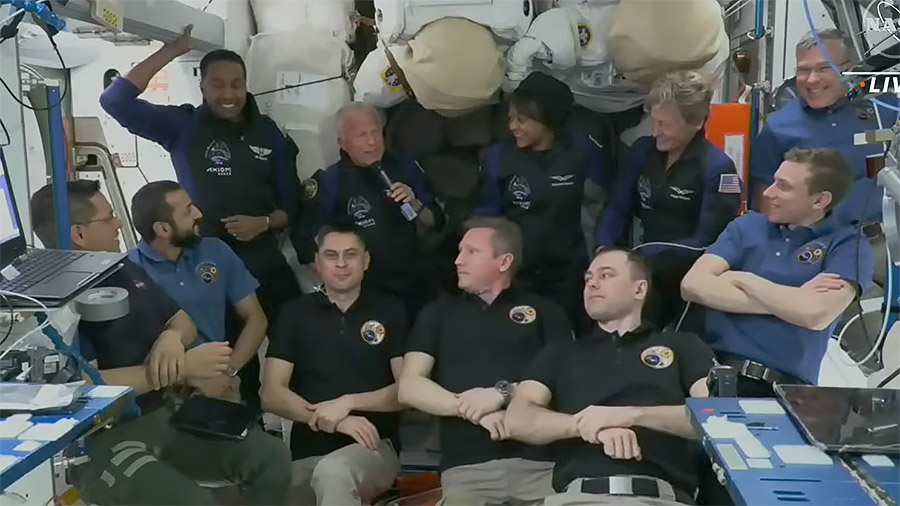
The four Axiom Mission-2 crew members join the seven-member Expedition 69 crew aboard the station and gather together for a crew greeting ceremony. Credit: NASA TV
Axiom Mission 2 (Ax-2) astronauts Peggy Whitson, John Shoffner, Ali Alqarni and Rayyanah Barnawi now are aboard the International Space Station following Dragon’s hatch opening at 11 a.m. EDT Monday, May 22.
Ax-2 docked to the orbital complex at 9:12 a.m. on the second mission with an entirely private crew to arrive at the orbiting laboratory.
The Axiom Space crew are joining Expedition 69 crew members aboard station, including NASA astronauts Frank Rubio, Woody Hoburg, and Stephen Bowen, UAE (United Arab Emirates) astronaut Sultan Alneyadi, as well as Roscosmos cosmonauts Dmitri Petelin, Andrey Fedyaev, and Sergey Prokopyev.
Next up, the station crew members will take part in a welcome ceremony aboard the International Space Station.
Axiom Space astronauts are expected to depart the space station May 30, pending weather, for a return to Earth and splashdown at a landing site off the coast of Florida
Four spaceships are docked at the space station including the SpaceX Dragon Endeavour and Freedom crew ships and Roscosmos’ Soyuz MS-23 crew ship and Progress 83 resupply ship.
Axiom Mission 2 astronauts Peggy Whitson, John Shoffner, Ali Alqarni and Rayyanah Barnawi arrived at the International Space Station at 9:12 a.m. EDT Monday, May 22, on the SpaceX Dragon spacecraft. Live coverage continues on NASA Television, the NASA app, and the agency’s website for hatch opening and the welcome ceremony.
Live coverage continue on NASA Television, the NASA app, and the agency’s website for hatch opening and the welcome ceremony.