NASA Updates Commercial Crew Planning Manifest

NASA Updates Commercial Crew Planning Manifest
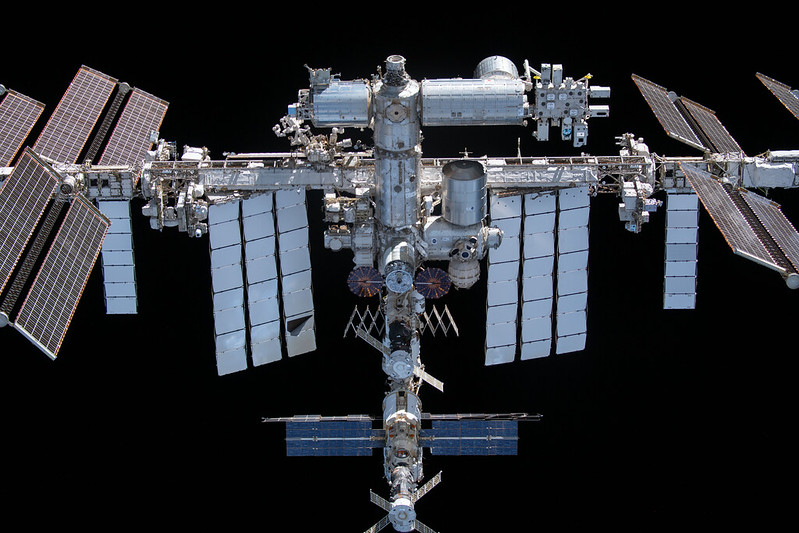
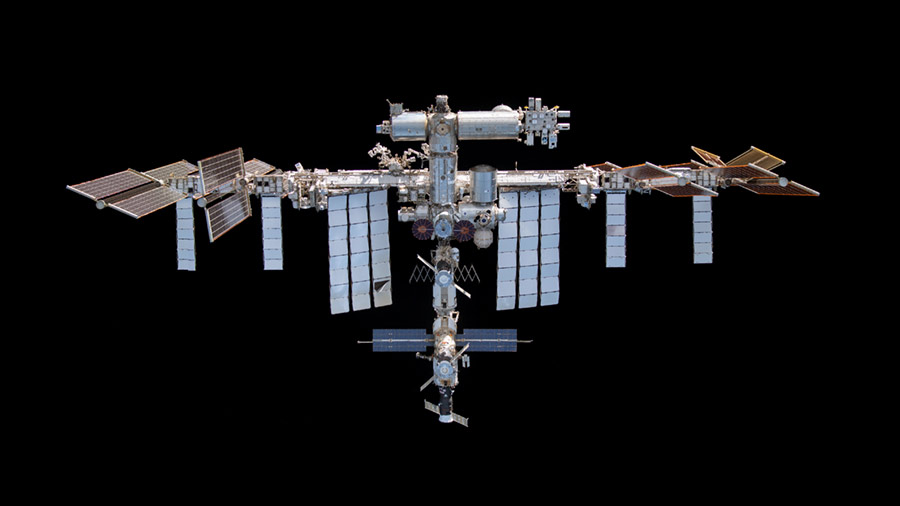
The International Space Station’s U.S. segment and portions of the Russian segment are pictured from the SpaceX Crew Dragon Endeavour during a fly around of the orbiting lab that took place following its undocking from the Harmony module’s space-facing port on Nov. 8, 2021. Prominent at the top in this view, are the Columbus laboratory module, the Harmony module and its space-facing docking port, and the Kibo laboratory module with its external pallet. Credit: NASA

NASA and its industry partners Boeing and SpaceX are planning for the next set of missions to the International Space Station for the agency’s Commercial Crew Program.

Crew-8

NASA’s SpaceX Crew-8 mission to the orbiting laboratory is targeted to launch no earlier than mid-February. The mission will carry NASA astronauts Matthew Dominick, commander; Michael Barratt, pilot; and mission specialist Jeanette Epps, as well as Roscosmos cosmonaut mission specialist Alexander Grebenkin to the space station to conduct a wide range of operational and research activities. Routine maintenance and processing of the Crew-8 SpaceX Falcon 9 rocket and Dragon spacecraft is in work. This will be the first spaceflight for Dominick, Epps, and Grebenkin, and the third for Barratt. Crew-8 is expected to return to Earth in late August 2024, following a short handover with the agency’s Crew-9 mission.

Starliner Crew Flight Test (CFT)

The first crewed flight of the Starliner spacecraft, named NASA’s Boeing Crew Flight Test (CFT), is planned for no earlier than mid-April. CFT will send NASA astronauts and test pilots Butch Wilmore and Suni Williams on a demonstration flight to prove the end-to-end capabilities of the Starliner system. Starliner will launch atop a United Launch Alliance Atlas V rocket from Cape Canaveral Space Force Station in Florida, spend approximately eight days docked to the space station, and return to Earth with a parachute and airbag-assisted ground landing in the desert of the western United States.

NASA will provide an updated status of CFT readiness as more information becomes available.

Crew-9

Looking further ahead in 2024, NASA and SpaceX are targeting no earlier than mid-August for the launch of the agency’s Crew-9, SpaceX’s ninth crew rotation mission to the space station for NASA. A crew of four will be announced at a later date.

10th Crew Rotation Mission

The 10th commercial crew rotation opportunity to the space station is targeted for early 2025. NASA is planning for either SpaceX’s Crew-10 or Boeing’s Starliner-1 mission in this slot. The Starliner-1 date was adjusted to allow for the post-flight review of the Crew Flight Test and incorporation of anticipated learning, approvals of final certification products, and completion of readiness and certification reviews ahead of that mission.

For more insight on NASA’s Commercial Crew Program missions to the orbiting laboratory follow the commercial crew blog. More details can be found @commercial_crew on X and commercial crew on Facebook.

Powered by WPeMatico

Get The Details…

Heather Scott

Spacewalks Postponed as Managers Review Leak Data

Spacewalks Postponed as Managers Review Leak Data

The space station is pictured from the SpaceX Crew Dragon Endeavour during its departure and flyaround on Nov. 8, 2021.

NASA engineering and flight control teams are continuing to review data and video associated with a coolant leak from a backup radiator on the station’s Nauka multipurpose laboratory module (MLM). Two United States segment spacewalks originally scheduled for Thursday, Oct.12, and Friday, Oct. 20, have been postponed until the review is complete. New dates will be announced later.

The leak has now ceased, as was reported by Roscosmos flight controllers and evidenced by NASA external station camera views, which show only residual coolant droplets.

The primary radiator on Nauka continues to work normally, providing full cooling to the module with no impacts to the crew or to space station operations.

The backup radiator was delivered to the space station on the Rassvet module during space shuttle mission STS-132 in 2010. It was transferred to the Nauka during a Roscosmos spacewalk in April.

Teams on the ground continue to investigate the cause of the leak, and additional updates will be made as soon as available.

Meanwhile, cargo operations and maintenance rounded out the day aboard the International Space Station.

All seven orbital lab residents began Wednesday morning weighing themselves in microgravity. While the space environment renders objects and humans weightless, they still have mass. The crew uses a specialized device that applies a known force to a crew member and measures the resulting acceleration to accurately calculate their mass.

The international septet then split up for the rest of the day moving on to a variety of activities in preparation for upcoming spacewalks. Astronauts Loral O’Hara of NASA and Andreas Mogensen of ESA (European Space Agency) will exit the space station and swab station surfaces to determine the types of microbes that might survive the extreme conditions of outer space. They will be supported by fellow astronauts Jasmin Moghbeli of NASA and Satoshi Furukawa of JAXA (Japan Aerospace Exploration Agency) who will assist the spacewalkers before, during, and after the scheduled six-hour excursion.

Cosmonauts Oleg Kononenko and Nikolai Chub are also getting ready for a spacewalk together planned at the end of the month to install new hardware and deploy nanosatellites. The duo spent Wednesday morning studying the procedures planned for the six-hour and 45-minute spacewalk. After lunchtime, the Roscosmos flight engineers began collecting their spacesuit components and organizing spacewalking tools.

Amidst the spacewalk prep work today, O’Hara, Mogensen and Furukawa also took turns transferring cargo in and out of the Cygnus space freighter berthed to the Unity module’s Earth-facing port. Cygnus launched to the orbital outpost on Aug. 1, carrying food, fuel, supplies, and new science experiments to study gene therapy, atmospheric density, spacecraft fire safety, and more. The cargo craft from Northrop Grumman is due to end its mission and depart in December.

Cosmonaut Konstantin Borisov spent his day supporting life support and electronics maintenance. The first-time space flyer finalized a session of carbon dioxide monitoring and readied radiation detectors that will be worn on spacesuits on an upcoming spacewalk. He also charged camcorder batteries and reconfigured video cameras.


Learn more about station activities by following the space station blog, @space_station and @ISS_Research on X, as well as the ISS Facebook and ISS Instagram accounts.

Get weekly video highlights at: https://roundupreads.jsc.nasa.gov/videoupdate/

Get the latest from NASA delivered every week. Subscribe here: www.nasa.gov/subscribe

Powered by WPeMatico

Get The Details…

Mark Garcia

Tuesday Sees Space Physics, Human Research, and Spacewalk Preps

Tuesday Sees Space Physics, Human Research, and Spacewalk Preps

Astronaut Loral O'Hara shows off spacewalking tools aboard the International Space Station.
Astronaut Loral O’Hara shows off spacewalking tools aboard the International Space Station.

The Expedition 70 crew worked throughout Tuesday on space physics and human research aboard the International Space Station. Two astronauts are also gearing up for a spacewalk on Thursday to determine if microorganisms can survive the harsh environment of outer space.

Tuesday morning, the orbital residents focused their science activities on a variety of physics research hardware. NASA astronaut Loral O’Hara installed new components and reconnected power and data cables on the Cold Atom Lab, a device that observes the quantum behavior of atoms chilled to near absolute zero. Flight Engineer Satoshi Furukawa of JAXA (Japan Aerospace Exploration Agency) set up combustion experiment gear in the Kibo laboratory module to study how microgravity affects flames and improve fire safety on spacecraft.

O’Hara then joined fellow NASA Flight Engineer Jasmin Moghbeli in the Columbus laboratory module for vein scans. Moghbeli operated the Ultrasound 2 device and scanned O’Hara’s neck, shoulder, and leg veins with assistance from doctors on the ground.

At the end of the day, both astronauts joined up with Furukawa and Commander Andreas Mogensen of ESA (European Space Agency) and discussed robotics procedures planned for Thursday’s spacewalk. Moghbeli and Furukawa will be at the controls of the Canadarm2 robotic arm assisting O’Hara and Mogensen when they exit the station on Thursday for a six-hour spacewalk that starts at 10 a.m. EDT.

Mogensen and O’Hara earlier worked in the Quest airlock organizing the spacewalking tools they will use on Thursday to swab station surfaces and determine if microbes can live in the external conditions of microgravity. Moghbeli and Furukawa trained on a computer for the robotics maneuvers necessary to support the spacewalkers.

Two cosmonauts worked on a pair of technology studies exploring 3D printing and space navigation on Tuesday. Flight Engineer Nikolai Chub tested the on-demand manufacturing, or 3D printing, of tools in microgravity to help crews become less dependent on supplies launched from Earth. Flight Engineer Konstantin Borisov photographed landmarks on Earth for an experiment collecting data to improve high-precision data for determining the location of the space station.

Veteran cosmonaut Oleg Kononenko spent Tuesday working inside the Progress 85 (85P) cargo craft docked to the aft port of the Zvezda service module. The five-time station visitor first transferred water stowed inside the 85P into liquid containers aboard the Roscosmos segment of the orbiting lab. Afterward, Kononenko unpacked cargo from the 85P, stowed the new supplies in the appropriate station modules, and updated inventory systems.

The coolant leak from a backup radiator on the station’s Nauka Multipurpose Laboratory Module (MLM) has ceased, as was reported by Roscosmos flight controllers and evidenced by NASA external station camera views, which show only residual coolant droplets.

The primary radiator on Nauka continues to work normally, providing full cooling to the module with no impacts to the crew or to space station operations.

The radiator was delivered to the space station on the Rassvet module during space shuttle mission STS-132 in 2010. It was transferred to the Nauka during a Roscosmos spacewalk in April.

Teams on the ground continue to investigate the cause of the leak, and additional updates will be made as available.


Learn more about station activities by following the space station blog, @space_station and @ISS_Research on X, as well as the ISS Facebook and ISS Instagram accounts.

Get weekly video highlights at: https://roundupreads.jsc.nasa.gov/videoupdate/

Get the latest from NASA delivered every week. Subscribe here: www.nasa.gov/subscribe

Powered by WPeMatico

Get The Details…

Mark Garcia

International Space Station Operations Update

International Space Station Operations Update

At approximately 1 p.m. EDT Oct. 9, NASA flight controllers in mission control at the agency’s Johnson Space Center in Houston, using cameras on the International Space Station exterior, observed flakes emanating from one of two radiators on the Roscosmos Nauka Multipurpose Laboratory Module (MLM) at the orbital complex. The flight control team informed the crew aboard the space station of the potential leak, and NASA astronaut Jasmin Moghbeli confirmed the presence of the flakes from the cupola windows, after which the crew was asked to close the shutters on U.S. segment windows as a precaution against contamination.

The crew aboard station was never in any danger.

Roscosmos confirmed that the observed leak is on Nauka’s backup radiator, which is mounted to the outside of the module. The radiator was delivered to the space station on the Rassvet module during space shuttle mission STS-132 in 2010. It was transferred to the Nauka during a Roscosmos spacewalk in April. The primary radiator on Nauka is working normally, providing full cooling to the module with no impacts to the crew or to space station operations.

Teams on the ground will continue to investigate the cause of the leak, and additional updates will be made as available.

Powered by WPeMatico

Get The Details…

Victoria Ugalde

Astronauts Prepare for Two October Spacewalks

Astronauts Prepare for Two October Spacewalks

(From left) Astronauts Andreas Mogensen and Loral O'Hara try on their spacesuits and test the suits' components aboard the Quest airlock in preparation for their upcoming spacewalk.
(From left) Astronauts Andreas Mogensen and Loral O’Hara try on their spacesuits and test the suits’ components aboard the Quest airlock in preparation for their upcoming spacewalk.

Spacewalk preparations topped the schedule for the Expedition 70 crew aboard the International Space Station on Friday. NASA managers previewed the spacewalks at the end of the week that will see astronauts exiting the orbital lab to collect microbe samples and service a variety of hardware.

Flight Engineer Loral O’Hara of NASA and space station Commander Andreas Mogensen of ESA (European Space Agency) will exit the space station on Oct. 12 for a planned six-hour spacewalk. The duo will swab external station surfaces with specialized tools collecting samples of microorganisms for analysis. Scientists will process the samples to determine the types of microbes that may survive in the vacuum of space.

The duo was joined on Friday by astronauts Jasmin Moghbeli of NASA and Satoshi Furukawa of JAXA (Japan Aerospace Exploration Agency) to continue preparing for their mission’s first spacewalk. The foursome called down to specialists on the ground and reviewed the upcoming spacewalk’s procedures. All four astronauts also studied the robotics activities necessary to support the microbe-sampling spacewalk. Moghbeli and Furukawa will maneuver the Canadarm2 robotic arm during the excursion, monitor the astronauts during their spacewalk, and help the spacewalkers in and out of their spacesuits.

NASA managers previewed the upcoming spacewalk activities on NASA TV on Friday. They also highlighted a second spacewalk scheduled for Oct. 20 when O’Hara will exit the space station with Moghbeli. The two NASA astronauts will spend about six-and-a-half hours in the vacuum of space removing faulty radio communications gear and installing new solar array hardware.

View the animation depicting the Oct. 12 spacewalk activities
View the animation depicting the Oct. 20 spacewalk activities

The space station’s three cosmonauts representing Roscosmos spent their day conducting space research and maintaining orbital lab systems. Veteran flight engineer Oleg Kononenko installed Earth observation hardware during the morning and spent the rest of the day configuring electronics and communications gear. Nikolai Chub cleaned ventilation systems in the Zvezda service module then studied how crew members may pilot future spacecraft. Konstantin Borisov photographed forests on Earth documenting natural and man-made changes and ended his day checking docking port components on Zvezda.

Powered by WPeMatico

Get The Details…

Mark Garcia